radio Seat Ibiza 5D 2013 User Guide
[x] Cancel search | Manufacturer: SEAT, Model Year: 2013, Model line: Ibiza 5D, Model: Seat Ibiza 5D 2013Pages: 294, PDF Size: 4.05 MB
Page 93 of 294
91
Opening and closing
Note
● After 28 days, the indicator light will be switched off to prevent the bat-
tery from exhausting if the vehicle has been left parked for a long period of
time. The alarm system remains activated.
● The alarm will trigger again if attempts are made to open another protec-
tion zone.
● The alarm system can be activated or deactivated using the radio fre-
quency remote control ⇒ page 88.
Vehicle interior monitoring and anti-tow system*
Monitoring or control function incorporated in the anti-theft
alarm* which detects unauthorized vehicle entry by means
of ultrasound.
Activation
– It is automatically switched on when the anti-theft alarm is acti-
vated.
Deactivation
– Open the vehicle with the key, either mechanically 1)
or by press-
ing the
button on the remote control.
– Press the button
on the remote control twice. The volumetric
sensor and tilt sensors will be deactivated. The alarm system re-
mains activated. The vehicle interior monitoring and the anti-tow system are automatically
switched on again next time the vehicle is locked.
The vehicle interior monitoring and anti-tow sensor (tilt sensor) are auto-
matically switched on when the anti-theft alarm is switched on. In order to
activate it, all the doors and the rear lid must be closed.
If you wish to switch off the vehicle interior monitoring and the anti-tow sys-
tem, it must be done each time that the vehicle is locked; if not, they will be
automatically switched on.
The vehicle interior monitoring and the anti-tow system should be switched
off if animals are left inside the locked vehicle (otherwise, their movements
will trigger the alarm) or when, for example, the vehicle is transported or
has to be towed with only one axle on the ground.
False alarms
The interior monitoring only operates correctly if the vehicle is completely
closed. Please observe legal requirements when doing so.
The following cases may cause a false alarm:
●
opened windows (partially or fully)
● panoramic/tilting sunroof open (partially or completely).
● movement of objects inside the vehicle, such as loose papers, items
hanging from the rear vision mirror (air fresheners), etc.
1)
The time period from when the door is opened until the key is inserted in the contact
should not exceed 15 sec., otherwise the alarm will be triggered.
Safety FirstOperating instructionsPractical TipsTechnical Specifications
Page 132 of 294
130Seats and storage
Applies to the model: IBIZA ST Power socket in the luggage compartment*
Electrical equipment can be connected to the 12 volt power
socket.
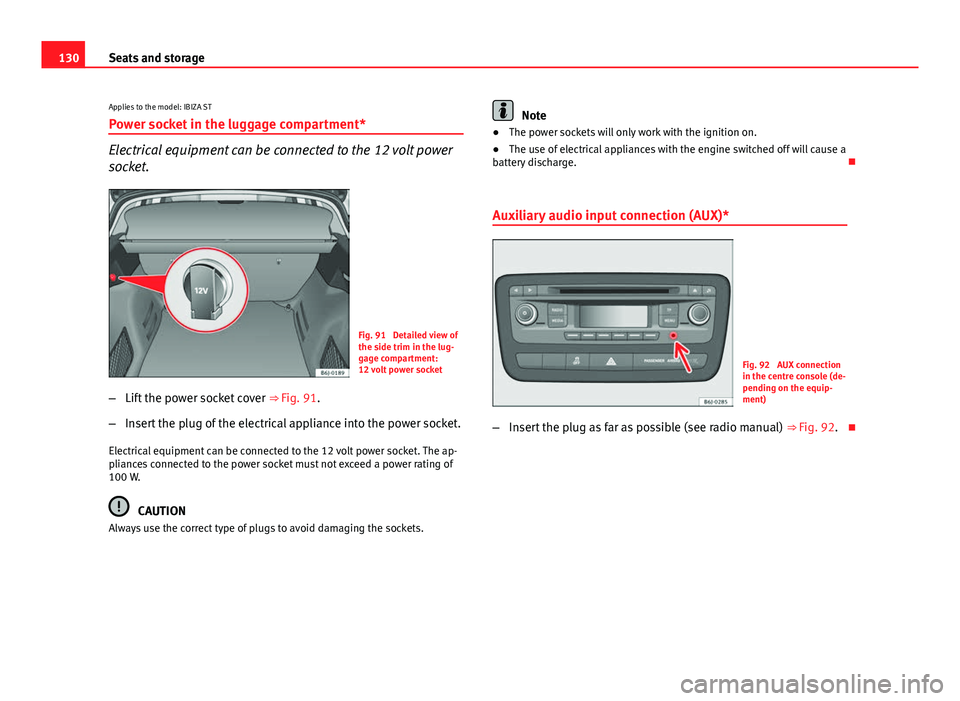
Fig. 91 Detailed view of
the side trim in the lug-
gage compartment:
12 volt power socket
– Lift the power socket cover ⇒ Fig. 91.
– Insert the plug of the electrical appliance into the power socket.
Electrical equipment can be connected to the 12 volt power socket. The ap-
pliances connected to the power socket must not exceed a power rating of
100 W.
CAUTION
Always use the correct type of plugs to avoid damaging the sockets.
Note
● The power sockets will only work with the ignition on.
● The use of electrical appliances with the engine switched off will cause a
battery discharge.
Auxiliary audio input connection (AUX)*
Fig. 92 AUX connection
in the centre console (de-
pending on the equip-
ment)
– Insert the plug as far as possible (see radio manual) ⇒ Fig. 92.
Page 133 of 294
131
Seats and storage
AUX/USB input connection*
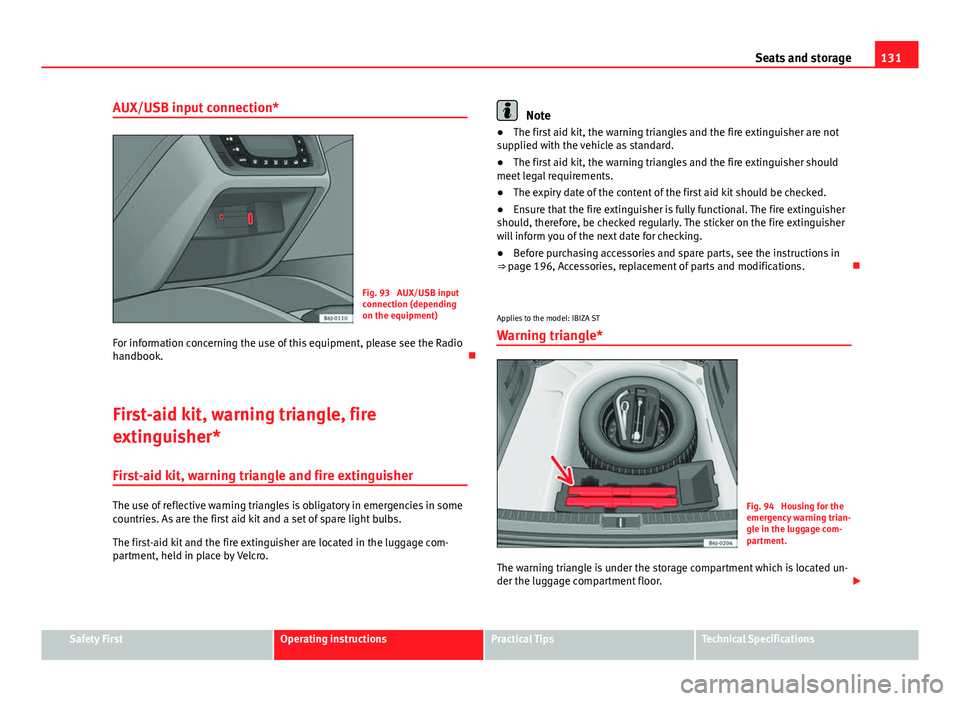
Fig. 93 AUX/USB input
connection (depending
on the equipment)
For information concerning the use of this equipment, please see the Radio
handbook.
First-aid kit, warning triangle, fire
extinguisher* First-aid kit, warning triangle and fire extinguisher
The use of reflective warning triangles is obligatory in emergencies in some
countries. As are the first aid kit and a set of spare light bulbs.
The first-aid kit and the fire extinguisher are located in the luggage com-
partment, held in place by Velcro.
Note
● The first aid kit, the warning triangles and the fire extinguisher are not
supplied with the vehicle as standard.
● The first aid kit, the warning triangles and the fire extinguisher should
meet legal requirements.
● The expiry date of the content of the first aid kit should be checked.
● Ensure that the fire extinguisher is fully functional. The fire extinguisher
should, therefore, be checked regularly. The sticker on the fire extinguisher
will inform you of the next date for checking.
● Before purchasing accessories and spare parts, see the instructions in
⇒ page 196, Accessories, replacement of parts and modifications.
Applies to the model: IBIZA ST Warning triangle*
Fig. 94 Housing for the
emergency warning trian-
gle in the luggage com-
partment.
The warning triangle is under the storage compartment which is located un-
der the luggage compartment floor.
Safety FirstOperating instructionsPractical TipsTechnical Specifications
Page 190 of 294
188Vehicle maintenance and cleaning
Care of the vehicle exterior
Automatic car washing tunnel
The vehicle paintwork is so durable that the vehicle can normally be washed
without problems in an automatic car wash tunnel. However, the paintwork
wear depends to a large extent on the kind of the car wash tunnel, the
brushes used, its water filtering and the type of cleaning and preservative
products.
Before going through a car wash, be sure to take the usual precautions such
as closing the windows and sunroof. There is nothing to note apart from
that.
If the vehicle has special accessories such as spoilers or a roof rack or two-
way radio aerial, etc., it is advisable to consult the car wash tunnel operator.
After washing, the brakes could take some time to respond as the brake
discs and pads could be wet, or even frozen in winter. Dry the brakes by
braking several times.
WARNING
Water, ice and salt on the brake system can reduce braking effectiveness.
Risk of accident.
CAUTION
Before putting the vehicle through the car washing tunnel, do not tighten
the aerial if it is folded because it can be damaged. Washing by hand
Vehicle washing
–
First soften the dirt and rinse it off with water.
– Clean your vehicle from top to bottom with a soft sponge, a
glove or a brush. Use very light pressure.
– Rinse the sponge or glove often with clean water.
– Special car shampoo should only be used for very stubborn dirt.
– Leave the wheels, sill panels etc. until last, using a different
sponge or glove.
– Rinse the vehicle thoroughly with water.
– Dry the vehicle surface gently with a chamois leather.
– In cold temperature, dry the rubber seals and their surfaces to
prevent them from freezing. Apply silicone spray to the rubber
seals.
After washing the vehicle
– After washing, avoid sudden and sharp braking. Dry the brakes
by braking several times.
Page 196 of 294
194Vehicle maintenance and cleaning
WARNING
Never clean the dash panel and the airbag module surface with cleaners
containing solvents. Solvents cause the surface to become porous. If the
airbag triggered, plastic parts could become detached and cause inju-
ries.
CAUTION
Cleaning products which contain solvents will damage the material.
Wooden trim cleaning*
– Clean the wooden trim with a water-moistened clean cloth.
– If this does not provide satisfactory results, use a gentle soap
solution.
CAUTION
Cleaning products which contain solvents will damage the material.
Cloth seat covers and fabric trim cleaning
Cloth seat covers and fabric trim on the doors, headlining etc. can be
cleaned with a special interior cleaner or with dry foam and a soft brush. Cleaning the radio and climate controls
To clean the radio and/or climate controls, use a soft damp cloth. For more
resistant dirt, a neutral soap solution may be used.
Leather cleaning*
Normal cleaning
– Moisten a cotton or woollen cloth with water and wipe over the
leather surfaces.
Cleaning stubborn stains
– More stubborn dirt can be removed using a mild soap solution
(pure liquid soap; two tablespoons diluted in one litre of water)
and a cloth.
– Do not let the water soak through the leather or soak into the
seams.
– Then wipe off with a soft, dry cloth.
Leather maintenance
– The leather should be treated twice a year with a special leath-
er-care product, available in your Technical Services.
– Apply these products very sparingly.
– Then wipe off with a soft, dry cloth.
SEAT does everything possible to preserve the genuine qualities of this nat-
ural product. Due to the natural properties of the specially selected hides
employed, the finished leather has a certain sensitivity to grease and dirt,
Page 199 of 294
197
Accessories, replacement of parts and modifications
WARNING
Any type of work or modification performed incorrectly on your vehicle
can lead to malfunctions and can cause accidents.
Roof aerial*
The vehicle can be fitted with a foldable* and anti-theft* roof aerial which
can be folded backwards, for example when going through an automatic car
wash.
To fold
Unscrew the aerial rod, tilting it backwards into a horizontal position and
then screw in again.
To return to working position
Continue in the reverse order to the previous instruction.
CAUTION
If an automatic car wash tunnel is used, before entering the tunnel, put the
aerial down parallel to the roof and do not tighten to avoid damage.
Mobile telephones and two-way radios
You will require an external aerial for mobile phones and
two-way radios. SEAT has approved for your vehicle the use of mobile telephones and two-
way radios providing under the following conditions: ●
The correct installation of an external aerial,
● transmitting power of maximum 10 watts.
The optimal reach of the equipment is only achieved with an external aerial.
First consult your Technical Service if you wish to use a mobile telephone or
a two-way radio with a transmitting power output in excess of 10 watts.
Here you will receive information concerning the technical possibilities for
retrofitting this equipment.
Mobile telephones and two-way radios should be only fitted by a special-
ised workshop, for example a SEAT dealership.
WARNING
● Always concentrate primarily on driving. If you are distracted while
driving you could have an accident.
● Never attach the telephone mountings to the surfaces covering the
airbag units or within the range of the airbags. There is a high danger of
injury if the airbag is triggered.
● Using your mobile telephones or two-way radios in the vehicle with-
out an external aerial, electromagnetic radiation in the vehicle could ex-
ceed authorised limits. This also may occur to external aerials that have
not been correctly installed.
CAUTION
Failure to consider the above-mentioned conditions could cause the elec-
tronics to malfunction. The most common causes of faults are:
● no external aerial,
● external aerial incorrectly installed,
● transmitting power output in excess of 10 watts.
Safety FirstOperating instructionsPractical TipsTechnical Specifications
Page 200 of 294
198Accessories, replacement of parts and modifications
Note
Please observe the operating instructions of your mobile telephone/two-
way radio.
Fitting a towing bracket*
It is possible to fit a towing bracket to the rear of the vehicle.
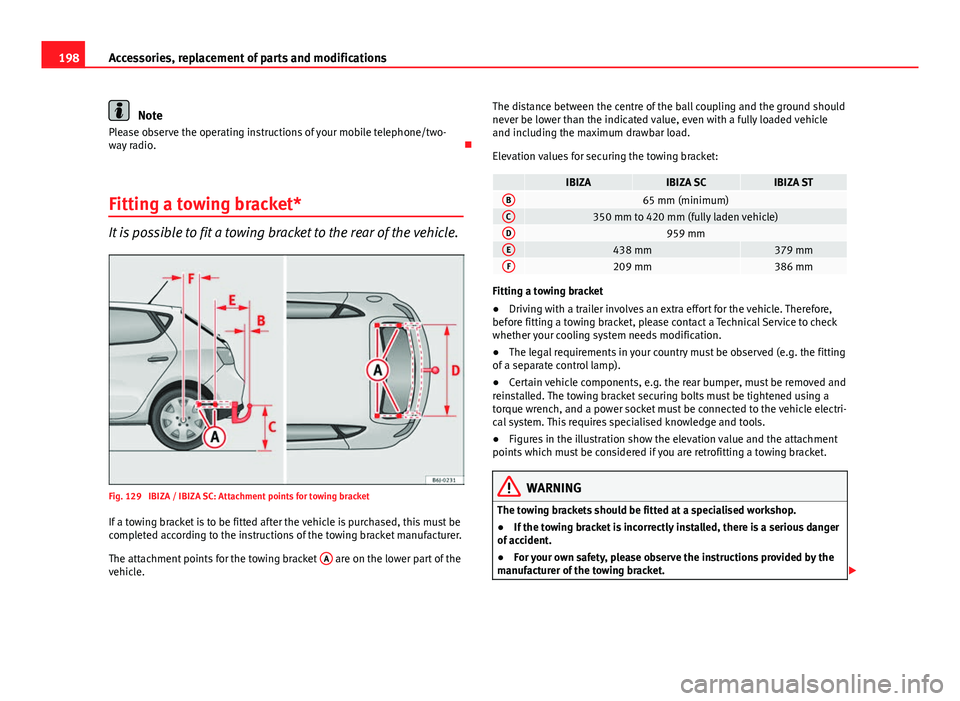
Fig. 129 IBIZA / IBIZA SC: Attachment points for towing bracket If a towing bracket is to be fitted after the vehicle is purchased, this must be
completed according to the instructions of the towing bracket manufacturer.
The attachment points for the towing bracket A
are on the lower part of the
vehicle. The distance between the centre of the ball coupling and the ground should
never be lower than the indicated value, even with a fully loaded vehicle
and including the maximum drawbar load.
Elevation values for securing the towing bracket:
IBIZAIBIZA SCIBIZA STB65 mm (minimum)C350 mm to 420 mm (fully laden vehicle)D959 mmE438 mm379 mmF209 mm386 mm
Fitting a towing bracket
●
Driving with a trailer involves an extra effort for the vehicle. Therefore,
before fitting a towing bracket, please contact a Technical Service to check
whether your cooling system needs modification.
● The legal requirements in your country must be observed (e.g. the fitting
of a separate control lamp).
● Certain vehicle components, e.g. the rear bumper, must be removed and
reinstalled. The towing bracket securing bolts must be tightened using a
torque wrench, and a power socket must be connected to the vehicle electri-
cal system. This requires specialised knowledge and tools.
● Figures in the illustration show the elevation value and the attachment
points which must be considered if you are retrofitting a towing bracket.
WARNING
The towing brackets should be fitted at a specialised workshop.
● If the towing bracket is incorrectly installed, there is a serious danger
of accident.
● For your own safety, please observe the instructions provided by the
manufacturer of the towing bracket.
Page 205 of 294
203
Checking and refilling levels
The LPG tank ⇒ Fig. 132 in the spare wheel well has a capacity of 52.8 li-
tres. If the outside temperatures are very low, it may not be possible to com-
pletely fill the LPG tank.
Pump attachments
There are a variety of types of LPG pump, and the methods of use may vary.
Therefore, let the pump operator fill the tank when refuelling for the first
time or fill from another pump.
Noises when refuelling with LPG
When refuelling with LPG, noises may be heard. These noises are insignifi-
cant.
WARNING
Failure to refuel or handle LPG in the correct way could result in a fire,
cause an explosion or lead to injuries.
● LPG is a highly explosive and inflammable substance. It may cause
severe burns and other injury.
● Switch off the engine before refuelling.
● Always switch off mobile phones and any other radiophony applian-
ces, as electromagnetic waves may produce sparks and cause a fire.
● Do not remain in the vehicle while refuelling. If it is absolutely neces-
sary to enter the vehicle, close the door and touch a metal surface before
touching the attachment again. This will prevent the generation of static
electricity and any possible fires while refuelling.
● Small quantities of LPG may leak out after refuelling. If LPG comes in-
to contact with skin, there is a risk of freezing.
● Do not smoke and always keep bare flames away from the tank during
refuelling. Failure to do so may lead to an explosion.
Adapter for the liquid petroleum gas (LPG) filler neck
An adapter is required due to the existence of a range of
pumps with different nozzles.
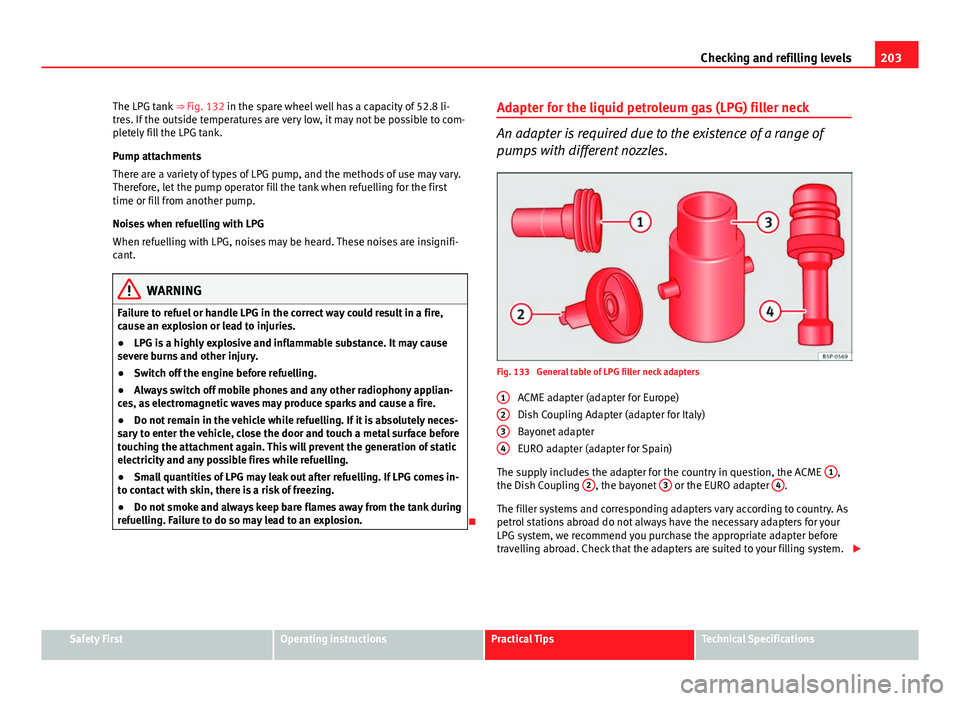
Fig. 133 General table of LPG filler neck adapters
ACME adapter (adapter for Europe)
Dish Coupling Adapter (adapter for Italy)
Bayonet adapter
EURO adapter (adapter for Spain)
The supply includes the adapter for the country in question, the ACME 1
,
the Dish Coupling 2, the bayonet 3 or the EURO adapter 4.
The filler systems and corresponding adapters vary according to country. As
petrol stations abroad do not always have the necessary adapters for your
LPG system, we recommend you purchase the appropriate adapter before
travelling abroad. Check that the adapters are suited to your filling system.
1
234
Safety FirstOperating instructionsPractical TipsTechnical Specifications
Page 290 of 294
Overviewcontrol lamps . . . . . . . . . . . . . . . . . . . . . . . . 67
Control lamps . . . . . . . . . . . . . . . . . . . . . . . . 65
Dash panel . . . . . . . . . . . . . . . . . . . . . . . . . . 55
Instruments . . . . . . . . . . . . . . . . . . . . . . . . . 57
warning lamps . . . . . . . . . . . . . . . . . . . . . . . 67
Warning lamps . . . . . . . . . . . . . . . . . . . . . . . 65
P Paintwork Polishing . . . . . . . . . . . . . . . . . . . . . . . . . . . 190
Panoramic sunroof . . . . . . . . . . . . . . . . . . . . . . . 99
Parking . . . . . . . . . . . . . . . . . . . . . . . . . . . . . . . 165
Parking aid . . . . . . . . . . . . . . . . . . . . . . . . . . . . 166
Parking lights . . . . . . . . . . . . . . . . . . . . . . . . . . 108
Passenger see Correct sitting position . . . . . . . 10, 11, 12
Pedals . . . . . . . . . . . . . . . . . . . . . . . . . . . . . . . . . 16
Petrol . . . . . . . . . . . . . . . . . . . . . . . . . . . . . . . . . 205 Driving abroad . . . . . . . . . . . . . . . . . . . . . . 184
Petrol additives . . . . . . . . . . . . . . . . . . . . . . . . 205
Physical principles of a frontal collision . . . . . . 21
Plastic parts . . . . . . . . . . . . . . . . . . . . . . . . . . . 190
Plastic parts cleaning . . . . . . . . . . . . . . . . . . . . 193
Pollen filter . . . . . . . . . . . . . . . . . . . . . . . . . . . . 145
Pollution filter . . . . . . . . . . . . . . . . . . . . . . . . . . 145
Power socket in the luggage compartment . . . . . . . . . . . 130
Power sockets . . . . . . . . . . . . . . . . . . . . . . . . . . 129
Products for vehicle maintenance . . . . . . . . . . 187 R
Radio frequency remote control . . . . . . . . . . . . 88 Changing the battery . . . . . . . . . . . . . . . . . . 89
Rain sensor . . . . . . . . . . . . . . . . . . . . . . . . . . . . 112
Rear drink holder . . . . . . . . . . . . . . . . . . . . . . . 128
Rear fog light control lamp . . . . . . . . . . . . . . . . . . . . . . . . . 71
Control lamp . . . . . . . . . . . . . . . . . . . . . . . . 101
Rear head restraints . . . . . . . . . . . . . . . . . . . . . . 14
Rear lid . . . . . . . . . . . . . . . . . . . . . . . . . . . . . . . . 93 Control lamp . . . . . . . . . . . . . . . . . . . . . . . . . 74
Emergency opening . . . . . . . . . . . . . . . . . . . 94
Rear parking aid . . . . . . . . . . . . . . . . . . . . . . . . . . . . . . . . 167
Rear seat folding down . . . . . . . . . . . . . . . . . . . . . . . . 123
Rear seats . . . . . . . . . . . . . . . . . . . . . . . . . . . . . 123
Rear shelf . . . . . . . . . . . . . . . . . . . . . . . . . . . . . 134
Rear shelf with storage compartment Storage compartment . . . . . . . . . . . . . . . . 135
Rear view mirrors . . . . . . . . . . . . . . . . . . . . . . . 114
Rear window automatic wiper/washer . . . . . . 113
Rear window wiper . . . . . . . . . . . . . . . . . . . . . . 113
Recommended gear display . . . . . . . . . . . . . . . 60
Refuelling . . . . . . . . . . . . . . . . . . . . . . . . . . . . . 200
Remote control key Buttons . . . . . . . . . . . . . . . . . . . . . . . . . . . . . 88
Synchronising . . . . . . . . . . . . . . . . . . . . . . . . 89
Removing and fitting the wheel . . . . . . . . . . . 234
Repairs Airbags . . . . . . . . . . . . . . . . . . . . . . . . . . . . . 32 Replacement keys . . . . . . . . . . . . . . . . . . . . . . . 87
Replacement of parts . . . . . . . . . . . . . . . . . . . . 196
Rev counter . . . . . . . . . . . . . . . . . . . . . . . . . . . . . 58
Reverse gear
Manual gearbox . . . . . . . . . . . . . . . . . . . . . 156
Roll-back function panoramic/tilting sunroof . . . . . . . . . . . . . 100
Windows . . . . . . . . . . . . . . . . . . . . . . . . . . . . 98
Roof aerial . . . . . . . . . . . . . . . . . . . . . . . . . . . . . 197
Roof rack . . . . . . . . . . . . . . . . . . . . . . . . . . . . . . 136
Rubber seals . . . . . . . . . . . . . . . . . . . . . . . . . . . 191
Running in Brake pads . . . . . . . . . . . . . . . . . . . . . . . . . 179
Engine . . . . . . . . . . . . . . . . . . . . . . . . . . . . . 179
Tyres . . . . . . . . . . . . . . . . . . . . . . . . . . . . . . 179
Running in tyres . . . . . . . . . . . . . . . . . . . . . . . . 179
S Safe . . . . . . . . . . . . . . . . . . . . . . . . . . . . . . . . . . . 82
Safe driving . . . . . . . . . . . . . . . . . . . . . . . . . . . . . 7
Safety . . . . . . . . . . . . . . . . . . . . . . . . . . . . . . . . . . 8
Safety equipment . . . . . . . . . . . . . . . . . . . . . . . . . 7
Safety instructions Coolant temperature . . . . . . . . . . . . . . . . . . 76
Safety notes Airbags . . . . . . . . . . . . . . . . . . . . . . . . . . . . . 32
Deactivating front passenger airbag . . . . . . 42
Front airbags . . . . . . . . . . . . . . . . . . . . . . . . 37
Seat belt tensioners . . . . . . . . . . . . . . . . . . . 28
Side airbags . . . . . . . . . . . . . . . . . . . . . . . . . 39
288 Index
Page 292 of 294
Traction control systemcontrol lamp . . . . . . . . . . . . . . . . . . . . . . . . . 72
Traction control system (ASR) . . . . . . . . . . . . . 175
Trailer turn signals control lamp . . . . . . . . . . . . . . . . . . . . . . . . 108
Trailer weights . . . . . . . . . . . . . . . . . . . . . . . . . 265
Turn signals . . . . . . . . . . . . . . . . . . . . . . . . . . . 107 control lamp . . . . . . . . . . . . . . . . . . . . . 76, 108
Two-way radio . . . . . . . . . . . . . . . . . . . . . . . . . . 197
Tyre Mobility System (tyre repair kit) . . . . . . . . 230
Tyre pressure . . . . . . . . . . . . . . . . . . . . . . . . . . 223
Tyre pressure control lamp . . . . . . . . . . . . . . . . 73
Tyre pressures . . . . . . . . . . . . . . . . . . . . . . . . . . 265
Tyre repair kit . . . . . . . . . . . . . . . . . . . . . . 230, 235
Tyres and wheels Dimensions . . . . . . . . . . . . . . . . . . . . . . . . . 225
Tyres tread depth . . . . . . . . . . . . . . . . . . . . . . . 224
Tyres useful life . . . . . . . . . . . . . . . . . . . . . . . . . 224
Tyres with directional tread pattern . . . . . . . . 223
U Underbody protection . . . . . . . . . . . . . . . . . . . 192
V Vehicle battery . . . . . . . . . . . . . . . . . . . . . . . . . 220
Vehicle data . . . . . . . . . . . . . . . . . . . . . . . . . . . 263
Vehicle identification data . . . . . . . . . . . . . . . . 263
Vehicle identification number . . . . . . . . . . . . . 264
Vehicle interior heating or cooling system . . . 141 Vehicle interior monitoring and anti-tow system
Activation . . . . . . . . . . . . . . . . . . . . . . . . . . . 91
Vehicle modifications . . . . . . . . . . . . . . . . . . . 196
Vehicle paintwork Maintenance . . . . . . . . . . . . . . . . . . . . . . . . 190
Products for vehicle maintenance . . . . . . . 187
Vehicle tools Storage . . . . . . . . . . . . . . . . . . . . . . . . . . . . 229
Vehicle washing . . . . . . . . . . . . . . . . . . . . . . . . 188
Ventilation . . . . . . . . . . . . . . . . . . . . . . . . . . . . 138
Ventilation slits . . . . . . . . . . . . . . . . . . . . . . . . . 17
W Warning lamps . . . . . . . . . . . . . . . . . . . . . . . . . . 65
Warning messages Red . . . . . . . . . . . . . . . . . . . . . . . . . . . . . . . . 68
Yellow . . . . . . . . . . . . . . . . . . . . . . . . . . . . . . 68
Warning symbols . . . . . . . . . . . . . . . . . . . . . . . . 68
Warning triangle . . . . . . . . . . . . . . . . . . . . . . . . 131
Washer fluid . . . . . . . . . . . . . . . . . . . . . . . . . . . 215
Washing by hand . . . . . . . . . . . . . . . . . . . . . . . 188
Washing the vehicle . . . . . . . . . . . . . . . . . . . . . 188
Washing tunnel . . . . . . . . . . . . . . . . . . . . . . . . 188
Washing with high pressure cleaners . . . . . . . 189
Water in the windscreen washer tank . . . . . . . 215
Wear indicators . . . . . . . . . . . . . . . . . . . . . . . . 224
Wearing suitable shoes . . . . . . . . . . . . . . . . . . . 16
Wheel bolts . . . . . . . . . . . . . . . . . . . . . . . . 232, 266 Tightening torque . . . . . . . . . . . . . . . . . . . . 226
Wheel change . . . . . . . . . . . . . . . . . . . . . . . . . . 230 Wheels . . . . . . . . . . . . . . . . . . . . . . . . . . . 222, 265
Why assume the correct sitting position? . . . . . 30
Why should head restraints be correctly adjus-
ted? . . . . . . . . . . . . . . . . . . . . . . . . . . . . . . . . . 13
Why wear seat belts? . . . . . . . . . . . . . . . 19, 21, 30
Windows . . . . . . . . . . . . . . . . . . . . . . . . . . . . . . . 96
Windscreen defrosting . . . . . . . . . . . . . . . . . . . 138
Windscreen washer fluid control lamp . . . . . . . . . . . . . . . . . . . . . . . . . 71
Windscreen wiper blades Cleaning . . . . . . . . . . . . . . . . . . . . . . . . . . . 191
Windscreen wipers . . . . . . . . . . . . . . . . . . . . . . 111 Changing blades . . . . . . . . . . . . . . . . . . . . 216
Changing the rear wiper blade . . . . . . . . . 218
Winter driving Diesel engine . . . . . . . . . . . . . . . . . . . . . . . 206
Winter tyres . . . . . . . . . . . . . . . . . . . . . . . . . . . . 227
Wooden trim cleaning . . . . . . . . . . . . . . . . . . . 194
Working in the engine compartment . . . . . . . 206
290 Index