start stop button Seat Ibiza 5D 2014 User Guide
[x] Cancel search | Manufacturer: SEAT, Model Year: 2014, Model line: Ibiza 5D, Model: Seat Ibiza 5D 2014Pages: 240, PDF Size: 4.89 MB
Page 145 of 240
Driver assistance systems
Start-Stop function interruption
In the following situations, the Start-Stop
function will be interrupted and the engine
will automatically start:
● The vehicle starts moving.
● The brake pedal is pressed several times in
a row.
● The battery has been discharged excessive-
ly.
● The Start-Stop System is manually deacti-
vated.
● The windscreen de-mist function is turned
on.
● The temperature of the interior exceeds the
comfort limits ( A/C button).
● If the airflow is increased by more than 3
presses.
● Temperature setting HI or LO is selected.
● The engine coolant temperature is insuffi-
cient.
● The alternator is faulty, for example the V-
belt has ruptured.
● If any of the conditions described in the
previous section are not fulfilled. WARNING
Never allow the vehicle to move with the en-
gine off for any reason. You could lose control
of your vehicle. This could cause an accident
and serious injury. ●
The brake servo does not work with the en-
gine off. You need more force to stop the vehi-
cle.
● Power steering does not work when the en-
gine is not running. That is why it is much
more difficult to turn the steering wheel.
● Turn off the Start-Stop system when driving
through water (fording streams, etc.). Note
● For vehicles with the Start-Stop function
and a manual gearbox, when the engine is
started, the clutch must be pressed.
● When the conditions for the Start-Stop
function are not fulfilled, the instrument pan-
el displays the Start-Stop indicator dimmed.
● If the steering wheel is turned more than
270°, it will not be possible to start the vehi-
cle again. To start the vehicle, straighten the
steering wheel so that it is turned less than
270°. Activating and deactivating the Start-
Stop function
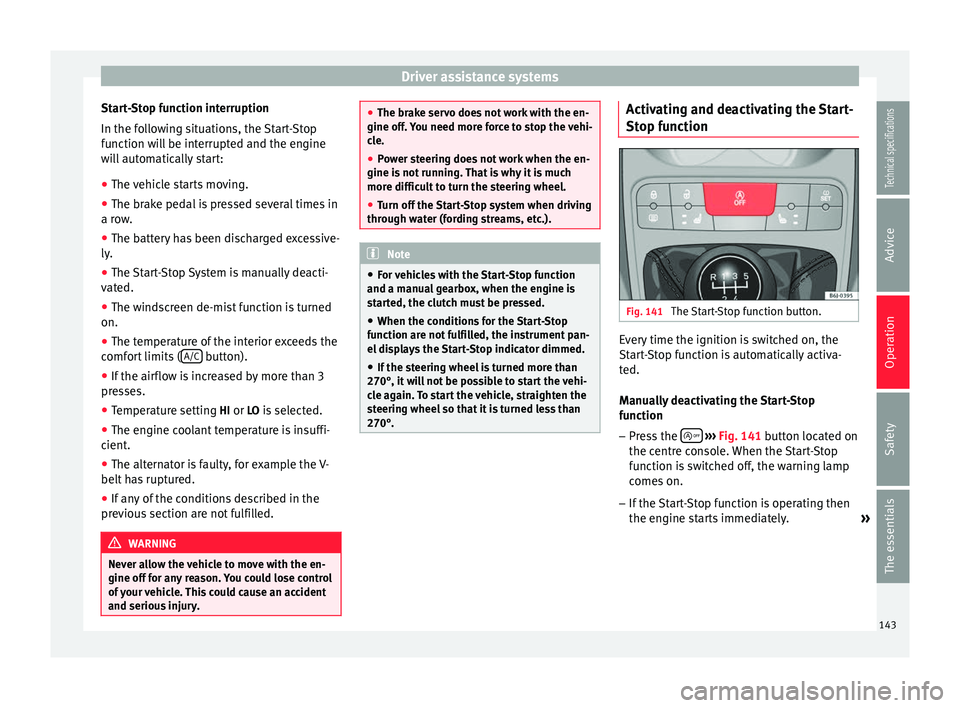
Fig. 141
The Start-Stop function button. Every time the ignition is switched on, the
Start-Stop function is automatically activa-
ted.
Manually deactivating the Start-Stop
function
– Press the
››› Fig. 141 button located on
the c entr
e console. When the Start-Stop
function is switched off, the warning lamp
comes on.
– If the Start-Stop function is operating then
the engine starts immediately.
»
143
Technical specifications
Advice
Operation
Safety
The essentials
Page 146 of 240
Operation
Switching the Start-Stop function on
manually – Press the
››› Fig. 141 button located on
the c entr
e console. The warning lamp will
switch off.
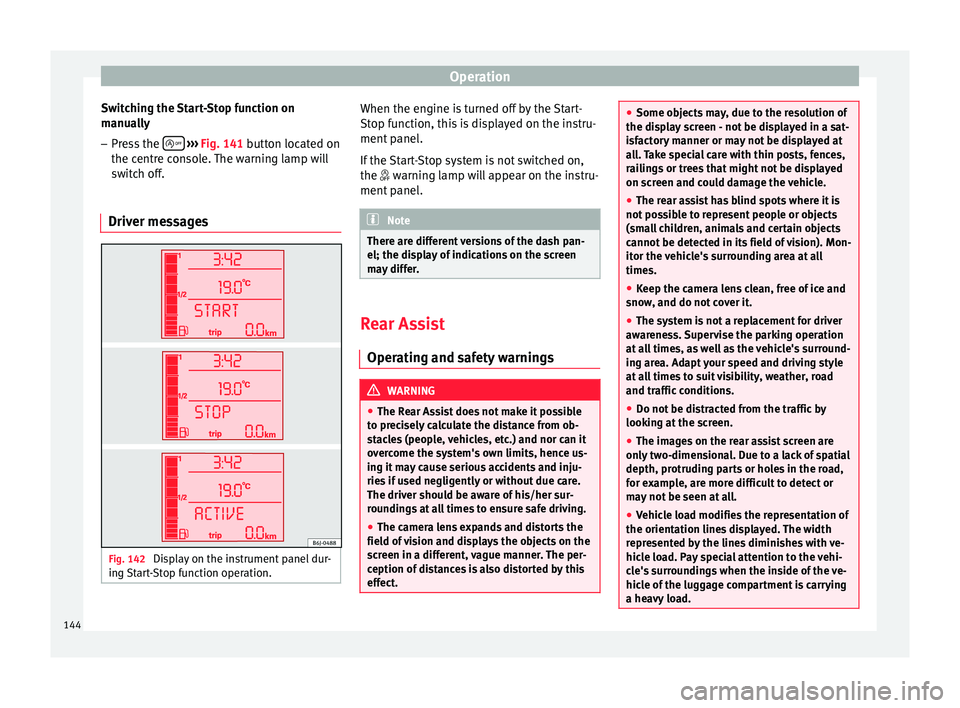
Driver messages Fig. 142
Display on the instrument panel dur-
ing Start-Stop function operation. When the engine is turned off by the Start-
Stop function, this is displayed on the instru-
ment panel.
If the Start-Stop system is not switched on,
the
warning lamp will appear on the instru-
ment
panel. Note
There are different versions of the dash pan-
el; the display of indications on the screen
may differ. Rear Assist
Operating and safety warnings WARNING
● The Rear Assist does not make it possible
to precisely calculate the distance from ob-
stacles (people, vehicles, etc.) and nor can it
overcome the system's own limits, hence us-
ing it may cause serious accidents and inju-
ries if used negligently or without due care.
The driver should be aware of his/her sur-
roundings at all times to ensure safe driving.
● The camera lens expands and distorts the
field of vision and displays the objects on the
screen in a different, vague manner. The per-
ception of distances is also distorted by this
effect. ●
Some objects may, due to the resolution of
the display screen - not be displayed in a sat-
isfactory manner or may not be displayed at
all. Take special care with thin posts, fences,
railings or trees that might not be displayed
on screen and could damage the vehicle.
● The rear assist has blind spots where it is
not possible to represent people or objects
(small children, animals and certain objects
cannot be detected in its field of vision). Mon-
itor the vehicle's surrounding area at all
times.
● Keep the camera lens clean, free of ice and
snow, and do not cover it.
● The system is not a replacement for driver
awareness. Supervise the parking operation
at all times, as well as the vehicle's surround-
ing area. Adapt your speed and driving style
at all times to suit visibility, weather, road
and traffic conditions.
● Do not be distracted from the traffic by
looking at the screen.
● The images on the rear assist screen are
only two-dimensional. Due to a lack of spatial
depth, protruding parts or holes in the road,
for example, are more difficult to detect or
may not be seen at all.
● Vehicle load modifies the representation of
the orientation lines displayed. The width
represented by the lines diminishes with ve-
hicle load. Pay special attention to the vehi-
cle's surroundings when the inside of the ve-
hicle of the luggage compartment is carrying
a heavy load. 144
Page 150 of 240
Operation
●
Periodic cleaning of the sensors, take care
not to damage or scratch them. When clean-
ing with high pressure washers or steam
cleaners, the sensors should be sprayed for
only a very short period and from a distance
of more than 10 cm.
● If the licence plate (especially the front
one) is bent in such a way that it noticeably
juts out from the bumper, false alarms may
sound for the area in front of the vehicle. Rear parking aid with navigator view
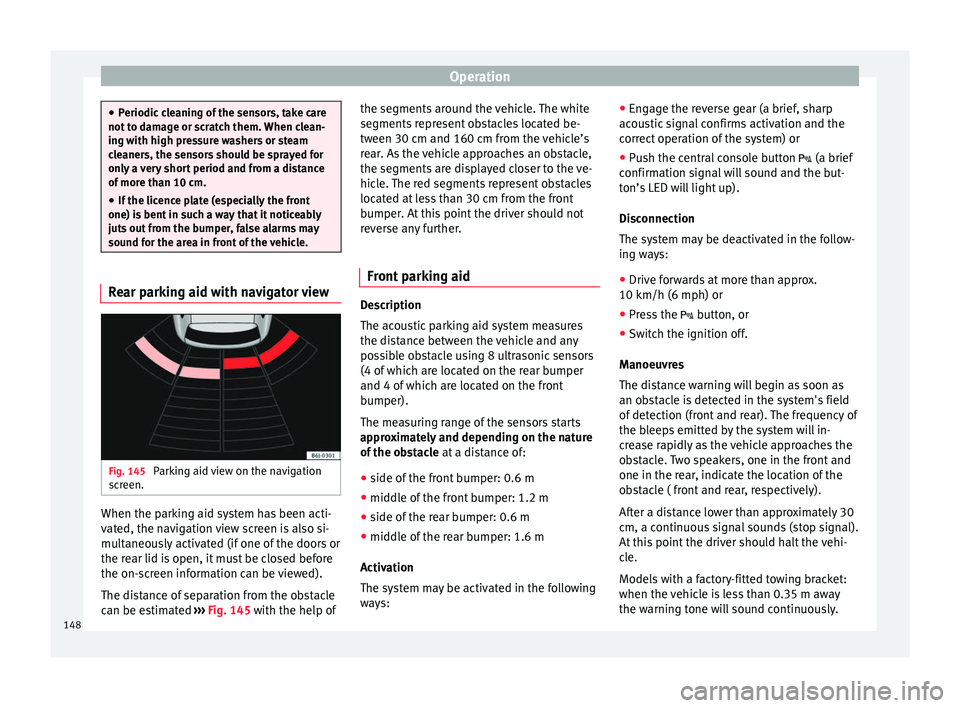
Fig. 145
Parking aid view on the navigation
screen. When the parking aid system has been acti-
vated, the navigation view screen is also si-
multaneously activated (if one of the doors or
the rear lid is open, it must be closed before
the on-screen information can be viewed).
The distance of separation from the obstacle
can be estimated
››› Fig. 145 with the help of the segments around the vehicle. The white
segments represent obstacles located be-
tween 30 cm and 160 cm from the vehicle’s
rear. As the vehicle approaches an obstacle,
the segments are displayed closer to the ve-
hicle. The red segments represent obstacles
located at less than 30 cm from the front
bumper. At this point the driver should not
reverse any further.
Front parking aid Description
The acoustic parking aid system measures
the distance between the vehicle and any
possible obstacle using 8 ultrasonic sensors
(4 of which are located on the rear bumper
and 4 of which are located on the front
bumper).
The measuring range of the sensors starts
approximately and depending on the nature
of the obstacle
at a distance of:
● side of the front bumper: 0.6 m
● middle of the front bumper: 1.2 m
● side of the rear bumper: 0.6 m
● middle of the rear bumper: 1.6 m
Activation
The system may be activated in the following
ways: ●
Engage the reverse gear (a brief, sharp
acoustic signal confirms activation and the
correct operation of the system) or
● Push the central console button (a brief
confirmation signal will sound and the but-
ton’s LED will light up).
Disconnection
The system may be deactivated in the follow-
ing ways:
● Drive forwards at more than approx.
10 km/h (6 mph) or
● Press the button, or
● Switch the ignition off.
Manoeuvres
The distance warning will begin as soon as
an obstacle is detected in the system's field
of detection (front and rear). The frequency of
the bleeps emitted by the system will in-
crease rapidly as the vehicle approaches the
obstacle. Two speakers, one in the front and
one in the rear, indicate the location of the
obstacle ( front and rear, respectively).
After a distance lower than approximately 30
cm, a continuous signal sounds (stop signal).
At this point the driver should halt the vehi-
cle.
Models with a factory-fitted towing bracket:
when the vehicle is less than 0.35 m away
the warning tone will sound continuously.
148
Page 236 of 240
Index
Remote control key Buttons . . . . . . . . . . . . . . . . . . . . . . . . . . . . . . . . 83
Synchronising . . . . . . . . . . . . . . . . . . . . . . . . . . . 84
Removing and fitting the wheel . . . . . . . . . . . . . 185
Replacement keys . . . . . . . . . . . . . . . . . . . . . . . . . 82
Replacement of parts . . . . . . . . . . . . . . . . . . . . . . 155
Rev counter . . . . . . . . . . . . . . . . . . . . . . . . . . . . . . . 56
Roll-back function panoramic/tilting sunroof . . . . . . . . . . . . . . . . . 90
Windows . . . . . . . . . . . . . . . . . . . . . . . . . . . . . . . 88
Roof aerial . . . . . . . . . . . . . . . . . . . . . . . . . . . . . . . 155
Roof carrier . . . . . . . . . . . . . . . . . . . . . . . . . . . . . . 111
Roof carrier system . . . . . . . . . . . . . . . . . . . . . . . . 111
Rubber seals . . . . . . . . . . . . . . . . . . . . . . . . . . . . . 160
Running in Brake pads . . . . . . . . . . . . . . . . . . . . . . . . . . . . 134
Engine . . . . . . . . . . . . . . . . . . . . . . . . . . . . . . . . 134
Tyres . . . . . . . . . . . . . . . . . . . . . . . . . . . . . . . . . 134
Running in tyres . . . . . . . . . . . . . . . . . . . . . . . . . . 134
S Safe . . . . . . . . . . . . . . . . . . . . . . . . . . . . . . . . . . . . . 79
Safe driving . . . . . . . . . . . . . . . . . . . . . . . . . . . . . . 29
Safe Security system . . . . . . . . . . . . . . . . . . . . . . . 79
Safety . . . . . . . . . . . . . . . . . . . . . . . . . . . . . . . . . . . 29 child safety . . . . . . . . . . . . . . . . . . . . . . . . . . . . . 46
child seats . . . . . . . . . . . . . . . . . . . . . . . . . . . . . . 46
Safety equipment . . . . . . . . . . . . . . . . . . . . . . . . . . 29
Safety information Front passenger airbag deactivation . . . . . . . . 46
Safety instructions Coolant temperature . . . . . . . . . . . . . . . . . . . . . 63
front airbags . . . . . . . . . . . . . . . . . . . . . . . . . . . . 43
side airbags . . . . . . . . . . . . . . . . . . . . . . . . . . . . 44
Safety notes Seat belt tensioners . . . . . . . . . . . . . . . . . . . . . . 39
Using seat belts . . . . . . . . . . . . . . . . . . . . . . . . . 36 Seals . . . . . . . . . . . . . . . . . . . . . . . . . . . . . . . . . . . 160
Seat belt
Adjusting . . . . . . . . . . . . . . . . . . . . . . . . . . . . . . . 12
Seat belt cleaning . . . . . . . . . . . . . . . . . . . . . . . . 163
Seat belt control lamp . . . . . . . . . . . . . . . . . . . . . . 35
Seat belt position for pregnant women . . . . . . . . . . . . . . . . . . . . . . 38
Seat belts . . . . . . . . . . . . . . . . . . . . . . . . . . . . . . 38
Seat belt protection . . . . . . . . . . . . . . . . . . . . . . . . 35
Seat belt release . . . . . . . . . . . . . . . . . . . . . . . . . . 38
Seat belts . . . . . . . . . . . . . . . . . . . . . . . . . . . . . . . . 34 Adjustment . . . . . . . . . . . . . . . . . . . . . . . . . . . . . 37
control lamp . . . . . . . . . . . . . . . . . . . . . . . . . . . . 35
Safety notes . . . . . . . . . . . . . . . . . . . . . . . . . . . . 36
unfastened . . . . . . . . . . . . . . . . . . . . . . . . . . . . . 36
Seat belt tensioner control lamp . . . . . . . . . . . . . . . . . . . . . . . . . . . . 42
Seat heating . . . . . . . . . . . . . . . . . . . . . . . . . . . . . 102
Selecting a gear . . . . . . . . . . . . . . . . . . . . . . . . . . 128
Selective opening . . . . . . . . . . . . . . . . . . . . . . . . . 80
Semiautomatic air conditioning controls . . . . . . . . . . . . . . . . . . . . . . . . . . . . . . . 118
Service interval display . . . . . . . . . . . . . . . . . . . . . 67
Side airbags . . . . . . . . . . . . . . . . . . . . . . . . . . . . . . 43 safety instructions . . . . . . . . . . . . . . . . . . . . . . . 44
Single headlight bulbs . . . . . . . . . . . . . . . . . . . . 198
Sitting position driver . . . . . . . . . . . . . . . . . . . . . . . . . . . . . . . . . . 30
Sitting position, occupants . . . . . . . . . . . . . . . . . . 30
Snow chains . . . . . . . . . . . . . . . . . . . . . . . . 180, 210
Soot accumulation in the diesel engine particu- late filter
control lamp . . . . . . . . . . . . . . . . . . . . . . . . . . . . 59
Spanner symbol . . . . . . . . . . . . . . . . . . . . . . . . . . . 67
Spare parts . . . . . . . . . . . . . . . . . . . . . . . . . . . . . . 155
Spare wheel . . . . . . . . . . . . . . . . . . . . . . . . . . . . . 182
Speedometer . . . . . . . . . . . . . . . . . . . . . . . . . . . . . 57 Speed selector lever lock
control lamp . . . . . . . . . . . . . . . . . . . . . . . . . . . . 62
Start-Stop Activating and deactivating . . . . . . . . . . . . . . . 143
functioning . . . . . . . . . . . . . . . . . . . . . . . . . . . . 142
Starting petrol engines . . . . . . . . . . . . . . . 124, 125
Starting the engine . . . . . . . . . . . . . . . . . . 124, 125 after the fuel tank has been run dry . . . . . . . . 125
Starting the vehicle . . . . . . . . . . . . . . . . . . . . . . . . 13
Steam jets . . . . . . . . . . . . . . . . . . . . . . . . . . . . . . . 158
Steering . . . . . . . . . . . . . . . . . . . . . . . . . . . . . . . . . 31 steering lock . . . . . . . . . . . . . . . . . . . . . . . . . . . 123
Steering wheel . . . . . . . . . . . . . . . . . . . . . . . . . . . . 13
Steering wheel height adjustment . . . . . . . . . . . . 31
Storage compartment . . . . . . . . . . . . . . . . . . . . . 110 Front passenger side . . . . . . . . . . . . . . . . . . . . 104
right front seat . . . . . . . . . . . . . . . . . . . . . . . . . 105
Sunroof . . . . . . . . . . . . . . . . . . . . . . . . . . . . . . . . . . 10
Sun visor Sliding/tilting sunroof . . . . . . . . . . . . . . . . . . . . 89
Sun visors . . . . . . . . . . . . . . . . . . . . . . . . . . . . . . . . 97
Switch Hazard warning lights . . . . . . . . . . . . . . . . . . . . 95
Heated rear window . . . . . . . . . . . . . . . . . . . . . . 96
Light switch . . . . . . . . . . . . . . . . . . . . . . . . . . . . . 90
Switches Electric windows . . . . . . . . . . . . . . . . . . . . . . . . . 87
Switching off the engine . . . . . . . . . . . . . . . . . . . 125
T
Tail lights . . . . . . . . . . . . . . . . . . . . . . . . . . . . . . . 203
Tank Fuel level . . . . . . . . . . . . . . . . . . . . . . . . . . . . . . . 64
Reserve indicator . . . . . . . . . . . . . . . . . . . . . . . . 64
Tank capacity . . . . . . . . . . . . . . . . . . . . . . . . . . . 64
Technical modifications . . . . . . . . . . . . . . . . . . . . 155
The PND (portable navigation device) . . . . . . . . . 69
234