key battery Seat Mii 2012 User Guide
[x] Cancel search | Manufacturer: SEAT, Model Year: 2012, Model line: Mii, Model: Seat Mii 2012Pages: 308, PDF Size: 4.13 MB
Page 164 of 308

162Driver assistance systems
Vehicles with an automatic gearbox
● When the vehicle is at a standstill, depress the brake or keep it pressed
down. The engine switches off.
● The engine will start again as soon as you release the brake pedal.
● With the gear lever set to position P, the engine will not start until a
range of gears is selected or the accelerator pedal is depressed.
Important conditions for the engine to stop automatically
● The driver's seat belt must be fastened.
● The driver door must be closed.
● The bonnet must be closed.
● The engine must have reached a minimum temperature.
● The vehicle must have moved since the last time the engine was stop-
ped.
● The vehicle's battery must be sufficiently charged.
● The battery temperature must not be too low or too high.
● The vehicle must not be on a very steep slope.
Conditions for the engine to restart automatically
The engine can be automatically restarted in the following cases:
● If the vehicle starts to moves.
● If the battery voltage drops.
Conditions requiring engine start-up using the key
The engine must be started by hand using the vehicle's key in the following
cases:
● If the driver unbuckles his/her seat belt.
● If the driver door is opened.
● If the bonnet is opened. Switching the Start-Stop system on and off
●
Press the button situated in the centre console ⇒ Fig. 101.
● The button will light up when the Start-Stop system is switched off.
The engine will start immediately if the vehicle is in Stop mode when the
system is switched off by hand.
WARNING
The brake servo and the electromechanical steering do not work when
the engine is switched off.
● The vehicle must never be allowed to move with the engine switched
off.
● Disconnect the Start-Stop system before working in the engine com-
partment.
CAUTION
The vehicle's battery could be damaged if the vehicle is used for long peri-
ods at very high outside temperatures.
Note
In some cases, it may be necessary to start the engine by hand using the
key. Refer to the corresponding control lamp on the instrument panel.
Hill-start aid*
This function is only included in vehicles with ESC. This device helps when starting uphill.
Page 182 of 308

180In the engine compartment
Care, cleaning and maintenance
In the engine compartment
Working in the engine compartmentIntroduction
Before working in the engine compartment, make sure that the vehicle is
parked on horizontal and firm ground.
The engine compartment of the vehicle is a hazardous area. Never work on
the engine or in the engine compartment if you are not familiar with the op-
erations to be carried out, the applicable safety standards and especially if
you do not have the instruments, liquids and tools necessary ⇒
! In such
a case, have any work carried out by a Specialised workshop. Negligent
work can cause serious injury.
Additional information and warnings:
● Exterior detail ⇒ page 6
● Windscreen wash system ⇒ page 91
● Start and stop the engine ⇒ page 119
● Brake fluid ⇒ page 134
● Checks when filling up ⇒ page 171
● Engine oil ⇒ page 185
● Engine coolant ⇒ page 189
● Vehicle battery ⇒ page 193
● Accessories, parts replacement, repairs and modifications ⇒ page 222
WARNING
If the vehicle moves unexpectedly, this could cause serious injury.
● Never work underneath the vehicle if it is not secured against moving.
If you must work underneath the vehicle with the wheels in contact with
the ground then it should be parked on flat ground, the wheels should be
prevented from moving and the key must be removed from the ignition.
● If you have to work underneath the vehicle, you must use suitable
stands additionally to support the vehicle, there is a risk of accident!.
The jack is not intended for this kind of work and its failure could lead to
severe injuries.
● Disconnect the Start-Stop system.
WARNING
The engine compartment is a dangerous area capable of causing serious
injury.
● For all type of work, always take the utmost precautions, work care-
fully and note the general safety standards in force. Never take personal
risks.
● Never work on the engine or in the engine compartment if you are not
familiar with the necessary operations. If you are not sure about proce-
dures then visit a Specialised workshop to carry out the necessary work.
Incorrect work can cause serious injuries.
Page 183 of 308

181
In the engine compartment
WARNING (Continued)
● Never open the bonnet if you see steam or coolant escaping from the
engine compartment. Hot vapours and coolant can cause serious burns.
Always wait until you cannot see or hear the sound of steam or coolant
coming from the engine compartment.
● Always allow the engine to cool down before opening the bonnet.
● Contact with hot elements of the engine and the exhaust system can
cause burns.
● Once the engine has cooled, follow the instructions below before
opening the bonnet:
–Engage the handbrake and place the gear selector lever in P or the
gear stick in neutral.
– Remove the key from the ignition.
– Keep children away from the engine compartment and never leave
them unsupervised.
● When the engine is warm or hot, the cooling system is pressurised.
Do not unscrew the cap on the coolant expansion tank when the engine
is hot. Otherwise, coolant may spray out under pressure causing burns
and serious injury.
–After cooling, carefully and slowly unscrew the cap anticlockwise,
gently pressing down on it.
– Always protect your face, hands and arms from hot coolant and
steam using a large, thick cloth.
● When refilling liquids, avoid spilling them on parts of the engine and
the exhaust system. Spilled liquids could cause a fire.WARNING
The high voltages of the electrical system can give electric shocks as well
as causing burns and serious injury and possibly even death!
● Never cause short circuits in the electrical system. The battery could
explode.
● To minimise the risk of electric shock and serious consequences
while the engine is running or starting the engine, note the following:
–Never touch the electrical wiring of the ignition system.
WARNING
In the engine compartment, there are rotating parts that could cause se-
rious injury.
● Never place your hands directly on or near the radiator fan. Touching
the rotor blades could seriously harm you. The ventilator works accord-
ing to the engine temperature and could start suddenly even when the ig-
nition is turned off and the key is removed.
● If any work has to be performed when the engine is started or with
the engine running, there is an additional, potentially fatal, safety risk
from the rotating parts, such as the drive belts, alternator, radiator fan
etc as well as from the high-voltage ignition system. Always work with
the utmost caution.
–Always make sure that no parts of your body, jewellery, ties, loose
clothing and long hair can be trapped by the rotating parts of the en-
gine. Before any work, remove ties and jewellery ( necklaces, etc), tie
longhair back and tie all items of loose clothing to your body to make
sure that they cannot be trapped by engine components.
– Take extreme caution when operating the accelerator and remain
attentive. The vehicle could move, even if the handbrake is applied.
● Always make sure you have not left any objects, such as cloths or
tools, in the engine compartment. If any object is left in the engine com-
partment, this could cause malfunctions, engine faults and even a fire.
Vehicle diagramPrior to a journey...While drivingCare, cleaning and mainte-
nanceIf and whenTechnical Data
Page 184 of 308
182In the engine compartment
WARNING
Refill liquids and certain materials can catch fire easily in the engine
compartment, causing a fire and serious injury!
● Never smoke.
● Never work close to places exposed to flames or sparks.
● Never pour service fluids over the engine. These fluid may ignite hot
engine parts and cause injuries.
● If it is necessary to work on the fuel system or the electrical system,
please follow the instructions below:
–Always disconnect the vehicle battery.
– Never work close to heaters, heat sources or places exposed to
flames or sparks.
● Always keep a recently serviced and perfectly working fire extin-
guisher close by.
CAUTION
When refilling or changing service liquids, ensure that you put the liquids
into the right tank. Making a mistake when refilling could cause serious
malfunctions and damage the engine!
For the sake of the environment
Service fluids leaks are harmful to the environment. For this reason you
should make regular checks on the ground underneath your vehicle. Take
the vehicle to a Specialised workshop to be checked if you see stains, oil or
other fluids on the ground. Collect any spilt service fluids and allow a pro-
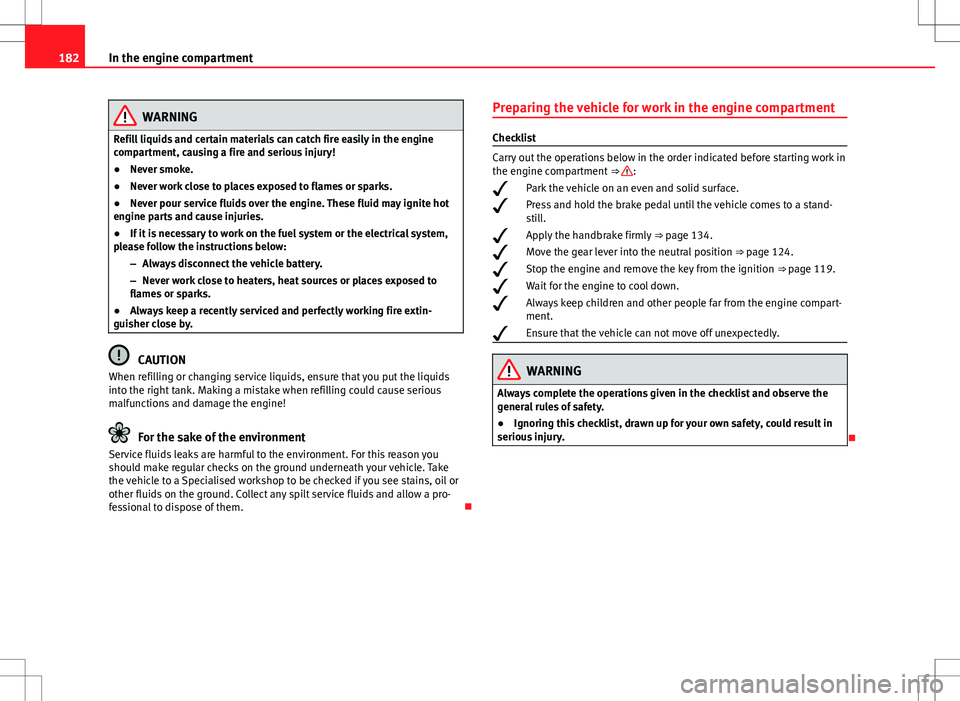
fessional to dispose of them. Preparing the vehicle for work in the engine compartment
Checklist
Carry out the operations below in the order indicated before starting work in
the engine compartment
⇒
:
¥ Park the vehicle on an even and solid surface.
¥ Press and hold the brake pedal until the vehicle comes to a stand-
still.
¥ Apply the handbrake firmly
⇒ page 134.
¥ Move the gear lever into the neutral position
⇒ page 124.
¥ Stop the engine and remove the key from the ignition
⇒ page 119.
¥ Wait for the engine to cool down.
¥ Always keep children and other people far from the engine compart-
ment.
¥ Ensure that the vehicle can not move off unexpectedly.
WARNING
Always complete the operations given in the checklist and observe the
general rules of safety.
● Ignoring this checklist, drawn up for your own safety, could result in
serious injury.
Page 240 of 308

238Practical information
If and when
Practical information
Frequently asked questions
If you suspect that the vehicle has a fault or is damaged when using it, be-
fore consulting a SEAT dealership or a specialised workshop, carefully read
the following instructions. Similarly, the terms in the alphabetical index
“Things to note” or “Checklist” may be of help.
ProblemPossible causes,
among othersPossible solution
The engine does
not start.
The vehicle battery is
flat.– Carry out the jump start
⇒ page 273.
– Charge the battery
⇒ page 193.
You are using an incor-
rect vehicle key.Use the correct key
⇒ page 28.
The fuel tank level is
insufficient.Refuel ⇒ page 171.
The vehicle cannot
be locked or un-
locked with the
key.
– Vehicle key battery is
flat.
– Too far away from
the vehicle.
– Buttons pressed out-
side the radius of
reach.– Change the battery
⇒ page 28.
– Move closer to the vehicle.
– Synchronize the vehicle
key ⇒ page 28.
– Manually lock or unlock
the vehicle ⇒ page 243.
Unusual noises.
Engine cold, City Safe-
ty Assist system, steer-
ing column electronic
lock.See entry “Noises” in the de-
tailed alphabetical index.
ProblemPossible causes,
among othersPossible solution
Handling is
strange.
Assistance systems ac-
tive.See entry “Assistance sys-
tems” in the detailed alpha-
betical index.
You are using an incor-
rect tyre pressure.Check the tyre pressure
⇒ page 210.
Damage to the wheel
trims or tyres.
Inspect wheel trims and
tyres regularly for damage
⇒ page 210 and replace
them if necessary
⇒ page 250.
Vehicle has no
jack, spare wheel
or tire mobility set
present.Equipment subject to
the vehicle.
No direct solution, depends
on the equipment. In this
case, you should contact a
SEAT Dealership
⇒ page 246.
Surface not correct-
ly illuminated.
– Headlights covered
for driving on the left-
hand side or right-
hand side.
– Headlight adjust-
ment too high.
– Faulty bulbs.
– Dipped headlights
switched off.– Cover the headlights for
driving on the left-hand side
or right-hand side
⇒ page 84.
– Adjust the headlight range
⇒ page 84.
– Change the bulbs
⇒ page 264.
– Switch on the dipped
headlights ⇒ page 84.
Page 243 of 308

241
Practical information
Checklist (Continued) 7. When leaving the vehicle, take all keys with you.
8. Place an emergency warning triangle to indicate the position of your vehicle to other road users.
9. Allow the engine to cool and check if a specialist is required.
When being towed with the hazard warning lights system on, a change in
direction or traffic lane can be indicated as usual using the turn signals lev-
er. The hazard lights will be interrupted temporarily.
Examples of when to use the hazard warning lights system:
● If the vehicles ahead suddenly slow down or reach the end of a traffic
jam, to warn the vehicles behind.
● In case of an emergency.
● If the vehicle breaks down.
● When tow-starting or towing.
Always comply with the applicable laws regarding the use of hazard warn-
ing lights.
If the hazard warning lights system is not working, you must use an alterna-
tive method of drawing attention to your vehicle. This method must comply
with traffic legislation.
WARNING
Failure to follow the checklist prepared for your own safety could lead to
accidents and severe injuries.
● Always complete the operations given in the checklist and observe
the general rules of safety.
WARNING
The components of the exhaust system reach very high temperatures.
This could cause a fire and considerable damage.
● Always park your vehicle so that no part of the exhaust system can
come in contact with flammable materials (such as dried grass or fuel).
Note
The vehicle battery will discharge and run down if the hazard warning lights
remain on for too much time (even with the ignition turned off).
Note
For some vehicles, the brake lights will blink when braking suddenly at
speeds of approximately 80 km/h (50 mph) to warn vehicles behind. If brak-
ing continues, then the hazard warning lights system will automatically be
turned on at the speed of less than approximately 10 km/h (6 mph). The
brake lights remain lit. Upon accelerating, the hazard warning lights system
will be automatically turned off.
Vehicle diagramPrior to a journey...While drivingCare, cleaning and mainte-
nanceIf and whenTechnical Data
Page 278 of 308
276Practical information
Towing and tow starting
Introduction
When towing or tow starting, respect the legal requirements.
For technical reasons, it is not possible to tow a vehicle if the battery is flat.
Additional information and warnings:
● Exterior detail ⇒ page 6
● Electronic power control and exhaust gases purification system
⇒ page 236
WARNING
A vehicle with a flat battery should never be towed.
● Never remove the key from the ignition lock. Otherwise, the steering
wheel lock could suddenly lock. Then the vehicle will be uncontrollable.
You may lose control of the vehicle and there is a risk of serious accident.
WARNING
When towing the vehicle, the handling and braking efficiency change
considerably. Please observe the following instructions to minimise the
risk of serious accidents and injury:
● As the driver of the vehicle being towed:
– The brake must be depressed must harder as the brake servo does
not operate. Always remain aware to avoid collision with the towing
vehicle.
– More strength is required at the steering wheel as the power steer-
ing does not operate when the engine is switched off.
● As the driver of the towing vehicle:
– Accelerate gently and carefully.
– Avoid sudden braking and manoeuvres.
– Brake well in advance than usual and brake gently.
CAUTION
● Carefully fit and remove the towing ring and its cover to avoid damage to
the vehicle (for example, paintwork).
● When towing, fuel could enter the catalytic converter and cause dam-
age!
Note
Fitting a towline anchorage to the rear bumper is not possible. The vehicle is
not suitable for towing other vehicles.
Page 294 of 308

malfunction . . . . . . . . . . . . . . . . . . . . . . . . 132
starting on a slope . . . . . . . . . . . . . . . . . . . 131
stopping on a slope . . . . . . . . . . . . . . . . . . 131
Axle loads . . . . . . . . . . . . . . . . . . . . . . . . . . . . . 281
B
BAS see Brake assist systems . . . . . . . . . . . . . . 140
Battery Change in the vehicle key . . . . . . . . . . . . . . 31
discharge . . . . . . . . . . . . . . . . . . . . . . . . . . . 33
Discharging . . . . . . . . . . . . . . . . . . . . . . . . 241
See Vehicle battery . . . . . . . . . . . . . . . . . . 193
Battery acid . . . . . . . . . . . . . . . . . . . . . . . . . . . . 195
Before consulting a specialised workshop . . . 238
Belt tension device . . . . . . . . . . . . . . . . . . . . . . . 65 Disposal . . . . . . . . . . . . . . . . . . . . . . . . . . . . 65
Service and disposal . . . . . . . . . . . . . . . . . . 65
Belt tension limiter . . . . . . . . . . . . . . . . . . . . . . . 65
Bench . . . . . . . . . . . . . . . . . . . . . . . . . . . . . . . . 101
Bonnet Closing . . . . . . . . . . . . . . . . . . . . . . . . . . . . 183
Opening . . . . . . . . . . . . . . . . . . . . . . . . . . . 183
Bottle capacity Windscreen washer water bottle . . . . . . . . . 94
Brake . . . . . . . . . . . . . . . . . . . . . . . . . . . . . . . . . 134 Brake servo . . . . . . . . . . . . . . . . . . . . . . . . . 138
Brake assist system (BAS) . . . . . . . . . . . . . . . . 140
Brake fluid . . . . . . . . . . . . . . . . . . . . . . . . . . . . 141 Specification . . . . . . . . . . . . . . . . . . . . . . . . 141 Brakes
Assisted braking systems . . . . . . . . . . . . . 139
Brake fluid . . . . . . . . . . . . . . . . . . . . . . . . . 141
Brake fluid level . . . . . . . . . . . . . . . . . . . . . 142
Brake pads . . . . . . . . . . . . . . . . . . . . . . . . . 137
Changing the brake fluid . . . . . . . . . . . . . . 142
Control lamp . . . . . . . . . . . . . . . . . . . . . . . . 135
Emergency brake indicator in case of sud-den braking . . . . . . . . . . . . . . . . . . . . . . . 241
Handbrake . . . . . . . . . . . . . . . . . . . . . . . . . 136
Running-in brake pads . . . . . . . . . . . . . . . . 137
Warning lamp . . . . . . . . . . . . . . . . . . . . . . . 135
Brake servo . . . . . . . . . . . . . . . . . . . . . . . . 138, 139
Brake system Malfunction . . . . . . . . . . . . . . . . . . . . . . . . 138
Brake systems . . . . . . . . . . . . . . . . . . . . . . . . . 139
Breakdown Securing the vehicle . . . . . . . . . . . . . . . . . 240
Bulb fault See changing bulbs . . . . . . . . . . . . . . . . . . 264
C
Capacities Fuel tank . . . . . . . . . . . . . . . . . . . . . . . . . . . 290
Care See "Care of your vehicle" . . . . . . . . . . . . . 197
Vehicle interior . . . . . . . . . . . . . . . . . . . . . . 205
Care of your vehicle Exterior . . . . . . . . . . . . . . . . . . . . . . . . . . . . 197
Caring for paintwork . . . . . . . . . . . . . . . . . . . . . 202
Carrier system . . . . . . . . . . . . . . . . . . . . . . . . . . 104 Catalytic converter . . . . . . . . . . . . . . . . . . . . . . 237
Control lamp . . . . . . . . . . . . . . . . . . . . . . . . 236
Malfunctions . . . . . . . . . . . . . . . . . . . . . . . . 236
CCS . . . . . . . . . . . . . . . . . . . . . . . . . . . . . . . . . . 152
central locking Deadlock . . . . . . . . . . . . . . . . . . . . . . . . . . . . 37
Central locking . . . . . . . . . . . . . . . . . . . . . . . . . . 33 Central locking button . . . . . . . . . . . . . . . . . 36
locking and unlocking from the exterior . . . 34
locking and unlocking from the inside . . . . 36
Central locking system After airbag deployment . . . . . . . . . . . . . . . 33
Description . . . . . . . . . . . . . . . . . . . . . . . . . . 33
Opening doors individually . . . . . . . . . . . . . 33
Centre console . . . . . . . . . . . . . . . . . . . . . . . 12, 13 Bottom part . . . . . . . . . . . . . . . . . . . . . . . . . . 13
Top part . . . . . . . . . . . . . . . . . . . . . . . . . . . . . 12
Changing Windscreen wiper blades . . . . . . . . . . . . . 201
Changing a wheel . . . . . . . . . . . . . . . . . . . . . . 250 Changing a wheel . . . . . . . . . . . . . . . . . . . 255
Preparations . . . . . . . . . . . . . . . . . . . . . . . . 251
Raising the vehicle . . . . . . . . . . . . . . . . . . . 253
Wheel bolts . . . . . . . . . . . . . . . . . . . . . . . . . 251
Changing bulbs . . . . . . . . . . . . . . . . . . . . . . . . 264 Checklist . . . . . . . . . . . . . . . . . . . . . . . . . . . 265
Front bumper . . . . . . . . . . . . . . . . . . . . . . . 267
Initial operations . . . . . . . . . . . . . . . . . . . . 265
in the headlights . . . . . . . . . . . . . . . . . . . . 266
Number plate light . . . . . . . . . . . . . . . . . . . 270
Rear lights . . . . . . . . . . . . . . . . . . . . . . . . . . 269
Sea changing bulbs . . . . . . . . . . . . . . . . . . 264
292 Index
Page 297 of 308

Driving abroadCheck list . . . . . . . . . . . . . . . . . . . . . . . . . . . 26
Headlights . . . . . . . . . . . . . . . . . . . . . . . . . . 87
Driving advice Spare wheel . . . . . . . . . . . . . . . . . . . . . . . . 217
Temporary spare wheel . . . . . . . . . . . . . . . 217
Driving in winter Fuel consumption . . . . . . . . . . . . . . . . . . . . 146
Snow chains . . . . . . . . . . . . . . . . . . . . . . . . 220
Tread depth . . . . . . . . . . . . . . . . . . . . . . . . . 216
Tyre pressures . . . . . . . . . . . . . . . . . . . . . . . 214
Windscreen washer bottle . . . . . . . . . . . . . 200
Driving through water . . . . . . . . . . . . . . . . . . . . 27
Driving tips Driving a loaded vehicle . . . . . . . . . . . . . . . 97
Dust filter . . . . . . . . . . . . . . . . . . . . . . . . . . . . . 164
E
Ecological driving . . . . . . . . . . . . . . . . . . . . . . . 144
Economic driving . . . . . . . . . . . . . . . . . . . . . . . 144
EDL See "Brake assist systems" . . . . . . . . . . . . 140
Electrical components . . . . . . . . . . . . . . . 117, 241
Electrical consumers . . . . . . . . . . . . . . . . . . . . 118
Electrical power socket . . . . . . . . . . . . . . . . . . 117
Electric windows Buttons . . . . . . . . . . . . . . . . . . . . . . . . . . . . . 43
Closing . . . . . . . . . . . . . . . . . . . . . . . . . . . . . 43
Opening . . . . . . . . . . . . . . . . . . . . . . . . . . . . 43
see Windows . . . . . . . . . . . . . . . . . . . . . . . . 43
Electronic differential lock system (EDL) . . . . 140 Electronic immobilizer . . . . . . . . . . . . . . . . . . . 122
Electronic Stability Control (ESC) . . . . . . . . . . 139
Emergency brake indicator . . . . . . . . . . . . . . . 241
Emergency locking and unlocking . . . . . . . . . 243
Driver door . . . . . . . . . . . . . . . . . . . . . . . . . 243
Passenger door . . . . . . . . . . . . . . . . . . . . . 244
Rear lid . . . . . . . . . . . . . . . . . . . . . . . . . . . . 244
Emission control system Control lamp . . . . . . . . . . . . . . . . . . . . . . . . 236
Engaging gears Automatic gearbox . . . . . . . . . . . . . . . . . . . 129
Manual gearbox . . . . . . . . . . . . . . . . . . . . . 128
Engine Noises . . . . . . . . . . . . . . . . . . . . . . . . . . . . . 122
Running-in . . . . . . . . . . . . . . . . . . . . . . . . . 223
Engine and ignition . . . . . . . . . . . . . . . . . . . . . 119 12 Volt sockets . . . . . . . . . . . . . . . . . . . . . . 117
Ignition lock . . . . . . . . . . . . . . . . . . . . . . . . 120
Immobilizer . . . . . . . . . . . . . . . . . . . . . . . . . 122
Starting the engine . . . . . . . . . . . . . . . . . . 121
Stopping the engine . . . . . . . . . . . . . . . . . 122
Unauthorised vehicle key . . . . . . . . . . . . . 120
Engine compartment . . . . . . . . . . . . . . . . . . . . 180 Engine coolant . . . . . . . . . . . . . . . . . . . . . . 189
Engine oil . . . . . . . . . . . . . . . . . . . . . . . . . . 185
Preparation . . . . . . . . . . . . . . . . . . . . . . . . . 182
Vehicle battery . . . . . . . . . . . . . . . . . . . . . . 193
Water box . . . . . . . . . . . . . . . . . . . . . . . . . . 204
Engine coolant . . . . . . . . . . . . . . . . . . . . . . . . . 189 Checking the level . . . . . . . . . . . . . . . . . . . 191
Filler mouth . . . . . . . . . . . . . . . . . . . . . . . . . 191
G 12 plus-plus . . . . . . . . . . . . . . . . . . . . . . 190
G 13 . . . . . . . . . . . . . . . . . . . . . . . . . . . . . . . 190 Refilling . . . . . . . . . . . . . . . . . . . . . . . . . . . . 191
Specifications . . . . . . . . . . . . . . . . . . . . . . . 190
Temperature gauge . . . . . . . . . . . . . . . . . . 189
Warning lamp . . . . . . . . . . . . . . . . . . . . . . . 189
Engine management . . . . . . . . . . . . . . . . . . . . 236 Control lamp . . . . . . . . . . . . . . . . . . . . . . . . 236
Engine oil . . . . . . . . . . . . . . . . . . . . . . . . . . . . . 185 changing . . . . . . . . . . . . . . . . . . . . . . . . . . . 188
Checking the oil level . . . . . . . . . . . . . . . . . 186
Consumption . . . . . . . . . . . . . . . . . . . . . . . 187
Dipstick . . . . . . . . . . . . . . . . . . . . . . . . . . . . 186
Filler mouth . . . . . . . . . . . . . . . . . . . . . . . . . 186
Indicator . . . . . . . . . . . . . . . . . . . . . . . . . . . 185
Specifications . . . . . . . . . . . . . . . . . . . . . . . 185
Topping up . . . . . . . . . . . . . . . . . . . . . . . . . 186
Errors . . . . . . . . . . . . . . . . . . . . . . . . . . . . . . . . . 238
ESC . . . . . . . . . . . . . . . . . . . . . . . . . . . . . . . . . . 139 see Electronic Stability Control (ESC) . . . . 139
Event Data Recorder . . . . . . . . . . . . . . . . . . . . . 227
Exhaust gas purification system . . . . . . . . . . . 236
Exterior aerial . . . . . . . . . . . . . . . . . . . . . . . . . . 226
Exterior mirrors . . . . . . . . . . . . . . . . . . . . . . . . . . 95 Controlling function . . . . . . . . . . . . . . . . . . . 96
folding . . . . . . . . . . . . . . . . . . . . . . . . . . . . . . 95
Vehicle care . . . . . . . . . . . . . . . . . . . . . . . . 200
Exterior views . . . . . . . . . . . . . . . . . . . . . . . . . . . . 6
F
FAQs . . . . . . . . . . . . . . . . . . . . . . . . . . . . . . . . . 238
Fault Parking distance warning system . . . . . . . 150
295
Index
Page 302 of 308

Checklist . . . . . . . . . . . . . . . . . . . . . . . . . . . . 61
Fastening . . . . . . . . . . . . . . . . . . . . . . . . . . . 62
Seat belt position . . . . . . . . . . . . . . . . . . . . . 63
Seat belt status display . . . . . . . . . . . . . . . . 58
Twisted belt . . . . . . . . . . . . . . . . . . . . . . . . . 62
Unfastened . . . . . . . . . . . . . . . . . . . . . . . . . . 60
Unfastening . . . . . . . . . . . . . . . . . . . . . . . . . 62
Use . . . . . . . . . . . . . . . . . . . . . . . . . . . . . . . . 61
Warning lamp . . . . . . . . . . . . . . . . . . . . . . . . 58
Seat belt warning lamp . . . . . . . . . . . . . . . . . . . 58
Seat functions . . . . . . . . . . . . . . . . . . . . . . . . . . 55
Seat heating . . . . . . . . . . . . . . . . . . . . . . . . . . . . 55
SEAT information system . . . . . . . . . . . . . . . . . . 22
Seats . . . . . . . . . . . . . . . . . . . . . . . . . . . . . . . . . . 48 Adjusting the steering wheel position . . . . 53
Adjust the rear head restraints . . . . . . . . . . 52
Correct position . . . . . . . . . . . . . . . . . . . . . . 50
Fitting the rear head restraints . . . . . . . . . . 53
Front seat . . . . . . . . . . . . . . . . . . . . . . . . . . . 51
Heated seats . . . . . . . . . . . . . . . . . . . . . . . . . 55
Number of seats . . . . . . . . . . . . . . . . . . . . . . 48
Rear backrest . . . . . . . . . . . . . . . . . . . . . . . 101
Removing and fitting rear head restraints . 53
Service interval display . . . . . . . . . . . . . . . . . . . 21
Set Air conditioner . . . . . . . . . . . . . . . . . . . . . . 167
Side airbags See "Airbag system" . . . . . . . . . . . . . . . . . . 75
Side lights . . . . . . . . . . . . . . . . . . . . . . . . . . . . . . 86
Sitting position Incorrect position . . . . . . . . . . . . . . . . . . . . . 49 Sliding/tilting electric panoramic sunroof . . . . 44
Anti-trap function . . . . . . . . . . . . . . . . . . . . . 46
Close . . . . . . . . . . . . . . . . . . . . . . . . . . . . . . . 45
Open . . . . . . . . . . . . . . . . . . . . . . . . . . . . . . . 45
Small window . . . . . . . . . . . . . . . . . . . . . . . . . . . 90
Snow chains . . . . . . . . . . . . . . . . . . . . . . . . . . . 220 Temporary spare wheel . . . . . . . . . . . . . . . 221
Socket 12 Volts . . . . . . . . . . . . . . . . . . . . . . . . . . . . 118
Spare fuel canister . . . . . . . . . . . . . . . . . . . . . . 171
Spare key see vehicle key . . . . . . . . . . . . . . . . . . . . 29, 30
Spare parts . . . . . . . . . . . . . . . . . . . . . . . . . . . . 223
Spare wheel . . . . . . . . . . . . . . . . . . . . . . . . . . . 217 Driving advice . . . . . . . . . . . . . . . . . . . . . . . 217
removing . . . . . . . . . . . . . . . . . . . . . . . . . . . 217
Special features Automatic car wash . . . . . . . . . . . . . . . . . . 199
High pressure cleaning equipment . . . . . . 199
Parking . . . . . . . . . . . . . . . . . . . 134, 137, 290
Pushing . . . . . . . . . . . . . . . . . . . . . . . . . . . . 119
Radio reception . . . . . . . . . . . . . . . . . . . . . 234
Removing the vehicle key . . . . . . . . . . . . . 121
Towing . . . . . . . . . . . . . . . . . . . . . . . . . . . . . 119
Washing the vehicle . . . . . . . . . . . . . . . . . . 198
Windscreen wipers . . . . . . . . . . . . . . . . . . . . 92
Special notes Long parking times . . . . . . . . . . . . . . . . . . . 33
Towing . . . . . . . . . . . . . . . . . . . . . . . . . 276, 277
Tow starting . . . . . . . . . . . . . . . . . . . . . . . . 277
Speed rating . . . . . . . . . . . . . . . . . . . . . . . . . . . 220
Start-Stop . . . . . . . . . . . . . . . . . . . . . . . . . . . . . 161 Start-Stop system . . . . . . . . . . . . . . . . . . . . . . . 161
Starting assistance . . . . . . . . . . . . . . . . . . . . . 273
Description . . . . . . . . . . . . . . . . . . . . . . . . . 274
Jump leads . . . . . . . . . . . . . . . . . . . . . . . . . 274
Starting using an external battery See starting assistance . . . . . . . . . . . . . . . 273
Steering . . . . . . . . . . . . . . . . . . . . . . . . . . . . . . 147 Control lamp . . . . . . . . . . . . . . . . . . . . . . . . 147
Electromechanical . . . . . . . . . . . . . . . . . . . 148
Power steering . . . . . . . . . . . . . . . . . . . . . . 148
Steering column lock . . . . . . . . . . . . . . . . . 148
Tendency to pull to one side . . . . . . . . . . . 216
Warning lamp . . . . . . . . . . . . . . . . . . . . . . . 147
Steering wheel Adjustment . . . . . . . . . . . . . . . . . . . . . . . . . . 53
Storage compartment Centre console . . . . . . . . . . . . . . . . . . . . . . 111
Driver side . . . . . . . . . . . . . . . . . . . . . . . . . . 109
Storage compartments . . . . . . . . . . . . . . . . . . 108
Sudden braking . . . . . . . . . . . . . . . . . . . . . . . . 241
Sun blind . . . . . . . . . . . . . . . . . . . . . . . . . . . . . . 89
Sunglasses storage compartment . . . . . . . . . 110
Sun visor . . . . . . . . . . . . . . . . . . . . . . . . . . . . . . . 89
Symbols see warning lamp . . . . . . . . . . . . . . . . . . . . . 15
Systems ABS . . . . . . . . . . . . . . . . . . . . . . . . . . . . . . . 140
Anti-lock brake system (ABS) . . . . . . . . . . 140
ASR . . . . . . . . . . . . . . . . . . . . . . . . . . . . . . . 140
BAS . . . . . . . . . . . . . . . . . . . . . . . . . . . . . . . 140
Brake assist system (BAS) . . . . . . . . . . . . . 140
Cruise control system (CCS) . . . . . . . . . . . . 152
300 Index