child restraint Seat Mii 2014 User Guide
[x] Cancel search | Manufacturer: SEAT, Model Year: 2014, Model line: Mii, Model: Seat Mii 2014Pages: 219, PDF Size: 4.19 MB
Page 31 of 219
Transporting children safely
yellow
››› page 17 con-
trol lamp on the dash panel will be lit. If you
cannot disable the front passenger front air-
bag and it remains activated, it is forbidden
to transport children on the front passenger
seat
››› .
Things to note if using a child seat on the
front passenger seat:
● The front passenger front airbag must be
disabled
when using a rear-facing child
se
at ››› page 17.
● The seat
backrest of the front passenger
seat must be upright.
● The front passenger seat must be moved as
far back as possible.
● The seat backrest of the front passenger
seat must be upright.
Suitable child seats
The child seat must be authorised by the
manufacturer especially for use on a front
passenger seat with a front or side airbag.
Universal seats for children can be fitted in
the front passenger seat, in groups 0, 0+, 1,
2 or 3 according to the ECE-R 44 regulation. WARNING
If a child seat is mounted on the front passen-
ger seat, the risk of the child sustaining se-
vere or fatal injuries in the event of an acci- dent increases. Rear-facing child seats must
never be mounted on the front passenger
seat when the front passenger front airbag is
enabled. This is life-threatening to the child
should the front airbag deploy, as the child
seat would be struck by the inflated airbag
and thrown against the seat backrest.
WARNING
If, in exceptional circumstances, a child must
be transported in a rear-facing child seat on
the front passenger seat, strictly observe the
following:
● Always disable the front passenger front
airbag and leave it disabled.
● The child seat must be approved by the
manufacturer for use on a front passenger
seat with front and side airbag.
● Follow the installation instructions of the
child seat manufacturer and observe the
warnings.
● Move the front passenger seat as far back
as possible and adjust it to its highest posi-
tion to keep as far away as possible from the
front airbag.
● Move the seat backrest to the upright posi-
tion.
● Children must always be protected with an
approved child restraint system suited to
their height and weight. Use of the child seat on the rear seat
If a child seat is mounted on the rear seat,
adapt the position of the front passenger
seat so that the child has enough space.
Therefore, adapt the front passenger seat to
the size of the child seat and the height of
the child. Ensure the passenger is in the cor-
rect position
››› page 6.
Suitable child seats
The manufacturer must authorise the child
seat for use in the rear seats with side air-
bags.
Universal seats for children can be fitted in
the passenger seat, in groups 0, 0+, 1, 2 or 3
according to the ECE-R 44 regulation.
The rear seats are suitable for child seats
with the ISOFIX system spec
ially designed
for this type of vehicle in accordance with
regulation ECE-R 44.
ISOFIX child seats approved for rear seats
ISOFIX child seats are divided into the follow-
ing certified categories: “universal”, “semi-
universal” or “specific categories for the ve-
hicle”.
● If the ISOFIX child seat is certified “univer-
sal”, it must be supported by the lower an-
chor points and the Top Tether retaining
strap. »
29
Technical specifications
Advice
Operation
Safety
Page 34 of 219
Safety
be used. Using auxiliary introduction ele-
ments facilitates installation and protects up-
holstery. Auxiliary introduction elements
form part of the supply volume of the child
seat or can be acquired at a SEAT dealership.
If necessary, auxiliary introduction elements
are inserted in both anchor points of the ve-
hicle ››› .
● Observe the manufacturer's instructions
when installing and removing the child seat
››› .
● Press the child seat onto the retaining rings
››› Fig. 21 in the direction of the arrow. The
c hi
ld seat must be safely engaged and click
audibly into place.
● Pull on both sides of the child seat to en-
sure that it is secure.
Child seat with adjustable retaining straps
● Observe the manufacturer's instructions
when installing and removing the child seat
››› .
● Place the child seat on the seat cushion
and attach the retaining strap hooks to the
retaining rings ››› Fig. 21 .
● Tight en the s
traps evenly using the corre-
sponding adjustment device. The child seat
must sit flush against the vehicle seat.
● Pull on both sides of the child seat to en-
sure that it is secure. WARNING
The lower anchor points for child seats do not
include rings. Only secure booster seats to
lower anchor points. CAUTION
● To avoid making permanent marks in the
padding, remove the auxiliary introduction
elements from the anchor points when the
child seat is not installed in the vehicle an-
chor points.
● To prevent damage being done to the up-
holstery, the padding or the auxiliary intro-
duction elements, always remove the auxili-
ary introduction elements from the anchor
points before folding the rear seat bench. Securing a child seat using a Top
Tether retaining strap
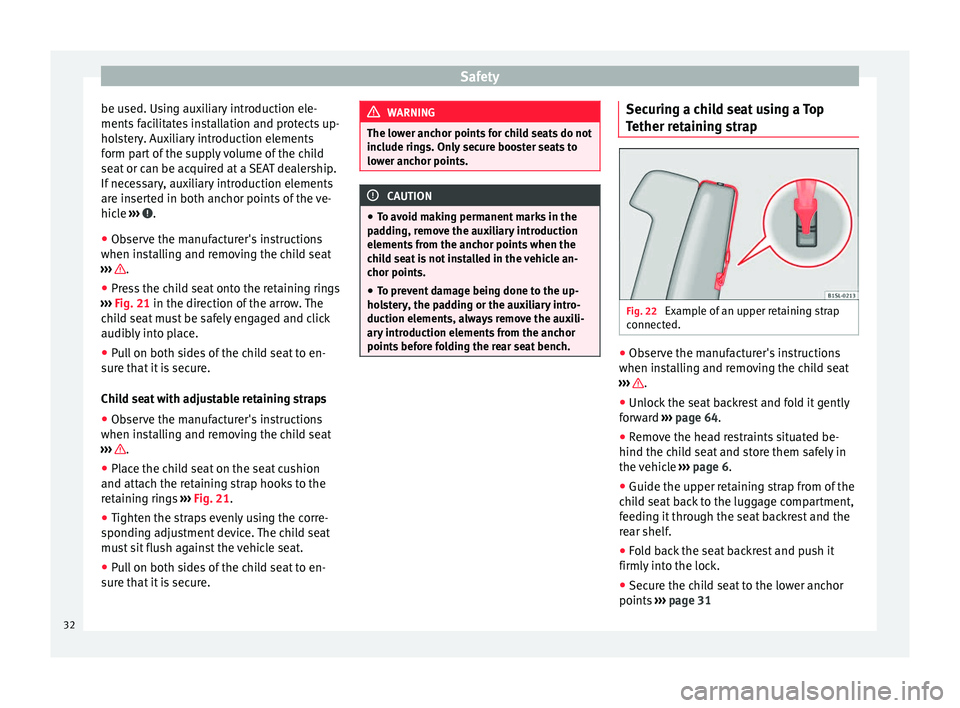
Fig. 22
Example of an upper retaining strap
connected. ●
Observe the manufacturer's instructions
when installing and removing the child seat
››› .
● Unlock the seat backrest and fold it gently
forward ››› page 64 .
● Remo
ve the head restraints situated be-
hind the child seat and store them safely in
the vehicle ››› page 6.
● Guide the upper r
etaining strap from of the
child seat back to the luggage compartment,
feeding it through the seat backrest and the
rear shelf.
● Fold back the seat backrest and push it
firmly into the lock.
● Secure the child seat to the lower anchor
points ››› page 31
32
Page 76 of 219
Operation
struck by a detonating airbag and fired
through the vehicle interior. To reduce the
risks, please note the following:
●
Secure all objects in the vehicle. Always
place equipment and heavy objects in the
boot.
● Always secure objects to the fastening
rings with suitable rope or straps to prevent
them from being thrown around the interior
and moving to the airbag deployment area in
the event of sudden movements or accidents.
● While driving, always keep object compart-
ments closed.
● Do not place hard, heavy or sharp objects
inside the vehicle interior, in open storage
compartments, the rear shelf or on the dash
panel.
● Remove hard, heavy and sharp objects from
clothes and pockets inside the vehicle and
store securely. WARNING
The transport of heavy object changes vehi-
cle handling and increases braking distance.
Heavy loads that have not been stored or se-
cured correctly could cause loss of control
and result in serious injury.
● Vehicle handling changes when transport-
ing heavy objects due to a change in the cen-
tre of gravity.
● Distribute the load as uniformly and as low
down on the vehicle as possible. ●
Store heavy objects in the luggage com-
partment as far from the rear axle as possi-
ble. CAUTION
Hard objects on the rear shelf could chafe
against the wires of the heating element in
the heated rear window and cause damage. Note
The ventilating slits between the heated rear
window and the rear shelf must not be cov-
ered so that used air can escape from the ve-
hicle. Folding and lifting up the rear seat
bench backrest
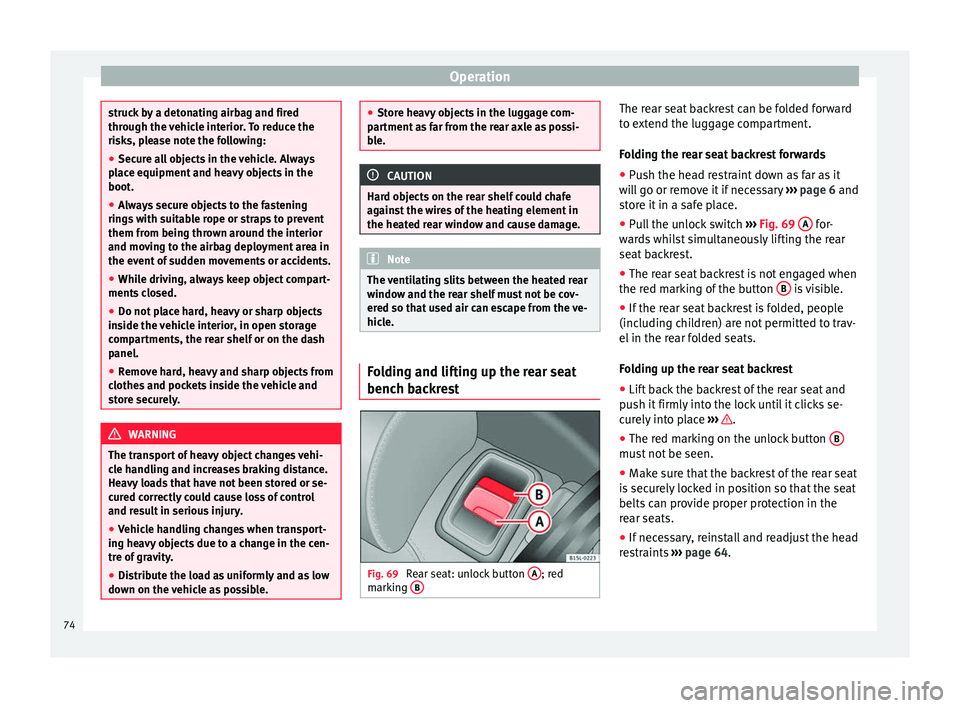
Fig. 69
Rear seat: unlock button A ; red
marking B The rear seat backrest can be folded forward
to extend the luggage compartment.
Folding the rear seat backrest forwards
●
Push the head restraint down as far as it
will go or remove it if necessary ››› page 6 and
store it in a safe place.
● Pull the unlock switch ››› Fig. 69 A for-
wards whilst simultaneously lifting the rear
seat backrest.
● The rear seat backrest is not engaged when
the red marking of the button B is visible.
● If the rear seat backrest is folded, people
(including children) are not permitted to trav-
el in the rear folded seats.
Folding up the rear seat backrest
● Lift back the backrest of the rear seat and
push it firmly into the lock until it clicks se-
curely into place ››› .
● The red marking on the unlock button B must not be seen.
●
Make sure that the backrest of the rear seat
is securely locked in position so that the seat
belts can provide proper protection in the
rear seats.
● If necessary, reinstall and readjust the head
restraints ›››
page 64 .
74
Page 207 of 219

Index
Index
A
Abroad Extended stay abroad with your vehicle . . . . . 135
Sale of vehicle . . . . . . . . . . . . . . . . . . . . . . . . . 135
ABS See "Brake assist systems" . . . . . . . . . . . . . . . 104
Accessories . . . . . . . . . . . . . . . . . . . . . . . . . . . . . . 118
Additional equipment . . . . . . . . . . . . . . . . . . . . . 119
Adjust Headlight range . . . . . . . . . . . . . . . . . . . . . . . . . 58
Adjustment Correct sitting position . . . . . . . . . . . . . . . . . . . . . 6
Front seat . . . . . . . . . . . . . . . . . . . . . . . . . . . . . . 63
rear head restraints . . . . . . . . . . . . . . . . . . . . . . . 9
Steering wheel . . . . . . . . . . . . . . . . . . . . . . . . . . . 7
Aerial . . . . . . . . . . . . . . . . . . . . . . . . . . . . . . . . . . . 135
Airbags description . . . . . . . . . . . . . . . . . . . . . . . . . . . . . 19
Airbag system . . . . . . . . . . . . . . . . . . . . . . . . . . 17, 21 activation . . . . . . . . . . . . . . . . . . . . . . . . . . . . . . 20
Cleaning dash panel . . . . . . . . . . . . . . . . . . . . 133
Control lamp . . . . . . . . . . . . . . . . . . . . . . . . . . . . 23
Deactivating the front passenger front airbag . 24
Deactivating using the key switch . . . . . . . . . . . 24
Differences between front passenger front air-bag systems . . . . . . . . . . . . . . . . . . . . . . . . . . 22
Faults . . . . . . . . . . . . . . . . . . . . . . . . . . . . . . . . . 120
Front airbags . . . . . . . . . . . . . . . . . . . . . . . . . . . . 21
functioning . . . . . . . . . . . . . . . . . . . . . . . . . . . . . 20
Locking the vehicle after airbag deployment . . 46
Repairs . . . . . . . . . . . . . . . . . . . . . . . . . . . . . . . 120
Side airbags . . . . . . . . . . . . . . . . . . . . . . . . . . . . 22
Use of child seats . . . . . . . . . . . . . . . . . . . . . . . . 24
Vehicle care . . . . . . . . . . . . . . . . . . . . . . . . . . . . 133 Air conditioner
Air recirculation . . . . . . . . . . . . . . . . . . . . . . . . . 84
Air vents . . . . . . . . . . . . . . . . . . . . . . . . . . . . . . . 83
Faults . . . . . . . . . . . . . . . . . . . . . . . . . . . . . . . . . . 83
set . . . . . . . . . . . . . . . . . . . . . . . . . . . . . . . . . . . . 82
Things to note . . . . . . . . . . . . . . . . . . . . . . . . . . . 83
User instructions . . . . . . . . . . . . . . . . . . . . . . . . 82
Air conditioning system . . . . . . . . . . . . . . . . . . . . . 80 Controls . . . . . . . . . . . . . . . . . . . . . . . . . . . . . . . . 81
Air recirculation . . . . . . . . . . . . . . . . . . . . . . . . . . . 84 How it works . . . . . . . . . . . . . . . . . . . . . . . . . . . . 84
switch off . . . . . . . . . . . . . . . . . . . . . . . . . . . . . . . 84
temporarily switch off . . . . . . . . . . . . . . . . . . . . . 84
Air vents . . . . . . . . . . . . . . . . . . . . . . . . . . . . . . . . . 83
Alternator . . . . . . . . . . . . . . . . . . . . . . . . . . . . . . . 155
Aluminium care . . . . . . . . . . . . . . . . . . . . . . . . . . 129
Anodized surfaces . . . . . . . . . . . . . . . . . . . . . . . . 129
Anti-lock brake system (ABS) . . . . . . . . . . . . . . . 104
Anti-theft bolts . . . . . . . . . . . . . . . . . . . . . . . . . . . 173
Anti-theft locking bolts . . . . . . . . . . . . . . . . . . . . 174
Anti-theft wheel locking bolts . . . . . . . . . . . . . . . 175
Antifreeze . . . . . . . . . . . . . . . . . . . . . . . . . . . . . . . 150
Ashtray . . . . . . . . . . . . . . . . . . . . . . . . . . . . . . . . . . 71
Aspects to take into account before starting the vehicle . . . . . . . . . . . . . . . . . . . . . . . . . . . . . . . . . . 5
ASR see Brake assist systems . . . . . . . . . . . . . . . . . 104
Assistance systems Brake assist system (BAS) . . . . . . . . . . . . . . . . 104
Cruise control system (CCS) . . . . . . . . . . . . . . . 107
Electronic differential lock system (EDL) . . . . . 104
Electronic stability control (ESC) . . . . . . . . . . . 103
Optical parking system (OPS) . . . . . . . . . . . . . 107
Parking aid . . . . . . . . . . . . . . . . . . . . . . . . . . . . 106
Parking distance warning system . . . . . . . . . . 106
Safety Assist (City Safety Assist function) . . . . 110
Start-Stop . . . . . . . . . . . . . . . . . . . . . . . . . . . . . 115 Traction control system (ASR) . . . . . . . . . . . . . 104
Traction Control (TC) . . . . . . . . . . . . . . . . . . . . . 104
Assist systems Anti-lock brake system (ABS) . . . . . . . . . . . . . . 104
Audible warnings Control and warning lamps . . . . . . . . . . . . . . . . 39
Lights . . . . . . . . . . . . . . . . . . . . . . . . . . . . . . . . . 56
Seat belt not fastened . . . . . . . . . . . . . . . . . . . . 12
Speed . . . . . . . . . . . . . . . . . . . . . . . . . . . . . . . . . 42
Automatic belt retainer . . . . . . . . . . . . . . . . . . . . . 16
Automatic car wash . . . . . . . . . . . . . . . . . . . . . . . 126
Automatic device disconnection . . . . . . . . . . . . . 157
automatic gearbox . . . . . . . . . . . . . . . . . . . . . . . . . 93
Automatic gearbox . . . . . . . . . . . . . . . . . . . . . . . . . 95 driving . . . . . . . . . . . . . . . . . . . . . . . . . . . . . . . . . 96
Ignition key removal lock . . . . . . . . . . . . . . . . . . 87
Kickdown . . . . . . . . . . . . . . . . . . . . . . . . . . . . . . . 96
malfunction . . . . . . . . . . . . . . . . . . . . . . . . . . . . . 97
starting on a slope . . . . . . . . . . . . . . . . . . . . . . . 97
stopping on a slope . . . . . . . . . . . . . . . . . . . . . . 97
Axle loads . . . . . . . . . . . . . . . . . . . . . . . . . . . . . . . 198
B BAS see Brake assist systems . . . . . . . . . . . . . . . . . 104
Battery Change in the vehicle key . . . . . . . . . . . . . . . . . 44
Discharging . . . . . . . . . . . . . . . . . . . . . . . . . . . . 172
drains . . . . . . . . . . . . . . . . . . . . . . . . . . . . . . . . . 45
See Vehicle battery . . . . . . . . . . . . . . . . . . . . . . 154
Battery acid . . . . . . . . . . . . . . . . . . . . . . . . . . . . . . 156
Before starting the vehicle . . . . . . . . . . . . . . . . . . . 5
Belt tensioner . . . . . . . . . . . . . . . . . . . . . . . . . . . . . 16 Disposal . . . . . . . . . . . . . . . . . . . . . . . . . . . . . . . 17
Service and disposal . . . . . . . . . . . . . . . . . . . . . 17
Belt tension limiter . . . . . . . . . . . . . . . . . . . . . . . . . 16
Bench . . . . . . . . . . . . . . . . . . . . . . . . . . . . . . . . . . . 74
205