ABS Seat Toledo 2013 User Guide
[x] Cancel search | Manufacturer: SEAT, Model Year: 2013, Model line: Toledo, Model: Seat Toledo 2013Pages: 258, PDF Size: 3.94 MB
Page 192 of 258
190Checking and refilling levels
WARNING
If the fluid level has dropped below the MIN mark, do not drive on.
Risk of accident! Seek professional help.
Changing the brake fluid
Brake fluid absorbs moisture. Therefore, it gradually absorbs moisture from
the atmosphere. If the water content in the brake fluid is too high, the brake
system could corrode. The water content also reduces the boiling point of
the brake fluid.
The brake fluid must comply with one of the following standards or specifi-
cations:
● VW 50114
● FMVSS 116 DOT4
WARNING
Heavy use of the brakes may cause a vapour lock if the brake fluid is left
in the brake system for too long. This would seriously affect the efficien-
cy of the brakes and the safety of the vehicle.
CAUTION
Brake fluid damages the vehicle paintwork. Windscreen washer
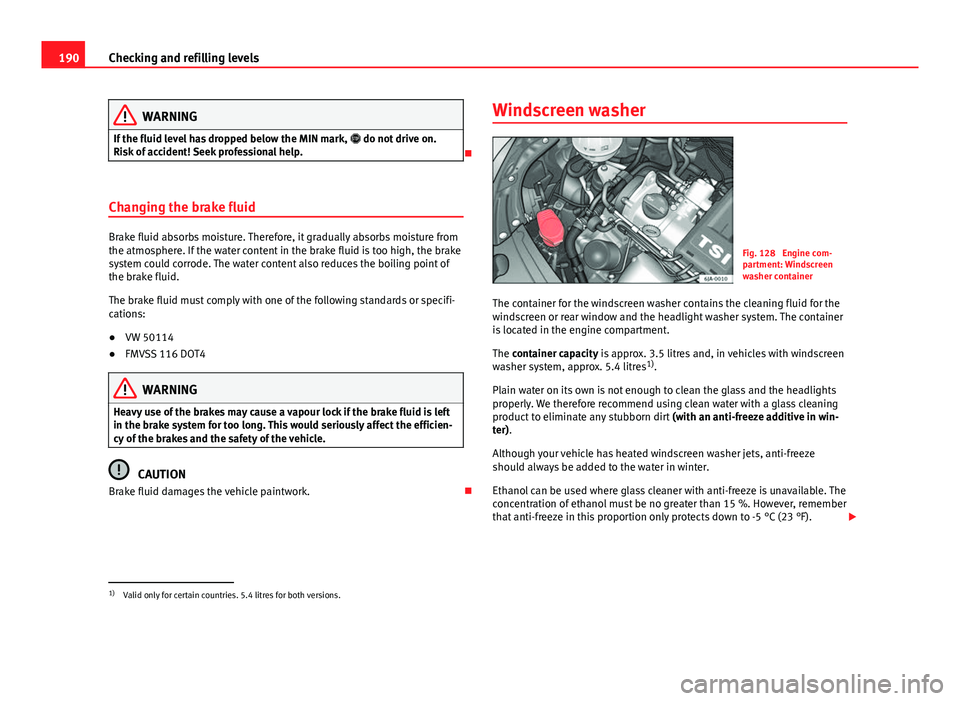
Fig. 128 Engine com-
partment: Windscreen
washer container
The container for the windscreen washer contains the cleaning fluid for the
windscreen or rear window and the headlight washer system. The container
is located in the engine compartment.
The container capacity is approx. 3.5 litres and, in vehicles with windscreen
washer system, approx. 5.4 litres 1)
.
Plain water on its own is not enough to clean the glass and the headlights
properly. We therefore recommend using clean water with a glass cleaning
product to eliminate any stubborn dirt (with an anti-freeze additive in win-
ter).
Although your vehicle has heated windscreen washer jets, anti-freeze
should always be added to the water in winter.
Ethanol can be used where glass cleaner with anti-freeze is unavailable. The
concentration of ethanol must be no greater than 15 %. However, remember
that anti-freeze in this proportion only protects down to -5 °C (23 °F).
1)
Valid only for certain countries. 5.4 litres for both versions.
Page 203 of 258

201
Wheels and tyres
Removing
– Insert the plastic clip into the cap until the inner retaining
notches on the clips touch the collar of the cap and then re-
move ⇒ Fig. 134.
Fitting
– Insert the caps as far as they will go over the wheel bolts.
The wheel bolt caps are stored in a box on the spare wheel or in the spare
wheel well.
Tyre pressure *
Fig. 135 Tyre pressure
setting switch
The tyre pressure monitoring system uses ABS sensors to compare the revo-
lutions and the circumference of each wheel. Should the circumference of
any wheel change, the warning lamp in the general instrument panel
⇒ page 76 will light up and an audible warning will be heard.
Tyre circumference may change if:
● Tyre pressure is too low
● Tyre structure is damaged ●
Vehicle load not evenly distributed
● Wheels on one axle are subjected to greater load, (e.g. driving with trail-
er, uphill, downhill)
● Snow chains are fitted
● The temporary spare wheel is fitted
● One wheel on the axle has been changed
Basic system settings
Should the tyre pressure change or if one or more wheels are changed or
the position of the wheel on the vehicle is changed, e.g. changing round the
front and rear wheels, or where a warning lamp lights up when driving, the
system must be adjusted as follows:
● Inflate all tyres to the prescribed pressures ⇒ page 197.
● Switch the ignition on.
● Hold the
⇒ Fig. 135 button down for at least 2 seconds. The warn-
ing lamp will light up when the button is pressed. The system memory is
also deleted and a new calibration system will begin, which is indicated by
an audible warning before the warning lamp switches off .
● If the warning lamp remains lit and does not switch off, not even once
the basic setting process is complete, this indicates a fault in the system.
Contact an Official Service.
The warning lamp lights up
If the pressure on at least one tyre is significantly lower than the pressure
set by the driver, the warning lamp ⇒
will light up.
The warning lamp flashes
If the warning lamp flashes, there is a fault in the system. Contact a special-
ised service to have it fixed.
Safety FirstOperating instructionsPractical TipsTechnical specifications
Page 222 of 258
220Fuses and bulbs
Fuses in the dash panel
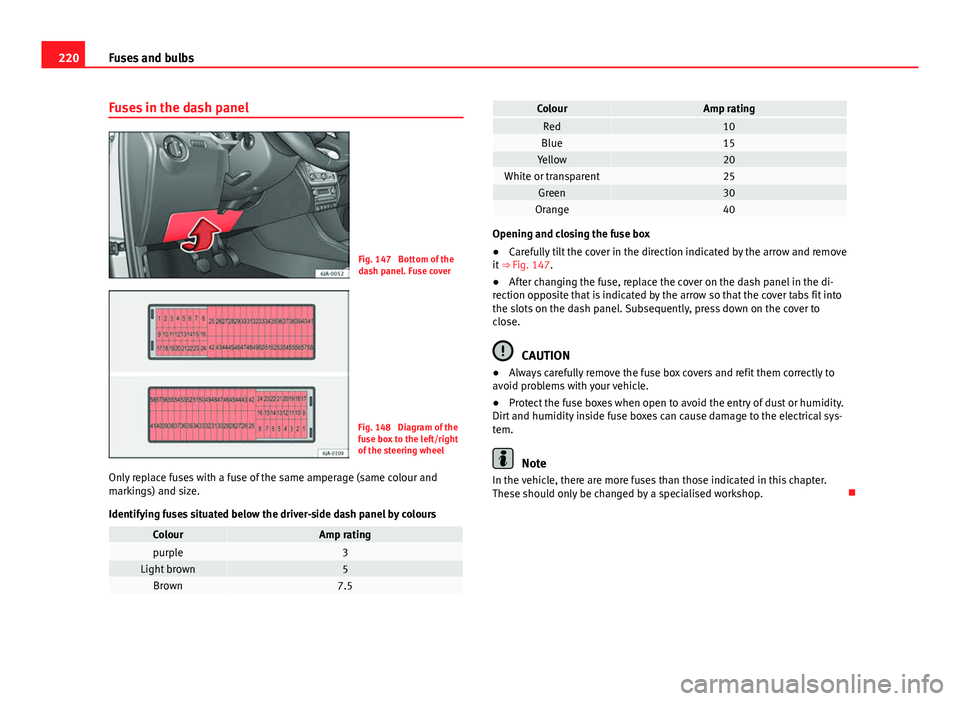
Fig. 147 Bottom of the
dash panel. Fuse cover
Fig. 148 Diagram of the
fuse box to the left/right
of the steering wheel
Only replace fuses with a fuse of the same amperage (same colour and
markings) and size.
Identifying fuses situated below the driver-side dash panel by colours
ColourAmp ratingpurple3Light brown5Brown7.5
ColourAmp ratingRed10Blue15Yellow20White or transparent25Green30Orange40
Opening and closing the fuse box
● Carefully tilt the cover in the direction indicated by the arrow and remove
it ⇒ Fig. 147.
● After changing the fuse, replace the cover on the dash panel in the di-
rection opposite that is indicated by the arrow so that the cover tabs fit into
the slots on the dash panel. Subsequently, press down on the cover to
close.
CAUTION
● Always carefully remove the fuse box covers and refit them correctly to
avoid problems with your vehicle.
● Protect the fuse boxes when open to avoid the entry of dust or humidity.
Dirt and humidity inside fuse boxes can cause damage to the electrical sys-
tem.
Note
In the vehicle, there are more fuses than those indicated in this chapter.
These should only be changed by a specialised workshop.
Page 223 of 258
221
Fuses and bulbs
Changing fuses in the engine compartment
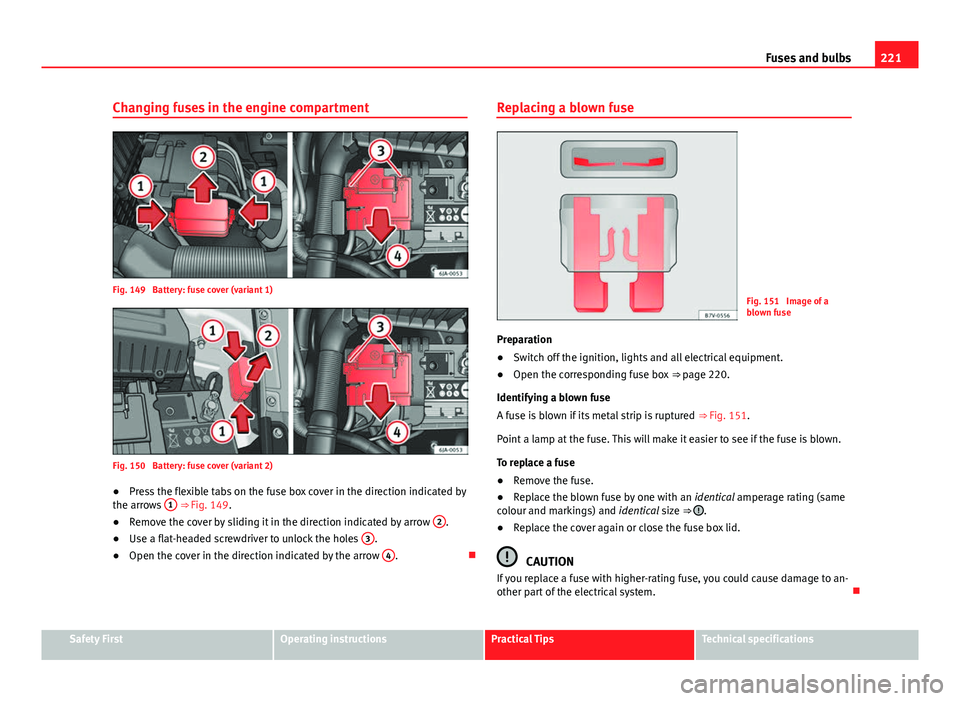
Fig. 149 Battery: fuse cover (variant 1)
Fig. 150 Battery: fuse cover (variant 2)
● Press the flexible tabs on the fuse box cover in the direction indicated by
the arrows 1
⇒ Fig. 149.
● Remove the cover by sliding it in the direction indicated by arrow 2.
● Use a flat-headed screwdriver to unlock the holes 3.
● Open the cover in the direction indicated by the arrow 4.Replacing a blown fuse
Fig. 151 Image of a
blown fuse
Preparation
● Switch off the ignition, lights and all electrical equipment.
● Open the corresponding fuse box
⇒ page 220.
Identifying a blown fuse
A fuse is blown if its metal strip is ruptured ⇒ Fig. 151.
Point a lamp at the fuse. This will make it easier to see if the fuse is blown.
To replace a fuse
● Remove the fuse.
● Replace the blown fuse by one with an identical amperage rating (same
colour and markings) and identical size ⇒
.
● Replace the cover again or close the fuse box lid.
CAUTION
If you replace a fuse with higher-rating fuse, you could cause damage to an-
other part of the electrical system.
Safety FirstOperating instructionsPractical TipsTechnical specifications
Page 249 of 258
Index
A
ABS . . . . . . . . . . . . . . . . . . . . . . . . . . . . . . . . . . 145control lamp . . . . . . . . . . . . . . . . . . . . . . . . . 73
Accessories . . . . . . . . . . . . . . . . . . . . . . . . . . . . 204
Adjusting the seat belt height . . . . . . . . . . . . . . 29
Adjustment seats . . . . . . . . . . . . . . . . . . . . . . . . . . . . . . 111
steering wheel . . . . . . . . . . . . . . . . . . . . . . 140
Aerial . . . . . . . . . . . . . . . . . . . . . . . . . . . . . . . . . 173 see radio reception . . . . . . . . . . . . . . . . . . 175
Airbag . . . . . . . . . . . . . . . . . . . . . . . . . . . . . . . . . 31
Airbag covers . . . . . . . . . . . . . . . . . . . . . . . . . . . 37
Airbag system . . . . . . . . . . . . . . . . . . . . . . . . . . . 31 control lamp . . . . . . . . . . . . . . . . . . . . . . . . . 33
Curtain airbags . . . . . . . . . . . . . . . . . . . . . . . 41
Front airbags . . . . . . . . . . . . . . . . . . . . . . . . 35
Side airbags . . . . . . . . . . . . . . . . . . . . . . . . . 38
air conditioning air conditioning . . . . . . . . . . . . . . . . . . . . . 129
Air conditioning air conditioning . . . . . . . . . . . . . . . . . 132, 134
Climatronic . . . . . . . . . . . . . . . . . . . . . . . . . 135
Air recirculation manual air conditioning . . . . . . . . . . . . . . 134
Alarm . . . . . . . . . . . . . . . . . . . . . . . . . . . . . . . . . . 91
Anti-lock system . . . . . . . . . . . . . . . . . . . . . . . . 145
Anti-theft alarm system . . . . . . . . . . . . . . . . . . . 91 Armrest . . . . . . . . . . . . . . . . . . . . . . . . . . . . . . . 111
rear . . . . . . . . . . . . . . . . . . . . . . . . . . . . . . . 114
Ashtrays . . . . . . . . . . . . . . . . . . . . . . . . . . . . . . 121
Aspects to take into account before starting the vehicle . . . . . . . . . . . . . . . . . . . . . . . . . . . . . . . . 8
ASR . . . . . . . . . . . . . . . . . . . . . . . . . . . . . . . . . . 145 Assistance systems . . . . . . . . . . . . . . . . . . . 73
control lamp . . . . . . . . . . . . . . . . . . . . . . . . . 73
Assistance system ABS . . . . . . . . . . . . . . . . . . . . . . . . . . . . . . . 145
ASR . . . . . . . . . . . . . . . . . . . . . . . . . . . . . . . 145
START-STOP . . . . . . . . . . . . . . . . . . . . . . . . . 154
Assistance systems ABS . . . . . . . . . . . . . . . . . . . . . . . . . . . . . . . . 73
cruise control . . . . . . . . . . . . . . . . . . . . . . . 152
EDL . . . . . . . . . . . . . . . . . . . . . . . . . . . . . . . 145
ESC . . . . . . . . . . . . . . . . . . . . . . . . . . . . 72, 144
parking aid . . . . . . . . . . . . . . . . . . . . . . . . . 151
Audible warning . . . . . . . . . . . . . . . . . . . . . . . . . 21
Auto-check system . . . . . . . . . . . . . . . . . . . . . . . 68
Automatic disconnection of electrical equip- ment . . . . . . . . . . . . . . . . . . . . . . . . . . . . . . . . 194
Automatic gearbox . . . . . . . . . . . . . . . . . . . . . . 146 back-up programme . . . . . . . . . . . . . . . . . . 150
Driving programmes . . . . . . . . . . . . . . . . . 149
instructions for use . . . . . . . . . . . . . . . . . . 146
kick-down . . . . . . . . . . . . . . . . . . . . . . . . . . 149
manual release of the selector lever . . . . . 150
parking . . . . . . . . . . . . . . . . . . . . . . . . . . . . 147
Selector lever lock . . . . . . . . . . . . . . . . . . . 149 selector lever positions . . . . . . . . . . . . . . . 147
starting . . . . . . . . . . . . . . . . . . . . . . . . . . . . 147
stopping . . . . . . . . . . . . . . . . . . . . . . . . . . . 147
Tiptronic . . . . . . . . . . . . . . . . . . . . . . . . . . . 148
AUX-IN . . . . . . . . . . . . . . . . . . . . . . . . . . . . . . . . . 81
B
Back-up automatic gearbox . . . . . . . . . . . . . . . . . . . 150
Battery automatic disconnection of electricalequipment . . . . . . . . . . . . . . . . . . . . . . . . 194
changing . . . . . . . . . . . . . . . . . . . . . . . . . . . 194
charging . . . . . . . . . . . . . . . . . . . . . . . . . . . 193
checking acid level . . . . . . . . . . . . . . . . . . . 193
safety instructions . . . . . . . . . . . . . . . . . . . 191
winter service . . . . . . . . . . . . . . . . . . . . . . . 193
Before starting the vehicle . . . . . . . . . . . . . . . . . 8
Bonnet closing . . . . . . . . . . . . . . . . . . . . . . . . . . . . 183
opening . . . . . . . . . . . . . . . . . . . . . . . . . . . . 183
Brake assist . . . . . . . . . . . . . . . . . . . . . . . . . . . 144
Brake fluid checking . . . . . . . . . . . . . . . . . . . . . . . . . . . 189
brakes brake fluid . . . . . . . . . . . . . . . . . . . . . . . . . . 189
247
Index