start stop button Seat Toledo 2016 User Guide
[x] Cancel search | Manufacturer: SEAT, Model Year: 2016, Model line: Toledo, Model: Seat Toledo 2016Pages: 248, PDF Size: 5.82 MB
Page 184 of 248
Operation
● Front
wheel
s not overly turned (steering
wheel turned less than three quarters of a
turn)
Conditions for engine start up (Start phase)
● Clutch pedal pressed.
● Max./min. temperature set.
● Windscreen defrost function switched on.
● High blower speed.
● Start-Stop button pressed.
Conditions
for automatic engine start up
without driver involvement
● Vehicle moving at a speed of over 3 km/h
(2 mph).
● Difference between outside temperature
and interior temper
ature is too great
● Vehicle's battery insufficiently charged.
● Insufficient brake system pressure.
If the driver se
at belt is unfastened for more
than 30 seconds in Stop phase, the engine
must be started using the ignition key.
Please observe the messages on the general
instrument panel display.
Warnings on the instrument panel display
(valid for vehicles not fitted with an informa-
tive display)
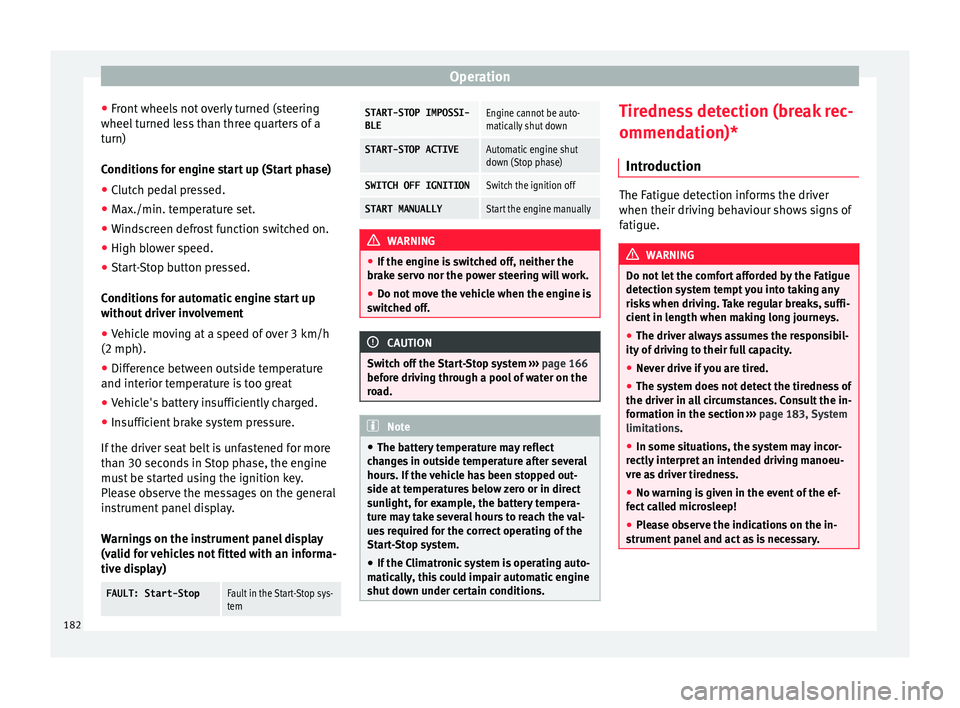
FAULT: Start-StopFault in the Start-Stop sys-
tem
START-STOP IMPOSSI-
BLEEngine cannot be auto-
matically shut down
START-STOP ACTIVEAutomatic engine shut
down (Stop phase)
SWITCH OFF IGNITIONSwitch the ignition off
START MANUALLYStart the engine manually WARNING
● If the engine i
s switched off, neither the
brake servo nor the power steering will work.
● Do not move the vehicle when the engine is
switc
hed off. CAUTION
Switch off the Start-Stop system ›››
page 166
before driving through a pool of water on the
road. Note
● The batt er
y temperature may reflect
changes in outside temperature after several
hours. If the vehicle has been stopped out-
side at temperatures below zero or in direct
sunlight, for example, the battery tempera-
ture may take several hours to reach the val-
ues required for the correct operating of the
Start-Stop system.
● If the Climatronic system is operating auto-
matica
lly, this could impair automatic engine
shut down under certain conditions. Tiredness detection (break rec-
ommend
ation)*
Intr oduction The Fatigue detection informs the driver
when their drivin
g beh
aviour shows signs of
fatigue. WARNING
Do not let the comfort afforded by the Fatigue
detection sy s
tem tempt you into taking any
risks when driving. Take regular breaks, suffi-
cient in length when making long journeys.
● The driver always assumes the responsibil-
ity of driv
ing to their full capacity.
● Never drive if you are tired.
● The system does not detect the tiredness of
the driver in al
l circumstances. Consult the in-
formation in the section ››› page 183, System
limitations.
● In some situations, the system may incor-
rectly int
erpret an intended driving manoeu-
vre as driver tiredness.
● No warning is given in the event of the ef-
fect c
alled microsleep!
● Please observe the indications on the in-
strument p
anel and act as is necessary.182
Page 185 of 248
Driver assistance systems
Note
● Fatigue det ection h
as been developed for
driving on motorways and well paved roads
only.
● If there is a fault in the system, have it
check
ed by a specialised workshop. Function and operation
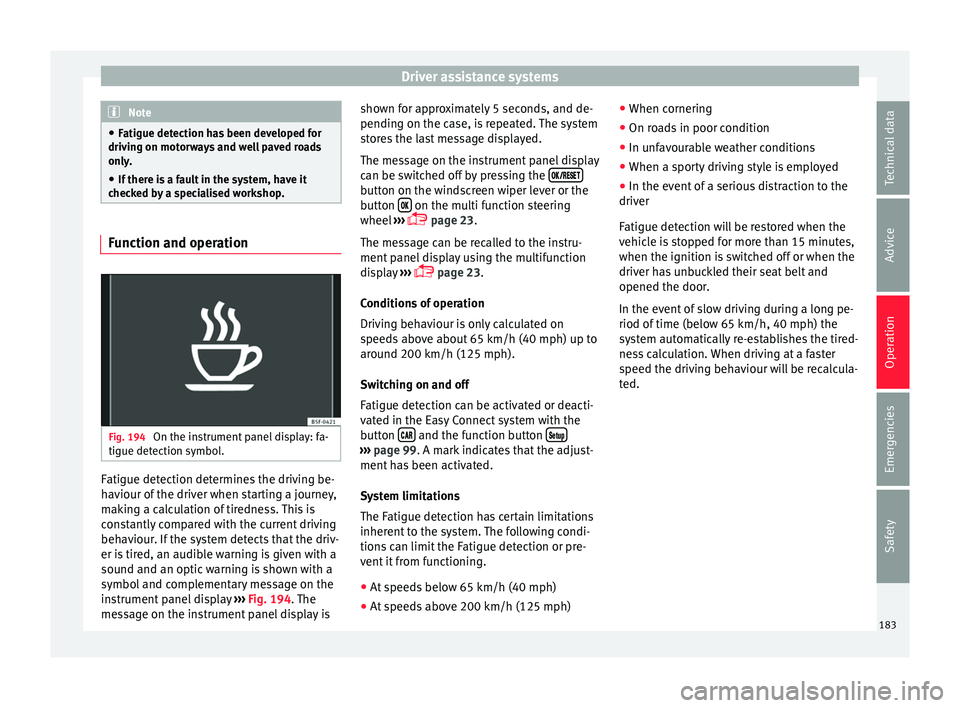
Fig. 194
On the instrument panel display: fa-
tigue det ection symbo
l
.Fatigue detection determines the driving be-
h
av
iour of
the driver when starting a journey,
making a calculation of tiredness. This is
constantly compared with the current driving
behaviour. If the system detects that the driv-
er is tired, an audible warning is given with a
sound and an optic warning is shown with a
symbol and complementary message on the
instrument panel display ››› Fig. 194. The
message on the instrument panel display is shown for approximately 5 seconds, and de-
pending on the ca
se, is repeated. The system
stores the last message displayed.
The message on the instrument panel display
can be switched off by pressing the button on the windscreen wiper lever or the
b
utt
on on the multi function steering
wheel
›
›
› page 23.
The message can be recalled to the instru-
ment panel display using the multifunction
display ›››
page 23.
Conditions of operation
Driving behaviour is only calculated on
speeds above about 65 km/h (40 mph) up to
around 200 km/h (125 mph).
Switching on and off
Fatigue detection can be activated or deacti-
vated in the Easy Connect system with the
button and the function button
›››
pag e 99. A mark indicates that the adjust-
ment
has been activated.
System limitations
The Fatigue detection has certain limitations
inherent to the system. The following condi-
tions can limit the Fatigue detection or pre-
vent it from functioning. ● At speeds below 65 km/h (40 mph)
● At speeds above 200 km/h (125 mph) ●
When cornerin g
● On r
oads in poor condition
● In unfavourable weather conditions
● When a sporty driving style is employed
● In the event of a serious distraction to the
driver
Fatigue det
ection will be restored when the
vehicle is stopped for more than 15 minutes,
when the ignition is switched off or when the
driver has unbuckled their seat belt and
opened the door.
In the event of slow driving during a long pe-
riod of time (below 65 km/h, 40 mph) the
system automatically re-establishes the tired-
ness calculation. When driving at a faster
speed the driving behaviour will be recalcula-
ted. 183Technical data
Advice
Operation
Emergencies
Safety
Page 242 of 248
Index
Rubber seals car
e
. . . . . . . . . . . . . . . . . . . . . . . . . . . . . . . . . . 196
Run-in new engine . . . . . . . . . . . . . . . . . . . . . . . . . . . . 161
new tyres . . . . . . . . . . . . . . . . . . . . . . . . . . . . . . 215
the first 1,500 km . . . . . . . . . . . . . . . . . . . . . . . 161
Running in brake pads . . . . . . . . . . . . . . . . . . . . . . . . . . . . 161
the tyres . . . . . . . . . . . . . . . . . . . . . . . . . . . . . . 161
S Safe . . . . . . . . . . . . . . . . . . . . . . . . . . . . . . . . . . . . 108 driving safe . . . . . . . . . . . . . . . . . . . . . . . . . . . . . 55
Safety child safety . . . . . . . . . . . . . . . . . . . . . . . . . . . . . 72
child seats . . . . . . . . . . . . . . . . . . . . . . . . . . . . . . 72
deactivating the front passenger airbag . . . . . . 14
Safe driving . . . . . . . . . . . . . . . . . . . . . . . . . . . . . 55
Safety equipment . . . . . . . . . . . . . . . . . . . . . . . . . . 55
Safety instructions head-protection airbags . . . . . . . . . . . . . . . . . . 70
side airbags . . . . . . . . . . . . . . . . . . . . . . . . . . . . 69
using child seats . . . . . . . . . . . . . . . . . . . . . 16, 73
Safety notes seat belt tensioners . . . . . . . . . . . . . . . . . . . . . . 66
using seat belts . . . . . . . . . . . . . . . . . . . . . . . . . 62
Saving tips (efficiency programme) . . . . . . . . . . . 28
Seat belt position for pregnant women . . . . . . . . . . . . . . . . . . . 12, 64
seat belts . . . . . . . . . . . . . . . . . . . . . . . . . . . 12, 64
Seat belt release . . . . . . . . . . . . . . . . . . . . . . . . . . 64
Seat belts . . . . . . . . . . . . . . . . . . . . . . . . . . . . . . . . 61 adjustment . . . . . . . . . . . . . . . . . . . . . . . . . . 12, 64
cleaning . . . . . . . . . . . . . . . . . . . . . . . . . . . . . . 198
control lamp . . . . . . . . . . . . . . . . . . . . . . . . . . . . 61
height adjustment . . . . . . . . . . . . . . . . . . . . . . . 65
protective function . . . . . . . . . . . . . . . . . . . . . . . 61 safety notes . . . . . . . . . . . . . . . . . . . . . . . . . . . . 62
unfa
stened . . . . . . . . . . . . . . . . . . . . . . . . . . . . . 63
Seat belt tensioners . . . . . . . . . . . . . . . . . . . . . 13, 65
Seat heating . . . . . . . . . . . . . . . . . . . . . . . . . . . . . 128
Selector lever positions . . . . . . . . . . . . . . . . . . . . . . . . . . . . . . 158
Selector lever lock . . . . . . . . . . . . . . . . . . . . . . . . 159
Selector lever (automatic gearbox) malfunction . . . . . . . . . . . . . . . . . . . . . . . . . . . . 159
manual release . . . . . . . . . . . . . . . . . . . . . . . . . . 35
Service interval indication . . . . . . . . . . . . . . . . . . . 30
Service notification: read . . . . . . . . . . . . . . . . . . . . 31
Side airbags description . . . . . . . . . . . . . . . . . . . . . . . . . . . . . 15
safety instructions . . . . . . . . . . . . . . . . . . . . . . . 69
see also Airbag system . . . . . . . . . . . . . . . . . . . 15
Signal lever . . . . . . . . . . . . . . . . . . . . . . . . . . . . . . . 19
Sitting position driver . . . . . . . . . . . . . . . . . . . . . . . . . . . . . . . . . . 56
Snow chains . . . . . . . . . . . . . . . . . . . . . . . . . 49, 224
Spanner symbol . . . . . . . . . . . . . . . . . . . . . . . . . . . 30
Spare wheel . . . . . . . . . . . . . . . . . . . . . . . . . . . . . 218
Speed warning device . . . . . . . . . . . . . . . . . . . . . . 29
Start-Stop operating . . . . . . . . . . . . . . . . . . . . . . . . . . . . . . 181
Start-Stop System . . . . . . . . . . . . . . . . . . . . . . . . . 181
Starter button . . . . . . . . . . . . . . . . . . . . . . . . . . . . 151
Starting the engine . . . . . . . . . . . . . . . . . . 149, 152
Starting the vehicle . . . . . . . . . . . . . . . . . . . . . . . . 18
Steering steering lock . . . . . . . . . . . . . . . . . . . . . . . . . . . 149
Steering wheel adjustment . . . . . . . . . . . . . . . . . . . . . . . . . . . . . 13
setting . . . . . . . . . . . . . . . . . . . . . . . . . . . . . . . . . 57
Steering wheel controls . . . . . . . . . . . . . . . . . . . . 100
Storage luggage compartment . . . . . . . . . . . . . . . . . . . 138 Storage compartment . . . . . . . . . . . . . . . . . . . . . 131
front se ats . . . . . . . . . . . . . . . . . . . . . . . . . . . . . 132
glasses . . . . . . . . . . . . . . . . . . . . . . . . . . . . . . . 135
in front door . . . . . . . . . . . . . . . . . . . . . . . . . . . 136
in the centre console . . . . . . . . . . . . . . . . . . . . 136
in the luggage compartment . . . . . . . . . . . . . . 136
passenger side . . . . . . . . . . . . . . . . . . . . . . . . . 131
reflective vest . . . . . . . . . . . . . . . . . . . . . . . . . . 132
Storage compartments . . . . . . . . . . . . . . . . . . . . 131
Sun visors . . . . . . . . . . . . . . . . . . . . . . . . . . . . . . . 124
Switch hazard warning lights . . . . . . . . . . . . . . . . . . . 121
Switching off the engine with the key . . . . . . . . . . . . . . . . . . . . . . . . . . . . 152
Switching off the lights . . . . . . . . . . . . . . . . . . . . 116
Switching on the lights . . . . . . . . . . . . . . . . . . . . 116
Switching the ignition on and off . . . . . . . . . . . . 149
System Easy Connect . . . . . . . . . . . . . . . . . . . . . . . 99
T
Tailgate locking time extension see Luggage compartment . . . . . . . . . . . . . . . 113
Technical specifications . . . . . . . . . . . . . . . . . . . . 221
Temperature display engine oil . . . . . . . . . . . . . . . . . . . . . . . . . . . . . . 28
outside temperature . . . . . . . . . . . . . . . . . . . . . . 24
Temperature selection heating . . . . . . . . . . . . . . . . . . . . . . . . . . . . . . . 144
Tightening torque of wheel bolts . . . . . . . . . . . . 224
Timer . . . . . . . . . . . . . . . . . . . . . . . . . . . . . . . . . . . . 28 lap times . . . . . . . . . . . . . . . . . . . . . . . . . . . . . . . 28
menu . . . . . . . . . . . . . . . . . . . . . . . . . . . . . . . . . . 28
statistics . . . . . . . . . . . . . . . . . . . . . . . . . . . . . . . 28
Tiptronic (automatic gearbox) . . . . . . . . . . 157, 159
Tiredness detection . . . . . . . . . . . . . . . . . . . . . . . 182
Top speed . . . . . . . . . . . . . . . . . . . . . . . . . . . . . . . . 29
Top Tether . . . . . . . . . . . . . . . . . . . . . . . . . . . . . . . . 17
240