engine oil SUBARU BAJA 2003 1.G User Guide
[x] Cancel search | Manufacturer: SUBARU, Model Year: 2003, Model line: BAJA, Model: SUBARU BAJA 2003 1.GPages: 400, PDF Size: 3.97 MB
Page 272 of 400

8-34
trailer, causing sway. Crosswinds can be due to weather conditions or
the passing of large trucks or buses. If swaying occurs, firmly grip the
steering wheel and slow down immediately but gradually.When passing other vehicles, considerable distance is required
because of the added weight and length caused by attaching the
trailer to your vehicle. Backing up with a trailer is difficult and takes practice. When back-
ing up with a trailer, never accelerate or steer rapidly. When turning
back, grip the bottom of the steering wheel with one hand and turn it
to the left for a left turn, and turn it to the right for a right turn.
Left turn Right turn
OM-H2791
If the ABS warning light illuminates while the vehicle is in motion,
stop towing the trailer and have repairs performed immediately by the
nearest SUBARU dealer. n Driving on grades
Before going down a steep hill, slow down and shift into lower gear
(if necessary, use 1st gear) in order to utilize the engine braking effect
and prevent overheating of your vehicle ’s brakes. Do not make sud-
den downshifts. When driving uphill in hot weather, the air conditioner may turn off
automatically to protect the engine from overheating. When driving uphill in hot weather, pay attention to the water tem-
perature gauge pointer (for all vehicles) and AT OIL TEMP warning
light (for AT vehicles) since the engine and transmission are relatively
prone to overheating under these conditions. If the water temperature
Page 273 of 400

Driving tips8-35
–
CONTINUED –
gauge pointer approaches the OVERHEAT zone or the AT OIL TEMP
warning light illuminates, immediately switch off the air conditioner
and stop the vehicle at the nearest safe place. Refer to the “Engine
overheat” section in Chapter 9, and “Warning and indicator lights ”
section in Chapter 3. If your vehicle has an automatic transmission, avoid using the
accelerator pedal to stay stationary on an uphill slope instead of usingthe parking brake or foot brake. That may cause the transmission fluidto overheat. Also, if your vehicle is equipped with an automatic trans-mission, avoid driving with the gear selector lever in “D” when towing
a heavy trailer to prevent fluid overheating. A lower gear should beused. n Parking on a grade
Always block the wheels under both vehicle and trailer when parking.
Apply the parking brake firmly. You should not park on a hill or slope.But if parking on a hill or slope cannot be avoided, you should takethe following steps:
1. Apply the brakes and hold the pedal down.
2. Have someone place wheel blocks under both the vehicle and
trailer wheels.
3. When the wheel blocks are in place, release the regular brakes
slowly until the blocks absorb the load.
4. Apply the regular brakes and then apply the parking brake; slowly
release the regular brakes.
5. Shift into 1st or reverse gear (manual transmission) or “P” (auto-
matic transmission) and shut off the engine.
Page 295 of 400
In case of emergency9-21
–
CONTINUED –
Engine overheating
WARNING
Never attempt to remove the radiator cap until the engine has been shut off and has fully cooled down. When the engine is hot,the coolant is under pressure. Removing the cap while the engineis still hot could release a spray of boiling hot coolant, which
could burn you very seriously.
If the engine overheats, pull off the road safely and stop the vehicle in asafe place. If steam is coming from the engine compartment
Turn the engine off and get everyone away from the vehicle until itcools down. If no steam is coming from the engine compartment
1. Keep the engine running at idling speed.
2. Open the hood to ventilate the engine compartment.
Confirm that the cooling fan is turning. If the fan is not turning, im-
mediately turn the engine off and contact your authorized dealer for
repair.
3. After the engine coolant temperature has dropped, turn off the en-gine.
If the temperature gauge stays at the overheated zone, turn the en-
gine off.
4. After the engine has fully cooled down, check the coolant level in
the reserve tank.If the coolant level is below the “MIN” mark, add coolant up to the
“MAX” mark.
5. If there is no coolant in the reserve tank, add coolant to the reserve
tank. Then remove the radiator cap and fill the radiator with coolant.
If you remove the radiator cap from a hot radiator, first wrap a thick
cloth around the radiator cap, then turn the cap counterclockwise
slowly without pressing down until it stops. Release the pressure from
Page 300 of 400

9-26
CAUTION
If transmission failure occurs, transport your vehicle on a flat-
bed truck. Do not run the engine while the vehicle is being towed using
this method. Transmission damage could result if the vehicle istowed with the engine running. For vehicles with automatic transmission, the traveling speed
must be limited to less than 20 mph (30 km/h) and the traveling
distance to less than 30 miles (50 km). For greater speeds and
distances, transport your vehicle on a flat-bed truck.
HB9071AA
1. Check the transmission and differential oil levels and add oil to
bring it to the upper level if necessary.
2. Release the parking brake and put the transmission in neutral.
3. The ignition switch should be in the “ACC” position while the ve-
hicle is being towed.
4. Take up slack in the towline slowly to prevent damage to the ve-hicle.
Page 304 of 400

10-2
Exterior care Washing
CAUTION
When washing the vehicle, the brakes may get wet. As a result,
the brake stopping distance will be longer. To dry the brakes, drive the vehicle at a safe speed while lightly pressing the brakepedal to heat up the brakes. Do not wash the engine compartment and areas adjacent to it.
If water enters the engine air intake, electrical parts or the power
steering fluid reservoir, it will cause engine trouble or faulty
power steering respectively.
The best way to preserve your vehicle ’s beauty is frequent washing.
Wash the vehicle at least once a month to avoid contamination by roadgrime.
Wash dirt off with a wet sponge and plenty of lukewarm or cold water. Do
not wash the vehicle with hot water and in direct sunlight.
Salt, chemicals, insects, tar, soot and bird droppings should be washed
off by using a light detergent, as required. If you use a light detergent,
make certain that it is a neutral detergent. Do not use strong soap or
chemical detergents. All cleaning agents should be promptly flushed
from the surface and not allowed to dry there. Rinse the vehicle thor-
oughly with plenty of lukewarm water. Wipe the remaining water off with a
chamois or soft cloth. NOTE When having your vehicle washed in an automatic car wash, make
sure beforehand that the car wash is of suitable type. If the vehicle
is equipped with a rear/roof spoiler, it may be damaged by car washbrushes or other equipment.
Page 311 of 400

11
Maintenance and service
Maintenance schedule11-3
. . . . . . . . . . . . . . . . . . . . . . . . . . . . . . . . . . . . . . . . . . . . . . . . . .
Maintenance precautions 11-3
. . . . . . . . . . . . . . . . . . . . . . . . . . . . . . . . . . . . . . . . . . . . . .
Engine hood 11-5
. . . . . . . . . . . . . . . . . . . . . . . . . . . . . . . . . . . . . . . . . . . . . . . . . . . . . . . . . . . . . . . .
Engine compartment overview 11-7 . . . . . . . . . . . . . . . . . . . . . . . . . . . . . . . . . . . . . . .
Engine oil 11-8
. . . . . . . . . . . . . . . . . . . . . . . . . . . . . . . . . . . . . . . . . . . . . . . . . . . . . . . . . . . . . . . . . . . .
Cooling system 11-13
. . . . . . . . . . . . . . . . . . . . . . . . . . . . . . . . . . . . . . . . . . . . . . . . . . . . . . . . . . . .
Engine coolant 11-14
. . . . . . . . . . . . . . . . . . . . . . . . . . . . . . . . . . . . . . . . . . . . . . . . . . . . . . . . . . .
Air cleaner element 11-17
. . . . . . . . . . . . . . . . . . . . . . . . . . . . . . . . . . . . . . . . . . . . . . . . . . . . . .
Spark plugs 11-19
. . . . . . . . . . . . . . . . . . . . . . . . . . . . . . . . . . . . . . . . . . . . . . . . . . . . . . . . . . . . . . . . .
Drive belts 11-20
. . . . . . . . . . . . . . . . . . . . . . . . . . . . . . . . . . . . . . . . . . . . . . . . . . . . . . . . . . . . . . . . . . .
Manual transmission oil 11-21
. . . . . . . . . . . . . . . . . . . . . . . . . . . . . . . . . . . . . . . . . . . . . . . .
Automatic transmission fluid 11-22 . . . . . . . . . . . . . . . . . . . . . . . . . . . . . . . . . . . . . . . . .
Front differential gear oil (AT vehicles) 11-24 . . . . . . . . . . . . . . . . . . . . . . . . . . . .
Rear differential gear oil 11-25
. . . . . . . . . . . . . . . . . . . . . . . . . . . . . . . . . . . . . . . . . . . . . . . .
Power steering fluid 11-27
. . . . . . . . . . . . . . . . . . . . . . . . . . . . . . . . . . . . . . . . . . . . . . . . . . . . .
Brake fluid 11-28
. . . . . . . . . . . . . . . . . . . . . . . . . . . . . . . . . . . . . . . . . . . . . . . . . . . . . . . . . . . . . . . . . . .
Clutch fluid (MT vehicles) 11-30 . . . . . . . . . . . . . . . . . . . . . . . . . . . . . . . . . . . . . . . . . . . . . .
Brake booster 11-31
. . . . . . . . . . . . . . . . . . . . . . . . . . . . . . . . . . . . . . . . . . . . . . . . . . . . . . . . . . . . . .
Brake pedal 11-32
. . . . . . . . . . . . . . . . . . . . . . . . . . . . . . . . . . . . . . . . . . . . . . . . . . . . . . . . . . . . . . . . .
Clutch pedal (Manual transmission vehicles) 11-33 . . . . . . . . . . . . . . . . . . .
Replacement of brake pad and lining 11-34 . . . . . . . . . . . . . . . . . . . . . . . . . . . . . .
Parking brake stroke 11-35
. . . . . . . . . . . . . . . . . . . . . . . . . . . . . . . . . . . . . . . . . . . . . . . . . . . .
Tires and wheels 11-36
. . . . . . . . . . . . . . . . . . . . . . . . . . . . . . . . . . . . . . . . . . . . . . . . . . . . . . . . . .
Types of tires 11-36
. . . . . . . . . . . . . . . . . . . . . . . . . . . . . . . . . . . . . . . . . . . . . . . . . . . . . . . . . . . . .
Tire inspection 11-37
. . . . . . . . . . . . . . . . . . . . . . . . . . . . . . . . . . . . . . . . . . . . . . . . . . . . . . . . . . .
Tire pressures and wear 11-37
. . . . . . . . . . . . . . . . . . . . . . . . . . . . . . . . . . . . . . . . . . . . . . . .
Wheel balance 11-40
. . . . . . . . . . . . . . . . . . . . . . . . . . . . . . . . . . . . . . . . . . . . . . . . . . . . . . . . . . . .
Wear indicators 11-41
. . . . . . . . . . . . . . . . . . . . . . . . . . . . . . . . . . . . . . . . . . . . . . . . . . . . . . . . . .
Tire rotation 11-42
. . . . . . . . . . . . . . . . . . . . . . . . . . . . . . . . . . . . . . . . . . . . . . . . . . . . . . . . . . . . . . .
Tire replacement 11-42
. . . . . . . . . . . . . . . . . . . . . . . . . . . . . . . . . . . . . . . . . . . . . . . . . . . . . . . . .
Wheel replacement 11-43
. . . . . . . . . . . . . . . . . . . . . . . . . . . . . . . . . . . . . . . . . . . . . . . . . . . . . .
Aluminum wheels 11-44
. . . . . . . . . . . . . . . . . . . . . . . . . . . . . . . . . . . . . . . . . . . . . . . . . . . . . . . . .
Windshield washer fluid 11-44
. . . . . . . . . . . . . . . . . . . . . . . . . . . . . . . . . . . . . . . . . . . . . . . .
Replacement of windshield wiper blades 11-45 . . . . . . . . . . . . . . . . . . . . . . . .
Battery 11-48
. . . . . . . . . . . . . . . . . . . . . . . . . . . . . . . . . . . . . . . . . . . . . . . . . . . . . . . . . . . . . . . . . . . . . . . .
Page 314 of 400
11-4
Always use the proper tools and make certain that they are
well maintained. Never get under the vehicle supported only by a jack. Always
use a safety stands to support the vehicle. Never keep the engine running in a poorly ventilated area,
such as a garage or other closed areas. Do not smoke or allow open flames around the fuel or battery.
This will cause a fire. Because the fuel system is under pressure, replacement of the
fuel filter should be performed only by your SUBARU dealer. Wear adequate eye protection to guard against getting oil or
fluids in your eyes. If something does get in your eyes, thorough-
ly wash them out with clean water. Do not tamper with the wiring of the SRS airbag system or
seatbelt pretensioner system, or attempt to take its connectorsapart, as that may activate the system or it can render it inopera-tive. The wiring and connectors of these systems are yellow for
easy identification. NEVER use a circuit tester for these wiring. If your SRS airbag or seatbelt pretensioner needs service, con-
sult your nearest SUBARU dealer. Before checking or servicing in the engine compart- ment
Always stop the engine and set the parking brake firmly to pre-
vent the vehicle from moving. Always let the engine cool down. Engine parts become very
hot when the engine is running and remain hot for some time af-ter the engine is stopped. Do not spill engine oil, engine coolant, brake fluid or any other
fluid on hot engine components. This may cause a fire. Always remove the key from the ignition switch. When the
ignition switch is in the “ON” position, the cooling fan may oper-
ate suddenly even when the engine is stopped.
Page 317 of 400

Maintenance and service11-7
–
CONTINUED –
Engine compartment overview
HBB036BB
1 Manual transmission oil level
gauge (MT) (page 11-21) or
Differential gear oil level gauge
(AT) (page 11-24)
2 Air cleaner element (page 11-17)
3 Clutch fluid reservoir (page 11-30)
4 Automatic transmission fluidlevel gauge (page 11-22)
5 Brake fluid reservoir (page 11-28)
6 Fuel filter 7
Windshield washer tank (page 11-44)
8 Fuse box (page 11-49)
9 Battery (page 11-48)
Q Engine oil filler cap (page 11-8)
W Engine coolant reservoir (page 11-14)
E Radiator cap (page 11-14)
R Engine oil level gauge (page 11-8)
T Power steering fluid reservoir (page 11-27)
Page 318 of 400

11-8
Engine oilChecking the oil level
Check the engine oil level at each fuel stop.
HBB061BB
HBB004JA
1. Park the vehicle on a level surface and stop the engine.
2. Pull out the dipstick, wipe it clean, and insert it again.
3. Be sure the dipstick is correctly inserted until it stops with the
graphic symbol
on its top appearing as shown in the illustra-
tion.
4. Pull out the dipstick again and check the oil level on it. If it is belowthe lower level, add oil to bring the level up to the upper level.
CAUTION
Use only engine oil with the recommended grade and viscosity.
If you check the oil level just after stopping the engine, wait a few min-
utes for the oil to drain back into the oil pan before checking the level.
To prevent overfilling the engine oil, do not add any additional oilabove the upper level when the engine is cold. The dipstick has a notch above the upper level.
Just after driving or while the engine is warm, the engine oil level
reading may be in a range between the upper level and the notch
mark. This is caused by thermal expansion of the engine oil.
Page 319 of 400
Maintenance and service11-9
–
CONTINUED –
Changing the oil and oil filter
Change the oil and oil filter according to the maintenance schedule in the “Warranty and Maintenance Booklet ”.
The engine oil and oil filter must be changed more frequently than
listed in the maintenance schedule when driving on dusty roads,
when short trips are frequently made, or when driving in extremely
cold whether.
1. Warm up the engine by letting the engine idle for about 10 minutes to ease draining the engine oil.
2. Park the vehicle on a level surface and stop the engine.
3. Remove the oil filler cap.
HBB005BB
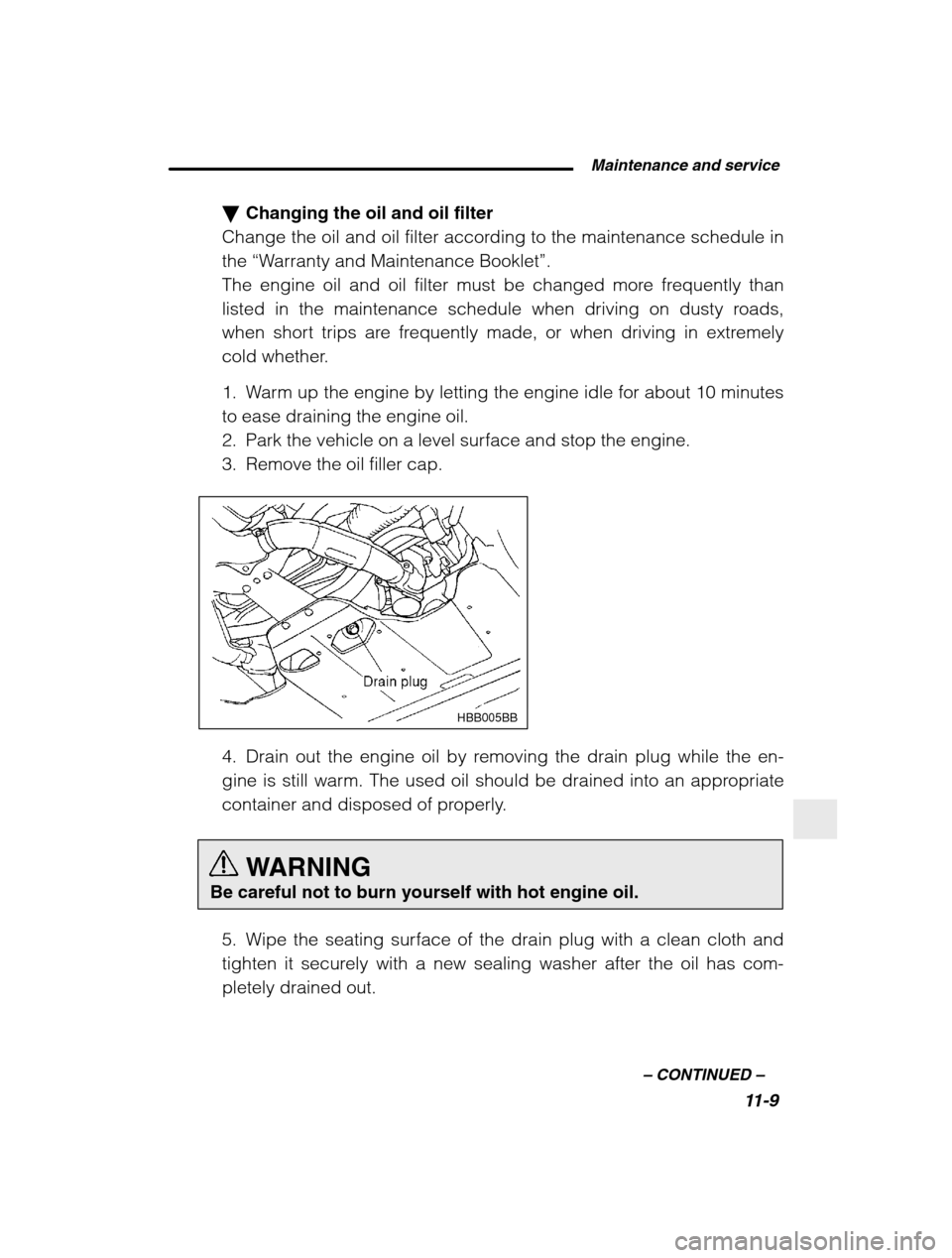
4. Drain out the engine oil by removing the drain plug while the en-
gine is still warm. The used oil should be drained into an appropriate
container and disposed of properly.
WARNING
Be careful not to burn yourself with hot engine oil.
5. Wipe the seating surface of the drain plug with a clean cloth and
tighten it securely with a new sealing washer after the oil has com-pletely drained out.