Ac system SUZUKI AERIO 2007 1.G Owners Manual
[x] Cancel search | Manufacturer: SUZUKI, Model Year: 2007, Model line: AERIO, Model: SUZUKI AERIO 2007 1.GPages: 232, PDF Size: 3.34 MB
Page 159 of 232
Downloaded from www.Manualslib.com manuals search engine 9-6 INSPECTION AND MAINTENANCE
54G27-03E
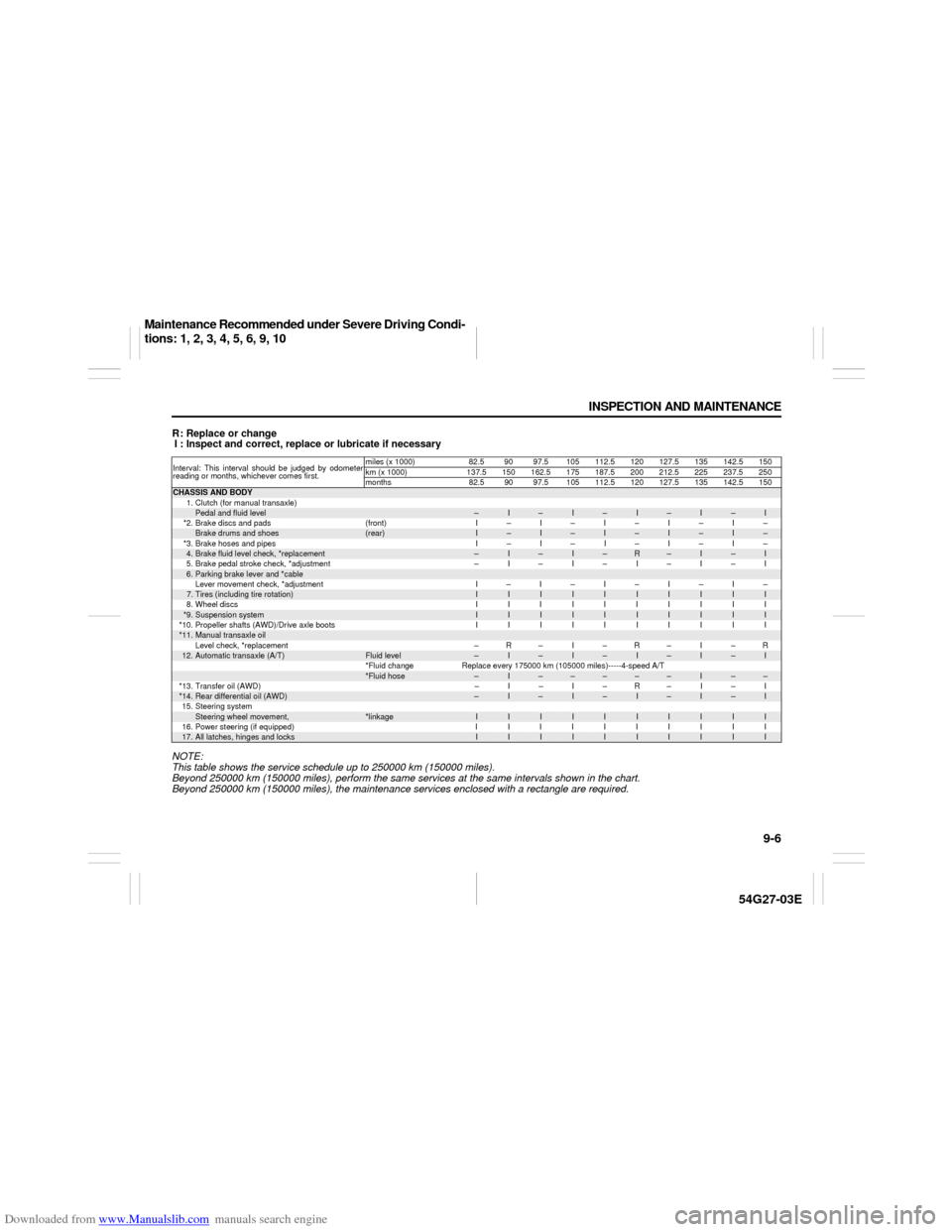
R: Replace or change
I : Inspect and correct, replace or lubricate if necessary
NOTE:
This table shows the service schedule up to 250000 km (150000 miles).
Beyond 250000 km (150000 miles), perform the same services at the same intervals shown in the chart.
Beyond 250000 km (150000 miles), the maintenance services enclosed with a rectangle are required.Interval: This interval should be judged by odometer
reading or months, whichever comes first.miles (x 1000) 82.5 90 97.5 105112.5 120 127.5 135 142.5 150
km (x 1000) 137.5 150 162.5 175 187.5 200 212.5 225 237.5 250
months 82.5 90 97.5 105 112.5 120 127.5 135 142.5 150CHASSIS AND BODY
1. Clutch (for manual transaxle)
Pedal and fluid level
–
I
–
I
–
I
–
I
–
I
*2. Brake discs and pads (front) I – I – I – I – I –
Brake drums and shoes
(rear)
I
–
I
–
I
–
I
–
I
–
*3. Brake hoses and pipes I – I – I – I – I –
4.Brake fluid level check, *replacement
–
I
–
I
–
R
–
I
–
I
5. Brake pedal stroke check, *adjustment – I – I – I – I – I
6.Parking brake lever and *cableLever movement check, *adjustment I–I–I–I–I–7.Tires (including tire rotation)
I
I
I
I
I
I
I
I
I
I
8.Wheel discs IIIIIIIIII
*9.
Suspension system
I
I
I
I
I
I
I
I
I
I
*10. Propeller shafts (AWD)/Drive axle boots I I I I I I I I I I
*11.
Manual transaxle oilLevel check, *replacement –R– I –R– I –R
12.
Automatic transaxle (A/T)
Fluid level
–
I
–
I
–
I
–
I
–
I
*Fluid change Replace every 175000 km (105000 miles)-----4-speed A/T
*Fluid hose
–
I
–
–
–
–
–
I
–
–
*13. Transfer oil (AWD) – I – I – R – I – I
*14.
Rear differential oil (AWD)
–
I
–
I
–
I
–
I
–
I
15. Steering system
Steering wheel movement,
*linkage
I
I
I
I
I
I
I
I
I
I
16. Power steering (if equipped) I I I I I I I I I I
17.
All latches, hinges and locks
I
I
I
I
I
I
I
I
I
I
Maintenance Recommended under Severe Driving Condi-
tions: 1, 2, 3, 4, 5, 6, 9, 10
Page 160 of 232
Downloaded from www.Manualslib.com manuals search engine 9-7 INSPECTION AND MAINTENANCE
54G27-03E
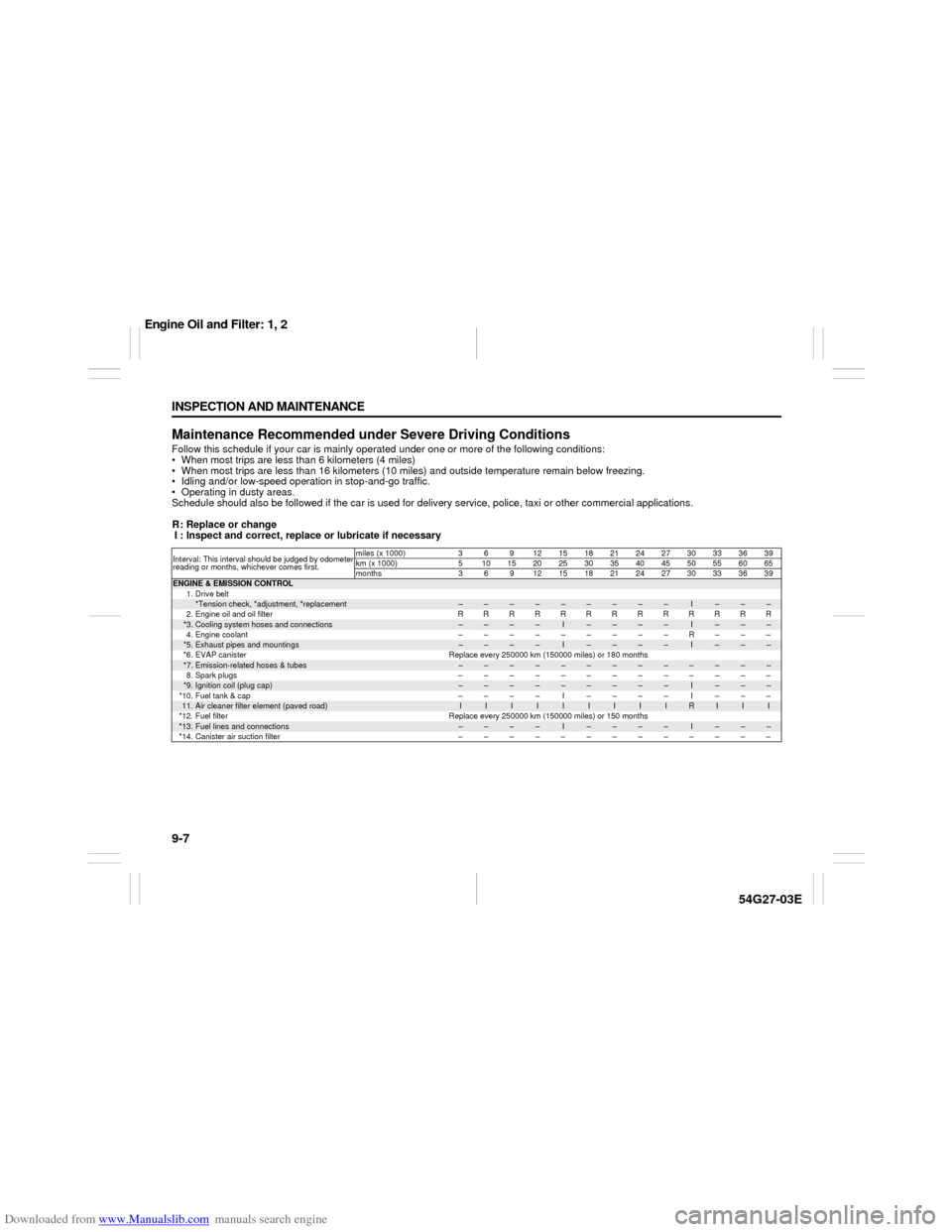
Maintenance Recommended under Severe Driving ConditionsFollow this schedule if your car is mainly operated under one or more of the following conditions:
When most trips are less than 6 kilometers (4 miles)
When most trips are less than 16 kilometers (10 miles) and outside temperature remain below freezing.
Idling and/or low-speed operation in stop-and-go traffic.
Operating in dusty areas.
Schedule should also be followed if the car is used for delivery service, police, taxi or other commercial applications.
R: Replace or change
I : Inspect and correct, replace or lubricate if necessaryInterval: This interval should be judged by odometer
reading or months, whichever comes first.miles (x 1000) 3 6 9 12 15 18 21 24 27 30 33 36 39
km (x 1000) 5 101520253035404550556065
months 3 6 9 12 15 18 21 24 27 30 33 36 39ENGINE & EMISSION CONTROL
1. Drive belt
*Tension check, *adjustment, *replacement
–
–
–
–
–
–
–
–
–
I
–
–
–
2.Engine oil and oil filter RRRRRRRRRRRRR
*3.
Cooling system hoses and connections
–
–
–
–
I
–
–
–
–
I
–
–
–
4.Engine coolant –––––––––R–––
*5.
Exhaust pipes and mountings
–
–
–
–
I
–
–
–
–
I
–
–
–
*6. EVAP canister Replace every 250000 km (150000 miles) or 180 months
*7.
Emission-related hoses & tubes
–
–
–
–
–
–
–
–
–
–
–
–
–
8.Spark plugs –––––––––––––
*9.
Ignition coil (plug cap)
–
–
–
–
–
–
–
–
–
I
–
–
–
*10.Fuel tank & cap –––– I –––– I –––
11.
Air cleaner filter element (paved road)
I
I
I
I
I
I
I
I
I
R
I
I
I
*12. Fuel filter Replace every 250000 km (150000 miles) or 150 months
*13.
Fuel lines and connections
–
–
–
–
I
–
–
–
–
I
–
–
–
*14.Canister air suction filter –––––––––––––
Engine Oil and Filter: 1, 2
Page 161 of 232
Downloaded from www.Manualslib.com manuals search engine 9-8 INSPECTION AND MAINTENANCE
54G27-03E
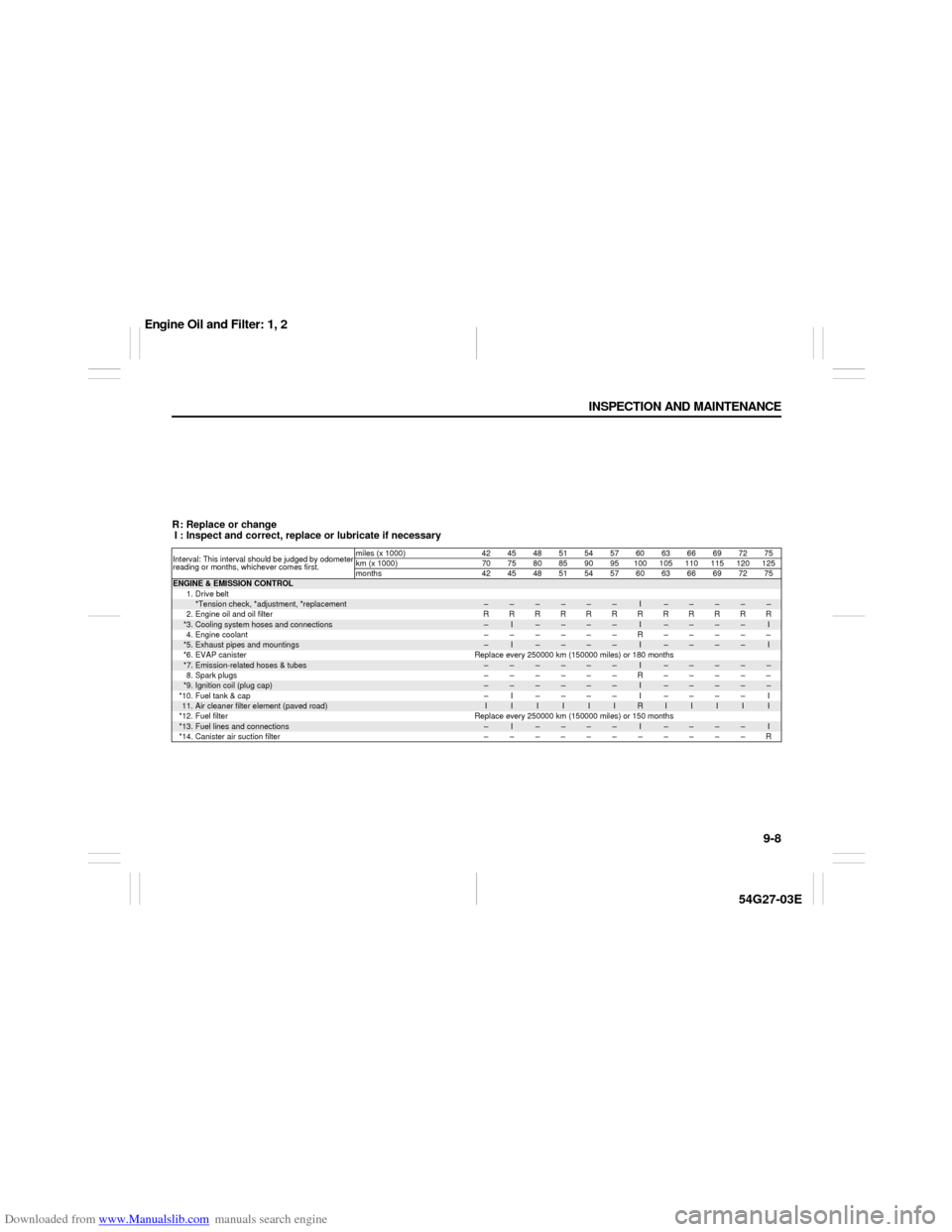
R: Replace or change
I : Inspect and correct, replace or lubricate if necessaryInterval: This interval should be judged by odometer
reading or months, whichever comes first.miles (x 1000) 42 45 48 51 54 57 60 63 66 69 72 75
km (x 1000) 70 75 80 85 90 95 100 105 110 115 120 125
months 42 45 48 51 54 57 60 63 66 69 72 75ENGINE & EMISSION CONTROL
1. Drive belt
*Tension check, *adjustment, *replacement
–
–
–
–
–
–
I
–
–
–
–
–
2.Engine oil and oil filter RRRRRRRRRRRR
*3.
Cooling system hoses and connections
–
I
–
–
–
–
I
–
–
–
–
I
4.Engine coolant ––––––R–––––
*5.
Exhaust pipes and mountings
–
I
–
–
–
–
I
–
–
–
–
I
*6. EVAP canister Replace every 250000 km (150000 miles) or 180 months
*7.
Emission-related hoses & tubes
–
–
–
–
–
–
I
–
–
–
–
–
8.Spark plugs ––––––R–––––
*9.
Ignition coil (plug cap)
–
–
–
–
–
–
I
–
–
–
–
–
*10.Fuel tank & cap – I –––– I –––– I
11.
Air cleaner filter element (paved road)
I
I
I
I
I
I
R
I
I
I
I
I
*12. Fuel filter Replace every 250000 km (150000 miles) or 150 months
*13.
Fuel lines and connections
–
I
–
–
–
–
I
–
–
–
–
I
*14.Canister air suction filter –––––––––––R
Engine Oil and Filter: 1, 2
Page 162 of 232
Downloaded from www.Manualslib.com manuals search engine 9-9 INSPECTION AND MAINTENANCE
54G27-03E
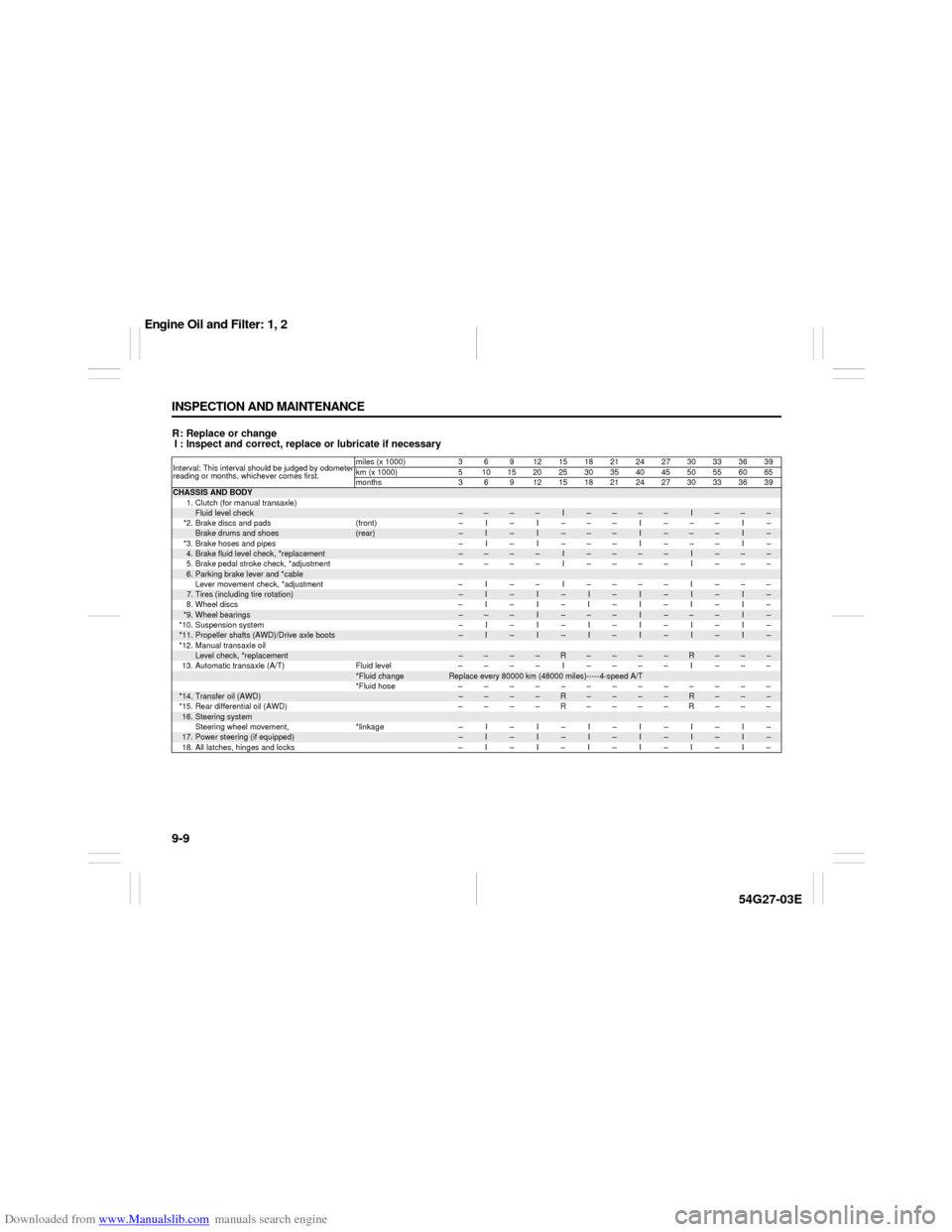
R: Replace or change
I : Inspect and correct, replace or lubricate if necessaryInterval: This interval should be judged by odometer
reading or months, whichever comes first.miles (x 1000) 3 6 9 12 15 18 21 24 27 30 33 36 39
km (x 1000) 5 101520253035404550556065
months 3 6 9 12 15 18 21 24 27 30 33 36 39CHASSIS AND BODY
1. Clutch (for manual transaxle)
Fluid level check
–
–
–
–
I
–
–
–
–
I
–
–
–
*2. Brake discs and pads (front) – I – I – – – I – – – I –
Brake drums and shoes
(rear)
–
I
–
I
–
–
–
I
–
–
–
I
–
*3. Brake hoses and pipes – I – I – – – I – – – I –
4.Brake fluid level check, *replacement
–
–
–
–
I
–
–
–
–
I
–
–
–
5. Brake pedal stroke check, *adjustment–––– I –––– I –––
6.Parking brake lever and *cableLever movement check, *adjustment – I –– I –––– I –––7.Tires (including tire rotation)
–
I
–
I
–
I
–
I
–
I
–
I
–
8.Wheel discs –I–I–I–I–I–I–
*9.
Wheel bearings
–
–
–
I
–
–
–
I
–
–
–
I
–
*10. Suspension system – I – I – I – I – I – I –
*11.
Propeller shafts (AWD)/Drive axle boots
–
I
–
I
–
I
–
I
–
I
–
I
–
*12. Manual transaxle oil
Level check, *replacement
–
–
–
–
R
–
–
–
–
R
–
–
–
13.Automatic transaxle (A/T) Fluid level –––– I –––– I –––
*Fluid change
Replace every 80000 km (48000 miles)-----4-speed A/T
*Fluid hose –––––––––––––
*14.
Transfer oil (AWD)
–
–
–
–
R
–
–
–
–
R
–
–
–
*15.Rear differential oil (AWD) ––––R––––R–––
16.
Steering systemSteering wheel movement, *linkage – I – I – I – I – I – I –
17.
Power steering (if equipped)
–
I
–
I
–
I
–
I
–
I
–
I
–
18. All latches, hinges and locks – I – I – I – I – I – I –
Engine Oil and Filter: 1, 2
Page 163 of 232
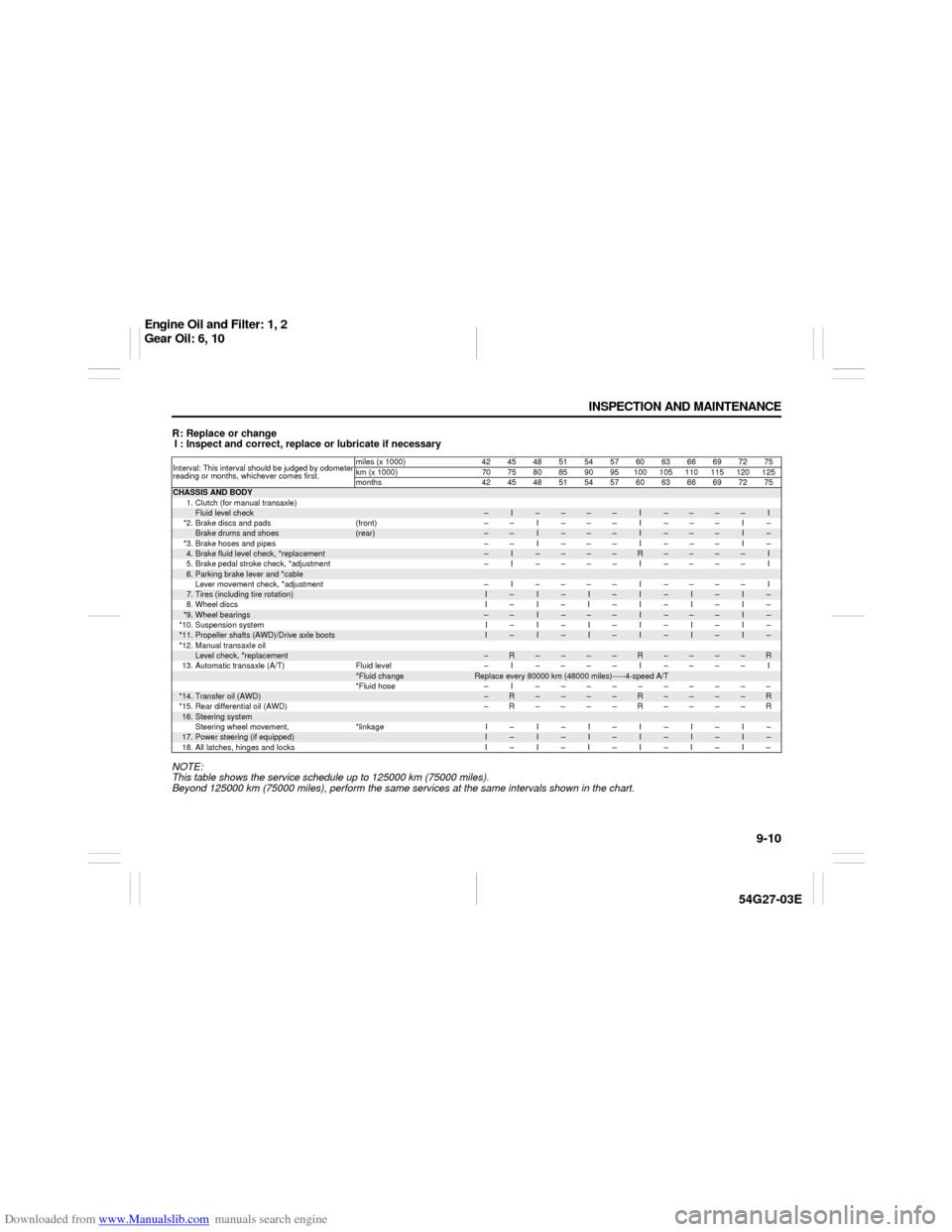
Downloaded from www.Manualslib.com manuals search engine 9-10 INSPECTION AND MAINTENANCE
54G27-03E
R: Replace or change
I : Inspect and correct, replace or lubricate if necessary
NOTE:
This table shows the service schedule up to 125000 km (75000 miles).
Beyond 125000 km (75000 miles), perform the same services at the same intervals shown in the chart.Interval: This interval should be judged by odometer
reading or months, whichever comes first.miles (x 1000) 42 45 48 51 54 57 60 63 66 69 72 75
km (x 1000) 70 75 80 85 90 95 100 105 110 115 120 125
months 42 45 48 51 54 57 60 63 66 69 72 75CHASSIS AND BODY
1. Clutch (for manual transaxle)
Fluid level check
–
I
–
–
–
–
I
–
–
–
–
I
*2. Brake discs and pads (front) – – I – – – I – – – I –
Brake drums and shoes
(rear)
–
–
I
–
–
–
I
–
–
–
I
–
*3. Brake hoses and pipes – – I – – – I – – – I –
4.Brake fluid level check, *replacement
–
I
–
–
–
–
R
–
–
–
–
I
5. Brake pedal stroke check, *adjustment – I–––– I –––– I
6.Parking brake lever and *cableLever movement check, *adjustment – I –––– I –––– I7.Tires (including tire rotation)
I
–
I
–
I
–
I
–
I
–
I
–
8.Wheel discs I–I–I–I–I–I–
*9.
Wheel bearings
–
–
I
–
–
–
I
–
–
–
I
–
*10. Suspension system I – I – I – I – I – I –
*11.
Propeller shafts (AWD)/Drive axle boots
I
–
I
–
I
–
I
–
I
–
I
–
*12. Manual transaxle oil
Level check, *replacement
–
R
–
–
–
–
R
–
–
–
–
R
13.Automatic transaxle (A/T) Fluid level – I –––– I –––– I
*Fluid change
Replace every 80000 km (48000 miles)-----4-speed A/T
*Fluid hose – I ––––––––––
*14.
Transfer oil (AWD)
–
R
–
–
–
–
R
–
–
–
–
R
*15.Rear differential oil (AWD) –R––––R––––R
16.
Steering systemSteering wheel movement, *linkage I – I – I – I – I – I –
17.
Power steering (if equipped)
I
–
I
–
I
–
I
–
I
–
I
–
18. All latches, hinges and locks I – I – I – I – I – I –
Engine Oil and Filter: 1, 2
Gear Oil: 6, 10
Page 170 of 232
Downloaded from www.Manualslib.com manuals search engine 9-17 INSPECTION AND MAINTENANCE
54G27-03E
Changing OilSince special procedures, materials and
tools are required to change the automatic
transaxle oil, it is recommended that you
trust this job to your authorized SUZUKI
dealer.
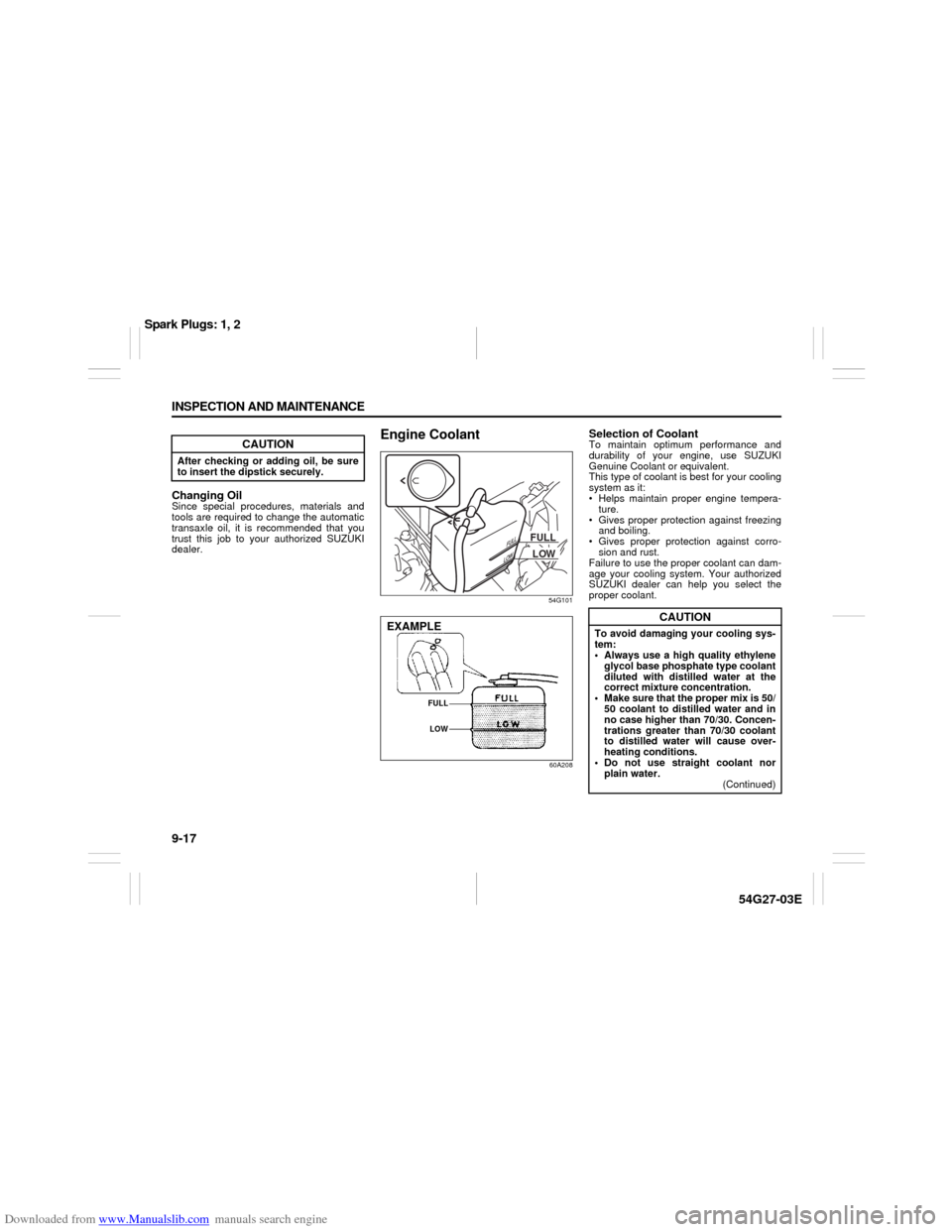
Engine Coolant
54G101
60A208
Selection of CoolantTo maintain optimum performance and
durability of your engine, use SUZUKI
Genuine Coolant or equivalent.
This type of coolant is best for your cooling
system as it:
Helps maintain proper engine tempera-
ture.
Gives proper protection against freezing
and boiling.
Gives proper protection against corro-
sion and rust.
Failure to use the proper coolant can dam-
age your cooling system. Your authorized
SUZUKI dealer can help you select the
proper coolant.
CAUTION
After checking or adding oil, be sure
to insert the dipstick securely.
FULLLOW
EXAMPLE
FULL
LOW
CAUTION
To avoid damaging your cooling sys-
tem:
Always use a high quality ethylene
glycol base phosphate type coolant
diluted with distilled water at the
correct mixture concentration.
Make sure that the proper mix is 50/
50 coolant to distilled water and in
no case higher than 70/30. Concen-
trations greater than 70/30 coolant
to distilled water will cause over-
heating conditions.
Do not use straight coolant nor
plain water.
(Continued)
Spark Plugs: 1, 2
Page 171 of 232
Downloaded from www.Manualslib.com manuals search engine 9-18 INSPECTION AND MAINTENANCE
54G27-03E
Engine Coolant Level CheckCheck the engine coolant level at the
reserve tank, not at the radiator. With the
engine cool, the engine coolant level
should be between the “FULL” and “LOW”
marks.Adding Engine CoolantIf the engine coolant level is below the
“LOW” mark, more engine coolant should
be added. Remove the reserve tank cap
and add engine coolant until the reserve
tank level reaches the “FULL” mark. Never
fill the reserve tank above the “FULL”
mark.
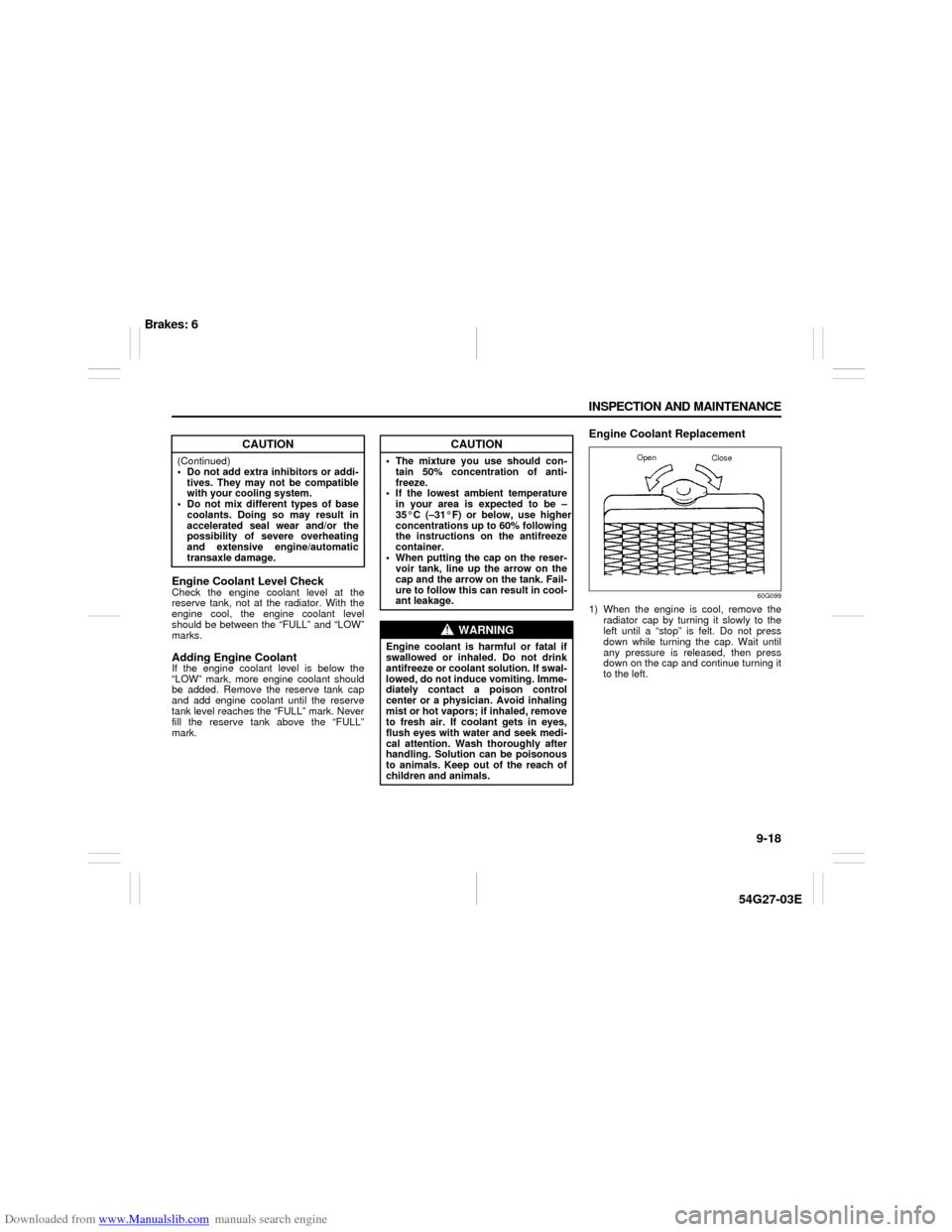
Engine Coolant Replacement
60G099
1) When the engine is cool, remove the
radiator cap by turning it slowly to the
left until a “stop” is felt. Do not press
down while turning the cap. Wait until
any pressure is released, then press
down on the cap and continue turning it
to the left.
CAUTION
(Continued)
Do not add extra inhibitors or addi-
tives. They may not be compatible
with your cooling system.
Do not mix different types of base
coolants. Doing so may result in
accelerated seal wear and/or the
possibility of severe overheating
and extensive engine/automatic
transaxle damage.
CAUTION
The mixture you use should con-
tain 50% concentration of anti-
freeze.
If the lowest ambient temperature
in your area is expected to be –
35°C (–31°F) or below, use higher
concentrations up to 60% following
the instructions on the antifreeze
container.
When putting the cap on the reser-
voir tank, line up the arrow on the
cap and the arrow on the tank. Fail-
ure to follow this can result in cool-
ant leakage.
WARNING
Engine coolant is harmful or fatal if
swallowed or inhaled. Do not drink
antifreeze or coolant solution. If swal-
lowed, do not induce vomiting. Imme-
diately contact a poison control
center or a physician. Avoid inhaling
mist or hot vapors; if inhaled, remove
to fresh air. If coolant gets in eyes,
flush eyes with water and seek medi-
cal attention. Wash thoroughly after
handling. Solution can be poisonous
to animals. Keep out of the reach of
children and animals.
Open
Close
Brakes: 6
Page 172 of 232
Downloaded from www.Manualslib.com manuals search engine 9-19 INSPECTION AND MAINTENANCE
54G27-03E
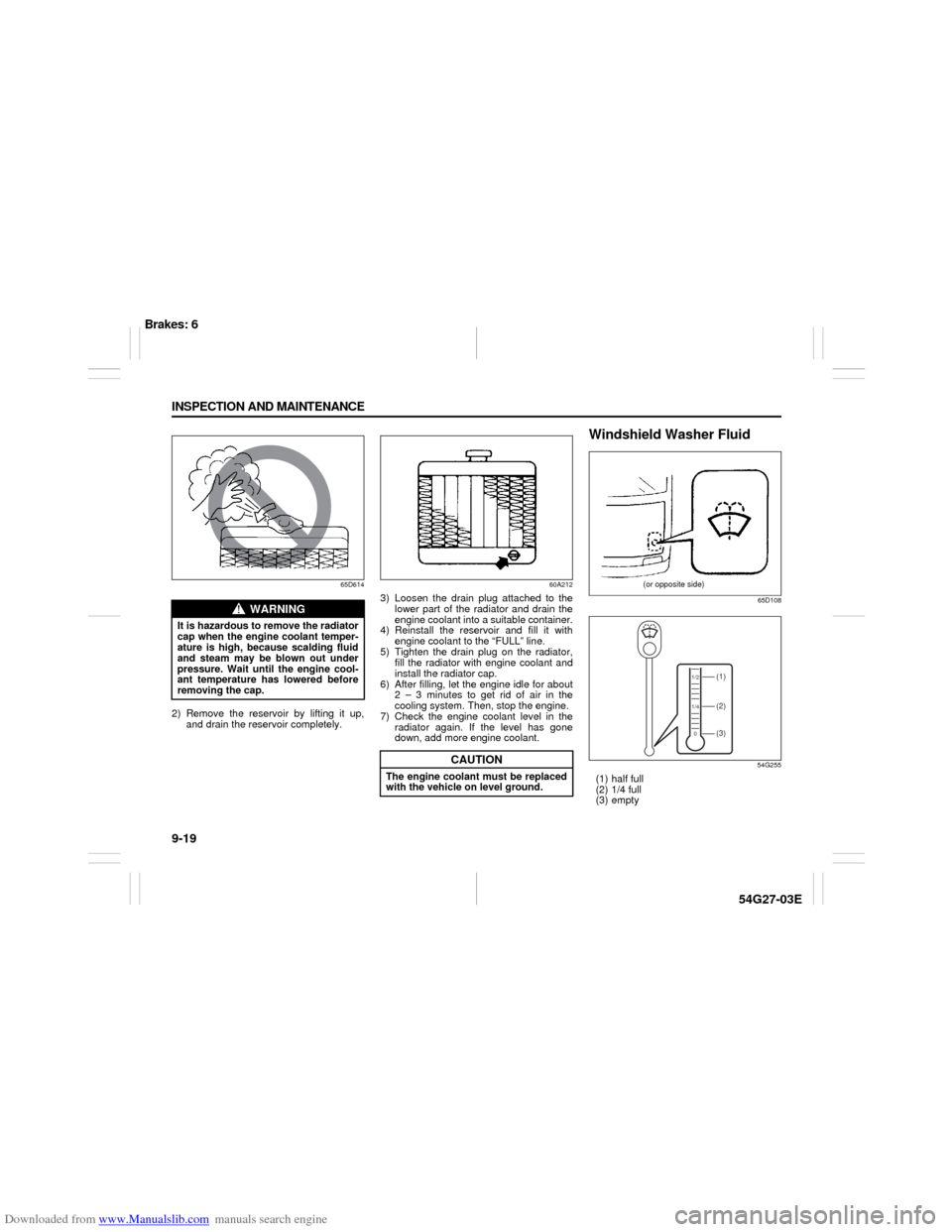
65D614
2) Remove the reservoir by lifting it up,
and drain the reservoir completely.
60A212
3) Loosen the drain plug attached to the
lower part of the radiator and drain the
engine coolant into a suitable container.
4) Reinstall the reservoir and fill it with
engine coolant to the “FULL” line.
5) Tighten the drain plug on the radiator,
fill the radiator with engine coolant and
install the radiator cap.
6) After filling, let the engine idle for about
2 – 3 minutes to get rid of air in the
cooling system. Then, stop the engine.
7) Check the engine coolant level in the
radiator again. If the level has gone
down, add more engine coolant.
Windshield Washer Fluid
65D108
54G255
(1) half full
(2) 1/4 full
(3) empty
WARNING
It is hazardous to remove the radiator
cap when the engine coolant temper-
ature is high, because scalding fluid
and steam may be blown out under
pressure. Wait until the engine cool-
ant temperature has lowered before
removing the cap.
CAUTION
The engine coolant must be replaced
with the vehicle on level ground.
(or opposite side)
0 1/4 1/2
(1)(2)(3)
Brakes: 6
Page 175 of 232
Downloaded from www.Manualslib.com manuals search engine 9-22 INSPECTION AND MAINTENANCE
54G27-03E
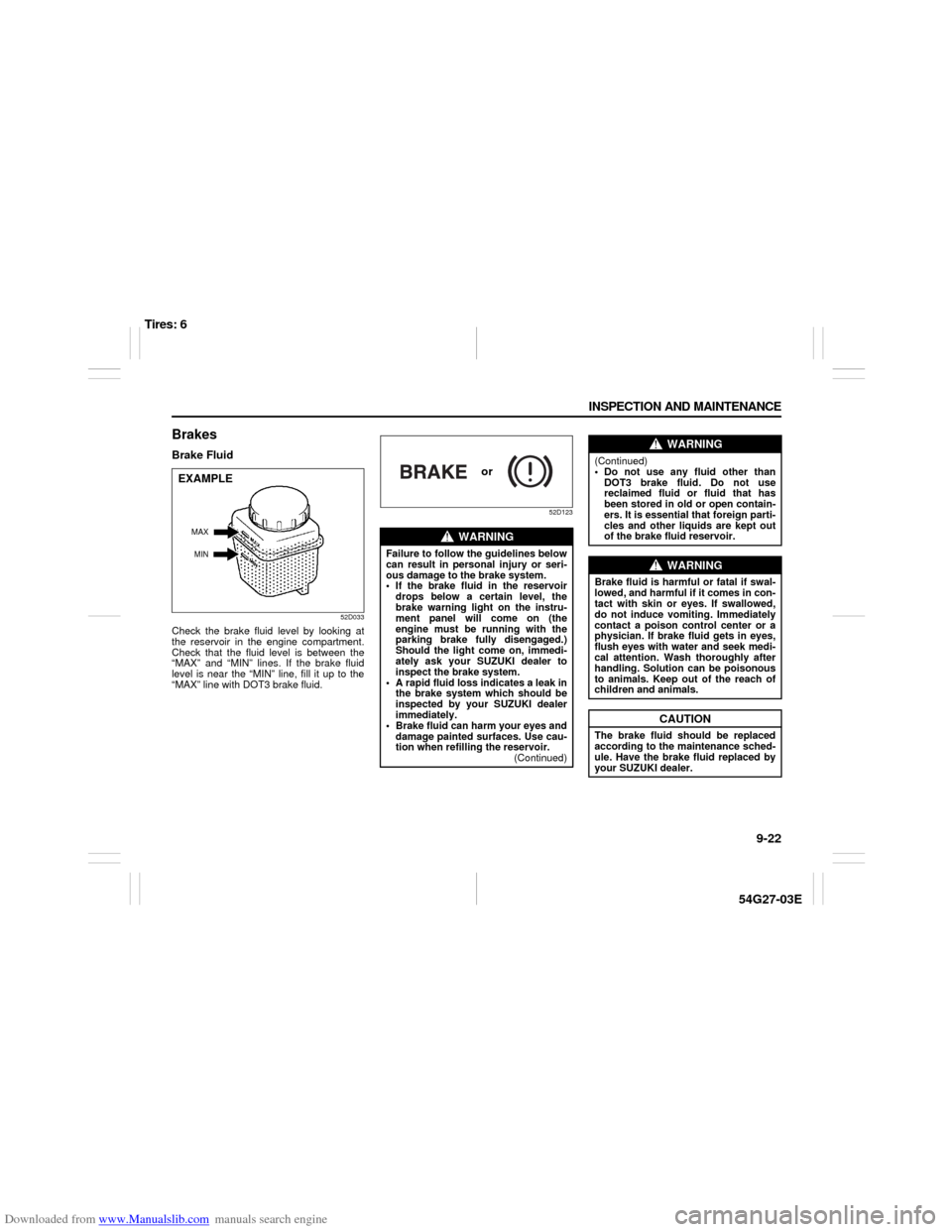
BrakesBrake Fluid
52D033
Check the brake fluid level by looking at
the reservoir in the engine compartment.
Check that the fluid level is between the
“MAX” and “MIN” lines. If the brake fluid
level is near the “MIN” line, fill it up to the
“MAX” line with DOT3 brake fluid.
52D123
MAX
MIN
EXAMPLE
WARNING
Failure to follow the guidelines below
can result in personal injury or seri-
ous damage to the brake system.
If the brake fluid in the reservoir
drops below a certain level, the
brake warning light on the instru-
ment panel will come on (the
engine must be running with the
parking brake fully disengaged.)
Should the light come on, immedi-
ately ask your SUZUKI dealer to
inspect the brake system.
A rapid fluid loss indicates a leak in
the brake system which should be
inspected by your SUZUKI dealer
immediately.
Brake fluid can harm your eyes and
damage painted surfaces. Use cau-
tion when refilling the reservoir.
(Continued)
or
WARNING
(Continued)
Do not use any fluid other than
DOT3 brake fluid. Do not use
reclaimed fluid or fluid that has
been stored in old or open contain-
ers. It is essential that foreign parti-
cles and other liquids are kept out
of the brake fluid reservoir.
WARNING
Brake fluid is harmful or fatal if swal-
lowed, and harmful if it comes in con-
tact with skin or eyes. If swallowed,
do not induce vomiting. Immediately
contact a poison control center or a
physician. If brake fluid gets in eyes,
flush eyes with water and seek medi-
cal attention. Wash thoroughly after
handling. Solution can be poisonous
to animals. Keep out of the reach of
children and animals.
CAUTION
The brake fluid should be replaced
according to the maintenance sched-
ule. Have the brake fluid replaced by
your SUZUKI dealer.
Tires: 6
Page 176 of 232
Downloaded from www.Manualslib.com manuals search engine 9-23 INSPECTION AND MAINTENANCE
54G27-03E
NOTE:
With disc brakes, the fluid level can be
expected to gradually fall as the brake
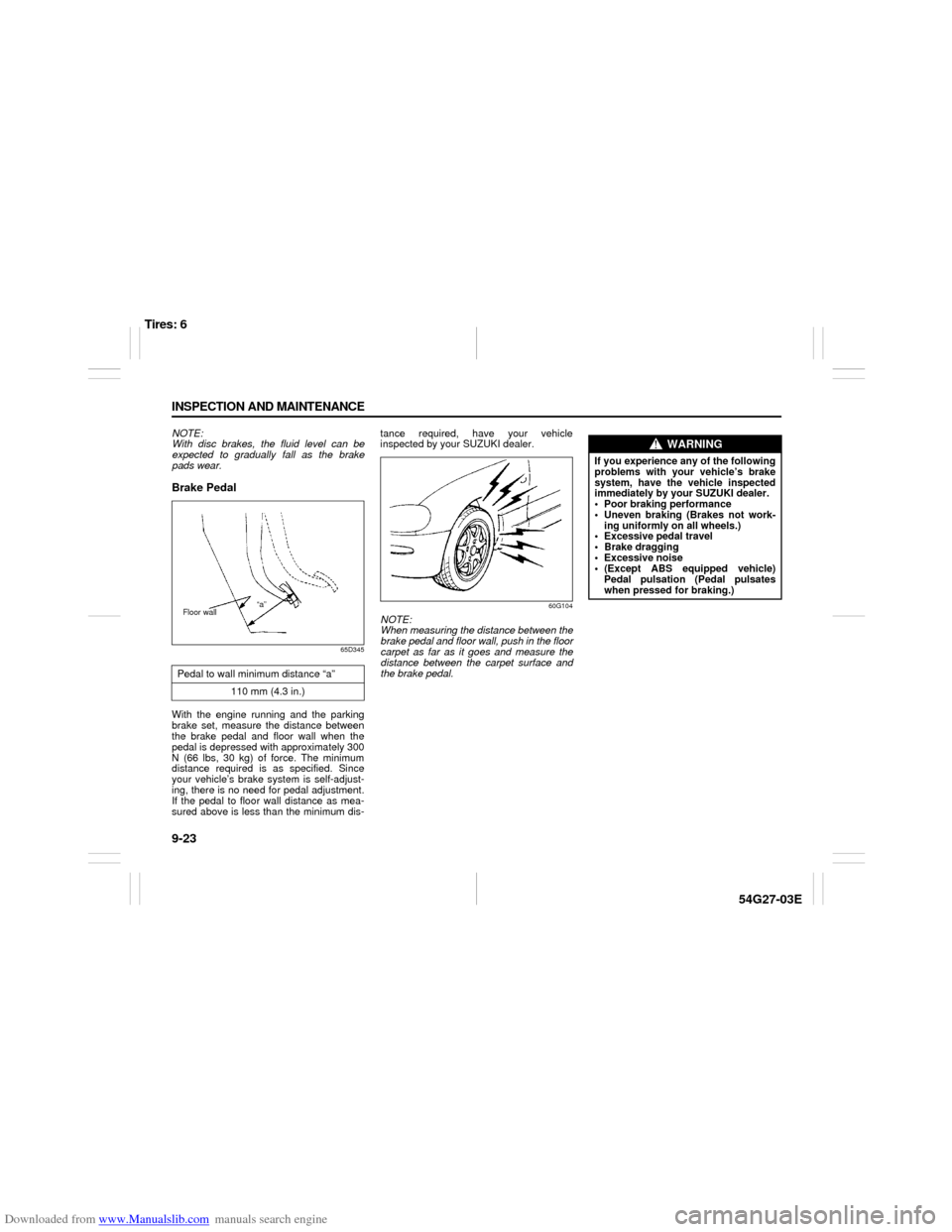
pads wear.Brake Pedal
65D345
With the engine running and the parking
brake set, measure the distance between
the brake pedal and floor wall when the
pedal is depressed with approximately 300
N (66 lbs, 30 kg) of force. The minimum
distance required is as specified. Since
your vehicle’s brake system is self-adjust-
ing, there is no need for pedal adjustment.
If the pedal to floor wall distance as mea-
sured above is less than the minimum dis-tance required, have your vehicle
inspected by your SUZUKI dealer.
60G104
NOTE:
When measuring the distance between the
brake pedal and floor wall, push in the floor
carpet as far as it goes and measure the
distance between the carpet surface and
the brake pedal.
Pedal to wall minimum distance “a”
110 mm (4.3 in.)
“a”
Floor wall
WARNING
If you experience any of the following
problems with your vehicle’s brake
system, have the vehicle inspected
immediately by your SUZUKI dealer.
Poor braking performance
Uneven braking (Brakes not work-
ing uniformly on all wheels.)
Excessive pedal travel
Brake dragging
Excessive noise
(Except ABS equipped vehicle)
Pedal pulsation (Pedal pulsates
when pressed for braking.)
Tires: 6