period SUZUKI GRAND VITARA 2014 Owner's Guide
[x] Cancel search | Manufacturer: SUZUKI, Model Year: 2014, Model line: GRAND VITARA, Model: SUZUKI GRAND VITARA 2014Pages: 337, PDF Size: 6.21 MB
Page 288 of 337
7-39INSPECTION AND MAINTENANCE
79K21-03E
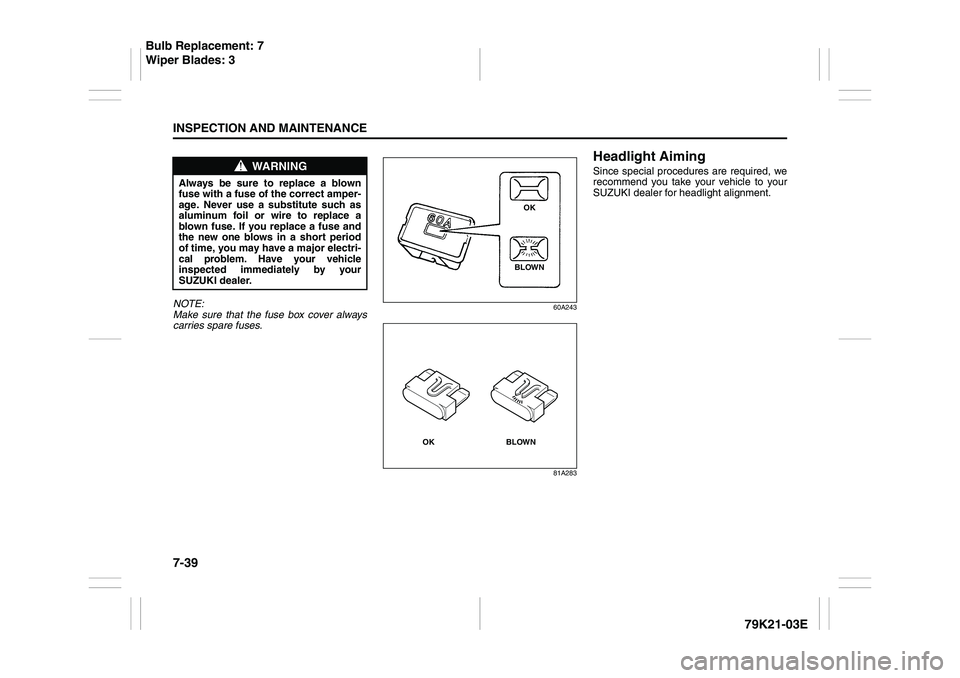
NOTE:
Make sure that the fuse box cover always
carries spare fuses.
60A243
81A283
Headlight AimingSince special procedures are required, we
recommend you take your vehicle to your
SUZUKI dealer for headlight alignment.
WARNING
Always be sure to replace a blown
fuse with a fuse of the correct amper-
age. Never use a substitute such as
aluminum foil or wire to replace a
blown fuse. If you replace a fuse and
the new one blows in a short period
of time, you may have a major electri-
cal problem. Have your vehicle
inspected immediately by your
SUZUKI dealer.
BLOWNOKBLOWN OK
Bulb Replacement: 7
Wiper Blades: 3
Page 298 of 337
7-49INSPECTION AND MAINTENANCE
79K21-03E
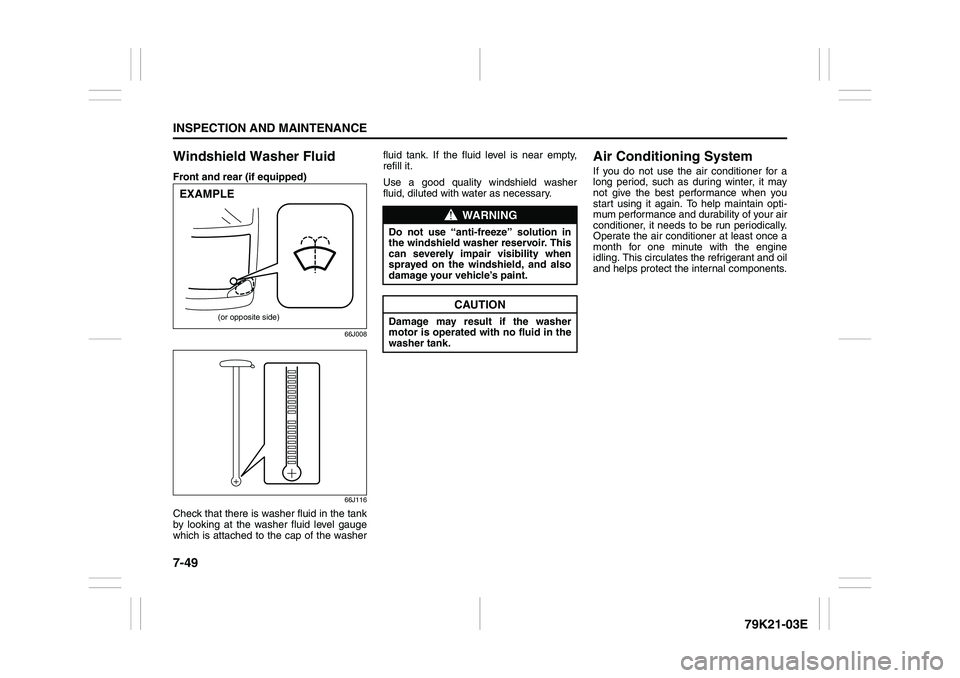
Windshield Washer FluidFront and rear (if equipped)
66J008
66J116
Check that there is washer fluid in the tank
by looking at the washer fluid level gauge
which is attached to the cap of the washerfluid tank. If the fluid level is near empty,
refill it.
Use a good quality windshield washer
fluid, diluted with water as necessary.
Air Conditioning SystemIf you do not use the air conditioner for a
long period, such as during winter, it may
not give the best performance when you
start using it again. To help maintain opti-
mum performance and durability of your air
conditioner, it needs to be run periodically.
Operate the air conditioner at least once a
month for one minute with the engine
idling. This circulates the refrigerant and oil
and helps protect the internal components.
(or opposite side)
EXAMPLE
WARNING
Do not use “anti-freeze” solution in
the windshield washer reservoir. This
can severely impair visibility when
sprayed on the windshield, and also
damage your vehicle’s paint.
CAUTION
Damage may result if the washer
motor is operated with no fluid in the
washer tank.
Page 312 of 337
9-1APPEARANCE CARE
79K21-03E
Corrosion PreventionIt is important to take good care of your
vehicle to protect it from corrosion.
Listed below are instructions for how to
maintain your vehicle to prevent corrosion.
Please read and follow these instructions
carefully.Important Information About Corro-
sionCommon causes of corrosion
1) Accumulation of road salt, dirt, moisture
or chemicals in hard-to-reach areas of
the vehicle underbody or frame.
2) Chipping, scratches and any damage to
treated or painted metal surfaces
resulting from minor accidents or
impact from stones and gravel.
Environmental conditions which accel-
erate corrosion
1) Road salt, dust control chemicals, sea
air or industrial pollution will all acceler-
ate the corrosion of metal.
2) High humidity will increase the rate of
corrosion particularly when the temper-
ature range is just above the freezing
point.
3) Moisture in certain areas of a vehicle
for an extended period of time may pro-
mote corrosion even though other body
sections may be completely dry.
4) High temperatures will cause an accel-
erated rate of corrosion to parts of thevehicle which are not well ventilated to
permit quick drying.
52D151
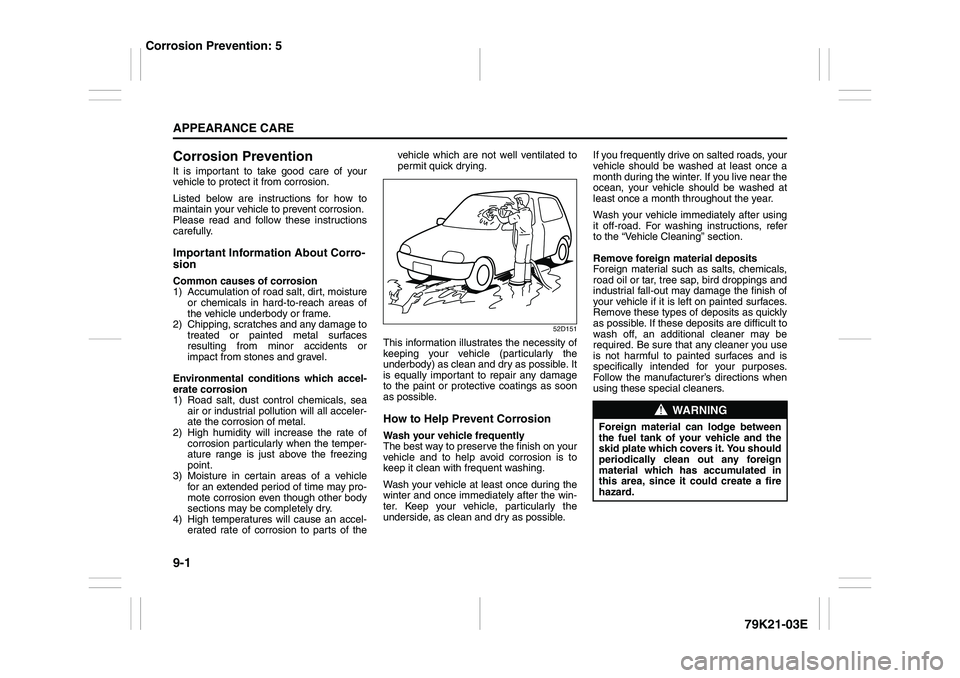
This information illustrates the necessity of
keeping your vehicle (particularly the
underbody) as clean and dry as possible. It
is equally important to repair any damage
to the paint or protective coatings as soon
as possible.How to Help Prevent CorrosionWash your vehicle frequently
The best way to preserve the finish on your
vehicle and to help avoid corrosion is to
keep it clean with frequent washing.
Wash your vehicle at least once during the
winter and once immediately after the win-
ter. Keep your vehicle, particularly the
underside, as clean and dry as possible.If you frequently drive on salted roads, your
vehicle should be washed at least once a
month during the winter. If you live near the
ocean, your vehicle should be washed at
least once a month throughout the year.
Wash your vehicle immediately after using
it off-road. For washing instructions, refer
to the “Vehicle Cleaning” section.
Remove foreign material deposits
Foreign material such as salts, chemicals,
road oil or tar, tree sap, bird droppings and
industrial fall-out may damage the finish of
your vehicle if it is left on painted surfaces.
Remove these types of deposits as quickly
as possible. If these deposits are difficult to
wash off, an additional cleaner may be
required. Be sure that any cleaner you use
is not harmful to painted surfaces and is
specifically intended for your purposes.
Follow the manufacturer’s directions when
using these special cleaners.
WARNING
Foreign material can lodge between
the fuel tank of your vehicle and the
skid plate which covers it. You should
periodically clean out any foreign
material which has accumulated in
this area, since it could create a fire
hazard.
Corrosion Prevention: 5
Page 334 of 337
13-4INDEX
79K21-03E
On-Pavement Driving
..........................................................4-4
Open Door Warning Light
...................................................2-62
Outside Rearview Mirrors ...................................................2-17
Overhead Console Box
.......................................................5-71
PParking Brake Lever
.................................................... 3-7
, 7-24
Pedals
...................................................................................3-8
Periodic Maintenance Schedule
.........................................7-3
Power Assisted Brakes
.......................................................3-29
Power Door Locking System
..............................................2-2
Power Mirror Control
...........................................................2-18
Power Steering
....................................................................7-24
Power Steering Fluid
...........................................................7-24
Power Window Controls
.....................................................2-15
RRadio Antenna
.....................................................................5-8
Rear Seats
............................................................................2-22
Rear Window Defroster and Outside Rearview Mirrors
Defroster Switch
..................................................................2-82
Rear Window Wiper/Washer Switch
..................................2-81
Refill with Oil and Check for Leaks ....................................7-12
Remote Audio Controls
............................................ 5-30
, 5-56
Replace the Oil Filter
...........................................................7-12
Replacing Tires and/or Wheels
..........................................3-41
Reporting Safety Defects
....................................................10-4
Roof Rails or Roof Rack Anchors
......................................5-78
SSafety Certification Label
...................................................10-2
Seat Adjustment
........................................................ 2-18
, 2-22
Seat Belt Extender
...............................................................2-41
Seat Belt Inspection ............................................................2-33Seat Belt Pretensioner System
.......................................... 2-42
Seat Belt Reminder
............................................................. 2-30
Seat Belts and Child Restraint Systems
........................... 2-26
Selection of Coolant
........................................................... 7-13
Shopping Hook
................................................................... 5-73
Shoulder anchor height adjuster
....................................... 2-32
Side Air Bags and Side Curtain Air Bags
......................... 2-46
Side Door Locks
.................................................................. 2-1
SLIP Indicator Light
...................................................2-58
, 3-32
Snow Tires
..................................................................7-32
, 8-6
Spare Tire Nut Lock
............................................................ 8-1
Spark Plugs
......................................................................... 7-16
SPECIFICATIONS
................................................................ 12-1
Specified Fluid
.................................................................... 7-20
Specified Gear Oil ............................................................... 7-17
Specified Oil
........................................................................ 7-10
Speedometer ....................................................................... 2-65
Spot Light
............................................................................ 5-66
Stability Control System
.................................................... 3-31
Starting the Engine
............................................................. 3-9
Steering Wheel
.................................................................... 7-24
Sun Visor
............................................................................. 5-64
Sunroof
................................................................................ 5-68
Supplemental Restraint System (air bags)
....................... 2-43
TTachometer
.......................................................................... 2-65
Tailgate
................................................................................ 2-3
Temperature Gauge
............................................................ 2-66
Theft Deterrent Light .......................................................... 2-15
Thermometer
....................................................................... 2-70
Tilt Steering Lock Lever
..................................................... 2-82