148 2-1. Driving procedures
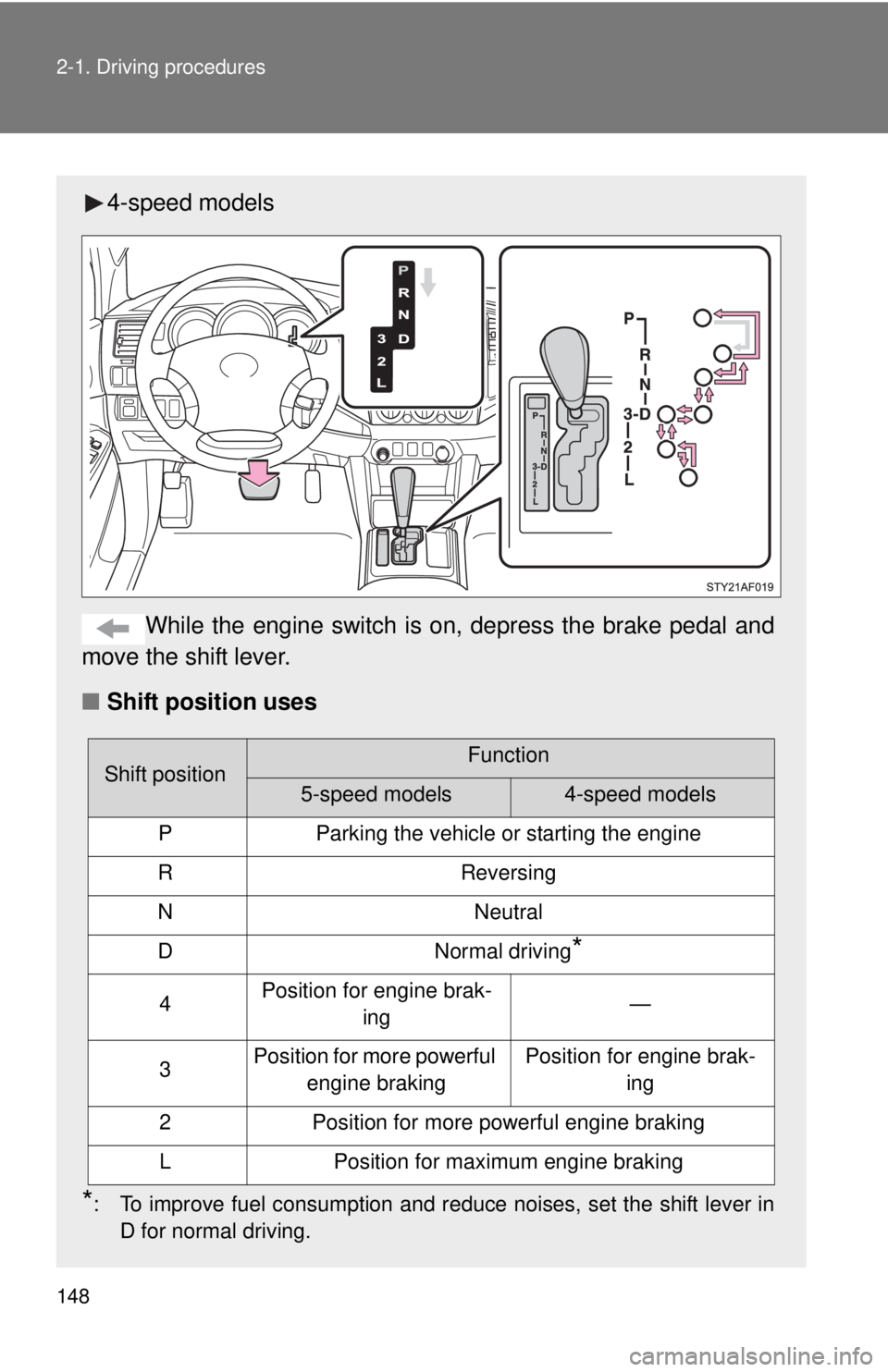
4-speed models
While the engine switch is on, depress the brake pedal and
move the shift lever.
■Shift position uses
*: To improve fuel consumption and reduce noises, set the shift lever in
D for normal driving.
Shift positionFunction
5-speed models4-speed models
PParking the vehicle or starting the engine
RReversing
NNeutral
DNormal driving*
4Position for engine brak-
ing—
3Position for more powerful
engine brakingPosition for engine brak-
ing
2Position for more powerful engine braking
LPosition for maximum engine braking
213
2-5. Driving information
2
When driving
Trailer towing
Your vehicle is designed primarily as a passenger-and-load carrying
vehicle, and thus towing a trailer will have an adverse effect on han-
dling, performance, braking, durability, and fuel consumption. For
your safety and the safety of others, do not overload the vehicle or
trailer.
We recommend you use a weight distributing hitch when towing to
keep your vehicle level with the ground.
■Weight limits
Confirm that the total trailer weight, gross combination weight,
gross vehicle weight, gross axle weight, and trailer tongue load
are all within the limits.
■Gross vehicle weight
The gross vehicle weight must not exceed the Gross Vehicle
Weight Rating (GVWR) indicated on the Certification Label. The
gross vehicle weight is the sum of the weights of the unloaded
vehicle, driver, passengers, luggage, hitch, and the trailer
tongue load. It also includes the weight of any special equipment
installed on your vehicle.