belt VOLKSWAGEN CC 2012 User Guide
[x] Cancel search | Manufacturer: VOLKSWAGEN, Model Year: 2012, Model line: CC, Model: VOLKSWAGEN CC 2012Pages: 578, PDF Size: 6.64 MB
Page 134 of 578
What happens to passengers not wearing a safety belt
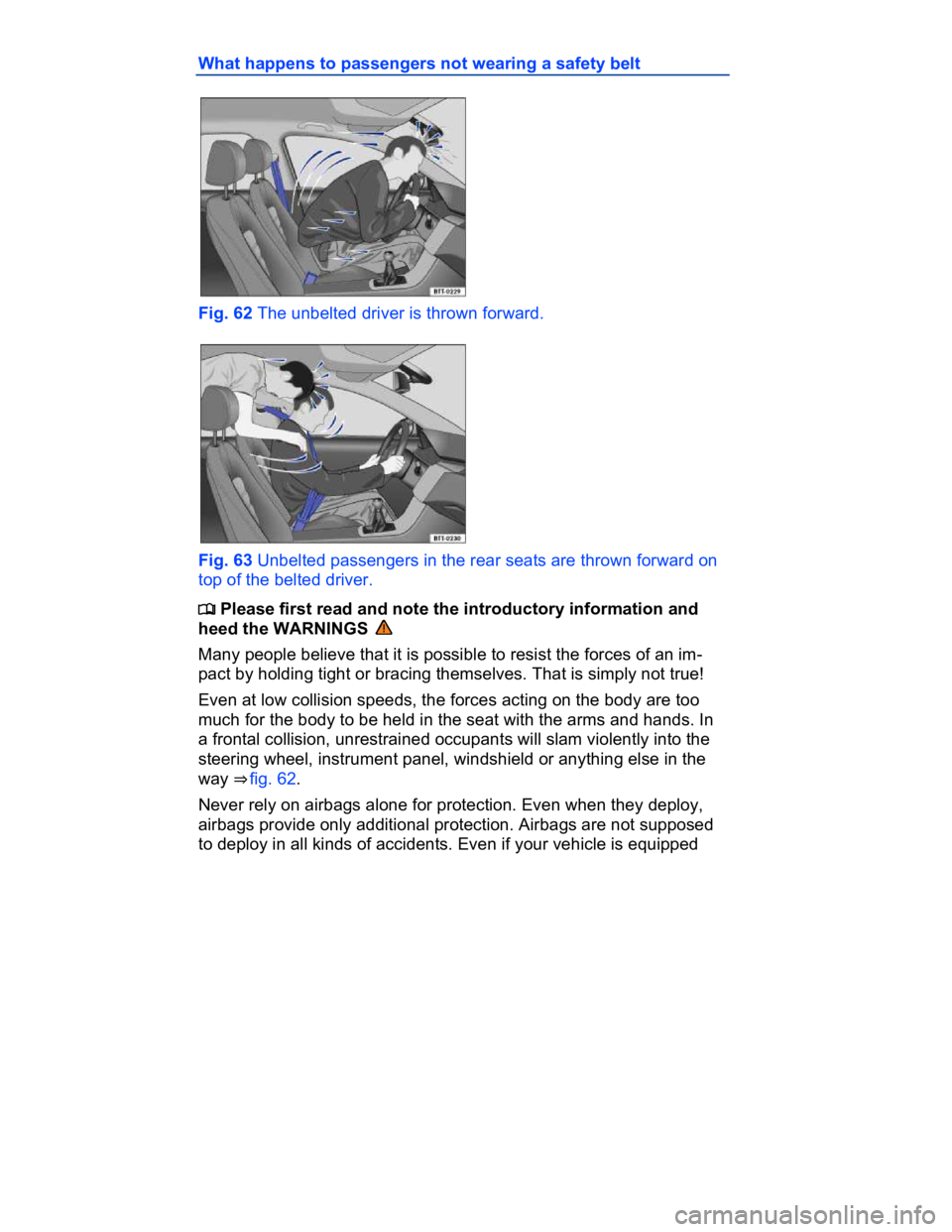
Fig. 62 The unbelted driver is thrown forward.
Fig. 63 Unbelted passengers in the rear seats are thrown forward on
top of the belted driver.
Page 135 of 578
with airbags, all vehicle occupants, including the driver, must wear
safety belts correctly in order to minimize the risk of severe injury or
death in a crash, regardless of whether a seating position has an air-
bag or not.
An airbag will deploy only once. Safety belts are always there to offer
protection in those accidents in which airbags are not supposed to
deploy or when they have already deployed. Unbelted occupants can
also be thrown out of the vehicle, causing even more severe injuries
or death.
It is also important for occupants in the rear seats to wear their safety
belts properly since they can be thrown violently forward through the
vehicle in the event of an accident. Unbelted passengers in the rear
seats endanger not only themselves but also the driver and other
passengers in the vehicle ⇒ fig. 63.
Safety belts protect
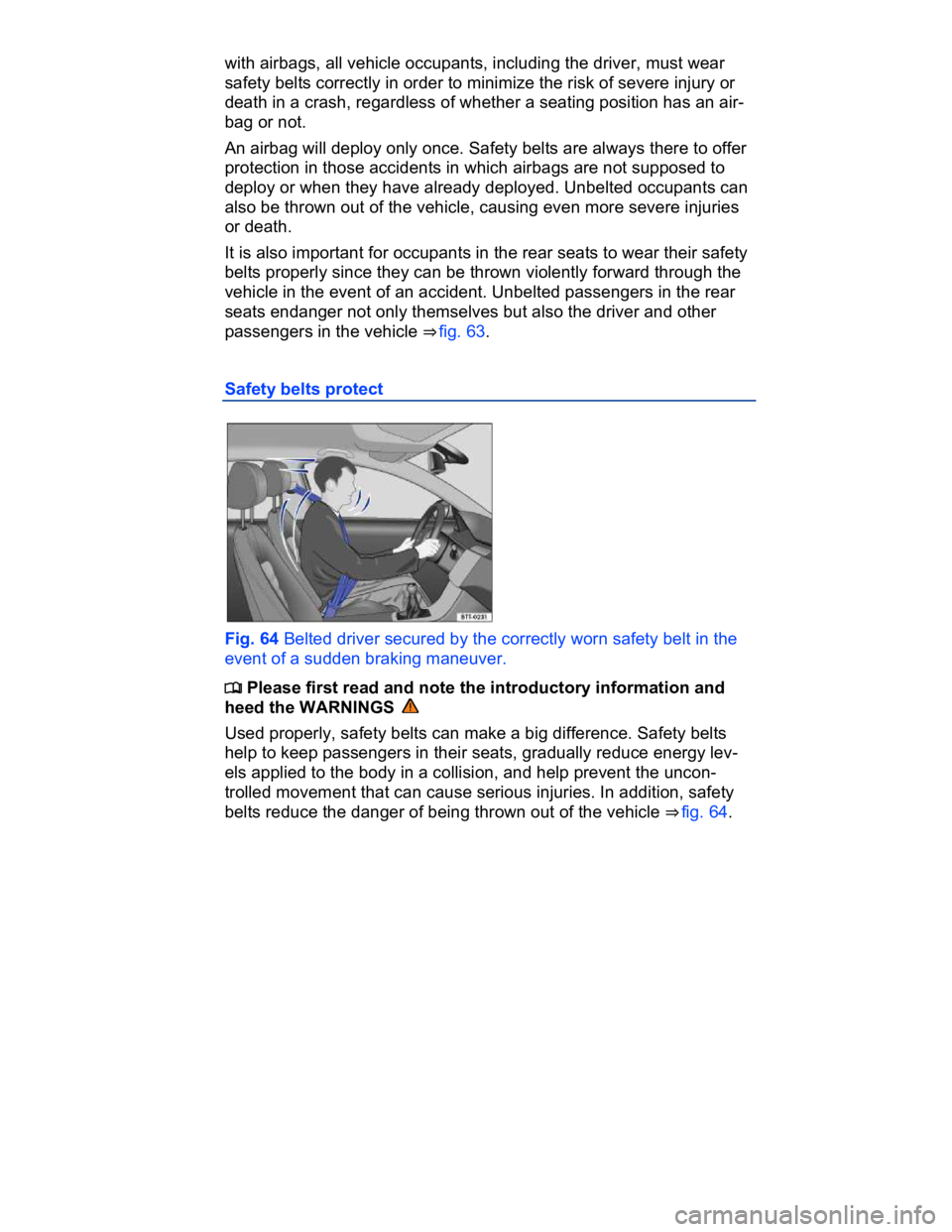
Fig. 64 Belted driver secured by the correctly worn safety belt in the
event of a sudden braking maneuver.
Page 136 of 578
Safety belts attach passengers to the car and give them the benefit of
being slowed down more gently or “softly” through the “give” in the
safety belts, crumple zones, and other safety features (such as air-
bags) engineered into today's vehicles. The front crumple zones and
other passive safety features (such as the airbag system) are also
designed to absorb kinetic energy. By “absorbing” the kinetic energy
over a longer period of time, the forces on the body become more
“tolerable” and less likely to cause injury.
Although these examples are based on a frontal collision, safety belts
can also substantially reduce the risk of injury in other kinds of crash-
es. So, whether you're on a long trip or “just going to the corner
store,” always buckle up and make sure that others do, too.
Accident statistics show that vehicle occupants properly wearing safe-
ty belts have a lower risk of being injured and a much better chance
of surviving a collision. Properly using safety belts also greatly in-
creases the ability of the supplemental airbags to do their job in a
collision. For this reason, wearing a safety belt is required by law in
most countries including the United States and Canada.
Although your Volkswagen is equipped with airbags, you still have to
wear the safety belts provided. Front airbags, for example, are acti-
vated only in some frontal collisions. The front airbags are not acti-
vated in all frontal collisions, in side and rear collisions, in rollovers, or
in cases when the conditions for deployment stored in the electronic
control unit are not met. The same goes for the other airbag systems
on your Volkswagen.
So always wear your safety belt and make sure that everybody in
your vehicle is properly restrained!
Using safety belts
Page 137 of 578

d Check the condition of all safety belts regularly.
d Keep safety belts clean.
d Keep objects and liquids away from safety belt webbing, the safety
belt buckle tongue, and the safety belt buckle latch and opening.
d Do not pinch or damage the safety belt or buckle tongue (for in-
stance, when closing a door).
d Never modify, disassemble or try to repair safety belts and safety
belt anchorages.
d Always fasten your safety belt properly before driving and keep it
fastened whenever the vehicle is moving.
Twisted safety belt
If it is difficult to pull the safety belt out of the belt guide, the belt may
be twisted inside the side trim because the belt retracted too quickly
when it was taken off.
Hold the safety belt tongue, slowly and carefully pull safety belt all
the way out.
Untwist the safety belt and slowly return the belt by hand.
If you cannot untwist the safety belt, wear it anyway. Make sure that
the safety belt is twisted in a spot where it does not come in direct
contact with your body. Have the safety belt untwisted immediately by
an authorized Volkswagen dealer or authorized Volkswagen Service
Facility.
Lockable safety belt
The retractors for the rear seat safety belts and the front passenger
safety belt have a switchable locking feature for child restraints in
addition to the emergency locking feature. Whenever a child restraint
is installed with a safety belt, the safety belt must be locked so that
the safety belt webbing cannot unreel. The switchable locking feature
lets you lock the belt so that a child restraint can be properly installed
and, for example, so that it can't tip to the side when the vehicle goes
around a corner ⇒ Child safety and child restraints.
To see whether a safety belt is lockable, pull the safety belt all the
way out of the safety belt retractor. You should then hear a “clicking”
sound as the belt winds back into the retractor reel. Test the switcha-
ble locking feature by pulling on the belt. When the switchable locking
Page 138 of 578
feature is active, you should no longer be able to pull the belt out of
the retractor.
The locking feature must be deactivated when a vehicle occupant
uses the safety belt.
WARNING
Improper use and care of safety belts increases the risk of se-
vere personal injury or death.
Regularly check safety belts and related parts for damage.
Damaged safety belts must be replaced; they cannot be re-
paired.
Always keep safety belts clean.
Never catch, damage or chafe safety belt webbing on sharp
edges.
Always keep objects and liquids away from the belt buckle
and buckle opening.
Fastening and unfastening safety belts
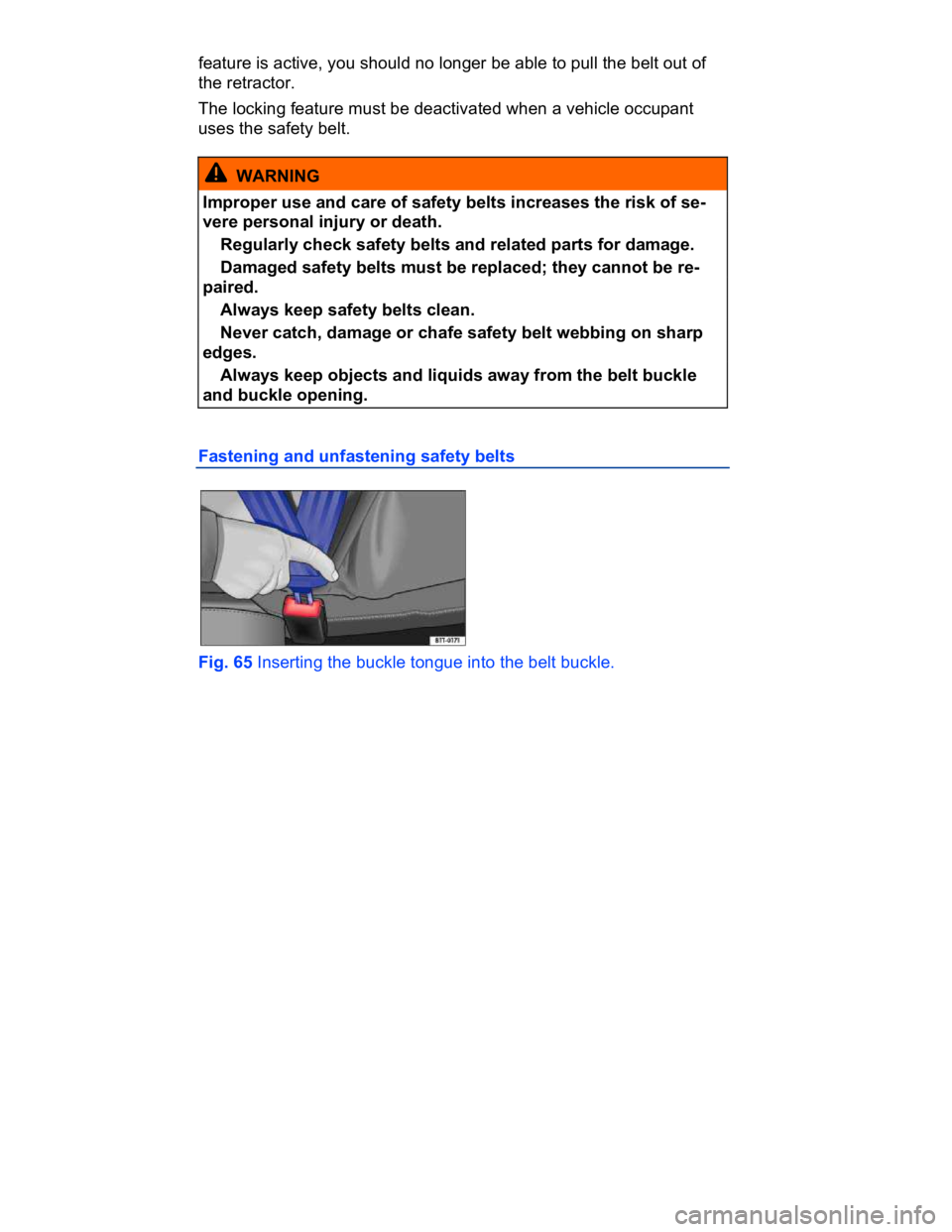
Fig. 65 Inserting the buckle tongue into the belt buckle.
Page 139 of 578
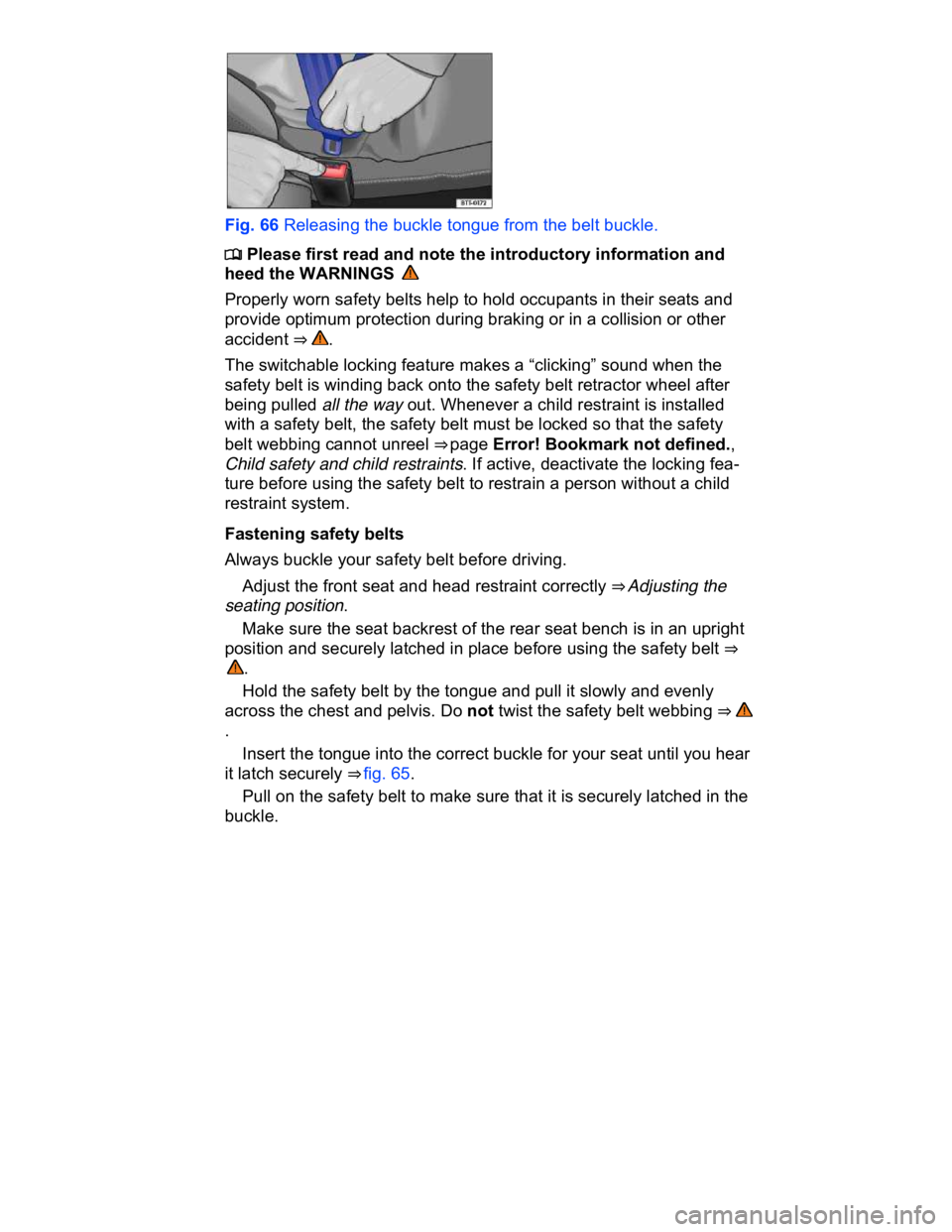
Fig. 66 Releasing the buckle tongue from the belt buckle.
Page 140 of 578
Unfastening safety belts
Unfasten safety belts only when the vehicle is not moving ⇒ .
Press the red button on the buckle ⇒ fig. 66. The buckle tongue is
ejected.
Let the belt wind up on the retractor as you guide the belt tongue to
its stowed position to help prevent the safety belt from twisting and to
help avoid damage to the interior trim.
WARNING
Improperly positioned safety belts can cause serious personal
injury or death in an accident.
Safety belts offer optimum protection only when the seat
backrest is upright and belts are correctly positioned on the
body.
A person who is not properly restrained can be seriously in-
jured by the safety belt itself if it slips from the stronger parts of
the body into sensitive areas like the abdomen.
Unfastening safety belts while the vehicle is in motion can
cause severe personal injury or death in the event of an acci-
dent or braking maneuver!
Safety belt position
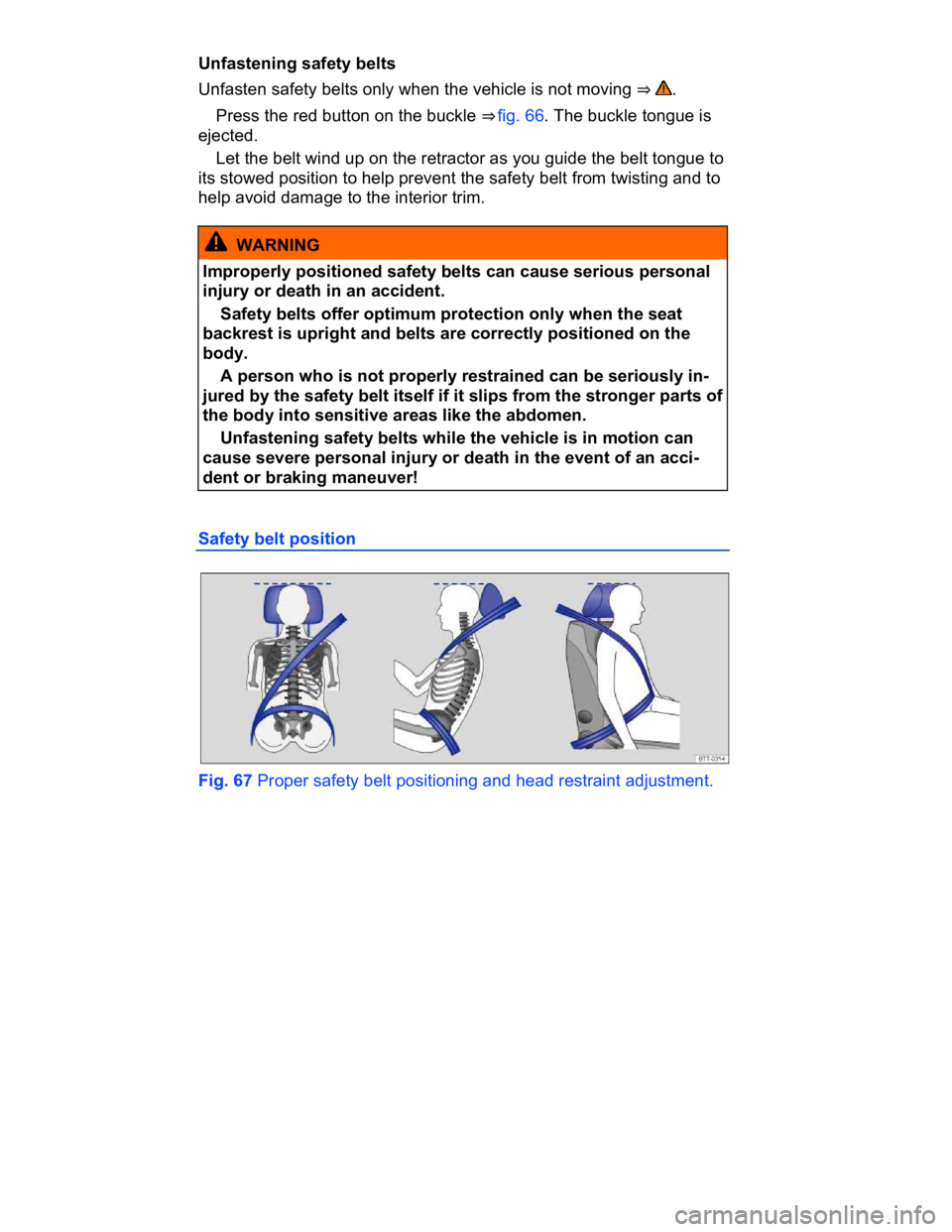
Fig. 67 Proper safety belt positioning and head restraint adjustment.
Page 141 of 578
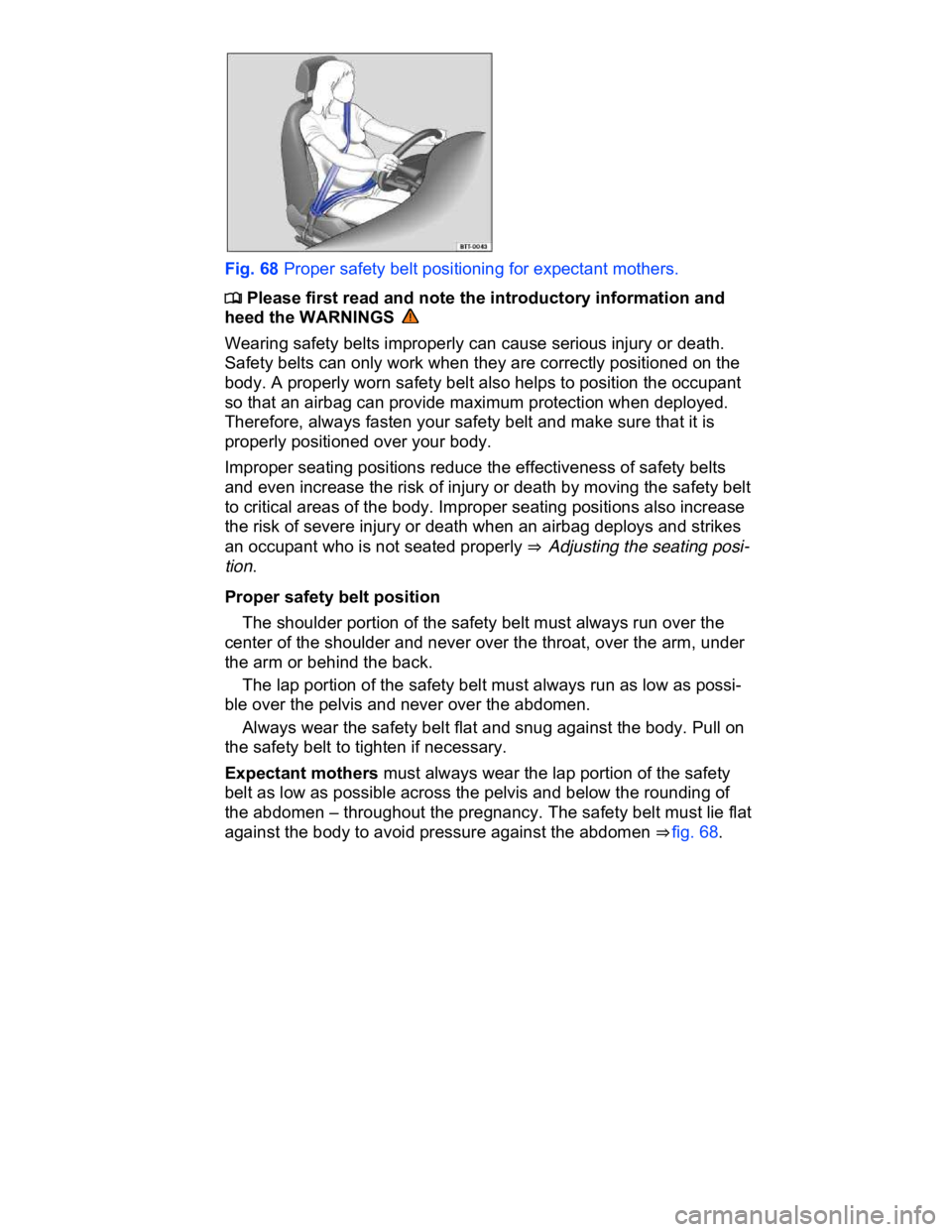
Fig. 68 Proper safety belt positioning for expectant mothers.
Page 142 of 578

Adjusting safety belt height
The safety belt position can be adjusted using the following features:
Safety belt height adjusters for the front seats.
Front seats with height adjustment.
Page 143 of 578

WARNING
Improperly positioned safety belts can cause serious personal
injury in an accident or a sudden braking maneuver.
Always make sure that all vehicle occupants are correctly re-
strained and stay in a correct seating position whenever the
vehicle is being used.
Safety belts offer optimum protection only when the seat
backrest is upright and belts are correctly positioned on the
body.
A loose-fitting safety belt can cause serious injuries by shift-
ing its position on your body from the strong bones to more
vulnerable soft tissue and cause serious injury.
The shoulder belt portion of the safety belt must be posi-
tioned over the middle of the occupant's shoulder and never
across the neck or throat.
The safety belt must lie flat and snug on the occupant's up-
per body.
Never wear the shoulder part of the safety belt under your
arm or otherwise out of position.
The lap portion of the safety belt must be positioned as low
as possible across the pelvis and never over the abdomen.
Make sure the belt lies flat and snug against the pelvis. Pull on
the safety belt to tighten if necessary.
Expectant mothers must always wear the lap portion of the
safety belt as low as possible across the pelvis and below the
rounding of the abdomen.
Do not twist the belt when attaching it. If you cannot untwist
a twisted safety belt, wear it anyway, but make sure the twisted
part is not in contact with your body. Have the problem correct-
ed right away by an authorized Volkswagen dealer or author-
ized Volkswagen Service Facility.
Never hold the safety belt away from your body with your
hand.
Never wear belts over rigid or breakable objects, such as
eyeglasses, pens or keys.
Never modify the position of the belt using comfort clips,
loops or similar devices.