flat tire VOLKSWAGEN CC 2012 Owner's Manual
[x] Cancel search | Manufacturer: VOLKSWAGEN, Model Year: 2012, Model line: CC, Model: VOLKSWAGEN CC 2012Pages: 578, PDF Size: 6.64 MB
Page 258 of 578

Normal occupant weight
Means 150 lbs (68 kilograms) times the number of occupants seated
in the vehicle up to the total seating capacity of your vehicle.
Occupant distribution
The placement of passengers in a vehicle.
Outer diameter
The diameter of a new, properly inflated tire.
Overall width
Total width measured at the exterior sidewalls of an inflated tire, in-
cluding the additional width of labeling, decorations, or protective
bands or ribs.
Passenger car tire
A tire intended for use on passenger cars, multipurpose passenger
vehicles, and trucks, that have a gross vehicle weight rating (GVWR)
of 10,000 pounds or less.
Ply
A layer of rubber-coated parallel cords.
Ply separation
A parting of rubber compound between adjacent plies.
Pneumatic tire
A mechanical device made of rubber, chemicals, fabric, and steel or
other materials, that, when mounted on an automotive wheel, pro-
vides the traction and contains the gas or fluid that sustains the load.
Production options weight
The combined weight of installed regular production options weighing
over 5 lbs (2.3 kg) more than the standard items they replace, and not
previously considered as curb weight or accessory weight. These
include, for example, heavy-duty brakes, ride levelers, roof rack,
heavy-duty battery, and special trim.
Radial ply tires
A pneumatic tire in which the ply cords that extend to the beads are
laid at substantially 90 degrees to the centerline of the tread.
Page 259 of 578

Recommended inflation pressure
The tire pressure recommended by the vehicle manufacturer for a tire
of a specified size that has not been driven for more than a couple of
miles (kilometers) at low speeds in the 3 hour period before the tire
pressure is measured or adjusted.
Reinforced tire
A tire designed to operate at higher loads and at higher inflation pres-
sures than the corresponding standard tire.
Rim
The outer edge of a wheel upon which the tire beads are seated.
Rim diameter
The nominal diameter of the wheel's tire bead seating surface. If you
change your wheel size, to wheels of a different diameter, you will
have to purchase new tires to match the new wheels.
Rim size
Designation means rim diameter and width.
Rim type designation
The industry or manufacturer's designation for a rim by style or code.
Rim width
The nominal distance between wheel rim flanges.
Section width
The linear distance between the exteriors of the sidewalls of an inflat-
ed tire, excluding elevations due to labeling decoration, or protective
bands.
Sidewall
The portion of a tire between the bead and the tread.
Sidewall separation
The parting of the rubber compound from the cord material in the
sidewall.
Page 260 of 578

Speed rating (letter code)
A standardized letter code indicating the maximum speed at which a
tire is designed to be driven for extended periods of time. The ratings
range from 93 mph or 150 km/h (“P”) to 186 mph or (300 km/h) “Y”.
The speed rating letter code, where applicable, is molded on the tire
sidewall. You may not find this information on all tires because it is
not required by law.
Tire Pressure Monitoring System
A system that detects when at least one of a vehicle's tires is underin-
flated and illuminates a low tire-pressure warning light.
Tread
The portion of a tire that normally touches the road.
Tread rib
A tread section running circumferentially around a tire.
Tread separation
Tire failure caused by the tread pulling away from the tire carcass.
Tread wear indicators (TWI)
Raised areas within the main tread grooves that show, visually, when
tires are worn and near the end of their useful life ⇒ page 261.
Uniform Tire Quality Grading (UTQG)
A tire information system developed by the U.S. National Highway
Traffic Safety Administration (NHTSA) that is designed to help buyers
compare tires. UTQG is not a safety rating, nor is it a guarantee that a
tire will last for a certain number of miles or perform a certain way. It
gives tire buyers more information to compare with factors such as
price, brand loyalty and dealer recommendations. Under UTQG, tires
are graded by the tire manufacturers in 3 areas: tread wear, traction
and temperature resistance. UTQG information is molded into the tire
sidewalls.
U.S. DOT Tire Identification Number (TIN)
A tire's serial number. It begins with the letters “DOT” (“Department of
Transportation”) and indicates that the tire meets all federal stand-
ards. The next 2 numbers or letters indicate the plant where the tire
Page 263 of 578

WARNING
Overloading a vehicle can cause loss of vehicle control, a crash
or other accident, serious personal injury, and even death.
Carrying more weight than your vehicle was designed to car-
ry will prevent the vehicle from handling properly and increase
the risk of the loss of vehicle control.
The brakes on a vehicle that has been overloaded may not be
able to stop the vehicle in a safe distance.
Tires on a vehicle that has been overloaded can fail sudden-
ly, including a blowout and sudden deflation, causing loss of
control and a crash.
Always make sure that the total load being transported – in-
cluding the weight of a trailer hitch and the tongue weight of a
loaded trailer – does not make the vehicle heavier than the ve-
hicle's Gross Vehicle Weight Rating.
Determining the correct load limit
Page 266 of 578

WARNING
The temperature grade for this tire is established for a tire that
is properly inflated and not overloaded. Excessive speed,
underinflation or excessive loading, either separately or in
combination, can cause heat buildup and possible tire failure.
Page 268 of 578

WARNING
Incorrect tire pressures and/or underinflation can cause sudden
tire failure, loss of control, collision, serious personal injury or
even death.
When the warning symbol appears in the instrument cluster,
stop and inspect the tires.
Incorrect tire pressure and/or underinflation can cause in-
creased tire wear and can affect the handling of the vehicle and
stopping ability.
Incorrect tire pressures and/or underinflation can also lead to
sudden tire failure, including a blowout and sudden deflation,
causing loss of vehicle control.
The driver is responsible for the correct tire pressures for all
tires on the vehicle. The recommended tire pressure values are
listed on a sticker inside the driver door ⇒ Tire inflation pres-
sure.
The TPMS can only work correctly when all tires on the vehi-
cle are filled to the correct cold tire inflation pressure specified
for the tires installed on the vehicle.
Using incorrect tire pressure values can cause accidents or
other damage. Always inflate the tires to the correct specified
cold tire pressure values for the tires installed on the vehicle.
Always maintain correct cold tire inflation pressure so that
TPMS can do its job.
Always inflate tires to the recommended and correct tire
pressure before driving off.
Driving with underinflated tires causes them to flex (bend)
more, letting them get too hot, resulting in tread separation,
sudden tire failure, and loss of control.
Excessive speed and/overloading can cause heat build-up,
sudden tire failure, and loss of control.
If the tire pressure is too low or too high, the tires will wear
prematurely and the vehicle will not handle well.
If the tire is not “flat” and you do not have to change a wheel
immediately, drive carefully and at reduced speed to the near-
est service station to check the tire pressure and add air as re-
quired.
Page 269 of 578

When replacing tires or wheel rims on vehicles equipped with
TPMS always read and heed the information and all WARNINGS
regarding tires and wheels ⇒ Tires and wheels.
NOTICE
The wheel electronics are attached to special aluminum valves
on the wheels. These valves are screwed on rigidly. Never bend
the valves “into position” when checking and adjusting tire
pressure.
Missing valve stem caps can cause damage to the valves as
well as to the TPMS sensors. To help prevent damage, always
use valve stem caps like those originally installed at the factory.
The caps must be screwed on tightly. Do not use metal valve
stem caps.
Do not use “comfort valve caps.” They do not seal properly
and can damage the sensors.
When replacing or rotating tires, make certain the valves and
sensors are not damaged.
The aluminum valves that are installed should be replaced
after about 6 years of use because of aging in the rubber seals.
The valves can be replaced when a tire is changed. Do not reuse
aluminum valves after they are removed. They must be replaced.
The tire pressure sensor can be reused.
When replacing the valve cores, use only nickel-plated re-
placement cores.
The batteries in the wheel electronics last up to 10 years. It is
not possible to replace the batteries. The entire device must be
replaced.
Underinflation increases fuel consumption and tire wear.
Dispose of the wheel electronics and the old batteries in an envi-
ronmentally responsible manner. Batteries of the type used in the
wheel electronics may contain Perchlorate Material. Special handling
may apply. See www.dtsc.ca.gov/hadardouswaste/perchlorate. Obey
all applicable legal requirements regarding proper disposal.
Page 270 of 578

Do not rely only on the Tire Pressure Monitoring System. Check
your tires regularly to make sure they are properly inflated and have
no signs of damage, such as punctures, cuts, cracks, and blisters.
Remove any objects that become embedded in the tire tread but have
not penetrated into the body of tire itself.
The Tire Pressure Monitoring System checks for the factory-
recommended inflation pressure, as shown on the label inside the
driver door ⇒ Tire inflation pressure.
For replacement tires that require a different inflation pressure, the
TPMS must be adjusted to the new pressure specification by an au-
thorized Volkswagen dealer or an authorized Volkswagen Service
Facility. Only one value can be entered for each tire; see the tire infla-
tion pressure label on the driver door pillar ⇒ Tire inflation pressure.
To help prevent damage to the sensor and valve, do not put exces-
sive force on the valve when checking the tire pressure. Do not try to
bend the valve.
If sensors have to be replaced, have the valves changed at the
same time.
The tire valve gaskets must be replaced whenever a tire is mount-
ed on the rim. Your authorized Volkswagen dealer or authorized
Volkswagen Service Facility has a valve seal and gasket kit for this
purpose. Always make sure that a valve seal and gasket kit is also
used whenever a sensor is replaced.
If you have to adjust the tire pressure on a “warm” tire, fill the tire
with 2.0 - 4.35 psi (20 - 30 kPa) more than the pressure specified on
the tire pressure label.
When the TPMS determines that the air pressure in at least one
tire is too low, carefully check the pressure in all 4 tires with an accu-
rate tire pressure gauge. Low tire pressure usually cannot be deter-
mined by looking at the tire. This is especially true of low-profile tires.
A Declaration of Compliance with the United States FCC and
Industry Canada regulations is found in the Consumer Information
section of this Manual ⇒ Declaration of Compliance, Telecommunica-
tions and Electronic Systems.
Page 274 of 578

WARNING
Incorrect tire pressures and/or underinflation can cause sudden
tire failure, loss of control, collision, serious personal injury, or
even death.
When the warning symbol
Page 275 of 578
If the tire is not “flat” and you do not have to change the tire
or wheel immediately, drive at reduced speed to the nearest
service station to check the tire pressure and add air as re-
quired.
When replacing tires or wheel rims on vehicles equipped with
TPMS, always read and heed the information and all WARN-
INGS in the section ⇒ Tires and wheels.
WARNING
Failure to heed warning lights and instrument cluster text mes-
sages can cause the vehicle to break down in traffic and result
in a collision and serious personal injury.
Never ignore warning lights or text WARNINGS.
Always stop the vehicle as soon as it is safe to do so.
NOTICE
Failure to heed warning lights or text WARNINGS can result in
vehicle damage.
Tire Pressure Monitoring System (TPMS)
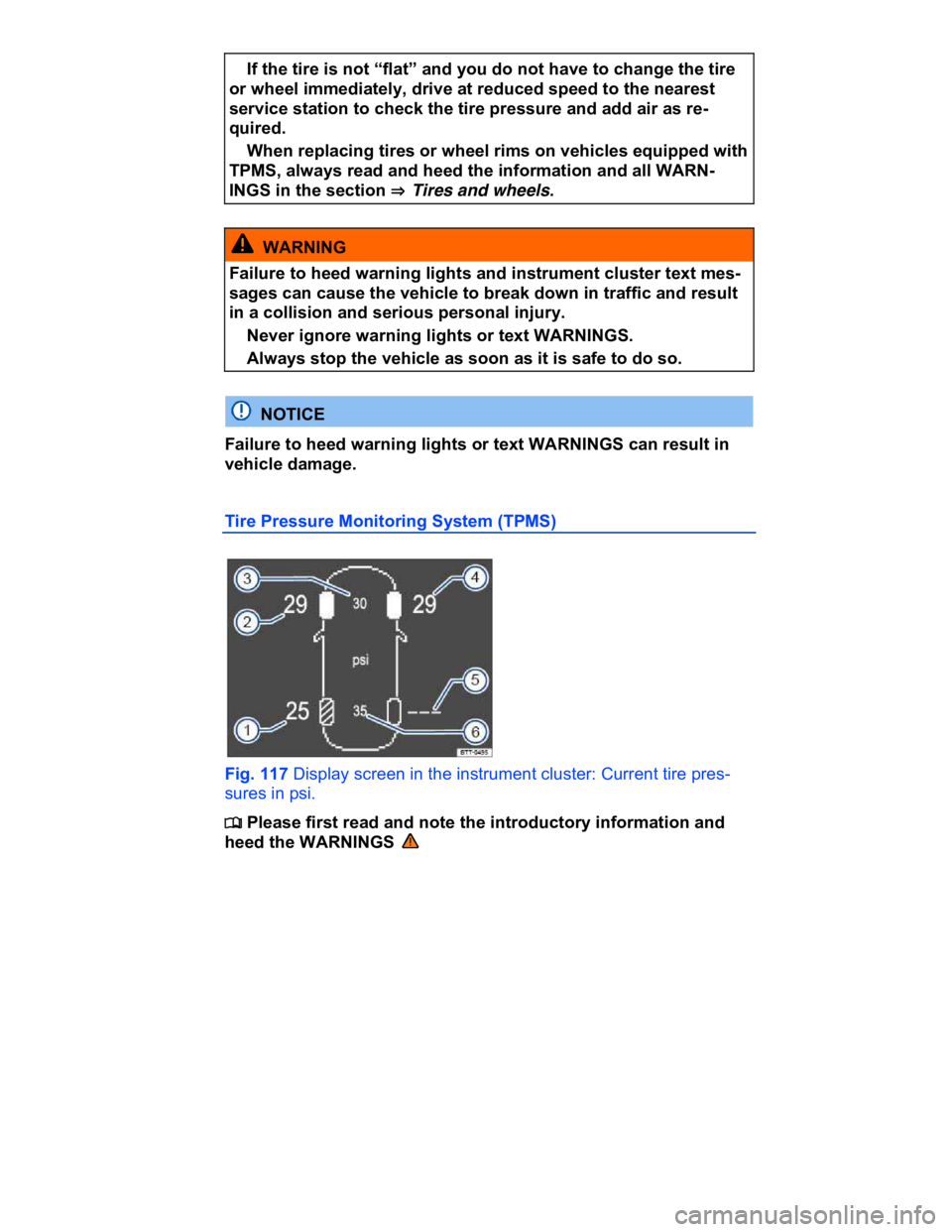
Fig. 117 Display screen in the instrument cluster: Current tire pres-
sures in psi.