trailer VOLKSWAGEN EOS 2015 1.G User Guide
[x] Cancel search | Manufacturer: VOLKSWAGEN, Model Year: 2015, Model line: EOS, Model: VOLKSWAGEN EOS 2015 1.GPages: 393, PDF Size: 5.57 MB
Page 160 of 393

(F) 19.7 inches (501 mm)
(G) 40.9 inches (1040 mm)
WARNING
Improper or incorrect connections to the vehicle electrical system can cause malfunctions that affect the entire vehicle electrical system and cause accidents and serious personal injury.
x Never connect the electrical system of the trailer directly to the electrical connections of the rear lights or other unsuitable power sources. Use only a suitable connector to provide power to the trailer.
x Have any trailer hitch retrofit or other work on a trailer hitch done by a qualified workshop.
WARNING
An improperly installed or unsuitable trailer hitch can cause the trailer to separate from the towing vehicle and result in a major accident with serious personal injuries.
Maximum permissible trailer weight
Page 186 of 393

the loaded trailer) is also limited. More passengers, or passengers who are heavier than the assumed 150 lbs (68 kg), mean that less weight can be carried as luggage or other cargo. The tire pressure label on your Volkswagen also lists the maximum combined weight of all of the occupants and luggage or other cargo that the vehicle can carry.
WARNING
Overloading a vehicle can cause loss of vehicle control, a crash or other accident, serious personal injury, and even death.
x Carrying more weight than your vehicle was designed to carry will prevent the vehicle from handling properly and increase the risk of the loss of vehicle control.
x The brakes on a vehicle that has been overloaded may not be able to stop the vehicle in a safe distance.
x Tires on a vehicle that has been overloaded can fail suddenly, including a blowout and sudden deflation, causing loss of control and a crash.
x Always make sure that the total load being transported – including the weight of a trailer hitch and the tongue weight of a loaded trailer – does not make the vehicle heavier than the vehicle's Gross Vehicle Weight Rating.
Determining the correct load limit
Page 243 of 393
Calm and smooth driving
Consistency is more important than speed. The more smoothly you drive, the less fuel the vehicle consumes.
When driving on the highway or freeway, a constant, moderate speed is more efficient and economical than constantly accelerating and braking. Usually you can reach your destination just as quickly by driving at a moderate, but steady speed.
The cruise control system can assist in maintaining a uniform driving style.
Moderate use of extra electrical loads
Comfort inside the vehicle is nice and important, but it is important to use them in an environmentally conscious manner.
Some devices can increase fuel consumption when activated (examples):
x Climate control system (air conditioner): If the air conditioner has to produce starkly contrasting temperatures, it requires a large amount of energy, which is generated by the engine. The temperature in the vehicle should therefore not be extremely different from that of the outside temperature. It may be helpful to ventilate the vehicle before driving and then to drive a short distance with the windows open. After that, switch on the air conditioner with the windows closed. Keep the windows closed when driving at high speeds. Open windows increase fuel consumption.
x Switch off seat heating once it has served its purpose.
x Switch off the rear window defroster as soon as the windows are free of fog and ice.
Additional factors that increase fuel consumption (examples):
x Malfunctioning engine control.
x Driving in the mountains.
x Towing a trailer.
NOTICE
Never let the vehicle coast or roll down a hill in Neutral (N), especially when the engine is not running. The transmission will not be lubricated and will be damaged.
Fuel-efficient driving
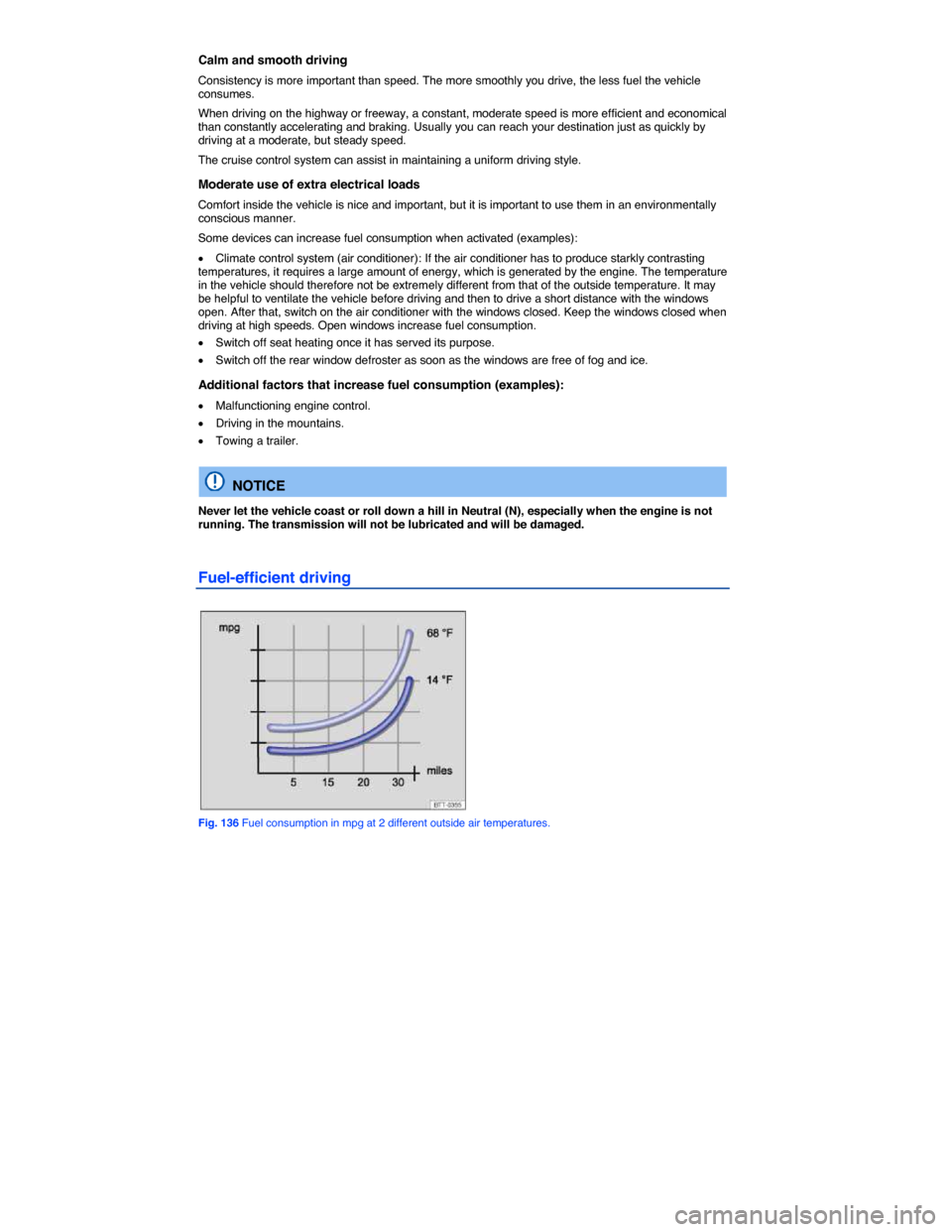
Fig. 136 Fuel consumption in mpg at 2 different outside air temperatures.
Page 257 of 393

WARNING
x Opening and closing the luggage compartment lid and the CSC roof can cause serious injuries if someone gets in the way of moving parts. The rear lid assist system is no substitute for careful and attentive driving. It is the driver's responsibility to make sure that nobody is in the way when opening or closing the luggage compartment lid, particularly when putting the CSC roof up or down.
x If the opening or closing process is interrupted or the hydraulic pump overheats, the CSC roof will automatically lower itself into a balanced position after a while (may take up to 8 minutes).
NOTICE
x Things like trailer draw bars, thin rods, fences, trees, narrow painted vertical poles, posts, or a luggage compartment lid that is opening may not be detected by the Park Distance Control sensors and could damage the vehicle.
x If you continue driving closer to an object that the Park Distance Control has already detected and reported, the object may disappear from the sensor range and may no longer be detected. This is especially true for low or high objects. The system will no longer sound warnings about these objects. Ignoring signals from the Park Distance Control system could result in serious damage to the vehicle.
x The sensors in the bumper can be damaged or become misaligned in low speed impacts and parking maneuvers. Damaged or misaligned sensors cannot accurately detect or report objects that might be within range of the PDC system.
x To help make sure that the system works properly, always keep the sensors in the bumpers clean and free of snow and ice; do not cover the sensors with stickers or other objects.
x When cleaning the sensors with power washers or steam cleaners, only spray the sensors directly for a very short time, and always keep the washer nozzle at least 4 inches (10 cm) from the sensors.
x Noise from rough roads, cobblestones, other vehicles and the surrounding area, for example, can prevent the Park Distance Control system from accurately detecting and reporting people and objects that may be within range of the system sensors.
x Aftermarket components such as bicycle racks can impair the function of the Park Distance Control system.
NOTICE
x Rear lid assist does not detect obstacles above the rear bumper. For this reason, always check to make sure there is enough room behind the vehicle before opening or closing the CSC roof.
x When the CSC roof is opening or closing, the luggage compartment lid lowers and covers the Park Distance Control sensors. The sensors cannot detect people or things that are moving behind the vehicle within range of the luggage compartment lid or that were not there before the lid began to descend.
x Rear lid assist only checks the area behind the vehicle for obstacles at the start of CSC roof operation, when the roof is still completely closed or open. If roof operation is interrupted, the area behind the vehicle will not be checked a second time when roof operation starts again.
x You can damage the vehicle if rear lid assist detects an obstacle and stops CSC roof operation, and you continue to operate the switch to open or close the roof.
Volkswagen recommends practicing with the Park Distance Control system in a location or parking space with no traffic in order to become familiar with the system and how it works.
Page 340 of 393

Description Possible causes, among others Possible remedy
Headlights do not light up the road as they should.
– Headlights incorrectly adjusted. – Light bulbs burned out. – Low beams not switched on.
– Have the headlight range adjusted by an authorized Volkswagen dealer or an authorized Volkswagen Service Facility. – Change light bulbs – Switch on low beams
Electrical consumers do not work. Vehicle battery charge too low. Charge vehicle battery
Remaining fuel level too low. Refuel
Fuse blown. Check fuse and replace if necessary
Fuel consumption higher than indicated. – Short hauls. – “Jumpy” accelerator pedal. – Avoid short distance driving. – Drive defensively. – Accelerate smoothly.
Electrical loads switched on. Switch off unnecessary loads.
Engine control malfunction. Have the malfunction corrected
Tire pressure too low. Adjust tire pressure
Driving in the mountains. No direct corrective action possible.
Towing a trailer. – Check use. – Remove if not in use.
Driving with heavy payload. No direct corrective action possible.
Driving at high engine speed. Select a higher gear.
Page 365 of 393

WARNING
Changing a wheel, especially on the side of the road, can be dangerous. To help reduce the risk of serious personal injury:
x Always stop the vehicle as soon as it is safe to do so. Move the vehicle a safe distance off the road where it is safe to change the wheel.
x Always make sure that all passengers, especially children, are in a safe place outside the vehicle and away from the vehicle and traffic (such as behind a guard rail).
x Turn on the emergency flashers and set up another warning device about 25 yards (25 meters) behind the vehicle to warn approaching traffic.
x Change a wheel by yourself only if you are familiar with the necessary steps. Otherwise, get expert assistance.
x Always switch the engine off, firmly apply the parking brake, and shift the transmission into Park (P) (automatic transmission) or any gear (manual only) to help prevent the vehicle from moving suddenly and slipping off the jack.
x Always make sure that the ground is level and firm. If necessary, place the jack on a large and sturdy board or on a similar ground support.
x Always block the wheel diagonally opposite the wheel being changed with chocks or other similar things.
x If you are towing a trailer, always unhitch it from your vehicle before starting to change the wheel. Always apply the trailer brakes firmly and make sure the trailer cannot move unintentionally.
x Always use proper and undamaged tools when changing a wheel.
x Once a wheel is lifted off the ground, having the transmission in Park (P) or in gear will not prevent sudden vehicle movement.
x Always use a jack that has been approved by the manufacturer for your vehicle. Never use other jacks, even if they have been approved for use on other Volkswagen models.
x To reduce the risk of losing control, crashes, and serious personal injuries, never loosen the screws on rims with threaded rim rings.
x After changing a wheel, have the wheel bolt tightening torque checked with an accurate torque wrench.
x After changing a wheel or tire, reset the Tire Pressure Monitoring System ⇒ Tire Pressure Monitoring System (TPMS) and recalibration with the SET button.
Preparations for changing a wheel
Page 366 of 393
7. If towing a trailer: Unhitch the trailer from the vehicle and park the trailer properly.
8. If the luggage compartment is loaded: Remove the luggage.
9. Take the compact spare wheel and the vehicle tool kit out of the luggage compartment.
10. Take off the wheel covers ⇒ Wheel trim.
WARNING
Disregarding the safety-related checklist may lead to accidents and serious personal injuries.
x Always review and follow the checklist. Follow accepted safety practices and use common sense.
Wheel bolts
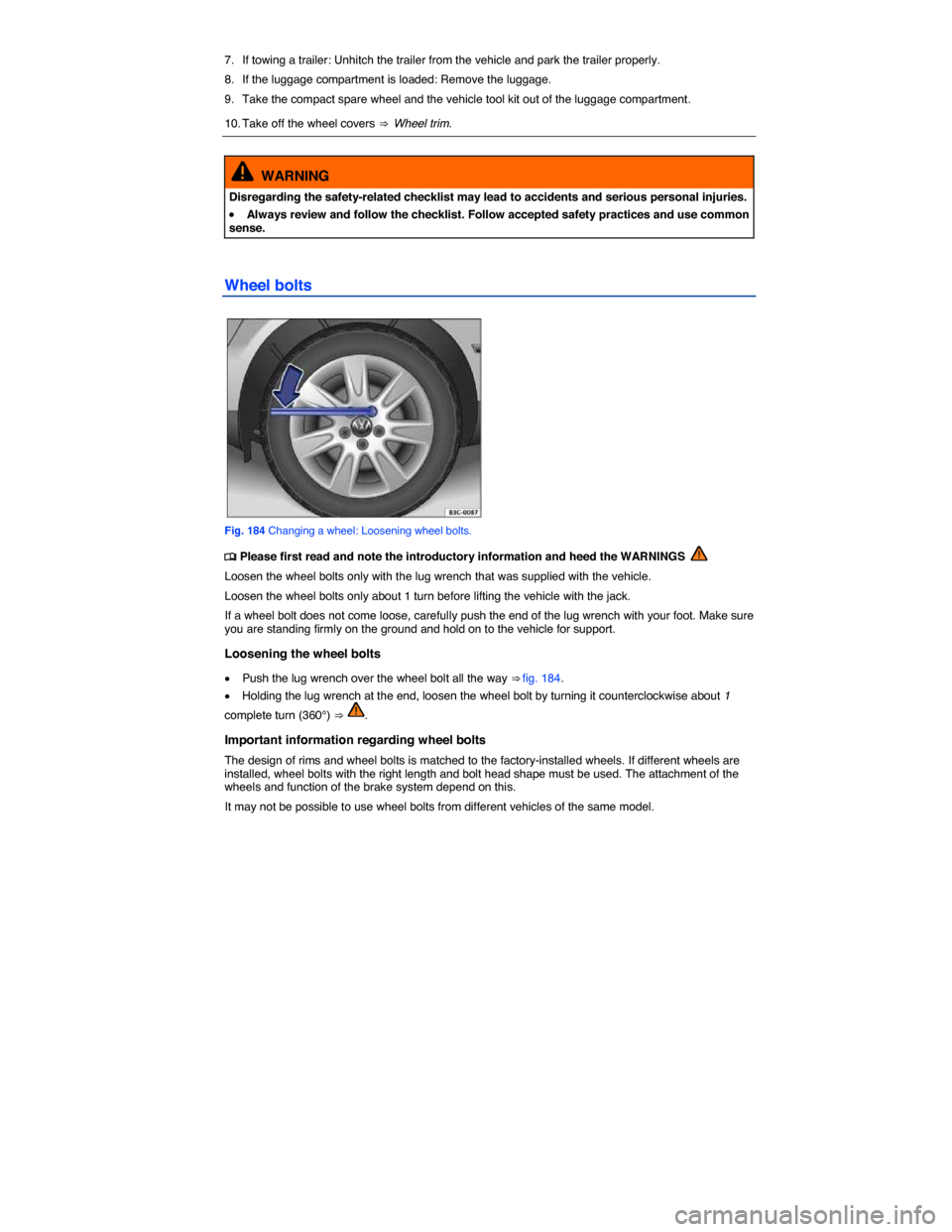
Fig. 184 Changing a wheel: Loosening wheel bolts.