Adjust VOLKSWAGEN GOLF 2005 Repair Manual
[x] Cancel search | Manufacturer: VOLKSWAGEN, Model Year: 2005, Model line: GOLF, Model: VOLKSWAGEN GOLF 2005Pages: 444, PDF Size: 92.7 MB
Page 279 of 444
on. the bra ke sys tem warning symbol or
If a malfunction occurs in the ABS. the warning light light up togethe r the brake o r
39. T he e ngin e com partment of any motor ve hicle is po te ntiall y dangerou s area and can cause serious personal injury.
Dri vin g w ith ba d brakes can cause a c olli sion and serio us person al injury.
does n ot go out, or if it lights up w hen driving the brake fluid level in the reservoir is too lo w or there is a f ault in the brake syste m .lmmedi-
Brake Assist System (BAS)
In an emergency, most drive rs brake in time, but not p in g dista nces that are longer than they have to be!
T he
brake assis t sys te m helps: if yo u p ress the b rake pedal very quick ly , th e brake assist sys te m
regi sters an emergency situation.
can be activated more quickly and ciently, reducing th e brakin g distance while ting you steer at the sam e tim e.
Do no t reduce th e pressure on the brake pedal.
T he bra ke switches off cally as soon as you re lease th e bra ke. The brake assist system work s onl y w hen the engi ne is
nin g.
A lways adjust yo ur speed and driving sty le to road , weather condit io ns.
{continued)
a te ly s to p dri ving a nd ta nce=> page 53.
symbol BRA KE or lights up a t the same ti m e as th eABS warning light the may not be working pro perl y and th e rear w heels could lock up first under
hard braki ng. Rear wheel brake lock-up can cause loss o f vehicl e control. If yo u believe tha t it is safe to do so, go imm ediately a t low speed to the nearest autho rized V olkswagen
dealer o r
w arning light does no t go o ut, or if it comes on w hil e driving, the
your autho rized
V o lkswagen deale r o r qualifi ed wo rkshop as soon as possible.
(continuod)
Neve r let the ex tra safety offered b y the
B rake Ass is t
The Brake Assis t Syst em canno t reduce the
risk o f a n acci dent, fo r example i f yo u drive too fast fo r conditions or if yo u d o not keep your distance from the vehicl e in front of yo u.
S li ppery and we t roads a re dangerous even with the Brake Ass ist Sys te m!
Always re m ember tha t vehi cle alterations
o r m odificati ons can affect the functio n oft h e syste m s. Exa mples of
these alteration s or modifica tions include a different w heel/tire com bination and brake or chassis m odificati on s=> page 32, "Repairs a nd
t echnical m odifica tion s".
the vehicle su sp en sion or u sing unapproved tire I rim combinati on can ch an ge the way the
Smart
Page 280 of 444
The Anti-Lock Brake System prevents the wheels from locking up when the brakes
are applied.
The is an
works only when the engin e is running.
How the ABS works
I f
one w hee l beg ins to turn too slow ly in relat ion to vehicle spee d and tends to lock up, the automati cally redu ces brak e pressure to pre vent
that w heel from lock ing up. When is doing its job you will notic e a slight vib ration through the brake ped a l a nd hear a noise to le t you know
that your speed must be adjusted to road, traffic and weather co ndition s. Thi s is a warni ng that one or more of th e whee ls is about to lock up and
that th e control function has intervened. In
thi s situati on it is important to keep th e br ake
peda l full y depressed so th e the
b rake ped al-cannot do its job if yo u do .
helps you to keep the vehicle under control
because it pr eve nts th e w hee ls from locking up w hen the brake s are a ppli ed. Thi s m ea ns th e hicle can still be s teered and is less likely to skid.
Th e
cannot necessarily shorte r
braking dis tances in con dition s. The brakin g
di stance ca n eve n be longer if you brake on gravel or on fres h snow c overing a slippery face.
If
i s not fun ctioning properly, a warning
light will co me pag e 5.
4 Smart technol .ogy
Always adjust your speed and driving style to
road, tra ffic and weather co nditions. Never let the ex tr a sa fety that
Alwa ys drive safely.
cannot change the laws of physics.
S lipp ery and wet roads are dangerous even
withABS!
cannot reduc e the risk of accidents,
for example if you drive too fast for the tions or if you do not keep your distance from the veh icle in front of you.
Always remember that vehicle alteration s or modifications can affect the function oft he
page 32, and te chnical modifications".
Changing the vehicle suspension or using unapproved tire
systems work and reduce their effectiveness.
The effec tive ness of is also determined
b y the tir es on your pag e 57 ,
Page 282 of 444
does th is by braking the whee l that h as lo st trac tion an d dis tributing more
driv ing force to the other driven wheel via the differen tial.
EDL i s active at speed s up to about mph
not that the EDL has been shut off.
EDL wi
ll automatically switch on again when the brake
Always adjust your speed and driving style to
road,
When accelerating on a slippery surface,
for example on ice and snow, press the accelerator carefully_ Despit e EDL, the wheels m ay
start t o spin leading to a loss of vehicle control.
Always remember that vehicle alterations or modifications can affect the function ofthe EDL and
page 32, and te chnical m odifications".
Changing the vehicl e s uspension or using unapproved tire rim combination can
change the way the EDL and systems work and reduce their e ff ectiveness_
6 Smart
The E lectronic Stabilization con
tai ns the E lectronic Differential Lock (EDL) and the Anti- S lip Regulation (ASR). The
or sy s te m s malfunction.
The is sta rted automatically when the engine is started.
The should generall y be left switched on at
all times. In specific circumstances where yo u
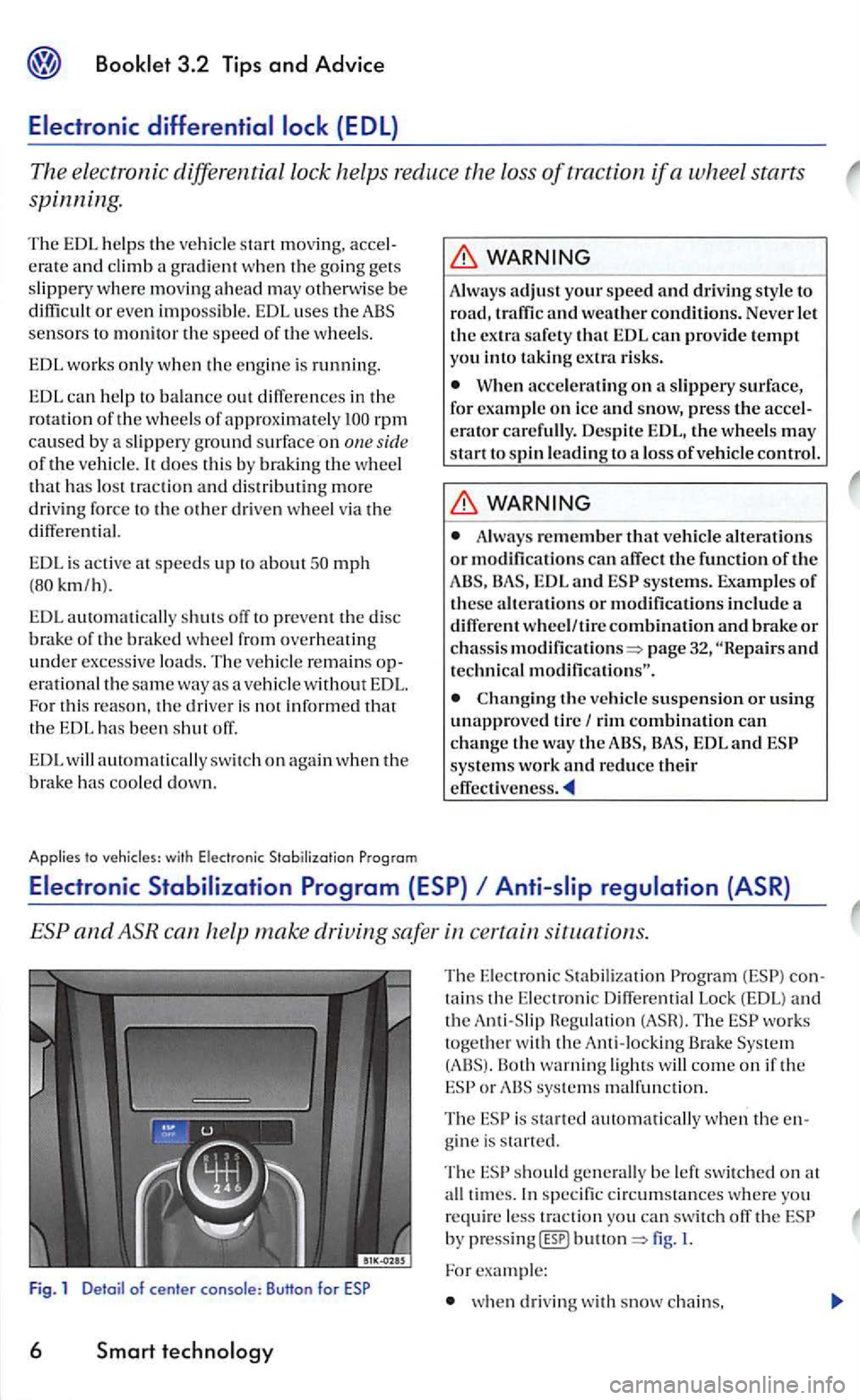
requ ire less by l.
For exampl e:
whe n driv ing w ith snow chains,
Page 283 of 444
when dri ving in deep snow or on loose faces.
w he n r ocking the ve hicl e out.
Switch
ba ck on w he n yo u no longer need wheel s pin. The
remains switch ed oiT.
Ho w
works
The electroni c stab ilization progra m
helps to reduce the ris k of skiddin g braking th e w heels individually. works o nl y
w he n th e e ngine is ru nning.
The sys te m uses th e steering whee l an gle and road speed to calculate th e changes of tio n desired by the driver, and constantl y pares thi s informat ion with the actual behavior of the vehicl e. accurately ( for example if the hicle is beginni ng to skid ) tomatically by applyin g th e at the priate wheel.
The forces acti ng on the braked wheel help to
b rin g the vehicle back on course. th e ve hicl e is tending away at the rear, the brake
wide r dius in a curve. th e brake is mainly applied to the
in sid e wheel.
How the Anti-slip regulation
reduces engine powe r to he lp preven t the driven wheels of front-wheel d rive vehicles
losing traction during acceleration. The sys te m works in the entire speed ra nge in conjunctio n
with fails , the will a lso be out of action. h elp s the ve hicl e to moving. accele rat e and climb a grad ient in slipp ery d itions wh ere thi s may o therwise be diffi cult or even imposs ibl e.
When do the indicator light and the button come on or flash?
T he indicator light comes on for about
2 seconds as o perati o nal check when the
3.2 Tips and Advice
The indicator ligh t flashes while yo u are driv ing when the is wo rking.
They come on if there is a malfun ction in the
They come on when the
Th ey also come o n in the event of an malfunction because the system works in conjunction with the ABS.
the indicator light comes on immedia tel y
a fter the engine is started , th ere m ay be a
sys tem-controlled deactivation. You can vate the tion off and on agai n. th e in dicator ligh t
goes out , the sys te m is full y ope rational again.
the battery has been disconnected, th e
A lways adjust your speed and driving style to road, traffi c and weather conditions. Never le t the extra safety that can provide tempt you into taking extra risk s.
Alway s drive sa fe ly .
and
cannot reduc e the ris k of cident, for example if you drive too for conditions or if you do not keep your distance from the vehicle in front of yo u.
Although
Always remember that vehicle alterations or modificatio ns can affec t the functio n of the EDL and
different wheel/ tire combination and brake or chassis modifications=> page 32, and technical modifi cations".
Changing
EDL and sys te m s work and reduce their effecti veness.
Smart
Page 290 of 444
For dri ving safely. always follow the specified
maintenance int erva ls in your mainte na nce booklet 1.1 ciall y for changin g the brake fluid. Hard u se, maril y stop and go driv ing, o p eratio n in very dusty area s. trailer towing as well as other tions may make it necessary to short en nance in te rvals-see your a u th orize d swage n dealer.
Your
l ow ing po int s befo re yo u drive off:
lights and turn signal s.
Make sur e that all ligh ts and all windows are
clea n.
Adjust the mirro rs.
Make sure th at the a ir intake slots between the e ngin e hoo d and the w in d shi eld are free of leaves . s n ow and ice.
wa rnin g and indicato r light s whe n
s ta rti ng the e ng in e.
Your personal driving styl e and attitude have a
lot
to do with safety.
Th eref ore, for yo
ur ow n safety:
Wear your safety belts and wear the m
book let 2.1 chapter
Make sure that all passenge rs their safe ty be lls properly. eve n those sitting in the book le t2.1 chapter Passengers not wear ing safety bells
Make sure that chil dren always sit on the rea r seat properly restrain ed by
Neve r transport chil d in a r ear-faci ng c hild or infant seat on the fron t passe nger seat booklet2.1
Adjust you r seat that yo u can easily reach
all control s while yo u are as far away from the airbag as pos sibl e but not close r than
bookle t2.1 and bookle t3. 1
The seatin g position is ve ry important for th e
a ir bag book let2.1 chapter" Air bag
Always adjust the head rest ra int s to the rect heig ht. For maximum pro tection. adjust the
head restrai nt so the upper e d ge is as eve n
w ith the top of your head a s pos sibl e, but no lower than eye level and so that it is as close th e back of your head booklet 2.1
Always make s ure that th e movem ent of the
p ed als is not re stricted in any booklet 3.1 Equipment",
Sto re lu ggage and light it em s properly in the
lu ggage compartment and on th e roof bookle t3. 1 and Luggag e compartment " and book let3.1 and Equipment", chapte r " Roof
If you drink, do not drive!
The use of alco hol. drugs and certai n tions will seriou sly impa ir percepti on , reac tio ns and dri ving ability, substantially in creasin g the risk of an acc ident, cras h and persona l injury.
Do not driv e if you are tired.
Make frequ ent rest sto ps, least afte r every two hours of dri ving.
Always
adapt vehicle speed to traffic, rood and
weather conditions.
R e
member, that especially on sm oot h. slipp ery
roa ds, ve hicl e ha ndl ing and brak ing depend a
g reat deal o n tire adhes ion. wet roads, the
f ront w heels can h ydropla ne, especi ally at
hi ghe r speeds. th is happen s, yo u will then no
lon ger be abl e to steer or brake properly.
Alwa ys observe the p osted speed limits and common sense. good judg m ent can mean the diff ere nce b e tween arriving safely at your d estination and being seriou sly injured in a cras h or othe r kind of accident.
14 Driving and protecting the environment
Page 293 of 444
Safety chains
Be sure trailer safe ty cha ins are prop erly necte d fro m the trailer to th e hitch on th e hicle. Leave enoug h slack in th e c hain s to turn
corners. When you install safety ch a in s, mak e sure they will not dragon th e road whi le you are
driv ing.
Th e chains shou ld c ross
under th e trai le r to ng ue
to prevent it from dropping to the ground in case of separa tion from the hit ch .
Electronic Stabilization
Always leave th e mak es it easie r to stabilize the
t railer sho uld it start to swerve or sway.
Always adjust your speed and driving style to
road, traffic and weather conditions. Never le t the extra safety that and
A rig is eas ier to o pe rate and trol. Thi s means that th e tow vehicle should be loaded to the exte nt possibl e and permi ssibl e
w hil e keepin g th e t raile r as lig ht as possibl e under the ci rcumstances . Whenever possible, tran sfe r so me cargo to the luggage compartm ent
o f th e tow vehicle whil e observ ing tongue load requireme nts and ve hicl e loading ation s.
The hig her th e spee d, the more diffi cult it comes for the driver to control the rig. Do not drive at the maximum permissible
Always appl y brake s early . W hen dri ving
downhill , down shift into lower gear (selector leve r positi on
The cooli ng effect of th e fa n cannot
b e in cre ase d by dow nshif tin g because fan speed
i s independent of engine speed. Therefore,
Riding in a trailer is dangerous and may be
A person who is not properly restrained in
a moving vehicle risks serious personal injury and even death in a crash.
Never let anyone ride in your vehicle
without being properly restrained .
Never allow a passenger to rid e in a trailer.
Exceed ing the maximum permissible weight ratings and maximum permissibl e trailer
weights can result in accident s leading to rious personal injury.
Never le t the actual Gross Axle W eight Rating at the front and rear axles exceed the
permissible weights. Also never let their bination exceed the Gross Weight
Rating.
Always remember that the vehicle's
w he n dri vin g uphill, you can alwa ys drive in the
hi ghes t possibl e gear wit h low engin e speed. the coo lant tempe rature warni ng light in th e strument clu ster start s flas hin g in red, pull off
th e ro ad, s top and let th e engine idle for ab o ut 2 minutes to preve nt a heat buildup and eng in e
damage.
R educe your speed even more under vorab le load , weather or wind conditions
particularly when going downhill.
Be especial ly careful when passing other vehicles. Reduce vehicle speed immediately if the trail er shows the slightest sign of sway ing.
N ev e r try to stop the sway ing by ating.
Always heed speed limits.ln some a reas speed limits for vehicle s towing
Driving and protecting the environment 17
Page 309 of 444
3.2 Tip s and Advice
correct in stallation of ou ts ide anre nna,
tran smitting pow er is no more than a imum of watts.
An out side amenna is needed to give the
ence with electron ics in th e vehicl e.
l fyou
wantto use a cellular phone or a CB ra dio
w ith a tran smittin g powe r greater than
stalle d only by a qualifi ed workshop or by your authori ze d Volkswag en dealer.
Carefully follow the o pera tin g in str u ctions for
your ce llular te lephon e or C B radio.
Driver distraction causes accident s, co llision s and serious perso nal injury!
Neve r let yourself b e di stract ed by selling,
adjusting or using th e ce llular phone or C B
radio.
A lways set volume leve ls so tha t you can clearly hear horns, sirens and other wa rning
sounds outsid e th e vehicl e.
{continu ed)
In areas with no or inadequate ce llular phone network serv ice and occas ionally in tunnels, gar ages and underpasses as w ell, a
t elephone call cannot be put through- no emergency calls e ith er!
side th e veh icle without having a separate side antenna can be dangerous to your health and that of your passenge rs because th e tromagnetic radiation energy that th ese
rie s (for examp le cup h o lders or telephone
bracket s) to the airbag covers or w ithin the
airbag deploym ent booklet 2.1 chapter
Objects on or near the surfaces where bag s are located can co me loose and cause
Note
Impro pe r installation of ce llular telephones, CB
radi os or other electro nic component s can ca use other ve hicl e systems to malfun ction . The
mo st common ca use s of fau lts are:
no exte rnal am cnna,
incorrectly in stalled exte rnal amenna.
transmitting power in excess of
Accessories , new parts, repairs and modifications 33
Page 313 of 444
Tips
Remember to refuel w hen the tank is 1/4 full to reduce the risk of running out of fuel, es pecially in remote areas.
Applies to vehicles: with a gas oline engine
The correct gasoline grades are listed on a sticker inside the fuel filler flap.
rating
Oc tane caused by pre-i g
n it ion . Th ere fore, buying th e correct grade of gasoline is very important to help prevent possibl e engine damage and a loss of engine performance.
The recommended gasoline octane ra ting for
your e n g in e can be found on a label lo cated on the in sid e o f the fuel flap. This ratin g m ay be specified as (CLC) or
Grade: 91-96 AKI
Regular Grade: 87-90
Canada, a nd in most European countries.
We recommend that you do not take your ve
hicl e to areas or countries where unleaded gasoline may not be available.
Gasoline containing alcohol or MTBE
You may us e unleaded gasoline blended withalcohol or MTBE (methyl tertiary butyl ether; commonly re fe rr ed to as oxygenates) if the
b lende d mi xture meets th e following criteria:
B
lend of gasoline methanol (wood alcoho l or methyl a lcohol):
A nti -knoc k ind ex must be 87 or higher,
methanol.
An ti-k nock index must b e 87 or higher,
Blend must not contain mor e t ha n ethanol.
Blend of gasoline and MTBE:
Anti-knock ind ex must be 87 or high er,
Blend must conta in not more than 15%
MTBE .
Seasonally adjusted gasoline
Many gasolines are blended t o perform especially well for winter or summe r driv in g. During
seasonal change -over, we sugges t th at you fill up
at busy gas stations where th e seasonal adjustment is more like ly to be made in time.
Note
Do not use a ny fu el with octane lower than 87 or 91
Do not use leaded gasoline! U sin g leaded gasoline will seve re ly damage your vehicle's catalyt ic conver te r and its ab ility to reduce exhaust emissions.
Methanol fuels that do not meet these re quirements may cause corrosion and damage to plast ic and rubbe r component s in the fuel
sys tem.
Do not use fuels that fail to meet the c rit eria specified above .
and 37
Page 341 of 444
to the USA models
The tire pressure monitoring system helps the driver to keep track of tire pressures.
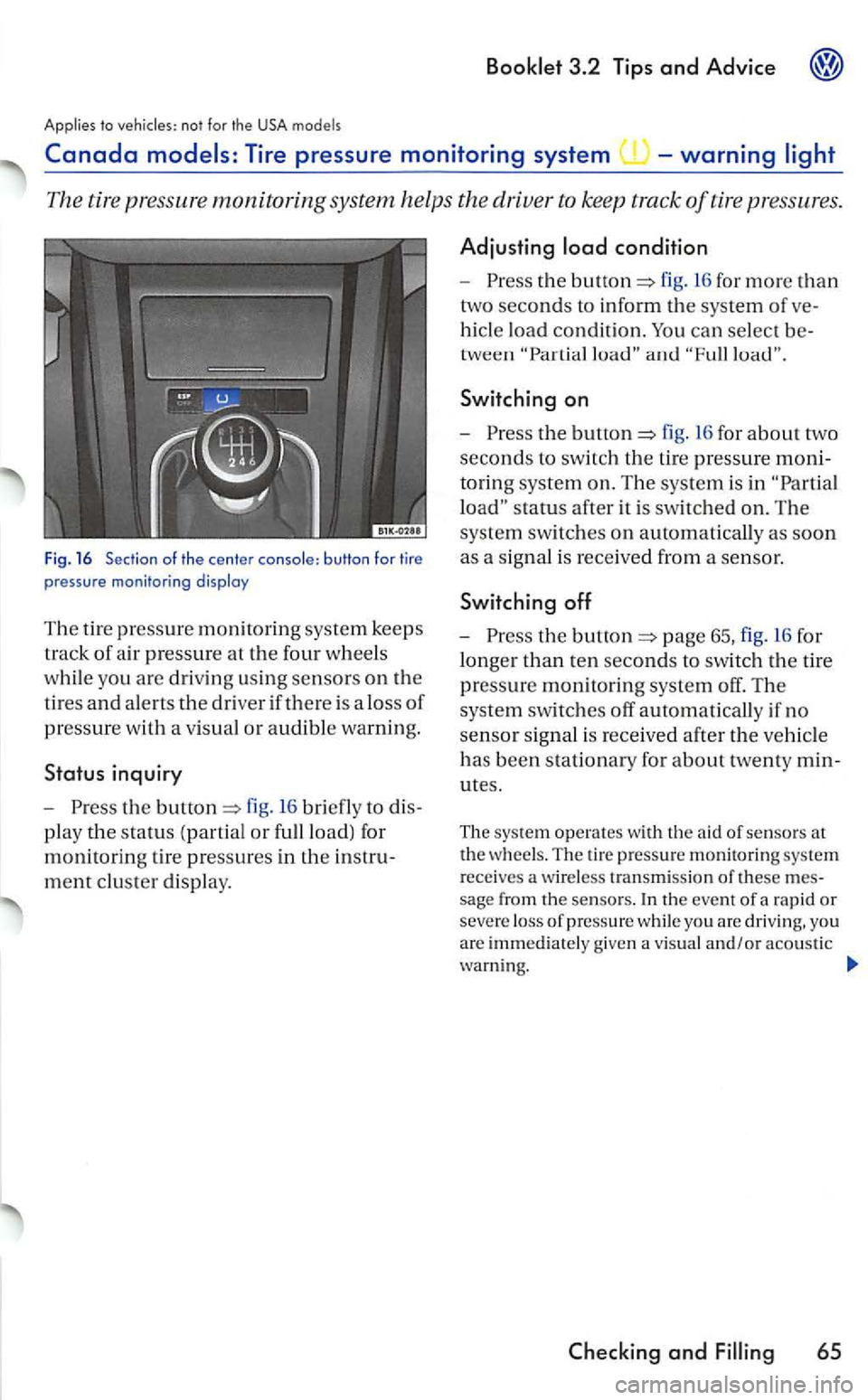
Fig. 16 Section of the center console: button for tire
p ressure monitoring disploy
T he tir e pressure monitoring system keep s
track
of air pressure at the four wheels
w hil e yo u
are driving using sen so rs on th e
tir
es and alerts the dri ver if th ere is a lo ss of
pressure with a visual or audibl e warning.
Status inquiry
-
play the status (partial or full load) for
m
onito ring tir e press ures in the
ment clu ster display.
Adjusting
the fig. 16 for more than
two seconds to inform th e system of
hicle load condition.
Switching on
-the fig. 16 for about two
seconds to switch the tire press ure
tori ng syste m on. The system is in
after it is switched o n. The
system
switches on autom atic ally as soon
as a sig nal is receive d from a sensor.
Switching off
-page 65, fig. 16 for
lo nger than te n seconds to switch th e ti re
pressure monito ring system off. The
system switches off automatically if no
sensor sig na l i s received aft e r th e vehicle
has been statio nary for about twenty
th e a id of se nso rs at t h e w heels . The tir e pressure monitoring syste m
rece ives a wireless transmissio n of these sage from the senso rs. In the event of a rapid or severe loss of pressu re wh ile yo u are driving, you are immediately given a visual and/or acoust ic
warning .
65
Page 342 of 444
3.2 Tips and Advice
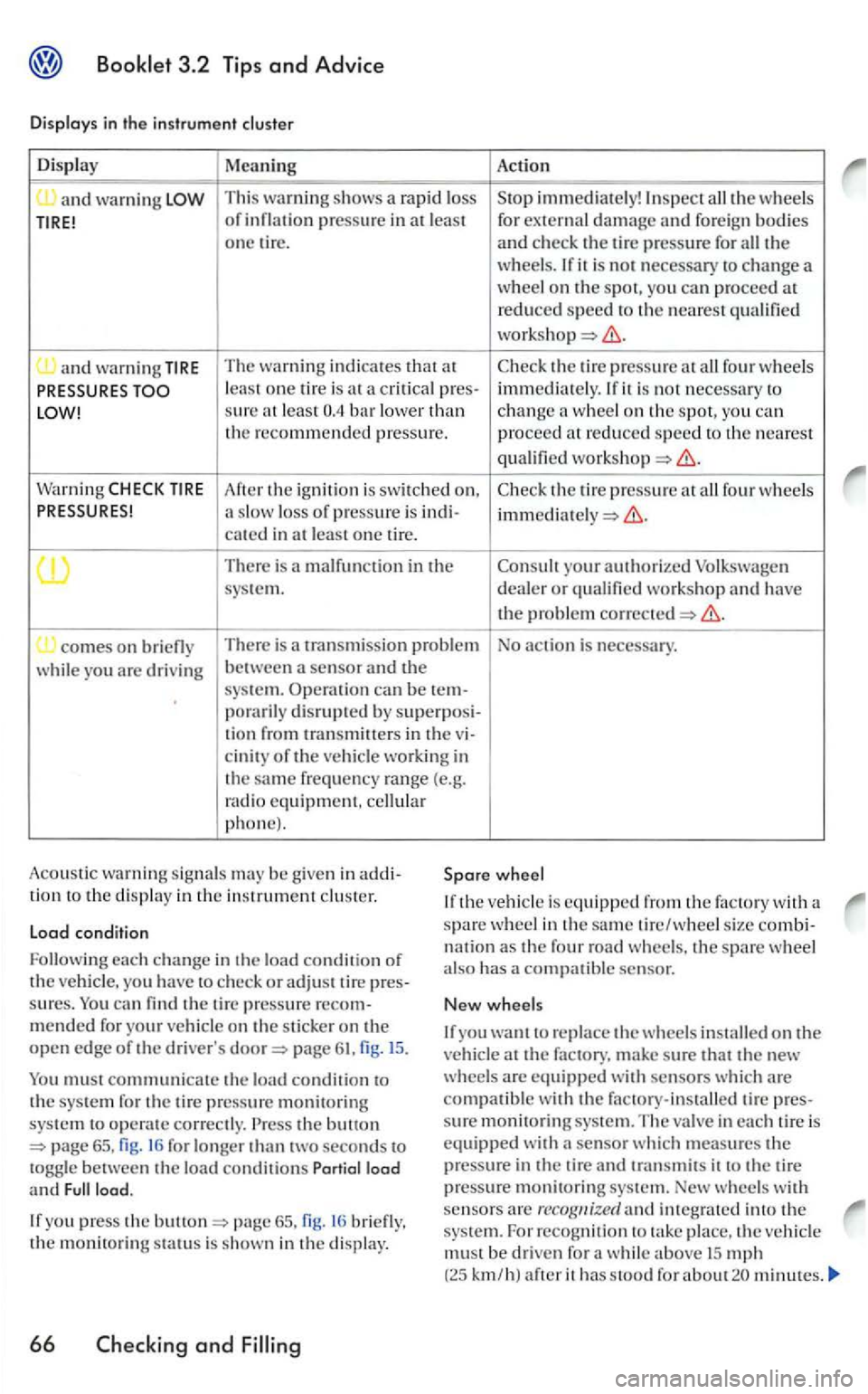
Displays in the instrument
Display Meaning Act io n -and warni ng T hi s warning shows a rapid loss immediately! In spect the wheels of p ressure in least for external damage and for eign bodies
o ne tir e. and check th e tire pressure for th e wheels. If it is not necessary to change a wheel on the spot, you pro ceed at
reduced s p e ed to the nea re st
and warnin g TIRE The warning ind ic a tes that at Check th e tire pressure at four wheels
sure at least
Warn ing After the ignition is switched on. Check th e tire pressure at four wheels a slow loss of pressure is in di-ca tcd in at le a st one tire.
T here is a malfunction in the your authorized Volkswagen
sys tem. dealer o r
comes o n
disrupted by superposi-
tion from transmi tters in the
the same frequency range (e.g.
rad io equipment. phone).
Load condition
Followi ng
each change in th e load conditio n of
th e yo u have check or adjust tir e sure s. can
page
mus t communicate th e load condition to the sys te m for the tire pressure monitoring system to operat e correctly. the bullon 16 for lo nger th an two seconds to
If you press the bullon briefly. th e monitoring status is shown in the display.
66
wheel
If the vehicle is equipped the fac tory with a
spare wheel in th e same tire /wheel s ize
you re place the w heels o n the at the factory. make sure that the new
w heels are equipped with se nsors whic h are compatible with the factory-installe d tire sure monitoring sys te m. The val ve in each tire is equipped with
mus t be dri ven for a while above mph (25 km/h ) after it has s tood fo r about