Rear VOLKSWAGEN GOLF 2012 Workshop Manual
[x] Cancel search | Manufacturer: VOLKSWAGEN, Model Year: 2012, Model line: GOLF, Model: VOLKSWAGEN GOLF 2012Pages: 516, PDF Size: 105.12 MB
Page 236 of 516
Transporting
Driving tips
this sectio n
Always stow heavy objects in the luggage partment and make sure tha t the rear seat ests are securely latched. Always use the downs in the luggage compartment and secu re th e
ob jects with suita ble straps. Neve r ove rload the
hic le . R emember that the vehicle load, as
More information:
Rear hatch 49
Folding down the passenger seat backrest
Lights page 122
Luggage compartment 141
Roof rack 146
Trailer towing 149
Tires and wheels 258
Unsec ured or incorrectly stowed items can fly through the vehicle, causing serious
senger compartment by the front airbags if they To help reduce the risk of se riou s
per sonal injury:
strument panel.
nothing on
the front passenger seat when the backrest is folded forward. When the backrest is folded
forward, even
85.
scat that is
blocked by objects being carried
H eavy loads will cle handle s and increase stopping distances.
Heavy lo ads that are not properly stowed or secured can cause loss of control and ous injury.
the luggage compartment as possible.
-
Always tie down h eavy items securely with su itabl e strap s using the tie-downs in the luggage compartment.
Tran sporting
Page 237 of 516
Never exceed the Gross Axle Weight ing or the Gross
Always adapt your speed and driving to
the heavier load and the weight distribution in the vehicle . Take road, weather , traffic, and visibility conditions into account as
Please first read and note the tory information and heed the on page 137.
Always stow luggage securely in the
Distribute the load in the vehicle, on the roo f,
and in the trailer as evenly as possible .
Put heavy objec ts as far forward as possib le in
the luggage compartmen t and securely latc h t he
rear seat backrest in the upright position .
luggage in the luggage compartmen t to
the tie-downs with su itable straps
Adjust the headlig ht range 122 .
Check the pressure in 4 tires when the tires
are
P ay especially close att enti on to your vehicle 's Tire Pressu re M on itoring
Driving with an open rear hatch
tory information and heed the on page 137.
D rivi ng with
an ope n rear hatch can lead to se riou s
personal injury. if you have to drive with an ope n
rear hatc h, make sure t hat objec ts and the
hatch it sel f are properly secured and take
Before d riving
den braking and driving maneuvers .
Always brake earlier than you would if you were not driving a loaded vehicle. <1
The defroster heating wires or antenna in the rear window can be damag ed by objects that rub against them.
Please review the in forma tion on loadi ng a tr ai le r 149 and a roof rack 146. <1
Driving with a n unlatched or open rear hatch
ca n lead to serious personal injury.
After clo sing the rear hatch, always
Page 238 of 516
stow in the compartment. Loose objects can compartment and injure others on the road behind you.
ers
compartment for others to see. requirements.
Never use the rear hatch to or objects that stick out of the compartment.
rack or othe r
rack mounted on rear hatch
Driving with an open rear hatch can cause poisonous carbon monoxide in the engine exhaust to get into the passenger ment.
Driving a
first read and note the tory information and heed the on page 137.
For good
observe the
stow 138 .
Driv e gently.
Avoid sudden braking and driving maneuvers.
Brake if you were not
driving a
observe information abo ut driving with a 149.
1 46 .
attentiveness, poisoning, and of sciousness. can vere
driving to keep poisonous exhaust fumes from being drawn into the
to fit into the area,
you must drive with an open rear hatch, do the to reduce the risk of carbon monoxide poisoning:
-
the fresh air fan to the highest
speed.
The
open rear hatch changes the and height.
Heavy can change the way your and increase stopping distances. Heavy stowed or secured can shift suddenly, causing of and se riou s injury.
to keep it from shifting.
remember when transporting heavy objects that they change the vehicle's center of gravity and the way it
-as
heavy objects as far forward in the
tie down heavy items
Tran sporting 139
Page 239 of 516
the rear seat backrest in the upright position.
Weight Rating on the
safety sticker on the door j amb. Exceeding
ad apt speed and driving to the heavier and the weight distribution in the Tak e road , weather , traffic, and
Weights and axle weights
first read and note the
on page 137 .
T he
gross weight of any depends on
the eng ine. basic equipme nt, an y fac tory-installed equipment for the given and any
ac cessories tha t have been The Gross Weigh t Rat ing (GVWR) an d t he G ross front
a nd Rea r
are p rinted on th e S afety on the driver door ja mb.
The Gross the
weight of the a t ank of the
e ngine and
Weight R atings specify th e
may not be increased by using
a roo f rac k withou t commens urate ly red ucing th e
weig ht fr o m D ete rmi ning the Gross
Passe ngers.
Roo f
Factory-insta lled or re trofitted accesso ries.
H itch weight and tongue weight for
and avoid den braking and driving maneuver s.
brake than you
(GVWR) and the Gross fr ont and rear
which are printed
on the Certification on the driver door jamb .
damage, accidents,
and seriou s
Never the exceed the Gross Weight Rating. never the weights exceed the Gross Weight Rating .
remember that the and braking be affected by extra Adjust your s p ee d
distribute the as in the The
in the (passengers and
When transporting a heavy in the ga ge compartment, c arry the as to the rear so that the and braking are af-
f ec ted as
Page 240 of 516
Introduction
this section
partment and make sure that the rear seat
ble straps. Never overload the veh ic le . Remember
t hat th e vehicle load, as as how it is ed , can affect vehicle
More information:
Airbag system
Lights
Transporting 137
Trailer towing 149
Tires and whee ls
An open or unlocked luggage compartment poses special risks for
atures can quickly reach levels that can cause unconsciousness or death, particularly to children.
hicle.
can
senger compartment by the front airbags if they inflate. To help reduce the risk of serious personal injury:
objects securely in the
sion.
jects from clothing and bags
Transporting heavy objects causes the
cle capacity weight figures apply when the
load is distributed evenly
Transporting 141
Page 241 of 516
vided.
The ventilation slo ts between the rear dow and the luggage compartme nt cover
must not be blocked so that stale air can escape
from the veh ic le .
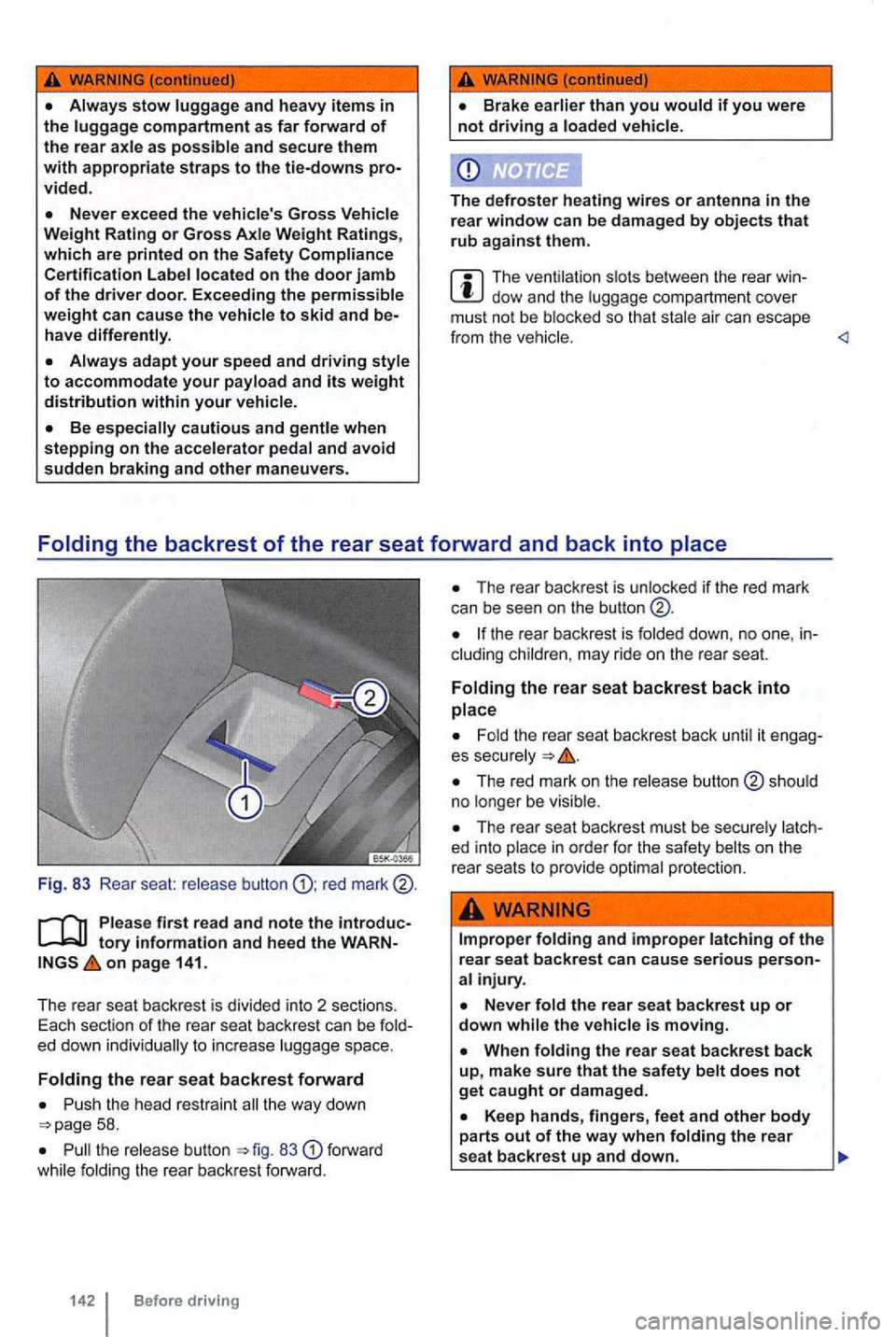
F ig . 83 Rear seat: release button red
Please first read and note the tory information and heed the on page 141.
The rea r seat backrest is di vide d into 2 sectio ns.
E ach sectio n of
the rear seat backrest can be to increase luggage space.
Folding the rear seat backrest forward
58.
the release button 83 forward
w hile folding the rear backrest forward.
142 Before driving
the rear seat backrest back until it es secu re ly
ed into place in order for the safety belts on the
rear seats to provide optimal protection.
Improper folding and improper latching of the rear seat backrest can cause serious
Page 242 of 516
Each backrest must be the upright position so that the safety
a seat is used with an unsecured backrest, the passenger
A red mark on the button indicates that the backres t is not check to make sure that the red marking
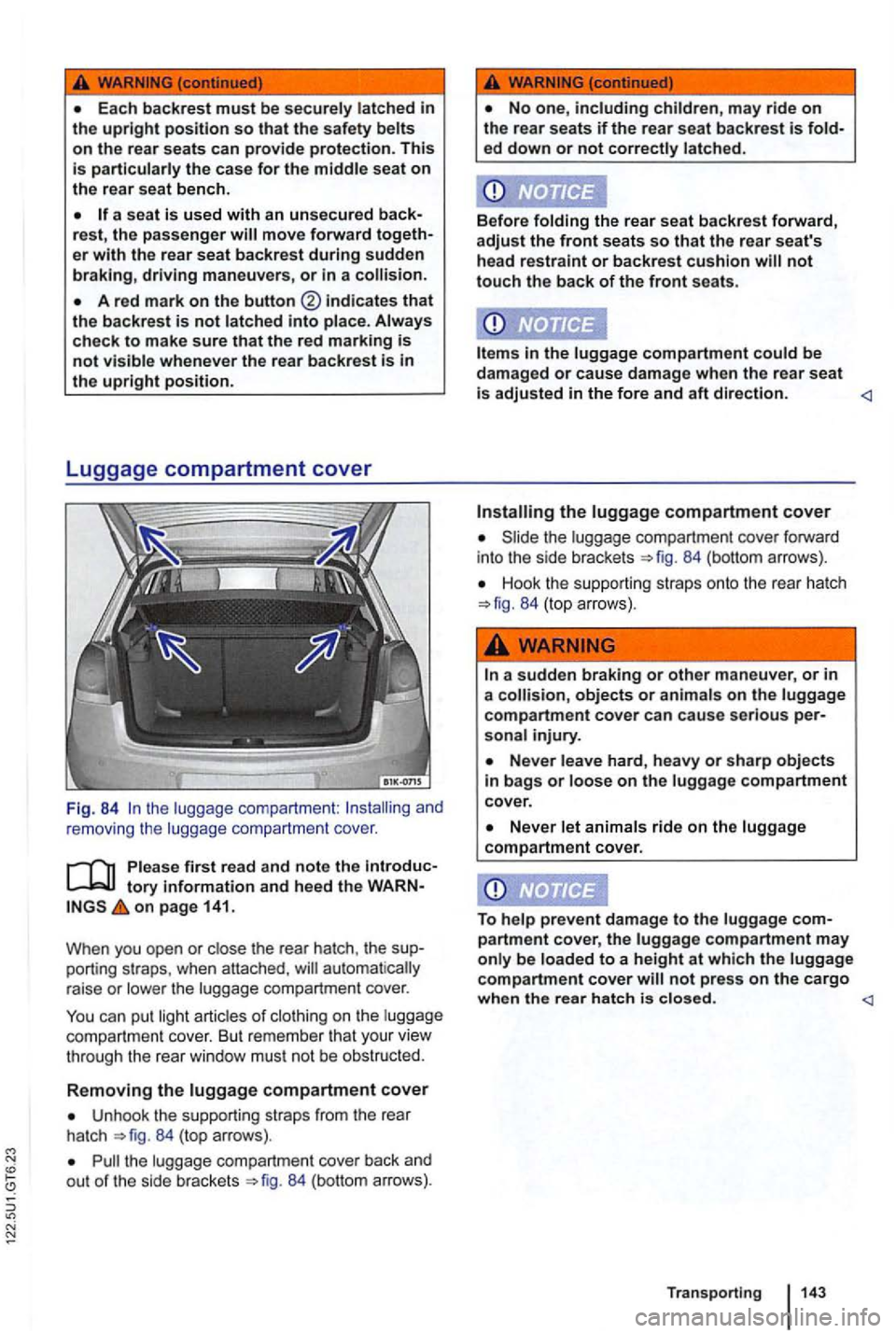
compartment : compartment cove r.
first read and note the introductory on page 141.
When you open
or the rear hatch . the sup
porting str aps , when attached .
can put of
compartment cover
Unhook the supporting str aps from the rear
ha tch 84 (top arrows) .
84 (bottom arrows).
No one, may ride on the rea r seats if the rear seat backrest is ed down or not
Before the rear seat backrest forward, adjust the front seats so that the rear seat's head restraint or backrest cushion not touch the back of the front seats.
compartment
adjuste d in the fore and aft d irection.
84 (bo ttom arrows).
Hook the supporting straps onto the rear hatch 84 (top arrows).
objects or animals on the compartment cover can cause seriou s injury.
Never hard, heavy or s harp objects
ride on the luggage compartment cover.
To prevent damage to the
to a height at which the
Transporting
Page 243 of 516
Luggage compartment pass-through
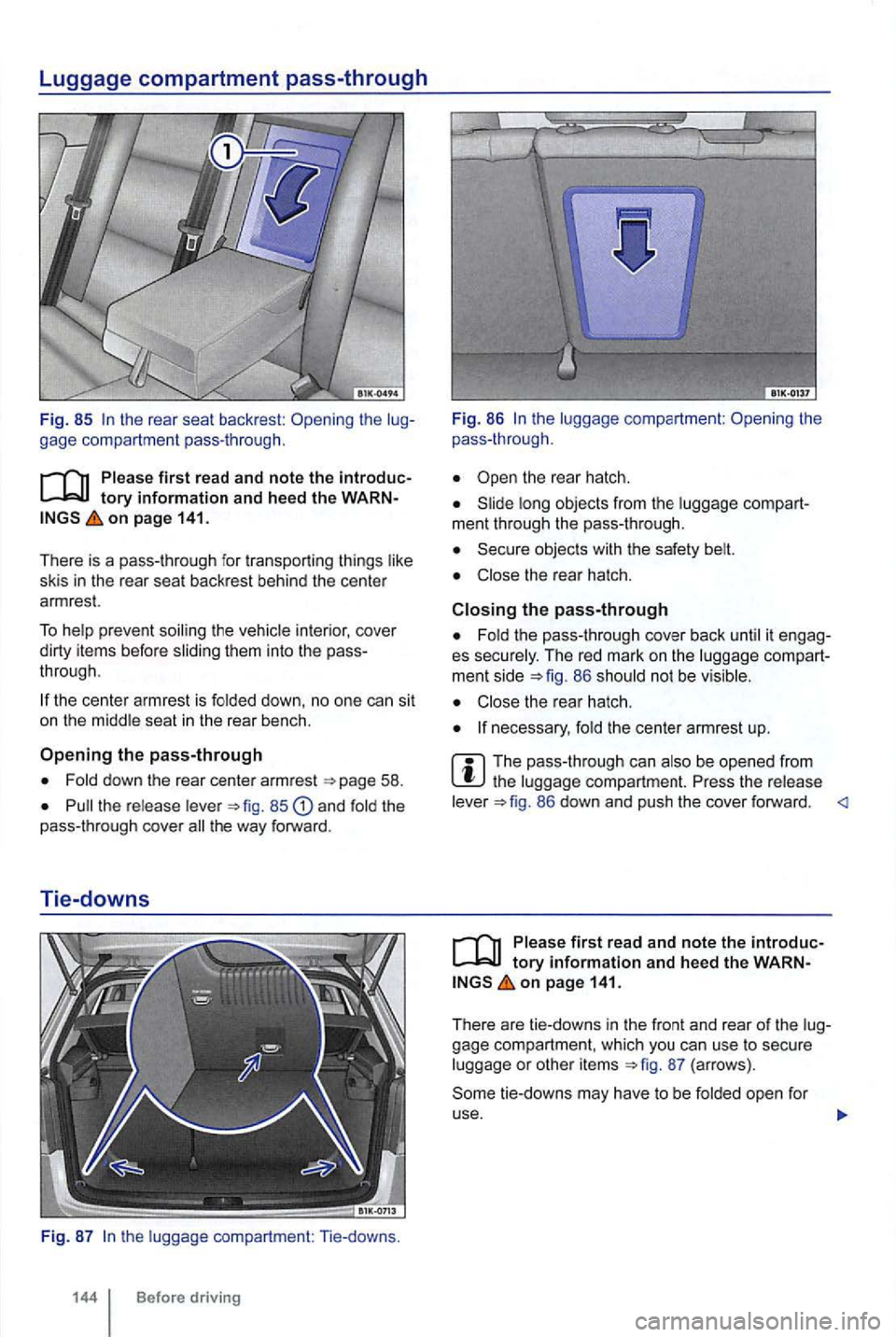
Fig. 85 gage compartmen t pass -th roug h.
first r ead and note the introduc
o n p age 141.
There is a pass-through for transporting things
skis in the rear seat backrest behind the center
armrest.
To them into the through.
seat in th e rear bench.
58.
85 and the
pass -through cover the way forward .
Tie-downs
Fig. 87 the luggage compartment: Tie-downs.
Before driving
Fig. 86 the
pass- through .
the rear hatch .
objects from the lu ggage ment through the pass-through .
Secure objects with the safety
es secure ly. The red mark on the 86
the center arm rest up.
be opened from the luggage compartment. Press the release 86 down and push the cover forward .
on page 14 1.
T here are tie-downs in the front and rear
of the gage compartm ent , which you can use to secur e or other items 87 (arrows) .
open for
use .
Page 246 of 516
Mounting the roof rack base carrier an d roof rack
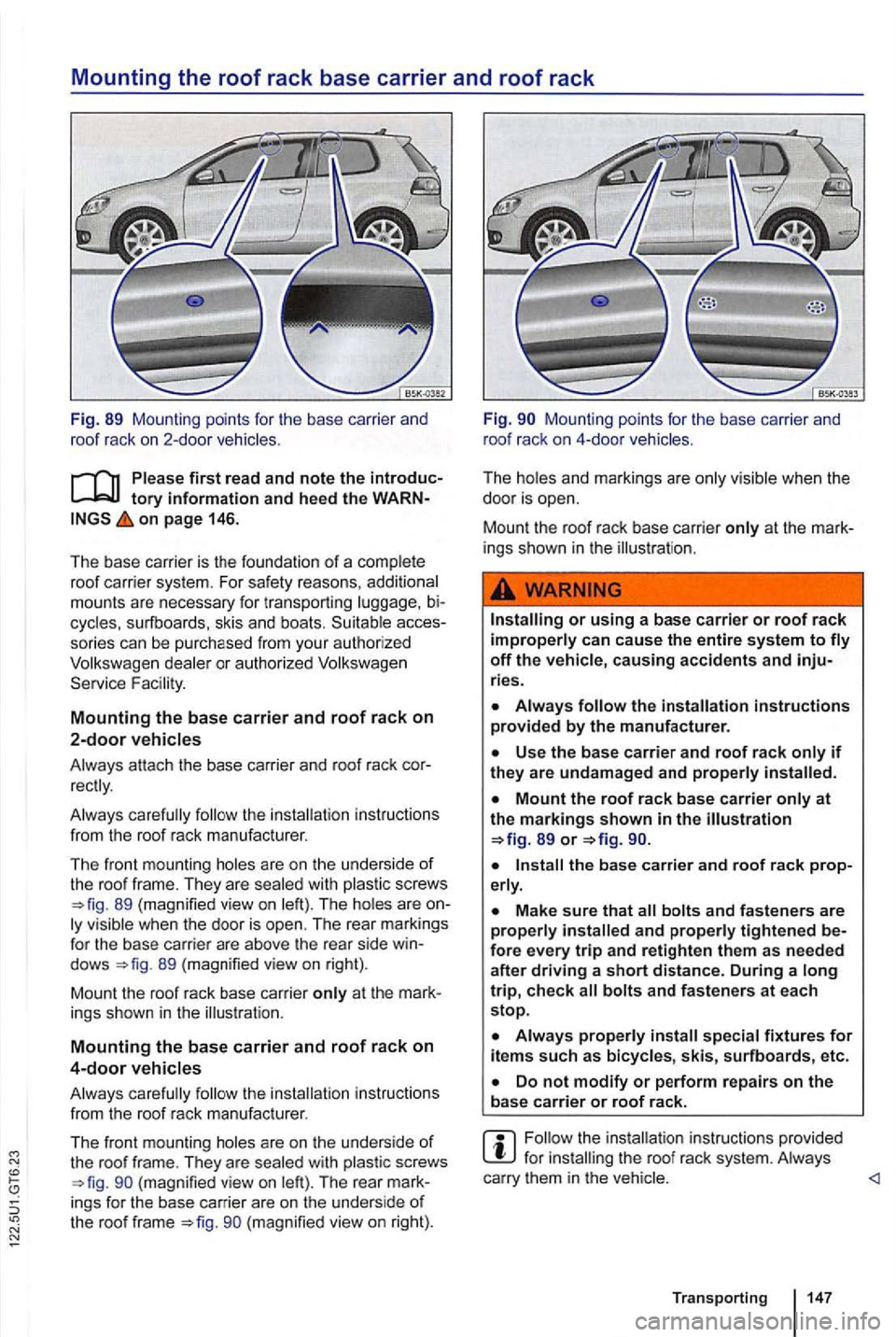
Fig . 89 Mounting points for the base carrier and
r oof rack on 2-door vehicles .
on page 146.
Th e base carrier is th e foundation
of a complet e
roof carrier sys te m . For safety reasons , additi onal
mount s are necessary for tran spor ting luggage,
cycles , s urfb oards, skis and boats . sories can be purchased from your auth orized Volk swage n dea ler or autho rized Volkswagen
Mounting the base carrier and roof rack on
2-door vehicles
Always attach th e base carrier and roof rack
A lways the instruct ions
f r om the roof r ack manuf acture r.
T he fr o nt mount ing holes are on
the unders ide of
t he roo f frame . Th ey are sealed with plastic screws 89 (magnified view on left). The ho les are
do ws 89 (magn ified view on right).
Mou nt the roof ra ck base carrier only a t the ings sh ow n in the
Mounting the base carrier and roof rack on 4-door vehicles
Always instructions
from the roof r ack manufacturer.
The fr ont mounting holes are on the underside
of the roof frame . They are sealed with plastic screws (magnified view on left) . Th e rear ings for the base carrier are on the unders ide of the roof frame (magnified view on right). Fig
.
ings sh own in the
the instructions provided by the manufacturer.
fig.
fore every trip and retighten them as needed
after driving a short distance. During a long trip, check bolts and fasteners at each stop.
for the roof rack system . A lways
carry them in the veh icle.
Page 249 of 516
some area s, speed
is higher.
you are driv ing a new vehicle or a ve hicle with a new or rebui lt engine, do not tow a during the break-in period, about 283.
Technical requirements
tory informatio n an d heed the WARNon page 149.
Use only a weight-car rying
hitch must be suitable for
you r
a "weight -dis
tributing " or "load-equalizing " trailer hitch on your The vehicle is not designed for this kind of trailer hitch
Do not use a bumper-mounted traile r hitch
Never
a trailer hitch on the bumper or on the
bumper attachments. The trailer hitch must not in
terfe re with the impact-absorbing bumper system.
Do not make any changes to the vehicle exhaust
and brake systems. From time to time, check that trailer hitch mounting bolts are secure ly fas
tened. When you are not towing, remove the trailer
hitch. This
helps keep the trailer hitch from causing damage if your vehicle is hit from behind.
Engine cooling syste m
Tow i
ng a trailer makes the engine and its cooling
system work harder.
Before driving
maintenance more often because of the extra
load it has to move.
When you are not towing , remove the trailer hitch
Some models need a trailer hitch to tow or tow-start other vehicles. after it has
been removed. Be sure to stow it securely.
your trailer has its own brakes , make sure it
meets
151 .
T ra
iler
Trailer lights must meet regulations 151.
Never connect the trailer lights directly to the elec
t rical system
of your
Outside mirrors
you cannot see the traffic behind you using the
r egular outside mirrors, then you must ex
t ended mirrors. Extended mirrors may also be re
quired by law in some countries
I states I provin
ces . Always adjust the outside mirrors befo re dr iving. It's vital that you always have a clear view to
the rear of the veh icle .
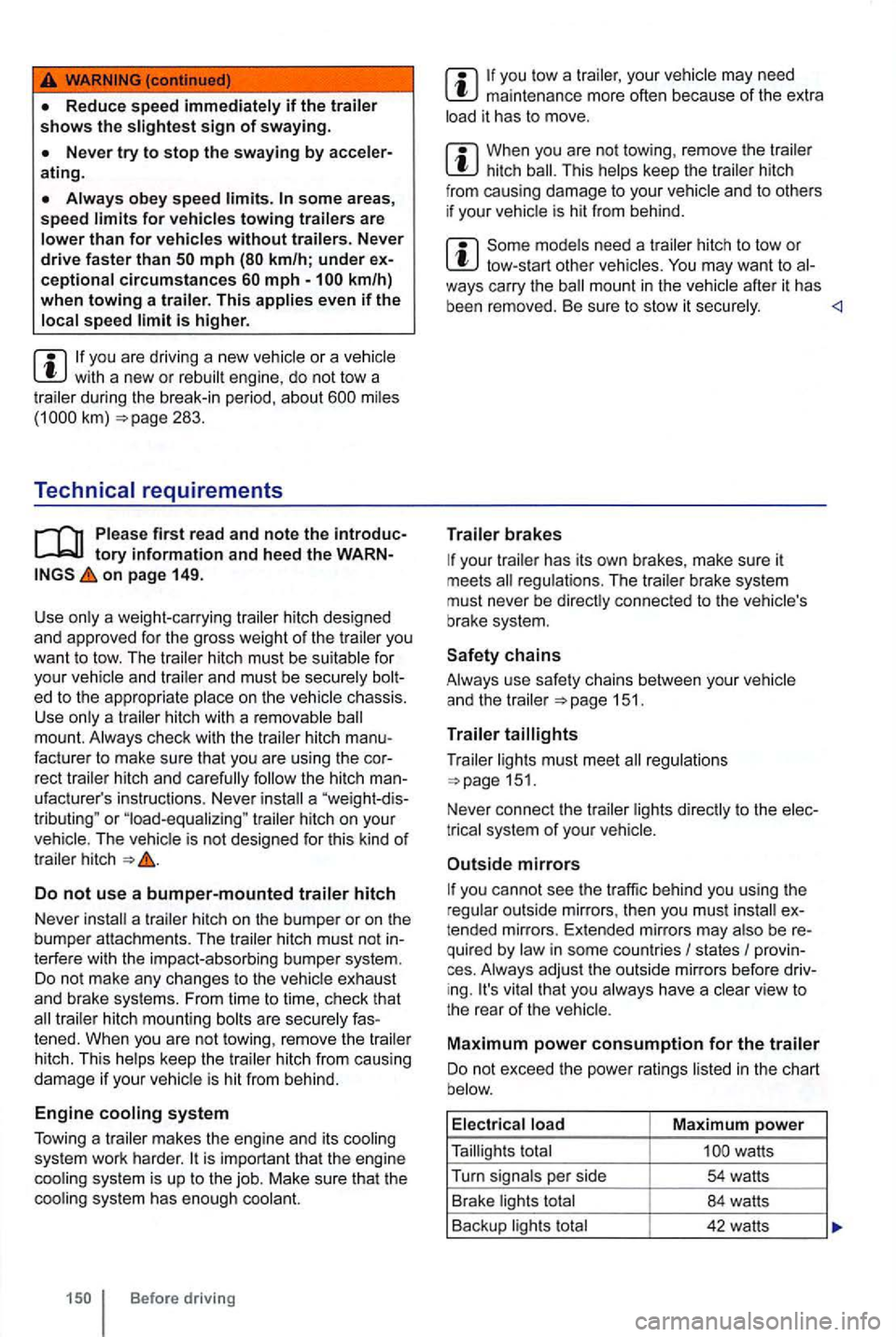
Maximum po w er con sumption fo r the trailer
Do not exceed the power ratings listed in the chart
b elow.
E l
ectr ica l load Maximum power
Taillights total