weight VOLKSWAGEN GOLF PLUS 2012 Owner's Guide
[x] Cancel search | Manufacturer: VOLKSWAGEN, Model Year: 2012, Model line: GOLF PLUS, Model: VOLKSWAGEN GOLF PLUS 2012Pages: 541, PDF Size: 98.86 MB
Page 201 of 541
Fuel-efficient driving
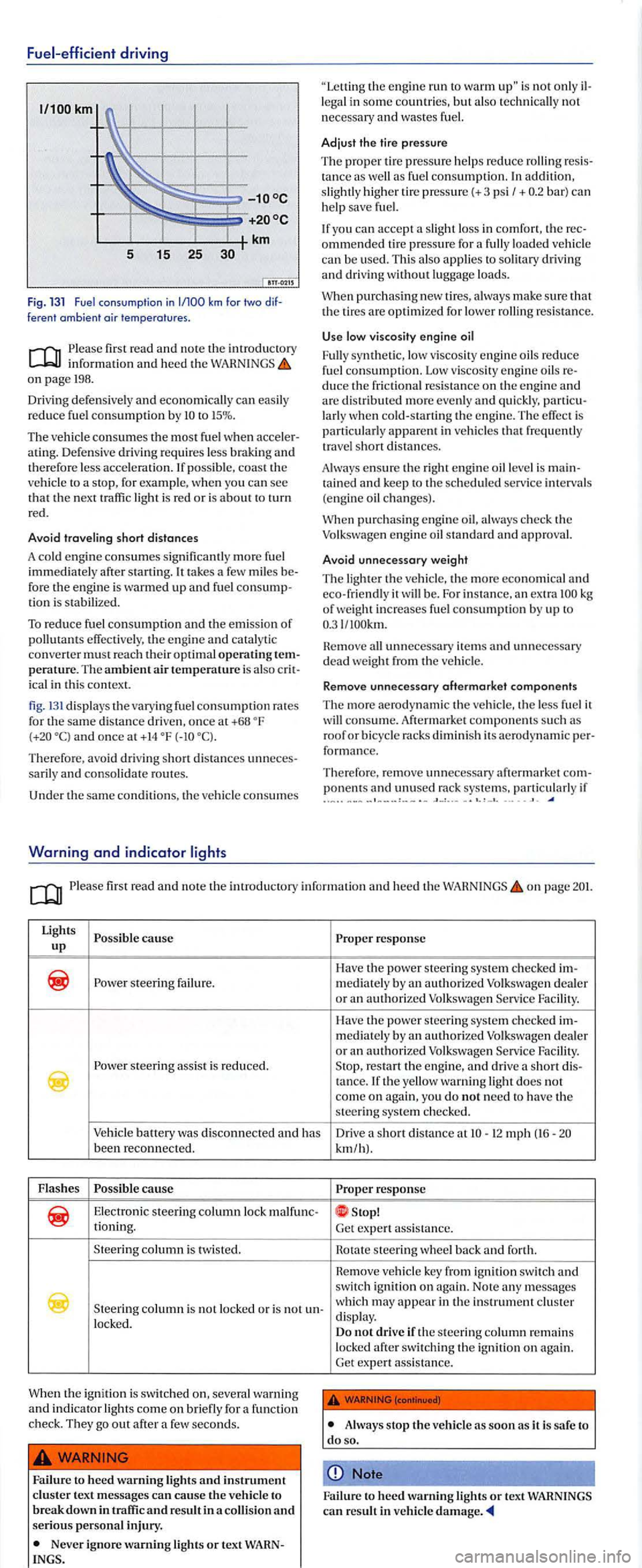
Fig. 131 Fuel consumption in ferent ambient air temperatures .
info rmation and heed the on page 198.
Dri vin g defensive ly and economically can easily
r educe fuel con sumption by to 15 % .
The ve hicle consu mes the most fu el w he n atin g. D efe nsive dri vin g require s less brakin g and therefore less accelerat ion. If possib le, coast the ve hicle to a sto p, for exa mple, when yo u ca n see th a t th e next traffic ligh t is red or is about to turn
red.
Avoid traveling short distanc
es
A cold engine consumes sig nificantl y more fuel
imm ediately after sta rtin g. It take s a few miles fore the engi ne is warm ed up and fuel tion i s stabili zed.
To reduce fuel consumptio n and the emission of pollutants effect ive ly, the e ng in e and ca talytic
conve rter must reach th eir optimal operating
ica l in thi s context.
fig. 13 1 displays the v a ry ing fuel consumption rates
for the same d istance dri ven, once at +68 and once at + 14
th e e ngin e run to warm is not o nl y lega l in some co untries, but also technicall y not
n ecessary and wastes fu el.
Adjust the tire pres sure
T he prop er tir e
pressure help s reduce rollin g tance as well as fue l co nsumption. In additi on ,
slig htl y higher tire pressure(+ 3 psi I+ bar) ca n
h e lp save fuel.
If you ca n a ccept a slight los s in comfort, the ommend ed tir e pressure for a fully loade d ve hicl e
ca n be used. This als o applies to so litary dri vin g and driv ing withou t lu ggage loa ds.
When purchasing new t ires, alway s ma ke sure th at
th e tires are optimi zed for lower rollin g resis tance.
Us e low viscosity engine oil
F ull y sy nth e
tic, low viscosity e ngine oils reduce
fuel consumption. Low viscosity e ngin e oils duce the fric tional res istance on th e engine and are dis tributed m ore evenly and qui ckly, larly w hen co ld -s tarting the engine. The effect is parti c ularl y apparent in vehicles th at frequentl y
tra vel s hort dis tan ces.
A lways ens
ure th e righ t e n g in e oil leve l is ta in ed and keep to the sc h edul ed serv ice interva ls
(e ng ine oil ch an ges).
W
hen purch asing e ngine oil, always ch eck th e Volksw agen en gine oil standard and approval.
Avoid unnecessary weight
The lighter th e ve hicl e, th e more economica l and ceo-friend ly it w ill be. For in stance, an extra
H e m ove
consum e. Aftermark et co mponents s uch as
ro of or b icycle racks dimin is h its aerod yn a m ic fonnan ce.
Th erefo re, re
mov e un necessary aftermark e t ponents and unused rac k systems, parti cul arly if ....... -
fir st read and note th e introductory informa tion and h ee d th e WAHNINGS page
response
Ha ve the power stee rin g sys te m ch ec ked ste eri ng failure. mediatel y by an authori zed Volk swag en deale r
o r a n authorized Volk swagen
Fac ility. steeri ng ass is t i s reduced. re start the e n gine, and dri ve a sh ort tan ce. If th e yello w warning light does not
c o m e on again, you do not need to have th e
s te ering syste m ch ec ke d .
Vehicle battery was di sconnected and has Drive a short distan ce at 12 mph been reconnec te d . km/h).
F lashes re sponse
Elec troni c steering column lo ck malfunc -
which m ay appea r in the in strument clu ste r
di sp lay. loc ke d.
W
hen the i g nit ion is switc h ed on, seve ra l wa rnin g and indicator lights come on bri efly for a f un ction ch e ck . T hey go out after a few seconds.
Failure to
heed warning light s and in strument cluster text m essages can cause th e vehicl e to break down in t raffic and result in a collisio n and seriou s personal injury.
Neve r igno re warning lights or tex t
Do not dri ve if th e s teerin g co lumn remains
l ocke d switch in g th e ig niti on on aga in.
Ge t expert assis ta nce.
Alwa ys sto p the vehicl e as soon as it is safe to do so .
Note
Failur e to heed warning lights or tex t WARNINGS can res ult in vehicl e damage
Page 213 of 541
Introduction
th is section yo u'll fin d inform ation on the followi ng:
Warning ond indica tor lights . . . . . . . . . . . . . . . . . . 215
Cruise control operation . . . . . . . . . . . . . .
h elps maint ains
an indiv idually s tored con stan t sp ee d w hen
d ri vin g above 12 mph (km /h).
Th e
More information:
page 179
Parts, acce ssories. repa irs an d modificat io ns page 303
Using the cruise control when it is not possibl e
t o drive safely at a constant speed can b e dan
gerous
Never use cruise control when dri ving in
h eavy or varying traffic or when you cannot keep
a safe distance betwe en you and the ve hicle s ahead of you. Never use cruise contro l on ste ep , winding, or slippery roads (s uch grav el roads, wet roads, or sno\vy or icy road s) or on road s with standing
wat er.
Never use cruise control when driving off
road or on unpave d road s.
Always adjust your speed and the di stance yo u keep betwe en you and the vehicles ahead of you to the weather, and vis ibility condition s.
To he lp prevent unintended operation of crui se control , switch the s y stem off when it is not
It is dange rous to use the Resume feature
wh en th e prev iously set speed is too high for the exis ting traffic, or weather condi tion s.
When traveling downhill , tJ1e cru ise control may no t b e a ble to maintain a cons tant sp eed .
Th e vehicl e will spe ed up b ecause of it s o wn
weight. Downshift and/or usc the foot brake to
s low the ve hicle.
When travelin g downhill , the crui se control may not be able to a constant speed.
The vehicle may speed up b ecause of it s own
weight . Dow nshift and/or u se the foot brak e to
s lo w the vehicle.
Page 219 of 541
Tire Pressure Monitoring System (TPMS)
this section you'll find informati on on th e lowing:
. . . . . . . . . . . . . . . . . . . . . . . . . . . . . . . . . . . . . 221
Monitor ing System
Monito ring Sys te m indirectly c hecks the tire pressure of all
f our tires while you are driving by us ing the lock Brake Syste m (ABS) sensor s to monitor the
tr ea d circumf erenc e and vibration ch arac te ris tics of the indi vidua l tir es. warns if there is a nifi cant loss of pres sure in one or more tires while
the vehicl e is mo vin g. loss is s ig nale d b y
the ind icato r light as by an aco usti c
wa rni ng and text warnin gs in the in strument clu ster di spla y if your ve hicle has an MFD. The
origina l b en chmark pre ssure is th e recommended
m axi mum load cold tire inflati on pressure for the tire s that come with your vehicle that is lis te d on
th e tire pressure lab el on the dri ver door pill ar. By press ing the Reset button , yo u can ch ange the
b enchmark pressure to match th e c urr ent pressure of the tir es on you r page 222.
use of the Heset butto n i s explained below 222.
More informa tion:
page 137
Bra king, stopping and page 188
Ext e rior care an d page 262
page 276
pa ge303
Whil e driving
An acoustic warni ng sounds th e first time low tire pressure is detec ted. a system
Improp er tire care can cause sudden tire sure loss,
hicle control, accidents, and serious personal
injury .
tire inflation pressure regularl y when the tires are cold and alway s maintain the scribed tire pressure . Low tire pressure can cause tires to get too hot, res ultin g in tread ration, sudden lo ss of pres sure, and blowout s.
Thi s is because tires with excessively low
sure undergo more flexi ng, which can cau se the tir e to overheat and destroy the tire.
Always maintain correct cold tire inflation pressure as listed on the tire pressure label
Check tire inflation pressure regularl y when the tires are cold. Adjust tir e press ure in the cold
tir e to the recommended tire pressure for t11e tires installed on your vehicl e as necessary.
Neve r exceed the permissi ble maximum speed and load rating of the tires on your hicl e.
Imprope r us e of the Reset button can cause the to give false warnings or to give no
warning des pite dangerou sly lo w tire pressure
page222.
Und er- inflat ion increases fue l con sumptio n and tire wear.
to ring Syste m.
bedde d in the tir e tre ad but have n o t penetrated
int o the body of tire
Driving on u npaved roads for an extended
The te lltal e
s h ows a malfunc tion but switch es orr if road dit io ns or th e drivin g sty le c han ges or if th e tio n is switch ed on and orr
Tire Pressure Monitoring System (TPMS) and reset button
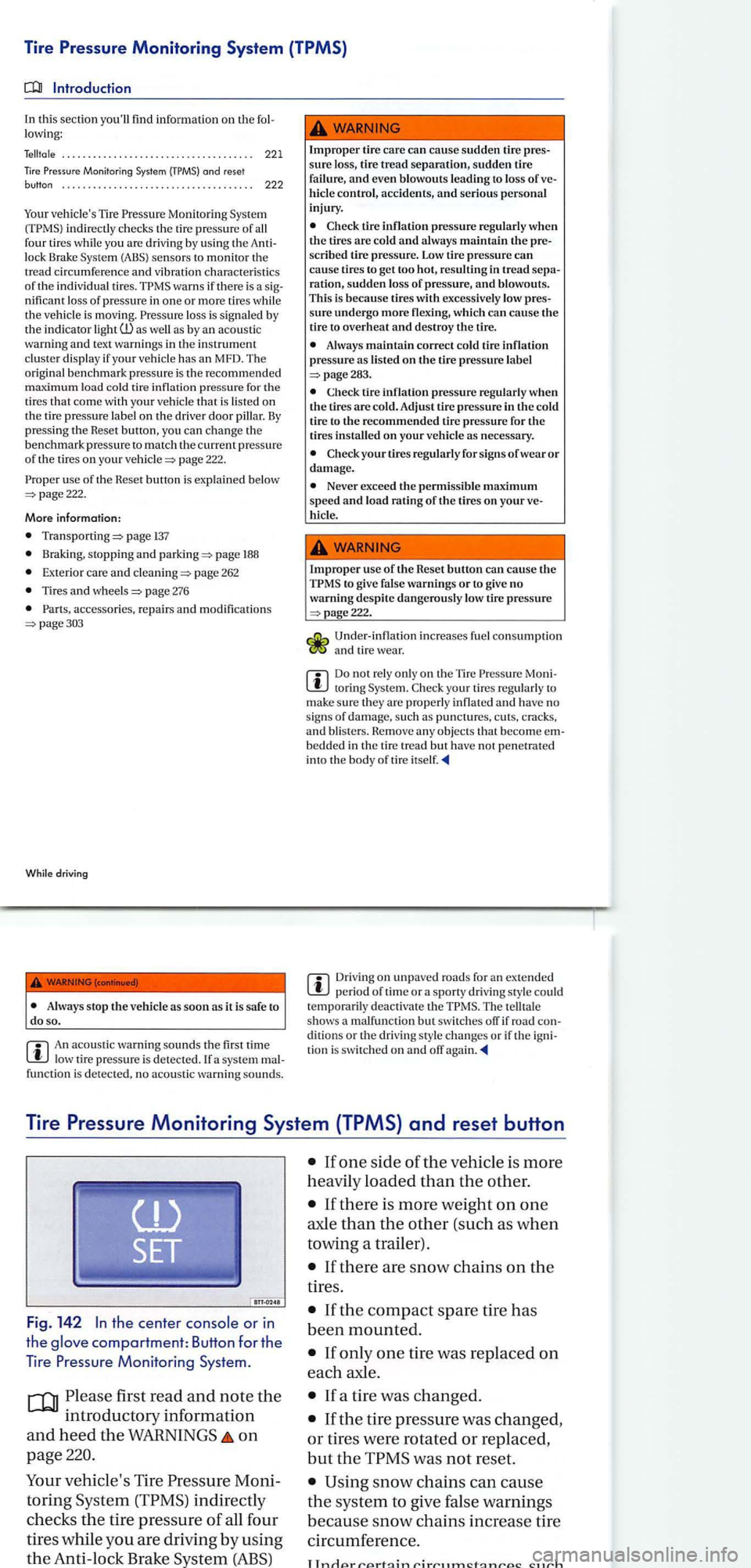
the center or in
the compartment: Button for th e
T
ire Pressure Monitoring System.
first r ead and note the
introductory informatio n
and heed the WARNINGS on
page
ve hicle's Tir e Moni
torin g
indirectly
c h ec ks
the ti re pressure of al l four
tire s while yo u are drivin g by us
ing
the Anti -loc k
If there is more weight on one
axle than the other (such as when
towin g a trailer) .
Page 239 of 541
Introduction
In thi s sectio n you'll find information on the lowing:
Warning light . . . . . . . . . . . . . . . . . . . . . . . . . . . . 244
Getting ready to work in the engine comportment 245
ond closing tho engine comportment . . . 246
A lways
pos iti on th e ve hicl e on a firm and leve l face befor e doin g a ny work in the e ngin e ment.
Th e e ngin e com p
artment of a ve hicle is a hazardo us
area. Neve r do any work on the en gine or in
the engine compartment unless you
- know exactly how to carry out the job, -have th e correc t tec hnica l information and the
prop er tools and supplies, and -are famili ar with the necessary safe ty
I f you are un certain in any way, have the work done by an aut horized Volkswage n dea le r or authorized Volk swage n Se rvice
Wind shi eld wiper and 128
Sta rtin g and stopping th e page 172
Brake 188
Vehicle
while 234
Engi ne
En gin e 252
Part s, accessories, repairs and modificat ions pag e303
Core, maint enance
Unintended vehicle movement during
Neve r work under the unless you have safely secured the vehicle from moving. If
you mus t work under the
are strong enough to support the weight of the vehicle. The jack supplied the vehicle is no t st ro ng enough for purpose and can collapse ca using seriou s personal in-
Th e engine
compartment of any motor vehicl e is
a potentially dangerous and can cause riou s per sonal injury .
Always use extrem e ca ution when doing any work in the engine comp artm ent. Alway s follow
c ommonl y accepted safety practice s and use common sense. Neve r risk personal injury.
Never perform any work in the engine partm ent unl ess you know exactly how to carry
o ut the job and hav e th e correct tec hni cal mation and the correct tools.
w age n dealer ,
We stron gly recommend th at you always
hav e gas disc harg e lamp s (Xenon) and
Page 275 of 541
Tire and wheel handling
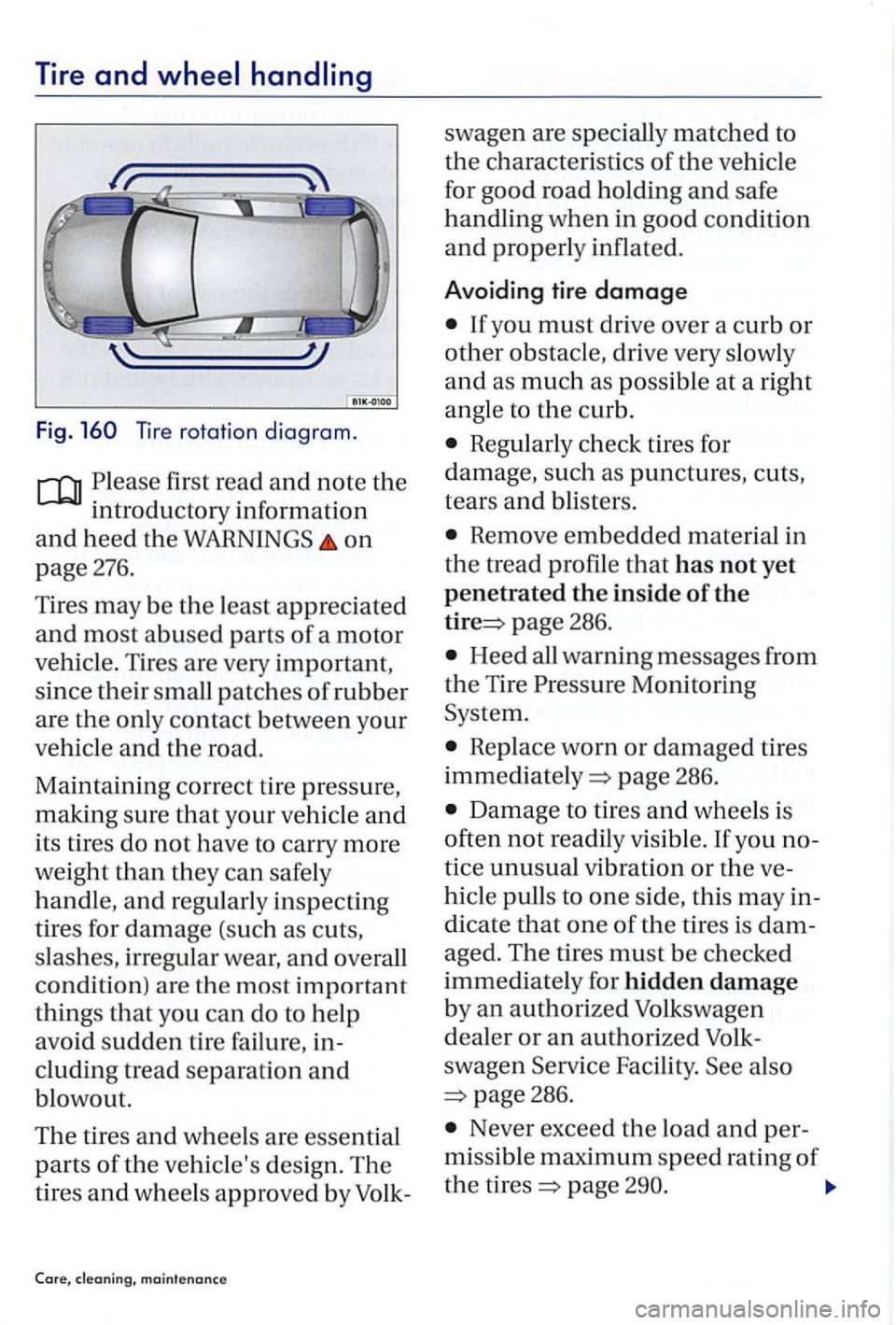
Fig. 160 Tire rotation diagram.
and note the
mtroductory mformation
and heed the WARNINGS on
page 276.
Tires may be the least appreciated
and most abused parts of a motor
vehicle. Tires are very important,
since their small patches of rubber
are the only contact between your
vehicle and the road.
Maintaining
correct tire pressure,
making sure that your vehicle and
its tires do not have to carry more
weight than they can safe ly
handle, and regularly inspecting
tires for damage (such as cuts,
s la sh es, irregular
wear, and overall
condition) are the
most important
things that you can do to help
avoid
sudden tire failure , in
cluding tread separation and
blowout.
The tires and wheels are essential
parts of the vehicl e's design. The
tires and wheels approved by Yolk-
If you must drive over a curb or
other obstacle, drive very slowly
and as much as possible at a right
angle to
the curb.
Regularly check tires for
damage,
such as punctures, cuts,
tears
and blisters .
Remove embedded material in
the tread profile that has not yet
penetrated the inside of the
page 286.
Heed all warning messages from
the Tir e
Rep lace worn or damaged tires
immediately=> page 286.
Damage to tires and wheels is
often not readily visible. If you no
tice unusual vibration or the ve
hicl e pulls
to one side, this may in
dicate
that one of the tires is dam
aged. The tires must be checked
immediate ly for hidden damage
by an authorized Volkswagen
dealer or an authorized Volk
swagen Service Facility.
Never exceed the load and per
missible maximum speed rating of
the tires=> page
Page 293 of 541
Note
Remove sno w c hain s w hen road s are free or snow. the chains ca n damage tires, impair vehicle handling and ca n be qui ck ly worn
down.
-------chain s they h ave direct contact w ith th e rims. Volk swage n recommend s usin g coa te d sn ow
chains .
c hain s are available in different sizes
Please first read and note the
introductory information
and heed the WARNINGS on
page 276.
Accessory weight
The combine d weight (in excess of
those standa rd items which may
be re placed) of automatic tra n s
mission, electro-mechnical power
stee ring, power brakes, power
windows, power seats, radio, and
heater, to th e extent that these
items are availabl e as factory-in
stall ed equipme n t (w hether in
s tall ed or not).
Aspect ratio
The ratio of sidewall heig h t to tir e
w
idth, expressed as a p ercentage.
A number o r or
lower indicates a low-profile tire
with a shorter sidewall for im
proved steering response and
better overall handling on dry
pavem ent.
Bead
The part of a tire made of steel
wires, wrapped or reinforced b y
ply cords, with the shape and
structure to en sure proper fit to the
w h
eel rim.
maintenance
Bead separation
A breakdown of the bond between
components in the bead.
The tire structure, excep t tread
and s id ewall rubber which, when
infl ate d, bears the lo ad.
The breakjng away of pieces of the
tread or sidewall.
The strands of materia l forming
the plie s in the tir e.
An y parting within the tread,
s id
ewall, or inne r lin er of the tire
ex te
nding to cord material.
at low
speeds in the three hour p e riod be
fore
the tire pressure is measured
o r a
djuste d.
Page 294 of 541
Curb weight
The weight of a motor vehicle with
standard equipment including the
maximum capacity of fuel, oil, and
coolant, air conditioner, and addi
tional weight
of optional equip
ment.
Extra load tire
A tire designed to operate at higher
lo
ads and at higher inflation pres
sures than the corresponding stan
dard tire.
Gross Axle Weight Rating
(GAWR)
The load-carryin g capacity of a
single axle system, measured
where the tire contacts the ground.
Gross
The maximum loaded weight of
the vehicle.
Groove
The space between two adjacent
tread rib s.
Load rating (code)
The maximum load that a tir e is
rated to carry for a given inflation
pressure.
You may not find this in
formation on all tires because it is
not required by law.
Maximum load rating
The load rating for a tire at the
maximum permissible inflation
pressure for
that tire.
Maximum loaded vehicle weight
The total of:
Curb weight
Accessory weight
Vehicle capacity weight
Production options weight
Maximum (permissible) inflation
pressure
The maximum cold inflation
pressure
to whic h a tire may be
inflated.
Also ca lled
inflation
Normal occupant weight
Means 150 lbs (68 kilograms) times
the number of occupants seated in
the veh icle
up to the total seating
capacity
of your vehicle.
Occupant distribution
The placement of passengers in a
veh icle.
pounds or less.
Ply
A layer of rubber- coated parallel
cords.
Ply separation
A parting of rubber compound bet-
ween adjacent plies.
296 297
Page 297 of 541
first read and note the
mtroductory information
and hee d the on
page 276.
There
are limit s to the load any ve
hicl e
or any tire can carry. A vehicle
that is ov erlo ad ed will not h andle
well and is more diffi cult to stop.
Overloading
can d am age impor
tant parts of the ve hicle.
loading can also lead to blowout,
s
udden lo ss of press ure or other
tire failur e that can cause loss of
control.
Your safety and the safety of your
passengers depends on making
sure that load limits are not ex
ceeded. Vehicle load includes ev
e rybody
and everything in and on
the ve hicl e. These load limit s are
technically refe rr
ed to as the ve
hicl
e's Gross Vehicle Weight
Rating (GVWR).
The GVWR includes the weight of
the bas ic vehicle , a ll factory-in
s tall
ed and other accessories, a full
tank of fu el, oil, coo lant and other
fluids
plus m aximum load. The
maximum load includes the
Cor e,
size designation
Wheel rim diamete r and widt h.
number of passengers that the ve
hicl e is
intended to carry (seating
capacity) with an assumed weight
of
ft m),
c
ombine d towin g weight (vehicle
plus trail er) must b e reduced by
for eve ry
Page 298 of 541
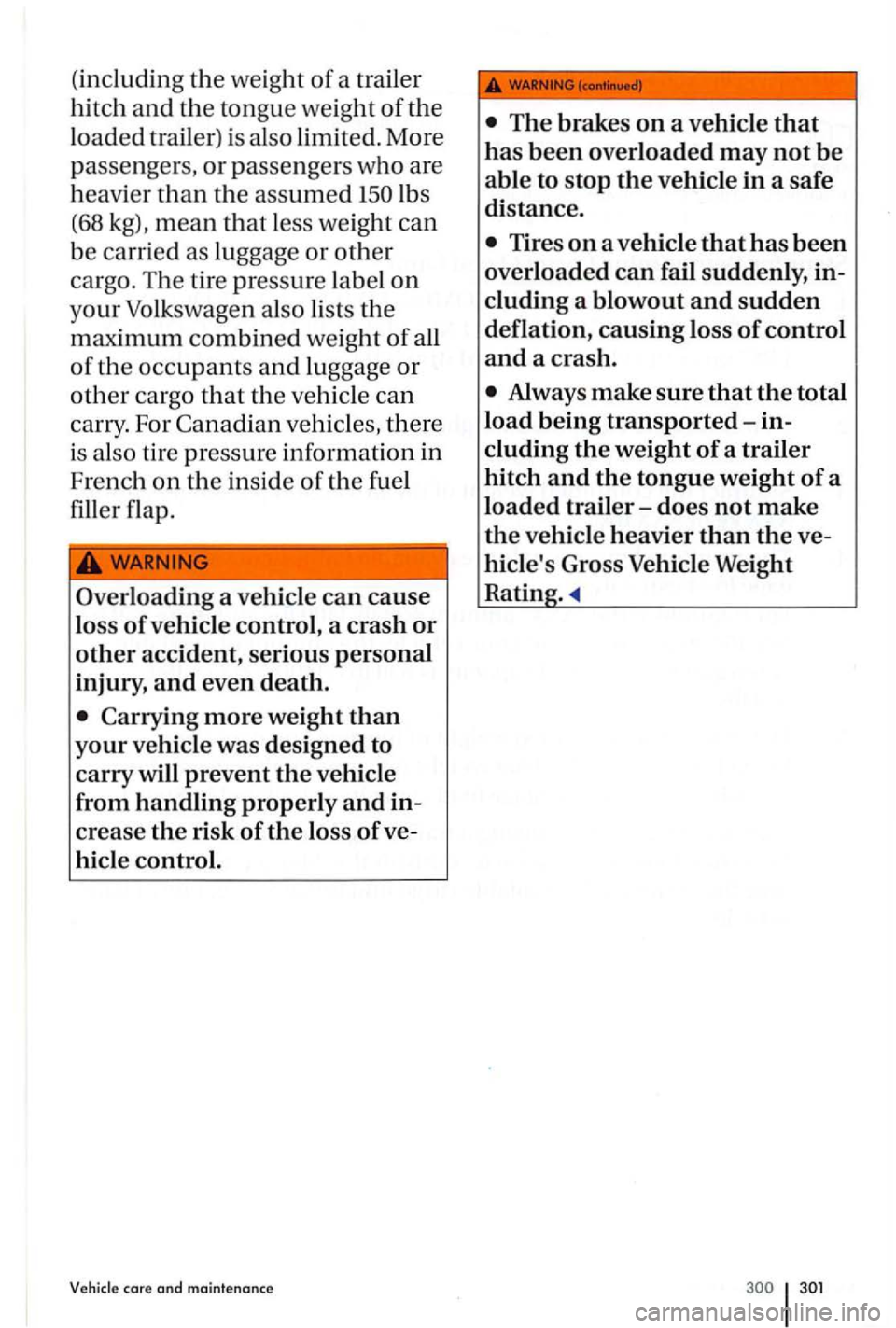
(includin g the weight of a trailer
hit ch and the tongue weig
ht of the
loaded trailer) is also limit ed. More
p asse ngers, or passengers who are
h eavier than the ass
umed
a vehicle can cause
lo ss of vehicle control, a crash or
other accident, serious personal
injury, a
nd even death.
Carrying more weight than
your vehicle was designed to
carry will prevent
the vehicle
from handling properly
and in
crease
the risk of the loss ofve
hicle control.
Page 299 of 541
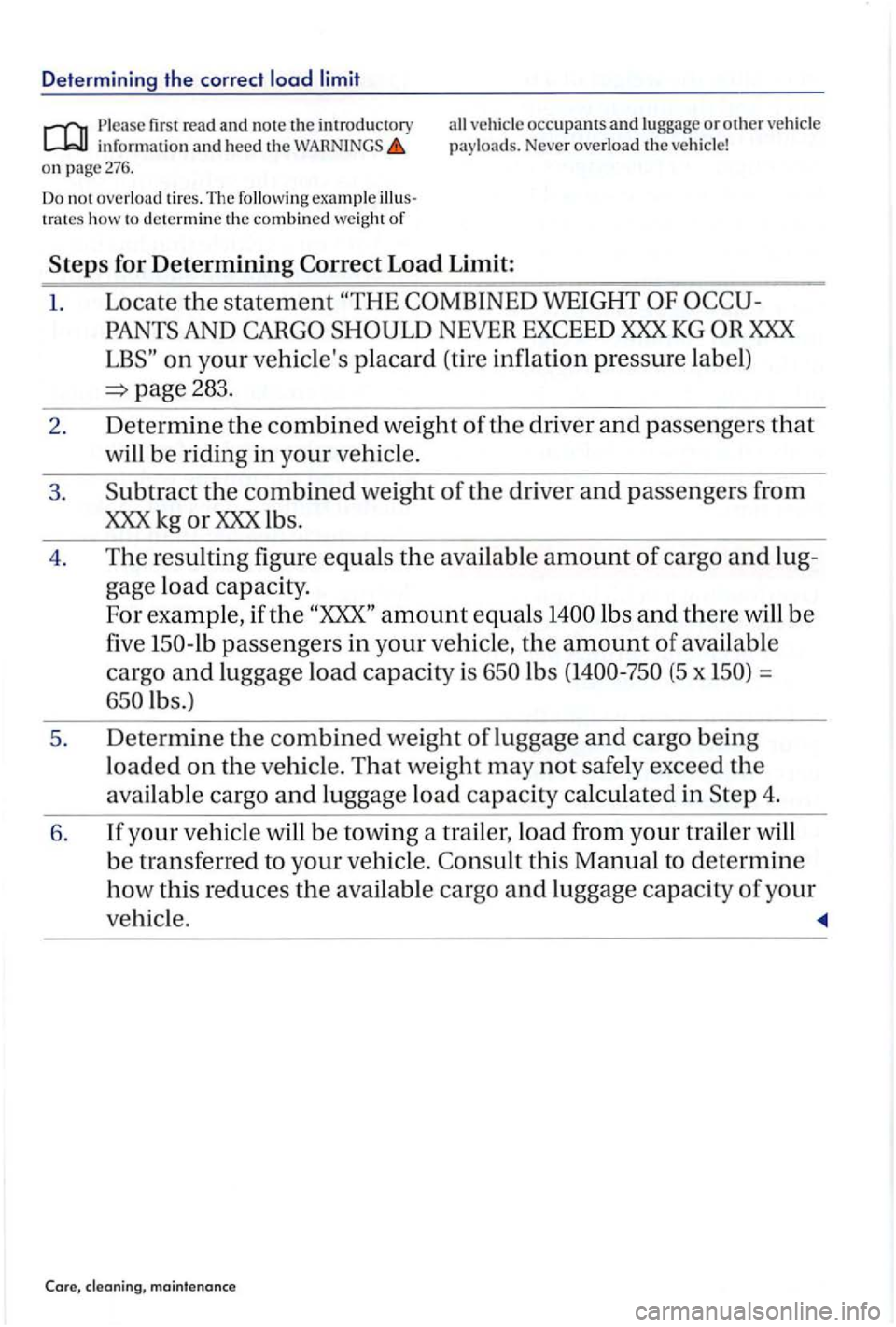
Determining the correct load limit
Please firs t read and note the introductory all ve hicle occupants and lu ggage or other ve hicl e inrormation and heed the pay loa ds. Neve r overload the ve hicle! on page 276.
Do no t over loa d tir es. The rollowi ng example trat es how to dete rm in e the combined we ight or
Load Limit:
1. Locate the statem ent
XXX KG XXX
on your ve hicle's placard (tire inflation pressure la b el)
lb s (5 x =
lb s.)
5. De
termine the combined weight of lu ggage and cargo being
loaded on the ve hicl e. That weight m ay not safely exceed the
ava
ilabl e cargo and lu ggage load capacity calculated in
maintenance