ESP VOLKSWAGEN JETTA 2007 User Guide
[x] Cancel search | Manufacturer: VOLKSWAGEN, Model Year: 2007, Model line: JETTA, Model: VOLKSWAGEN JETTA 2007Pages: 477, PDF Size: 77.6 MB
Page 107 of 477
Booklet 1.2 USA Warranty
California Emissions Warranties
California law requires us to provide you with the
following Emissions Warranty Statement :
CALIFORNIA EMISSION CONTROL WARRANTY
STATEMENT
Your warranty righ ts and obligations
T he Ca lifornia Air Resources Boar d is pleased exp lain the emi ssion control syste m wa rranty on
yo ur mode l year 2006 vehicle. In Califo rnia, n ew
motor vehicles
be de signed, and
eq uipp ed m ee t th e State 's string enr smo g sta ndards. Volkswagen must warran t the
e mi ssion control sys tem on your vehicle for th e
periods of time listed below prov ided th ere ha s
been no abuse, neglect or improp er m aint e
nan ce of you r v eh icl e.
Your emi ssio n co ntr ol system may includ e part s
s u ch as t he carburet or or fuel-in jection system,
th e ignition syste m , catalytic converter, and en
g in e compute r. Also includ ed ma y be hoses,
co nn ector s and Olher emission-re lated as
se mbli es.
Where a warrantabl e condition
Volk
swage n will r epair yo ur vehicl e at no cost to yo u
includin g di ag nosi s, p arts and labor.
Manufacturer's warranty coverage:
For 3 years or 50, 000 mile s, whichev er occ urs
first .
If your ve hicle fails an Inspec tion and Ma inte
n ance Tes t, all ne cessary rep air s and adju st
m ents w ill be mad e by Vo lkswage n to ensure
that your ve hicl e passe s th e in spection. This is
yo ur Emiss ion Comrol Syste m PERFORMA NCE
WARRAN TY.
I f any em ission-re lated part on yo ur vehicl e is
defective, the part wi ll be repair ed or rep lace d by
Vo lkswagen. This is yo ur short- term Emission
Co ntro l Sys te m DEFECTS WAHRANTY.
20 Californ ia Emi ssions Warranties
For 7 yea rs or 70, 000 mil es, wh ic h ever occurs
first
If an em iss ion-r ela te d part liste d in this war
ranty booklet sp ec ially noted wi th coverage for 7
years or 70,000 mil es is d efec tive, the part will b e
repaired or re pla ced by Volkswagen. This is yo ur
l ong -term Emiss io n
Sys te m DE FECTS
WA RRANTY .
15 years or 150 ,000 mil es, whichever occurs
Some Volkswagen models ma y be speci ally
eq uipped m ee t Ca liforni a Partia l Zero E mis
s io n Veh icle (P -ZEV J re qui rements, as id entifi ed
o n th e Ve hicle Emissio n
Inform ation
L abe l loc ated on the hood . For these ve hicles, if
your Volkswage n fail s an Inspec tion and Ma in
t e nance T est,
if any emission-related pan is
found to be defect ive, the part will be re p aire d or
repla ced b y Vo lkswage n for 15 y ears or 150,000
mi les, whi ch eve r occ urs
from th e time of
d eliver y of the veh icle the or ig ina l re tail pur
c ha ser o r or igin al le ssee. This re prese ms yo ur
Emi ssion Contro l Sys te m PERFORMA NCE WAR
and WARRANTY .
Own er's w arrant y respons ibilities:
As the veh icl e owner, you are resp onsible fo r th e
per form anc e of the requi re d ma int enan ce liste d
in your owner's Maintenanc e boo klet. Volk
swage n re commend s th at you re ta in all rece ipts
co verin g maintenanc e on your vehicle, but Volk
swage n can not deny warranty solely fo r the l ack
of rece ipt s or for your failur e to ensur e th e per -
formanc e of all sc hedul ed
Page 108 of 477
You are responsible for presenti ng yo ur ve hicle
to a Volkswagen dealer as soon as a problem ex
ist s. The warranty re pair s shou ld be completed
i n a reasonable amount of
not to exceed da ys.
As
ve hicle owner, you shou ld also be aware
that Volkswagen may den y yo u warranty cov
erage if your vehicle or a part has failed due to
Booklet 1.2 USA Warranty
abuse , neg lect, impro per main te n ance o r unap
proved modifications.
YOU HAVE ANY QUESTIONS REGARDfNG
YOUR WARRANTY AND RESPONS IBIL
IT IES, YOU SHOULD CO NTACT VOLKSWAGEN
OFAME HICA, INC:., CUSTOMER
I (800)
822-8987, OR THE CALIFORNIA R E
SOURCES BOARD AT P.O. BOX 8001, EL MONTE,
CA 91734-2302.
California Em is sions Warrant ies 21
Page 126 of 477
Booklet 2.1 Safety first
Safety is everybody 's res pon sibilit y! ..
Important things to do before driving
Safety is job. Vehicle and occupant safety always depends on the in
fo rm ed and
driver.
For your safety and th e sa fe ty of yo ur pas
se ng ers, before drivi ng a lways :
- Make sure that a ll lights and signals are
ope ratin g correctly.
- Mak e sur e that the tire pressure is co r
rect.
- Make s ure that all wind ows are clea n
and a fford good vis ib ili ty to the out side.
- Secu re all luggage a nd oth er items care
fully
10.
- Make sure that not hing can interf ere
w ith the peda ls .
What impairs driving safety
- Adju st fr ont sea t, head res traint and
mirror s correct ly for your heig ht.
- Instru ct pa ssengers to adjust the head
restra ints accor ding to th eir h eig ht .
- Ma ke su re to use the r ig ht chil d re
s tra int and use it cor rectl y to prot ect chil
dren
5 l.
- Sit p rope rly in you r sea t and make sur e
that your passenger s do th e sa me
4.
- Faste n yo ur safe ty belt and wear it prop
e rly. A lso i nst ruct your pa ssenge rs to
fasten their safety belts prop erl y
.-
Safe driv ing is directly re lat ed to the condition of the vehicle , the driv er as well as
the driver's
to concentrate on the road without being distracted.
The driv er i s respo nsibl e for the sa fe ty o f
th e ve hicle and a ll of its occupan ts. If yo ur
ab ilit y to dr ive is im paired, safe ty risks for
eve ry bod y in th e veh icle increase and you
a lso become a hazard to everyo ne e lse on
t he road
The refo re:
- Do not le t yo urse lf be distra cte d b y pas
se nge rs or by usi ng the sound system o r a
ce llul ar t elep hone
- Never drive when yo ur driv in g abil ity is
imp air ed (b y m edi ca tions, alco hol , drugs,
etc.) .
- Obse rve a ll traffic laws, rules of th e road
and sp eed limit s and plai n co mm on se nse . -
Alw ays ad just yo ur spee d to road , traffic
a nd wea ther condition s.
- Take frequ ent breaks on long trips.
Don't drive for more than two hou rs at a
s tr etc h.
- Do n ot dr ive w he n yo u are tir ed, und er
press ure o r w hen you a re s tressed.
WARNING
dri vin g sa fe ty increases the risk of
se riou s perso nal inju ry and dea th when ever a
ve hicle is being use d ...
Safe driving 3
Page 131 of 477
Booklet 2.1 Safety first
Active head restraints for the front seats
During a rea r e nd collisio n the passenge rs
in th e vehicle are pressed against th e sea t
back rest. The res ultin g pressu re th at the
body exe rts aga in st th e bac kres t ac tivates
t h e ac tive head rest raint s in the front seats .
Th e front hea d res train ts wi ll mo ve fo r
w ard and upwa rd at the sa me tim e to help
r e duce the risk o f n eck injuri es.
WARNING
Driving without hea d re stra ints or with im
properl y ad justed head r estraint s in creases
th e risk or seriou s injuri es in a collision . To
help reduce th e risk or injury:
• Always drive
th e hea d r estra ints in
place and prop erl y a dju sted. Remember that
th e rear center he ad r estraint is not h eight ad
ju stabl e and that it mu st be rai sed up all th e
w ay w hen eve r the center rear seat is occ upied .
• Every per son in the vehicle must have a
properly adjuste d head restraint.
• Always make su re each perso n in the ve
hicl e prop erl y adju sts th eir head r estraint.
WA RNING (continue d)
Eac h head restraint mu st be adju ste d ac
cord ing to oc cupants ' size so that the upper
edge is as eve n with the top or the person' s
h ead, but no lo wer than eye level and so it is as
clo se to th e back or to the h ead as possibl e.
• Nev er attempt to adjust head res traint
whil e dri vin g. Ir you have driven
and must
adju st the driver h eadr est any reaso n, stop the vehicl e attempting to
adju st the hea d re straint.
• Children mu st always b e properl y re
strained in a c hild restraint that is appropriat e
their age a nd size 5 1, " C hild
Tips
The acti ve head res train ts ca n also ac tivate
w hen p assenger push es up agains t th e ba ck
r es t wi th en ough force exa mpl e yourse lf ju st into th e seat abr uptly) or if th e
h ea d res train t is push ed from behind. This is
n orm al and will not da m age th e head res traint.
I t w ill go back t o its o riginal pos itio n rig h t
Examples of improper seating positions
The occupant rest raint system ca n on ly redu ce th e risk of if v eh icle
pa nts ar e prop erly sea ted .
Improp er se atin g po siti ons ca n cause se
r io us injur y or deat h. Safe ty belts ca n on ly
wo rk whe n th ey are prop erl y pos ition ed
o n th e body . Impr oper seati ng posit ions
r e du ce the e ffect ive ne ss of sa fe ty belt s a nd
w ill eve n inc rease the ris k or injury and
d ea th by m ov ing t he sa fety belt to criti cal
a reas of the body. Imp roper seating posi
ti ons a ls o in crease the risk of seriou s injur y
and d eath when a n airb ag de plo ys and
s trikes an occ upant who is not in the
prop er sea ting po sition.
driver is res pon
s ibl e for the sa fe ty of all vehicl e occ upant s
a nd especiall y for childr en. There for e:
8 Safe driving
-Never a llow anyone to ass um e an im
proper seating pos it ion when th e ve hicl e is
bei ng
lists onl y so me or the pos itions
that will increase the risk or ser io us injury and
d ea th. Our h ope is
th ese ex amples will help
mak e you more awa re of sea ting po siti ons that
ar e da ngero us.
Therefore, whenever the vehic le is moving:
• neve r sta nd up in the vehicle
• neve r stand on the seats
• neve r kneel on th e seats
• neve r rid e with the seat back recl ined
• never lie clown on th e re ar sea t
Page 134 of 477
WARNING
To help preven t poiso nous ex haust gas bei ng draw n in to the ve hicle, always kee p th e
r ea r li d closed w hile dri vin g.
• Never tra nspo rt objec ts la rger than those
fill ing co mplete ly i nto
lu ggage area be
ca use re ar lid cann ot be full y close d.
• If you abso lutely m usl d rive
th e rear
li d ope n, obse rve fo llow ing notes to red uce ris k of poiso ning:
C lose a ll win dows,
C lose the power
Ope n all ai r o ut lets i n the instrume nt
panel,
Swi tc h olT air reci rc ul ati on,
Se t th e fr esh air fan lo h ig hes t speed .
WARNING
Always make su re that doo rs, the power all w indows a nd rea r lid a re secure ly
closed an d locked lo re du ce the r is k of injur y
w hen
ve hicl e is no t be ing used.
Tie-downs
Bo oklet 2 .1 Safety fir st
WARN ING
• Afte r clo sin g th e rea r lid, always make sure il i s proper ly closed a nd locked.
• Never leave your vehicle u nattended espe
cia lly
rear lid open. A chil d co uld
craw l in to ve hicle thro ugh th e lu ggage
com partmen t a n d cl ose t he rear lid o r wi ndow
b eco min g tra pp ed a nd un abl e to get ou l.
Be ing trapped in a ve hicle ca n lea d lo se rious
p ersona l injury.
• Neve r lei c hild ren play in or around th e ve
hi cle.
• Never le t p assenge rs ride in the lu ggage
co mp artm ent. Vehicle occ upan ts
a lways
be proper ly re stra ined in one of the veh icle's
sea ting positions ..
Mak e sure heat in g w ires in re a r
w indo w ca nnot b e scraped and damaged b y
in ve hi cle .
Tip s
Air ci rc ula tion h elps redu ce window fogg ing.
D o not co ver slot s becaus e can
pre vent stal e air from escap ing the vehicl e.
The lu ggag e compartm ent is equipped w ith Jou r ti e-downs to secure luggage and
other items.
U se 10 sec ure y our cargo prop erl y IO , " Loadin g th e lu gg age compa rtm ent ".
l n a collis ion ,
laws of p hys ics mean even
s m alle r are lo ose in veh icle w ill
b ecome hea vy mi ssiles can cause se rious
injur y. h em s in v ehicl e po ssess e nerg y which
v ar y ve hicl e spee d and wei gh t of the
i t em. Veh icl e s peed is s ignifi cant facto r.
Fo r ex amp le. in a
co lli sion at a sp eed of 30
mph (48 km /h ). th e fo rces ac tin g o n a IO lb s. (4 .5
kg )
arc 2 0 l ime s norma l of item. Thi s m ea ns o f th e
i t e m wo uld sudd en ly be ab out 200 lb s. (9 0 kg) .
You can im agine
inju ries a 200 lbs. (90
kg ) flyin g free ly th rou gh pa sse nger
c ompar tm ent cou ld cau se in a colli sion like thi s.
WARNING
Weak, damaged or im pro per stra ps use d l ose
c u re item s lo lie -d owns can fail durin g hard
braking or i n collisio n an d cause se rious pe r
so nal injur y.
• A lways use suit abl e m ountin g str aps a nd
p ro per ly se cur e ite ms lo the lie-downs in
lu ggage compartment lo he lp preven t items
from or flying forwa rd as dangero us
m issi le s.
• When th e rear seal backres t is fo lded down,
a lway s use sui tab le mo unt ing stra ps an d
proper ly sec ure items to the tie- downs in the
lu ggage compa rtme nt l o help prevent item s
Saf e drivin g 11
Page 136 of 477
Safety belts
General not es
Always wear safety belts!
Wearing safety b elt s correctly saves lives!
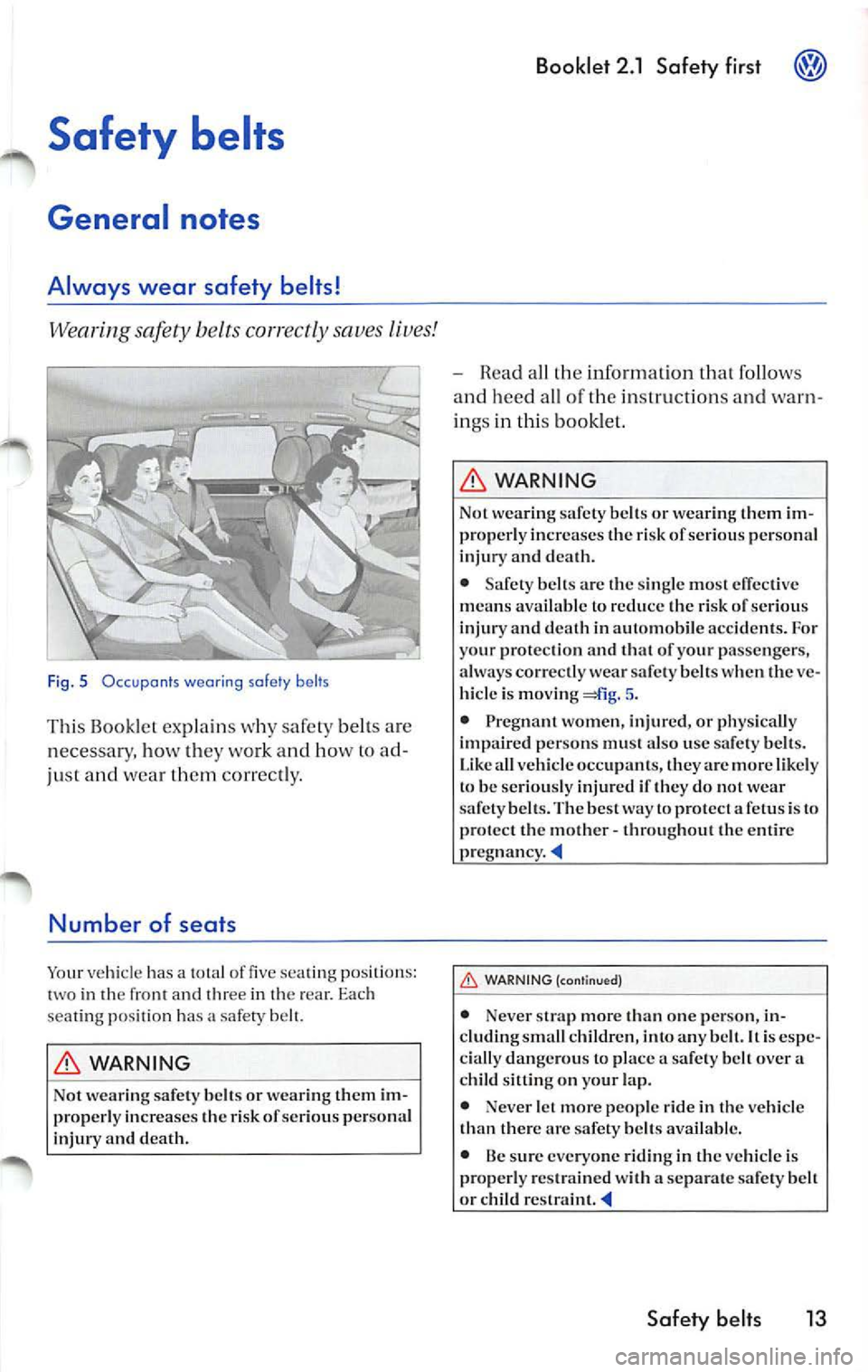
Fig . 5 Occ upan ts wear ing safety belts
This Bookl et explain s why safet y belt s are
nece ssary, ho w the y work and how to ad
ju st and wear them correc tly.
Number of seats
Yo ur vehicl e has a tota l of five se ating position s: in the fro nt and three in th e rear. Each
sea tin g p ositio n ha s a sa fety b elt.
WARNING
Not wearing safety belts or wearing them im
properly increases the risk of seriou s per sona l
injury and d eat h.
Booklet 2.1 Safety first
- Read all the information th at follows
and heed all of th e in struction s and warn
in gs in thi s booklet.
WARNING
Not wearing safety belts or wearing them im
properly increases the risk of seriou s personal
injury and death.
• Safety belts are t he sin gle mo st efTec tive
means available to reduce the risk of se rious
injur y and death in automobile accidents.
your protection and that of your passengers,
a lwa ys corre ctl y wear safety belts when the ve
hicle is moving =;fig. 5.
• Pregnant women, injured, or physically
impaired per sons mu st
use safe ty belts.
l..ik eall vehicle occupant s, they arc more likely
to be seriou sly injur ed if the y do not wear
safety bel ts. The best way to protect
fet us is to
protect the mother -throughout the entire
pregnancy.
WAR NING (con tinued)
• Never strap more than one person, in
cluding small children, into any belt. It is espe
cially dangerous to pla ce a sa fety belt over a
c hild sittin g on yo ur lap.
• Never let more people ride in the vehicle
than ther e arc safe ty belt s available.
• Be sure eve ryone riding in the vehicle is
properly res train ed with a separat e safety belt
or child restraint.
Safety belts 13
Page 142 of 477
Safety belts
Fastening safety belts
Sa fe ty fir st -eve rybody buckle up!
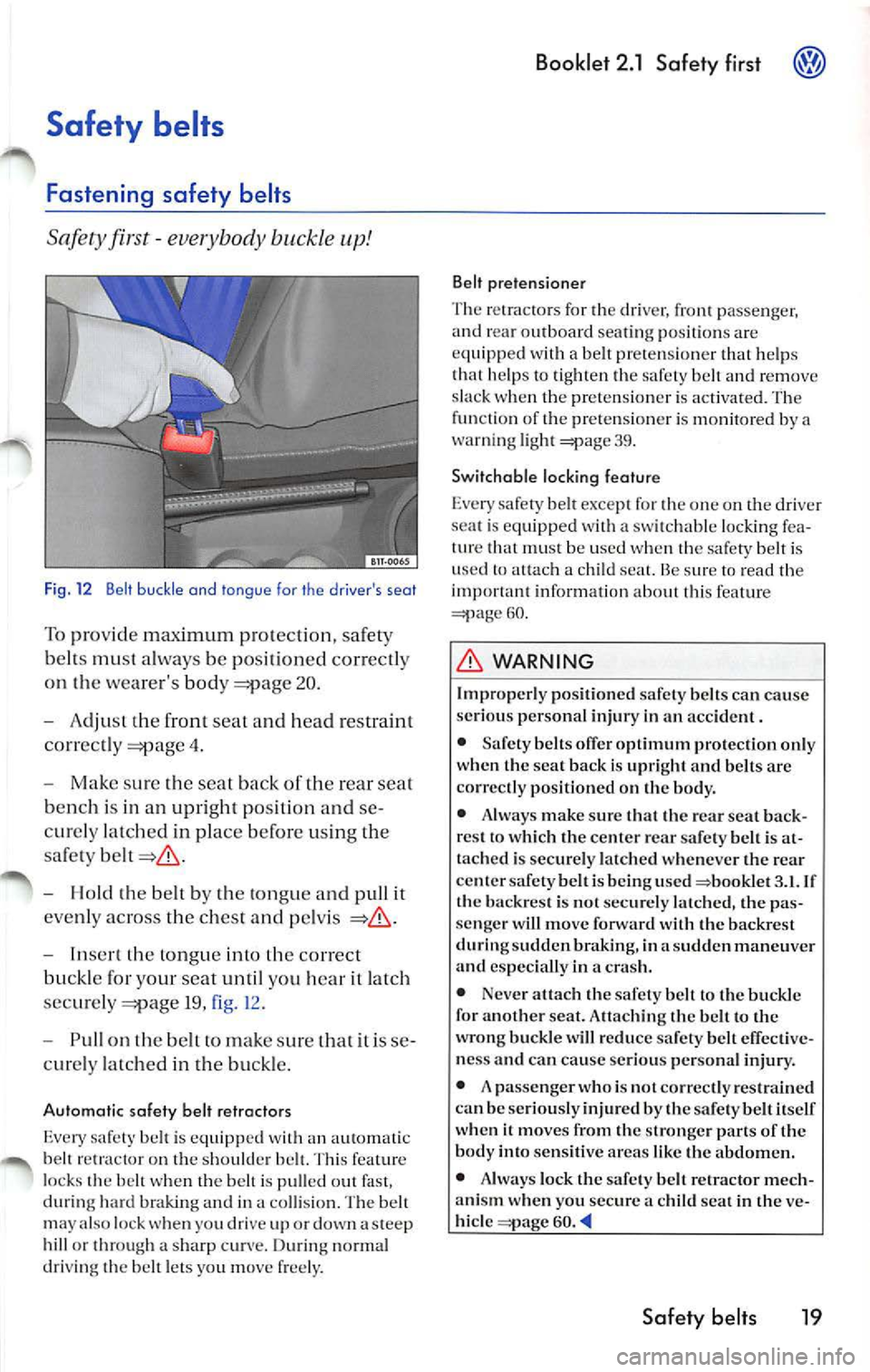
Fig. 12 Belt buck le and tongue fo r th e dr iver's seat
To pro vid e maximum prot ectio n, sa fety
b elt s
alw ays be po siti oned cor rectly
o n
weare r's bod y 20.
- Adju st
fro nt sea t and head restra int
co rrec tly
4.
- Mak e su re th e seat back of the rea r sea t
b ench i s in an upright pos ition and se
cu rely latche d in plac e before usin g th e
sa fe ty
- Hold !he be lt b y ton gu e and pull it
eve nly across the ch es t and pel vis
-th e tongue into correct
bu ckle for your seat until you h ear
latch
sec urely
19, fig. 12 .
- Pull on
belt to mak e sure that it is se
cure ly latc hed in the bu ckle.
Automatic safety belt retractors
E ve ry
b elt i s equipp ed with an aut om ati c
belt retrac tor on th e sho uld er bell. Thi s fea ture
l oc ks th e belt when the
is pu lled ou t fast ,
during hard braking and in a collision. The belt
m ay also lock
yo u d rive a stee p
hill or thro ugh a sh arp cur ve. Durin g no rma l
dri vin g th e belt le ts yo u mo ve freel y.
Booklet 2 .1 Safety first
Belt prete nsio ne r
T he re tracto rs for the drive r,
pa sse nger,
a nd rea r outboard seating po sition s are
e quipp ed wit h a belt pr ete nsio ner that h elp s
th at h elp s to t ight en th e safe ty belt and remo ve
s lac k w hen th e pr etens ioner is act iva te d. Th e
fun ction o f the pr eten sio ner is m onit ored b y a
wa rnin g light
39.
Switc hable l ocking feature
Every safety belt excep t fo r th e one on th e dr ive r
se at is eq uippe d wit h a sw itchable locking fea
tur e th at mu st be use d when the saf ety b elt is
used
1 0 att ach a child seal. Be sur e to read the
imp orta nt in formation about thi s feature
60 .
WARNING
Imp roperl y position ed safe ty belt s ca n ca use
se riou s personal injury in an accident.
• Saf ety belts offer optimum protection only
when the seat back is upright and belt s arc
c o rr ectly positioned on the body.
• Alway s m ake sure that th e re ar sea t back
res t to which th e center re ar safety belt is at
t ached is sec urely la tc h ed when ever th e rear
center safety belt i s bei ng use d
3.1. If
the b ackres t is n ot sec urely latc hed, the pa s
s enger will move fon vard wit h the backres t
during sudden braking, in a sudd en maneuver
a nd especially in a cras h.
• Never attach the safe ty belt to the bu ckl e
for another seat. Attachi ng the belt to th e
wrong buckle will reduce safety belt effective
ness and can cause se rious per sona l injury .
• A pa ssenge r w ho is not corre ctl y restrain ed
can be se riou sly injur ed by th e sa fe ty belt it self
w hen
60.
Safety belts 19
Page 148 of 477
Booklet 2.1 Safety first
Improperly worn safety belts
Inco rrec tly position ed safety bel ts can cause severe injuries.
Wearing safe ty belts impro perl y can cause
se rious injury or death. Saf ety bel ts ca n
only work when they a re co rrect ly po si
tio ned on the body. Improper seating posi
t ions redu ce th e e ffec tive ne ss o f safe ty
a nd will eve n incr ease the risk of in
j ury and dea th by mo ving the safety belt t o
c riti ca l area s of the body. Improper seating
p osition s also inc rease the risk of serious
i njury and dea th when a n airbag dep loys
a nd str ik es an occ upant who is no r in the
cor rect seating position.
dri ver is re
spo nsibl e for the safety o f all vehicl e occ u
pants and espec iall y for ch ild ren. Ther e
fore:
Safety belt pretensioners
-permit anyone to assume an in
correct sittin g posi tion in the ve hicle w hile
WARNING
I mproperly worn belt s in crease the risk
of seriou s per sonal injury and d eath whenever
a ve hicl e is being use d.
• Always make sure that all vehicle occu
pants are co rrec tly res trai ned and sta y in a
corr ect sea ting position whenever the vehicl e
i s bein g use d.
• Always read and heed all WARN INGS and
other import ant inform ation
1 7 .
How safety belt pretensioners work
In a frontal collision, the safety belts for the front and rea r outboard* seating po
s itions are tightened up automatically.
The retractor s for the driver and fron t pas seng er
po sition s (r ear o utboar d seat ing positions only
i n co mb ination
op tional sid e air ba gs for
th e ou tboa rd rear sea tin g po sit ions ) are
eq uipped with b elt pre1 ensioner s. S en sors ac ti
v at e th e belt pre te n sion ers in frontal colli sion s
whe n dec ele ra ti on is high enough. Th is tig ht ens
t h e belt and ta kes up belt sla ck.
up s lack help s to re duce forwa rd o ccup a111 mov e
m ent durin g a co llis ion .
The belt p re te n sioncr can onl y be activ at ed
o n ce.
Th e belt pr ete nsion er can be
in a frontal, s ide or rea rcn cl colli sion. It will n ot acti
va te in a ro llo ve r in which side airb ags do not
d eplo y.
Note
Neve r le t th e belt re main ov er a re a r seat back
that has been fo lded forward . T he re ar belt p re - t
en sio ne r• c an be a cti vated unn ec es sar ily in a
co llision and will then have to be rep laced .
Tips
• When the s afety b elt pre ten sion cr is acti
v at ed, a fin e du st is re lea sed . Thi s is no rm al and
i s
c ause d by fire in th e ve hicl e.
• Applicab le s afet y req uirem en ts mu st be ob
s e rved when th e veh icle or comp onents of the
sy ste m are scrapp ed .
A qualified dealers hip i s fa
mi liar w ith th es e re g ul atio ns and w ill be pl ease d IO pa ss o n informat ion to yo u.
• B e sur e
to obse rv e all saf ety , e nvironm e111al
an d other r eg ul ation s if t he v eh icl e or ind iv idual
pan s of the sys tem, particu lar ly th e s afety b elt or
a irba g. are to be dispo sed. We re co mmen d yo u
h av e yo ur auth orized Vo lkswagen pe rform thi s
s ervi ce for yo u.
Safety belts 25
Page 150 of 477
Booklet 2.1 Safety first @
Airbag system
Important things to know
Importance of wearing safety belts and sitting properly .
Airbags are only supplemental res traint s. For airbags to do th eir job , occupant s
m ust
prope rly wea r th eir saf ety b elts and be in a proper seating position.
Fo r yo ur safet y an d the safet y of your pa s
s en gers, before d riv ing alwa ys:
Ad just dr iv er 's seat and stee rin g
wh eel properl y
4.
Adj ust fr on t passe nge r seal p rop erl y
5.
We ar sa fe ty belt s properly 13 .
A lways properl y use th e co rr ec t child
r es tra int lo protect childr en
5 1.
In a co llisio n a irba gs mu st infl ate within th e
blink of an eye and w ith con sid erabl e fo rc e. The
s uppl em ental airb ags c an cause injuri es if th e
dri ver or th e front seat pa sse nge r is not seate d
prop erl y. Ther efor e in order to help the airba g to
do its jo b , it is im porta nt, both as a driver and
a passe nger to sit pro perly at all times.
keepin g ro om betwe en yo ur body and the
s te erin g and th e fr ont of t he passenger
co mpa rtm ent , the a irbag can i nflate f ull y a nd
co mpl etel y and p rovid e suppl em ent al p rotec
t io n in certa in fro ntal co llision s
deta ils
o n th e opera tio n of the se at adju stm ent contro ls
" F ro nt seat s".
I t 's especia lly im port ant th at child ren b e prop
e rl y res train ed
5 1, "C hild safe ty".
Th ere is a lo t t hat th e drive r and the passe ngers
ca n and mu st d o to he lp th e in divi du al safe ty
f e atur es insta lled in yo ur Vo lks wa gen
to
get he r as sys te m .
Pro per seati ng posi tio n is i mp ort ant sn th a t th e
fron t airb ag o n th e dr ive r sid e ca n do its jo b . If
y ou ha ve
phys ica l imp airm ent or cond iti on
t h at p rev ent s yo u from sittin g prop erly on t he
dri ver
with the sa fe ty belt prop erl y
and r eachin g th e pe dals , s p ecia l m odific ation s
t o yo ur vehicl e ma y be necessary .
Co nta ct you r auth ori7.e d Vo lk sw agen dea le r, or
c all t he V olk swage n Custo m er
Ce nter at 1-800 -822 -8987 .
When the airba g sys te m deploy s, a ga s gen erator
w ill fill the airb ags , b re ak op en th e padd ed
cov ers, and inflate be twee n the ste erin g wheel
and th e dri ver and b etwee n the in strum ent
p an el and the fro nt p asse nge r. Th e a irbag s
w ill defl ate imm edi ate ly af ter dep loy ment so that
t he front o ccupan ts ca n see th ro ugh th e wind
s h ie ld a gain with out int errupt io n .
A ll of thi s takes place in the blink ofan ey e, so
fa st that many peopl e do n't eve n rea lize t hat th e
a irbags have dep lo ye d.
airbags a lso inflat e
wit h a grea t dea l of fo rc e and noth in g sh ould be
in their w ay w hen th ey depl oy .
airb ags in
com binati on with pr op erl y wo rn safe ty belt s
s lo w
an d limi t th e occ upant 's for wa rd
m ove ment. T ogether th ey help t o preve nt the
dri ver a nd fro nt sc at passe nge r fr om hillin g
pa rts of the in side th e ve hicle
redu cing th e
fo rces actin g o n th e occu pant duri ng the cras h.
In this way they help to red uce the risk of inju ry
t o th e hea d an d upp er bod y in the c rash . A irb ags
d o no t p rot ect t he arm s or the low er p art s o f th e
b ody.
B o th fron t a irb ags w ill no t i nfl ate in all fro ntal
colli sio n s. Fro nt airba gs w ill no t infla te in all
front al colli sio ns .. The tri gge ring o f the a irbag
sys te m depe nds on the ve hicle dec ele rat io n ra te
ca use d by th e co llisio n and regis te re d b y th e
e lec tron ic control uni t. I f thi s ra te is
th e
r efe re n ce v alu e prog ramm ed in to the c ont rol
u nit , th e air bags
n o t b e trig gere d , eve n
th ou gh th e car may be badl y dam aged as a res ult
o f the colli sio n . Ve hicle dama ge, re pai r co sts o r
eve n th e la ck of v ehi cle
is not n eces-
Airbag system 27
Page 154 of 477
Booklet 2.1 Safety first
Front airbag system -the basics
Description of front airbags
The airbag system can provide supplemental protection to properly restrained
front seat
Fig. 21 L ocotion of d rive r airbag: in steer ing whee l
Your is fru 11L
"A dva nced Airbag in co mplian ce United Stales Fede ral Moto r Veh icle Safery dard (FMVSS ) 208 as applicab le a l time your
ve hicle was manufac tu re d . Yo ur vehicle is also
e quipped
side airbags fo r driver and seal passe nge r. Your vehicl e ma y also be wit h op tional sid e ai rb ags for re ar board T he belt s for front and
r ea r ou tboa rd seats equipped with opti onal side
a irbags have "pretensioner s" that help to take
s lack
of th e belt sys tem. The pret en sio ners
ar e also activa te d by the ele ctroni c control
for airbag syste m.
The front a nd outb oard r ea r seats
belts
al so hav e loa d limit ers to help reduce force s
appli ed to body in a crash.
Th e airbag for
driver is in steering whee l
h ub 2 1 an d airb ag for th e fr o nt pas
se nger is in in strum ent panel 22. Th e location of airba gs is marked
There is a yo u n eed to know airb ags
in your vehicle. \V e urge you rea d detail ed
in forma tion airbags, safety and child
safety in this and th e oth er bookl ets th at mak e
Fig. 22 Location of front passenger's airbag: in the
instrume nt pa nel
up 1he ow ner 's literawre. Please be s ure to h eed WARNI NGS -th ey arc ext remely for your safet y and the sa fety of yo ur pass enger s,
especially infants and sm all childr en.
WARNING
Ne ver re ly o n air bags alone for protection.
• Even w hen th ey deplo y, airbags provide
on ly s uppl em en tal prot ection.
• Airbag work mo st effectivel y when used
w ith prop erly wo rn safety belts.
• Th erefore, always wear your safety belts
and make sur e
everybody in your vehicle
is properly re strained.
WARNING
A person on front pa ssenger seat , espe
ci ally infants and sma ll childr en, w ill rec eive
se riou s injuri es and can even be killed by
being too close to lhe airbag when
it inflat es.
• Although
Advanced Airbag Syste m in
yo ur vehicl e is designed to turn off the
passenger airbag an infant or a small child in
o ne of the child restraints used to cer tify
Adva nced A irbag Sys te m i s on pas-
Airbag system 31