belt VOLKSWAGEN JETTA 2008 Owner's Manual
[x] Cancel search | Manufacturer: VOLKSWAGEN, Model Year: 2008, Model line: JETTA, Model: VOLKSWAGEN JETTA 2008Pages: 477, PDF Size: 77.6 MB
Page 137 of 477
Booklet 2.1 Safety first
Safety belt warning light
Your vehicl e ha s a w arning s yste m for the driv er and front seat pa sseng er to r e
mind
about the importan ce of bucklin g-up.
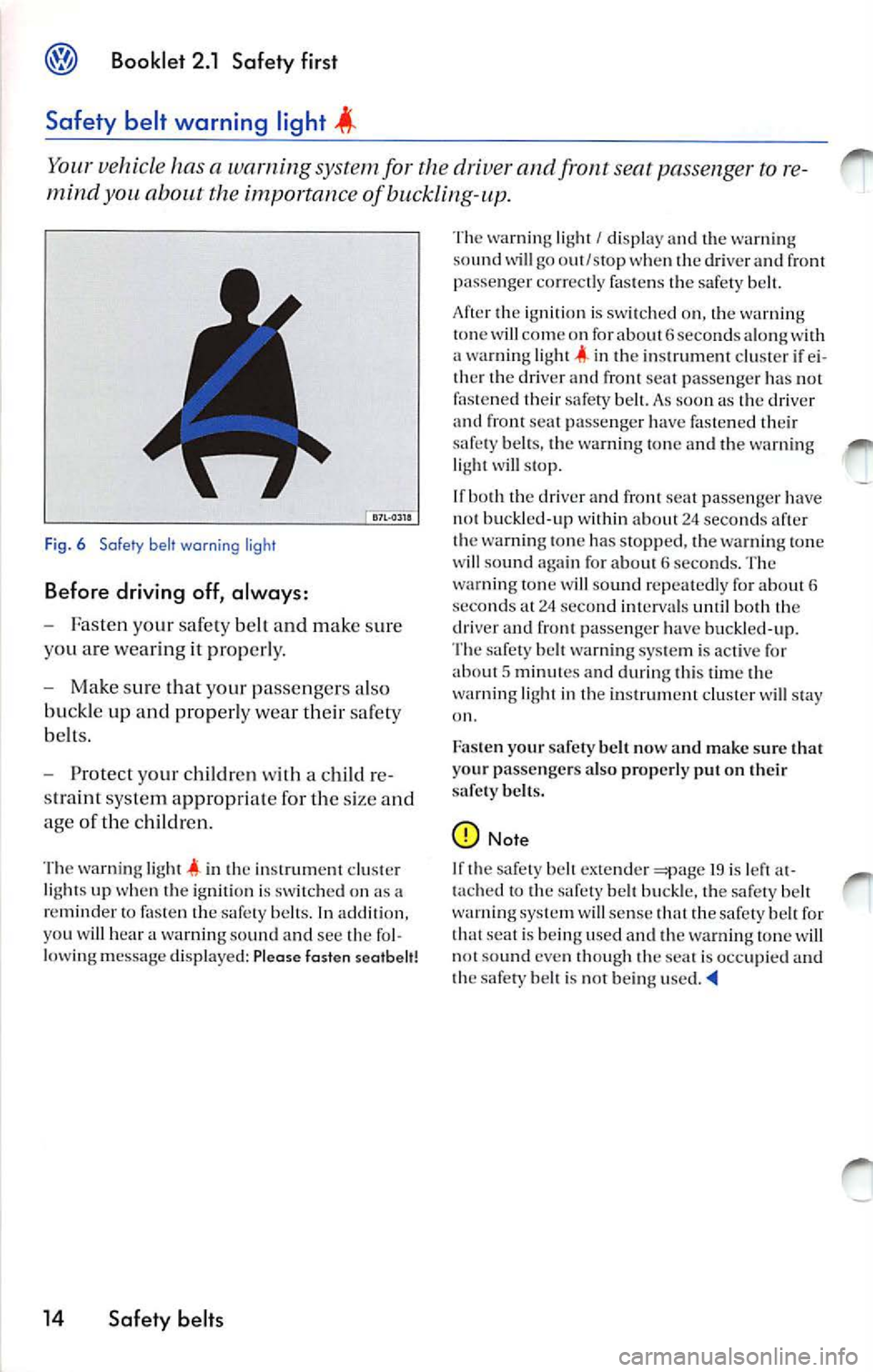
Fig. 6 Safety bel t warn ing lig ht
B efore driving off, always :
Faste n you r safet y be lt and mak e sure
you are w ear ing it prop erl y.
Ma ke s ure th at your p asse nge rs als o
bu ckle up and proper ly w ear their sa fe ty
b elt s.
Prot ect yo ur chi ldr en with a c hild re
s traint sy ste m appropri ate fo r th e s ize and
ag e o f the ch ildren.
The wa rning lig ht in th e in strum ent cluste r
li g ht s up when t he ig nition is s wit ch ed on a s a
r e minder
to fa ste n th e sa fe ty belts. In addition ,
y o u w ill hear a warnin g so und and see th e fol
l ow ing m ess age displa yed: Please fasten s eatbelt!
14 Safety belts
The warnin g light I di spla y and th e warn ing
so un d w ill go o ut/stop w hen th e dri ver an d front
p asse nger co rrec tly faste n s th e s afety be lt.
the ig ni tio n i s sw itch ed on , th e warning
t o ne w ill co me o n fo r a bou t 6sec ond s alo n g wi th
a wa rnin g ligh t
in the in strum ent clu ste r if ei
th er th e dri ver and front sea t pa ssenge r ha s not
fa ste ned th eir saf ety belt. As s oon as th e dri ver
and front seat pa sse nger have fa ste n ed th eir
sa fe ty belts, the warnin g to ne and the wa rning
li g ht
sto p.
If both the dr iver and fron t se at pa sse nger h ave
no t buc kled- up w ithi n abou t
24 sec onds afte r
t h e wa rning to ne ha s s to pp ed, the w arn ing ton e
w ill soun d a gain for ab out 6 second s. Th e
w arnin g to n e w ill sound re peate dl y fo r ab out
6 sec ond s at 24 seco nd int erv als unt il bo th the
dri ver and fr ont p asse nge r have buckl ed-up.
Th e sa fety belt warnin g sys te m is ac tive for
a bo ut
5 minut es and durin g thi s tim e th e
w arn ing lig ht in th e in strum ent clu ste r w ill sta y
o n.
F as te n you r sa fe ty be lt now and make sure that
y our passenge rs als o proper ly p ut on their
safe ty be lts.
19 is le ft at
ta ch ed to th e sa fe ty belt bu ck le, th e s afe ty bel t
w arn ing sys te m will se nse that th e safety belt for
th at sea t is bein g use d and the w arnin g to ne w ill
n ot sound even th ou gh th e sea t is occ upi ed and
t h e safe ty belt is not b ein g use d.
Page 138 of 477
Booklet 2 .1 Safety fir st ®
Why safety belts?
Frontal collisions and the laws of physics
Fronta l crashe s subject people riding in vehicles to very strong force s.
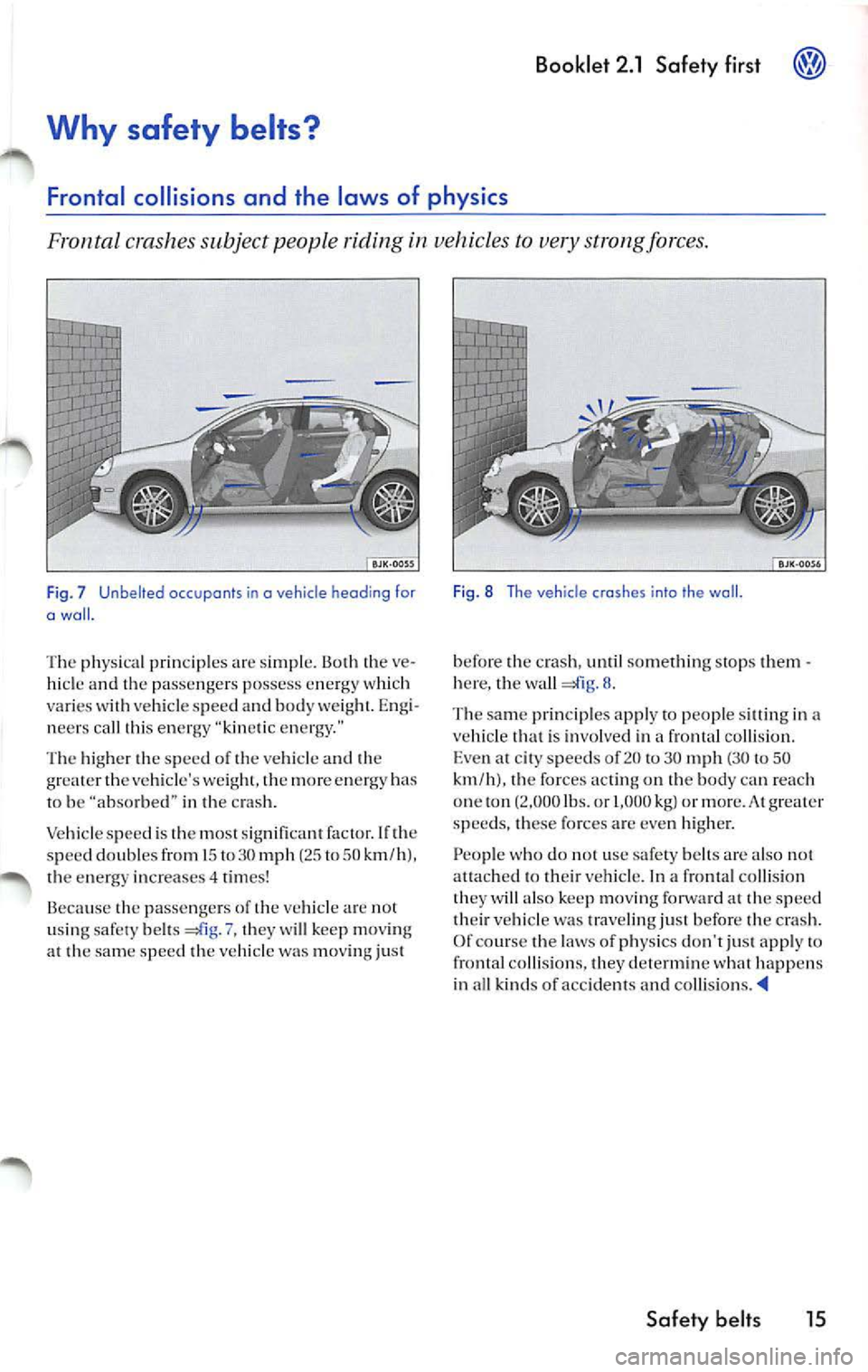
F ig . 7 Unbelted occupants in a veh icle head ing for
o wal l.
The ph ysica l prin ciples ar e simpl e. Both th e hicle and th e pa sse nger s po ssess e nergy w hich
va ries with veh icl e s pee d and bod y weig ht. Engi
n eer s c all thi s en erg y " kin etic energy. "
The hi gher th e s pee d of the vehicl e and th e
gr eater t he v ehicl e's weight, th e more energy h as
to be "a b so rbed " in th e c rash .
V ehicle speed is th e m os t signifi cant factor. I f the
spe ed doubl es from 15 to 30 mph (25 to 50 km /h ),
th e e nerg y in crea ses 4 tim es !
Be ca u se th e pass eng ers of th e vehicle a re not
u sin g s afety belt s
7, th ey w ill kee p movin g th e s am e s pee d th e ve h icl e mo ving ju st
F ig . 8 The vehicle crashes into the wall.
before th e c ras h, un til somet hing stop s them h ere, t he wa ll 8.
T he s ame princip les a pply
people sit ting ve hicle tha t is in vol ve d in a frontal collision.
E ve n at spe ed s o f20 t o 30 mph (30 to 50
km /h ). t he forc es act in g on the bod y reach
on e ton (2,000 lbs. or l,000 kg) or more. Al greater
s pe ed s, these force s are ev en high er.
P eo ple wh o do not u se sa fety belt s arc al so nut
a tta ch ed to th eir ve hicl e. In a fronta l colli sion
t h ey will als o ke ep moving forwa rd a t th e sp ee d
th eir ve hicl e was tra ve lin g ju st befo re the crash.
Of cour se the law s of p hys ics don't ju st a pp ly to
fro ntal colli sion s, the y det ermine what happ en s
in all kind s of accident s
Safety belts 15
Page 139 of 477
Booklet 2.1 Safety first
What happens to occupants not wearing safety belts?
In crashes unbelted occupant s cannot stop themselve s from flying forward and
being injured or killed. Always wear your safety belts.
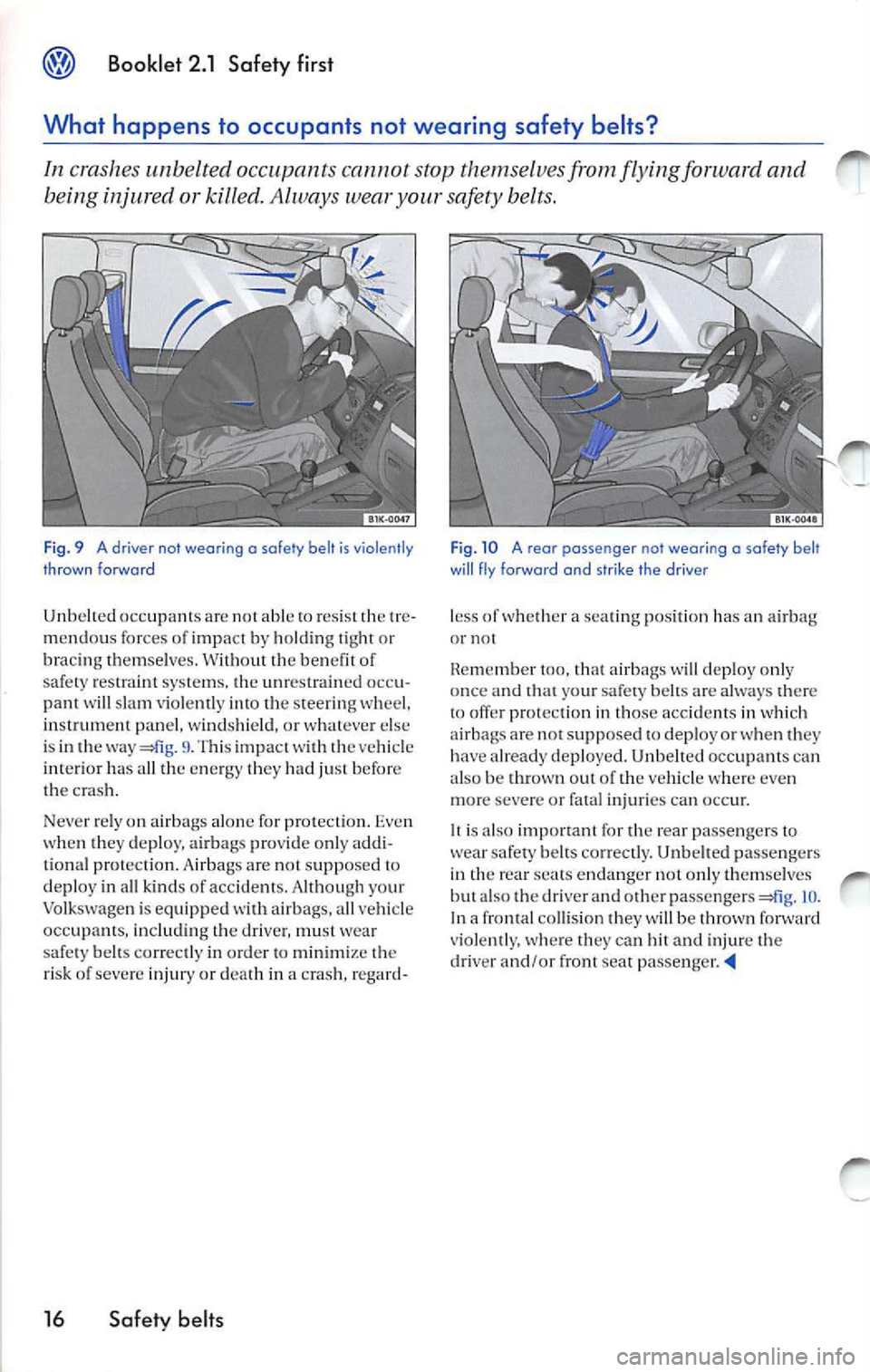
Fig. 9 A driver not wearing o safety belt is violently
thrown forward
Un belted occ upants ar e not abl e to res ist the tre
m endo us fo rces o f imp act by holdin g tig ht or
bra cing themse lves . W ith ou t th e ben efit of
s af etv res traint systems. th e unr estrai ned o ccu
slam vio le ntl y into t he steering wheel,
in strnm ent panel, win dshi eld , o r w hate ve r else
is in the way
9. T his impac t w ith the ve hicle
inte rior has a ll th e e nergy the y had just before
the cras h.
Neve r re ly on airb ags alone for pro tec tion. Eve n
wh en th ey deplo y, air ba gs provide onl y a ddi
t io n al prot ection. Airb ags are not su pposed
depl oy in all kin ds of a cci den ts. Alt hough your
Volk swag en i s eq uipped with airbags, all vehicl e
occ upant s, inclu ding th e dr ive r, mu st wear
sa fety belt s co rrectl y in order to min imize th e
ri sk of seve re injur y or d eath in a cras h, regard-
16 Safety belts
Fig . 10 A rear passenger not wearing o sa fety belt
will fly forward and strike the drive r
less of wheth er a se atin g pos ition has a n or no t
R em emb er too, that ai rbags w ill dep loy o nly
once a nd t hat your sa fery be lts are always there
to offe r pro tec tion in th ose acci dent s in whi ch
a irba gs are not supp osed to dep loy o r w hen they
h ave already deployed. Unbelt ed occ upan ts can
a lso be thro wn out of th e ve hicle w here e ven
more severe or fa ta l in jur ies can occur.
I t i s a lso important for the rear passe ngers to
wea r sa fety belts correct ly. Unb elt ed pas se nge rs
in th e re ar sea ts endanger no t on ly th emse lves
b u t a ls o th e driver an d oth er pa ssenge rs
JO .
In a fron tal collisio n th ey w ill be thrown forward
v io len tly, whe re they ca n hi t a nd injure the
driver and /or front seat
Page 140 of 477
Booklet 2.1 Safety first
it 's po ssibl e to use the to brace the body a ,ninor collision.
It 's simp ly not
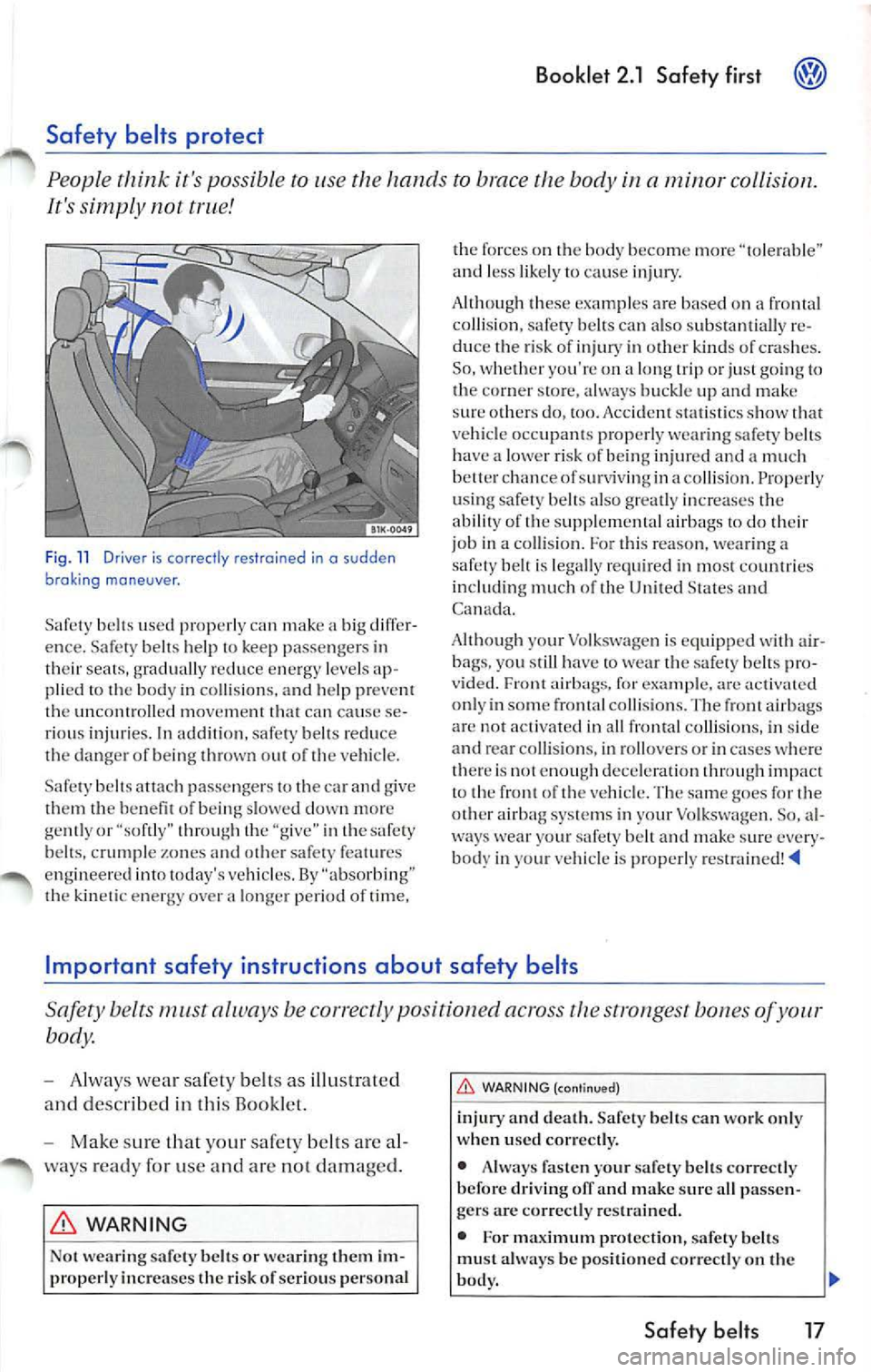
Fi g. 11 Driver is co rrectly re strained in o s udden
broki ng ma neuver .
Safely belt s used prop erl y can make a big diff er
ence. Safet y belts help to keep passe ngers in
the ir sea ls , gra dually r edu ce e nergy levels ap
pli ed
to the body in co llision s. and help preve nt
th e unc ontroll ed mo veme nl tha t can cause se
riou s injur ies. In ad di1i on, safe ty belt s redu ce
th e clang er of being thro wn ou1 o f th e ve hicl e.
Safe ty belt s atta ch passengers 10 the car and giv e
th em t he ben efi t of b eing
down more
ge nll yor "sof tly" through lhe "g ive" in the saf ety
b e lts, cru mp le zo ne s
other saf ely fea1 ures
e n gin ee re d into toda y's vehicl es. By "ab sorb ing"
t h e kinet ic ener gy ov er
longe r per iod of lime , th
e fo rces o n 1h e body be come more "tolerable "
and less likely to c ause injur y.
A lthoug h 1hese exa mples are ba sed on a frontal
co llision,
belt s can also sub sla nt ially re
duc e the risk of inju ry in 01h er kin ds of crash es.
So . w heth er yo u're on a long 1rip or ju sl go ing to
lh e c orner stor e, always buckle up and make
s ur e oth ers do, too. Acci denl statist ics sh ow 1h at
ve hicle occ upan 1s prop erl y wea ring sa fe ty
ha ve lower risk of bein g in jur ed and a much
b elie r ch an ce of in collis io n. Properl y
u sin g safe ty bell s also great ly in cre a ses the
abili 1y of 1 he s uppl em ent al a irbags 10 do their
job in a collisio n . Fo r thi s rea son, wea ring a
safe ty belt is lega lly re quir ed in mo sl cou ntries
includin g mu ch of th e Un ited
and
Canada .
A lth ough your Volk swage n i s eq uipped wilh a ir
ba gs. yo u still have to we ar th e safe ly be lts pro
v id ed. Fro nt a irba gs, for examp le,
a cti va ted
on ly in some frontal collisio ns. Th e front airb ags
a re no t acli vated in all fron ta l co lli sio ns, in sid e
and rea r co llisio ns. in rollo vers o r in cas es wh ere
is no t e nou gh de celeration through impac t
to the front of the vehicle. Th e sa me go es for the
01 hcr airbag sys1ems in yo ur Volk sw agen. So, al
w ays
you r saf ety belt and mak e sure ev ery
bo dy in ve hicle is prop erly
Impo rtant safety instructions about safety belts
Safety bel ts must alway s be cor rect ly pos i ri on ed across the strongest bones of you r
body.
- Always wea r saf ety bells as ill ustra ted
and descr ibed in thi s Bookl et.
- Make su re th at yo ur sa fet y be lts a rc a l
ways rea dy fo r u se and arc no t da ma ged.
WARNING
Not wea ring sa fe ty belt s or wearing t hem im
prop erl y inc re as es the ri sk of se rious per sona l
WAR NING (continued)
injury and death. Safety belts ca n w ork onl y
w hen u sed correct ly.
• Always fas te n yo ur safety belt s cor rect ly
before dri vin g o ff and make sure all pa sse n
ge rs are cor rec tly res tra in ed.
•
m ax imum protection, sa fel y belt s
mu st be po sitione d cor rectly on th e
body.
Safety belts 17
Page 141 of 477
Booklet 2.1 Safety first
WARN ING (continued)
• Neve r strap m ore than one perso n, in
cluding small ch ildr en, into belt.
• Neve r p lace a safety belt over a child sitting
o n your lap.
• Always keep fee t in the foot we ll in front of
th e scat w hile th e ve hicl e is being driven.
• Neve r let a n y perso n r ide with feet on the
instrument panel or sticking out th e window
or on th e sca t.
• Never remove a safety be lt whil e th e ve
hicle i s mo ving. Do ing so w ill increase yo ur
ri sk of being injur ed or kill ed.
• Neve r wear be lts twi sted.
• Never wear bel ts over rigid o r breakable
ob jects in or on your clothing, su ch as eye
glasses, pen s, keys, etc., as these may cause in
jur y.
• Neve r allo w sa fet y belts to become dam
aged by being caugh t in door or sea t hardware.
• Neve r wear t he s hou lder part of the be lt
und er you r ar m or otherwi se ou t of posi tion.
• Severa l layers of heavy clothing may inter
fere w ith correc t position ing of belt s and re
duce the overa ll eff ect ive ness of t he sys tem.
18 Safety belt s
WARNING (continued)
• Alwa ys keep b elt buckles free of a nyt hing
that may prevent th e buckl e from latc hing se
cure ly.
• Never use comfor t clips or dev ices that
crea te slac k in the sh ould er bel t. Howeve r,
s pecial clips may be required for the correc t
u se of some child restraint systems.
• Torn o r frayed safety belt s can tear a nd
damag ed belt hardw are can break in a colli
s ion. In spect belts reg ularl y. lf webb ing, bind
in gs, buckl es, or retractors are damaged, h ave
b elt s rep laced by an authorized Volkswage n
dealer or qualifi ed worksho p.
• Safety be lts that have been worn and
l oaded in an accident must b e re pl ace d w ith
the correct re placement safety belt by a n au
t h orized Volkswage n dea le r. Replacement
may be necessary even if damage canno t be
clea rly see n. Anchorages t hat were loaded
mu st a lso be inspecte d.
• Neve r remove, modify, disassembl e, or try
t o repa ir th e safe ty belts yourse lf.
• Always keep the belts clean. Dirty belts
m ay not work co rrectl y and can impair the
fun ction o f th e in erti a ree l
3.4 "Ti ps
an d Adv ice", c hap te r "C lea nin g and
Pro tect ion."
Page 142 of 477
Safety belts
Fastening safety belts
Sa fe ty fir st -eve rybody buckle up!
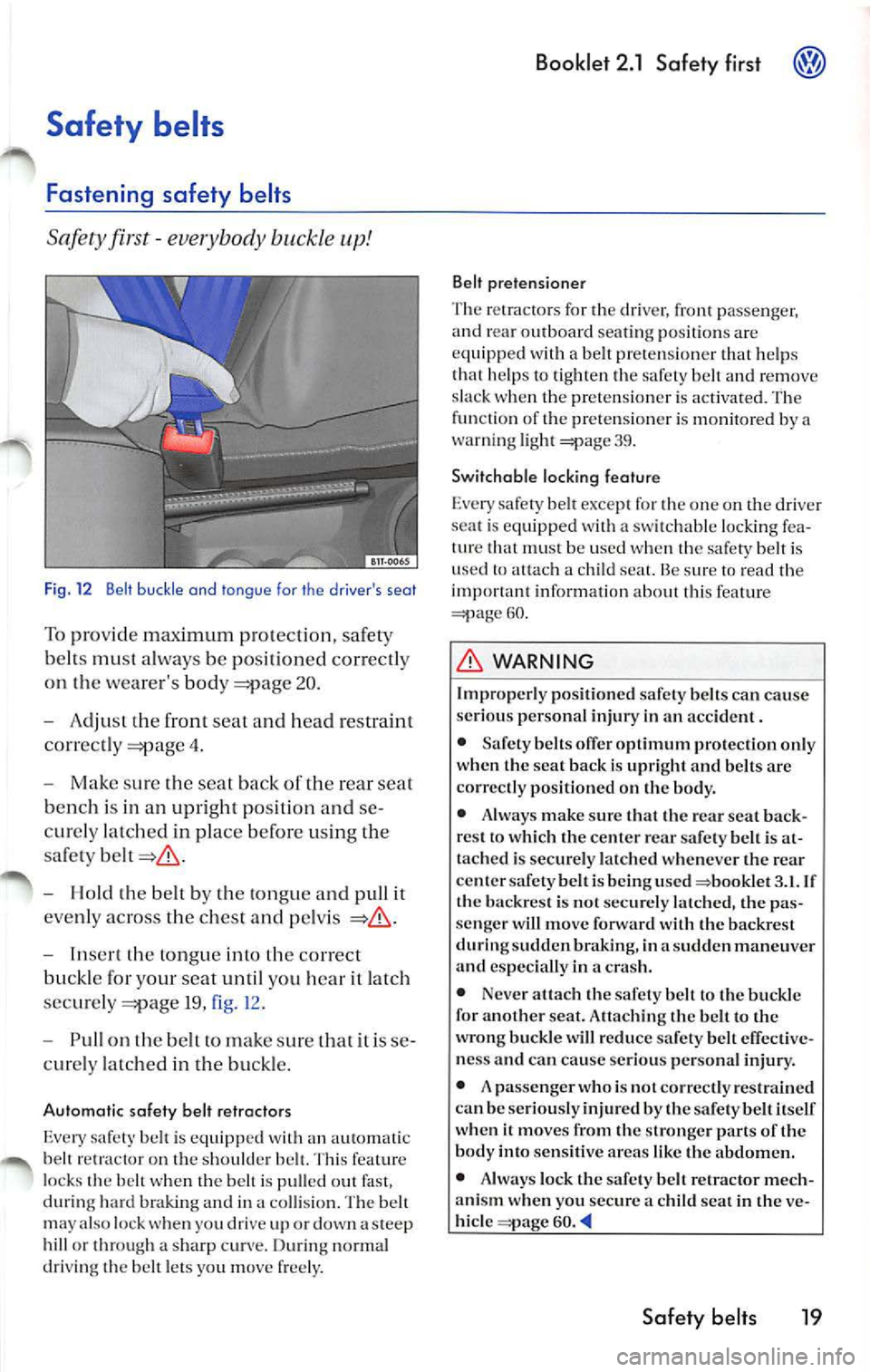
Fig. 12 Belt buck le and tongue fo r th e dr iver's seat
To pro vid e maximum prot ectio n, sa fety
b elt s
alw ays be po siti oned cor rectly
o n
weare r's bod y 20.
- Adju st
fro nt sea t and head restra int
co rrec tly
4.
- Mak e su re th e seat back of the rea r sea t
b ench i s in an upright pos ition and se
cu rely latche d in plac e before usin g th e
sa fe ty
- Hold !he be lt b y ton gu e and pull it
eve nly across the ch es t and pel vis
-th e tongue into correct
bu ckle for your seat until you h ear
latch
sec urely
19, fig. 12 .
- Pull on
belt to mak e sure that it is se
cure ly latc hed in the bu ckle.
Automatic safety belt retractors
E ve ry
b elt i s equipp ed with an aut om ati c
belt retrac tor on th e sho uld er bell. Thi s fea ture
l oc ks th e belt when the
is pu lled ou t fast ,
during hard braking and in a collision. The belt
m ay also lock
yo u d rive a stee p
hill or thro ugh a sh arp cur ve. Durin g no rma l
dri vin g th e belt le ts yo u mo ve freel y.
Booklet 2 .1 Safety first
Belt prete nsio ne r
T he re tracto rs for the drive r,
pa sse nger,
a nd rea r outboard seating po sition s are
e quipp ed wit h a belt pr ete nsio ner that h elp s
th at h elp s to t ight en th e safe ty belt and remo ve
s lac k w hen th e pr etens ioner is act iva te d. Th e
fun ction o f the pr eten sio ner is m onit ored b y a
wa rnin g light
39.
Switc hable l ocking feature
Every safety belt excep t fo r th e one on th e dr ive r
se at is eq uippe d wit h a sw itchable locking fea
tur e th at mu st be use d when the saf ety b elt is
used
1 0 att ach a child seal. Be sur e to read the
imp orta nt in formation about thi s feature
60 .
WARNING
Imp roperl y position ed safe ty belt s ca n ca use
se riou s personal injury in an accident.
• Saf ety belts offer optimum protection only
when the seat back is upright and belt s arc
c o rr ectly positioned on the body.
• Alway s m ake sure that th e re ar sea t back
res t to which th e center re ar safety belt is at
t ached is sec urely la tc h ed when ever th e rear
center safety belt i s bei ng use d
3.1. If
the b ackres t is n ot sec urely latc hed, the pa s
s enger will move fon vard wit h the backres t
during sudden braking, in a sudd en maneuver
a nd especially in a cras h.
• Never attach the safe ty belt to the bu ckl e
for another seat. Attachi ng the belt to th e
wrong buckle will reduce safety belt effective
ness and can cause se rious per sona l injury .
• A pa ssenge r w ho is not corre ctl y restrain ed
can be se riou sly injur ed by th e sa fe ty belt it self
w hen
60.
Safety belts 19
Page 143 of 477
@) Booklet 2.1 Safety first
Safety belt position
Correct belt position is the key maximum protection bel ts.
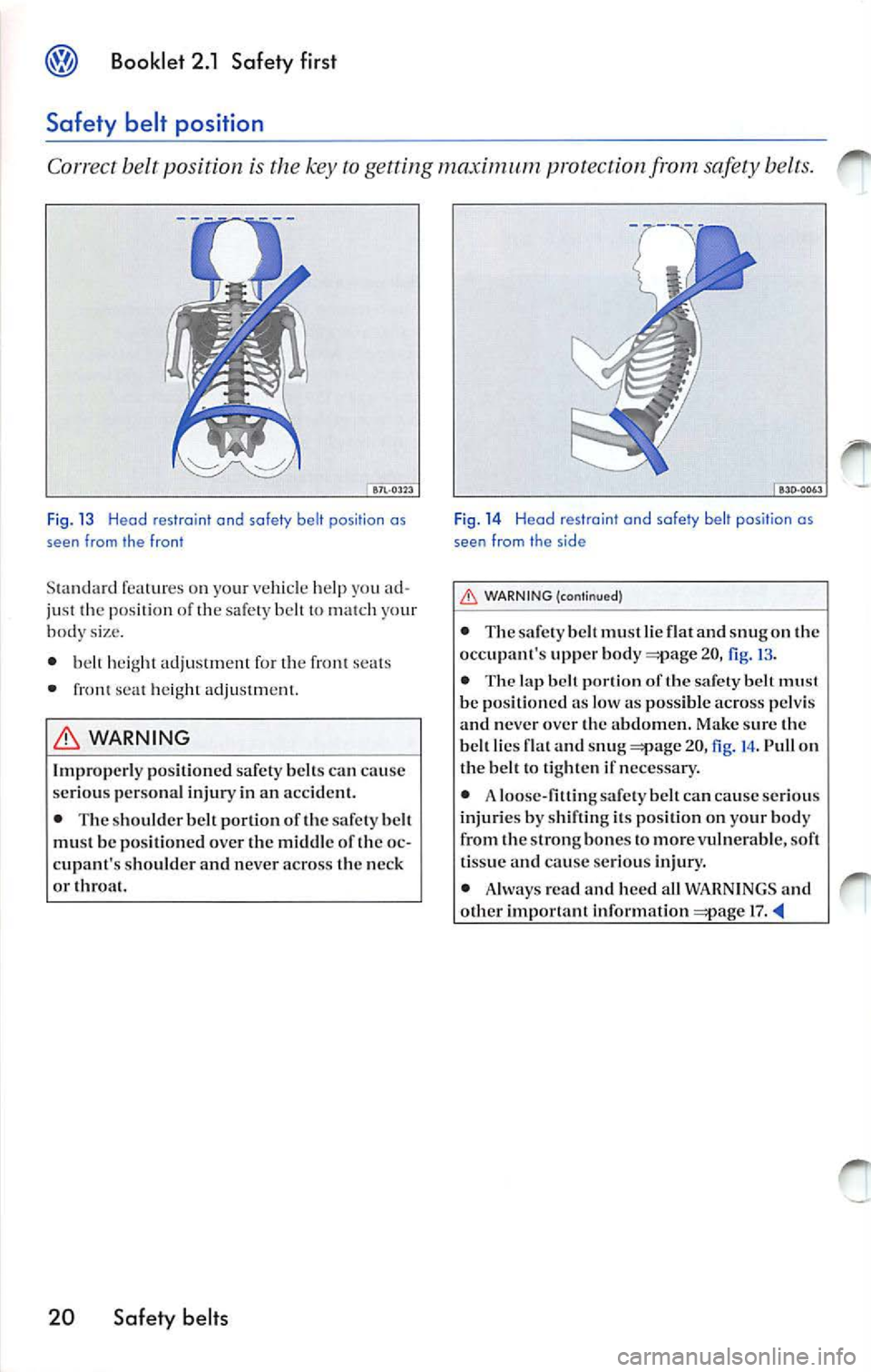
Fi g. 13 Head restra int and safety belt position as
seen from the front
S1a nd ard feal ures o n yo ur vehicl e help you ad
ju sl o f safel y lo yo ur
body size .
•
h eigh! adjuslmelll for lh e fron l se als
•
s ea l heig h!
WARNING
Improperly posilioned safety belts ca n cause
ser ious person al injury in an
• The sh ou lder belt porlion of lhe safety mu st be po sitioned over the middle of the oc
cupant' s shoulder and never across the neck
or lhr oal.
20 Safety belts
Fig . 14 Head restraint and safety belt position as
see n from the side
Lf::. WARNING (continued)
• The safet y must lie flat and snug on the
occupant 's upper body 20, fig.
• The lap porlion lhe safely belt must
be position ed as low as possible across pelvis
and never over the abdomen. Make sur e th e
lies and snug 20, fig. 14 . Pull on
the belt to tighten
can cause seriou s
injuri es by shiftin g its position on your bod y
from the strong bone s to more vulnerable, soft
ti ss ue and cause se ri ous injury.
• Alway s read and heed all WARNIN GS and
othe r importa nt inform ation
17 .
Page 144 of 477
Booklet 2.1 Safety first
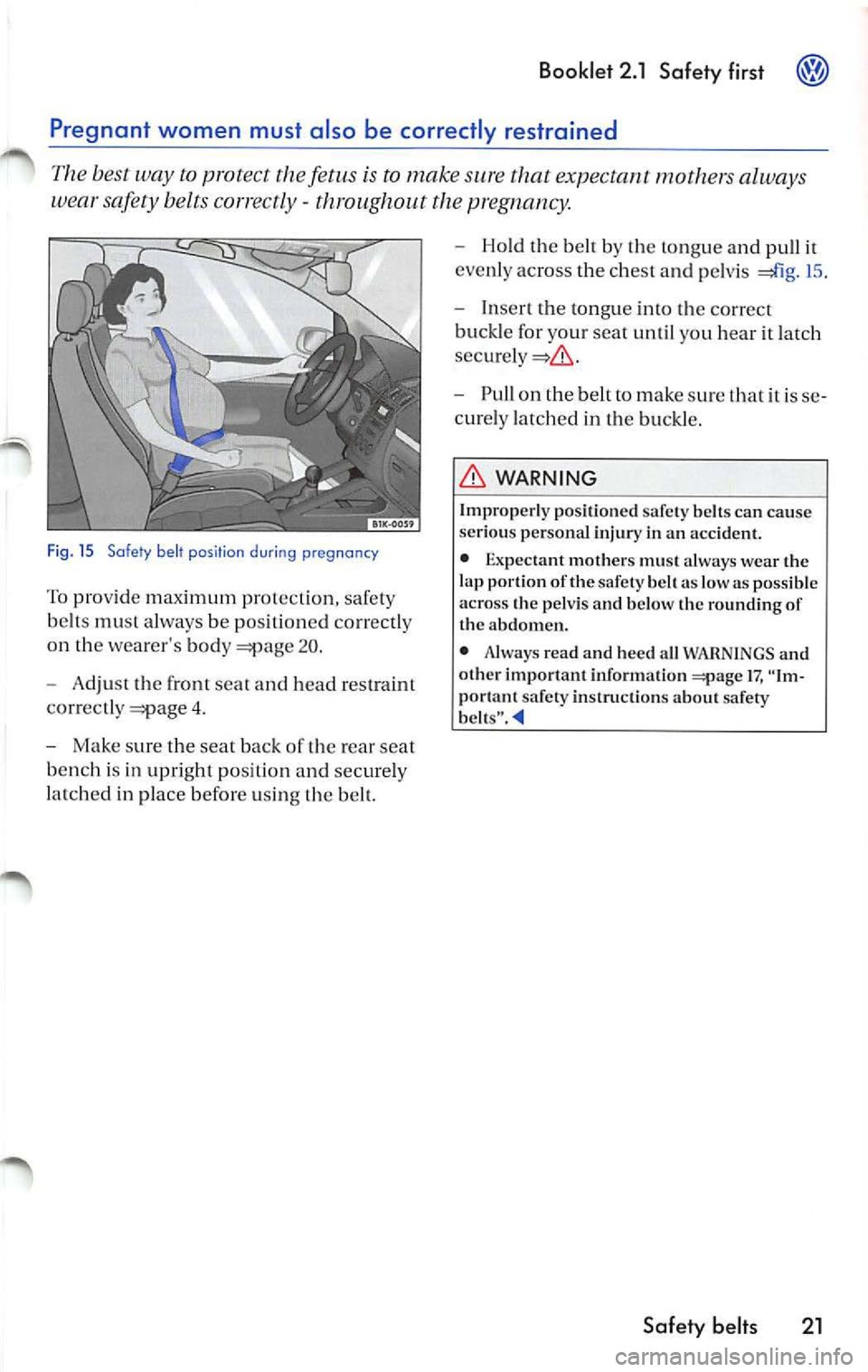
best way to prote ct the fetus is to make sure that expectant mothers always
wear safety belts
20.
- Adjust the front seat and head restrai nt
corr ectly
4.
- Make sure the seat back of th e rear seat
ben ch is in upright position and sec urely
l a tched in place befor e usin g th e be lt. -
Hold the belt by the tongue and pu ll it
eve nly acro ss the ch est a nd pelv is
1 5 .
- Inse rt the tongu e into th e correct
buck le for your seat until you hear it latch
- Pull on the belt to make sure that it i s se
cu re ly latched in the buckle.
WARNING
I mproper ly po sition ed safety belt s can cause
ser ious persona l injury in a n acciden t.
• Expecta nt mothers must always wear the
l ap por tion of the safety be lt
low as possible
across the pelvis and below the round ing of
the abdomen.
• Always read and heed all WARNINGS and
ot her importan t informa tion
17, "Im
port ant safety instructions about safety
belt s".
Safety belts 21
Page 145 of 477
Booklet 2.1 Safety fir st
Safety belt extender
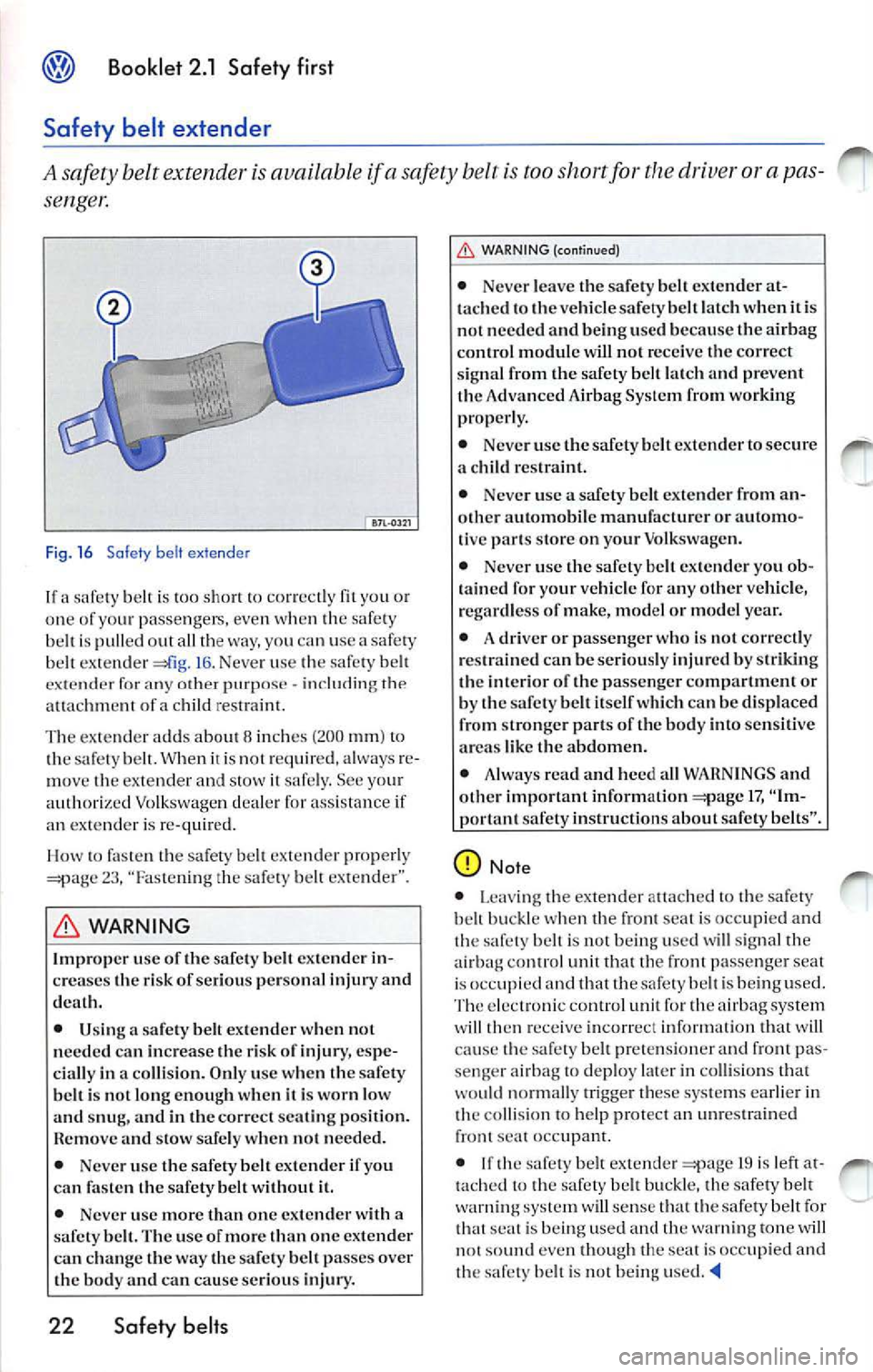
A safety belt extende r is available if a belt is too short for the driver o r a pas
seng e,:
F ig . 16 Safety be lt ex tender
If a safe ty belt is too s hort t o co rrectly fit yo u or
one of your pa sse ngers , even when th e
b elt is pull ed o ut the way, you ca n use a safe ty
b elt ex te nd er 16 . Neve r use th e sa fe ty belt
ex te nd er any o ther purp ose. att ac hm ent of a child re straint.
Th e extender adds about
8 inche s (200 mm ) to
t h e sa fety belt. When is r e quired. always re
mo ve extender and stow it safe ly. See y our
a uthoriz ed Vo lksw agen d ealer for assista nce if
a n ex te nder i s re- qui re d.
How to faste n the s afet y be lt extender properly
23 , "Fa steni ng th e saf ety belt ex te nd er".
WARNING
Im proper use o f the safety belt ex te nder in
c reas es th e risk of serious perso nal injur y and
d eat h.
• U sing a sa fe ty belt ex te n der w hen n ot
n eede d can increase the r isk of inju ry, es pe
cia lly in a co llision . On ly use whe n th e safe ty
b e lt i s not lo ng eno ugh when it is wo rn low
a n d sn u g, and in the cor rect sea ting po sition .
R em ove a nd stow safely w hen not needed.
• Never use t he safe ty belt exte nder if you
can faste n th e safe ty belt w ith out it.
• Never use mo re t han one ex tende r w ith a
safe ty b elt . Th e use of more t han o ne ex ten der
ca n ch ange th e way the sa fe ty be lt passes ove r
th e body and ca n ca use ser ious injury.
22 Safety belts
WARN ING (continued)
• Neve r leave t he safety belt ex te n der at
t ac hed to t he ve hi cle safety belt latc h when it is
n ot needed and bei ng use d because t he a irb ag
con tro l m odul e will n ot r ec eive th e correct
s ig n al from the safety belt la tc h and preve nt
t h e Adva nce d Airbag Syste m fro m wo rk ing
proper ly .
• Neve r use the safety belt extende r to secure
a c hild restr ain t.
• Neve r use a safety belt exte nder from an
o the r au tomo bile manufact ure r or au to m o
t ive par ts sto re on yo ur Volk swagen.
• Never use the safety be lt ex tende r you ob
t a in ed fo r yo ur vehicl e for a ny o ther ve hicl e,
r egard less o f mak e, mo del o r m odel year.
• A drive r or passe nger who is no t correc tly
r es tra ined ca n be ser ious ly inj ured by striking
th e i nterior o f the passenger compartmen t o r
by t he safe ty belt itse lf w hich can be disp laced
f ro m stronge r pa rts of t he bo dy in to se nsit ive
areas like the abdom en.
• Always rea d and h eed all WARN INGS a nd
ot her im portant inform ation
17, " Im
por tan t safety instructio ns about safe ty belt s".
N ote
• Leav ing the extender
10 the safety
b elt bu ckle when the front scat is occ upied a nd
the saf ety belt is not b eing use d
will sig n al the
ai rba g co ntrol unit that the front passe nge r seat
i s occ up ie d and that the sa fe ty b elt is b eing use d.
Th e elec troni c control unit fo r th e airbag system
w ill th en r ece ive incorr ect informat io n that will
ca use the saf ety belt pr ete n sione r a nd fro nt pa s
s enger air bag to dep loy later in co llision s that
wou ld n orm ally trigge r th ese syste m s ea rlier in
th e colli sion
h elp prot ect an unr estrained
fr ont sea t occ up ant.
• If th e safe ty belt ex te nd er
19 is lef t tached to the sa fe ty belt buck le, th e safe ty be lt
warn ing sys te m will se nse th at the safety belt for
that scat is bei ng use d and the warn ing tone will
not soun d eve n thou gh th e sea t is occup ied and
the safe ty belt i s not be in g
Page 146 of 477
Fastening the safety belt extender
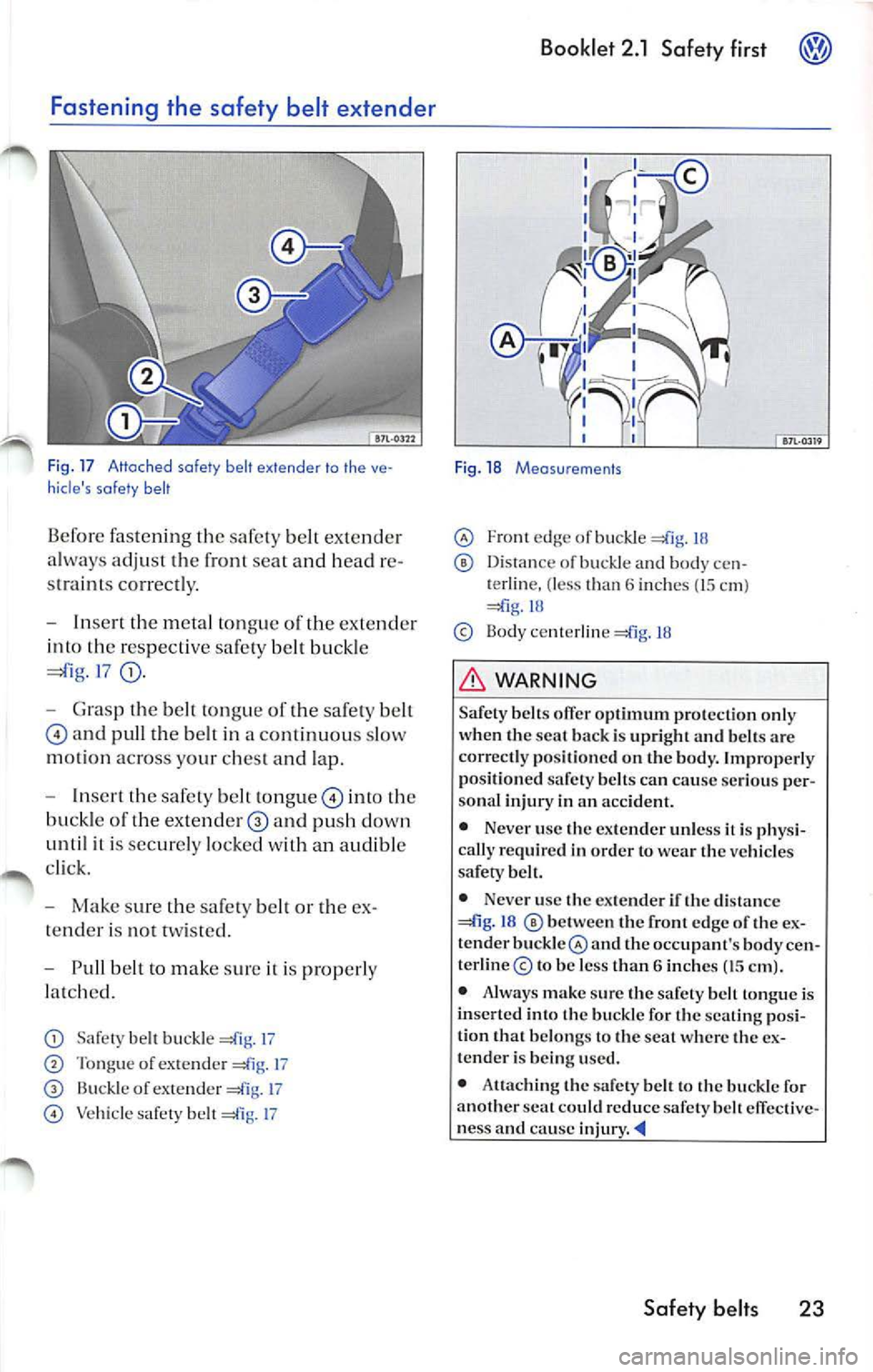
Fig. 17 Attached safe ty belt extender to the ve
hi cl e's safe ty be lt
Be for e faste ni ng th e belt e xte n de r
a lw ay s ad ju st t he
seal an d head r e
s trai nts co rre ctl y.
- I n se rl th e m eta l to ngue of th e ex te n d er
int o lh e res pect iv e s afe ly be lt buck le
17
b ell lO ngu e of the sa fe ty bell
a n d pull the belt in a co ntin uou s slo w
acro ss your and lap.
- Inse rt the safe ty belt
int o th e
bu ckle o f the e xten der
a nd p ush down
un til il i s sec ure ly loc ke d w ith an audi ble
cl ic k .
- Make s ure the safe ty belt or th e ex
l e nd er i s not tw isted .
- Pull belt to m ake su re it is pr op erly
l a tc h ed .
Saf ety bu ck le 17
T o ngue of e xte nd er 17
U uck le of ex te n der 17
V eh icl e saf ety 17
Booklet 2 .1 Safety first
Fig . 18 Measu rements
of b uckl e
of buck le a nd bod y c en
t e rlin e, (le ss 6 in ch es (15 c m) 18
B ody ce nterlin e 18
WARNING
Safety bell s ofTer o ptimum protec tion onl y
w hen th e se a t b ack i s upri ght an d belt s a re
c o rr ec tly po siti on ed on th e bod y. Imp roperl y
po sition ed saf ety be lts ca n ca use se rio us per
so nal inju ry in an accident.
• Neve r use the ex te nd er unl ess
is ph ysi
ca lly req uired in order t o wear the ve hicl es
safety b elt.
• Nev er u se the exten der
di sta nce 18 b etwe en th e front edge o f the ex
t e nd er bu ckle @ and th e occu pant' s bod y cen
te rline @ to be le ss than 6 in ch es (15 c m).
• Always make s ure th e safety belt t ongu e is
i n se rted into the buck le fo r th e seat ing pos i
ti on th at be lo ngs to the seat w her e th e e x
t e nd er i s be ing use d.
• Attac hin g th e sa fet y bell to t he buck le for
a not her scat co uld red uce sa fe ty bell
ness a nd cause
Saf ety belts 23