Cylinder VOLKSWAGEN JETTA 2017 Owners Manual
[x] Cancel search | Manufacturer: VOLKSWAGEN, Model Year: 2017, Model line: JETTA, Model: VOLKSWAGEN JETTA 2017Pages: 412, PDF Size: 4.04 MB
Page 66 of 412

The one-touch feature can be reactivated for one or more windows at the same time.
Convenience closing
If your vehicle is equipped with the convenience closing feature, you can close the windows and the power sunroof as follows:
x From inside the vehicle: When the driver door is open, pull up and hold the switch for the driver window until all windows and the sunroof close.
x Manual locking from outside the vehicle: Lock the vehicle with the vehicle key bit in the driver door
and keep the key turned in the locking position to close all windows and the power sunroof ⇒ Manual-ly unlocking and locking the driver door.
x Vehicles with Keyless Access: Hold your finger on the lock sensor surface on the outside of the
door handle for a few seconds until the windows and power sunroof close ⇒ Unlocking or locking the vehicle with Keyless Access.
WARNING
Improper use of power windows can result in serious personal injury.
x Never let anyone get in the way of a power window when closing it.
x When locking the vehicle from the outside, make sure that no one, especially children, remains in the vehicle. The windows will not open in case of an emergency.
x Always take the key with you when you leave the vehicle. You can still use the power win-dows for several minutes after the ignition is switched off as long as the driver or front pas-senger door has not been opened.
x Always use the safety switch when children are in the back seat to disable the rear power windows and keep them from being opened and closed.
If the power windows malfunction, the one-touch feature, as well as pinch protection may not work properly. See an authorized Volkswagen dealer or authorized Volkswagen Service Facility right away.
If convenience closing of the power windows from the outside requires removing the cover cap of
the lock cylinder on the driver door, the cover cap must be reinstalled after the vehicle is locked ⇒ Manually unlocking and locking the driver door.
Power window pinch protection
Page 332 of 412

Clean the wheels and under the door sills last. Use a different sponge or wash mitt.
WARNING
After the vehicle has been washed, the wet brakes or, in winter, brake discs or pads coated with ice, react slower and need longer stopping distances.
x Always dry the brakes and clean off any ice coatings with a few careful applications of the brake. Make sure not to endanger other motorists or cyclists or disobey legal requirements.
CAUTION
Sharp edges under the vehicle can cut exposed skin.
x Always protect your hands and arms from cuts on sharp metal edges when cleaning the underbody, the inside of the wheel housings, etc.
NOTICE
x The water temperature must not be more than +140 °F (+60 °C).
x To help prevent damage to the paint, do not wash the vehicle in direct sunlight.
x Do not use insect sponges, abrasive kitchen sponges or similar things to clean the vehicle. These can damage the paint finish.
x Never clean headlights with a dry cloth or sponge. Always use a wet cloth or sponge. For best results use soapy water.
x When washing or rinsing the vehicle in cold weather, do not let water get into the lock cylinders or point the hose at gaps around the doors, hood, or luggage compartment lid. The water could freeze on the locks and seals and make it difficult to open the vehicle!
x When outside temperatures are low, wipe the rubber seals and their contact surfaces dry to help prevent freezing.
NOTICE
To help prevent vehicle damage in a car wash:
x Compare the vehicle track width with the dimensions of the guide rails in the car wash to help prevent damage to wheel rims and tires!
x Switch off the rain sensor before driving the vehicle through a car wash ⇒ Rain sensor.
x Make sure there is enough clearance for the height and width of the vehicle.
x To help prevent paint damage to the engine hood, place wiper blades against the windshield after they have dried. Do not let them snap back into place.
x Fold the outside mirrors toward the vehicle body.
x Lock the luggage compartment lid to help prevent unintentional opening in the car wash.
Washing with a power washer
Page 333 of 412
Make sure there is enough distance to soft materials such as rubber hoses or insulating material.
Never use concentrated jet nozzles or so-called dirt blasters ⇒ .
Never use a power washer to clean the engine compartment ⇒ Cleaning the engine compartment.
WARNING
Improper use of power washers can cause serious invisible permanent damage leading to tire failure and loss of vehicle control. This can cause accidents and severe personal injury.
x Keep sufficient distance between water jet and tires. Never wash tires with a nozzle that sprays the water out in a direct stream regardless of the distance to the tire and even for a very short time.
x Never use “dirt blasters” to clean tires. Even spraying from a relatively long distance for a very short time can do visible or invisible damage to tires.
WARNING
After the vehicle has been washed, the wet brakes or, in winter, brake discs or pads coated with ice, react slower and need longer stopping distances.
x Always dry the brakes and clean off any ice coatings with a few careful applications of the brake. Make sure not to endanger other motorists or cyclists or disobey legal requirements.
NOTICE
x Water temperature should not be more than +140 °F (+60 °C).
x To help prevent damage to the paint, do not wash the vehicle in direct sunlight.
x Do not clean icy or snow-covered windows with a power washer.
x When washing or rinsing the vehicle in cold weather, do not let water get into the lock cylinders or point the hose at gaps around the doors, hood, or luggage compartment lid. The water could freeze on the locks and seals and make it difficult to open the vehicle!
Cleaning windows and outside mirrors
Page 370 of 412
NOTICE
To help prevent vehicle damage, carefully remove and properly reinstall parts after emergency locking or unlocking.
Manually unlocking and locking the driver door
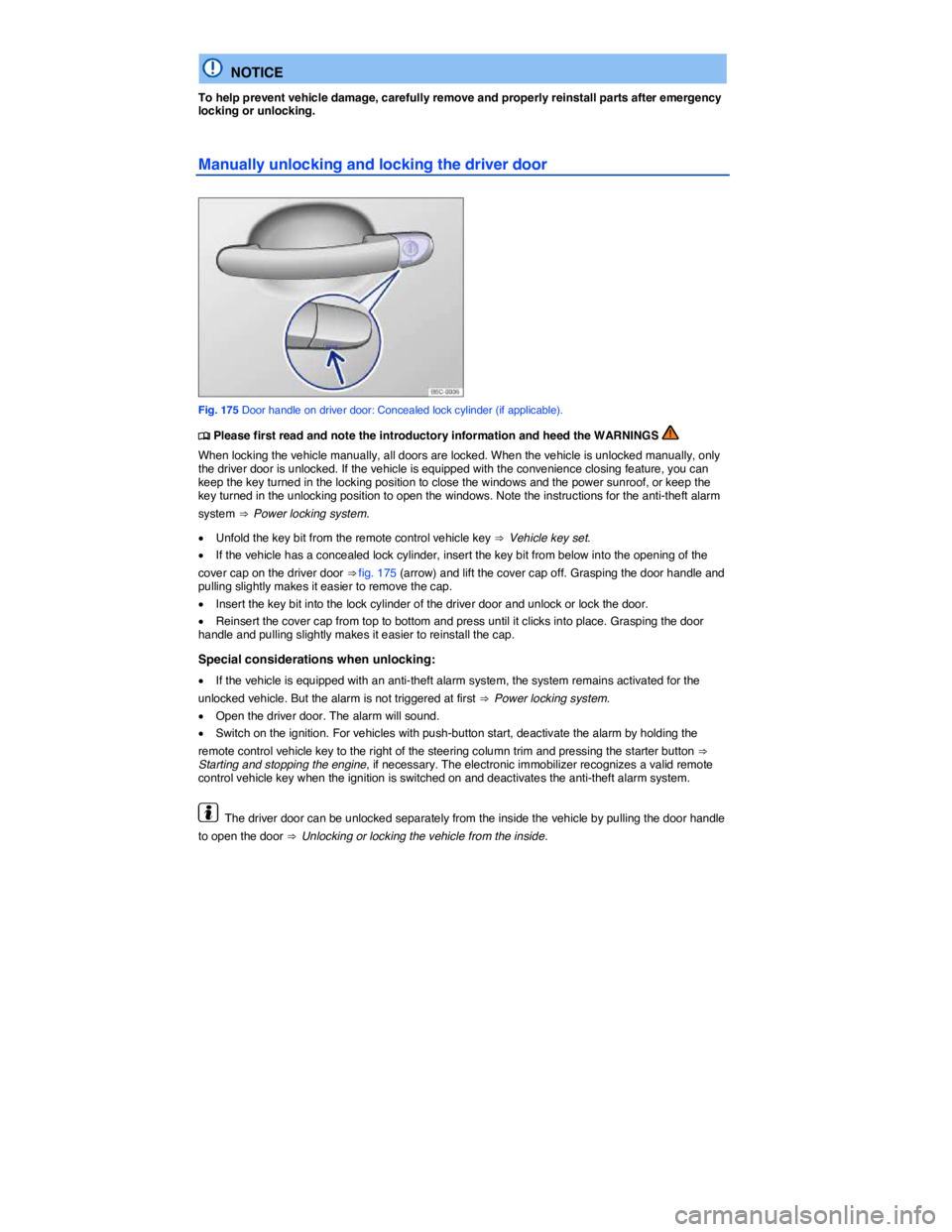
Fig. 175 Door handle on driver door: Concealed lock cylinder (if applicable).