All VOLKSWAGEN PASSAT 2015 B8 / 6.G Owners Manual
[x] Cancel search | Manufacturer: VOLKSWAGEN, Model Year: 2015, Model line: PASSAT, Model: VOLKSWAGEN PASSAT 2015 B8 / 6.GPages: 397, PDF Size: 5.66 MB
Page 253 of 397

Adjust the tire pressure
The proper tire pressure helps reduce rolling resistance as well as fuel consumption.
When purchasing new tires, always make sure that the tires are optimized for lower rolling resistance.
Use low viscosity engine oil
Fully “synthetic,” low viscosity engine oils that expressly comply with Volkswagen oil quality standards reduce fuel consumption. Low viscosity engine oils reduce the frictional resistance on the engine and are distributed more evenly and quickly, particularly when cold-starting the engine. The effect is partic-ularly apparent in vehicles that frequently travel short distances.
Always ensure the right engine oil level is maintained and keep to the scheduled service intervals (engine oil changes).
Make sure the engine oil that you purchase expressly complies with Volkswagen oil quality standards and is the oil approved by Volkswagen for your vehicle.
Avoid unnecessary weight
The lighter the vehicle, the more economical and eco-friendly it will be. For example, an extra 220 lbs (100 kg) of weight increases fuel consumption by up to 1 pint per 60 miles (0.3 l/100 km).
Remove all unnecessary items and unnecessary dead weight from the vehicle.
Remove unnecessary aftermarket components
The more aerodynamic the vehicle, the less fuel it will consume. Aftermarket components such as bicycle racks reduce its aerodynamic performance.
Therefore, remove unnecessary structures and unused rack systems, particularly if planning to drive at higher speeds.
Page 255 of 397

Hill Hold helps keep the vehicle from rolling backwards when starting out on a hill, for example after stopping at a traffic light. You don't have to apply and release the parking brake while depressing the accelerator. For Hill Hold to work, the engine must be running and the vehicle must be in First Gear or Reverse (manual transmission) or in Drive (D), Sport Drive (S), or Reverse (R) (automatic transmis-sion) and you must use the foot brake to hold the vehicle before starting to move.
Hill Hold keeps the brake applied for not quite 2 seconds with the same force you used to prevent the vehicle from moving. This gives you time to take your foot off the brake, let the clutch out on a manual transmission vehicle, and gently depress the accelerator to get the vehicle moving again. If you do not depress the accelerator pedal and get the vehicle moving again within this time, the brakes will release and the vehicle will roll downhill. Furthermore, if any requirement for engaging Hill Hold is no longer met while the vehicle is stopped, Hill Hold disengages and the brakes are automatically released and will no longer hold the vehicle.
Hill Hold is activated automatically when points 1 to 3 are met at the same time:
Manual transmission Automatic transmission
1. Hold the stopped vehicle on an incline with the foot or parking brake.
2. The engine must be running “smoothly.”
3. A manual transmission vehicle must be in 1st gear (1) if headed up a hill or in Reverse (R) if backing up a hill; you must hold the clutch down and the foot brake must be depressed to keep the vehicle from moving.
An automatic transmission vehicle must be in Reverse (R), Drive (D), or Sport Drive (S) and the foot brake must be depressed to keep the vehicle from moving.
4. To drive off take your foot off the brake pedal as you let the clutch out and gently depress the accelerator within 2 seconds.
To drive off take your foot off the brake pedal and gently depress the accelerator within 2 seconds.
Hill Hold is immediately deactivated:
x If any requirement listed in the table above is no longer met.
x If the engine is not running smoothly or the engine malfunctions.
x If the engine stalls or is switched off.
x Automatic transmission vehicles: If the transmission is in Neutral (N).
x Automatic transmission vehicles: If a tire does not have enough road contact (such as when the vehicle is tipped or at an angle).
WARNING
The intelligent technology of Hill Hold cannot overcome the laws of physics. Never let the increased convenience provided by Hill Hold tempt you into taking risks.
x The Hill Hold feature cannot hold the vehicle in all hill start situations (for example, if the surface is icy or slippery).
x Hill Hold can only help keep the vehicle from moving for less than 2 seconds. After that, the brakes will be released and the vehicle can roll down the hill.
Page 260 of 397
WARNING
The Rear View Camera system technology cannot overcome the laws of physics and the limits of the system. Careless or unintentional use of the Rear View Camera system may result in accidents and severe injuries.
x Always adjust your speed and driving style to road, traffic, weather, and visibility condi-tions.
x Always keep an eye on the parking direction and the vehicle surroundings. The front of the vehicle swings out more than the rear of the vehicle.
x Never pay so much attention to the graphics shown on the screen that you fail to notice what is going on around you.
x Always watch for people, especially small children, animals, and objects, because the camera may not always be able to detect them.
x The system may not be able to clearly show everything behind the vehicle.
x Use the Rear View Camera system only when the luggage compartment lid is completely closed.
NOTICE
x The camera shows only two-dimensional images on the screen. Due to the lack of depth of field, it may be difficult or impossible to identify protruding objects or recesses in the road, for example.
x Things like thin rods, fences, posts, and trees may not be detected by the camera and could damage the vehicle.
Operation instructions
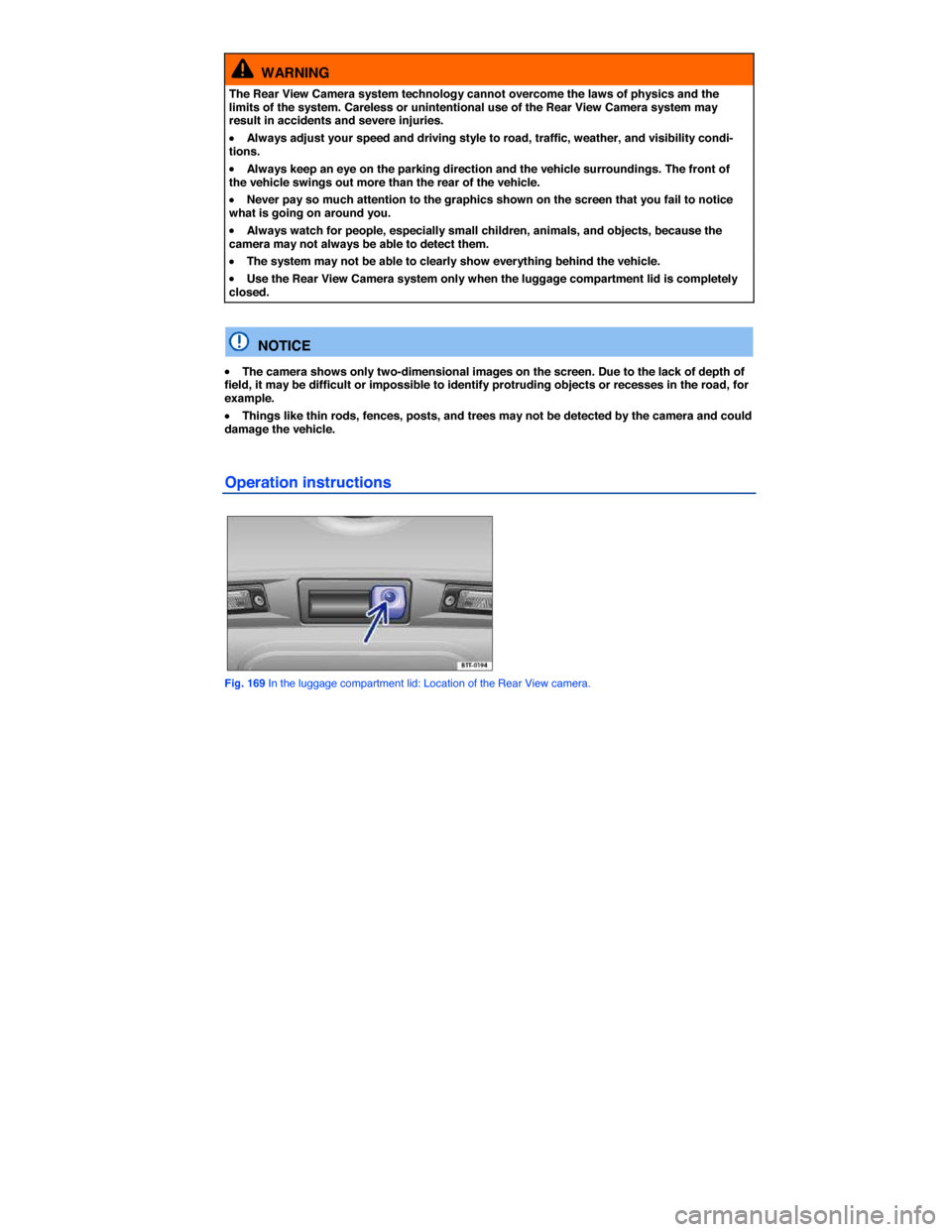
Fig. 169 In the luggage compartment lid: Location of the Rear View camera.
Page 262 of 397

1) Do not use the Rear View Camera system in the following situations:
– If the rear of the vehicle is heavily loaded.
– When the luggage compartment lid is open.
– If the driver is not familiar with the system.
– If the position or angle of the camera has changed, such as after a rear-end collision. Have the system checked by an authorized Volkswagen dealer or an authorized Volkswagen Service Facility.
2) Examples of optical distortion by the camera
The Rear View Camera system displays only two-dimensional images. Recesses and protruding objects on the ground or protruding parts on other vehicles are difficult or impossible to identify due to the lack of depth of field.
Objects or another vehicle may seem closer or farther away on the screen than they really are:
– When driving from a level surface onto an upward or downward slope.
– When driving up or down a slope onto a level surface.
– If the rear of the vehicle is heavily loaded.
– When approaching protruding objects. These objects can disappear from the field of view when backing up.
Cleaning the camera lens
Keep the camera lens clean and free of snow and ice:
x Engage the parking brake.
x Wet the camera lens with a commercially available alcohol-based glass cleaner and clean with a
dry cloth ⇒ .
x Remove snow with a brush.
x Remove ice with deicer spray ⇒ .
NOTICE
x Never use abrasive cleaning agents to clean the camera lens.
x Never remove snow or ice on the camera lens with warm or hot water. This can damage the camera lens.
Volkswagen recommends practicing parking with Rear View Camera system in a safe place with little or no traffic or in a parking lot under good visibility and weather conditions in order to familiarize yourself with the system, the orientation lines and the way they work.
Rear View Camera system does not work when the luggage compartment lid is open.
Page 265 of 397
WARNING
Poor visibility increases the risk of collisions and other accidents that cause serious person-al injuries.
x Always make sure all windows are clear of ice, snow and condensation for good visibility to the front, sides, and rear.
x Maximum heating output and defrosting performance are not possible until the engine has reached operating temperature. Wait until you have good visibility before driving off.
x Always make sure you know how to properly use the heating and ventilation systems as well as the rear window defroster that you will need for good visibility.
x Never use air recirculation for long periods of time. When the air conditioner is off and recirculation mode is on, condensation can quickly form on the windows and greatly reduce visibility.
x Always switch off recirculation mode when it is not needed.
WARNING
Stale air causes driver fatigue and reduces driver alertness, which can cause accidents, colli-sions and serious personal injury.
x Never switch off the fan for a long period of time and never use air recirculation a long period of time because no fresh air will enter the passenger compartment.
NOTICE
x If you think the air conditioner is not working properly or may be damaged, switch it off to help prevent more damage. Have the air conditioner checked by an authorized Volkswagen dealer or authorized Volkswagen Service Facility.
x Air conditioner repair requires specialized knowledge and special tools. Volkswagen rec-ommends that you see an authorized Volkswagen dealer or an authorized Volkswagen Service Facility.
x Do not smoke when air recirculation is switched on. Smoke drawn into the ventilation sys-tem can leave residue on the evaporator and on the dust and pollen active carbon filter, result-ing in permanent odors whenever the air conditioner is switched on.
If the air conditioner is switched off, the fresh outside air will not be dehumidified. To help keep the windows from fogging over, Volkswagen recommends leaving the air conditioner (compressor) switched on. Press the A/C button. The indicator light in the button must come on.
When it is very hot and humid outside, water condensation can drip from the air conditioner evaporator and form a puddle under the vehicle. This is normal and does not indicate a leak.
Keep the air intake slots in front of the windshield free of ice, snow and leaves in order to main-tain proper functioning of the heating and ventilation systems.
Maximum heating output and defrosting performance are not possible until the engine has reached operating temperature.
Page 267 of 397
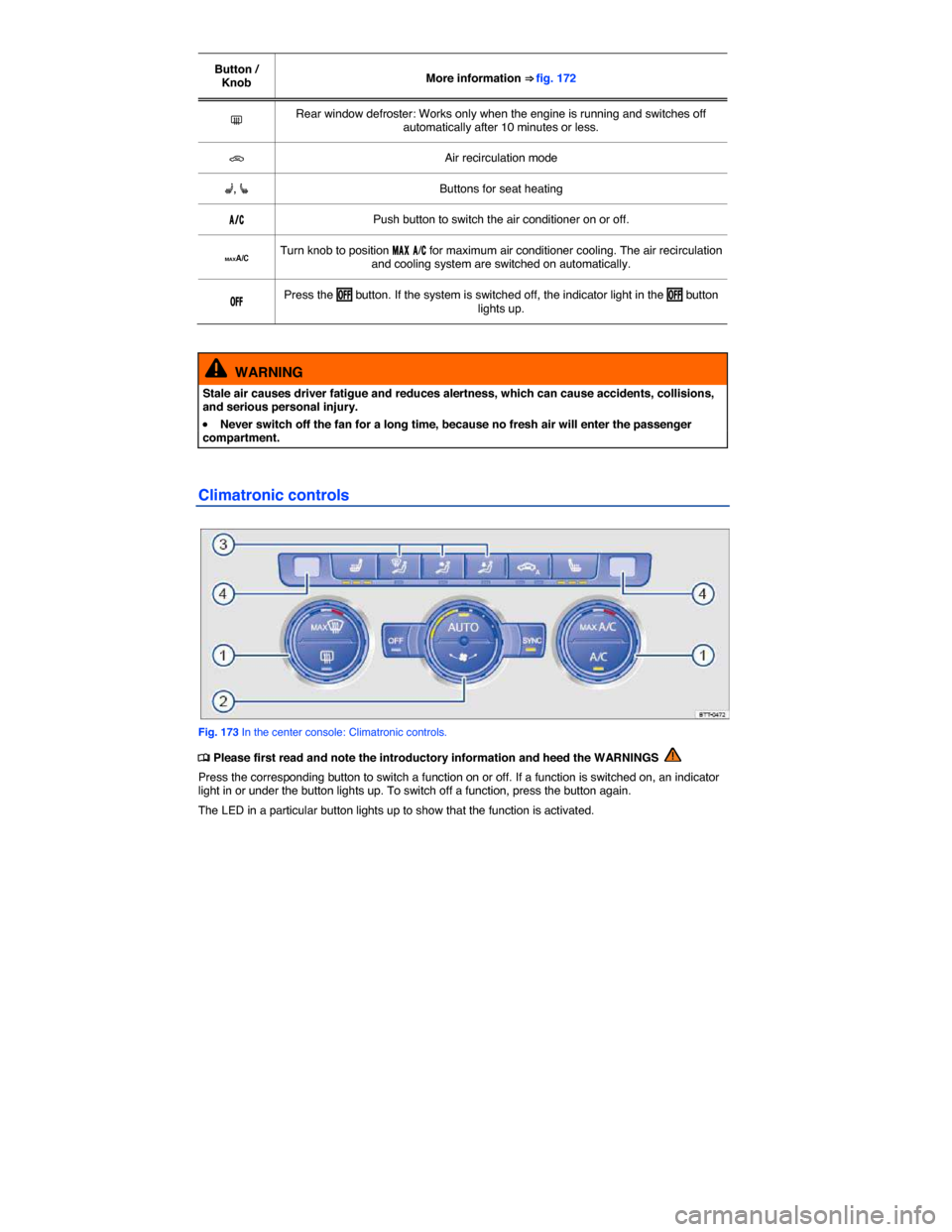
Button / Knob More information ⇒ fig. 172
= Rear window defroster: Works only when the engine is running and switches off automatically after 10 minutes or less.
3 Air recirculation mode
A, [ Buttons for seat heating
!
Page 274 of 397

WARNING
Even if empty, portable fuel containers can leak and cause a fire and serious personal inju-ries, especially in a crash.
x For your safety, we strongly recommend that you do not travel with a portable fuel con-tainer in your vehicle.
x If, under exceptional circumstances, you must transport a portable fuel container, please observe the following:
– Never fill a portable fuel container while it is anywhere in or on the vehicle (for exam-ple, in the luggage compartment or on top of the luggage compartment lid). Static electric-ity can build up while filling and can ignite fuel vapors, causing a fire.
– Always place a portable fuel container on the ground before filling. Never spill fuel inside the vehicle or luggage compartment. Fuel vapors are highly flammable.
– Always keep the filler nozzle completely inside the portable container before and dur-ing filling.
– If filling a portable container made of metal, the filler nozzle must always be in contact with the container. This will help prevent static electricity from discharging and causing a fire.
– Always observe local and state or provincial laws about the use, storage, and transpor-tation of portable fuel containers.
– Make certain that the portable fuel container meets industry standards, such as ANSI / ASTM F852-86.
NOTICE
x Remove fuel spills from the vehicle immediately to help prevent damage to the paint, tires, and wheel housings.
x Refueling with gasoline when your vehicle has a diesel engine or refueling with diesel fuel when your vehicle has a gasoline engine can cause very serious and expensive engine and fuel system damage that is not covered by any Volkswagen Limited Warranty.
x If you put any amount of incorrect fuel in the fuel tank, do not start the engine under any circumstances. Immediately contact the nearest authorized Volkswagen dealer or authorized Volkswagen Service Facility for assistance. These fuels contain substances that can severely damage the fuel system and the engine if the engine is started.
x Vehicles with diesel engines must never be refueled or driven with gasoline, kerosene, heating oil, or other non-specified fuels that have not been expressly approved for use with the diesel engine. Other kinds of fuel can cause serious damage to the fuel system and the engine that is not covered by any Volkswagen Limited Warranty.
Fuels can pollute the environment. Spilled fuel must be collected and disposed of properly, following all applicable environmental regulations.
There is no emergency release for the fuel filler flap. Contact an authorized Volkswagen dealer or an authorized Volkswagen Service Facility for assistance.
Page 276 of 397
WARNING
Driving with a fuel tank that is almost empty can lead to stalling in traffic, a collision, and serious personal injuries.
x When the fuel tank is almost empty, fuel supply to the engine can be interrupted, especial-ly when driving over bumps, across slopes, and up and down hills.
x Steering and braking assistance as well as ESC and related systems will not work if the engine “sputters” or stalls due to lack of fuel.
x Always refuel when the tank is 1/4 full to reduce the risk of running out of fuel and stalling in traffic.
NOTICE
x Failure to heed warning lights or text WARNINGS can result in vehicle damage.
x Never drive until the fuel tank is completely empty. The irregular fuel supply can cause the engine to misfire. This allows unburned fuel to get into the exhaust system and damage the catalytic converter or the diesel particulate filter.
The small arrow next to the gas pump symbol in the fuel gauge ⇒ fig. 175 shows the side of the vehicle with the fuel filler flap.
Refueling
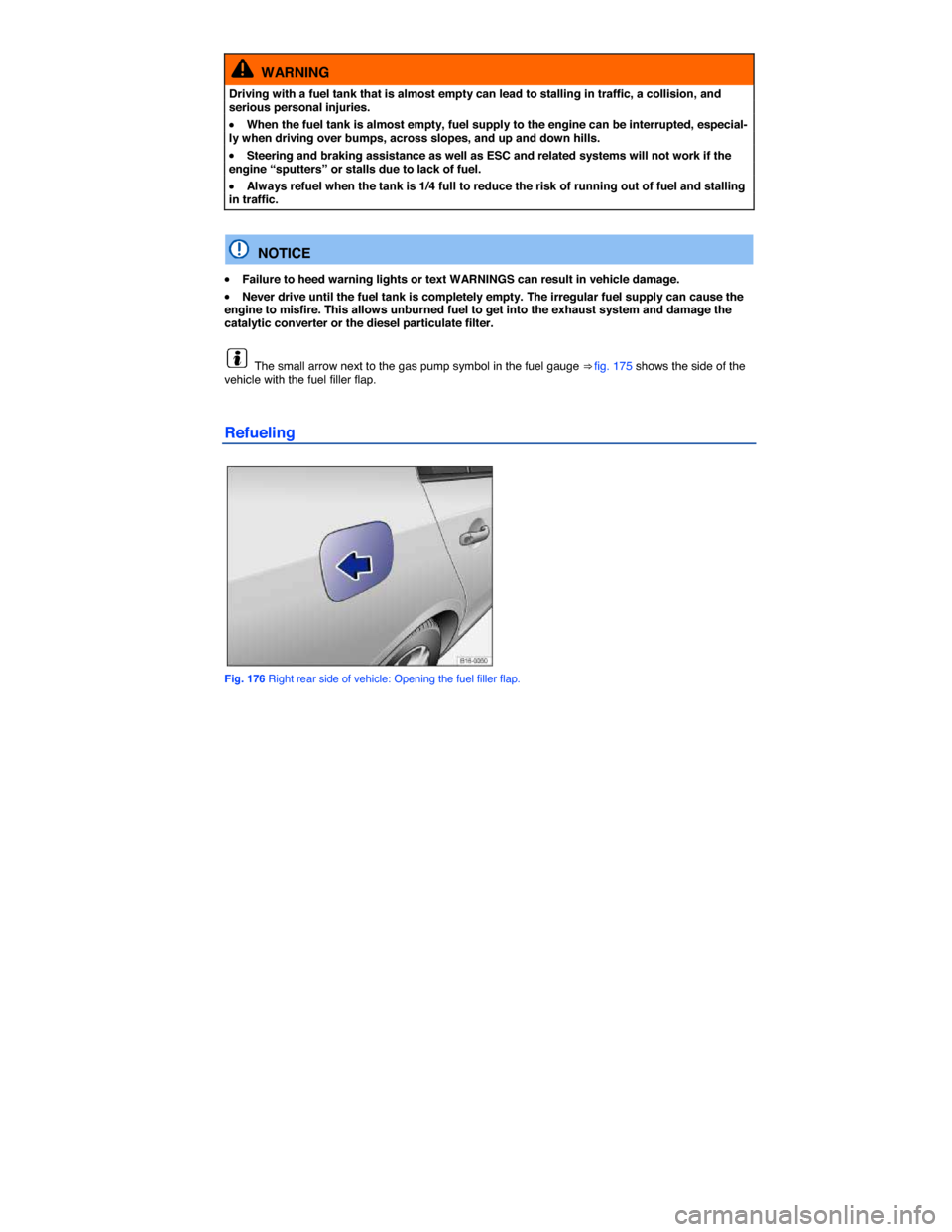
Fig. 176 Right rear side of vehicle: Opening the fuel filler flap.
Page 279 of 397

x If diesel fuel should get on any rubber hose, it must be wiped off immediately. The same applies if diesel fuel gets onto other parts of the vehicle, especially paint, tires, or a plastic part. Wash the contaminated vehicle parts right away with soap and warm water to help pre-vent leaks and serious damage.
NOTICE
x Never force a fuel nozzle in the misfueling guard. If you have problems inserting a fuel nozzle, first check to make sure you are using the correct diesel fuel. If you are, go to a pump with the standard diesel nozzle. Forcing a fuel nozzle in the misfueling guard can damage it so that it can no longer help prevent misfueling.
x If you have problems inserting a diesel fuel nozzle, please check to make sure you are using the right kind of diesel fuel.
x If you must refuel with a non-standard diesel fuel nozzle, an adapter is available from Volkswagen to allow refueling. Contact an authorized Volkswagen dealer or authorized Volkswagen Service Facility for assistance. Only use an adapter approved by Volkswagen for your vehicle.
x Remember that the nozzle on a portable fuel container will generally not open the misfueling guard. If you must refuel with a portable fuel container in an emergency, you can pour diesel fuel very slowly from a portable container into the fuel filler neck of your vehicle. The fuel will flow slowly past the misfueling guard and into the tank.
Fuel capacities
Page 282 of 397

Octane rating
Octane rating indicates a gasoline's ability to resist engine-damaging “knock” caused by pre-ignition. Using the correct grade of gasoline is very important to help prevent engine damage and loss of engine performance.
The recommended gasoline octane rating for your engine is listed on a label inside of the fuel filler flap. This rating may be specified according to AKI (CLC) or RON (ROZ) standards.
If unleaded Premium grade gasoline is specified for your vehicle, then Volkswagen recommends using TOP TIER Detergent Gasoline with a minimum octane rating of 91 AKI (95 RON). For more infor-mation on TOP TIER Detergent Gasoline, please go to the official Web site http://www.toptiergas.com.
The gasoline grades most commonly sold in the United States and Canada have the following octane ratings, which can usually be found on the filler pump:
x Premium grade: 91 to 96 AKI
x Regular grade: 87 to 90 AKI
Unleaded gasoline
Unleaded gasoline is available throughout the USA and Canada. Volkswagen recommends that you do not take your vehicle to places where unleaded gasoline may not be available.
Gasoline containing alcohol or MTBE
You may use unleaded gasoline blended with alcohol or MTBE (methyl tertiary butyl ether), commonly referred to as oxygenated fuels, if the blended mixture meets the following criteria:
Blends of gasoline and methanol (wood alcohol or methyl alcohol):
x Anti-Knock Index (AKI) must be 87 or higher.
x Blend must contain no more than 3% methanol.
x Blend must contain more than 2% co-solvents.
Blends of gasoline and ethanol (grain alcohol or ethyl alcohol):
x Anti-Knock Index (AKI) must be 87 or higher.
x Blend must contain no more than 15% ethanol.
Blends of gasoline and MTBE:
x Anti-Knock Index (AKI) must be 87 or higher.
x Blend must contain no more than 15% MTBE.
Seasonally adjusted gasoline
Many fuels are blended especially for winter or summer conditions. When seasons change, Volkswagen suggests that you buy fuel at busy stations where the seasonal adjustment is more likely to be made earlier.
WARNING
Starting fluids can explode and cause a run-away vehicle condition.
x Never use starting assist fluids.
NOTICE
x Never use fuel with an octane rating lower than 87 AKI / 91 RON. Using lower octane fuel may cause expensive engine damage.
x Never use leaded gasoline! Leaded gasoline will severely damage your vehicle's catalytic converter.