control VOLKSWAGEN SCIROCCO 2015 Owner´s Manual
[x] Cancel search | Manufacturer: VOLKSWAGEN, Model Year: 2015, Model line: SCIROCCO, Model: VOLKSWAGEN SCIROCCO 2015Pages: 400, PDF Size: 5.95 MB
Page 98 of 400

Accident statistics show that vehicle occupants properly wearing safety belts have a lower risk of being injured and a much better chance of surviving a collision. Properly using safety belts also greatly increases the ability of the supplemental airbags to do their job in a collision. For this reason, wearing a safety belt is required by law in most countries including the United States and Canada.
Although your Volkswagen is equipped with airbags, you still have to wear the safety belts provided. Front airbags, for example, are activated only in some frontal collisions. The front airbags are not activated in all frontal collisions, in side and rear collisions, in rollovers, or in cases when the condi-tions for deployment stored in the electronic control unit are not met. The same goes for the other airbag systems on your Volkswagen.
So always wear your safety belt and make sure that everybody in your vehicle is properly restrained!
Using safety belts
Page 105 of 400

person who is not using the safety belt. Leaving the extender attached to the safety belt buckle when the front seat is occupied and the safety belt is not being used will signal the airbag control unit during a collision that the front passenger seat is occupied and that the safety belt is being used. The elec-tronic control unit for the airbag system will then receive incorrect information that will cause the safety belt pretensioner to deploy unnecessarily and the front passenger airbag to deploy later in collisions that would normally trigger the front airbag earlier in the collision to help protect an unrestrained front seat occupant. The airbag will not be able to provide enough protection for an occupant not wearing a safety belt.
x Only use the safety belt extender approved by Volkswagen for your vehicle.
WARNING
Improper use or positioning of a safety belt extender increases the risk of serious personal injury and death.
x A driver or passenger who is not properly restrained can be seriously injured by striking the interior of the passenger compartment or by the safety belt itself, which can be displaced from stronger parts of the body into sensitive areas like the abdomen.
x Safety belt extenders offer optimum protection only when they are properly used.
x Only use the extender when the belt is not long enough to be worn low and snug and the person is in the correct seating position. Remove and stow extender safely when not needed.
x Always make sure the safety belt tongue of the safety belt extender is securely inserted into the buckle for the seating position that belongs to the seat where the safety belt extender is being used. Attaching the safety belt to the wrong buckle will reduce safety belt effective-ness and can cause serious personal injury.
x Never use the safety belt extender if you can properly attach the safety belt without it. Using a safety belt extender when not needed can increase the risk of injury, especially in a collision.
x Never use a safety belt extender if the distance (B) between the front edge of the safety belt extender buckle (A) and the centerline of the person using the safety belt extender
⇒ fig. 60 (C) is less than 6 inches (15 cm).
x Never leave a safety belt extender attached to the vehicle safety belt buckle when the extender is not needed and being used with the safety belt. Otherwise, the airbag control module will receive an incorrect signal from the safety belt buckle and this will prevent the airbag from working properly for a person who is not using the safety belt.
x Never use more than 1 extender with a safety belt. Using more than 1 extender can change the way the safety belt passes over the body and can cause serious injury.
x Never use the safety belt extender to secure a child restraint.
x Never use a safety belt extender on your Volkswagen that you got from another automo-bile manufacturer or from an automotive parts store.
x Never use the safety belt extender you got for your vehicle for any other vehicle, regard-less of make, model, or model year.
NOTICE
x Leaving the extender attached to the safety belt buckle when the front seat is occupied and the safety belt is not being used will signal to the airbag control unit that the front passenger seat is occu-pied and that the safety belt is being used. The electronic control unit for the airbag system will then receive incorrect information that will
– cause the safety belt pretensioner to deploy unnecessarily in collisions.
– cause the front passenger airbag to deploy later in collisions in which the front airbag would otherwise be triggered earlier to help protect an unrestrained front seat passenger.
Page 110 of 400
NOTICE
Failure to heed warning lights or text WARNINGS can result in vehicle damage.
High Intensity Discharge (HID) headlights provide bright, uniform lighting to help you see and be seen. The light comes from an electric arc between two electrodes in the gas-filled bulb. Over time, the electrodes can wear down and the gap between them will get wider. The HID lamp’s control unit then increases the voltage to keep the arc’s brightness constant. However, the commonly called “Xenon” bulbs will also ultimately burn out. Before they burn out, HID lamps can flicker. A message will then appear in the MFD. This is your reminder to see an authorized Volkswagen dealer or an authorized Volkswagen Service facility to check the headlights.
Turn signal lever and high beam switch
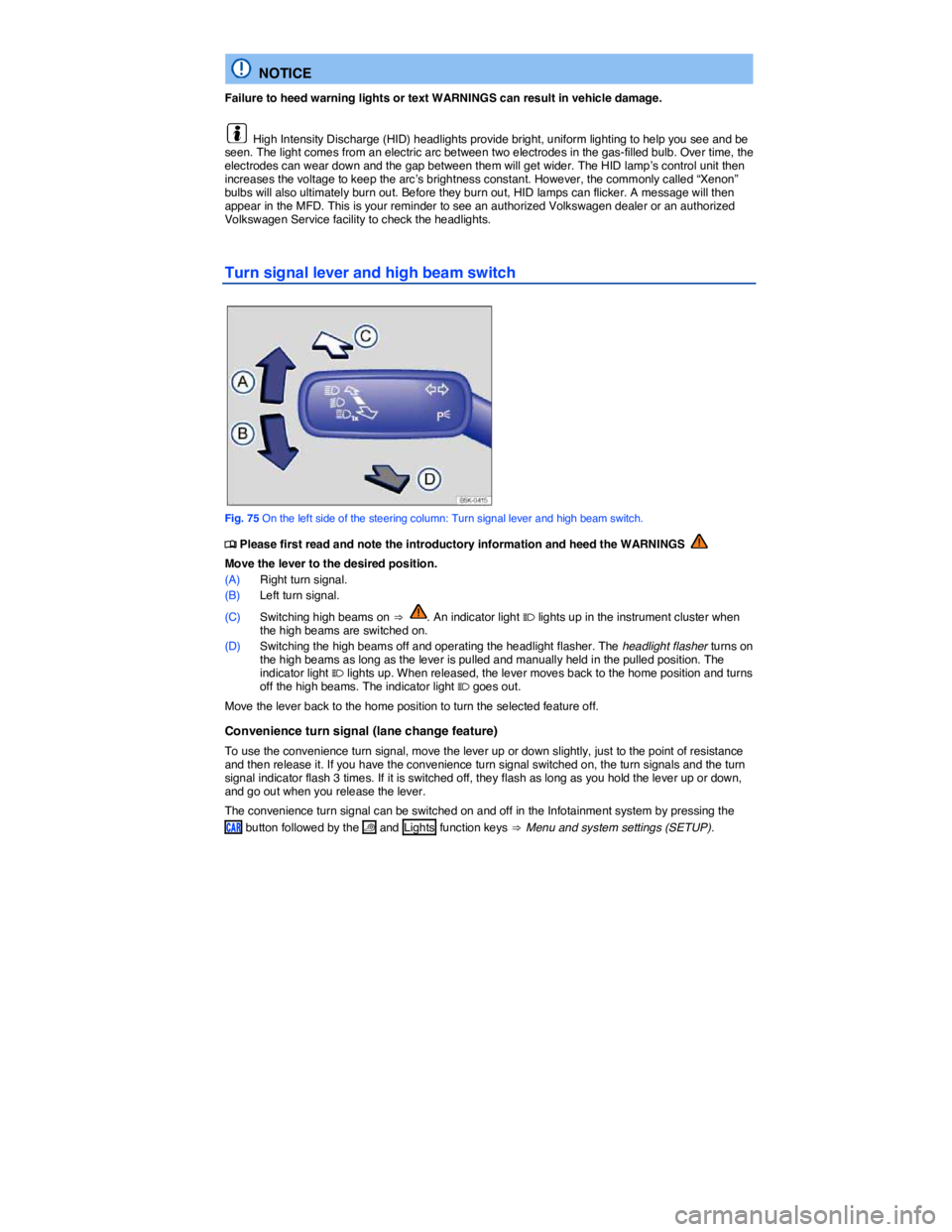
Fig. 75 On the left side of the steering column: Turn signal lever and high beam switch.
Page 133 of 400

WARNING
Heavy loads will influence the way your vehicle handles and increase stopping distances. Heavy loads that are not properly stowed or secured can cause loss of control and serious injury.
x Secure the load properly to keep it from shifting.
x Always remember when transporting heavy objects that a change in the center of gravity also changes the way your vehicle handles:
– Always distribute the load as evenly as possible.
– Secure heavy objects properly as far forward in the luggage compartment as possible.
– Always tie down heavy items securely with suitable straps using the tie-downs in the luggage compartment.
x Securely latch the rear seat backrest in the upright position.
x Never exceed the Gross Axle Weight Rating or the Gross Vehicle Weight Rating on the safety compliance sticker on the left door jamb. Exceeding permissible weight can cause the vehicle to skid and handle differently.
x Always adapt your speed and driving to the heavier load and the weight distribution in the vehicle. Take road, weather, traffic, and visibility conditions into account as well.
x Always accelerate gently and avoid sudden braking and driving maneuvers.
x Always brake earlier than you would if you were not driving a loaded vehicle.
Stowing luggage
Page 138 of 400

WARNING
Unsecured or incorrectly stowed items can fly through the vehicle, causing serious personal injury during hard braking or sharp steering or in an accident. Loose items can also be struck and thrown through the passenger compartment by the front airbags if they inflate. To help reduce the risk of serious personal injury:
x Always stow all objects securely in the vehicle. Always put luggage and heavy items in the luggage compartment.
x Always secure objects in the passenger compartment properly with suitable straps so that they cannot move into the deployment zone of a side or front airbag during sudden braking, in a sudden maneuver, or in a collision.
x Always keep storage compartments closed while driving.
x Never stow hard, heavy, or sharp objects in the vehicle's open storage compartments, on the luggage compartment cover, or on the top of the instrument panel.
x Always remove hard, heavy, or sharp objects from clothing and bags in the vehicle interior and stow them securely in the luggage compartment.
WARNING
Transporting heavy objects causes the handling characteristics of the vehicle to change and increases braking distances. Heavy loads which are not properly stowed or secured in the vehicle can lead to a loss of vehicle control and cause serious personal injury.
x Transporting heavy items causes the handling characteristics of the vehicle to change by shifting the vehicle's center of gravity.
x Always distribute luggage evenly and as low as possible within the vehicle. The vehicle capacity weight figures apply when the load is distributed evenly in the vehicle (passengers and luggage).
x Always stow luggage and heavy items in the luggage compartment as far forward of the rear axle as possible and secure them with appropriate straps to the tie-downs provided.
x Never exceed the vehicle's Gross Vehicle Weight Rating or Gross Axle Weight Ratings, which are printed on the Safety Compliance Certification Label located on the door jamb of the driver door. Exceeding the permissible weight can cause the vehicle to skid and behave differently.
x Always adapt your speed and driving style to accommodate your payload and its weight distribution within your vehicle.
x Be especially cautious and gentle when stepping on the accelerator pedal and avoid sudden braking and other maneuvers.
x Brake earlier than you would if you were not driving a loaded vehicle.
NOTICE
The defroster heating wires or antenna in the rear window can be damaged by objects that rub against them.
Page 152 of 400

WARNING
Improper use of the trailer hitch can cause accidents and injuries. An improperly installed, incorrect, or damaged trailer hitch can cause the trailer to separate from the towing vehicle and cause serious personal injuries.
x Only use an undamaged, properly mounted trailer hitch.
x Never repair or modify the trailer hitch.
x To reduce the risk of injury in rear-end collisions, and the risk to pedestrians and cyclists when the vehicle is parked, always remove the ball mount when you are not towing a trailer.
x Never install a “weight distributing” or “load equalizing” trailer hitch on your vehicle. The vehicle was not designed for these kinds of trailer hitches. The trailer hitch attachment can fail, causing the trailer to tear loose from the vehicle.
WARNING
Improper trailer towing can cause loss of vehicle control and serious personal injury.
x Driving with a trailer and carrying heavy or large things can change the way the vehicle handles, increase the distance it needs to stop safely, and cause accidents.
x Always secure the load properly with suitable and undamaged straps so that the load will not shift.
x Always adapt your speed and driving to the heavier load and the weight distribution in the vehicle. Take road, weather, traffic, and visibility conditions into account as well.
x Reduce your speed even more than you otherwise would when going downhill and under unfavorable load, weather, or wind conditions.
x Trailers with a high center of gravity tip more easily than trailers with a low center of gravity.
x Always avoid sudden maneuvers and hard braking.
x Be especially careful when passing other vehicles.
x Reduce speed immediately if the trailer shows the slightest sign of swaying.
x Never try to stop the swaying by accelerating.
x Always obey speed limits. In some areas, the speed limits for vehicles towing trailers are lower than for vehicles without trailers. Never drive faster than 50 mph (80 km/h; under exceptional circumstances, 60 mph - 100 km/h) when towing a trailer. This applies even if the local speed limit is higher.
If you are driving a new vehicle or a vehicle with a new or rebuilt engine, do not tow a trailer
during the break-in period, about 600 miles (1000 km) ⇒ Parts, accessories, repairs, and modifications.
If you tow a trailer, your vehicle may need maintenance more often because of the extra load it has to move.
When you are not towing, remove the trailer hitch ball. This helps keep the trailer hitch from causing damage to your vehicle and to others if your vehicle is hit from behind.
Some models need a trailer hitch to tow or tow-start other vehicles. You may want to always carry the ball mount in the vehicle after it has been removed. Be sure to stow it securely.
Page 157 of 400
the clutch until you can feel the car moving forward. If applicable, follow the instructions for the Hill
Hold feature ⇒ Starting assistance systems.
x Do not release the parking brake lever until the engine starts to move the vehicle forward. If your vehicle has an automatic transmission, you can also depress and hold the brake pedal for added braking and then let up on the brake pedal when you feel that the vehicle “wants” to move forward.
x Drive ahead slowly.
WARNING
Improper trailer towing can cause loss of vehicle control and serious personal injury.
x Driving with a trailer and carrying heavy or bulky items changes the way the vehicle handles and increases the distance it needs to stop safely.
x Always watch what is happening up ahead and around you. Brake earlier than you would if you were not towing a trailer.
x Always adapt your speed and driving to the heavier load and the weight distribution in the vehicle. Take road, weather, traffic, and visibility conditions into account as well.
x Reduce your speed even more than you otherwise would when going downhill and under unfavorable load, weather, or wind conditions.
x Drive especially carefully and accelerate gently. Always avoid sudden maneuvers and hard braking.
x Be especially careful when passing other vehicles.
x Reduce speed immediately if the trailer shows even the slightest sign of swaying.
x Never try to stop the swaying by accelerating.
x Always obey speed limits. In some areas speed limits for vehicles towing trailers are lower than for vehicles without trailers.
Ball mount
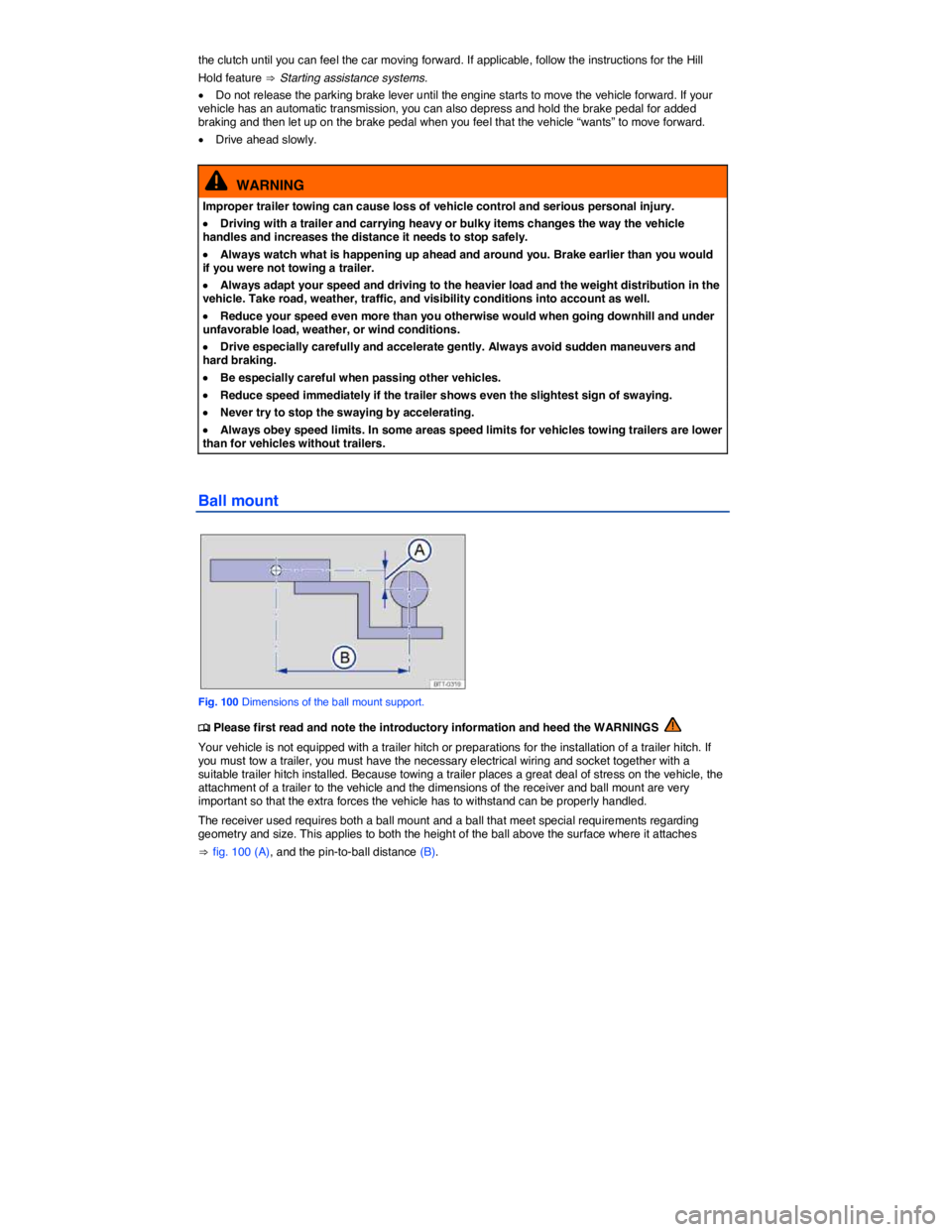
Fig. 100 Dimensions of the ball mount support.
Page 163 of 400

WARNING
New tires or tires that are old, worn or damaged cannot provide maximum control and braking performance.
x Improper care and handling of tires and wheels can reduce driving safety and cause accidents and severe injuries.
x Install only radial tires of the same make, the same dimensions (tread circumference), and similar tread profile on all 4 wheels.
x New tires tend to be slippery and must be broken in. Always drive with special care for the first 350 miles (560 km) to help reduce the risk of losing control, a collision, and serious personal injuries.
x Check tire inflation pressure regularly when the tires are cold and always maintain the prescribed tire pressure. Low tire pressure can cause tires to get too hot, resulting in tread separation, sudden loss of pressure, and blowouts. Tires with excessively low pressure flex (bend) more, which can cause the tire to overheat and fail suddenly without warning.
x Check tires regularly for wear and damage.
x Never drive with worn or damaged tires (for example, tires with punctures, cuts, cracks, blisters, or bumps). Driving with worn or damaged tires can lead to loss of vehicle control, sudden tire failure including blowouts and sudden deflation, crashes, and serious personal injuries.
x Have worn or damaged tires replaced immediately.
x Never exceed the maximum speed rating or the maximum load rating of the tires on your vehicle.
x The effectiveness of the driver assistance systems and the braking support systems depends on the tire traction.
x If you notice unusual vibration or if the vehicle pulls to one side when driving, always stop as soon as it is safe to do so and check the wheels and tires for damage.
x To reduce the risk of losing control, crashes, and serious personal injuries, never loosen the bolts on wheels with bolted rim rings.
x Never mount used tires on your vehicle if you are not sure of their past use. Old, used tires and wheels may have damage that cannot be seen that can lead to sudden tire failure and loss of vehicle control.
x Tires age even if they are not being used and can fail suddenly, especially at high speeds, causing loss of vehicle control, accidents, and severe personal injuries. Tires that are more than 6 years old can be used only in an emergency and even then only with special care and at low speed.
For technical reasons it is usually not possible to use wheel rims from other vehicles. Even wheel rims from the same model may not fit properly. Check with an authorized Volkswagen dealer or authorized Volkswagen Service Facility if necessary.
Page 165 of 400

mounted according to the specified direction of rotation in order to deliver their best grip, braking performance, low road noise, and good wear as well as good hydroplaning resistance.
If you have to mount a tire opposite to its proper direction of rotation, you must drive more carefully, since the tire is no longer being used as designed. This is particularly important on wet roads. You must replace or remount the tire as soon as possible in order to restore the correct direction of rotation.
Rotating tires
To help ensure even wear on all tires, regular tire rotation according to the diagram ⇒ fig. 102 is recommended. In this way all tires can have about the same service life.
Volkswagen recommends that you have your tires rotated by an authorized Volkswagen dealer or authorized Volkswagen Service Facility.
Tires more than 6 years old
Tires age even if they are not being used. Physical and chemical processes reduce tire strength and performance and cause them to harden and become brittle. Old tires can fail suddenly and without warning.
Volkswagen recommends replacing tires that are 6 years and older. This also applies to tires that look new (including the tire on the compact spare wheel) or that seem to still be usable with tread depth
that has not yet reached the legal minimum depth ⇒ .
The age of each tire can be determined with the manufacturing date that is part of the U.S. DOT tire
identification number (TIN) ⇒ Tire labeling.
Tire storage
Mark tires before removing them to help make sure that the previous location (left, right, front, rear) and rolling direction can be maintained when remounting them. Store tires in a cool, dry and preferably dark place. Do not store tires mounted on wheels standing up.
Tires not mounted on wheels should be covered to help protect them from dirt and stored vertically (sitting on the tread).
WARNING
Aggressive fluids and materials can cause visible and invisible tire damage that can cause tire blowouts.
x Always keep chemicals, oils, grease, fuels, braking fluids and other aggressive substances away from tires.
WARNING
Tires age even if they are not being used and can fail suddenly, especially at high speeds, causing loss of vehicle control, accidents, and severe personal injuries.
x Tires that are more than 6 years old can be used only in an emergency and even then only with special care and at low speed.
Always dispose of old tires in accordance with legal requirements.
Wheel rims
Page 167 of 400

x Install only radial tires of the same make, the same dimensions (tread circumference), and similar tread profile on all 4 wheels.
x The tread depth of new tires can differ between tire models and manufacturers because of different design features and tread design.
Replacing tires
x Tires should be replaced in pairs and not individually (both front tires or both rear tires at the same
time) ⇒ .
x Replace tires only with tires that have the same specifications, including width and diameter, load and top speed rating as the tires approved by Volkswagen for your vehicle and model.
x Never use tires that are larger or wider than the dimensions of the tires approved by Volkswagen for your vehicle and model. Larger tires could scrape and rub on the vehicle body or other parts of the vehicle.
Tire Pressure Monitoring System (TPMS) considerations: The Tire Pressure Monitoring System (TPMS) must be recalibrated whenever you remove and remount or change any wheel or tire on the vehicle, even if the reinstalled or replacement wheels and tires are identical to those that were
removed and even if the tire pressure does not change ⇒ Tire Pressure Monitoring System (TPMS).
WARNING
New tires tend to be slippery and must be broken in.
x Always drive with special care for the first 350 miles (560 km) to help reduce the risk of losing control, a collision, and serious personal injuries.
WARNING
Tires must have the required clearance. Tires that do not have enough clearance can rub against parts of the vehicle body, suspension, and brake system, causing brake system failure, tread delamination, and sudden blowouts.
x Always make sure that new tires are not larger than the tires approved for your vehicle and that the new tires do not rub against parts of the vehicle.
NOTICE
x When switching to different tires, make certain the valves are not damaged.
x Never drive without valve stem caps. The valves could be damaged.
Always dispose of old tires in accordance with legal requirements.
If the replacement wheel is different from the tires that you have mounted on your vehicle — for example, winter tires, wider, low-profile tires, or a compact spare — only use the replacement wheel for a short time and drive cautiously.
x Replace it with a tire matching the others on your vehicle as soon as possible.
Although tire size specifications can be the same, the actual dimensions may differ from those nominal values for different tire makes, or the tire contours may be significantly different.