check oil VOLKSWAGEN T-ROC 2020 User Guide
[x] Cancel search | Manufacturer: VOLKSWAGEN, Model Year: 2020, Model line: T-ROC, Model: VOLKSWAGEN T-ROC 2020Pages: 502, PDF Size: 8.58 MB
Page 372 of 502
You can check whether your vehicle is equipped for the Flexible Service QI6 (Longlife) or Fixed
Service QI1, QI2, QI3, QI4, QI7 (dependent on time or mileage) in the vehicle data Technical data
or on the inside cover of this owner's manual.
Permitted engine oil standards
Petrol engineswith particulate filter1)
Flexible ServiceVW 508 00 or alternatively VW 504 002)Fixed ServiceVW 502 00
Petrol engineswithout particulate filter
Flexible ServiceVW 508 00 or alternatively VW 504 00Fixed ServiceVW 502 00
Diesel engineswith particulate filter1)
Flexible ServiceVW 507 00Fixed ServiceVW 507 00
Diesel engineswithout particulate filter
Flexible ServiceVW 507 00Fixed ServiceVW 505 01
Volkswagen recommends engine oils.
NOTICE
additives is not covered by the warranty.
Using other engine oils can cause engine damage.
d engine oils are not
available. To avoid damaging the engine, a maximum quantity of 0.5 litres of the following engine oil
may be used only once until the next oil change:
SN (API SM).
ards ACEA C3 or API CJ-4.
1) Check with a qualified workshop if you are unsure whether your vehicle is equipped with a
particulate filter. Volkswagen recommends using a Volkswagen dealership for this purpose.
2) Using VW 504 00 instead of VW 508 00 may cause the vehicle's emissions values to increase
slightly.
Changing engine oil
First read and observe the introductoryinformation and safety warnings
Page 373 of 502

cable to
your vehicle Service
The engine oil and filter change should be carried out by a qualified workshop due to the special
tools and knowledge required, this also applies to the disposal of used oil. Volkswagen recommends
using a Volkswagen dealership for this purpose.
More details on the service intervals can be found in the chapter on service Service
Additives in the engine oil can cause new engine oil to discolour quickly. This is normal and does not
mean that the engine oil should be changed more frequently.
WARNING
If, in exceptional cases, you have to carry out an oil change yourself, please observe the following:
al when removing the oil drain plug with your fingers to help prevent oil
from running down your arm.
engine filling quantity.
l in empty food containers, bottles or any other non-original containers as
people finding these containers may not know that they contain engine oil.
Before changing the engine oil, first find out where old oil can be disposed of properly near you.
Used oil must be disposed of in accordance with regulations governing the protection of the
environment. Never dispose of used oil in locations such as gardens, woods, sewerage systems, on
streets and roads, or in rivers and waterways.
Engine oil consumption
First read and observe the introductoryinformation and safety warnings
Engine oil consumption can vary from engine to engine and can change during the service life of an
engine.
The vehicle may consume up to 1.0 litre of engine oil per 2,000 km, depending on your driving style
and the conditions in which the car is used. In new vehicles, consumption may be higher for the first
5,000 km. The engine oil level must therefore be checked at regular intervals, preferably each time
the vehicle is refuelled and before long journeys.
Page 374 of 502

area Fig. 186otorway journeys in summer, when towing a
trailer Trailer towing
Checking the engine oil level and refilling the engine oil
Fig. 186 Engine oil level markings on the oil dipstick (variants).
Fig. 187 In the engine compartment: engine oil filler cap (illustration).
First read and observe the introductoryinformation and safety warnings
Key to Fig. 186
Engine oil level too high observe the messages on the instrument cluster display or contact a
qualified workshop, if necessary.
Do not fill engine oil.
Engine oil level OK.
Engine oil level too low fill engine oil.
Checklist
Carry out the steps in the specified order
Page 377 of 502
lfunctions and engine
damage.
The engine oil level must never be above area Fig. 186
the crankcase breather and escape into the atmosphere via the exhaust system.
Troubleshooting
First read and observe the introductoryinformation and safety warnings
and Engine oil pressure too low
The central warning lamp lights up red and the text message Stop vehicle. Oil pressure. Observe
vehicle wallet is displayed.
Do not drive on!
Switch off the engine and check the engine oil level. Checking the engine oil level Checking the
Do not drive on or allow the engine to run if the
warning lamp is flashing although the engine oil level is correct. The engine could otherwise be
damaged. Seek expert assistance.
and Engine oil level too low
The central warning lamp lights up red and the text message Refill engine oil. is displayed.
Engine oil level is too low. Switch off the engine.
Checking the engine oil level Checking the engine oil level and refilling the engine oil
and Engine oil level low
The central warning lamp lights up yellow and the text message Check oil level. is displayed.
Engine oil level is low. Switch off the engine.
Checking the engine oil level Checking the engine oil level and refilling the engine oil
and Fault in engine oil system
The central warning lamp lights up yellow and the text message Oil sensor: workshop. is displayed.
Engine oil system is faulty. Go to a qualified workshop and have the engine oil sensor checked.
and Engine oil level too high
The central warning lamp lights up yellow and the text message Reduce oil level. is displayed.
Engine oil level is too high. Switch off the engine.
Check the engine oil level. Checking the engine oil level Checking the engine oil level and refilling
the engine oil
Page 382 of 502
Refill only with distilled water. All other types of water can cause corrosion in the engine due to
the chemical components contained in the water. This can also lead to engine failure. If any other
type of water apart from distilled water has been refilled, the fluid in the cooling system should be
completely replaced immediately by a qualified workshop.
Fig. 188
be forced out of the cooling system when the engine is hot and could cause damage.
completely. Heavy coolant loss is an indication of leaks in the cooling system. The cooling system
should be checked by a qualified workshop as soon as possible. Failure to do so can result in engine
damage.
have entered the cooling system. Do not drive on! Seek expert assistance. Failure to do so can result
in engine damage.
correct openings. The use of incorrect service fluids could result in serious malfunctions and engine
damage.
Brake fluid
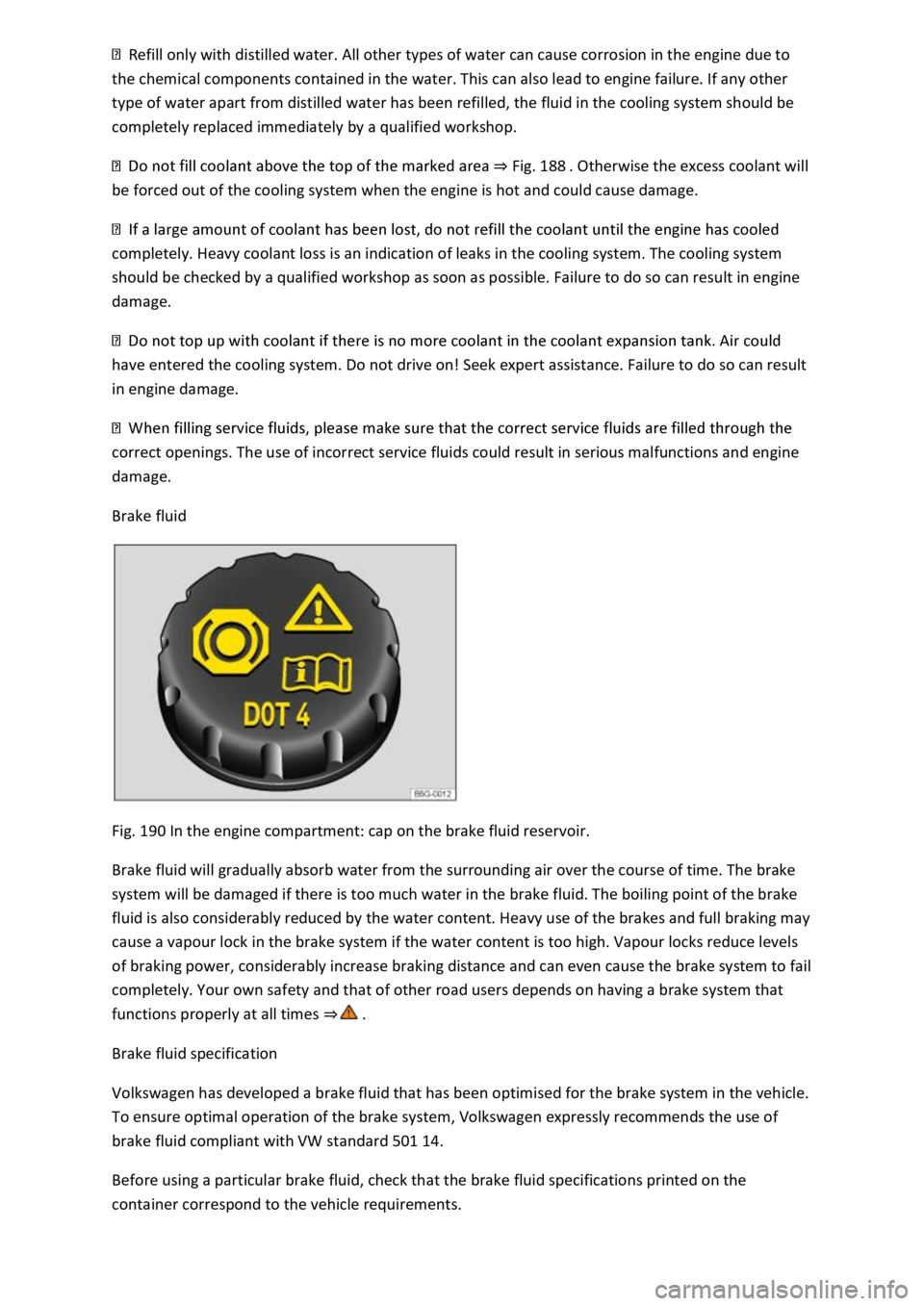
Fig. 190 In the engine compartment: cap on the brake fluid reservoir.
Brake fluid will gradually absorb water from the surrounding air over the course of time. The brake
system will be damaged if there is too much water in the brake fluid. The boiling point of the brake
fluid is also considerably reduced by the water content. Heavy use of the brakes and full braking may
cause a vapour lock in the brake system if the water content is too high. Vapour locks reduce levels
of braking power, considerably increase braking distance and can even cause the brake system to fail
completely. Your own safety and that of other road users depends on having a brake system that
functions properly at all times
Brake fluid specification
Volkswagen has developed a brake fluid that has been optimised for the brake system in the vehicle.
To ensure optimal operation of the brake system, Volkswagen expressly recommends the use of
brake fluid compliant with VW standard 501 14.
Before using a particular brake fluid, check that the brake fluid specifications printed on the
container correspond to the vehicle requirements.
Page 420 of 502

s with a wheel cover, the anti-theft wheel bolt must be screwed into position
Fig. 2
Tightening torque of wheel bolts
Specified tightening torque for wheel bolts for steel or alloy wheels:
Nm
If the wheel bolts are corroded and difficult to turn, they must be replaced before the tightening
torque is checked and the wheel hub threads cleaned.
Never grease or oil the wheel bolts or the threads of the wheel hub.
The tightening torque should be checked with a properly functioning torque wrench immediately
after changing a wheel.
WARNING
Incorrectly tightened wheel bolts can loosen while the vehicle is in motion and cause accidents,
serious injury, and loss of control of the vehicle.
easily.
bolts.
the wheel bolts only by approximately one turn before raising the vehicle with the vehicle
jack.
loosen while the vehicle is in motion, even if they have been tightened with the specified tightening
torque.
-on rings.
while the vehicle is in motion. The wheel bolts and the threads could be damaged if the tightening
torque is too high. Check the tightening torque regularly using a torque wrench.
WARNING
The wrong wheel bolts can loosen while the vehicle is in motion and cause accidents, serious injury,
and loss of control of the vehicle.
Page 429 of 502
Take the breakdown set out of the luggage compartment.
Take the sticker
Do not remove foreign objects (e.g. screws or nails) from the tyre.
WARNING
Ignoring any of the items on this important safety checklist can lead to accidents and severe injuries.
Sealing and inflating tyres
First read and observe the introductoryinformation and safety warnings
Sealing a tyre
Fig.
0to unscrew the valve core from the tyre valve. Place
the core on a clean surface.
Fig.
0vigorously to and fro several times.
Fig.
0tightly onto the tyre filler bottle in a clockwise direction. The
plastic foil on the closure is pierced automatically.
Fig.
0and place the open end fully on the tyre valve.
Fig.
0to screw the valve core back into the tyre valve.
Inflating the tyre
Fig.
Fig.
0is closed.
-volt plug Fig.
0into one of the vehicle's 12-volt sockets Electrical sockets