running VOLKSWAGEN T-ROC 2021 Owner´s Manual
[x] Cancel search | Manufacturer: VOLKSWAGEN, Model Year: 2021, Model line: T-ROC, Model: VOLKSWAGEN T-ROC 2021Pages: 502, PDF Size: 9.42 MB
Page 131 of 502
Turn the light switch to the appropriate position:
The lights are switched off.Leaving Home function (orientation lighting) can be switched on
⇒ Coming Home and Leaving Home function (orientation lighting) .Side lights or continuous
parking light on both sides of the vehicle switched on ⇒ Switching the parking lights on and off . The
symbol in the light switch lights up green.Dipped beam is switched off – the side lights will stay
on as long as the vehicle key is in the ignition lock or, in vehicles with Keyless Access, the driver door
is closed.
Daytime running lights
The daytime running lights (dependent on equipment level) can increase the visibility of your vehicle
in traffic during the day.
The daytime running lights are switched on every time the ignition is switched on when the light
switch is in position , or (when brightness is detected).
The daytime running lights cannot be switched on or off manually.
WARNING
Accidents and serious injuries can occur if the road is not sufficiently illuminated and other road
users have difficulty seeing the vehicle, or cannot see it at all.
The light assist systems are designed only to provide support; the driver is responsible for the
correct vehicle lights being switched on.
Always switch on the dipped beam headlights if it is dark, raining or visibility is poor.
WARNING
The side lights or daytime running lights are not bright enough to illuminate the road ahead and to
ensure that other road users are able to see you.
Always switch on the dipped beam headlights if it is dark, raining or visibility is poor.
The tail light clusters are not switched on with the daytime running lights. If the tail light clusters are
not switched on, the vehicle may not be visible to other road users if it is dark, raining, or if visibility
is poor.
WARNING
The automatic headlights ( ) switch dipped beam on and off only when there is a change in
the level of brightness.
Switch on dipped beam manually if required by the weather conditions, e.g. in fog.
Page 132 of 502
When reverse gear is engaged, the cornering light on both sides of the vehicle switches on to
provide better illumination of the surrounding area when manoeuvring.
Switching the fog lights on and off
Switching on the front fog lights : pull the light switch ⇒ Fig. 79 out to the first position. The
indicator lamp in the light switch lights up green.
Switching on the rear fog light : pull the light switch all the way out. The indicator lamp in the
instrument cluster lights up yellow.
To switch the fog lights off, press in the light switch or turn it to position .
When the automatic headlights are switched on and the front or rear fog lights are switched
on, the dipped beam headlights will also be switched on irrespective of the current light conditions
outside.
In vehicles with a factory-fitted towing bracket: the vehicle's rear fog light is not switched on if a
trailer with rear fog light is electrically connected to the vehicle ⇒ Trailer towing .
Light functions
Side lights
If the side lights are switched on, both headlights light up with the side lights, parts of the tail
light clusters, the number plate lighting and the buttons in the centre console and the dash panel.
The daytime running lights also switch on when the ignition is switched on.
If the vehicle is not locked from outside when the ignition is switched off, the continuous parking
light on both sides of the vehicle switches on automatically after around 10 minutes to reduce 12-
volt vehicle battery discharge ⇒ Switching the parking lights on and off .
Automatic headlights
If the automatic headlights are switched on, the vehicle lighting and the instrument and
switch lighting will switch on and off according to the light conditions. When the lights are switched
on, the indicator lamp lights up yellow.
The automatic headlights are merely an aid and will not always be able to detect all driving
situations.
In vehicles with a corresponding equipment level, the switch-on time of the automatic headlights
can be adjusted in the Infotainment system in the Vehicle settings menu ⇒ Infotainment system
controls and displays .
Cornering light
A cornering light is switched on when turning slowly or travelling around very tight bends.
Signal tones if lights are not switched off
Page 157 of 502

Press the button in the air conditioning block to switch the auxiliary heater on and off when the
ignition is switched off ⇒ .
Touch the function button in the Infotainment system air conditioning settings to access the
Auxiliary heater menu ⇒ Auxiliary heater and ventilation .
The auxiliary heater provides additional heating when the ignition is switched on.
– Blower
Turn the middle rotary control.
When Climatronic is in automatic mode, no blower speed is displayed in the rotary control.
– Air recirculation mode
Press the button.
Air distribution
– air distribution to the upper body via the vents in the dash panel.
– air distribution to footwell.
– air distribution to the upper body and the footwell.
– air distribution to the windscreen and the footwell.
– air distribution to the windscreen.
| – Defrost function
Manual air conditioning system: turn the right rotary knob to position ⇒ Fig. 91 .
Climatronic: press the button ⇒ Fig. 92 .
Manual air conditioning system: in the defrost function, the air recirculation mode switches off
and the air conditioning compressor for the cooling system switches on in order to dehumidify the
air. When the defrost function is switched on, it is not possible to switch the air recirculation mode
on or the air conditioning compressor off1).
– Rear window heating
Press to switch the rear window heating on or off while the engine is running.
The rear window heating will switch off after 10 minutes at the latest.
Recommended settings for manual air conditioning system
Switch off air recirculation mode.
Set blower to setting or .
Page 159 of 502
If the air distribution regulator of the manual air conditioning system is turned to position.
WARNING
Stale air can quickly make the driver tired and affect their concentration, which in turn can cause
collisions, accidents and serious injuries.
Never use the air recirculation mode for an extended period as no fresh air will enter the vehicle
interior.
If the cooling system is switched off, condensation can form on the windows very quickly in air
recirculation mode and reduce visibility considerably.
Switch off the air recirculation mode when it is no longer required.
NOTICE
In vehicles with an air conditioning system, do not smoke when the air recirculation mode is
switched on. The smoke can leave a residue on the cooling system evaporator and the dust and
pollen filter with pollution filter insert, producing a lasting unpleasant odour.
When reversing the vehicle, or when the wash and wipe system is being used, the air recirculation
mode will switch on to prevent odours from entering the vehicle interior.
Climatronic
If the outside temperature is very high, the manual air recirculation mode can be activated for a
short time to help cool the vehicle interior more quickly.
Seat heating
First read and observe the introductoryinformation and safety warnings⇒Introduction
The seat cushions and backrests can be heated electrically when the engine is running.
Operating the seat heating
Press the or button in the air conditioning block in order to switch the seat heating to the
highest temperature setting.
Press the or button repeatedly until the desired setting is reached.
To switch the seat heating off, press the or button repeatedly until no LEDs are lit.
Page 161 of 502
To save fuel, switch the seat heating off as quickly as possible.
Steering wheel heating
First read and observe the introductoryinformation and safety warnings⇒Introduction
The steering wheel heating works when the engine is running.
Switching the steering wheel heating on and off via the Infotainment system
Manual air conditioning system: press the button on the Infotainment system and
touch the Vehicle and function buttons.
Climatronic: open the air conditioning settings in the Infotainment system.
Touch the function button to switch the steering wheel heating on and off.
Switching the steering wheel heating on or off together with the seat heating (only for Climatronic)
Open the air conditioning settings in the Infotainment system.
Touch the function button.
Touch the Link seat/steering wheel heating function button to link the steering wheel heating with
the seat heating.
Press the button to switch the steering wheel heating on or off together with the seat heating.
Selecting a temperature setting (only for Climatronic)
Open the air conditioning settings in the Infotainment system.
Touch the function button.
Touch the Setting function button to select a temperature setting.
Three temperature settings are available. The selected setting is saved when the ignition is switched
off. The temperature setting for the steering wheel heating is unrelated to the temperature setting
for the seat heating.
Switch-off conditions
The steering wheel heating will be switched off automatically if one of the following conditions is
met:
Seat heating for the driver seat is switched off (if Link seat/steering wheel heating is active).
Power consumption is too high.
There is a fault in the steering wheel heating system.
Troubleshooting
First read and observe the introductoryinformation and safety warnings⇒Introduction
Page 162 of 502
The cooling system cannot be switched on or its function is restricted
The cooling system functions only when the engine is running and at ambient temperatures above
+3°C (+38°F).
The cooling system is switched off when the engine is very warm.
Switch on the blower.
Check the fuse of the air conditioning system ⇒ Fuses in the dash panel .
Change the dust and pollen filter ⇒ Service .
If the fault persists, seek expert assistance.
The heating and fresh air system cannot be switched on or its function is restricted
The heating and defrost function are more effective when the engine is warm.
If the fault persists, seek expert assistance.
Condensation on the windows
Keep the air intake in front of the windscreen free of ice, snow or leaves in order to improve heating
and cooling performance ⇒ Vehicle care .
Do not cover the air vents in the rear of the luggage compartment to allow air to flow through the
vehicle from the front to the rear.
Press the button or turn the rotary knob to position in order to switch on the defrost
function ⇒ .
The wrong unit of temperature is set
Change the unit of temperature for all temperature displays in the vehicle using the Infotainment
system ⇒ Infotainment system controls and displays .
Change the unit of temperature in the instrument cluster menu ⇒ Instrument cluster .
Water under the vehicle
If the humidity and temperature outside the vehicle are high, condensation can drip off the
evaporator of the cooling system and form a pool underneath the vehicle. This is normal and does
not indicate a leak!
If the outside humidity is high and the outside temperature low, condensation may evaporate when
the auxiliary heater is running ⇒ Auxiliary heater and ventilation . If this is the case, steam may
appear underneath the vehicle. This is not a sign that the vehicle is damaged.
WARNING
Poor visibility through all windows increases the risk of collisions and accidents, which can cause
serious injuries.
Page 163 of 502

Always ensure that all windows are free of ice, snow and mist to ensure good visibility.
Maximum heat output and the fastest possible defrosting of the windows are possible only when
the engine is running. Do not start your journey until you have good visibility.
To help ensure good visibility, make sure that you use the air conditioning system and the rear
window heating correctly.
Auxiliary heater and ventilation
Introduction
This chapter contains information on the followingsubjects:
⇒ Switching the auxiliary heater and ventilation on and off
⇒ Programming the auxiliary heater and ventilation
⇒ Remote control
The auxiliary heater and ventilation system can be used to heat the vehicle interior in the winter and
ventilate it in the summer. It is able to clear ice, condensation and a thin layer of snow from the
windscreen. The auxiliary heater is supplied with fuel from the vehicle fuel tank and can be operated
when the vehicle is stationary with the ignition switched off. The auxiliary ventilation system is
powered by the 12-volt vehicle battery.
Auxiliary heater exhaust system
The emissions generated by the auxiliary heater are discharged via an exhaust pipe underneath the
vehicle. The exhaust pipe must not be blocked by snow, mud or other objects.
WARNING
Among other things, the emissions from the auxiliary heater contain carbon monoxide, which is an
odourless and colourless poisonous gas. Carbon monoxide can cause people to lose consciousness. It
can also cause death.
Never switch on the auxiliary heater when the vehicle is in unventilated or closed rooms nor let the
auxiliary heater run in unventilated or closed rooms.
Never program the auxiliary heater so that it is switched on and runs in unventilated or closed
rooms.
WARNING
Parts of the auxiliary heater exhaust system become very hot. This can cause fires.
Park the vehicle so that no part of the exhaust system can come into contact with any inflammable
material underneath the vehicle, e.g. dry grass.
Page 166 of 502
Before programming, check that the date and time set in the vehicle are correct ⇒ Time .
Open the Auxiliary heater menu.
Touch the Set function button.
Select one of the memory locations for a Departure time.
Touch the Activate function button.
Manual air conditioning system: the programmed departure time determines the time at which
the auxiliary heater or ventilation should switch off. The point at which the heating or ventilation
process starts is determined depending on the programmed running time.
Climatronic: on the basis of the programmed departure time, the vehicle automatically
calculates the start time for heating or ventilation to the currently set temperature depending on
the outside temperature.
Press the Running time function button under Adjust in order to select the running time when the
auxiliary heater is switched on using the immediate heat button or remote control.
Checking programming
If a departure time has been activated, the LED in the immediate heat button will light up on the
Climatronic control panel for approximately 10 seconds after the ignition is switched off.
WARNING
Never program the auxiliary heating system so that is switched on and run in unventilated or
enclosed spaces. Among other things, the emissions from the auxiliary heater contain carbon
monoxide, which is an odourless and colourless poisonous gas. Carbon monoxide can cause people
to lose consciousness. It can also cause death.
Remote control
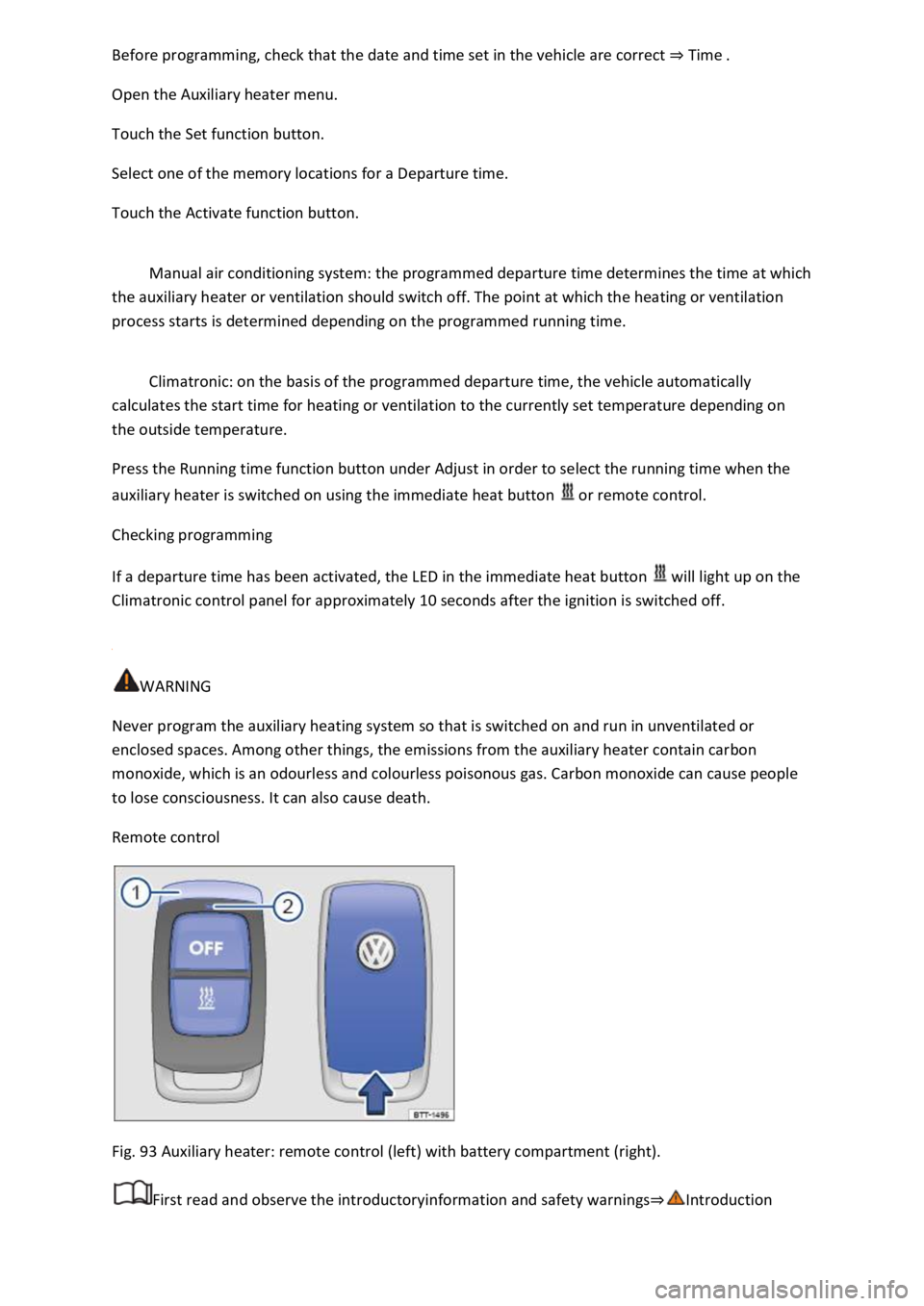
Fig. 93 Auxiliary heater: remote control (left) with battery compartment (right).
First read and observe the introductoryinformation and safety warnings⇒Introduction
Page 175 of 502

Accidents and injuries can occur if the driver is distracted. Operating the Infotainment system can
distract you from the road.
Always drive carefully and responsibly.
Information on the brakes
New brake pads cannot generate the full braking effect during the first 200 to 300 km and must first
be run in ⇒ . The slightly reduced brake pressure can however be compensated for by increasing
pressure on the brake pedal. During the run-in period, the braking distance is longer for full or
emergency braking than when the brake pads have been run in. In the run-in period, full braking
should be avoided and also situations that create a heavy load on the brakes, e.g. when driving up
close to the vehicle ahead.
The wear of the brake pads depends to a great extent on the conditions under which the vehicle is
operated and the way the vehicle is driven. If the vehicle is used for regular urban trips, short
journeys, and is driven with a sporty driving style, the brake pads must be regularly checked by a
qualified workshop.
When driving with wet brakes, for example after driving through water, after heavy rainfall or after
washing the vehicle, the braking effect may be delayed as the brake discs will be wet, or possibly
iced up (in winter). The brakes must be dried as quickly as possible by careful braking at higher
speed. Please ensure that no following vehicle and no other road user is put at risk as a result of this
action ⇒ .
A layer of salt that accumulates on the discs and pads will reduce the braking effect and increase the
braking distance. If the vehicle has not been braked for a long time on roads which have been gritted
with salt, the layer of salt must be reduced through careful braking ⇒ .
Corrosion on the brake discs and dirt in the brake pads are facilitated through long standstill times,
low mileage and low load levels. If the brake pads have been hardly used or if they are corroded,
Volkswagen recommends that the brake discs and brake pads be cleaned by braking strongly several
times from high speed. Please ensure that no following vehicle and no other road user is put at risk
as a result of this action ⇒ .
Brake servo
The brake servo will function only when the engine is running and reinforces the pressure applied by
the driver on the brake pedal.
If the brake servo does not function or the vehicle is being towed, the brake pedal will have to be
depressed more forcefully as the braking distance will be increased due to the lack of assistance for
the brake system ⇒ .
WARNING
Driving with worn brake pads or with a faulty brake system can cause accidents and serious injuries.
If the warning lamp lights up either alone or together with a text message in the instrument
cluster display, go to a qualified workshop immediately to have the brake pads checked and the
worn brake pads replaced.
Page 179 of 502

WARNING
After driving through water, mud, slush etc., the brakes may react slowly and the braking distance
will be increased as the brake discs and pads will be wet, or possibly iced up in winter.
Dry and de-ice the brakes using careful braking manoeuvres. Make sure that you do not endanger
any other road users or violate any legal regulations when doing so.
Avoid abrupt and sudden braking manoeuvres directly after driving through water.
NOTICE
If you drive through water, parts of the vehicle, such as the engine, gearbox, running gear and
vehicle electrics, could sustain severe damage.
Never drive through salt water as salt can cause corrosion. Immediately rinse all components that
have been exposed to salt water with fresh water.
Running in the engine
A new engine has to be run in during the first 1,500 kilometres. This enables all the moving parts to
bed in together. During the first few operating hours, the engine has higher internal friction than it
does later.
Do not depress the accelerator fully.
Do not drive the vehicle at more than 2/3 of the maximum engine speed.
Gradually increase speed and engine speed.
The style of driving during the first 1,500 kilometres will also affect the engine quality. Even after this
time – and especially with a cold engine – drive the vehicle at moderate engine speeds in order to
reduce engine wear and to increase the mileage that the engine can cover.
Do not drive at engine speeds which are too low. Always shift down gear if the engine is not running
smoothly.
New tyres ⇒ Wheels and tyres and brake pads ⇒ Notes on driving must be run in carefully.
If the engine is run in gently, its life will be increased and its oil consumption reduced.
Using the vehicle in other countries and continents
The vehicle is produced at the factory specifically for a certain country and complies with this
country's registration regulations valid at the time of vehicle production.