boot VOLKSWAGEN T-ROC 2021 Owner´s Manual
[x] Cancel search | Manufacturer: VOLKSWAGEN, Model Year: 2021, Model line: T-ROC, Model: VOLKSWAGEN T-ROC 2021Pages: 502, PDF Size: 9.42 MB
Page 299 of 502
Push the luggage compartment cover into the side retainers ⇒ Fig. 146 (lower arrows).
Hook the retaining straps onto the boot lid ⇒ Fig. 146 (upper arrows).
WARNING
Objects that are not secured or secured incorrectly or animals on the luggage compartment cover
may cause severe injuries in the event of sudden driving or braking manoeuvres or accidents.
Do not stow any hard, heavy or sharp items on the luggage compartment cover either loosely or in
bags.
Do not transport animals on the luggage compartment cover.
NOTICE
To prevent damage to the luggage compartment cover, do not load the luggage compartment to
such a height that the luggage compartment cover presses against the load when the boot lid is
closed.
Luggage compartment floor
Luggage compartment floor – Functions
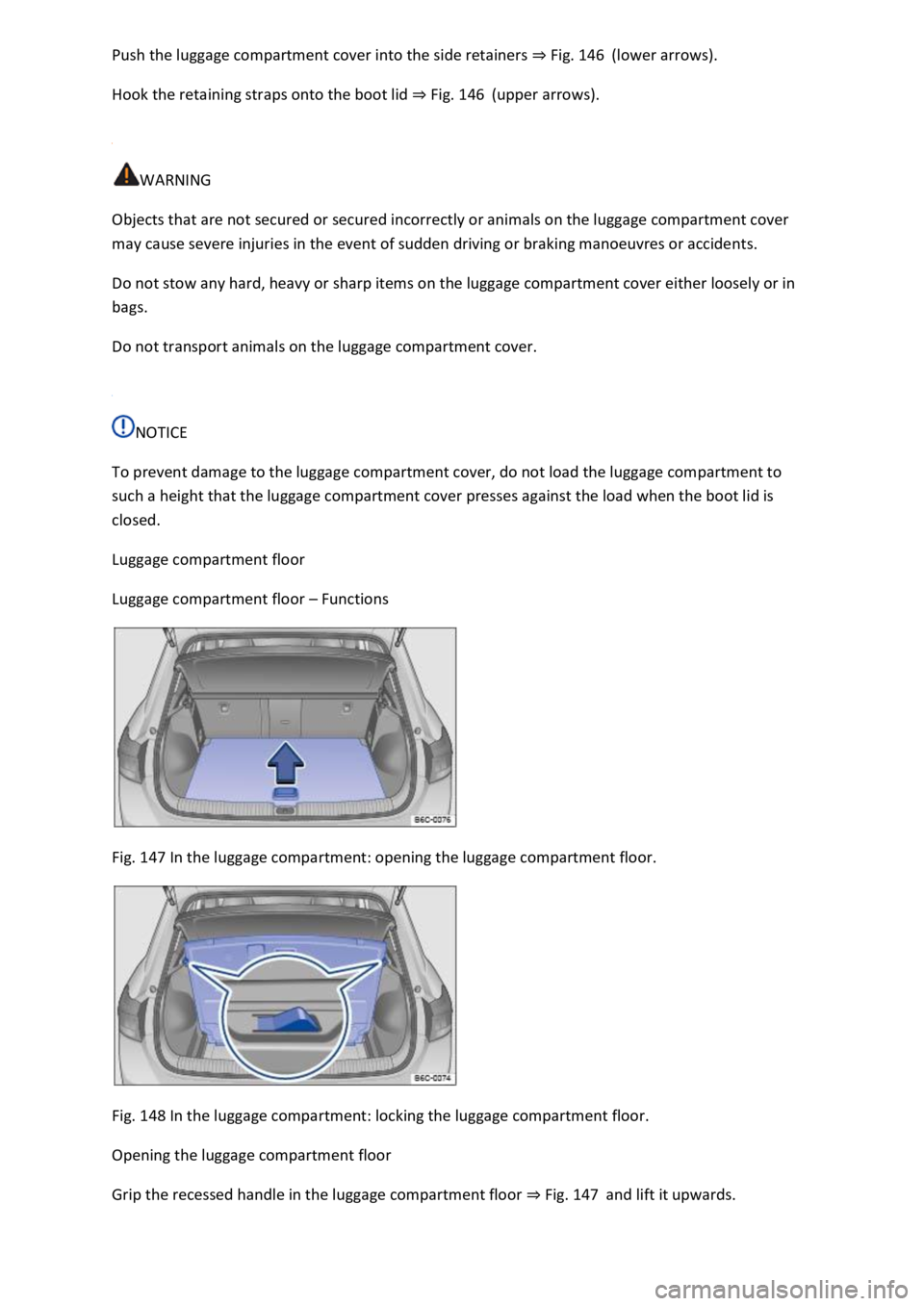
Fig. 147 In the luggage compartment: opening the luggage compartment floor.
Fig. 148 In the luggage compartment: locking the luggage compartment floor.
Opening the luggage compartment floor
Grip the recessed handle in the luggage compartment floor ⇒ Fig. 147 and lift it upwards.
Page 303 of 502
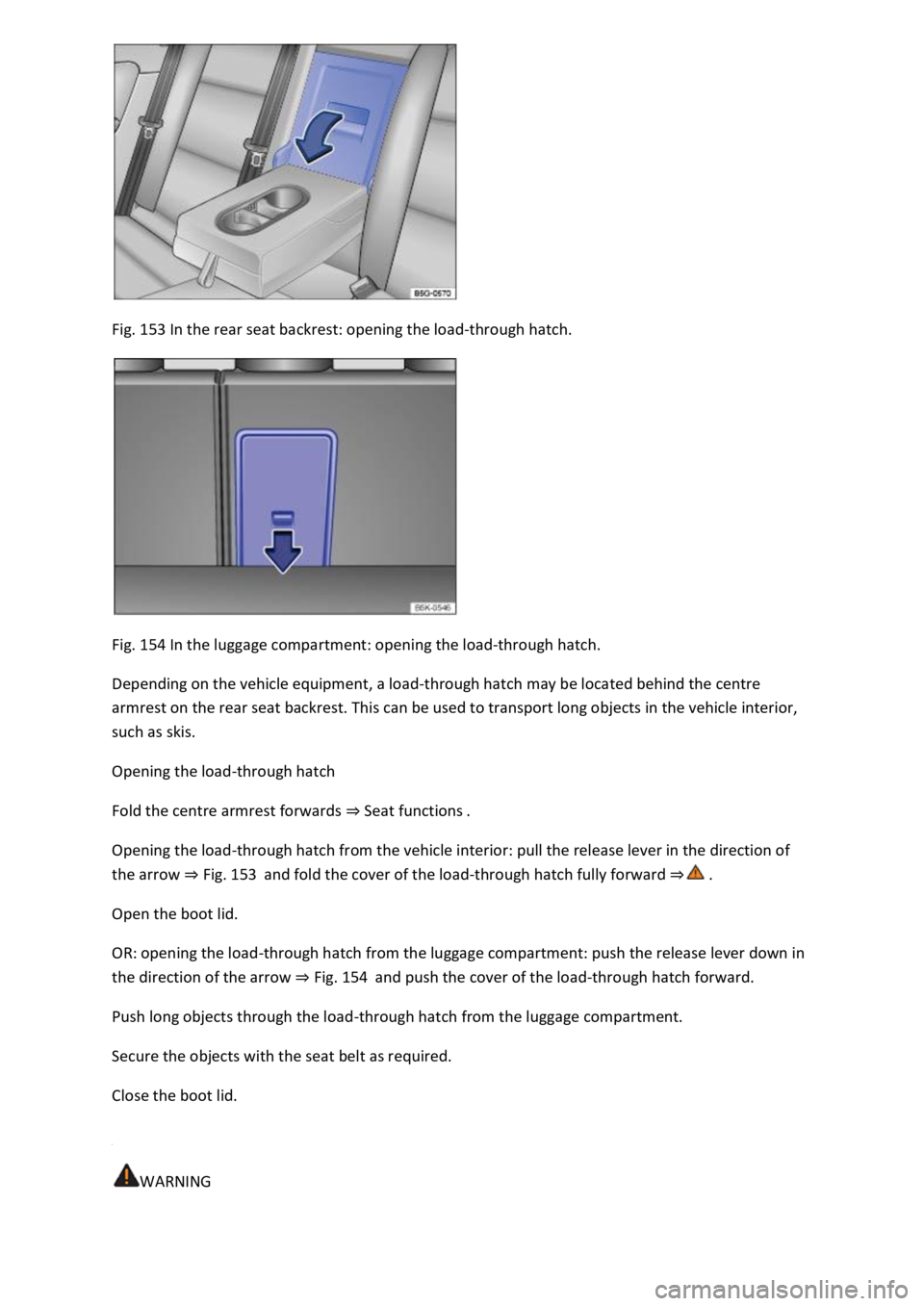
Fig. 153 In the rear seat backrest: opening the load-through hatch.
Fig. 154 In the luggage compartment: opening the load-through hatch.
Depending on the vehicle equipment, a load-through hatch may be located behind the centre
armrest on the rear seat backrest. This can be used to transport long objects in the vehicle interior,
such as skis.
Opening the load-through hatch
Fold the centre armrest forwards ⇒ Seat functions .
Opening the load-through hatch from the vehicle interior: pull the release lever in the direction of
the arrow ⇒ Fig. 153 and fold the cover of the load-through hatch fully forward ⇒ .
Open the boot lid.
OR: opening the load-through hatch from the luggage compartment: push the release lever down in
the direction of the arrow ⇒ Fig. 154 and push the cover of the load-through hatch forward.
Push long objects through the load-through hatch from the luggage compartment.
Secure the objects with the seat belt as required.
Close the boot lid.
WARNING
Page 306 of 502
Loading roof carriers
First read and observe the introductoryinformation and safety warnings⇒Introduction
Maximum permitted roof load
The maximum permitted roof load is 75 kg.
The roof load limit refers to the combined weight of the roof carrier and the load carried on the roof
⇒ .
Make sure you are aware of the weight of the roof carrier system and the load to be transported.
Weigh the load if necessary.
However, you will not be able to carry the maximum permitted roof load if you are using a roof
carrier with a lower load rating. In this case, do not exceed the maximum weight limit for the load
carrier system which is specified in the manufacturer's installation instructions.
Distributing the load
Distribute the load evenly and secure it correctly ⇒ .
WARNING
Accidents and significant vehicle damage can occur if the maximum permitted roof load is exceeded.
Never exceed the stated roof load, the maximum permissible axle loads, and the permissible gross
vehicle weight for the vehicle.
Do not exceed the load rating of the roof carrier, even if the maximum roof load has not been
reached.
WARNING
Loose and incorrectly secured loads can fall off the roof carrier and cause accidents and injuries.
Always use suitable and undamaged lashing, retaining or securing straps.
NOTICE
When opening the boot lid, take care not to let it hit the roof load.
Notes on use
First read and observe the introductoryinformation and safety warnings⇒Introduction
Remove the roof carrier in the following situations
The roof carrier is no longer needed.
Page 307 of 502

Before driving through an automatic car wash.
The vehicle height exceeds the required clearance height, e.g. in a garage.
NOTICE
Always remove the roof carrier before driving through an automatic car wash.
The height of the vehicle is changed by the installation of a roof carrier and the load secured to it.
Check and compare the height of the vehicle with clearance heights, e.g. for underpasses and garage
doors.
The roof carrier and its load must not obstruct you from opening and closing the glass roof and the
boot lid. The roof aerial must also remain unaffected.
Driving with a fitted roof carrier will increase air resistance and thus increase fuel consumption.
Trailer towing
Introduction
This chapter contains information on the followingsubjects:
⇒ Technical requirements
⇒ Fitting the removable ball head
⇒ Removing the ball head
⇒ Notes on towing a trailer
⇒ Loading the trailer
⇒ Driving with a trailer
⇒ Trailer stabilisation
⇒ Retrofitting a towing bracket
The vehicle can be used to tow a trailer if it has the required technical equipment for this. The
additional trailer load will affect the amount of wear, fuel consumption and performance of the
vehicle and, in certain circumstances, could shorten the service intervals.
Driving with a trailer not only places an extra load on the vehicle, but also requires increased
concentration on the part of the driver.
Vehicles with start/stop system
When using towing brackets that were not retrofitted by Volkswagen, the start/stop system must be
deactivated manually using the button in the centre console before towing a trailer, and it must
remain deactivated for as long as a trailer is being towed ⇒ .
Page 494 of 502

when driving into
parking spaces
with high kerbs or
fixed boundaries.
Objects that
protrude from the
ground can
damage the
bumper and other
components when
parking the
vehicle.pecified
values can vary
due to different
wheel rim and tyre
sizes, additional
equipment,
different model
versions or
retrofitted
accessories, and
also for special
vehicles and
vehicles that have
been
manufactured for
other
countries. Fig. 217 :
Value
and kerb
weighta)
mm
Ⓙ Height with
open boot lid
and kerb
weighta)
1,992
mm
Turning circle
diameter
Approx.
11.1 m
carefully
through dips
in the road
and over
kg 1,270