heating VOLKSWAGEN T-ROC 2021 Owner´s Manual
[x] Cancel search | Manufacturer: VOLKSWAGEN, Model Year: 2021, Model line: T-ROC, Model: VOLKSWAGEN T-ROC 2021Pages: 502, PDF Size: 9.42 MB
Page 226 of 502

An incorrect tyre pressure can cause overheating, sudden tyre damage including tyre bursts and
ripping of the tread surface and thus to a loss of control over the vehicle.
Driving on steep terrain
First read and observe the introductoryinformation and safety warnings⇒Introduction
Driving uphill or downhill
Get out of the vehicle and assess the situation before you attempt to drive up or down a hill:
Walk along the section and check the firmness of the ground. Look out for obstacles and other
hidden dangers ⇒ .
Check the section beyond the hill.
You should not follow the route if it is too steep, uneven or if the ground surface is too loose. Select
another route.
Drive slowly and at constant speed straight up or down a slope.
Accelerate only to the speed you need to climb the slope. Too much acceleration can cause the
wheels to spin and lead to a loss of control of the vehicle. Insufficient throttle increases the
probability of stalling the engine.
Never attempt to stop or turn on a slope.
Avoid allowing the engine to stall.
Do not change gear or engage the clutch when climbing a slope.
Use the offroad display ⇒ Offroad display .
If you cannot continue to drive up a hill
Never turn the vehicle around on an uphill gradient.
If the engine has stalled, depress the footbrake and start the engine again.
Select reverse gear and reverse back slowly in a straight line.
Use the foot brake to keep a constant speed until you have reached a safe place.
Driving downhill
Never exceed the tilt angle of the vehicle! If, in an emergency, you have to traverse the slope when
driving down it and the vehicle threatens to tip over, steer into the fall line immediately.
There is an increased risk of rolling over when driving downhill. Concentrate on steering the vehicle
when driving downhill in particular.
Use the offroad display on steep downhill stretches ⇒ Offroad display .
Drive down steep inclines in first gear.
Use the foot brake sparingly in order not to lose control of the vehicle.
Page 279 of 502

Electronic differential lock (EDL and XDS)
EDL brakes a spinning wheel automatically and distributes the drive force to the other drive wheels.
The EDL switches off automatically under unusually heavy loads to prevent the brake from
overheating. The EDL switches back on again automatically as soon as the brake has cooled down.
XDS improves traction in order to keep the vehicle on its intended course.
Automatic Post-Collision Braking System
In the event of a collision, the Automatic Post-Collision Braking System can help the driver to reduce
the risk of skidding, and the danger of secondary collisions, through automatic braking.
The Automatic Post-Collision Braking System functions only for collisions that are detected as a
collision by the airbag control unit.
The vehicle is braked automatically if the required systems have not been damaged in the collision
and have remained functional.
The following actions override automatic braking in the event of a collision:
When the driver depresses the accelerator.
When the brake pressure transmitted through the depressed brake pedal is greater than the brake
pressure provided by the system.
WARNING
The intelligent technology used in brake support systems cannot overcome the laws of physics, and
functions only within the limits of the systems. Driving fast on icy, slippery or wet roads can lead to a
loss of control of the vehicle and could cause serious injury to the driver and passengers.
Always adapt your speed and driving style to suit visibility, weather, road and traffic conditions. Do
not let the extra safety afforded by the brake support systems ABS, BAS, EDL, TCS and ESC tempt you
into taking any risks when driving.
The brake support systems cannot overcome the laws of physics. Slippery and wet roads will remain
dangerous, even when the ESC and other systems are active.
Driving too fast on wet roads can cause the wheels to lose contact with the road surface and
aquaplane. The vehicle cannot be braked, steered or controlled once it has lost contact with the
road surface.
Brake support systems cannot prevent an accident if, for example, you are driving too close to the
vehicle in front or are driving too fast for the individual situation.
Although the brake support systems are very effective and can help to control the vehicle in difficult
driving situations, please always remember that the driving stability of the vehicle depends on the
tyre grip.
Page 283 of 502
Before adjusting the seats, always ensure that there is no cigarette lighter on or near the moveable
parts of the seat.
Before closing stowage areas or compartments always ensure that there is no lighter in the way.
Never stow lighters in stowage areas or compartments or on other surfaces in the vehicle. Cigarette
lighters may self-ignite as a result of high surface temperatures, particularly in summer.
NOTICE
The heating elements in the rear window can be destroyed by objects rubbing against them.
Do not stow any temperature-sensitive objects, food or medicines inside the vehicle. Hot and cold
temperatures could damage them or render them unusable.
Objects stored in the vehicle that are made from transparent materials, such as glasses, magnifying
glasses or transparent suction cups on the windows, can concentrate the sun's rays and thus cause
damage to the vehicle.
Always ensure that the ventilation openings between the rear window and the stowage area are
uncovered to allow stale air to escape from the vehicle.
Stowage compartment on the front passenger side
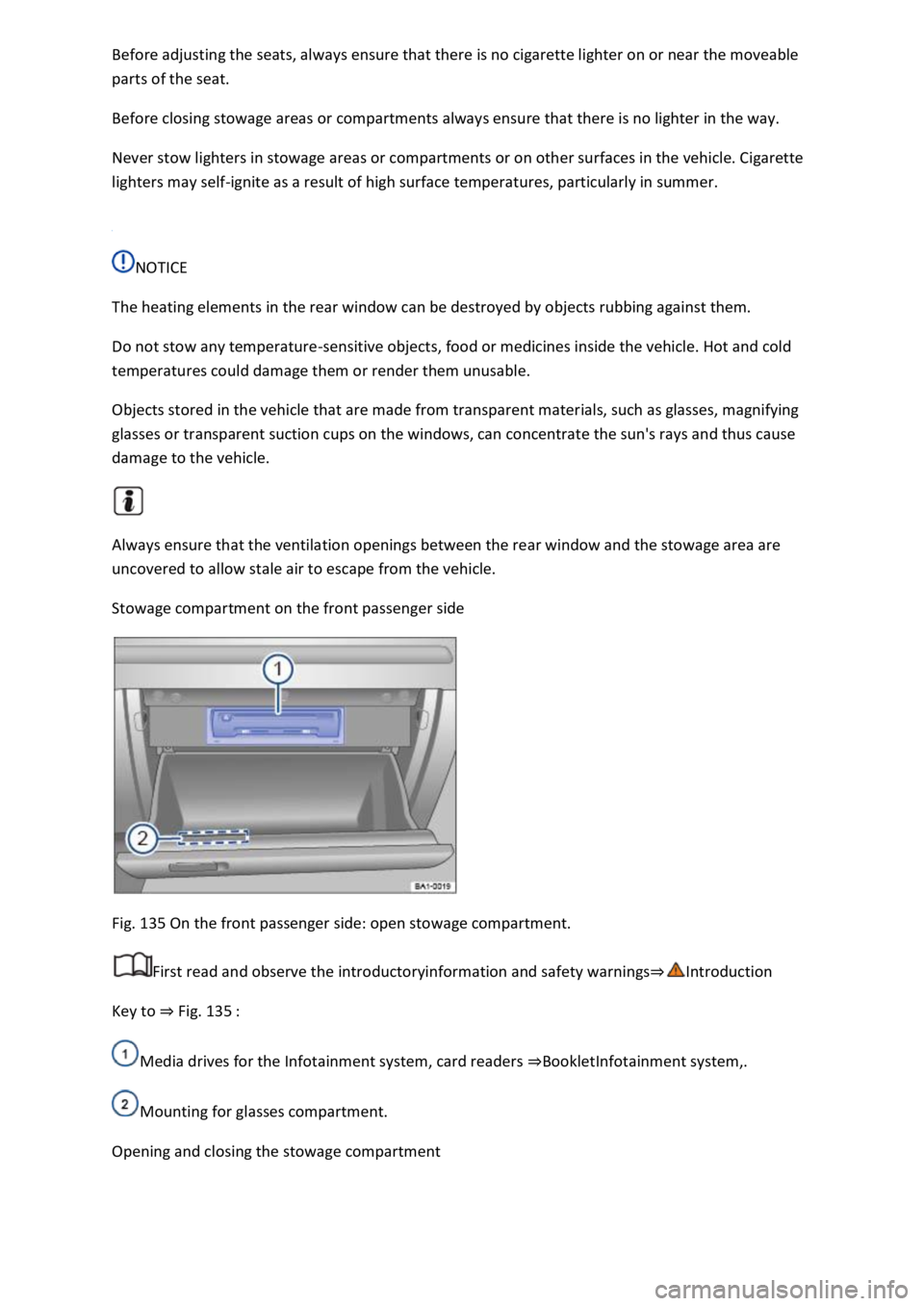
Fig. 135 On the front passenger side: open stowage compartment.
First read and observe the introductoryinformation and safety warnings⇒Introduction
Key to ⇒ Fig. 135 :
Media drives for the Infotainment system, card readers ⇒BookletInfotainment system,.
Mounting for glasses compartment.
Opening and closing the stowage compartment
Page 298 of 502
Never exceed the vehicle's maximum payload. Both the payload and the distribution of the load in
the vehicle will have an effect on the handling and braking distance of the vehicle.
Transporting heavy objects changes the vehicle's handling and the centre of gravity.
The load should be distributed as evenly as possible in the vehicle.
Always secure heavy objects in the luggage compartment as far in front of the rear axle as possible.
Loose objects in the luggage compartment can suddenly slide and change the way the vehicle
handles.
Always adapt your speed and driving style to suit visibility, weather, road and traffic conditions.
Accelerate very carefully and gently.
Avoid sudden braking and driving manoeuvres.
Brake earlier than in normal driving.
NOTICE
Objects rubbing against the rear windows may damage or destroy the heating wires or, depending
on the vehicle equipment, also the aerial.
Luggage compartment cover
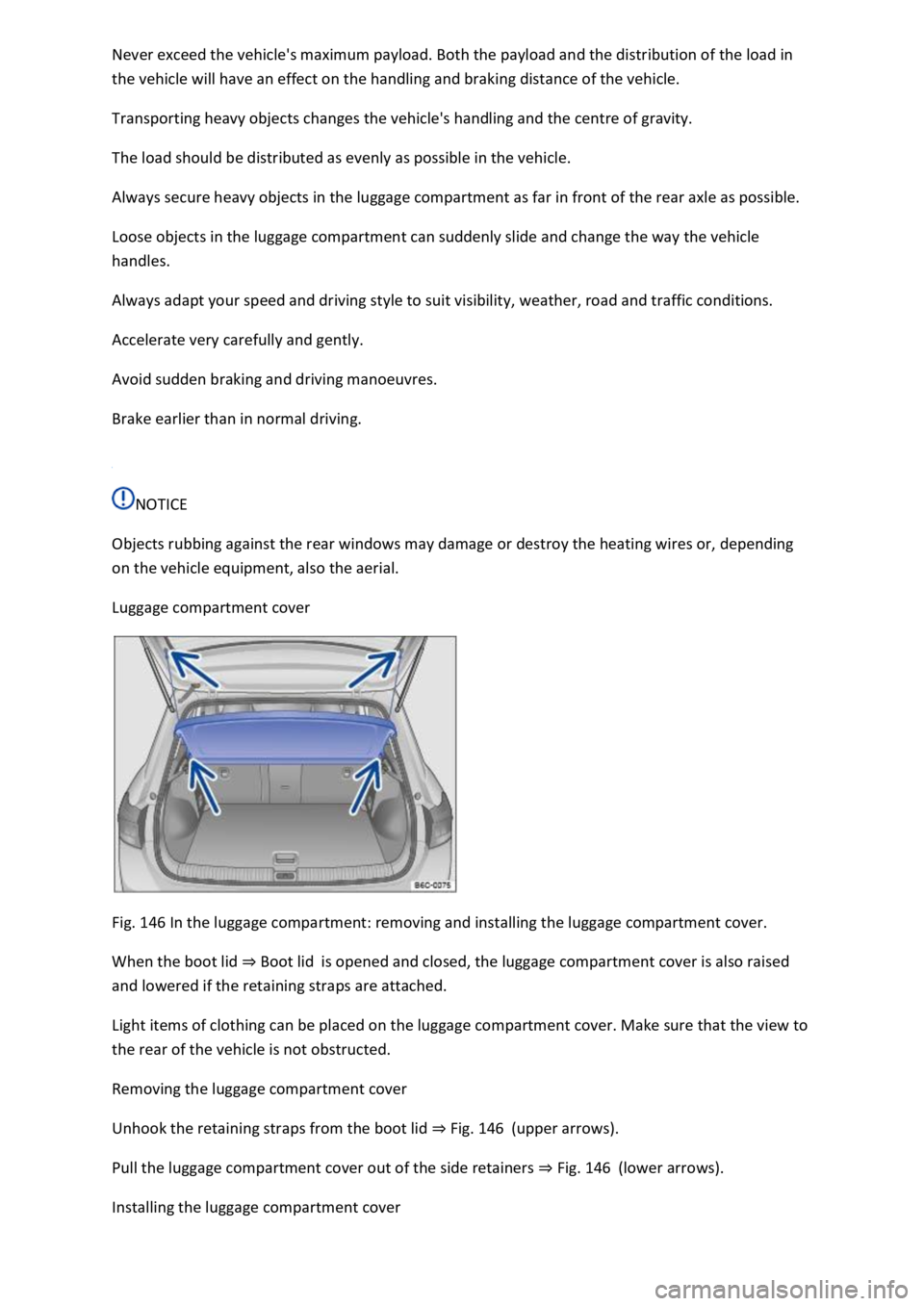
Fig. 146 In the luggage compartment: removing and installing the luggage compartment cover.
When the boot lid ⇒ Boot lid is opened and closed, the luggage compartment cover is also raised
and lowered if the retaining straps are attached.
Light items of clothing can be placed on the luggage compartment cover. Make sure that the view to
the rear of the vehicle is not obstructed.
Removing the luggage compartment cover
Unhook the retaining straps from the boot lid ⇒ Fig. 146 (upper arrows).
Pull the luggage compartment cover out of the side retainers ⇒ Fig. 146 (lower arrows).
Installing the luggage compartment cover
Page 331 of 502

First read and observe the introductoryinformation and safety warnings⇒Introduction
⇒ Petrol .
⇒ Refuelling .
⇒ Checking the engine oil level and refilling the engine oil .
⇒ Jump starting the vehicle .
If you notice misfiring, loss of power or uneven running when driving, reduce speed immediately and
have the vehicle checked by a qualified workshop ⇒ Troubleshooting . Otherwise unburnt fuel can
enter the exhaust system and escape into the atmosphere. The catalytic converter can also be
damaged by overheating.
The emissions may have a sulphur-like smell even when the exhaust purification system is working
properly.
Particulate filter
First read and observe the introductoryinformation and safety warnings⇒Introduction
Function
⇒ Fuel standards .
⇒ Refuelling .
⇒ Engine oil standards .
⇒ Jump starting the vehicle .
Periodic regeneration
The soot in the particulate filter is burnt off at high temperatures on a periodic basis.
To assist the regeneration of the particulate filter, Volkswagen recommends that you avoid making
only short journeys.
Noises, slight smells and increased engine speeds may occur during regeneration. The radiator fan
may run on while the vehicle is moving or when the engine has been switched off.
During the periodic regeneration process, the yellow indicator lamp does not light up.
Troubleshooting
First read and observe the introductoryinformation and safety warnings⇒Introduction
Irregular engine running and faults
Page 349 of 502
boxes can damage the electrical system.
Fuse table for fuses in the dash panel
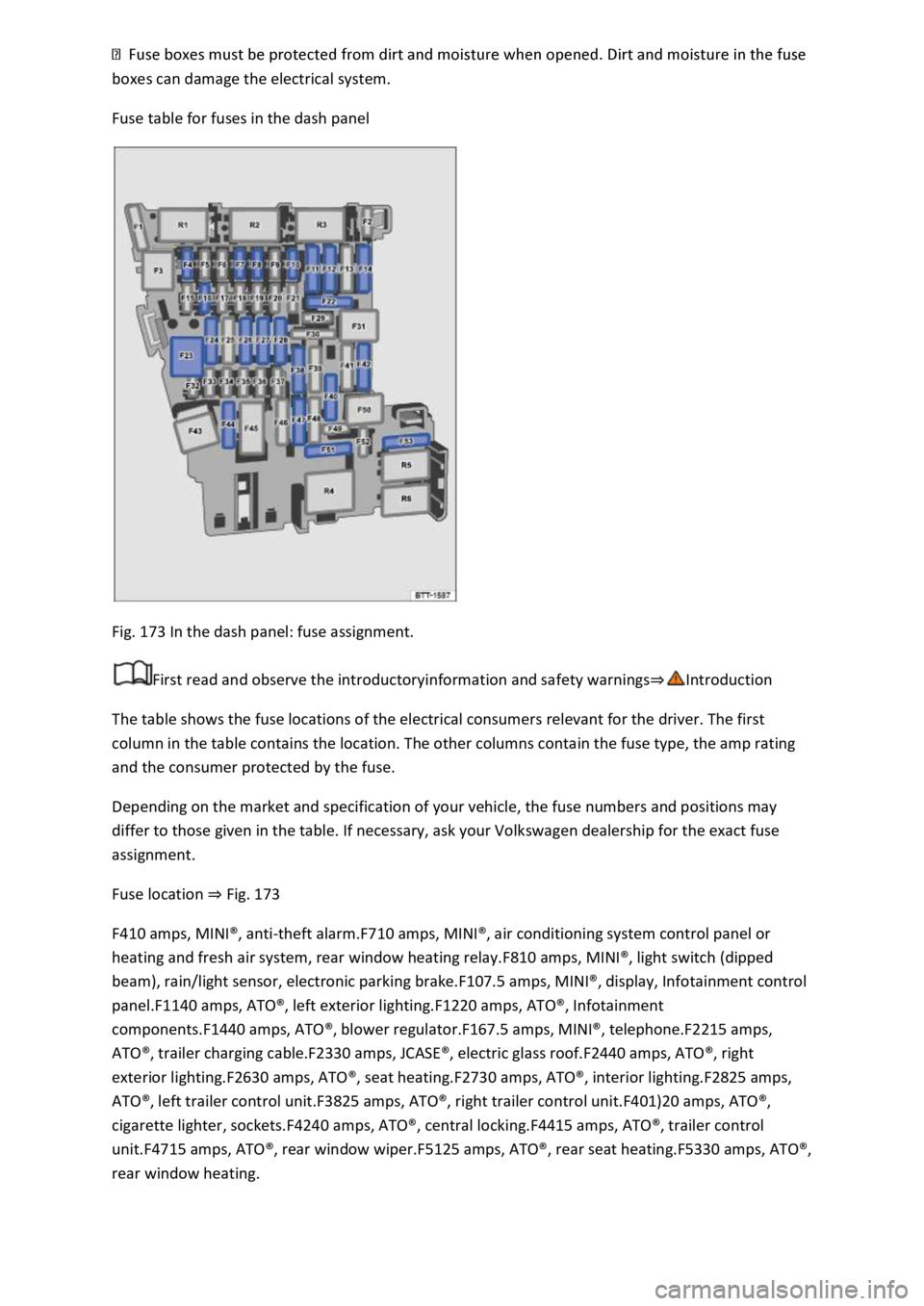
Fig. 173 In the dash panel: fuse assignment.
First read and observe the introductoryinformation and safety warnings⇒Introduction
The table shows the fuse locations of the electrical consumers relevant for the driver. The first
column in the table contains the location. The other columns contain the fuse type, the amp rating
and the consumer protected by the fuse.
Depending on the market and specification of your vehicle, the fuse numbers and positions may
differ to those given in the table. If necessary, ask your Volkswagen dealership for the exact fuse
assignment.
Fuse location ⇒ Fig. 173
F410 amps, MINI®, anti-theft alarm.F710 amps, MINI®, air conditioning system control panel or
heating and fresh air system, rear window heating relay.F810 amps, MINI®, light switch (dipped
beam), rain/light sensor, electronic parking brake.F107.5 amps, MINI®, display, Infotainment control
panel.F1140 amps, ATO®, left exterior lighting.F1220 amps, ATO®, Infotainment
components.F1440 amps, ATO®, blower regulator.F167.5 amps, MINI®, telephone.F2215 amps,
ATO®, trailer charging cable.F2330 amps, JCASE®, electric glass roof.F2440 amps, ATO®, right
exterior lighting.F2630 amps, ATO®, seat heating.F2730 amps, ATO®, interior lighting.F2825 amps,
ATO®, left trailer control unit.F3825 amps, ATO®, right trailer control unit.F401)20 amps, ATO®,
cigarette lighter, sockets.F4240 amps, ATO®, central locking.F4415 amps, ATO®, trailer control
unit.F4715 amps, ATO®, rear window wiper.F5125 amps, ATO®, rear seat heating.F5330 amps, ATO®,
rear window heating.
Page 350 of 502
1) Note installation position. Factory-fitted fuse location as shown in illustration ⇒ Fig. 173 .
Fuse tables for fuses in the engine compartment
First read and observe the introductoryinformation and safety warnings⇒Introduction
The table shows the fuse locations of the electrical consumers relevant for the driver. The first
column in the table contains the location. The other columns contain the fuse type, the amp rating
and the consumer protected by the fuse.
Depending on the market and specification of your vehicle, the fuse numbers and positions may
differ to those given in the table. If necessary, ask your Volkswagen dealership for the exact fuse
assignment.
F65 amps, ATO®, brake light sensor.F1440 amps, JCASE®, windscreen heating.F1515 amps, ATO®,
horn.F1930 amps, ATO®, front wipers.F3720 amps, ATO®, auxiliary heater.
Changing a blown fuse
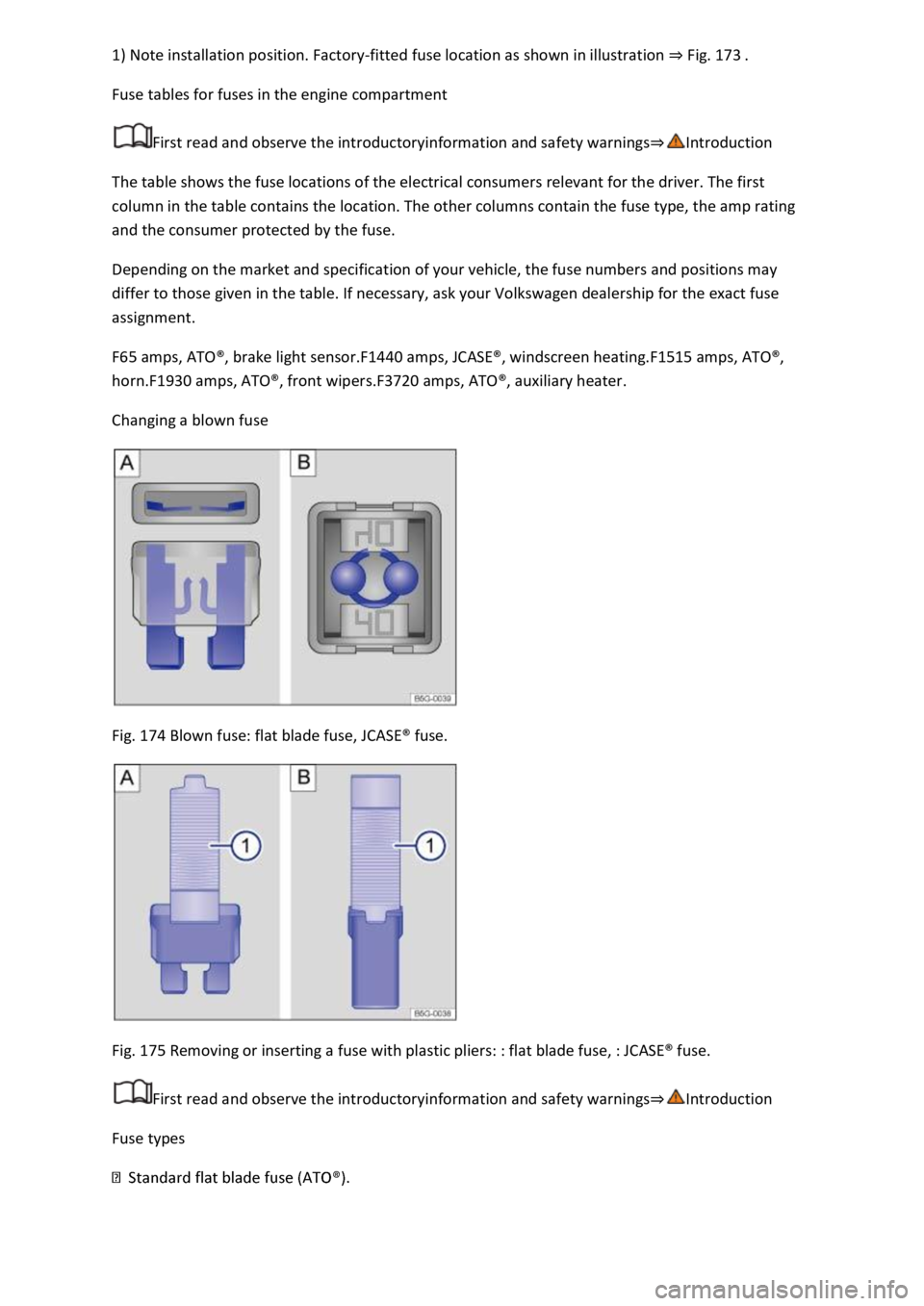
Fig. 174 Blown fuse: flat blade fuse, JCASE® fuse.
Fig. 175 Removing or inserting a fuse with plastic pliers: : flat blade fuse, : JCASE® fuse.
First read and observe the introductoryinformation and safety warnings⇒Introduction
Fuse types
Page 364 of 502

Additional insulating materials such as blankets in the engine compartment could disrupt the
operation of the engine, start fires and lead to severe injuries.
WARNING
Service fluids and some materials in the engine compartment are highly flammable and can cause
fires and serious injuries!
ty of the engine compartment.
injuries.
tem or the electrical
system:
-volt vehicle battery. Ensure that the vehicle is unlocked when the 12-
volt vehicle battery is disconnected as otherwise the anti-theft alarm will be activated.
of heating systems, water heaters or any other open flames.
NOTICE
When filling or changing service fluids, please ensure that the correct service fluids are filled through
the correct openings. The use of incorrect service fluids could result in serious malfunctions and
engine damage.
Service fluids that leak from the vehicle are harmful to the environment. For this reason, you should
regularly check the ground underneath your vehicle. If there are spots of oil or other fluids on the
ground, the vehicle should be inspected by a qualified workshop. Any spilt service fluids must be
disposed of properly.
Preparing the vehicle for working in the engine compartment
Checklist
The following steps should always be carried out in the specified order before working in the engine
compartment ⇒ :
Park the vehicle on a level and stable surface.
Page 378 of 502

Coolant
Introduction
This chapter contains information on the followingsubjects:
⇒ Coolant specification
⇒ Checking the coolant level and refilling coolant
Do not work on the cooling system unless you are familiar with the task, aware of the general safety
procedures and have the correct equipment, service fluids and suitable tools. Serious injuries can be
caused by carrying out work incorrectly ⇒ . The work should be carried out by a qualified
workshop if you are uncertain. Volkswagen recommends using a Volkswagen dealership for this
purpose.
WARNING
Coolant is toxic.
ce.
-original containers as
people finding these containers may then drink the coolant.
ct coolant additive used must be sufficient for the lowest
ambient temperature that you expect the vehicle to be exposed to.
Vehicle occupants with inadequate winter clothing could then freeze to death as the heating will
also no longer function.
Coolant and coolant additives can pollute the environment. Spilt service fluids must be collected
then disposed of properly and in an environmentally responsible way.
Coolant specification
First read and observe the introductoryinformation and safety warnings⇒Introduction
The cooling system is filled at the factory with a mixture of specially prepared water and at least 40%
coolant additive G 13 (TL-VW 774 J).
The proportion of engine coolant additive must always be at least 40% to protect the cooling system.
If greater frost protection is required in very cold climates, the proportion of anti-freeze additive can
be increased. However, the percentage of coolant additive should not exceed 60%, as this would
reduce the frost protection again and the cooling effect.
Page 379 of 502

The coolant additive is dyed purple. The mixture of water and a coolant additive offers anti-freeze
protection down to -25°C (-13°F), protects the alloy parts in the cooling system against corrosion,
prevents limescale deposits and significantly increases the boiling point of the coolant.
When refilling the coolant, a mixture of distilled water and at least 40% coolant additive - G 13 - or -
G 12 plus-plus - (TL-VW 774 G) (both of which are dyed purple) must be used in order to obtain the
optimum corrosion protection ⇒ .
Mixing - G 13 - with the coolant additives - G 12 plus - (TL-VW 774 F), - G 12 - (dyed red) or - G 11 -
(dyed blue-green) will significantly decrease the level of corrosion protection and should therefore
be avoided ⇒ .
WARNING
Insufficient anti-freeze in the coolant system can cause the engine to break down and cause serious
injuries.
ive used must be sufficient for the lowest
ambient temperature that you expect the vehicle to be exposed to.
Vehicle occupants with inadequate winter clothing could then freeze to death as the heating will
also no longer function.
NOTICE
Never mix genuine coolant additives with other coolants that have not been approved by
Volkswagen.
ts from mixing the purple
coolant additive with distilled water) but for example, brown instead of purple, - G 13 - has been
mixed with an unsuitable coolant additive. The coolant must be changed as soon as possible if this is
the case. Failure to observe this warning can result in serious malfunctions or damage to the engine
and cooling system.
Coolant and coolant additives can pollute the environment. Spilt service fluids must be collected and
then disposed of properly and in an environmentally responsible way.
Checking the coolant level and refilling coolant