•Always check the tyre pressure when the tyres are cold. The specified tyre pressure applies to
cold tyres. Tyre pressure is always higher in warm tyres than it is in cold tyres. For this reason,
never reduce the pressure in warm tyres to adjust the tyre pressure.
•Always adjust the tyre pressure to the load level ⇒ Fig. 236④.
•After adjusting the tyre pressures, always screw the caps onto the valves and observe the
information on the tyre monitoring system ⇒ Tyre monitoring systems.
•Always use the tyre pressure specified on the sticker. Never exceed the maximum tyre pressure
which is given on the sidewall of the tyre
Underinflated tyres will result in increased fuel consumption.
Tread depth and wear indicators
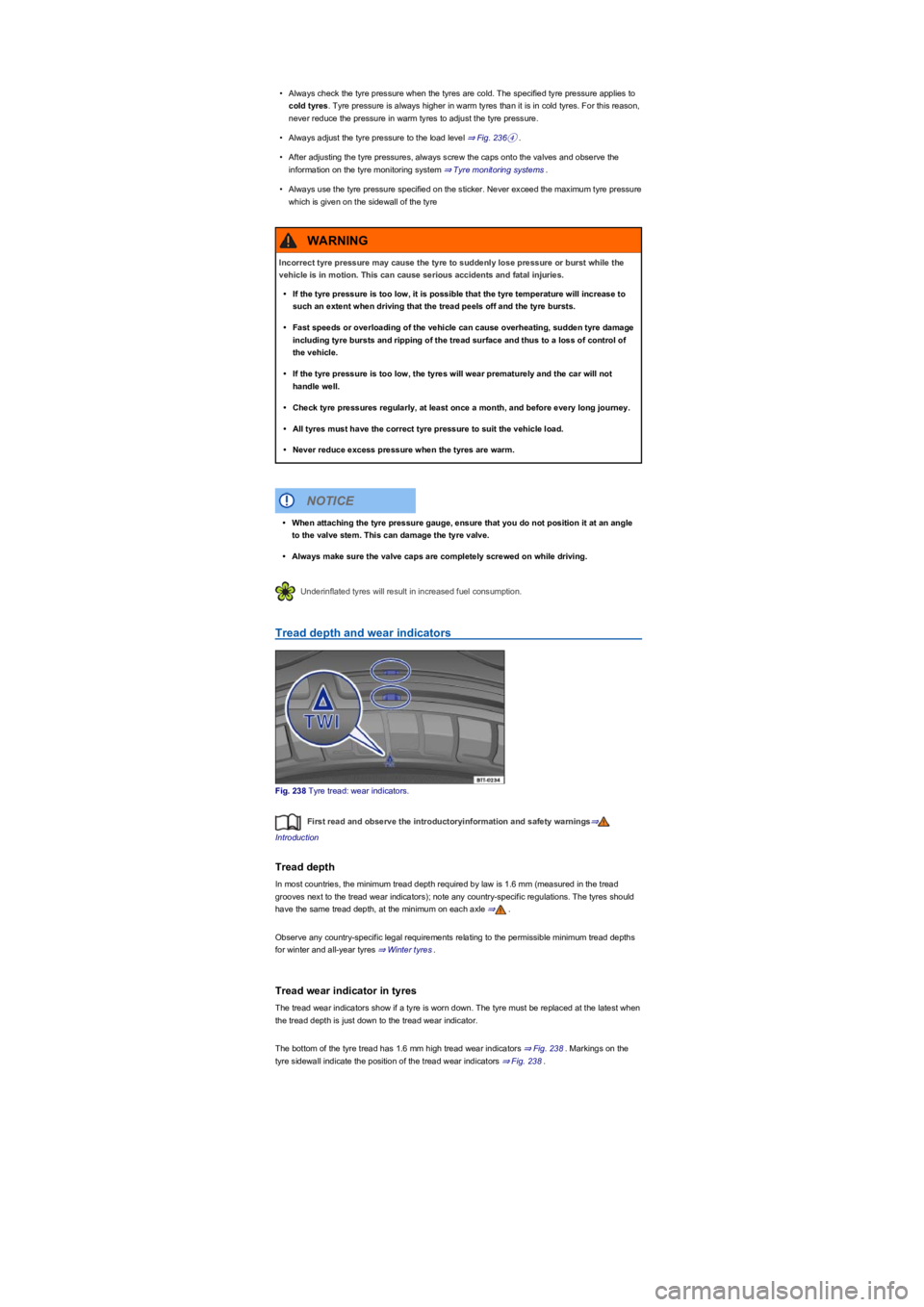
Fig. 238 Tyre tread: wear indicators.
First read and observe the introductoryinformation and safety warnings⇒
Introduction
Tread depth
In most countries, the minimum tread depth required by law is 1.6 mm (measured in the tread
grooves next to the tread wear indicators); note any country-specific regulations. The tyres should
have the same tread depth, at the minimum on each axle ⇒.
Observe any country-specific legal requirements relating to the permissible minimum tread depths
for winter and all-year tyres ⇒ Winter tyres.
Tread wear indicator in tyres
The tread wear indicators show if a tyre is worn down. The tyre must be replaced at the latest when
the tread depth is just down to the tread wear indicator.
The bottom of the tyre tread has 1.6 mm high tread wear indicators ⇒ Fig. 238. Markings on the
tyre sidewall indicate the position of the tread wear indicators ⇒ Fig. 238.
Incorrect tyre pressure may cause the tyre to suddenly lose pressure or burst while the
vehicle is in motion. This can cause serious accidents and fatal injuries.
•If the tyre pressure is too low, it is possible that the tyre temperature will increase to
such an extent when driving that the tread peels off and the tyre bursts.
•Fast speeds or overloading of the vehicle can cause overheating, sudden tyre damage
including tyre bursts and ripping of the tread surface and thus to a loss of control of
the vehicle.
•If the tyre pressure is too low, the tyres will wear prematurely and the car will not
handle well.
•Check tyre pressures regularly, at least once a month, and before every long journey.
•All tyres must have the correct tyre pressure to suit the vehicle load.
•Never reduce excess pressure when the tyres are warm.
WARNING
•When attaching the tyre pressure gauge, ensure that you do not position it at an angle
to the valve stem. This can damage the tyre valve.
•Always make sure the valve caps are completely screwed on while driving.
NOTICE