Front assist VOLKSWAGEN TIGUAN 2017 Owner´s Manual
[x] Cancel search | Manufacturer: VOLKSWAGEN, Model Year: 2017, Model line: TIGUAN, Model: VOLKSWAGEN TIGUAN 2017Pages: 341, PDF Size: 9.14 MB
Page 112 of 341
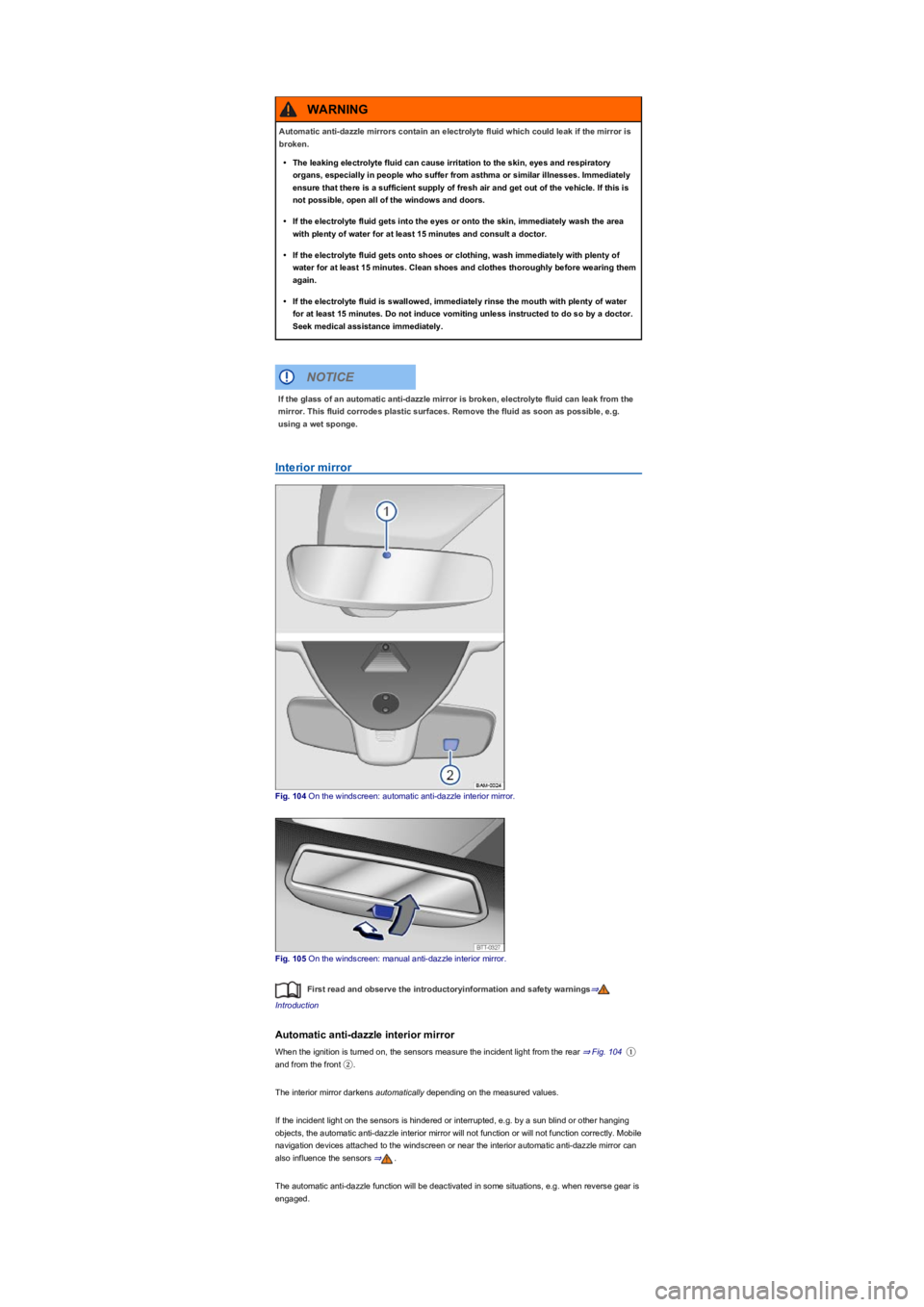
Interior mirror
Fig. 104 On the windscreen: automatic anti-dazzle interior mirror.
Fig. 105 On the windscreen: manual anti-dazzle interior mirror.
First read and observe the introductoryinformation and safety warnings⇒
Introduction
Automatic anti-dazzle interior mirror
When the ignition is turned on, the sensors measure the incident light from the rear ⇒ Fig. 104①
and from the front ②.
The interior mirror darkens automatically depending on the measured values.
If the incident light on the sensors is hindered or interrupted, e.g. by a sun blind or other hanging
objects, the automatic anti-dazzle interior mirror will not function or will not function correctly. Mobile
navigation devices attached to the windscreen or near the interior automatic anti-dazzle mirror can
also influence the sensors ⇒.
The automatic anti-dazzle function will be deactivated in some situations, e.g. when reverse gear is
engaged.
Automatic anti-dazzle mirrors contain an electrolyte fluid which could leak if the mirror is
broken.
•The leaking electrolyte fluid can cause irritation to the skin, eyes and respiratory
organs, especially in people who suffer from asthma or similar illnesses. Immediately
ensure that there is a sufficient supply of fresh air and get out of the vehicle. If this is
not possible, open all of the windows and doors.
•If the electrolyte fluid gets into the eyes or onto the skin, immediately wash the area
with plenty of water for at least 15 minutes and consult a doctor.
•If the electrolyte fluid gets onto shoes or clothing, wash immediately with plenty of
water for at least 15 minutes. Clean shoes and clothes thoroughly before wearing them
again.
•If the electrolyte fluid is swallowed, immediately rinse the mouth with plenty of water
for at least 15 minutes. Do not induce vomiting unless instructed to do so by a doctor.
Seek medical assistance immediately.
WARNING
If the glass of an automatic anti-dazzle mirror is broken, electrolyte fluid can leak from the
mirror. This fluid corrodes plastic surfaces. Remove the fluid as soon as possible, e.g.
using a wet sponge.
NOTICE
Page 129 of 341
m/k/a995MK Vehicles with DSG dual clutch gearbox: the selector lever must be in the
Tiptronic position ⇒ Changing gear using Tiptronic.
No recommended gear is indicated if the most suitable gear is already selected. The currently
selected gear is displayed.
Information on cleaning the particulate filter
The engine management system recognises when the particulate filter is becoming saturated and
supports regeneration of the particulate filter by recommending the most suitable gear when driving.
Compared with normal driving, this may mean driving with an increased engine speed ⇒ Particulate
filter.
Driving in the correct gear can help to reduce fuel consumption.
Gear-change indicator display goes out when the clutch is depressed in vehicles with a
manual gearbox or when Tiptronic position is deselected in vehicles with a DSG dual clutch
gearbox.
Driving economically
First read and observe the introductoryinformation and safety warnings⇒
Introduction
The fuel consumption, pollution and
wear of the engine, brakes and tyres
are reduced by an appropriate driving
style. A few tips are provided below
which will help you protect the
environment and also save money.
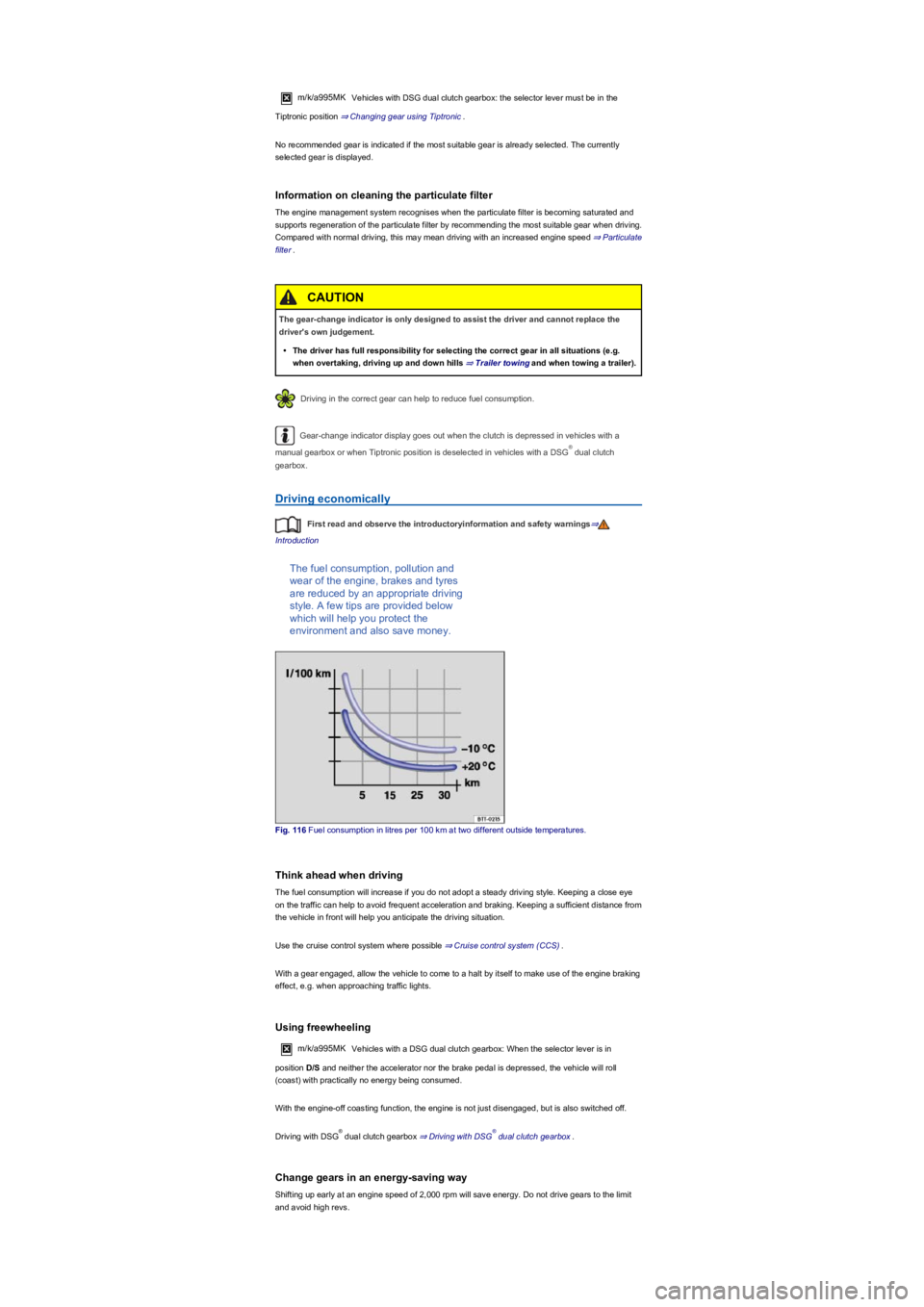
Fig. 116 Fuel consumption in litres per 100 km at two different outside temperatures.
Think ahead when driving
The fuel consumption will increase if you do not adopt a steady driving style. Keeping a close eye
on the traffic can help to avoid frequent acceleration and braking. Keeping a sufficient distance from
the vehicle in front will help you anticipate the driving situation.
Use the cruise control system where possible ⇒ Cruise control system (CCS).
With a gear engaged, allow the vehicle to come to a halt by itself to make use of the engine braking
effect, e.g. when approaching traffic lights.
Using freewheeling
m/k/a995MKVehicles with a DSG dual clutch gearbox: When the selector lever is in
position D/S and neither the accelerator nor the brake pedal is depressed, the vehicle will roll
(coast) with practically no energy being consumed.
With the engine-off coasting function, the engine is not just disengaged, but is also switched off.
Driving with DSG dual clutch gearbox ⇒ Driving with DSG dual clutch gearbox.
Change gears in an energy-saving way
Shifting up early at an engine speed of 2,000 rpm will save energy. Do not drive gears to the limit
and avoid high revs.
The gear-change indicator is only designed to assist the driver and cannot replace the
driver's own judgement.
•The driver has full responsibility for selecting the correct gear in all situations (e.g.
when overtaking, driving up and down hills ⇒ Trailer towingand when towing a trailer).
CAUTION
®
®®
Page 132 of 341
situations should be avoided that create a heavy load on the brakes, e.g. when driving up close to
the vehicle ahead.
The rate of wear of the brake pads depends to a great extent on the conditions under which the
vehicle is operated and the way in which the vehicle is driven. If the vehicle is used for regular
urban trips, short journeys, and is driven with a sporty driving style, the brake pads must be
regularly checked by a qualified workshop.
When driving with wet brakes, for example after driving through water, after heavy rainfall or after
washing the vehicle, the braking effect may be delayed as the brake discs will be wet, or possibly
iced up (in winter). The brakes must be dried as quickly as possible by careful braking at higher
speed. Please ensure that no following vehicle and no other road user is put at risk as a result of
this action ⇒.
Any salt layer accumulating on the discs and pads will delay the braking effect and increase the
braking distance. If the brakes on the vehicle have not been applied for a long time on roads that
have been gritted with salt, the layer of salt must be reduced through careful braking ⇒.
Corrosion on the brake discs and dirt in the brake pads are facilitated through long periods of
inactivity, low mileage and low load levels. If the brake pads have been hardly used, or if they are at
all corroded, Volkswagen recommends that the brake discs and brake pads be cleaned by braking
strongly several times from high speed. Please ensure that no following vehicle and no other road
user is put at risk as a result of this action ⇒.
Brake servo
The brake servo will only function when the engine is running and reinforces the pressure applied
by the driver on the brake pedal.
If the brake servo is not functioning or the vehicle is being towed, the brake pedal will have to be
depressed more forcefully as the braking distance will be increased due to the lack of assistance for
the brake system ⇒.
Driving with worn brake pads or with a faulty brake system can cause accidents and
serious injuries.
•If the warning lamp lights up either alone or together with a text message in the
instrument cluster display, go to a qualified workshop immediately to have the brake
pads checked and the worn brake pads replaced.
WARNING
New brake pads will not have the optimal braking effect when first fitted.
•New brake pads cannot generate the full braking effect during the first 300 km (186
miles) and must first be run in. A reduced braking effect can be increased by applying
more pressure to the brake pedal.
•You must drive particularly carefully when driving with new brake pads in order to
reduce the risk of accidents, serious injuries and loss of control of the vehicle.
•Never drive too close to other vehicles when running in new brake pads, and never
create a driving situation that will place a heavy load on the brakes.
WARNING
Overheated brakes reduce the braking effect and considerably increase the braking
distance.
•When driving downhill the brakes are placed under particular strain and become hot
very quickly.
•Before driving down a long, steep gradient, reduce speed and change to a lower gear
(with manual gearboxes or in Tiptronic mode with the DSG dual clutch gearbox). This
will make use of the engine braking effect and relieve the load on the brakes.
•Non-standard or damaged front spoilers could restrict the airflow to the brakes and
cause them to overheat.
WARNING
Page 133 of 341
If the front brake pads are tested, the rear brake pads should be tested at the same time.
Regularly check the thickness of the brake pads through the openings in the rims or from the
underside of the vehicle. If necessary, remove the wheels to carry out a comprehensive check.
Volkswagen recommends using a Volkswagen dealership for this purpose.
Driving with a loaded vehicle
First read and observe the introductoryinformation and safety warnings⇒
Introduction
For good vehicle handling when driving a loaded vehicle, please observe the following:
•Stow all items of luggage securely ⇒ Stowing luggage and loads.
•Accelerate particularly cautiously and carefully.
•Avoid sudden braking and driving manoeuvres.
•Brake earlier than in normal driving.
•If applicable, observe the information concerning the roof carrier ⇒ Roof carrier.
•If applicable, observe the information about driving with a trailer ⇒ Trailer towing.
Driving with an open boot lid
First read and observe the introductoryinformation and safety warnings⇒
Introduction
Driving with an open boot lid is particularly dangerous. All objects and the open boot lid must be
secured properly. Take the appropriate measures to reduce the amount of poisonous exhaust
fumes that could enter into the vehicle.
Wet brakes or brakes coated with ice or road salt react more slowly and require longer
braking distances.
•Carefully apply the brakes to test them.
•Always dry brakes and clean off any coating of ice and salt with a few cautious
applications of the brake when visibility, weather, road and traffic conditions permit.
WARNING
Driving without the brake servo can considerably increase the braking distance and thus
cause accidents and serious injuries.
•Never switch the engine or ignition off while the vehicle is in motion.
•If the brake servo does not function or the vehicle is being towed, the brake pedal will
have to be depressed more forcefully as the braking distance will be increased due to
the lack of assistance for the brake system.
WARNING
Moving loads can severely impair the vehicle's stability and driving safety which could
cause accidents and severe injuries.
•Secure objects properly to prevent them from sliding.
•Use suitable straps when securing heavy objects.
•Engage the rear seat backrests and the adjustable rear bench seat securely.
WARNING
Page 144 of 341
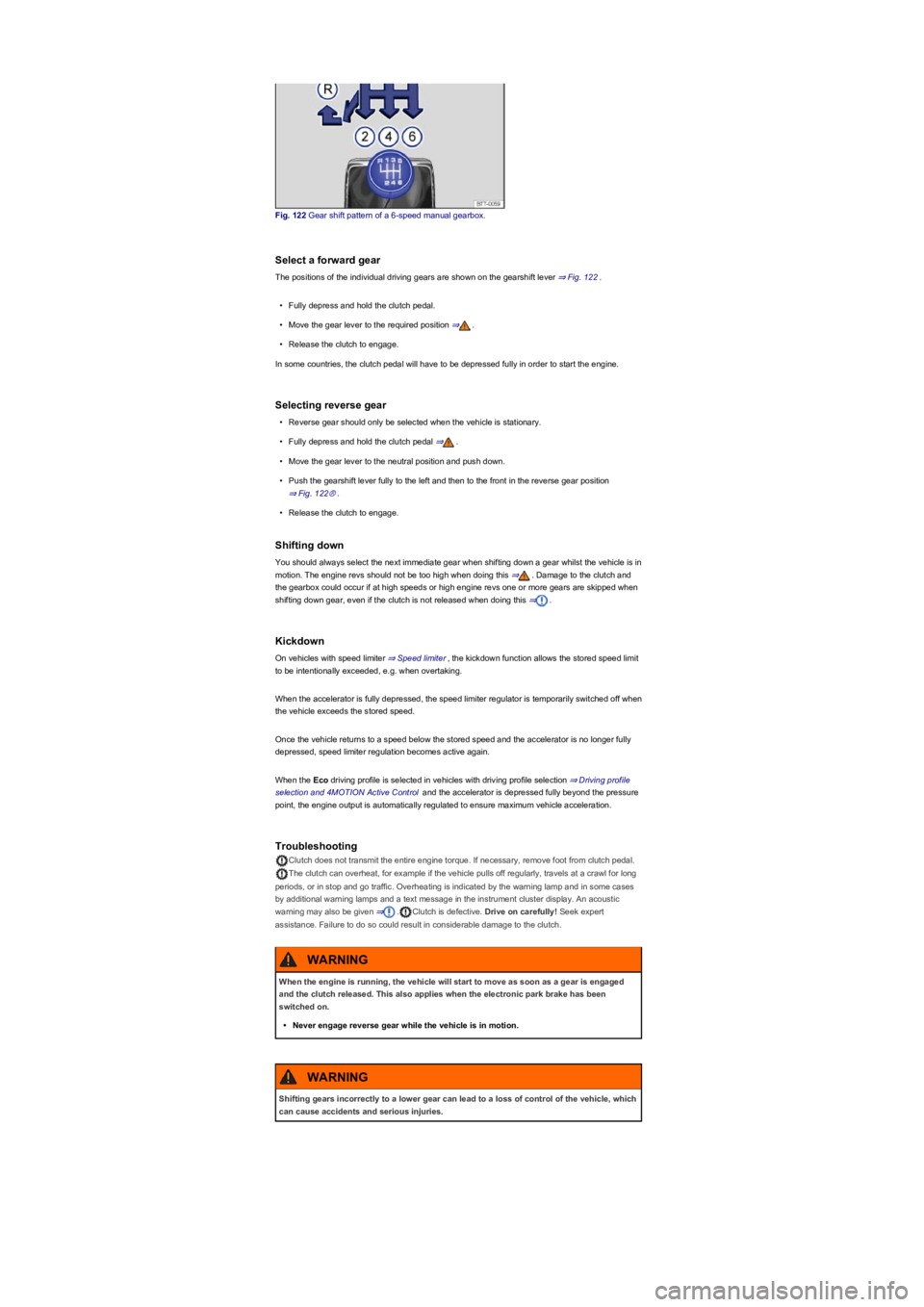
Fig. 122 Gear shift pattern of a 6-speed manual gearbox.
Select a forward gear
The positions of the individual driving gears are shown on the gearshift lever ⇒ Fig. 122.
•Fully depress and hold the clutch pedal.
•Move the gear lever to the required position ⇒.
•Release the clutch to engage.
In some countries, the clutch pedal will have to be depressed fully in order to start the engine.
Selecting reverse gear
•Reverse gear should only be selected when the vehicle is stationary.
•Fully depress and hold the clutch pedal ⇒.
•Move the gear lever to the neutral position and push down.
•Push the gearshift lever fully to the left and then to the front in the reverse gear position
⇒ Fig. 122Ⓡ.
•Release the clutch to engage.
Shifting down
You should always select the next immediate gear when shifting down a gear whilst the vehicle is in
motion. The engine revs should not be too high when doing this ⇒. Damage to the clutch and
the gearbox could occur if at high speeds or high engine revs one or more gears are skipped when
shifting down gear, even if the clutch is not released when doing this ⇒.
Kickdown
On vehicles with speed limiter ⇒ Speed limiter, the kickdown function allows the stored speed limit
to be intentionally exceeded, e.g. when overtaking.
When the accelerator is fully depressed, the speed limiter regulator is temporarily switched off when
the vehicle exceeds the stored speed.
Once the vehicle returns to a speed below the stored speed and the accelerator is no longer fully
depressed, speed limiter regulation becomes active again.
When the Eco driving profile is selected in vehicles with driving profile selection ⇒ Driving profile
selection and 4MOTION Active Control and the accelerator is depressed fully beyond the pressure
point, the engine output is automatically regulated to ensure maximum vehicle acceleration.
Troubleshooting
Clutch does not transmit the entire engine torque. If necessary, remove foot from clutch pedal.
The clutch can overheat, for example if the vehicle pulls off regularly, travels at a crawl for long
periods, or in stop and go traffic. Overheating is indicated by the warning lamp and in some cases
by additional warning lamps and a text message in the instrument cluster display. An acoustic
warning may also be given ⇒.Clutch is defective. Drive on carefully! Seek expert
assistance. Failure to do so could result in considerable damage to the clutch.
When the engine is running, the vehicle will start to move as soon as a gear is engaged
and the clutch released. This also applies when the electronic park brake has been
switched on.
•Never engage reverse gear while the vehicle is in motion.
WARNING
Shifting gears incorrectly to a lower gear can lead to a loss of control of the vehicle, which
can cause accidents and serious injuries.
WARNING
Page 150 of 341
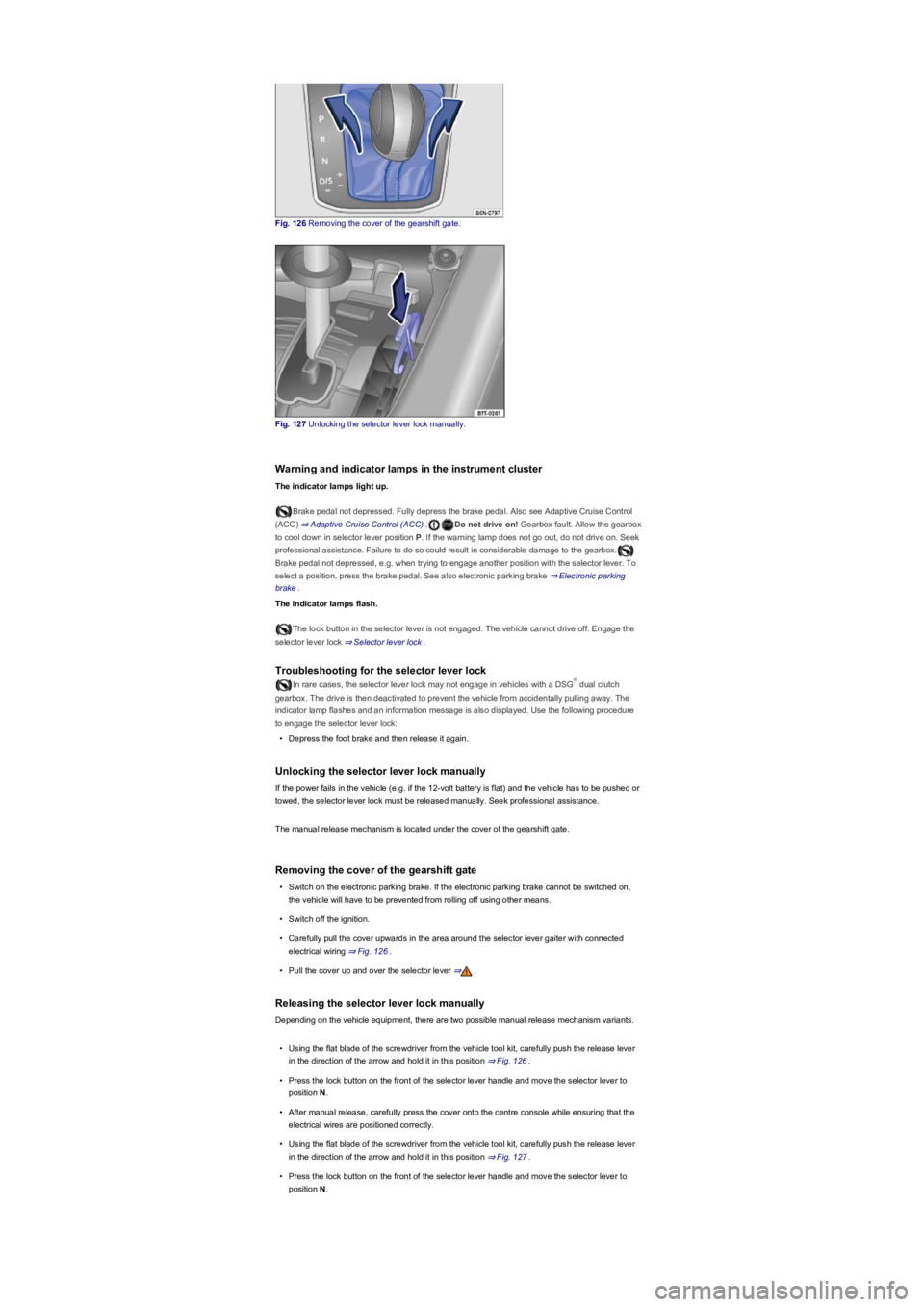
Fig. 126 Removing the cover of the gearshift gate.
Fig. 127 Unlocking the selector lever lock manually.
Warning and indicator lamps in the instrument cluster
The indicator lamps light up.
Brake pedal not depressed. Fully depress the brake pedal. Also see Adaptive Cruise Control
(ACC) ⇒ Adaptive Cruise Control (ACC).Do not drive on! Gearbox fault. Allow the gearbox
to cool down in selector lever position P. If the warning lamp does not go out, do not drive on. Seek
professional assistance. Failure to do so could result in considerable damage to the gearbox.
Brake pedal not depressed, e.g. when trying to engage another position with the selector lever. To
select a position, press the brake pedal. See also electronic parking brake ⇒ Electronic parking
brake.
The indicator lamps flash.
The lock button in the selector lever is not engaged. The vehicle cannot drive off. Engage the
selector lever lock ⇒ Selector lever lock.
Troubleshooting for the selector lever lock
In rare cases, the selector lever lock may not engage in vehicles with a DSG dual clutch
gearbox. The drive is then deactivated to prevent the vehicle from accidentally pulling away. The
indicator lamp flashes and an information message is also displayed. Use the following procedure
to engage the selector lever lock:
•Depress the foot brake and then release it again.
Unlocking the selector lever lock manually
If the power fails in the vehicle (e.g. if the 12-volt battery is flat) and the vehicle has to be pushed or
towed, the selector lever lock must be released manually. Seek professional assistance.
The manual release mechanism is located under the cover of the gearshift gate.
Removing the cover of the gearshift gate
•Switch on the electronic parking brake. If the electronic parking brake cannot be switched on,
the vehicle will have to be prevented from rolling off using other means.
•Switch off the ignition.
•Carefully pull the cover upwards in the area around the selector lever gaiter with connected
electrical wiring ⇒ Fig. 126.
•Pull the cover up and over the selector lever ⇒.
Releasing the selector lever lock manually
Depending on the vehicle equipment, there are two possible manual release mechanism variants.
•Using the flat blade of the screwdriver from the vehicle tool kit, carefully push the release lever
in the direction of the arrow and hold it in this position ⇒ Fig. 126.
•Press the lock button on the front of the selector lever handle and move the selector lever to
position N.
•After manual release, carefully press the cover onto the centre console while ensuring that the
electrical wires are positioned correctly.
•Using the flat blade of the screwdriver from the vehicle tool kit, carefully push the release lever
in the direction of the arrow and hold it in this position ⇒ Fig. 127.
•Press the lock button on the front of the selector lever handle and move the selector lever to
position N.
®
Page 154 of 341
Progressive steering
Depending on the vehicle equipment level, progressive steering can adjust the force of the steering
movement in a driving situation. Progressive steering only functions when the engine is running.
In urban driving, smaller steering movements are required when parking, manoeuvring, or turning
sharply.
When driving on country roads or on the motorway, the progressive steering provides a more
sporty, direct steering response, and a dynamic feel.
Troubleshooting
Warning and indicator lamps in the instrument cluster
The indicator lamps light up.
Do not drive on! Electromechanical steering not functioning. The steering must be
checked by a qualified workshop as soon as possible.Electromechanical steering function
reduced. The steering must be checked by a qualified workshop as soon as possible. If the yellow
warning lamp remains off after the engine has been restarted and you have driven a short distance,
you do not need to consult a qualified workshop.The 12-volt battery has been disconnected
and reconnected. Drive a short distance at a speed of 15 – 20 km/h (9 – 12 mph).
The indicator lamps flash.
Steering column twisted. Turn the steering wheel back and forth.Steering column not
locked or unlocked. Remove the vehicle key from the ignition lock and switch the ignition back on
again. Follow any messages that are on the instrument cluster display. Do not continue your
journey if the steering column remains locked when the ignition is switched on. Seek expert
assistance.
Driving profile selection and 4MOTION Active
Control
Introduction
This chapter contains information on the followingsubjects:
⇒ Selecting a driving profile (ONROAD)
⇒ Selecting a driving profile (4MOTION Action Control)
⇒ Adjusting the driving profile to suit your requirements
⇒ Troubleshooting
The driving profile selection contains
factory-defined driving profiles which
have different effects on the vehicle
setup. You can also set your own
vehicle setup by means of an individual
driving profile.
Different driving profiles can be selected depending on the vehicle equipment level. The effect on
the vehicle setup in the individual driving profiles depends on the vehicle equipment.
The settings available depend on the type of drive. Vehicles with a front-wheel drive come with
ONROAD driving profiles ⇒ Selecting a driving profile (ONROAD), while vehicles with all-wheel
If the power steering is not working, the steering wheel is difficult to turn, which makes it
difficult to steer the vehicle.
•The power steering only functions when the engine is running.
•Never allow the vehicle to roll if the engine is switched off.
•Never remove the vehicle key from the ignition lock when the vehicle is in motion. The
steering column lock may be activated and it will no longer be possible to steer the
vehicle.
WARNING
In conjunction with the ESC, counter steering assistance provides the driver with
assistance when steering in critical driving situations. The driver must steer the vehicle at
all times. Counter steering assistance does not steer the vehicle.
WARNING
The ignition of the vehicle being towed must be switched on to prevent the steering wheel
from locking, and so that the turn signals, horn, wipers and window washer system can be
used.
NOTICE
Page 159 of 341
The driver can use 4MOTION Active Control to activate a variety of vehicle settings in an all-wheel
drive vehicle as required ⇒ Selecting a driving profile (4MOTION Action Control).
Checklist
Before driving for the first time, take the following steps so you can operate and drive the
vehicle safely off-road:
Observe the basic safety notes Safety notes for driving off-road.
Familiarise yourself with the vehicle controls.
Check and adjust the seat position Sitting position and fasten the seat belts Seat belts.
Check distance to steering wheel and adjust Steering.
Always wear suitable, well-fitting shoes that provide good grip for your feet when using the
pedals.
Safety notes for driving off-road
First read and observe the introductoryinformation and safety warnings⇒
Introduction
The intelligent vehicle technology cannot overcome the laws of physics, and functions
only within the limits of the system. Despite input from the ABS, adverse terrain can cause
instability through locked wheels – e.g. if you brake hard when driving on a loose gravel
road. The ESC system will have difficulty stabilising the vehicle in these circumstances.
WARNING
Driving off-road can be dangerous and could cause accidents, serious injury, damage to
the vehicle and also a vehicle breakdown far from any assistance.
•Never select a dangerous route and never take risks that could endanger you and your
passengers. If you cannot drive on or if you are in any doubt about the safety of the
route, turn round and choose another route.
•Even terrain that looks harmless can be difficult and dangerous, and could get you and
your passengers into difficulties. It is preferable to walk over the terrain before driving
over it.
•You should drive particularly carefully and think ahead when driving off-road. If you
drive too fast or if a driving manoeuvre is unsuccessful this could result in serious
injuries and vehicle damage.
•Never drive faster than the current terrain, road conditions, traffic and weather allow.
•Never drive too fast along embankments, ramps or slopes. This could cause the
vehicle to lose contact with the ground. If this happens, you will be unable to steer and
will lose control of the vehicle.
•If the vehicle does lose contact with the ground, always point the front wheels straight
ahead. If the wheels are not pointing straight ahead when the vehicle lands, it could roll
over.
•Terrain might look harmless, but there could be hidden dangers. Potholes, hollows,
ditches, precipices, obstacles, shallows, soft and boggy surfaces are often not
recognisable as such and can be covered either fully or partly by water or grass or
branches lying on the ground. Inspect terrain on foot.
WARNING
Sporty SUVs are subject to a considerably higher risk of rolling over than normal road
passenger vehicles ⇒ Explanation of some technical terms.
•In the event of an accident, vehicle occupants not wearing seat belts are subjected to a
considerably higher risk of fatal injury than those wearing seat belts.
•The vehicle has a higher centre of gravity and is more prone to rolling over than a
normal on-road vehicle which is unsuited for off-road driving.
•Never drive too fast, especially when driving through bends, or carry out any extreme
driving manoeuvres.
•Always adjust your speed and driving style to the terrain.
•Luggage and other items transported on the roof of the vehicle raise the centre of
gravity and will make the vehicle more likely to roll over.
WARNING
Page 160 of 341
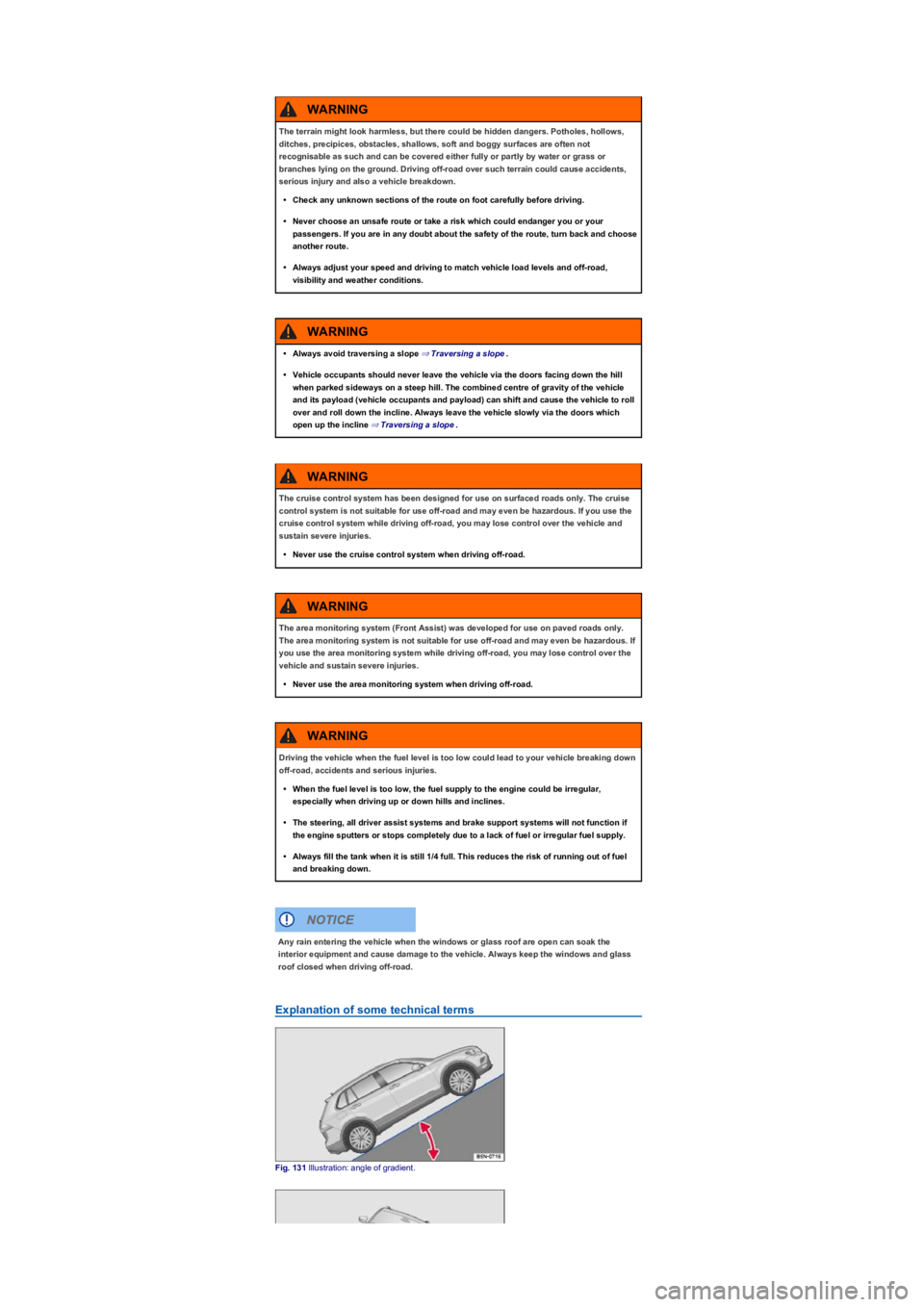
Explanation of some technical terms
Fig. 131 Illustration: angle of gradient.
The terrain might look harmless, but there could be hidden dangers. Potholes, hollows,
ditches, precipices, obstacles, shallows, soft and boggy surfaces are often not
recognisable as such and can be covered either fully or partly by water or grass or
branches lying on the ground. Driving off-road over such terrain could cause accidents,
serious injury and also a vehicle breakdown.
•Check any unknown sections of the route on foot carefully before driving.
•Never choose an unsafe route or take a risk which could endanger you or your
passengers. If you are in any doubt about the safety of the route, turn back and choose
another route.
•Always adjust your speed and driving to match vehicle load levels and off-road,
visibility and weather conditions.
WARNING
•Always avoid traversing a slope ⇒ Traversing a slope.
•Vehicle occupants should never leave the vehicle via the doors facing down the hill
when parked sideways on a steep hill. The combined centre of gravity of the vehicle
and its payload (vehicle occupants and payload) can shift and cause the vehicle to roll
over and roll down the incline. Always leave the vehicle slowly via the doors which
open up the incline ⇒ Traversing a slope.
WARNING
The cruise control system has been designed for use on surfaced roads only. The cruise
control system is not suitable for use off-road and may even be hazardous. If you use the
cruise control system while driving off-road, you may lose control over the vehicle and
sustain severe injuries.
•Never use the cruise control system when driving off-road.
WARNING
The area monitoring system (Front Assist) was developed for use on paved roads only.
The area monitoring system is not suitable for use off-road and may even be hazardous. If
you use the area monitoring system while driving off-road, you may lose control over the
vehicle and sustain severe injuries.
•Never use the area monitoring system when driving off-road.
WARNING
Driving the vehicle when the fuel level is too low could lead to your vehicle breaking down
off-road, accidents and serious injuries.
•When the fuel level is too low, the fuel supply to the engine could be irregular,
especially when driving up or down hills and inclines.
•The steering, all driver assist systems and brake support systems will not function if
the engine sputters or stops completely due to a lack of fuel or irregular fuel supply.
•Always fill the tank when it is still 1/4 full. This reduces the risk of running out of fuel
and breaking down.
WARNING
Any rain entering the vehicle when the windows or glass roof are open can soak the
interior equipment and cause damage to the vehicle. Always keep the windows and glass
roof closed when driving off-road.
NOTICE
Page 167 of 341
Clean the turn signals, headlight system, the number plate and all windows.
If necessary, remove the towing eye and the snow chains.
Check the tyres, struts and axles for damage and remove dirt, stones and other foreign
bodies from the tyre tread.
Inspect the vehicle underbody and remove all items that are jammed in the brake system,
on the wheels, in the running gear, in the exhaust system and in the engine, such as
branches, leaves or pieces of wood . If you see any damage or leaks, take your vehicle to a
qualified workshop.
Clean heavy soiling from the radiator grille and the vehicle underbody Vehicle care.
Check the engine compartment to see if any dirt is affecting the engine operation In the
engine compartment.
Switch off OFF-ROAD mode Selecting a driving profile (4MOTION Action Control).
Switch on TCS again Brake support systems.
If your vehicle gets stuck
First read and observe the introductoryinformation and safety warnings⇒
Introduction
Rocking out a vehicle requires a great deal of training and feeling for the vehicle.
If you make a mistake when rocking the vehicle, it can sink deeper and you will need assistance to
get out of the mud.
When you cannot proceed ...
•Carefully dig out all the wheels and check that no other parts of the vehicle are stuck in the
sand.
•Engage reverse gear.
•Reverse over your own tracks, accelerating gently.
If this does not help, place brushwood, floor mats or sacking directly in front of the wheels to
increase grip ⇒.
Rocking the vehicle
Never allow the wheels to spin for long periods as this will cause the vehicle to sink deeper ⇒.
•Switch off TCS ⇒ Brake support systems.
•Position the steering wheel so that it is facing straight ahead.
•Reverse until the point where the wheels just start to spin.
•Quickly select first gear and drive forwards until the wheels start to spin again.
•Repeat driving back and forth until you have enough momentum to free yourself.
•Switch the TCS on after the rocking procedure is completed ⇒ Brake support systems.
•Use the Off-road driving profile.
After off-road driving
First read and observe the introductoryinformation and safety warnings⇒
Introduction
Checklist
Never drive through a ditch if the entry/exit angle is too steep for the vehicle and the ditch
is too deep. The vehicle could slide away, tip over or roll.
WARNING
If you drive into the ditch at a right angle, the front wheels will fall in. The underbody of
your vehicle could get stuck and damaged which means that the vehicle could break
down. It is then almost impossible to get out of the ditch despite having all-wheel drive.
NOTICE
Nobody may stand either in front or behind the vehicle, particularly if you are attempting
to free a stuck vehicle.
•Spinning wheels can propel stones, brushwood, pieces of wood or other objects that
are in front or behind the wheels at enormous speed and cause potentially fatal injury.
•People standing in front of or behind the vehicle could be run over if the stuck vehicle
starts to move suddenly.
WARNING