child VOLKSWAGEN TIGUAN 2017 Owner´s Manual
[x] Cancel search | Manufacturer: VOLKSWAGEN, Model Year: 2017, Model line: TIGUAN, Model: VOLKSWAGEN TIGUAN 2017Pages: 341, PDF Size: 9.14 MB
Page 219 of 341
The cigarette lighter socket can also be used as a 12-volt socket ⇒ Electrical sockets.
Electrical sockets
Introduction
This chapter contains information on the followingsubjects:
⇒ Sockets in the vehicle
Electrical equipment can be connected to the sockets in the vehicle.
The electrical devices must be in good condition. Do not use faulty devices.
The 12-volt socket will work only when the ignition is switched on.
Using electrical consumers with the engine switched off and the ignition switched on will
drain the 12-volt battery.
Unshielded devices can cause interference in the Infotainment system and vehicle
electronics.
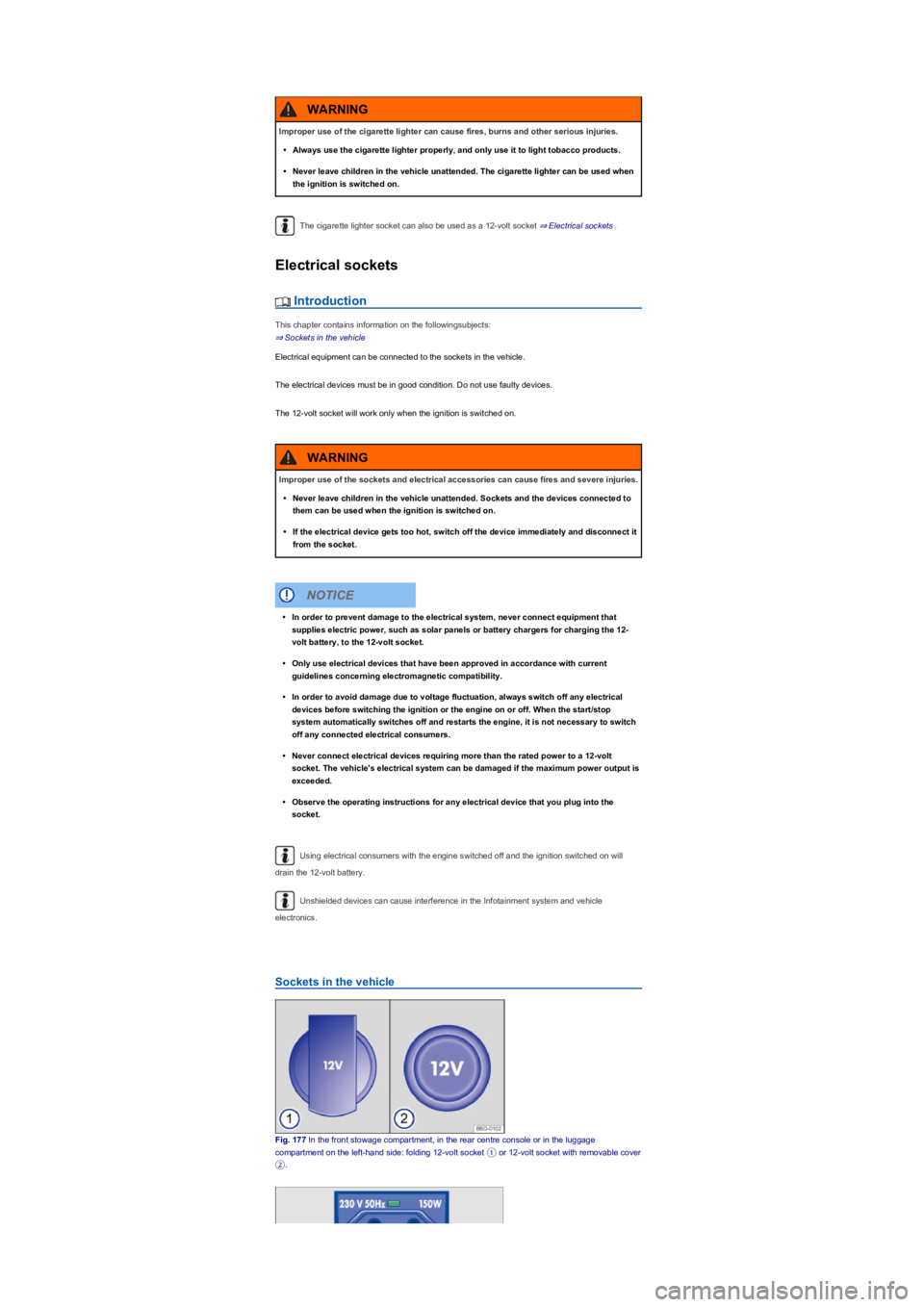
Sockets in the vehicle
Fig. 177 In the front stowage compartment, in the rear centre console or in the luggage
compartment on the left-hand side: folding 12-volt socket ① or 12-volt socket with removable cover
②.
Improper use of the cigarette lighter can cause fires, burns and other serious injuries.
•Always use the cigarette lighter properly, and only use it to light tobacco products.
•Never leave children in the vehicle unattended. The cigarette lighter can be used when
the ignition is switched on.
WARNING
Improper use of the sockets and electrical accessories can cause fires and severe injuries.
•Never leave children in the vehicle unattended. Sockets and the devices connected to
them can be used when the ignition is switched on.
•If the electrical device gets too hot, switch off the device immediately and disconnect it
from the socket.
WARNING
•In order to prevent damage to the electrical system, never connect equipment that
supplies electric power, such as solar panels or battery chargers for charging the 12-
volt battery, to the 12-volt socket.
•Only use electrical devices that have been approved in accordance with current
guidelines concerning electromagnetic compatibility.
•In order to avoid damage due to voltage fluctuation, always switch off any electrical
devices before switching the ignition or the engine on or off. When the start/stop
system automatically switches off and restarts the engine, it is not necessary to switch
off any connected electrical consumers.
•Never connect electrical devices requiring more than the rated power to a 12-volt
socket. The vehicle's electrical system can be damaged if the maximum power output is
exceeded.
•Observe the operating instructions for any electrical device that you plug into the
socket.
NOTICE
Page 220 of 341
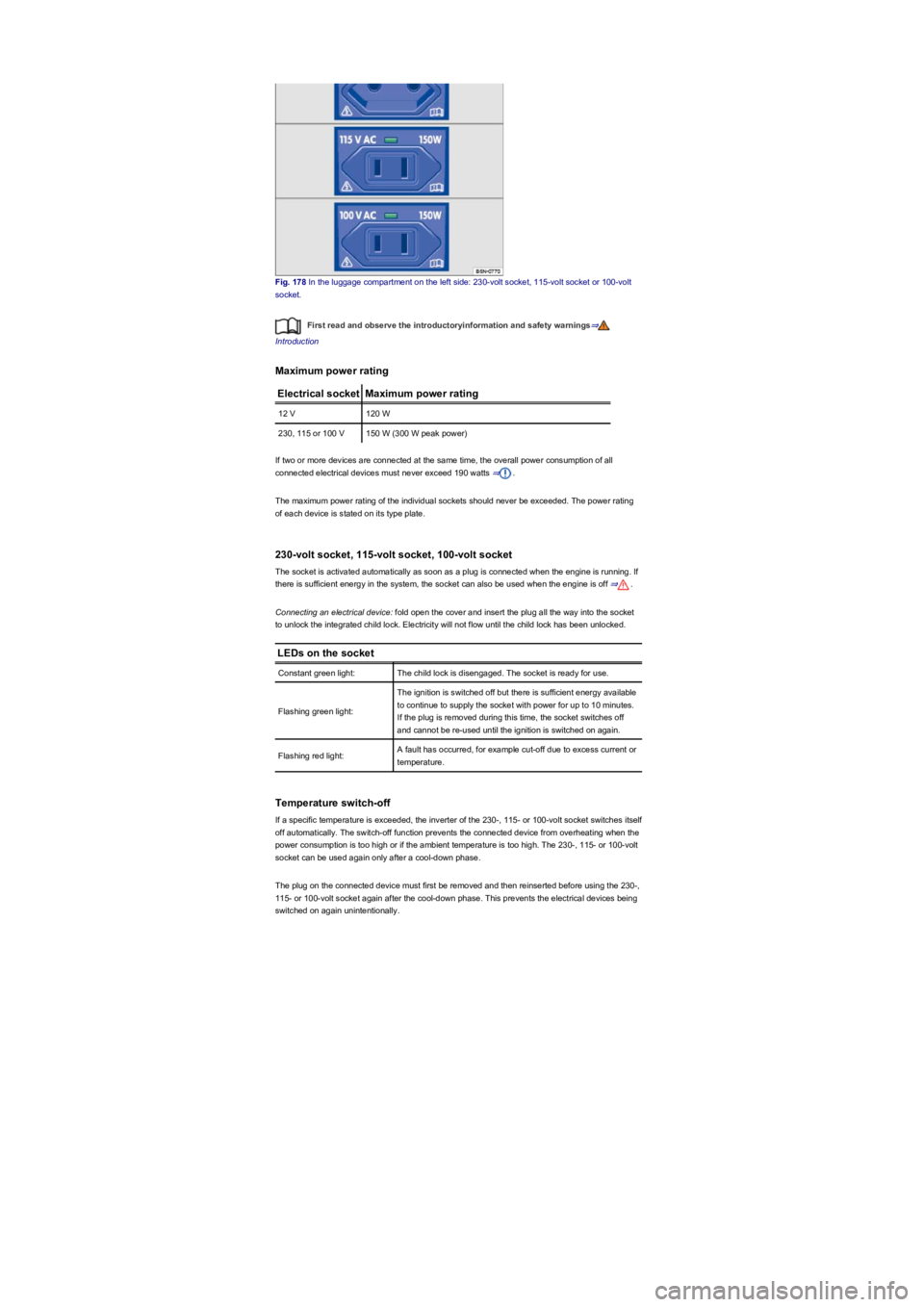
Fig. 178 In the luggage compartment on the left side: 230-volt socket, 115-volt socket or 100-volt
socket.
First read and observe the introductoryinformation and safety warnings⇒
Introduction
Maximum power rating
Electrical socketMaximum power rating
12 V120 W
230, 115 or 100 V150 W (300 W peak power)
If two or more devices are connected at the same time, the overall power consumption of all
connected electrical devices must never exceed 190 watts ⇒.
The maximum power rating of the individual sockets should never be exceeded. The power rating
of each device is stated on its type plate.
230-volt socket, 115-volt socket, 100-volt socket
The socket is activated automatically as soon as a plug is connected when the engine is running. If
there is sufficient energy in the system, the socket can also be used when the engine is off ⇒.
Connecting an electrical device: fold open the cover and insert the plug all the way into the socket
to unlock the integrated child lock. Electricity will not flow until the child lock has been unlocked.
LEDs on the socket
Constant green light:The child lock is disengaged. The socket is ready for use.
Flashing green light:
The ignition is switched off but there is sufficient energy available
to continue to supply the socket with power for up to 10 minutes.
If the plug is removed during this time, the socket switches off
and cannot be re-used until the ignition is switched on again.
Flashing red light:A fault has occurred, for example cut-off due to excess current or
temperature.
Temperature switch-off
If a specific temperature is exceeded, the inverter of the 230-, 115- or 100-volt socket switches itself
off automatically. The switch-off function prevents the connected device from overheating when the
power consumption is too high or if the ambient temperature is too high. The 230-, 115- or 100-volt
socket can be used again only after a cool-down phase.
The plug on the connected device must first be removed and then reinserted before using the 230-,
115- or 100-volt socket again after the cool-down phase. This prevents the electrical devices being
switched on again unintentionally.
Page 221 of 341
Functional problems may occur with some devices when they are connected to the 230-,
115- or 100-volt socket due to the lower power output (wattage).
Mobile online services
Volkswagen Car-Net⇒
Introduction
This chapter contains information on the followingsubjects:
⇒ Legal requirements
⇒ Deactivating Car-Net services
⇒ Interferences
⇒ Volkswagen Car-Net services
⇒ Apps
Volkswagen Car-Net allows you to communicate with your vehicle online or via an app in a very
simple way in order to exchange data, request information or control functions.
In order to use Volkswagen Car-Net, the vehicle needs to have been ordered with Car-Net and
factory-fitted with the system. Depending on the service portfolio, Volkswagen Car-Net can be
operated via the factory-fitted Infotainment system, via a Car-Net portal on the internet or using a
mobile device.
Information about the Volkswagen Car-Net services, applications, availability, compatible mobile
devices and service portfolio, as well as service descriptions, are available on the Volkswagen
website:
•In Europe and Japan: www.Volkswagen.com/car-net
•In China: www.vwcarnet.com.cn
Before using the Volkswagen Car-Net services for the first time, please read and observe the
information in the relevant service description. This will quickly help you to become familiar
with the services and make you aware of potential risks to yourself and others, and how to
avoid them.
High voltage in the electrical system!
•Never spill any liquids over the socket.
•Do not plug any adapters or extension cables into the 230-, 115- or 100-volt socket.
Otherwise the built-in child lock will disengage and power will be supplied to the
socket.
•Do not insert any items which will conduct electricity, such as knitting needles, into the
contacts of the 230-, 115- or 100-volt socket.
DANGER
•230-, 115- or 100-volt socket:
- Do not plug any heavy devices or connections, such as mains adapters, directly
into the socket.
- Do not connect any lights which use neon tubes.
- Only connect devices to the socket with a voltage that matches the voltage of the
socket.
- In the case of electrical devices with a high starting current, the built-in excess
current switch will prevent the device from being switched on. If this happens,
disconnect the electrical device from the power supply and reconnect after waiting
approximately ten seconds.
NOTICE
Accidents and injuries can occur if the driver is distracted.
•Always drive carefully and responsibly.
WARNING
Failure to observe the information in the service description can lead to your vehicle
breaking down in traffic, and can cause accidents and serious injuries.
•Always use the most up-to-date edition of the relevant service descriptions which is
available on the Volkswagen website.
WARNING
Page 229 of 341
The maximum load rating of the fastening rings is approximately 3.5 kN.
Suitable lashing, retaining or securing straps and luggage securing systems are available
from qualified workshops. Volkswagen recommends using a Volkswagen dealership for this
purpose.
Luggage net
Fig. 188 In the luggage compartment: luggage net fitted flat.
The luggage net can help to prevent light items of luggage from sliding around in the luggage
compartment. The luggage net also has a built-in pocket with a zip that can hold smaller items.
Attaching the luggage net flat on the luggage compartment floor
•Hook the luggage net hooks into the front fastening rings ⇒ Fig. 188⇒. The luggage net zip
must face upwards.
•Attach the hooks on the other end of the luggage net to the fastening rings under the load sill
⇒ Fig. 188.
Some fastening rings have to be folded out before they can be used ⇒ Fastening rings.
Removing the luggage net
When fitted, the luggage net is held taut ⇒.
•Unhook the hooks and loops of the luggage net.
•Store the luggage net in the luggage compartment.
Bag hook
Unsuitable or damaged securing straps could rip in the event of a braking manoeuvre or
accident. This could cause objects to be flung through the vehicle interior and lead to
severe or fatal injuries.
•Always use suitable and undamaged securing straps.
•Pull lashing, retaining and securing straps taut crosswise over the cargo on the
luggage compartment floor and attach securely to the fastening rings.
•Never exceed the maximum load rating of the fastening rings when securing objects.
•Make sure that the upper edge of the load is higher than the fastening rings,
particularly when stowing flat objects.
•Depending on the vehicle equipment, observe the signs about stowing loads that are
attached in the luggage compartment.
•Never secure a child seat to the fastening rings.
WARNING
The elastic luggage net must be stretched when it is secured to the fastening rings in the
luggage compartment. When fitted, the luggage net is held taut. The luggage net hooks
can cause injuries if the luggage net is installed or removed incorrectly.
•Always hold the luggage net hooks tightly to prevent them from falling out of the ring
during installation or removal.
•Protect your eyes and face to avoid injuries from any hooks that may spring out during
installation or removal.
•Always attach the luggage net hooks in the order described. There is a risk of injury if
one of the hooks on the luggage net snaps back.
WARNING
Page 230 of 341
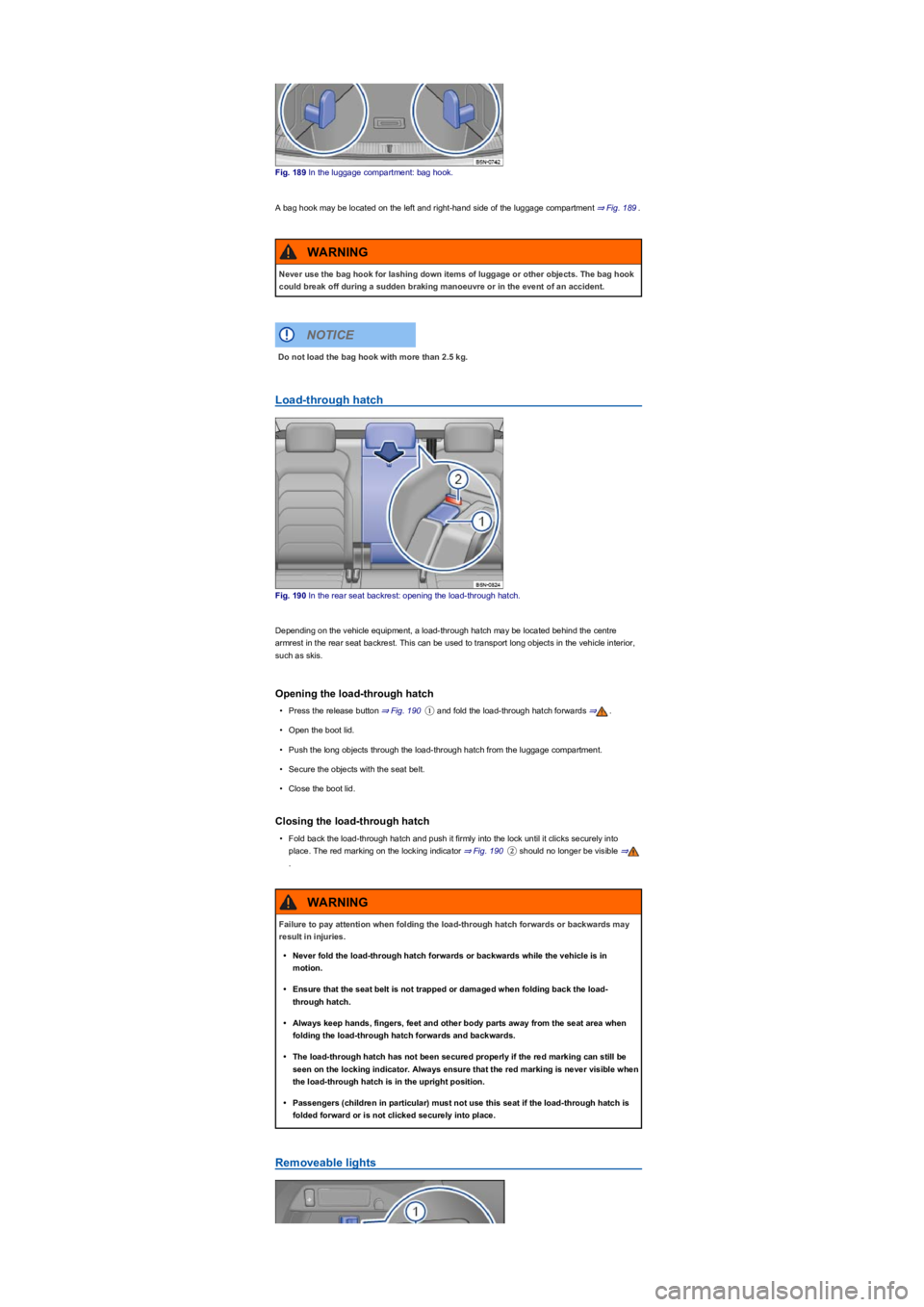
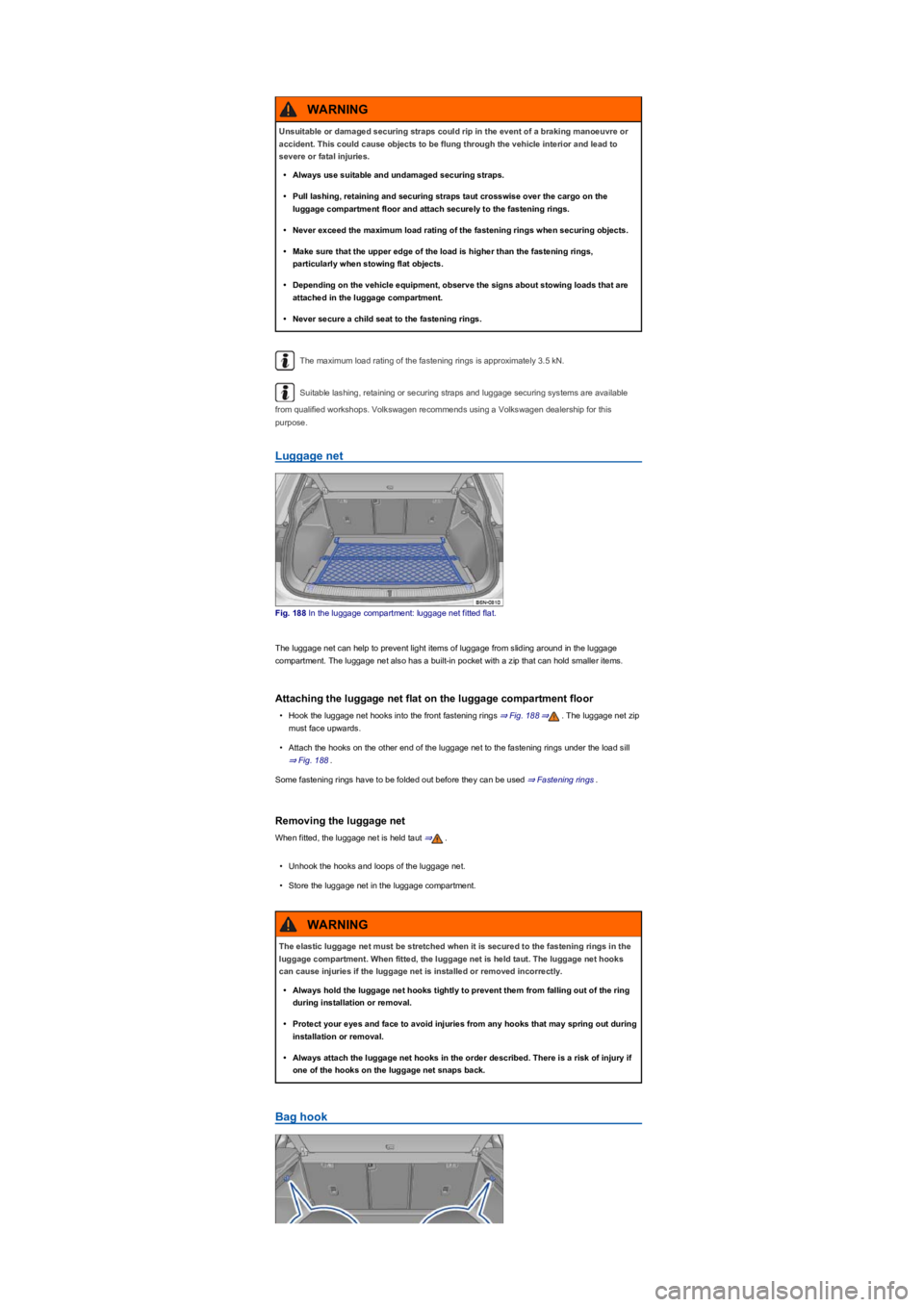
Fig. 189 In the luggage compartment: bag hook.
A bag hook may be located on the left and right-hand side of the luggage compartment ⇒ Fig. 189.
Load-through hatch
Fig. 190 In the rear seat backrest: opening the load-through hatch.
Depending on the vehicle equipment, a load-through hatch may be located behind the centre
armrest in the rear seat backrest. This can be used to transport long objects in the vehicle interior,
such as skis.
Opening the load-through hatch
•Press the release button ⇒ Fig. 190① and fold the load-through hatch forwards ⇒.
•Open the boot lid.
•Push the long objects through the load-through hatch from the luggage compartment.
•Secure the objects with the seat belt.
•Close the boot lid.
Closing the load-through hatch
•Fold back the load-through hatch and push it firmly into the lock until it clicks securely into
place. The red marking on the locking indicator ⇒ Fig. 190② should no longer be visible ⇒
.
Removeable lights
Never use the bag hook for lashing down items of luggage or other objects. The bag hook
could break off during a sudden braking manoeuvre or in the event of an accident.
WARNING
Do not load the bag hook with more than 2.5 kg.
NOTICE
Failure to pay attention when folding the load-through hatch forwards or backwards may
result in injuries.
•Never fold the load-through hatch forwards or backwards while the vehicle is in
motion.
•Ensure that the seat belt is not trapped or damaged when folding back the load-
through hatch.
•Always keep hands, fingers, feet and other body parts away from the seat area when
folding the load-through hatch forwards and backwards.
•The load-through hatch has not been secured properly if the red marking can still be
seen on the locking indicator. Always ensure that the red marking is never visible when
the load-through hatch is in the upright position.
•Passengers (children in particular) must not use this seat if the load-through hatch is
folded forward or is not clicked securely into place.
WARNING
Page 237 of 341
At extremely low outside temperatures, the electric ball head might not rotate. If this
happens, it is sufficient to place the vehicle in a warmer room, e.g. a garage.
Fitting a bicycle carrier on the swivelling ball head
First read and observe the introductoryinformation and safety warnings⇒
Introduction
Mount the bicycle carrier in accordance with the manufacturer's assembly instructions.
Only carrier systems which can hold a maximum of three bicycles may be used ⇒. Position
heavy bicycles as close to the vehicle (ball head) as possible.
Maximum carrying load
The maximum permitted load (carrier system including load) on the ball coupling is 75 kg at a
distance of 300 mm. This distance refers to the gap between the centre of gravity of the bicycle
carrier and the middle of the ball head.
Volkswagen recommends that you remove all add-on parts from the bicycles before setting
off. This includes for example bicycle bags and baskets, child seats or batteries. This helps improve
the carrier system's wind load and centre of gravity.
Notes on towing a trailer
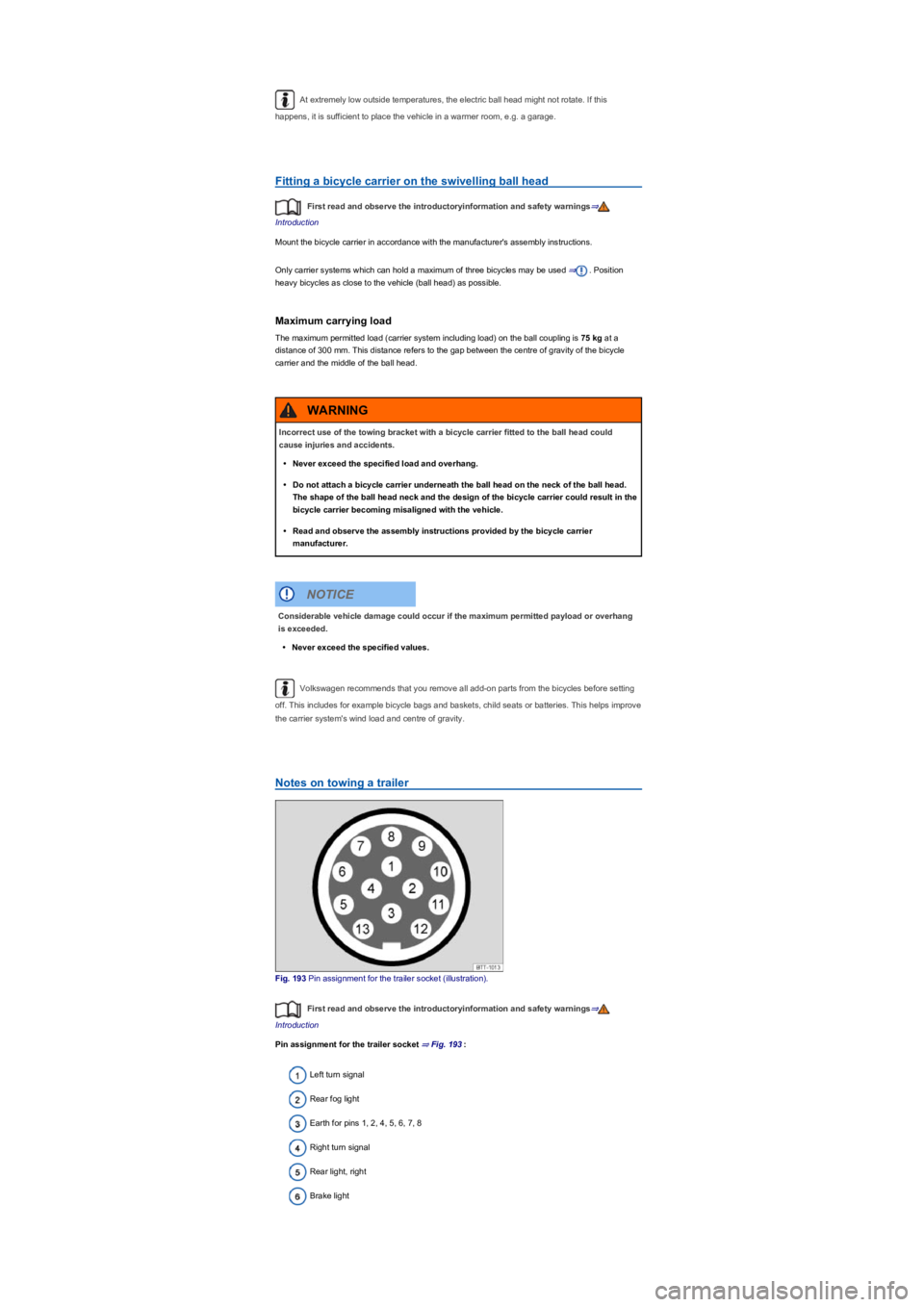
Fig. 193 Pin assignment for the trailer socket (illustration).
First read and observe the introductoryinformation and safety warnings⇒
Introduction
Pin assignment for the trailer socket ⇒ Fig. 193:
Left turn signal
Rear fog light
Earth for pins 1, 2, 4, 5, 6, 7, 8
Right turn signal
Rear light, right
Brake light
Incorrect use of the towing bracket with a bicycle carrier fitted to the ball head could
cause injuries and accidents.
•Never exceed the specified load and overhang.
•Do not attach a bicycle carrier underneath the ball head on the neck of the ball head.
The shape of the ball head neck and the design of the bicycle carrier could result in the
bicycle carrier becoming misaligned with the vehicle.
•Read and observe the assembly instructions provided by the bicycle carrier
manufacturer.
WARNING
Considerable vehicle damage could occur if the maximum permitted payload or overhang
is exceeded.
•Never exceed the specified values.
NOTICE
Page 248 of 341
The refill bottle must be disposed of in accordance with regulations governing the protection
of the environment.
Catalytic converter
First read and observe the introductoryinformation and safety warnings⇒
Introduction
To help ensure long-term functionality in the exhaust system and the catalytic converter:
•Use unleaded petrol only ⇒ Fuel types and refuelling.
•Do not allow the fuel tank to run completely empty.
•Do not overfill engine oil ⇒ Engine oil.
•Do not tow start the vehicle. Use jump leads ⇒ Jump starting.
If you notice misfiring, uneven running or loss of power when the vehicle is moving, reduce speed
immediately. The vehicle should be inspected at the nearest qualified workshop
⇒ Troubleshooting. If this happens, unburnt fuel can enter the exhaust system and escape into the
atmosphere. The catalytic converter can also be damaged by overheating.
The emissions may have a sulphur-like smell even if the emission purification system is
working properly.
Particulate filter
First read and observe the introductoryinformation and safety warnings⇒
Introduction
Function
The particulate filter filters out soot particles in the exhaust gas. Observe the following points to
ensure that the exhaust purification system will work properly for a long time:
AdBlue is an irritant and corrosive fluid that can damage the skin, eyes and breathing
passages upon contact.
•Always observe the instructions for use when using AdBlue. If containers are used
according to the instructions, it is unlikely that a user will come into contact with
AdBlue.
•AdBlue must be kept in the closed original container. Never use empty food
containers, bottles or other containers for this purpose.
•Always store in a safe place out of reach of children.
•If AdBlue gets into the eyes, immediately rinse the eyes with plenty of water for at
least 15 minutes and consult a doctor.
•If AdBlue gets onto the skin, immediately wash the area with plenty of water for at
least 15 minutes and consult a doctor if the skin becomes irritated.
•If AdBlue is swallowed, immediately rinse the mouth out with lots of water for at least
15 minutes. Do not induce vomiting unless instructed to do so by a doctor. Seek
medical assistance immediately.
CAUTION
®
®
®
®
®
®
®
Overfilling AdBlue may damage the tank system and the vehicle.
•Do not fill with more than the maximum refill quantity indicated on the instrument
cluster display.
•Remove any spilt AdBlue as quickly as possible with a damp cloth and plenty of cold
water.
•If the AdBlue has already formed crystals, use warm water and a sponge to remove.
NOTICE
®
®
®
Improper use of AdBlue may cause damage to the vehicle that is not covered by the
warranty.
•Only use AdBlue that complies with the standard ISO 22241-1.
•Do not mix with water, fuel or additives.
•Never fill AdBlue in the diesel tank.
•Do not transport the refill bottle in the vehicle habitually. The bottle may develop a leak
following changes in temperature and damage and the AdBlue may damage the
vehicle interior.
NOTICE
®
®
®
®
Page 272 of 341
Safety notes for working in the engine compartment
Always park the vehicle on a level and stable surface before carrying out any work in the engine
compartment.
The engine compartment of a motor vehicle is a hazardous area. You should only carry out work on
the engine, and in the engine compartment, if you know exactly how to perform the required tasks,
are aware of the general safety procedures and have access to the correct equipment, service
fluids and suitable tools. Failing to carry out work correctly can cause serious injuries ⇒. The
work should be carried out by a qualified workshop if you are uncertain. Volkswagen recommends
using a Volkswagen dealership for this purpose.
Unintentional vehicle movements during service work can cause serious injury.
•Never work underneath a vehicle if it is not secured against rolling away. If you are
working underneath the vehicle while the wheels are on the ground, the vehicle must
be on a level, the wheels chocked, and the vehicle key removed from the ignition lock
as required.
•If you have to work underneath the vehicle, use suitable stands to provide extra
support for the vehicle. The vehicle jack is not sufficient for this task and can fail,
which can lead to serious injuries.
•The start/stop system must have been deactivated.
WARNING
The engine compartment of any motor vehicle is a dangerous area. Serious injuries can be
sustained here.
•The utmost care and attention must be paid when carrying out any work and you must
follow the general safety rules. Never take any risks.
•Never do any work on the engine or in the engine compartment unless you know
exactly how to carry it out. If you are uncertain of what to do, the work should be
carried out by a qualified workshop. Serious injuries can result from work that has not
been carried out properly.
•Never open the bonnet if you see steam or coolant escaping from the engine
compartment. Hot steam or hot coolant can cause serious burns. Always wait until you
can no longer see or hear steam or coolant coming from the engine compartment.
•Always allow the engine to cool down before opening the bonnet.
•Hot parts of the engine or exhaust system can burn the skin.
•Observe the following points before opening the bonnet once the engine has cooled
down:
- Switch on the electronic parking brake and move the selector lever to position P
or move the gear lever to the neutral position.
- Switch off the ignition and remove the vehicle key from the ignition lock.
- Always keep children away from the engine compartment and never leave the
vehicle unattended.
•The cooling system is under pressure when the engine is hot. Never open the cap of
the coolant expansion tank when the engine is hot. Coolant may spray out and cause
serious burns and other injuries.
- Slowly and carefully turn the cap on the coolant expansion tank anticlockwise
while exerting gentle downward pressure on the cap.
- Always protect the face, hands and arms from hot coolant or steam with a large,
thick cloth.
•When refilling, do not spill any service fluids on engine components or on the exhaust
system. The spilt service fluids can start a fire.
WARNING
High voltages in the electrical system can cause electric shocks, burns, serious injuries
and death!
•Never short circuit the electric system. The 12-volt battery could explode.
•Please note the following guidelines to help reduce the risk of an electric shock and
serious injuries while the engine is running or being started:
- Never touch the electrical wiring of the ignition system.
- Never touch the electrical wiring and connections of gas discharge bulbs.
WARNING
Page 274 of 341
Allow the engine to cool sufficiently.
Children and other people should be kept well away from the engine compartment.
Ensure that the vehicle cannot roll away unexpectedly.
Opening and closing the bonnet
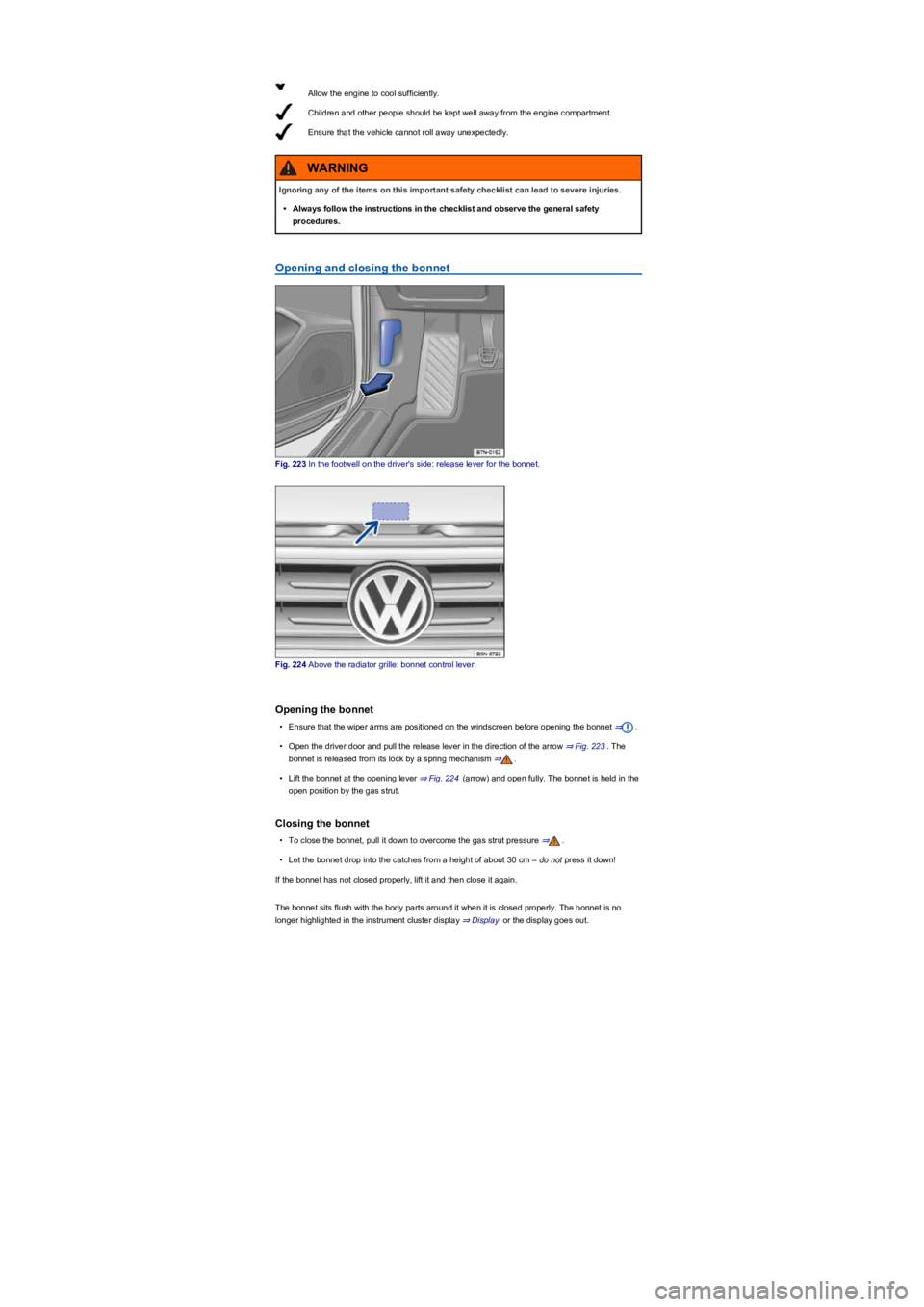
Fig. 223 In the footwell on the driver's side: release lever for the bonnet.
Fig. 224 Above the radiator grille: bonnet control lever.
Opening the bonnet
•Ensure that the wiper arms are positioned on the windscreen before opening the bonnet ⇒.
•Open the driver door and pull the release lever in the direction of the arrow ⇒ Fig. 223. The
bonnet is released from its lock by a spring mechanism ⇒.
•Lift the bonnet at the opening lever ⇒ Fig. 224 (arrow) and open fully. The bonnet is held in the
open position by the gas strut.
Closing the bonnet
•To close the bonnet, pull it down to overcome the gas strut pressure ⇒.
•Let the bonnet drop into the catches from a height of about 30 cm – do not press it down!
If the bonnet has not closed properly, lift it and then close it again.
The bonnet sits flush with the body parts around it when it is closed properly. The bonnet is no
longer highlighted in the instrument cluster display ⇒ Display or the display goes out.
Ignoring any of the items on this important safety checklist can lead to severe injuries.
•Always follow the instructions in the checklist and observe the general safety
procedures.
WARNING
Page 276 of 341
Leaking service fluids can pollute the environment. Spilt service fluids must be collected in
suitable containers and disposed of properly and with respect for the environment.
Washer fluid
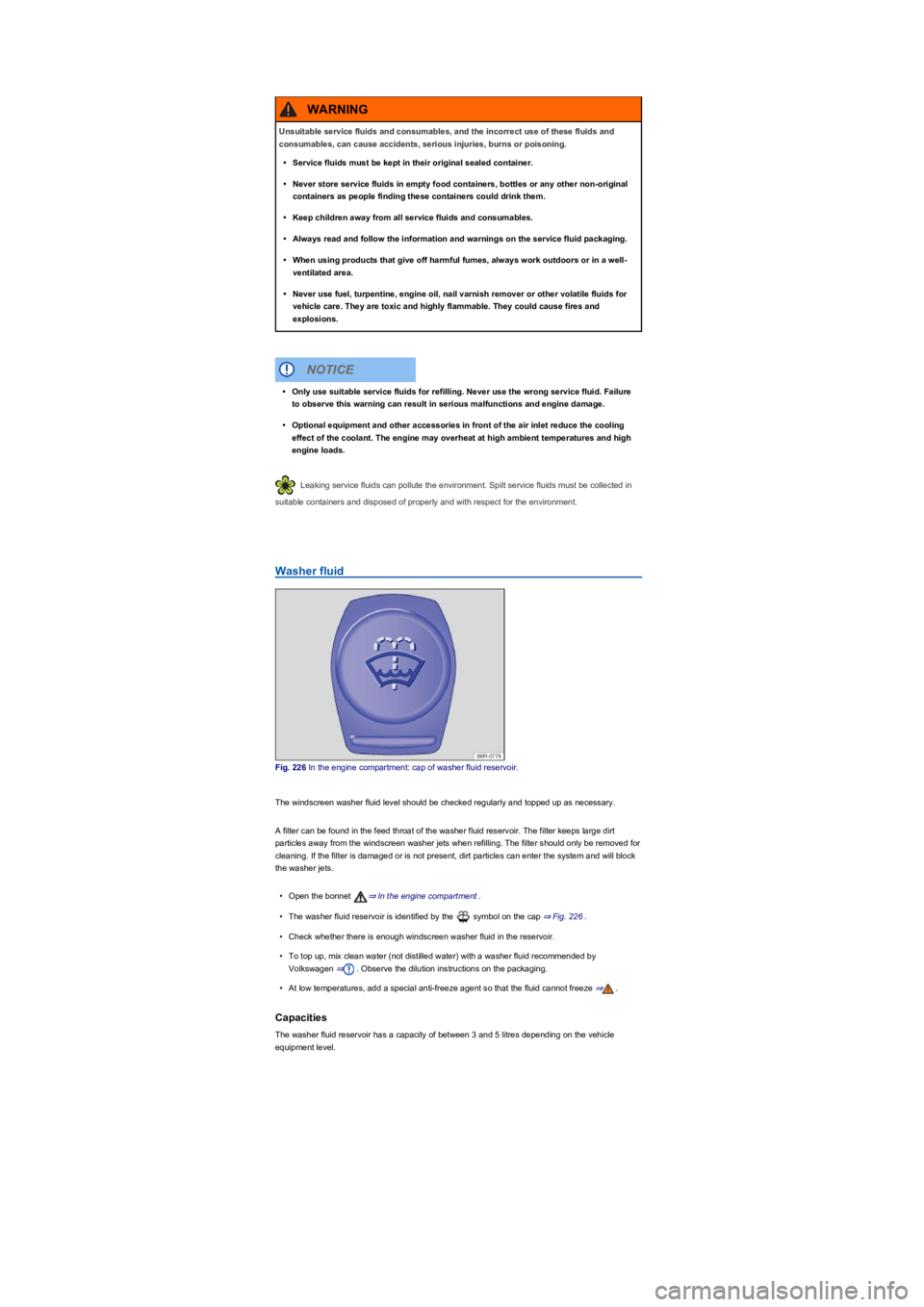
Fig. 226 In the engine compartment: cap of washer fluid reservoir.
The windscreen washer fluid level should be checked regularly and topped up as necessary.
A filter can be found in the feed throat of the washer fluid reservoir. The filter keeps large dirt
particles away from the windscreen washer jets when refilling. The filter should only be removed for
cleaning. If the filter is damaged or is not present, dirt particles can enter the system and will block
the washer jets.
•Open the bonnet ⇒ In the engine compartment.
•The washer fluid reservoir is identified by the symbol on the cap ⇒ Fig. 226.
•Check whether there is enough windscreen washer fluid in the reservoir.
•To top up, mix clean water (not distilled water) with a washer fluid recommended by
Volkswagen ⇒. Observe the dilution instructions on the packaging.
•At low temperatures, add a special anti-freeze agent so that the fluid cannot freeze ⇒.
Capacities
The washer fluid reservoir has a capacity of between 3 and 5 litres depending on the vehicle
equipment level.
Unsuitable service fluids and consumables, and the incorrect use of these fluids and
consumables, can cause accidents, serious injuries, burns or poisoning.
•Service fluids must be kept in their original sealed container.
•Never store service fluids in empty food containers, bottles or any other non-original
containers as people finding these containers could drink them.
•Keep children away from all service fluids and consumables.
•Always read and follow the information and warnings on the service fluid packaging.
•When using products that give off harmful fumes, always work outdoors or in a well-
ventilated area.
•Never use fuel, turpentine, engine oil, nail varnish remover or other volatile fluids for
vehicle care. They are toxic and highly flammable. They could cause fires and
explosions.
WARNING
•Only use suitable service fluids for refilling. Never use the wrong service fluid. Failure
to observe this warning can result in serious malfunctions and engine damage.
•Optional equipment and other accessories in front of the air inlet reduce the cooling
effect of the coolant. The engine may overheat at high ambient temperatures and high
engine loads.
NOTICE