open bonnet VOLKSWAGEN TIGUAN 2017 Owner´s Manual
[x] Cancel search | Manufacturer: VOLKSWAGEN, Model Year: 2017, Model line: TIGUAN, Model: VOLKSWAGEN TIGUAN 2017Pages: 341, PDF Size: 9.14 MB
Page 3 of 341
Texts with this symbol contain additional information on the protection of the environment.
Texts with this symbol contain additional information.
Vehicle overviews
Front view
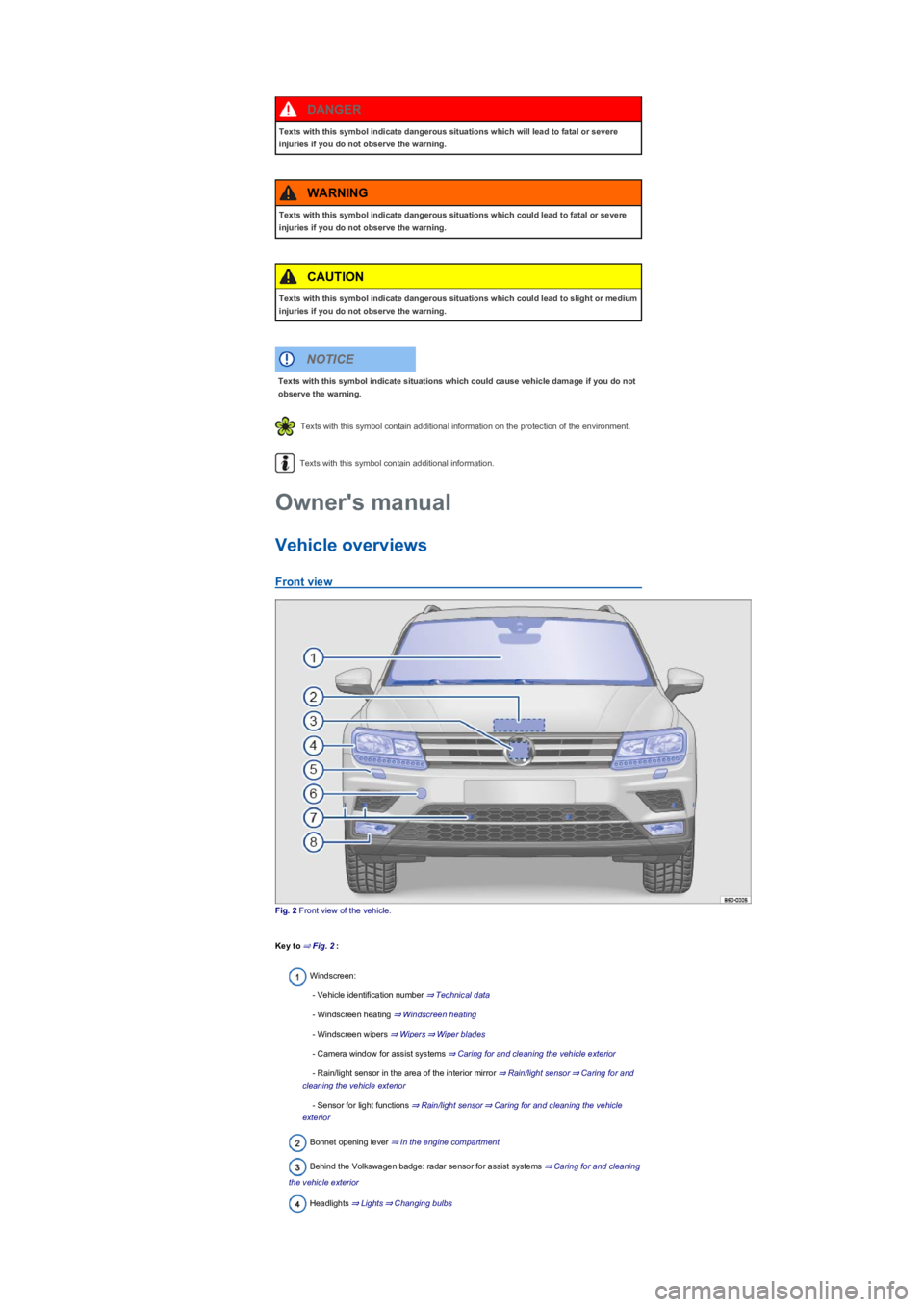
Fig. 2 Front view of the vehicle.
Key to ⇒ Fig. 2:
Windscreen:
- Vehicle identification number ⇒ Technical data
- Windscreen heating ⇒ Windscreen heating
- Windscreen wipers ⇒ Wipers⇒ Wiper blades
- Camera window for assist systems ⇒ Caring for and cleaning the vehicle exterior
- Rain/light sensor in the area of the interior mirror ⇒ Rain/light sensor⇒ Caring for and
cleaning the vehicle exterior
- Sensor for light functions ⇒ Rain/light sensor⇒ Caring for and cleaning the vehicle
exterior
Bonnet opening lever ⇒ In the engine compartment
Behind the Volkswagen badge: radar sensor for assist systems ⇒ Caring for and cleaning
the vehicle exterior
Headlights ⇒ Lights⇒ Changing bulbs
Texts with this symbol indicate dangerous situations which will lead to fatal or severe
injuries if you do not observe the warning.
DANGER
Texts with this symbol indicate dangerous situations which could lead to fatal or severe
injuries if you do not observe the warning.
WARNING
Texts with this symbol indicate dangerous situations which could lead to slight or medium
injuries if you do not observe the warning.
CAUTION
Texts with this symbol indicate situations which could cause vehicle damage if you do not
observe the warning.
NOTICE
Owner's manual
Page 15 of 341
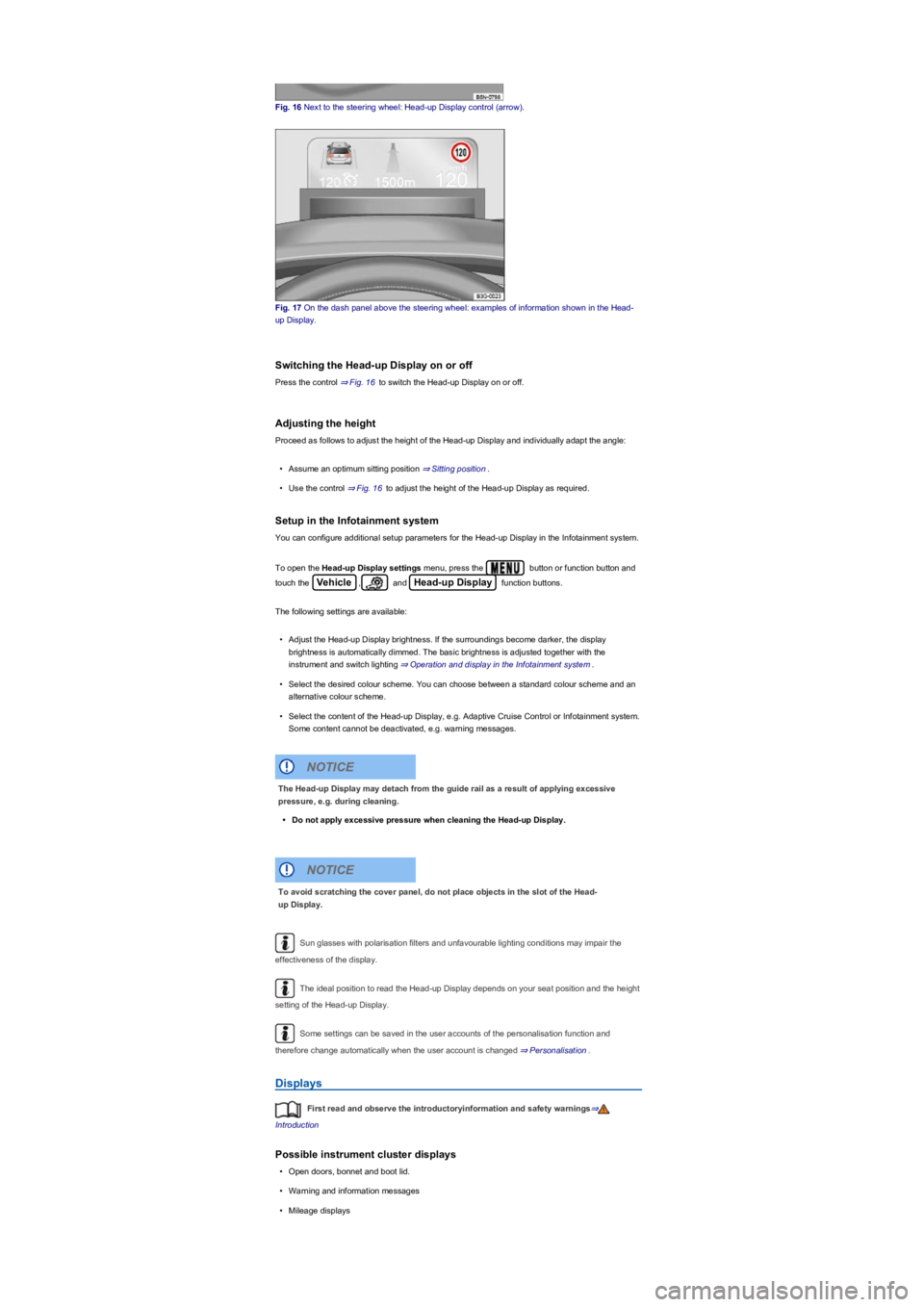
Fig. 16 Next to the steering wheel: Head-up Display control (arrow).
Fig. 17 On the dash panel above the steering wheel: examples of information shown in the Head-
up Display.
Switching the Head-up Display on or off
Press the control ⇒ Fig. 16 to switch the Head-up Display on or off.
Adjusting the height
Proceed as follows to adjust the height of the Head-up Display and individually adapt the angle:
•Assume an optimum sitting position ⇒ Sitting position.
•Use the control ⇒ Fig. 16 to adjust the height of the Head-up Display as required.
Setup in the Infotainment system
You can configure additional setup parameters for the Head-up Display in the Infotainment system.
To open the Head-up Display settings menu, press the button or function button and
touch the Vehicle, and Head-up Display function buttons.
The following settings are available:
•Adjust the Head-up Display brightness. If the surroundings become darker, the display
brightness is automatically dimmed. The basic brightness is adjusted together with the
instrument and switch lighting ⇒ Operation and display in the Infotainment system.
•Select the desired colour scheme. You can choose between a standard colour scheme and an
alternative colour scheme.
•Select the content of the Head-up Display, e.g. Adaptive Cruise Control or Infotainment system.
Some content cannot be deactivated, e.g. warning messages.
Sun glasses with polarisation filters and unfavourable lighting conditions may impair the
effectiveness of the display.
The ideal position to read the Head-up Display depends on your seat position and the height
setting of the Head-up Display.
Some settings can be saved in the user accounts of the personalisation function and
therefore change automatically when the user account is changed ⇒ Personalisation.
Displays
First read and observe the introductoryinformation and safety warnings⇒
Introduction
Possible instrument cluster displays
•Open doors, bonnet and boot lid.
•Warning and information messages
•Mileage displays
The Head-up Display may detach from the guide rail as a result of applying excessive
pressure, e.g. during cleaning.
•Do not apply excessive pressure when cleaning the Head-up Display.
NOTICE
To avoid scratching the cover panel, do not place objects in the slot of the Head-
up Display.
NOTICE
Page 16 of 341
•Time ⇒ Time.
•Radio and navigation information ⇒BookletInfotainment system,.
•Telephone information ⇒BookletInfotainment system,.
•Outside temperature
•Compass display
•Selector lever positions
•Gear-change indicator ⇒ Gear-change indicator.
•Driving data display (multifunction display) and menus for various settings ⇒ Instrument cluster
menus.
•Service interval display ⇒ Service interval display.
•Speed warning function ⇒ Instrument cluster menus.
•Speed warning for winter tyres.
•Start/stop system status display ⇒ Start/stop system .
•Status display for Active Cylinder Management (ACT) ⇒ Driving economically.
•Economical mode .
•Engine code (EC)
•Personalisation: welcome and user selection.
•Road signs detected by the Dynamic Road Sign Display system ⇒ Dynamic Road Sign Display
(Sign Assist).
Open doors, bonnet and boot lid
The instrument cluster display indicates if any doors, the bonnet or boot lid are open once the
vehicle has been unlocked, and while the vehicle is in motion. In some cases, a signal tone is also
given. Different instrument cluster designs will have different displays.
Selector lever positions (DSG dual clutch gearbox)
The gear selected is displayed on the side of the selector lever and on the display in the instrument
cluster. The instrument cluster display may show which gear has been selected if the selector lever
is in D/S position or in Tiptronic mode ⇒ DSG dual clutch gearbox.
Outside temperature display
If the outside temperature falls below approximately +4°C (+39°F), the temperature display also
shows a snowflake symbol . This symbol remains lit up until the outside temperature rises
above +6°C (+43°F) ⇒.
Heat radiated from the engine may cause the temperature display to show a slightly higher value
than the actual outside temperature if the vehicle is stationary, the auxiliary heater ⇒ Auxiliary
heater and ventilation is switched on or the vehicle is travelling at a very low vehicle speed.
The measuring range lies between -45°C (-49°F) and +76°C (+169°F).
Gear-change indicator
When driving in Tiptronic mode, the instrument cluster display may recommend a gear to save fuel
⇒ Gear-change indicator.
Mileage displays
The odometer registers the total distance travelled by the car.
The trip recorder (trip) shows the distance travelled since the trip recorder was last reset.
•To reset the trip recorder to 0, briefly press the button in the instrument cluster
⇒ Analogue instrument cluster or ⇒ Digital instrument cluster (Active Info Display).
Speed warning for winter tyres
A display in the instrument cluster indicates when the set maximum speed has been exceeded
⇒ Instrument cluster menus.
You can adjust the settings for the speed warning in the Infotainment system ⇒ Vehicle settings
menu.
Compass display
If the ignition is switched on, depending on the equipment level, the instrument cluster display
shows the current direction of travel in the form of an abbreviation, e.g. NW for north west.
The graphic compass display is also shown when the Infotainment system is switched on and route
guidance is not active.
®
®
®
Page 64 of 341
Behaviour after a collision with active bonnet
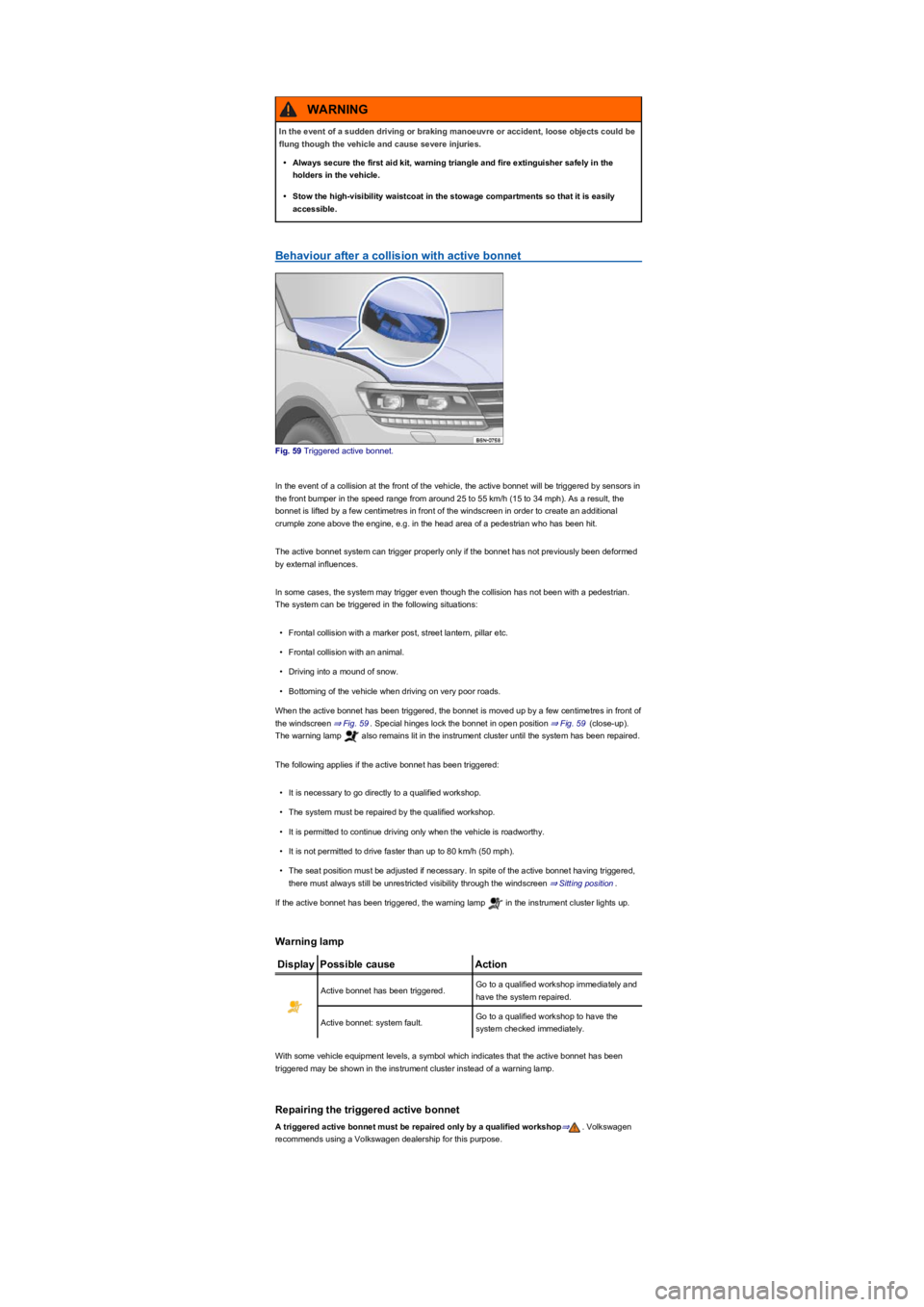
Fig. 59 Triggered active bonnet.
In the event of a collision at the front of the vehicle, the active bonnet will be triggered by sensors in
the front bumper in the speed range from around 25 to 55 km/h (15 to 34 mph). As a result, the
bonnet is lifted by a few centimetres in front of the windscreen in order to create an additional
crumple zone above the engine, e.g. in the head area of a pedestrian who has been hit.
The active bonnet system can trigger properly only if the bonnet has not previously been deformed
by external influences.
In some cases, the system may trigger even though the collision has not been with a pedestrian.
The system can be triggered in the following situations:
•Frontal collision with a marker post, street lantern, pillar etc.
•Frontal collision with an animal.
•Driving into a mound of snow.
•Bottoming of the vehicle when driving on very poor roads.
When the active bonnet has been triggered, the bonnet is moved up by a few centimetres in front of
the windscreen ⇒ Fig. 59. Special hinges lock the bonnet in open position ⇒ Fig. 59 (close-up).
The warning lamp also remains lit in the instrument cluster until the system has been repaired.
The following applies if the active bonnet has been triggered:
•It is necessary to go directly to a qualified workshop.
•The system must be repaired by the qualified workshop.
•It is permitted to continue driving only when the vehicle is roadworthy.
•It is not permitted to drive faster than up to 80 km/h (50 mph).
•The seat position must be adjusted if necessary. In spite of the active bonnet having triggered,
there must always still be unrestricted visibility through the windscreen ⇒ Sitting position.
If the active bonnet has been triggered, the warning lamp in the instrument cluster lights up.
Warning lamp
DisplayPossible causeAction
Active bonnet has been triggered.Go to a qualified workshop immediately and
have the system repaired.
Active bonnet: system fault.Go to a qualified workshop to have the
system checked immediately.
With some vehicle equipment levels, a symbol which indicates that the active bonnet has been
triggered may be shown in the instrument cluster instead of a warning lamp.
Repairing the triggered active bonnet
A triggered active bonnet must be repaired only by a qualified workshop⇒. Volkswagen
recommends using a Volkswagen dealership for this purpose.
In the event of a sudden driving or braking manoeuvre or accident, loose objects could be
flung though the vehicle and cause severe injuries.
•Always secure the first aid kit, warning triangle and fire extinguisher safely in the
holders in the vehicle.
•Stow the high-visibility waistcoat in the stowage compartments so that it is easily
accessible.
WARNING
Page 74 of 341
The anti-theft alarm is activated automatically when the vehicle is locked using the vehicle key.
When does the system trigger an alarm?
The anti-theft alarm issues acoustic and visual alarm signals for up to five minutes if any of the
following unauthorised actions are performed while the vehicle is locked:
•A door that was unlocked mechanically with the vehicle key is opened.
•A door is opened.
•The bonnet is opened.
•The boot lid is opened.
•Switch on the ignition using an invalid vehicle key.
•If the 12-volt vehicle battery is disconnected.
•Movement inside the vehicle (in vehicles with interior monitoring ⇒ Interior monitoring system
and anti-tow alarm).
•The vehicle is towed (in vehicles with anti-tow alarm ⇒ Interior monitoring system and anti-tow
alarm).
•The vehicle is lifted (in vehicles with anti-tow alarm ⇒ Interior monitoring system and anti-tow
alarm).
•The vehicle is transported on a car ferry or by rail (in vehicles with anti-tow alarm or interior
monitoring ⇒ Interior monitoring system and anti-tow alarm).
•A trailer that is connected to the anti-theft alarm system is removed ⇒ Trailer towing.
Switching off the alarm
•Unlock the vehicle using the unlocking button on the vehicle key.
•OR: switch on the ignition using a valid vehicle key. A short alarm lasting around one second
may sound.
•In vehicles with keyless access, the alarm can also be switched off by gripping the door handle
⇒ Locking and unlocking the vehicle with keyless access.
The alarm will be triggered again if a person gains access to the same or a different secured
zone after the alarm has been switched off.
The anti-theft alarm will not be activated if the vehicle is locked from the inside using the
central locking button .
If you unlock the driver door mechanically using the vehicle key, only the driver door is
unlocked, and not the whole vehicle. The SAFELOCK mechanism on all doors is not deactivated
and the central locking button is not activated until you switch on the ignition (however the doors will
not be unlocked).
The anti-theft alarm will not function correctly if the 12-volt vehicle battery is weak or
discharged.
Interior monitoring system and anti-tow alarm
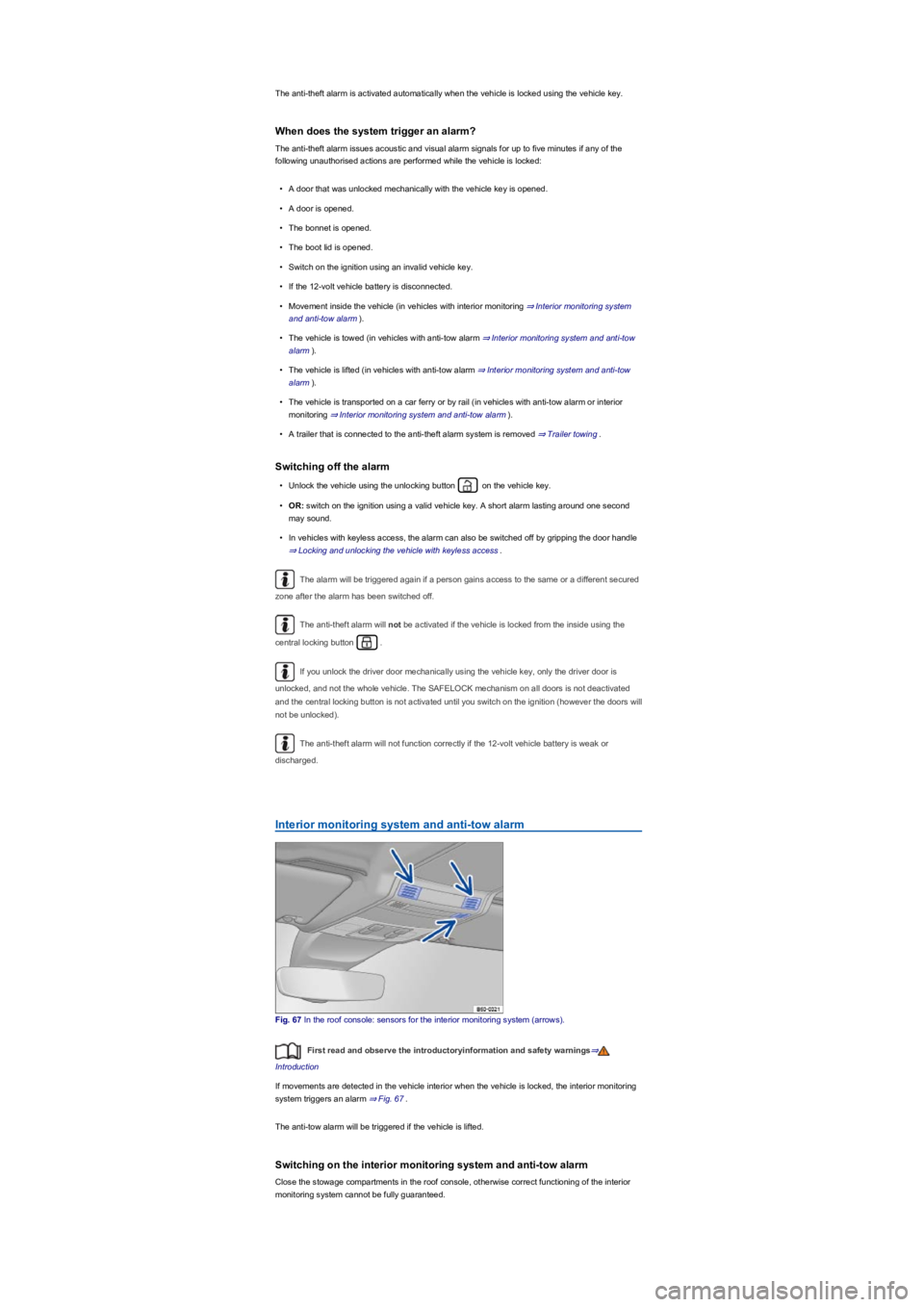
Fig. 67 In the roof console: sensors for the interior monitoring system (arrows).
First read and observe the introductoryinformation and safety warnings⇒
Introduction
If movements are detected in the vehicle interior when the vehicle is locked, the interior monitoring
system triggers an alarm ⇒ Fig. 67.
The anti-tow alarm will be triggered if the vehicle is lifted.
Switching on the interior monitoring system and anti-tow alarm
Close the stowage compartments in the roof console, otherwise correct functioning of the interior
monitoring system cannot be fully guaranteed.
Page 143 of 341
Conditions that require a manual engine start
The engine must be started manually under the following conditions:
•If the driver door is opened.
•If the bonnet is opened.
Activating and deactivating the start/stop system manually
•Press the button in the centre console ⇒ Fig. 121 to deactivate the system. If the
start/stop system has been deactivated, the indicator lamp in the button lights up.
•Press the button in the centre console again ⇒ Fig. 121 to reactivate the system.
The instrument cluster shows the status of the start/stop system every time the button is
pressed.
If the start/stop system has switched the engine off, it will start again as soon as the system has
been deactivated manually with the button.
Always deactivate the start/stop system manually when driving through water.
Start/stop mode when Adaptive Cruise Control (ACC) is active
The engine will be switched off after the Adaptive Cruise Control (ACC) has brought the vehicle to a
standstill via an active braking intervention ⇒ Adaptive Cruise Control (ACC).
m/k/a995MKVehicles with DSG dual clutch gearbox: when the Adaptive Cruise Control
(ACC) is active, the DSG dual clutch gearbox can shift into coasting mode and the engine can be
switched off with the engine-off coasting function.
In the following instances, the engine will restart when the Adaptive Cruise Control (ACC) is active:
•If the accelerator is depressed.
•When the Adaptive Cruise Control (ACC) has resumed speed and automatic distance control.
•If the vehicle ahead has moved on.
•If the Adaptive Cruise Control (ACC) is deactivated and the vehicle driving in front moved away.
Troubleshooting
The engine stop function may be deactivated if the temperature is above around 38°C (100°F).
In some cases, it may be necessary to restart the engine manually. Follow any
corresponding messages on the instrument cluster display.
The start/stop function is activated automatically if the Eco driving profile is selected on
vehicles with driving profile selection ⇒ Driving profile selection and 4MOTION Active Control.
Always deactivate the start/stop system manually when driving through water.
Manual gearbox: selecting a gear
®
Never switch off the engine or the ignition while the vehicle is in motion. This can lead to a
loss of vehicle control, accidents and serious injuries.
•The airbags and belt tensioners will not work if the ignition is switched off.
•The brake servo will not work when the engine is switched off. That is why more
pressure on the brake pedal is needed to brake the vehicle when the engine is
switched off.
•The power steering will not work when the engine is not running. More power is
needed to steer the vehicle when the engine is switched off.
•When the ignition is switched off, the steering lock may activate and you will no longer
be able to steer the vehicle.
•The start/stop system must be deactivated if work is to be carried out in the engine
compartment.
WARNING
If the start/stop system is used in very high outside temperatures over a long period, the
12-volt vehicle battery can be damaged.
NOTICE
Page 255 of 341
Check to see if a fuse has blown Changing fuses.
Follow the instructions to change the affected bulb . Always use identical bulbs with the
same designation. The designation is inscribed on the bulb, either on the glass part or on
the base.
Do not touch the glass part of the bulb with unprotected fingers. The heat of the bulb would
cause the fingerprint to evaporate and condense on the reflector. This will impair the
brightness of the headlight.
After changing the bulb, check to ensure that the bulb is working properly. If the bulb is not
working properly, the bulb may not have been inserted properly or may have failed again,
or the connector may have been inserted incorrectly.
Any time you change a bulb in the front of the vehicle, the headlight settings should be
checked by a qualified workshop.
Changing bulbs in the headlights (halogen bulbs)
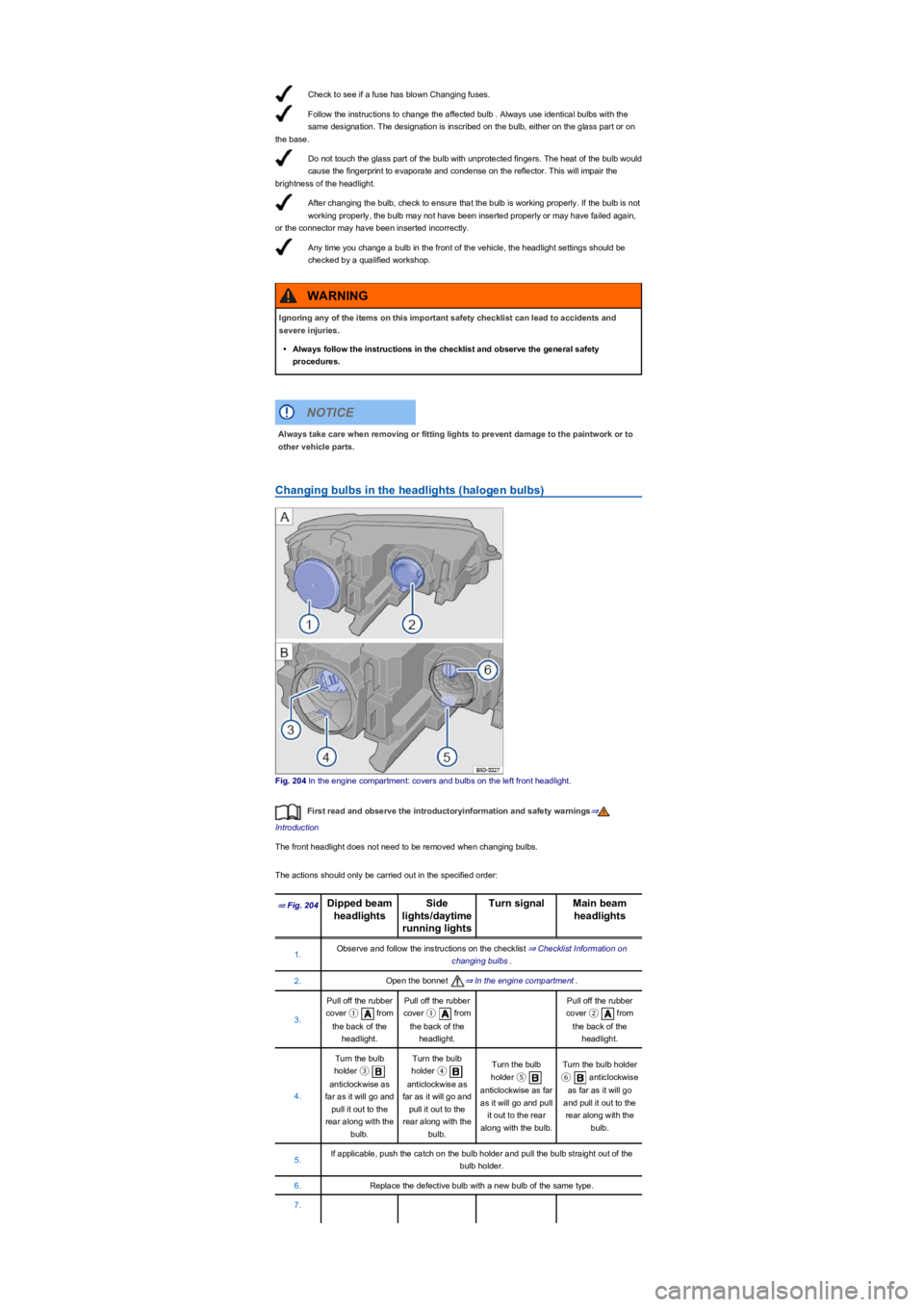
Fig. 204 In the engine compartment: covers and bulbs on the left front headlight.
First read and observe the introductoryinformation and safety warnings⇒
Introduction
The front headlight does not need to be removed when changing bulbs.
The actions should only be carried out in the specified order:
⇒ Fig. 204Dipped beam
headlights
Side
lights/daytime
running lights
Turn signalMain beam
headlights
1.Observe and follow the instructions on the checklist ⇒ Checklist Information on
changing bulbs.
2.Open the bonnet ⇒ In the engine compartment.
3.
Pull off the rubber
cover ① from
the back of the
headlight.
Pull off the rubber
cover ① from
the back of the
headlight.
Pull off the rubber
cover ② from
the back of the
headlight.
4.
Turn the bulb
holder ③
anticlockwise as
far as it will go and
pull it out to the
rear along with the
bulb.
Turn the bulb
holder ④
anticlockwise as
far as it will go and
pull it out to the
rear along with the
bulb.
Turn the bulb
holder ⑤
anticlockwise as far
as it will go and pull
it out to the rear
along with the bulb.
Turn the bulb holder
⑥ anticlockwise
as far as it will go
and pull it out to the
rear along with the
bulb.
5.If applicable, push the catch on the bulb holder and pull the bulb straight out of the
bulb holder.
6.Replace the defective bulb with a new bulb of the same type.
7.
Ignoring any of the items on this important safety checklist can lead to accidents and
severe injuries.
•Always follow the instructions in the checklist and observe the general safety
procedures.
WARNING
Always take care when removing or fitting lights to prevent damage to the paintwork or to
other vehicle parts.
NOTICE
Page 256 of 341
⇒ Fig. 204Dipped beam
headlights
Side
lights/daytime
running lights
Turn signalMain beam
headlights
Insert the bulb
holder ③ into
the headlight and
turn it clockwise as
far as it will go.
Insert the bulb
holder ④ into
the headlight and
turn it clockwise as
far as it will go.
Insert the bulb
holder ⑤ into
the headlight and
turn it clockwise as
far as it will go.
Insert the bulb holder
⑥ into the
headlight and turn it
clockwise as far as it
will go.
8.Fit the rubber
cover ①.
Fit the rubber
cover ①.
Fit the rubber cover
②.
9.Close the bonnet ⇒ In the engine compartment.
The illustrations show the left-hand headlight from the rear. The right-hand headlight is a
mirror image of the one shown.
There are various types of headlight, so the position and design of covers, bulbs and bulb
holders may vary from those shown in the illustrations.
It is not possible for customers to change the LEDs in daytime running lights with LED
technology. Go to a qualified workshop.
Changing bulbs in the front bumper
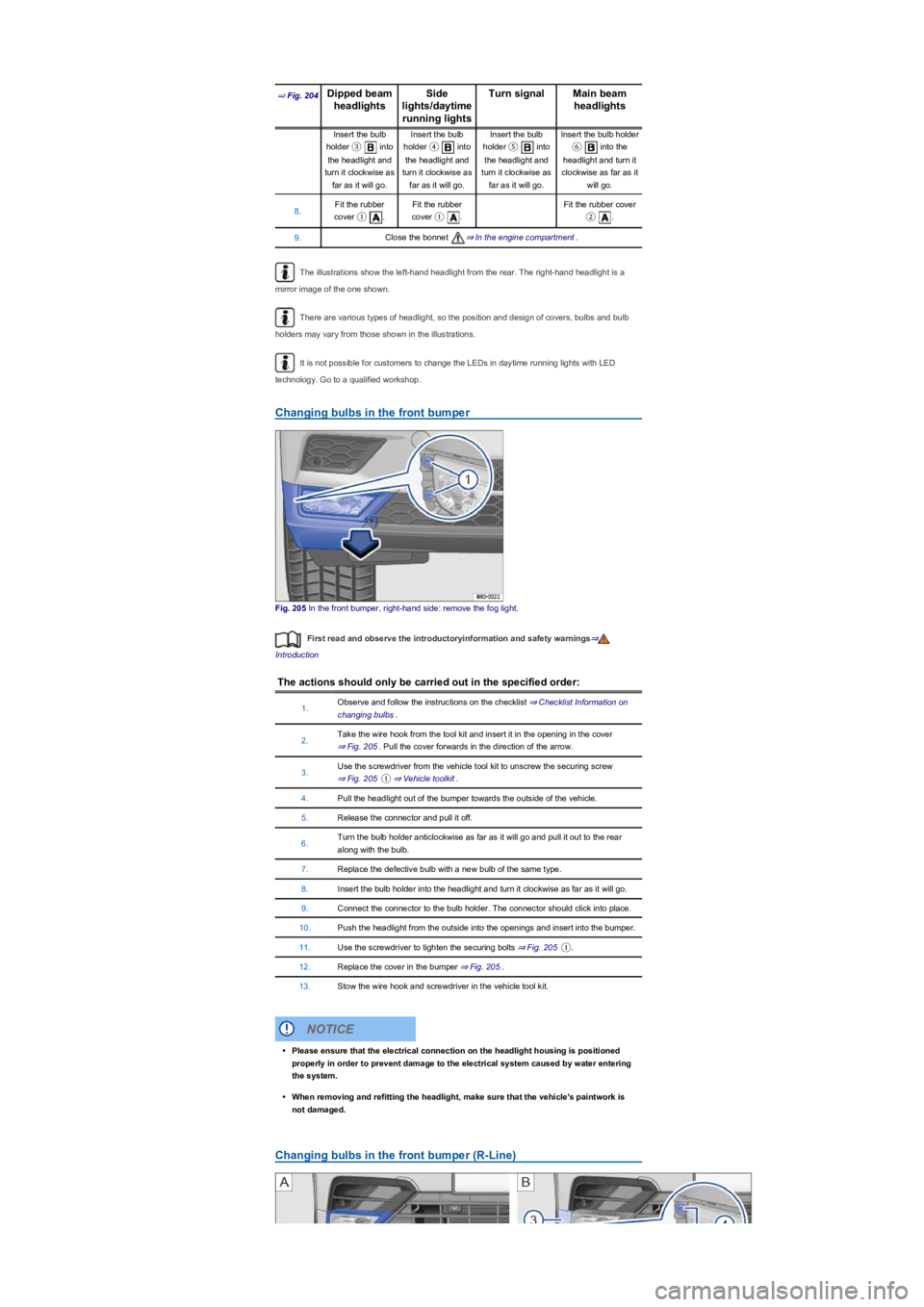
Fig. 205 In the front bumper, right-hand side: remove the fog light.
First read and observe the introductoryinformation and safety warnings⇒
Introduction
The actions should only be carried out in the specified order:
1.Observe and follow the instructions on the checklist ⇒ Checklist Information on
changing bulbs.
2.Take the wire hook from the tool kit and insert it in the opening in the cover
⇒ Fig. 205. Pull the cover forwards in the direction of the arrow.
3.Use the screwdriver from the vehicle tool kit to unscrew the securing screw
⇒ Fig. 205①⇒ Vehicle toolkit.
4.Pull the headlight out of the bumper towards the outside of the vehicle.
5.Release the connector and pull it off.
6.Turn the bulb holder anticlockwise as far as it will go and pull it out to the rear
along with the bulb.
7.Replace the defective bulb with a new bulb of the same type.
8.Insert the bulb holder into the headlight and turn it clockwise as far as it will go.
9.Connect the connector to the bulb holder. The connector should click into place.
10.Push the headlight from the outside into the openings and insert into the bumper.
11.Use the screwdriver to tighten the securing bolts ⇒ Fig. 205①.
12.Replace the cover in the bumper ⇒ Fig. 205.
13.Stow the wire hook and screwdriver in the vehicle tool kit.
Changing bulbs in the front bumper (R-Line)
•Please ensure that the electrical connection on the headlight housing is positioned
properly in order to prevent damage to the electrical system caused by water entering
the system.
•When removing and refitting the headlight, make sure that the vehicle's paintwork is
not damaged.
NOTICE
Page 260 of 341
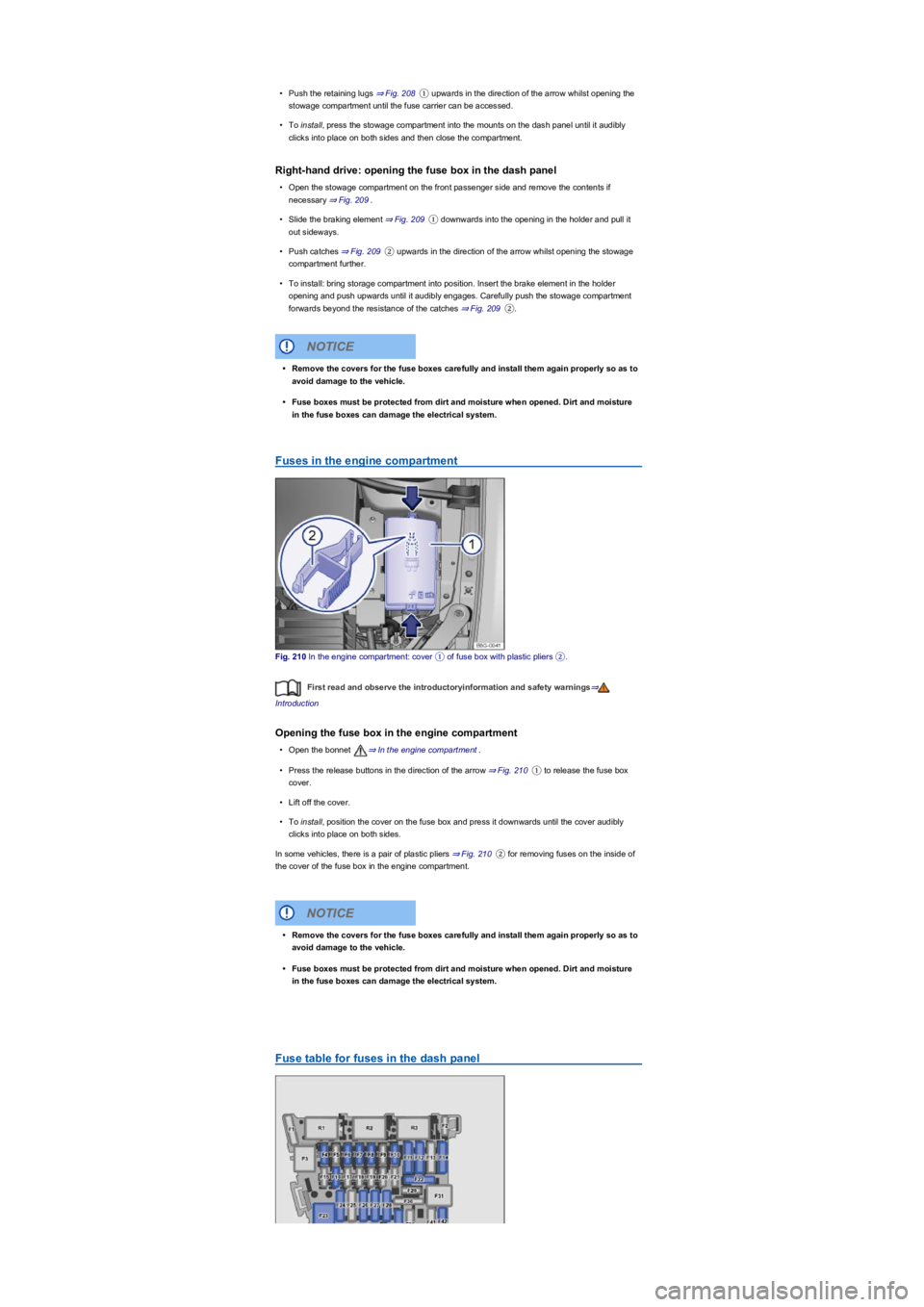
•Push the retaining lugs ⇒ Fig. 208① upwards in the direction of the arrow whilst opening the
stowage compartment until the fuse carrier can be accessed.
•To install, press the stowage compartment into the mounts on the dash panel until it audibly
clicks into place on both sides and then close the compartment.
Right-hand drive: opening the fuse box in the dash panel
•Open the stowage compartment on the front passenger side and remove the contents if
necessary ⇒ Fig. 209.
•Slide the braking element ⇒ Fig. 209① downwards into the opening in the holder and pull it
out sideways.
•Push catches ⇒ Fig. 209② upwards in the direction of the arrow whilst opening the stowage
compartment further.
•To install: bring storage compartment into position. Insert the brake element in the holder
opening and push upwards until it audibly engages. Carefully push the stowage compartment
forwards beyond the resistance of the catches ⇒ Fig. 209②.
Fuses in the engine compartment
Fig. 210 In the engine compartment: cover ① of fuse box with plastic pliers ②.
First read and observe the introductoryinformation and safety warnings⇒
Introduction
Opening the fuse box in the engine compartment
•Open the bonnet ⇒ In the engine compartment.
•Press the release buttons in the direction of the arrow ⇒ Fig. 210① to release the fuse box
cover.
•Lift off the cover.
•To install, position the cover on the fuse box and press it downwards until the cover audibly
clicks into place on both sides.
In some vehicles, there is a pair of plastic pliers ⇒ Fig. 210② for removing fuses on the inside of
the cover of the fuse box in the engine compartment.
Fuse table for fuses in the dash panel
•Remove the covers for the fuse boxes carefully and install them again properly so as to
avoid damage to the vehicle.
•Fuse boxes must be protected from dirt and moisture when opened. Dirt and moisture
in the fuse boxes can damage the electrical system.
NOTICE
•Remove the covers for the fuse boxes carefully and install them again properly so as to
avoid damage to the vehicle.
•Fuse boxes must be protected from dirt and moisture when opened. Dirt and moisture
in the fuse boxes can damage the electrical system.
NOTICE
Page 272 of 341
Safety notes for working in the engine compartment
Always park the vehicle on a level and stable surface before carrying out any work in the engine
compartment.
The engine compartment of a motor vehicle is a hazardous area. You should only carry out work on
the engine, and in the engine compartment, if you know exactly how to perform the required tasks,
are aware of the general safety procedures and have access to the correct equipment, service
fluids and suitable tools. Failing to carry out work correctly can cause serious injuries ⇒. The
work should be carried out by a qualified workshop if you are uncertain. Volkswagen recommends
using a Volkswagen dealership for this purpose.
Unintentional vehicle movements during service work can cause serious injury.
•Never work underneath a vehicle if it is not secured against rolling away. If you are
working underneath the vehicle while the wheels are on the ground, the vehicle must
be on a level, the wheels chocked, and the vehicle key removed from the ignition lock
as required.
•If you have to work underneath the vehicle, use suitable stands to provide extra
support for the vehicle. The vehicle jack is not sufficient for this task and can fail,
which can lead to serious injuries.
•The start/stop system must have been deactivated.
WARNING
The engine compartment of any motor vehicle is a dangerous area. Serious injuries can be
sustained here.
•The utmost care and attention must be paid when carrying out any work and you must
follow the general safety rules. Never take any risks.
•Never do any work on the engine or in the engine compartment unless you know
exactly how to carry it out. If you are uncertain of what to do, the work should be
carried out by a qualified workshop. Serious injuries can result from work that has not
been carried out properly.
•Never open the bonnet if you see steam or coolant escaping from the engine
compartment. Hot steam or hot coolant can cause serious burns. Always wait until you
can no longer see or hear steam or coolant coming from the engine compartment.
•Always allow the engine to cool down before opening the bonnet.
•Hot parts of the engine or exhaust system can burn the skin.
•Observe the following points before opening the bonnet once the engine has cooled
down:
- Switch on the electronic parking brake and move the selector lever to position P
or move the gear lever to the neutral position.
- Switch off the ignition and remove the vehicle key from the ignition lock.
- Always keep children away from the engine compartment and never leave the
vehicle unattended.
•The cooling system is under pressure when the engine is hot. Never open the cap of
the coolant expansion tank when the engine is hot. Coolant may spray out and cause
serious burns and other injuries.
- Slowly and carefully turn the cap on the coolant expansion tank anticlockwise
while exerting gentle downward pressure on the cap.
- Always protect the face, hands and arms from hot coolant or steam with a large,
thick cloth.
•When refilling, do not spill any service fluids on engine components or on the exhaust
system. The spilt service fluids can start a fire.
WARNING
High voltages in the electrical system can cause electric shocks, burns, serious injuries
and death!
•Never short circuit the electric system. The 12-volt battery could explode.
•Please note the following guidelines to help reduce the risk of an electric shock and
serious injuries while the engine is running or being started:
- Never touch the electrical wiring of the ignition system.
- Never touch the electrical wiring and connections of gas discharge bulbs.
WARNING