information VOLKSWAGEN TRANSPORTER 2011 Repair Manual
[x] Cancel search | Manufacturer: VOLKSWAGEN, Model Year: 2011, Model line: TRANSPORTER, Model: VOLKSWAGEN TRANSPORTER 2011Pages: 486, PDF Size: 69.28 MB
Page 78 of 486
• Fold the backrest of the 3-seat bench com-pletely forwards onto the seat cushion.
• Open the centre cover 53®@ below the bench seat, pull the loop @ under the seat cushion, and hold it in this position.
• Push the 3-seat bench forward to the single seats, and release the loop. The 3-seat bench must contact the seat cushions of the single seats.
• Pull the lever 53 CD out fully, until the red marking is visible.
• Fold the backrest of the 3-seat bench com-pletely backwards.
• Make sure that the lever has returned to its original position. The red marking should no longer be visible.
• Fold up the front surface 56® of the multi-flex board.
• Place the supplied mattress on the multi-flex board.
• Fit the elasticised cover to the bed.
A WARNING
Objects that are not secured, or are secured incorrectly, can cause serious injuries in the event of a sudden driving or braking manoeu-vre or accident.
Centre armrest
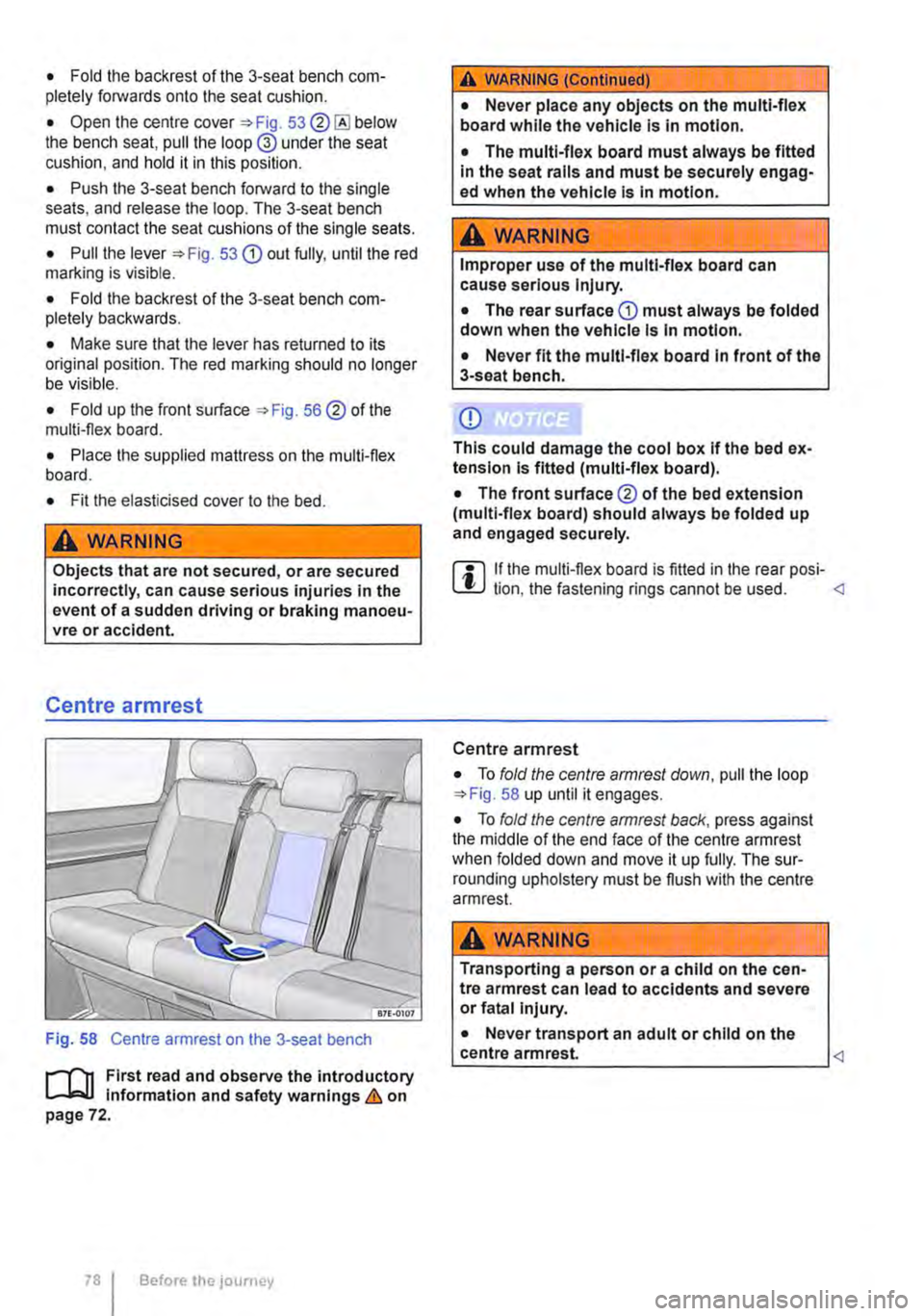
Fig. 58 Centre armrest on the 3-seat bench
1"'1'11 First read and observe the introductory l.-J,::.IJ information and safety warnings & on page 72.
78 Before the journey
A WARNING (Continued)
• Never place any objects on the multi-flex board while the vehicle Is In motion.
• The multi-flex board must always be fitted in the seat rails and must be securely engag-ed when the vehicle Is In motion.
A WARNING
Improper use of the multi-flex board can cause serious Injury.
• The rear surface CD must always be folded down when the vehicle Is In motion.
• Never fit the multi-flex board In front of the 3-seat bench.
Q)
This could damage the cool box If the bed ex-tension Is fitted (multi-flex board).
• The front surface® of the bed extension (multi-flex board) should always be folded up and engaged securely.
m If the multi-flex board is fitted in the rear posi-L!..J lion. the fastening rings cannot be used.
• To fold the centre armrest down, pull the loop 58 up until it engages.
• To fold the centre armrest back, press against the middle of the end face of the centre armrest when folded down and move it up fully. The sur-rounding upholstery must be flush with the centre armrest.
A WARNING
Transporting a person or a child on the cen-tre armrest can lead to accidents and severe or fatal Injury.
• Never transport an adult or child on the
__
Page 79 of 486
Seat belts
o:n Introduction
This chapter contains information on the following subjects:
Warning lamp . . . . . . . . . . . 80
Frontal collisions and the laws of physics 81
What happens to vehicle occupants who have not fastened their seat belts 82
Seat belt protection . . . . . . . . . . . . . . . . . . . . . . 83 Using seat belts . . . . . . . . . . . . . . 83
Fastening and unfastening seat belts . 84 Seat belt routing . . . . . . . . . . . . . . . . . . 85
Belt height adjuster . . . . . . . . . . . . . . . . 86
Automatic belt retractor and belt tensioner . . . 86
Service and disposal of belt tensioners . . 87
Check the condition of all seat belts regularly. If the belt webbing, belt connections, belt retractor or seat belt buckle become damaged, the seat belt in question should be replaced immediately by a qualified workshop=:.&. The qualified workshop must use correct spare parts that are compatible with the vehicle, equipment level and model year. Volkswagen Commercial Vehicles recommends us-ing a Volkswagen Commercial Vehicles dealership for this purpose.
Additional information and warnings:
• Adjusting the seat position =:.page 61
• Seat functions, rear =>page 72
• Airbag system =>page 87
• Child seats (accessories) =:.page 96
• Integrated child seats =:.page 102
• Stowage =>page 150
• Seat functions, rear, Business =>page 182
• Seat functions, rear, California =:.page 193
• Cleaning and caring for the interior =:.page 388
• Accessories, modifications, repairs and renewal of parts =>page 394
A WARNING
Incorrectly fastened or unfastened seat belts increase the risk of severe or fatal injuries. Seat belts will only offer the optimum level of protection when they are fastened and used properly.
A WARNING (Continued)
• Seat belts are the most effective means of reducing the risk of serious and fatal injuries In the event of an accident. Seat belts must always be fastened properly when the vehicle Is In motion to protect the driver and all vehi-cle occupants.
• Before every trip, each vehicle occupant must adopt the correct sitting position, cor-rectly fasten the seat belt belonging to their seat and keep it fastened properly throughout the trip. This applies to all vehicle occupants and also In urban traffic.
• While the vehicle is in motion, secure all children travelling In the vehicle in a restraint system suitable for their weight and height. They must also wear correctly fastened seat belts =>page 96.
• Only start driving when all passengers have correctly fastened their seat belts.
• Only ever insert the latch plate into the buckle of the associated seat, and always en-sure that it engages properly. Using a buckle that does not belong to the seat that you are occupying reduces the level of protection and can lead to severe injuries.
• Avoid allowing foreign bodies or liquids to enter the slot for the seat belt buckle. This could prevent the belt buckle and seat belt from working properly.
• Never unfasten the seat belt while the ve-hicle is in motion.
• Never allow more than one person to share the same seat belt.
• Never travel when children or babies are being carried on somebody's lap and fas-tened with the same belt.
• Never travel wearing loose, bulky clothing (such as an overcoat over a jacket). This could prevent the seat belts from fitting and functioning properly.
A WARNING
Damaged seat belts are very dangerous and can cause severe or fatal Injuries.
• Never damage the belt by trapping it in the door or in the seat mechanism. 11>
Sitting correctly and safely
Page 80 of 486
A WARNING (Continued)
• If the belt webbing or any other part of the seat belt becomes damaged, the seat belt may tear during an accident or sudden brak-Ing manoeuvre.
• Damaged seat belts must be replaced Im-mediately with new seat belts approved by Volkswagen Commercial Vehicles for your ve-hicle type. Seat belts subjected to stress and stretched d urlng an accident must be re-placed by a qualified workshop. Renewal may
Warning lamp
sn-0110
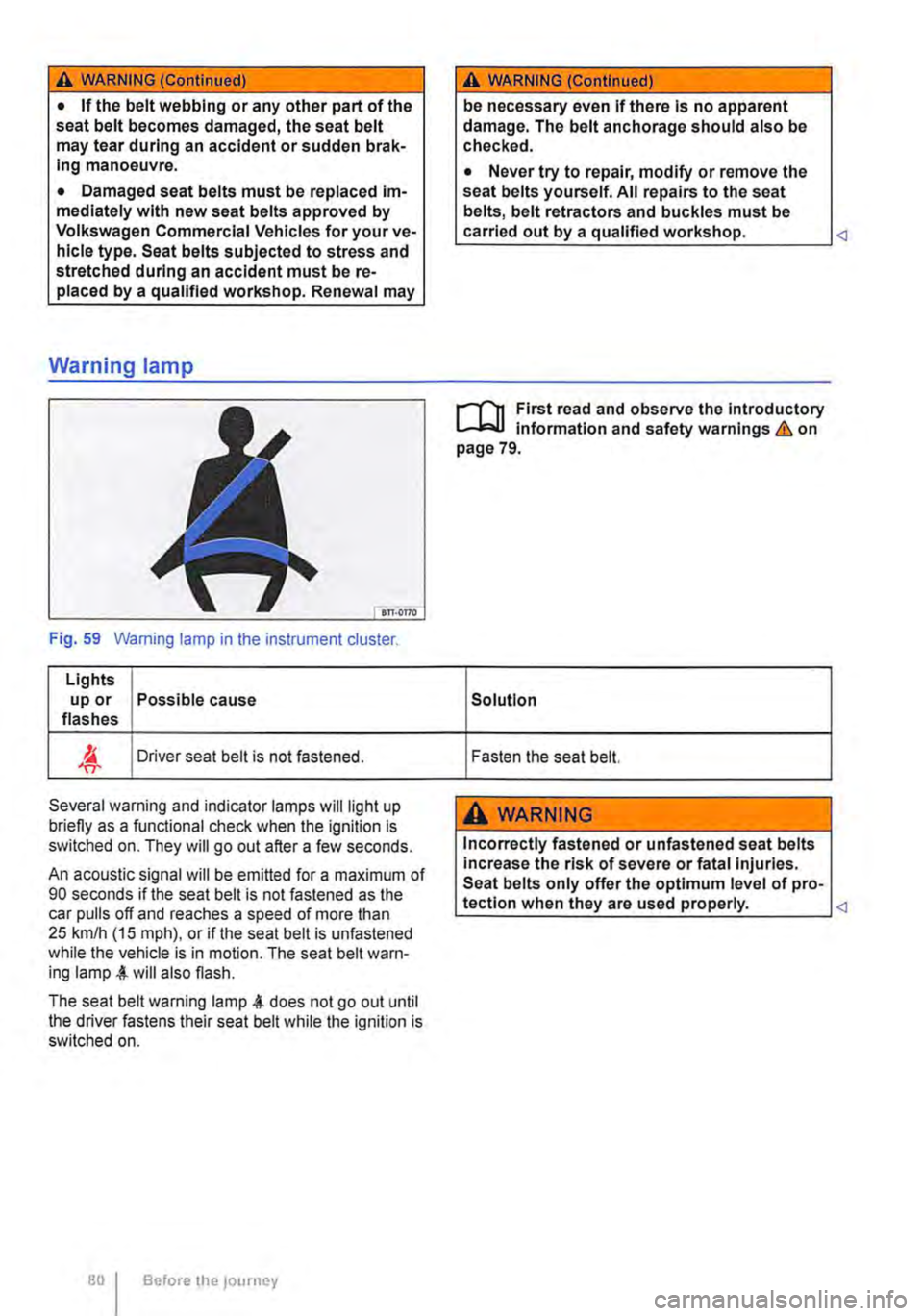
Fig. 59 Warning lamp in the instrument cluster.
Lights up or Possible cause flashes
'IT-Driver seat belt is not fastened.
Several warning and indicator lamps will light up briefly as a functional check when the ignition is switched on. They will go out after a few seconds.
An acoustic signal will be emitted for a maximum of 90 seconds if the seat belt is not fastened as the car pulls off and reaches a speed of more than 25 km/h (15 m ph), or if the seat belt is unfastened while the vehicle is in motion. The seat belt warn-ing will also flash.
The seat belt warning lamp does not go out until the driver fastens their seat belt while the ignition is switched on.
Before the journey
A WARNING (Continued)
be necessary even If there Is no apparent damage. The belt anchorage should also be checked.
• Never try to repair, modify or remove the seat belts yourself. All repairs to the seat belts, belt retractors and buckles must be carried out by a qualified workshop.
r-Y'n First read and observe the Introductory information and safety warnings & on page 79.
Solution
Fasten the seat belt.
A WARNING
Incorrectly fastened or unfastened seat belts Increase the risk of severe or fatal Injuries. Seat belts only offer the optimum level of pro-tection when they are used properly.
Page 81 of 486
Frontal collisions and the laws of physics
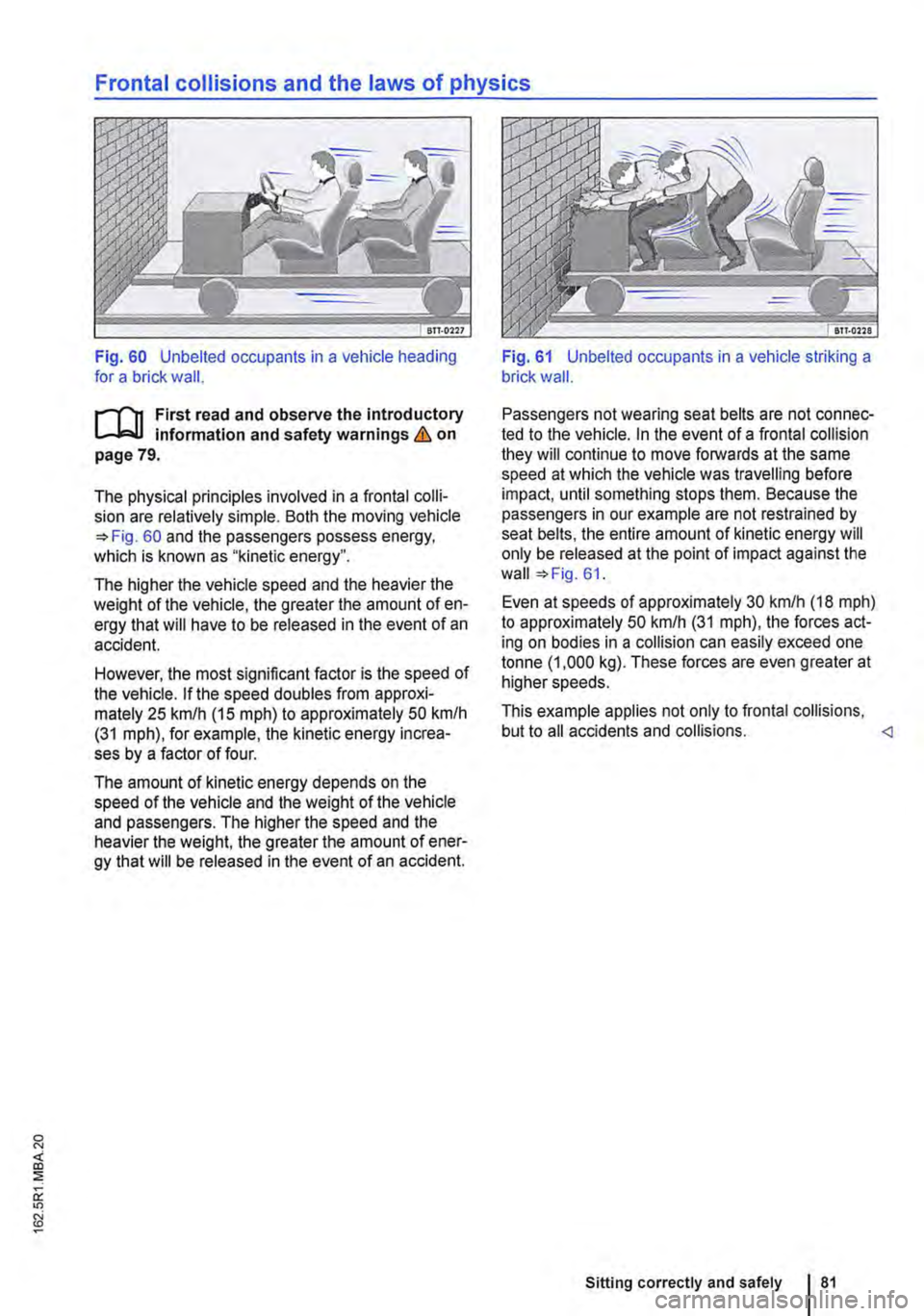
Fig. 60 Unbelted occupants in a vehicle heading for a brick wall.
r"'''"'n First read and observe the introductory information and safety warnings & on page 79.
The physical principles involved in a frontal colli-sion are relatively simple. Both the moving vehicle =>Fig. 60 and the passengers possess energy, which is known as "kinetic energy".
The higher the vehicle speed and the heavier the weight of the vehicle, the greater the amount of en-ergy that will have to be released in the event of an accident.
However, the most significant factor is the speed of the vehicle. If the speed doubles from approxi-mately 25 km/h (15 m ph) to approximately 50 km/h (31 mph), for example, the kinetic energy increa-ses by a factor of four.
The amount of kinetic energy depends on the speed of the vehicle and the weight of the vehicle and passengers. The higher the speed and the heavier the weight, the greater the amount of ener-gy that will be released in the event of an accident.
Fig. 61 Unbelted occupants in a vehicle striking a brick wall.
Passengers not wearing seat belts are not connec-ted to the vehicle. In the event of a frontal collision they will continue to move forwards at the same speed at which the vehicle was travelling before impact, until something stops them. Because the passengers in our example are not restrained by seat belts, the entire amount of kinetic energy will only be released at the point of impact against the wall =>Fig. 61.
Even at speeds of approximately 30 km/h (18 mph) to approximately 50 km/h (31 mph), the forces act-ing on bodies in a collision can easily exceed one tonne (1 ,000 kg). These forces are even greater at higher speeds.
This example applies not only to frontal collisions, but to all accidents and collisions.
Page 82 of 486
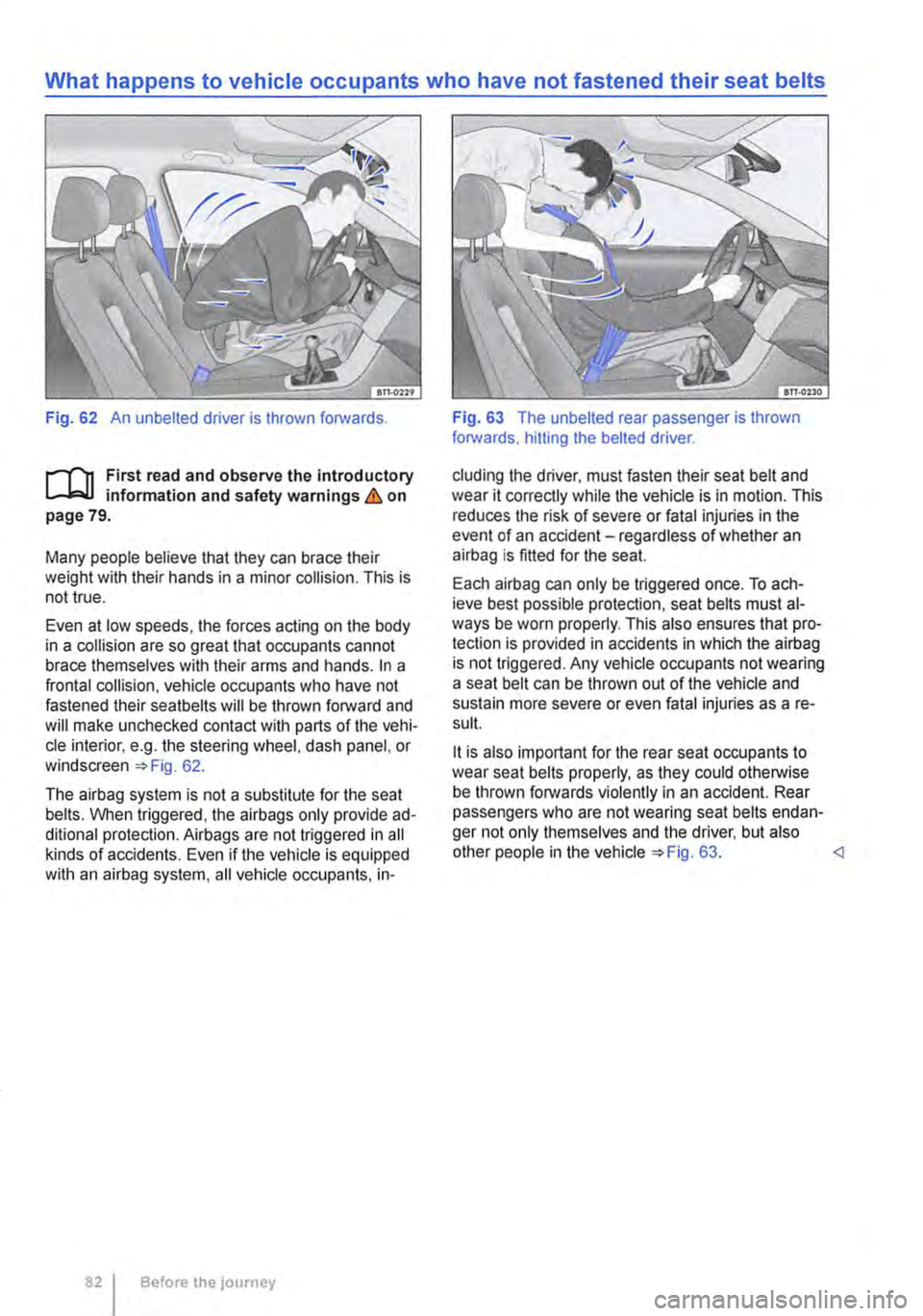
Fig. 62 An unbelted driver is thrown forwards.
r--()1 First read and observe the introductory L-.lo:-U information and safety warnings & on page 79.
Many people believe that they can brace their weight with their hands in a minor collision. This is not true.
Even at low speeds, the forces acting on the body in a collision are so great that occupants cannot brace themselves with their arms and hands. In a frontal collision, vehicle occupants who have not fastened their seatbelts will be thrown forward and will make unchecked contact with parts of the vehi-cle interior, e.g. the steering wheel, dash panel, or windscreen =:-Fig. 62.
The airbag system is not a substitute for the seat belts. When triggered, the airbags only provide ad-ditional protection. Airbags are not triggered in all kinds of accidents. Even if the vehicle is equipped with an airbag system, all vehicle occupants, in-
Before the Journey
Fig. 63 The unbelted rear passenger is thrown forwards, hitting the belted driver.
eluding the driver, must fasten their seat belt and wear it correctly while the vehicle is in motion. This reduces the risk of severe or fatal injuries in the event of an accident-regardless of whether an airbag is fitted for the seat.
Each airbag can only be triggered once. To ach-ieve best possible protection, seat belts must al-ways be worn properly. This also ensures that pro-tection is provided in accidents in which the airbag is not triggered. Any vehicle occupants not wearing a seat belt can be thrown out of the vehicle and sustain more severe or even fatal injuries as a re-sult.
11 is also important for the rear seat occupants to wear seat belts properly, as they could otherwise be thrown forwards violently in an accident. Rear passengers who are not wearing seat belts endan-ger not only themselves and the driver, but also other people in the vehicle =:-Fig. 63.
Page 83 of 486
Seat belt protection
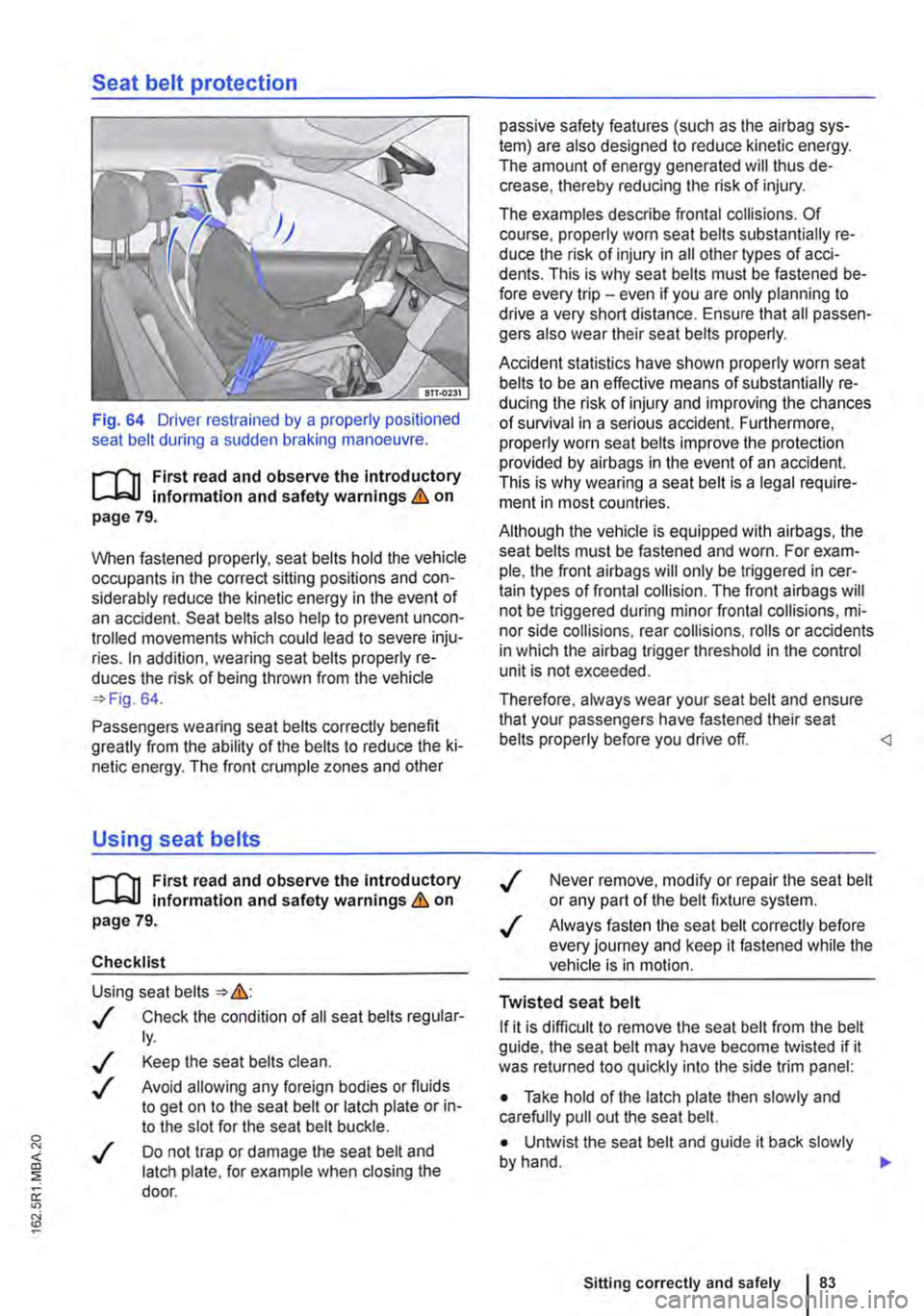
Fig. 64 Driver restrained by a properly positioned seat belt during a sudden braking manoeuvre.
i"111 First read and observe the introductory L..-.lo:.U information and safety warnings & on page 79.
When fastened properly, seat belts hold the vehicle occupants in the correct sitting positions and con-siderably reduce the kinetic energy in the event of an accident. Seat belts also help to prevent uncon-trolled movements which could lead to severe inju-ries. In addition, wearing seat belts properly re-duces the risk of being thrown from the vehicle 64.
Passengers wearing seat belts correctly benefit greatly from the ability of the belts to reduce the ki-netic energy. The front crumple zones and other
Using seat belts
i"111 First read and observe the Introductory L..-.lo:.U Information and safety warnings & on page 79.
Checklist
Using seat belts &:
../ Check the condition of all seat belts regular-ly.
../
../
Keep the seat belts clean.
Avoid allowing any foreign bodies or fluids to get on to the seat belt or latch plate or in-to the slot for the seat belt buckle.
../ Do not trap or damage the seat belt and latch plate. for example when closing the door.
passive safety features (such as the airbag sys-tem) are also designed to reduce kinetic energy. The amount of energy generated will thus de-crease, thereby reducing the risk of injury.
The examples describe frontal collisions. Of course, properly worn seat belts substantially re-duce the risk of injury in all other types of acci-dents. This is why seat belts must be fastened be-fore every trip -even if you are only planning to drive a very short distance. Ensure that all passen-gers also wear their seat belts properly.
Accident statistics have shown properly worn seat belts to be an effective means of substantially re-ducing the risk of injury and improving the chances of survival in a serious accident. Furthermore, properly worn seat belts improve the protection provided by airbags in the event of an accident. This is why wearing a seat belt is a legal require-ment in most countries.
Although the vehicle is equipped with airbags, the seat belts must be fastened and worn. For exam-ple, the front airbags will only be triggered in cer-tain types of frontal collision. The front airbags will not be triggered during minor frontal collisions, mi-nor side collisions, rear collisions. rolls or accidents in which the airbag trigger threshold in the control unit is not exceeded.
Therefore. always wear your seat belt and ensure that your passengers have fastened their seat belts properly before you drive off.
../ Always fasten the seat belt correctly before every journey and keep it fastened while the vehicle is in motion.
Twisted seat belt
If it is difficult to remove the seat belt from the belt guide, the seat belt may have become twisted if it was returned too quickly into the side trim panel:
• Take hold of the latch plate then slowly and carefully pull out the seat belt.
• Untwist the seat belt and guide it back slowly
Sitting correctly and safely
Page 84 of 486
Fasten the seat belt even if you are unable to undo the twist. However, the twist should not be in part of the seat belt that comes into direct contact with the body. The twist should be corrected immediate-ly by a qualified workshop.
A WARNING
Using seat belts incorrectly Increases the risk of severe or fatal Injuries.
Fastening and unfastening seat belts
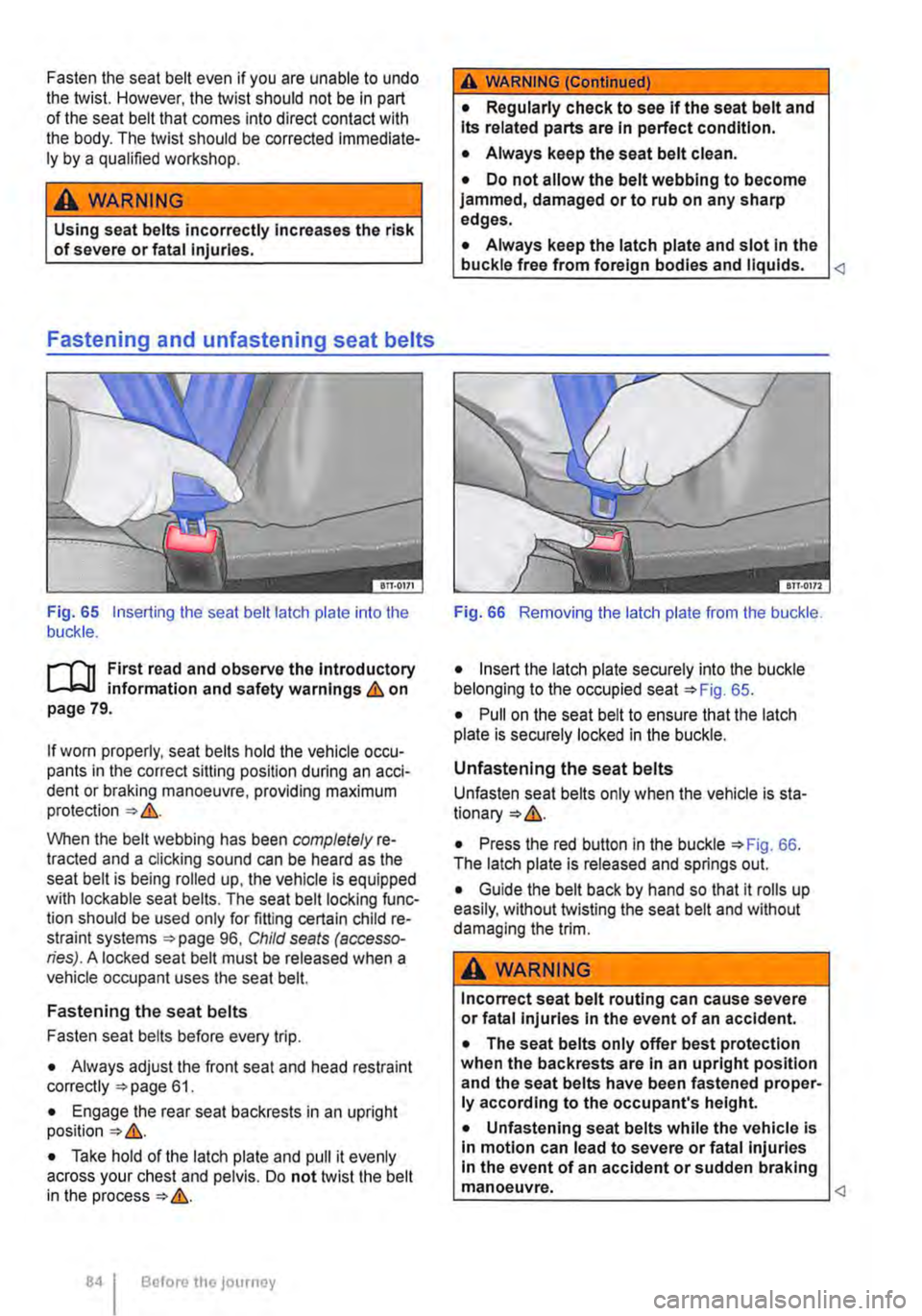
Fig. 65 Inserting the seat belt latch plate into lhe buckle.
f""'"'1'l1 First read and observe the Introductory L-J,:.iJ information and safety warnings & on page 79.
If worn properly, seat belts hold the vehicle occu-pants in the correct sitting position during an acci-dent or braking manoeuvre, providing maximum protection &.
When the belt webbing has been completely re-tracted and a clicking sound can be heard as the seat belt is being rolled up, the vehicle is equipped with lockable seat belts. The seat belt locking func-tion should be used only for fitting certain child re-straint systems 96, Child seals (accesso-ries). A locked seat belt must be released when a vehicle occupant uses the seat belt.
Fastening the seat belts
Fasten seat belts before every trip.
• Always adjust the front seat and head restraint correctly 61.
• Engage the rear seat backrests in an upright position &.
• Take hold of the latch plate and pull it evenly across your chest and pelvis. Do not twist the belt in the process &.
Before the journey
A WARNING (Continued)
• Regularly check to see if the seat belt and Its related parts are In perfect condition.
• Always keep the seat belt clean.
• Do not allow the belt webbing to become jammed, damaged or to rub on any sharp edges.
• Always keep the latch plate and slot In the buckle free from foreign bodies and liquids.
• Insert the latch plate securely into the buckle belonging to the occupied seat 65.
• Pull on the seat belt to ensure that the latch plate is securely locked in the buckle.
Unfastening the seat belts
Unfasten seat belts only when the vehicle is sta-
• Press the red button in the buckle 66. The latch plate is released and springs out.
• Guide the belt back by hand so that it rolls up easily, without twisting the seat belt and without damaging the trim.
A WARNING
Incorrect seat belt routing can cause severe or fatal Injuries In the event of an accident.
• The seat belts only offer best protection when the backrests are In an upright position and the seat belts have been fastened proper-ly according to the occupant's height.
• Unfastening seat belts while the vehicle is In motion can lead to severe or fatal injuries In the event of an accident or sudden braking manoeuvre. <1
Page 86 of 486
A WARNING !Continued)
• The shoulder part of the seat belt must lie on the centre of the shoulder and never un-der the arm or across the neck.
• The seat belt must lie flat and snugly on the chest.
• The lap part of the seat belt must lie across the pelvis and never across the stom-ach. The seat belt must lie flat and snugly on the pelvis. Tighten the belt if necessary.
• For pregnant women, the lap part of the seat belt must be as low as possible over the pelvis and lie flat around the bulge of the bel-ly.
• Do not twist the belt webbing while the seat belt is being worn.
• Never hold the seat belt away from the body by hand.
Belt height adjuster
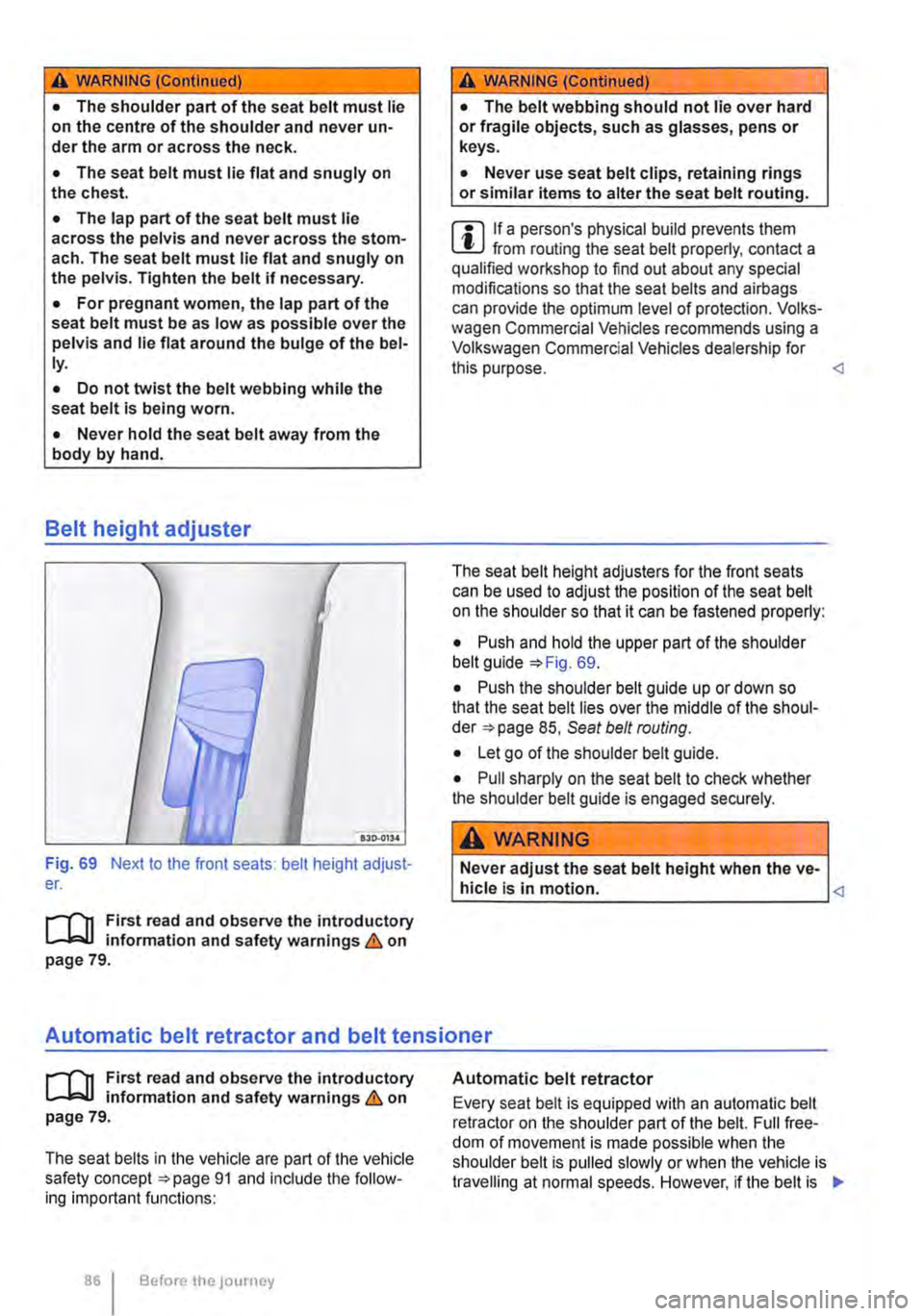
Fig. 69 Next to the front seats: belt height adjust-er.
r--T'n First read and observe the introductory L-W.I information and safety warnings & on page 79.
A WARNING !Continued)
• The belt webbing should not lie over hard or fragile objects, such as glasses, pens or keys.
• Never use seat belt clips, retaining rings or similar items to alter the seat belt routing.
m If a person's physical build prevents them L.!:J from routing the seat belt properly, contact a qualified workshop to find out about any special modifications so that the seat bells and airbags can provide the optimum level of protection. Volks-wagen Commercial Vehicles recommends using a Volkswagen Commercial Vehicles dealership for this purpose.
• Push and hold the upper part of the shoulder belt guide 69.
• Push the shoulder belt guide up or down so that the seat belt lies over the middle of the shoul-der 85, Seat belt routing.
• Let go of the shoulder belt guide.
• Pull sharply on the seat bell to check whether the shoulder belt guide is engaged securely.
Never adjust the seat belt height when the ve-hicle is in motion.
r--f"'n First read and observe the introductory L-W.I information and safety warnings & on page 79.
The seat belts in the vehicle are part of the vehicle safety concept 91 and include the follow-ing important functions:
86 Before the journey
Automatic belt retractor
Every seat belt is equipped with an automatic belt retractor on the shoulder part of the belt. Full free-dom of movement is made possible when the shoulder belt is pulled slowly or when the vehicle is travelling at normal speeds. However, if the belt is IIJ>
Page 87 of 486
pulled out quickly or during sudden braking, during travel in mountains or bends and during acceleration, the automatic belt retractor is locked.
Belt tensioners
The seat belts for the front seat occupants are equipped with belt tensioners.
The belt tensioners are activated by sensors dur-ing severe frontal, side and rear collisions. They tighten the seat belts against the direction in which they are pulled. Any slack in the seat belt is retrac-ted, which can reduce the passenger's movement forwards or in the direction of the impact. The belt
tensioner works together with the airbag system. The belt tensioner will not be activated if the vehi-cle rolls over if the combined curtain and side air-bags are not activated.
A fine dust may be produced when the airbags are triggered. This is quite normal and does not mean that there is a fire in the vehicle.
W All safety requirements must be observed L!.J when the vehicle or components of the sys-tem are scrapped. Qualified workshops are familiar with these requirements 87.
r-f'n First read and observe the introductory L-J,:.U information and safety warnings & on page 79.
Seat belts may become damaged during any work on the belt tensioners or while removing or refitting any vehicle parts in conjunction with any other re-pair work. This damage will not always be noticea-ble. The consequence may be that the belt ten-sioners could function incorrectly, or not function at all, in the event of an accident.
Regulations must be observed to ensure that the effectiveness of the belt tensioner is not reduced and that removed parts do not cause any injuries or environmental pollution. Qualified workshops are familiar with these requirements.
Airbag system
o:lJ Introduction
This chapter contains information on the following subjects:
Types of front passenger airbag systems . . . . 89
Indicator lamp . . . . . . . . . . . . . . . . . . . 89
Description and function of the airbags 90 Front airbags 92 Switching the front passenger front airbag on and off manually using the key-operated switch . . . 93
A WARNING
The risk of severe or fatal injuries may be in-creased if the seat belts, automatic belt re-tractors and belt tensioners are not used cor-rectly, or if they are repaired by a non-profes-sional. As a result, the belt tensioners may not be triggered when they should, or they may be triggered unexpectedly.
• Any repairs, adjustments or removal and refitting of parts in the belt tensioners or seat belts should always be carried out by a quali-fied workshop and never by yourself 394.
• Belt tensioners and automatic belt retrac-tors cannot be repaired. They must be re-placed.
r:Gl:-. The airbag modules and belt tensioners may C!fS contain perchlorate. Please comply with leg-islation regarding disposal.
Curtain airbags . . . . . . . . . . . . . . . . . . . . . . . . . 95
The vehicle is equipped with a front airbag for the driver and front passenger. The front airbags can provide front seat occupants with additional chest and head protection if the seat, seat belts, head re-straints and, in the case of the driver, steering wheel are adjusted and used correctly. Airbags are meant only for additional protection. The airbags .,.
Sitting correctly and safely 87
Page 88 of 486
are not a substitute for seat belts. Seat belts must always be worn, even when the front seats are equipped with front airbags.
Additional information and warnings:
• Driving tips 33
• Central locking system 39
• Correct sitting position 61
• Seat belts 79
• Child seats (accessories) 96
• Cleaning and caring for the interior 388
• Accessories, modifications, repairs and renewal of parts 394
• Consumer information 404
A WARNING
Never rely solely on the airbag system for your protection.
• Even if an alrbag is triggered, it only offers auxiliary protection.
• The airbag system offers the best level of protection, and reduces the risk of injury, when seat belts are properly worn 79, Seat belts.
• Before every trip, each vehicle occupant must adopt the correct sitting position, cor-rectly fasten the seat belt belonging to their seat and keep it fastened properly throughout the trip. This applies to ail vehicle occupants and also in urban traffic.
A WARNING
The risk of injury increases if there are any objects between the vehicle occupants and the deployment area of the airbag when it is triggered. This will alter the deployment zone of the airbag, or the objects will be flung against the body.
• Never hold any objects in your hand or on your lap while the vehicle is in motion.
• Never transport any objects on the front passenger seal The objects could enter the deployment zone of the airbag during sudden braking or driving manoeuvres and then be flung dangerously through the vehicle interi-or if the airbag is activated.
• Vehicle occupants sitting on the front seats and rear outer seats must never carry any people, pets or objects in the deployment zone between themselves and the airbags. Make sure that children and passengers also keep to this rule.
BB I Before the journey
A WARNING
External devices in the vehicle that are not properly secured can be flung though the in-terior and cause injuries, if there is a sudden driving or braking manoeuvre, or in the event of an accident.
• You should never position or attach an ex-ternal device on a door, on the windscreen or above or near to the areas marked "AIRBAG" on the steering wheel, the dash panel and the seat backrests, or between these areas and the vehicle occupants. External devices can cause serious Injury in an accident, especial-ly when the airbags deploy.
A WARNING
The alrbag system can only be triggered once. The system will have to be replaced if the airbags have been triggered.
• Alrbags that have deployed and any affec-ted system parts must be immediately re-placed with new parts that are approved by Volkswagen Commercial Vehicles for the re-spective vehicle.
• Repairs and modifications to your vehicle should only be carried out by a qualified workshop. Qualified workshops have the nec-essary tools, diagnostic equipment, repair in-formation and qualified personnel.
• Never use recycled alrbag components or components that have been taken from end-of-life vehicles in your vehicle.
• Never alter any components of the airbag system.
A WARNING
Fine dust particles or steam may be released when the alrbags trigger. This Is normal and does not mean that there is a fire in the vehi-cle.
• The fine dust can cause irritation to the skin and eye membranes and cause breath-ing difficulties, particularly for people suffer-ing from asthma or people who have {had) other respiratory problems. To help reduce breathing difficulties, get out of the vehicle or open the windows or doors for more fresh air.
• If you come into contact with the dust, you should wash your hands and face with a mild soap and water before eating.
• Do not let the dust get into your eyes or into open wounds.