open bonnet VOLKSWAGEN TRANSPORTER 2012 User Guide
[x] Cancel search | Manufacturer: VOLKSWAGEN, Model Year: 2012, Model line: TRANSPORTER, Model: VOLKSWAGEN TRANSPORTER 2012Pages: 486, PDF Size: 69.28 MB
Page 361 of 486
Checking the coolant level and refilling coolant
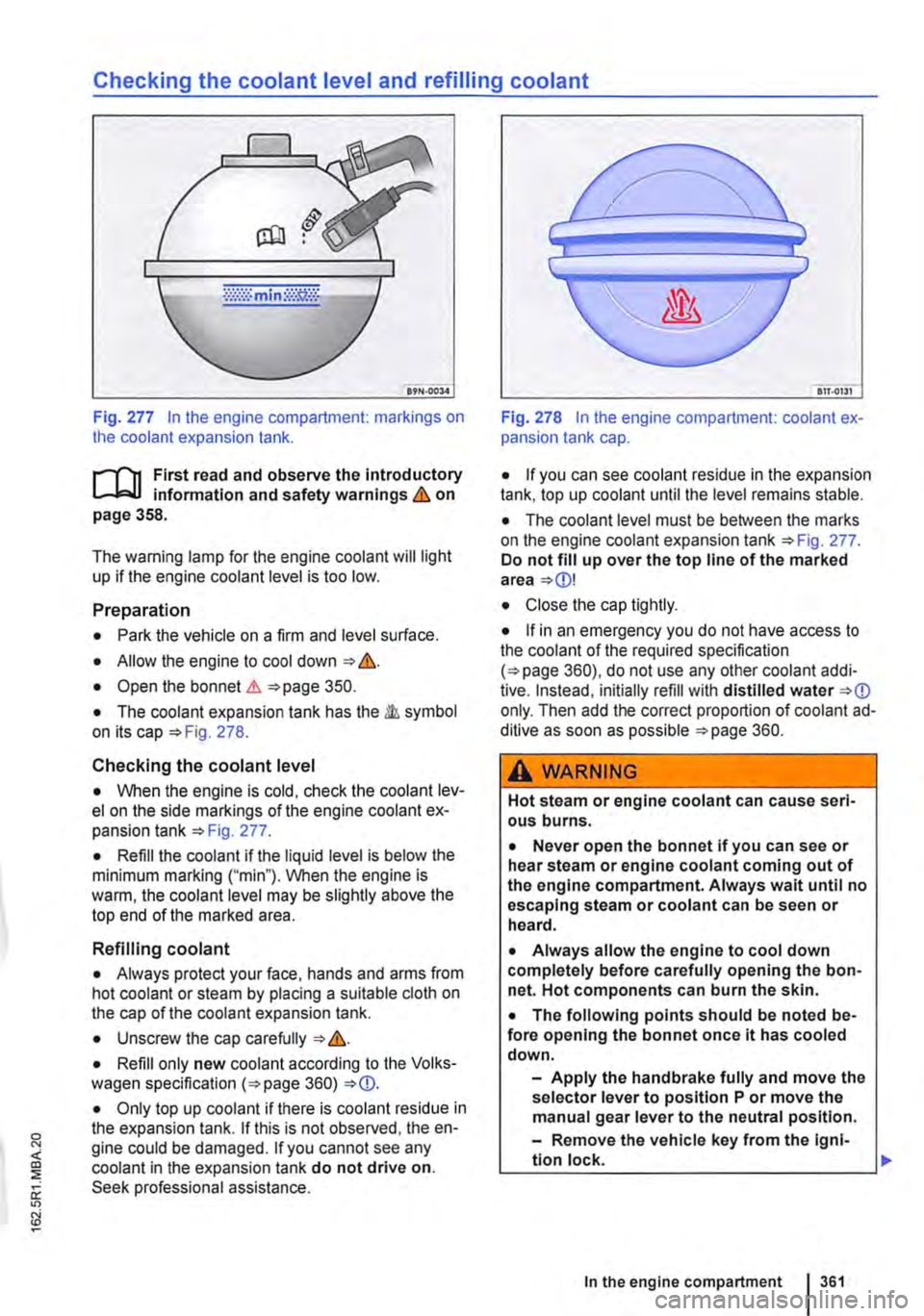
Fig. 277 In the engine compartment: markings on the coolant expansion tank.
r--f'n First read and observe the Introductory information and safety warnings & on page 358.
The warning lamp for the engine coolant will light up if the engine coolant level is too low.
Preparation
• Park the vehicle on a firm and level surface.
• Allow the engine to cool down &.
• Open the bonnet&. 350.
• The coolant expansion tank has the all. symbol on its cap 278.
Checking the coolant level
• When the engine is cold, check the coolant lev-el on the side markings of the engine coolant ex-pansion tank 277.
• Refill the coolant if the liquid level is below the minimum marking ("min"). When the engine is warm, the coolant level may be slightly above the top end of the marked area.
Refilling coolant
• Always protect your face, hands and arms from hot coolant or steam by placing a suitable cloth on the cap of the coolant expansion tank.
• Unscrew the cap carefully &.
• Refill only new coolant according to the Volks-wagen specification 360)
• Only top up coolant if there is coolant residue in the expansion tank. If this is not observed, the en-gine could be damaged. If you cannot see any coolant in the expansion tank do not drive on. Seek professional assistance.
Fig. 278 In the engine compartment: coolant ex-pansion tank cap.
• If you can see coolant residue in the expansion tank, top up coolant until the level remains stable.
• The coolant level must be between the marks on the engine coolant expansion tank 277. Do not fill up over the top line of the marked area
• Close the cap tightly.
• If in an emergency you do not have access to the coolant of the required specification 360), do not use any other coolant addi-tive. Instead, initially refill with distilled water only. Then add the correct proportion of coolant ad-ditive as soon as possible 360.
A WARNING
Hot steam or engine coolant can cause seri-ous burns.
• Never open the bonnet if you can see or hear steam or engine coolant coming out of the engine compartment. Always wait until no escaping steam or coolant can be seen or heard.
• Always allow the engine to cool down completely before carefully opening the bon-net. Hot components can burn the skin.
• The following points should be noted be-fore opening the bonnet once it has cooled down.
-Apply the handbrake fully and move the selector lever to position P or move the manual gear lever to the neutral position.
-Remove the vehicle key from the lgni-
In the engine compartment I 361
Page 364 of 486
Warning lamp
ro First read and observe the Introductory Information and safety warnings & on page 362.
Lit up Possible cause
0 Fault in the alternator.
Several warning and indicator lamps will light up briefly as a functional check when the ignition is switched on. They will go out after a few seconds.
A WARNING
Failure to observe illuminated warning lamps and text messages can lead to your vehicle breaking down In traffic, and can cause acci-dent and serious injury.
Solution
Go to a qualified workshop. Have the electrical system checked. Switch off any electrical consumers that are not required. The vehicle battery will not be charged by the alternator while the vehicle is in motion.
A WARNING (Continued)
• Never ignore any illuminated warning lamps or text messages.
• Stop the vehicle as soon as possible and when safe to do so.
CD
Failure to observe illuminated indicator lamps and text messages can lead to your vehicle be-Ing damaged. <1
Checking the electrolyte level of the vehicle battery
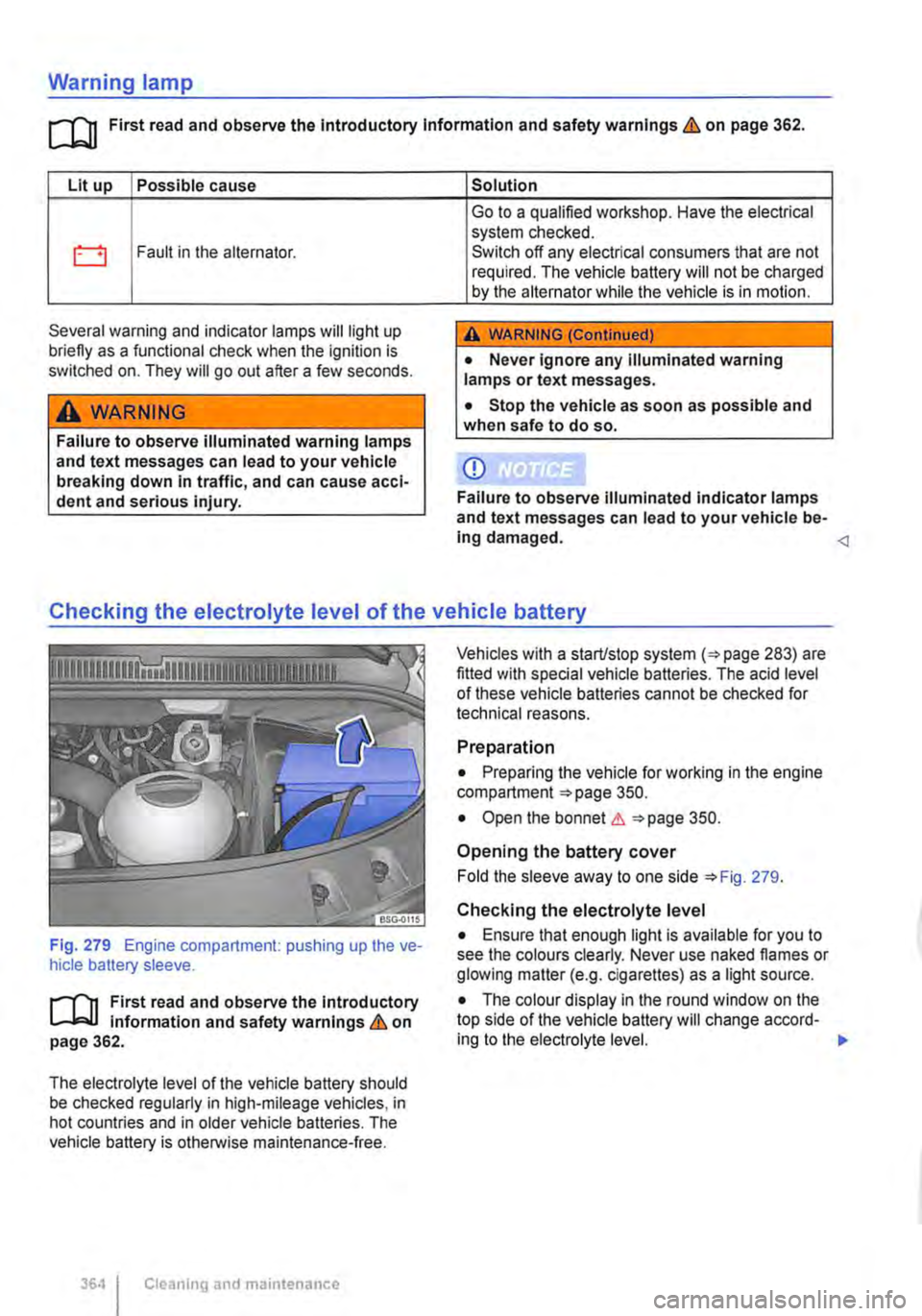
Fig. 279 Engine compartment: pushing up the ve-hicle battery sleeve.
r-111 First read and observe the Introductory l-Jo=,.lJ Information and safety warnings & on page 362.
The electrolyte level of the vehicle battery should be checked regularly in high-mileage vehicles, in hot countries and in older vehicle batteries. The vehicle battery is otherwise maintenance-free.
364 I Cleaning and maintenance
Vehicles with a starUstop system (=>page 283) are fitted with special vehicle batteries. The acid level of these vehicle batteries cannot be checked for technical reasons.
Preparation
• Preparing the vehicle for working in the engine compartment =>page 350.
• Open the bonnet &::. =>page 350.
Opening the battery cover
Fold the sleeve away to one side =>Fig. 279.
Checking the electrolyte level
• Ensure that enough light is available for you to see the colours clearly. Never use naked flames or glowing matter (e.g. cigarettes) as a light source.
• The colour display in the round window on the top side of the vehicle battery will change accord-ing to the electrolyte level.
Page 381 of 486
Washing the vehicle
r-f'n First read and observe the introductory Information and safety warnings & on page 380.
The longer substances such as insects, bird drop-pings, resinous tree sap, road dirt, industrial de-posits, tar, soot or road salt and other corrosive materials remain on the vehicle, the more damage they do to the paintwork. High temperatures (for in-stance in strong sunlight) accelerate the corrosion process. The underside of the vehicle should also be cleaned thoroughly and regularly.
Car washes
Please observe the signs on the automatic car wash. Before using an automatic car wash take the usual precautions, such as closing all windows and folding in the exterior mirrors, in order to avoid damage to the vehicle. You must consult the car wash operator if there are special parts on your ve-hicle such as spoilers, roof luggage carrier systems or radio aerials ::.CD.
The paint is so hard-wearing that the car can nor-mally be washed without problems in an automatic car wash. However, the effect on the paint de-pends to a large extent on the design of the car wash. Volkswagen Commercial Vehicles recom-mends the use of car washes without brushes.
To remove any wax residue from the windows and to stop wipers rubbing, please note the following points ::.page 382, Cleaning windows and exterior mirrors.
Washing the car by hand
When washing by hand, first soften the dirt with plenty of water and rinse off as well as possible.
Then clean the vehicle with a soft sponge, a glove or a brush using only light pressure. Start with the roof and work from the top to the bottom. Use a shampoo for very stubborn dirt only.
The sponge or glove should be wrung out thor-oughly at regular intervals.
Clean the wheels, sill panels etc. last. Use a differ-ent sponge for this purpose.
A WARNING
Parts of the vehicle with sharp edges can cause Injury.
• Protect your hands and arms from cuts on sharp parts, for example when cleaning the underbody or the inside of the wheel hous-lngs.
A WARNING
After the car has been washed, the braking effect could set in later than normal and ex-tend the braking distance as the brake discs and brake pads will be wet, or iced up In win-ter.
• You can "dry and de-ice" the brakes by performing careful braking manoeuvres. Make sure that you do not endanger any oth-er road users or violate any legal regulations when doing so.
CD
• The water should be no warmer than +so•c (+140.FJ.
• Do not wash the vehicle in direct sunlight in order to avoid damage to the vehicle palntwork.
• Never clean with insect sponges, rough kitchen sponges or similar products as these can damage the surface.
• Never clean the headlights with a dry cloth or sponge. Always use a wet cloth or sponge. lt is best to use soapy water.
• Washing the vehicle In cold weather: if the vehicle is rinsed with a hose, do not direct the water at the lock cylinders or the gaps around the doors, boot, or bonnet. The locks and seals could freeze.
CD
Observe the following guidelines before driving the vehicle into an automatic car wash in order to avoid damage to the vehicle:
• Ensure that the gap between the guide rails In the car wash is sufficient for the vehicle track. If the track is too narrow your wheels and tyres will be damaged.
• Switch off the rain sensor before driving the vehicle Into an automatic car wash.
• Check that the car wash is tall and wide enough for your vehicle.
• Fold In the exterior mirrors. Electrically fold-Ing exterior mirrors must be moved electrically. Do not fold them in and out by hand.
• In order to prevent damage to the palntwork on the bonnet, fold the wipers back onto the windscreen after drying the wiper blades. Do not drop the wipers onto the glass.
• Lock the tailgate to prevent it from opening accidentally In the car wash.
Page 399 of 486
Additional functions that are contractually agreed with the customer, e.g. vehicle positioning in an emergency, allow certain vehicle data to be trans-mitted from the vehicle.
Event data recorder
The vehicle is not fitted with an event data record-er.
Event data recorders temporarily store vehicle in-formation. This provides precise information in the event of an accident. In vehicles with an airbag system, data that might be relevant in the event of an accident can be stored, e.g. impact speed, belt buckle status, seat positions and trigger speed. The scope of the data is manufacturer-specific.
An event data recorder may only be fitted if the owner has approved the procedure. This is cov-ered by legislation in some countries.
Reprogramming control units
All data for the control of components are stored in the control units. Some convenience functions, such as lane change flash, single door unlocking and displays, can be reprogrammed using special workshop equipment. If this is the case, the de-scriptions in your vehicle wallet will no longer cor-respond with the original functions. Volkswagen Commercial Vehicles recommends that any re-programming should be confirmed in the service schedule under "Workshop comments".
Information about possible reprogramming can be obtained from the Volkswagen dealership.
Reading the vehicle's event memory
There is a diagnostic interface for reading the event memories in the vehicle interior &. Data relating to the function and status of the electronic control units are stored in the event memory. Addi-tional information on the stored data is available from qualified workshops.
The diagnosis interface is located in the footwell on the driver side behind a cover next to the lever for opening the bonnet.
The event memory should only be read and reset by a qualified workshop.
After a fault has been rectified, the information in the memory pertaining to the fault is deleted. Other memory content is overwritten on an on-going ba-sis.
A WARNING
Incorrect use of the diagnostic Interface can cause faults, which can result in accidents and serious injuries.
• Never read the event memory using the di-agnostic Interface yourself.
• The diagnostic Interface should only be read by a qualified workshop.
external aerial
,...--.m First read and observe the introductory L--I=>U information and safety warnings & on page 394.
Both during telephone calls and in standby mode, mobile telephones transmit and receive radio waves, which may also be termed "high-frequency energy". Current scientific literature warns us that radio waves can be harmful to human beings if they exceed certain limits. Government bodies and international committees have introduced threshold values and guidelines to ensure that electromag-netic radiation produced by mobile telephones does not pose a hazard to health. However, there is no proven scientific evidence that demonstrates that cordless telephones are absolutely safe.
For this reason, some experts are calling for more precautions to be taken in the use of mobile tele-phones, by taking steps to reduce the level of per-sonal exposure to electromagnetic radiation.
If a mobile telephone that is not connected to the vehicle's external aerial is used inside the vehicle, the level of electromagnetic radiation could be higher than when the mobile telephone is connec-ted to an integrated aerial or any other external aerial.
If the vehicle is fitted with a suitable hands-free unit which enables the use of innumerable additional functions of Bluetooth® compatible mobile tele-phones, this will satisfy the legal requirements in many countries which permit the use of a mobile telephone in a vehicle only if a hands-free unit is used.
The factory-fitted hands-free system in your vehicle has been developed for use with mobile tele-phones that are compatible with Bluetooth®_ Mo-bile telephones must be carried in a suitable tele-phone holder or be stored securely in the vehicle. If a telephone holder is used it must be securely at-tached to the base plate. This is the only way to .,.
Vehicle care and maintenance 399
Page 431 of 486
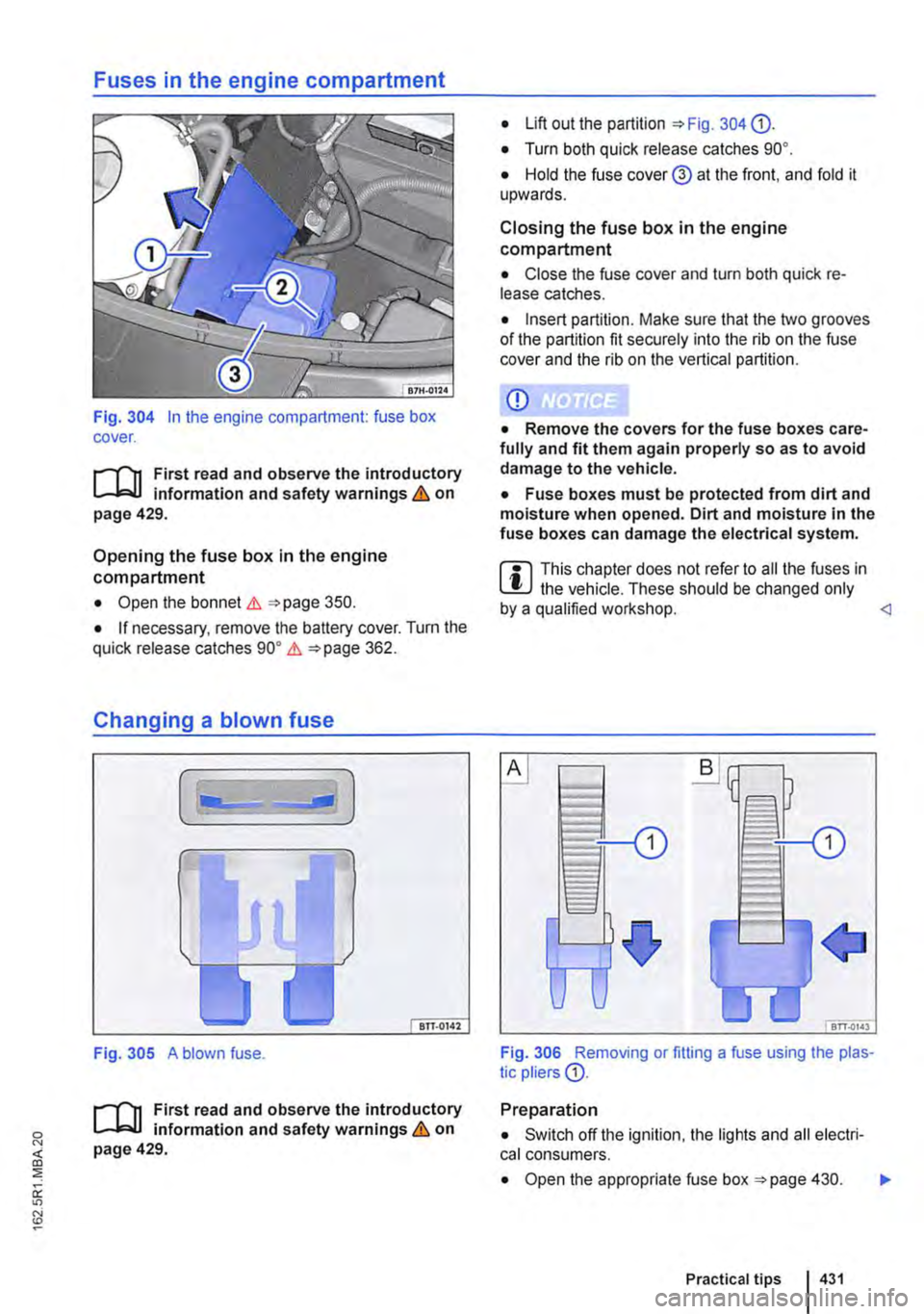
Fig. 304 In the engine compartment: fuse box cover.
;-('n First read and observe the introductory L-Jc.IJ information and safety warnings & on page 429.
Opening the fuse box in the engine compartment
• Open the bonnet .1. =<>page 350.
• If necessary, remove the battery cover. Turn the quick release catches go• .1. =<>page 362.
Changing a blown fuse
Fig. 305 A blown fuse.
;-('n First read and observe the introductory L-Jc.IJ information and safety warnings & on page 429.
• Lift out the partition =<>Fig. 304 0).
• Turn both quick release catches go•.
• Hold the fuse cover@ at the front. and fold it upwards.
Closing the fuse box in the engine compartment
• Close the fuse cover and turn both quick re-lease catches.
• Insert partition. Make sure that the two grooves of the partition fit securely into the rib on the fuse cover and the rib on the vertical partition.
CD
• Remove the covers for the fuse boxes care-fully and fit them again properly so as to avoid damage to the vehicle.
• Fuse boxes must be protected from dirt and moisture when opened. Dirt and moisture in the fuse boxes can damage the electrical system.
m This chapter does not refer to all the fuses in L!J the vehicle. These should be changed only by a qualified workshop.
Preparation
• Switch off the ignition, the lights and all electri-cal consumers.
• Open the appropriate fuse box =<>page 430. .,..
Practical tips I 431
Page 435 of 486
Changing bulbs in H4 halogen headlights
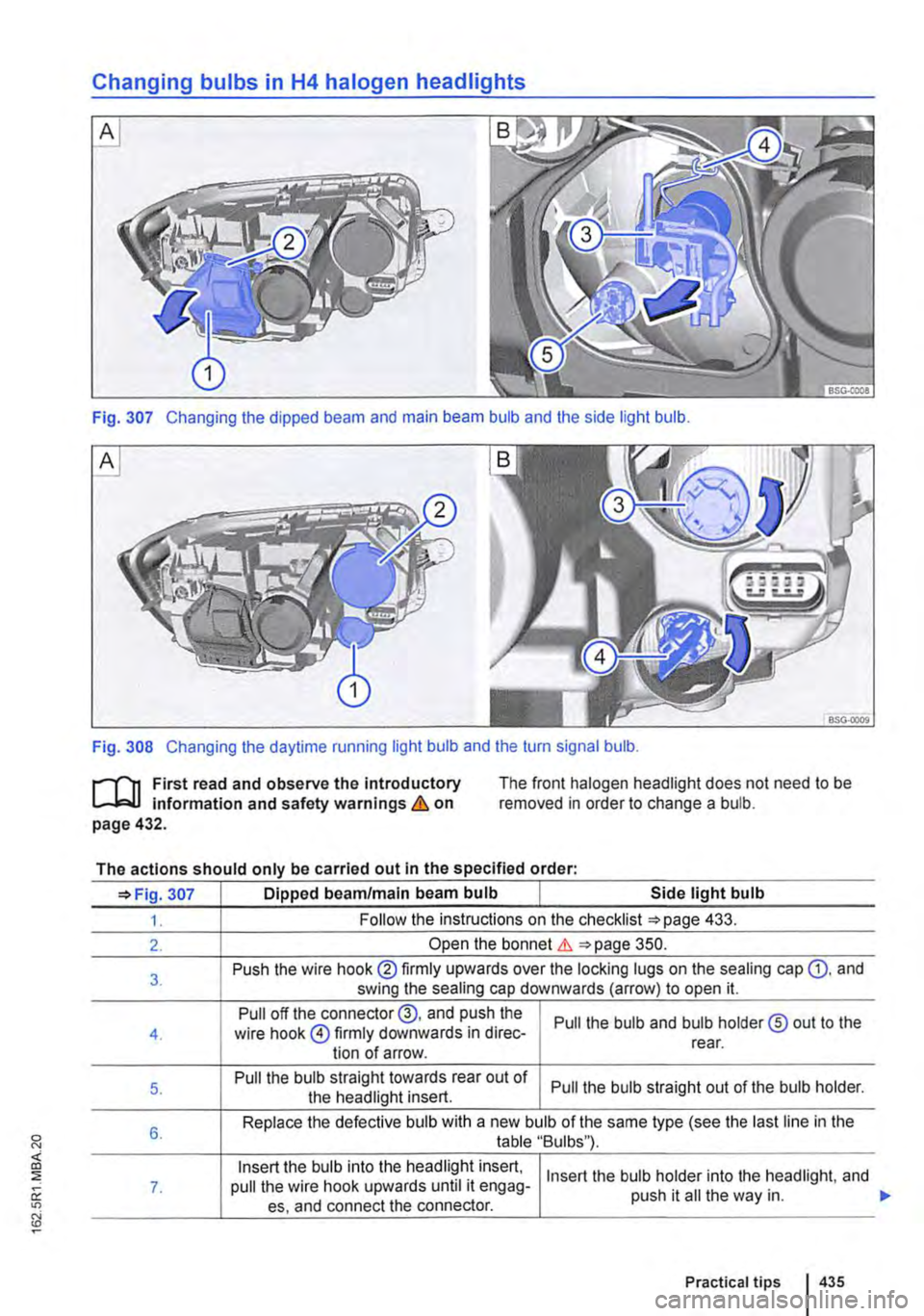
Fig. 307 Changing the dipped beam and main beam bulb and the side light bulb.
Fig. 308 Changing the daytime running light bulb and the turn signal bulb.
r-f"'n First read and observe the introductory L-J.::.l.l information and safety warnings & on page 432.
The front halogen headlight does not need to be removed in order to change a bulb.
The actions should only be carried out in the specified order:
307 Dipped beam/main beam bulb Side light bulb
1. Follow the instructions on the checklist 433.
2. Open the bonnet & 350.
3. Push the wire hook® firmly upwards over the locking lugs on the sealing cap Q). and swing the sealing cap downwards (arrow) to open it.
Pull off the connector@, and push the Pull the bulb and bulb holder® out to the 4. wire hook @firmly downwards in direc-tion of arrow. rear.
5. Pull the bulb straight towards rear out of Pull the bulb straight out of the bulb holder. the headlight insert.
6. Replace the defective bulb with a new bulb of the same type (see the last line in the table "Bulbs"}.
Insert the bulb into the headlight insert, Insert the bulb holder into the headlight, and 7. pull the wire hook upwards until it engag-push it ail the way in. es, and connect the connector.
Practical tips 435
Page 436 of 486
The actions should only be carried out in the specified order:
=>Fig. 307 Dipped beam/main beam bulb Side light bulb
8.
Bulb
Swing the sealing cap upwards, and swing the wire hook over the locking lugs on the sealing cap.
H4 W5W
The actions should only be carried out In the specified order·
=>Fig. 308 Daytime running light bulb Turn signal bulb
1. Follow the instructions on the checklist =>page 433.
2. Open the bonnet &. =>page 350.
3. Remove the sealing cap@. Remove the sealing cap Q).
Turn the bulb holder® anticlockwise as Turn the bulb holder@ anticlockwise as far 4. far as it will go and pull it out to the rear as it will go and pull it out to the rear along along with the bulb. with the bulb.
5. Push the bulb slightly into the bulb holder, turn it anti-clockwise, and pull it out straight.
6. Replace the defective bulb with a new bulb of the same type (see the last line in the table "Bulbs").
7. Insert the bulb holder, and turn it clockwise until it engages.
8. Fit the sealing cap.
Bulb BA15S I PY21W
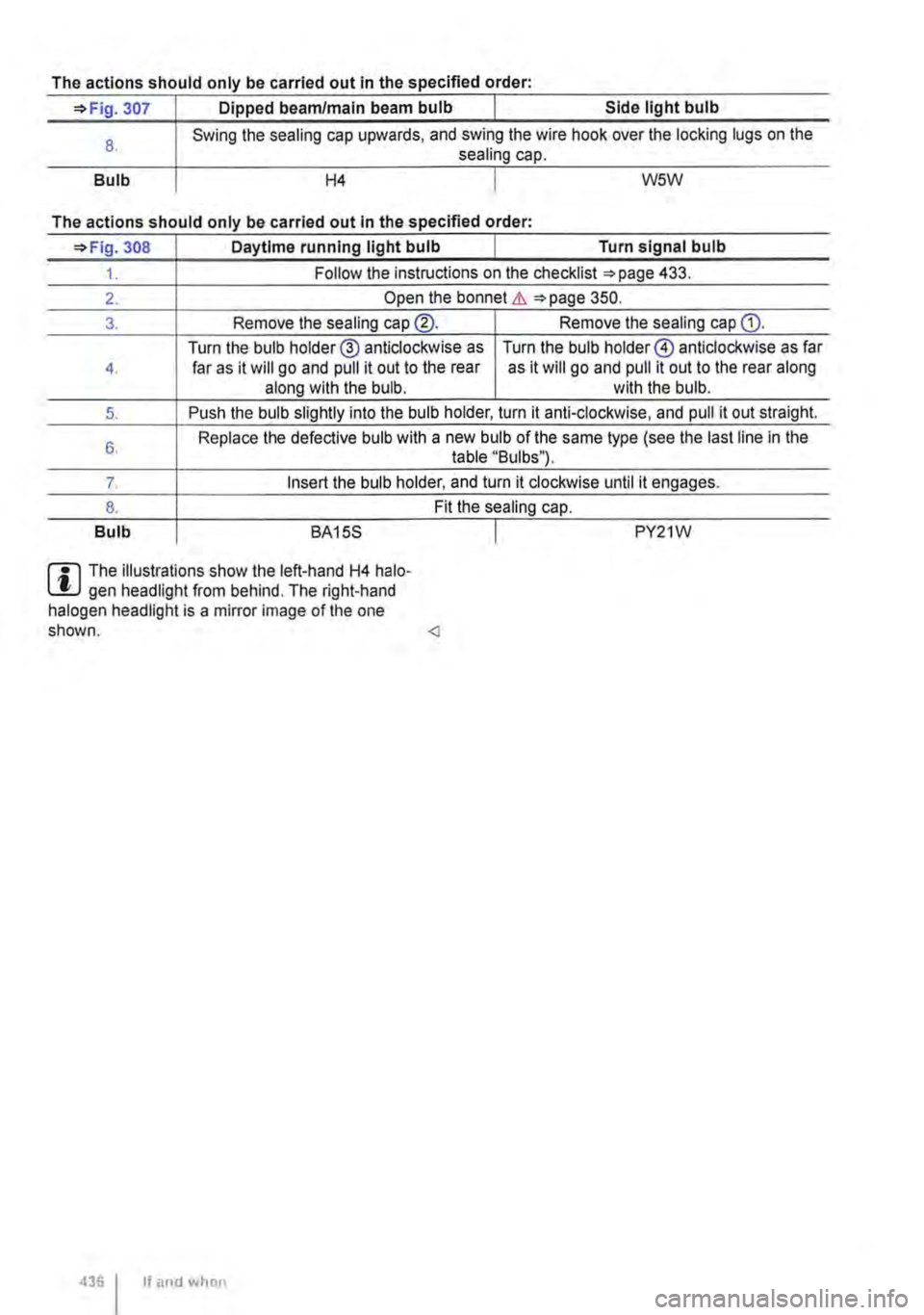
m The illustrations show the left-hand H4 halo-L.!J gen headlight from behind. The right-hand halogen headlight is a mirror image of the one shown.
Page 437 of 486
Changing bulbs in H7 halogen headlights
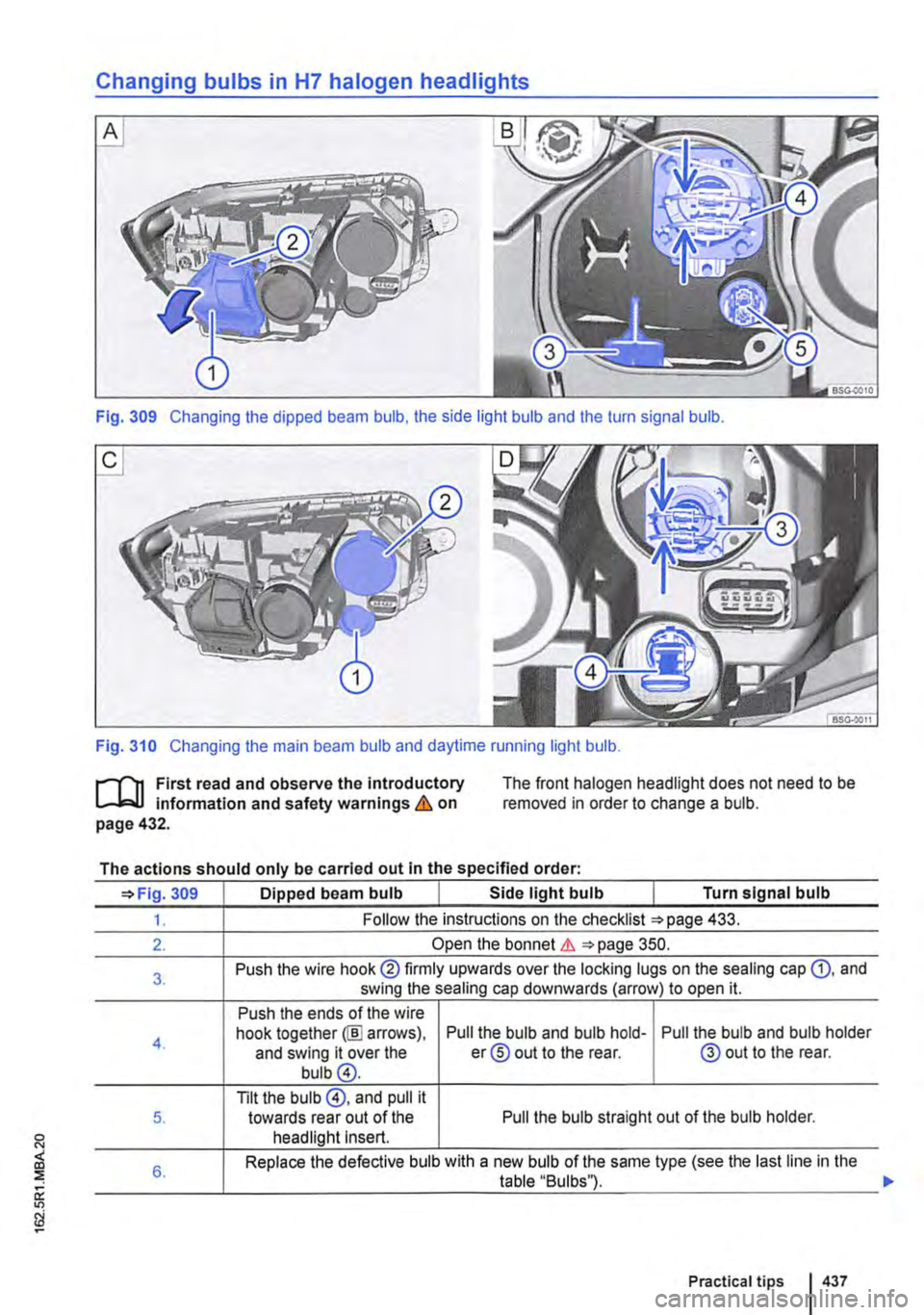
Fig. 309 Changing the dipped beam bulb, the side light bulb and the turn signal bulb.
Fig. 310 Changing the main beam bulb and daytime running light bulb.
l""""'('n First read and observe the introductory L-Jo:.Jl information and safety warnings & on page 432.
The front halogen headlight does not need to be removed in order to change a bulb.
The actions should only be carried out in the specified order:
=>Fig. 309 Dipped beam bulb Side light bulb Turn signal bulb
1. Follow the instructions on the checklist =>page 433.
2. Open the bonnet&. =>page 350.
3. Push the wire hook@ firmly upwards over the locking lugs on the sealing cap G), and swing the sealing cap downwards (arrow) to open it.
Push the ends of the wire
4. hook together@] arrows), Pull the bulb and bulb hold-Pull the bulb and bulb holder and swing it over the er® out to the rear. @out to the rear. bulb@.
Tilt the bulb @, and pull it 5. towards rear out of the Pull the bulb straight out of the bulb holder. headlight Insert.
6. Replace the defective bulb with a new bulb of the same type (see the last line in the table "Bulbs").
Practical tips I 437
Page 438 of 486
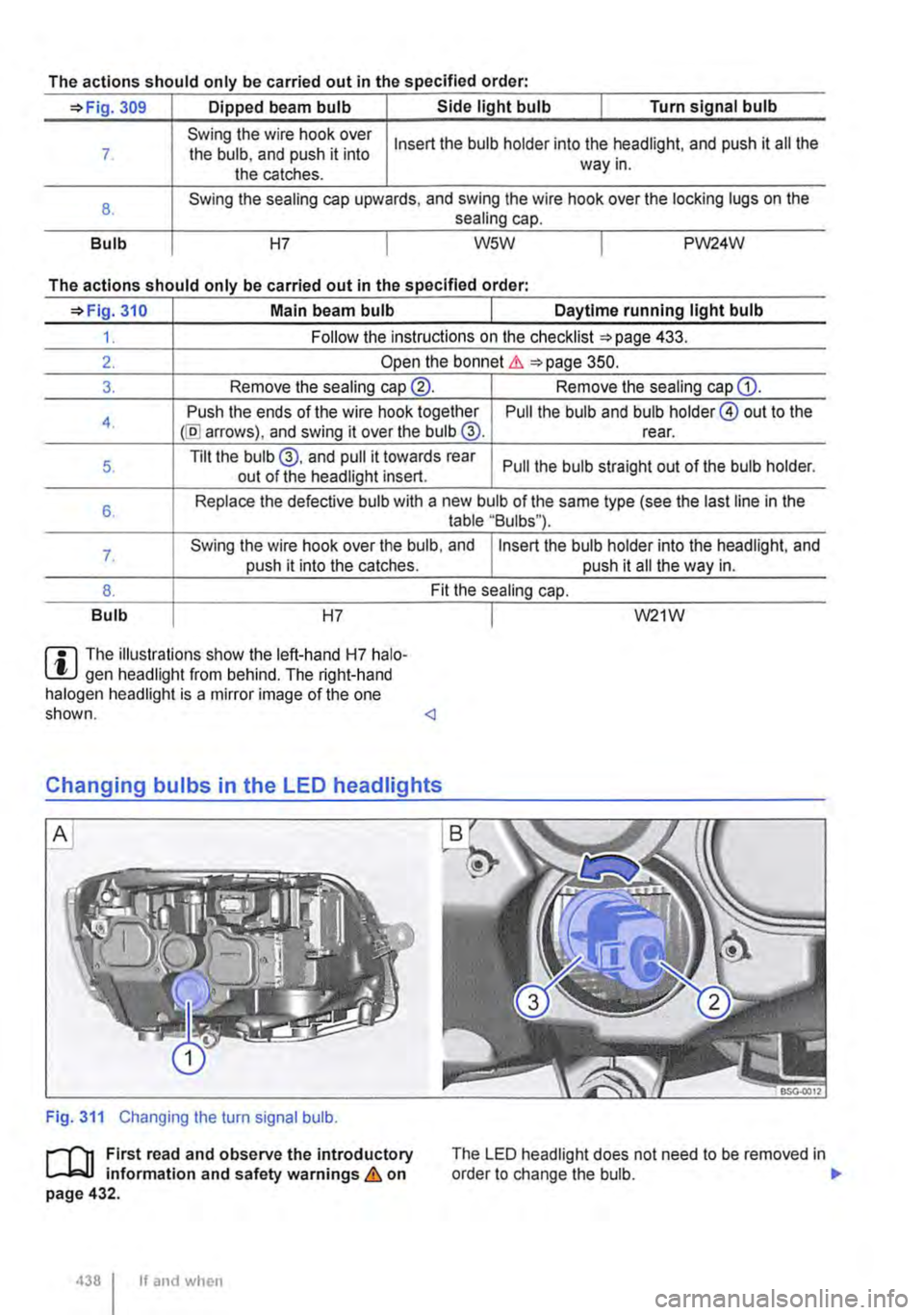
The actions should only be carried out in the specified order:
=>Fig. 309 Dipped beam bulb Side light bulb I Turn signal bulb
7
8.
Bulb
Swing the wire hook over the bulb, and push it into the catches.
Insert the bulb holder into the headlight, and push it all the way in.
Swing the sealing cap upwards, and swing the wire hook over the locking lugs on the sealing cap.
H7 I W5W I PW24W
The actions should only be carried out in the specified order·
=>Fig. 310 Main beam bulb Daytime running light bulb
1. Follow the instructions on the checklist =>page 433.
2. Open the bonnet Lh =>page 350.
3. Remove the sealing cap®. Remove the sealing cap G).
4. Push the ends of the wire hook together @I arrows), and swing it over the bulb @. Pull the bulb and bulb holder@ out to the rear.
5. Tilt the bulb@, and pull it towards rear Pull the bulb straight out of the bulb holder. out of the headlight insert.
6. Replace the defective bulb with a new bulb of the same type (see the last line in the table "Bulbs").
7. Swing the wire hook over the bulb, and Insert the bulb holder into the headlight, and push it into the catches. push it all the way in.
8. Fit the sealing cap.
Bulb H7
m The illustrations show the left-hand H7 halo-l!J gen headlight from behind. The right-hand halogen headlight is a mirror image of the one shown.
Fig. 311 Changing the turn signal bulb.
1"'"""111 First read and observe the introductory L-J,:.JJ information and safety warnings & on page 432.
438 I If and when
I W21W
The LED headlight does not need to be removed in order to change the bulb. .,..
Page 439 of 486
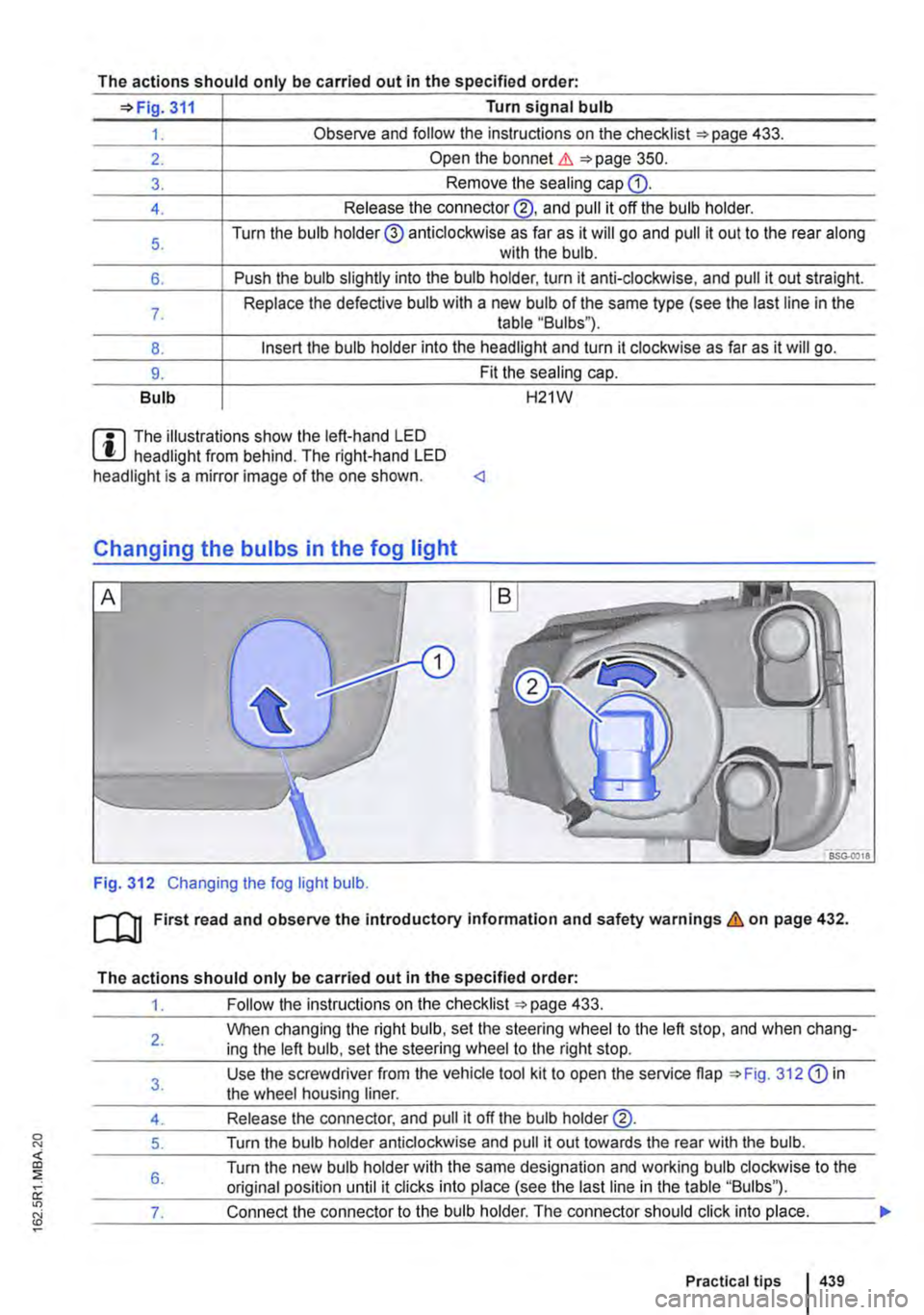
The actions should only be carried out in the specified order·
311 Turn signal bulb
1. Observe and follow the instructions on the checklist ""page 433.
2. Open the bonnet.&. 350.
3. Remove the seating cap Q).
4. Release the connector@, and pull it off the bulb holder.
5. Turn the bulb holder@ anticlockwise as far as it will go and pull it out to the rear along with the bulb.
6. Push the bulb slightly into the bulb holder, turn it anti-clockwise, and pull it out straight.
7. Replace the defective bulb with a new bulb of the same type (see the last line in the table "Bulbs").
8. Insert the bulb holder into the headlight and turn it clockwise as far as it will go.
9. Fit the sealing cap.
Bulb H21W
m The illustrations show the left-hand LED W headlight from behind. The right-hand LED headlight is a mirror image of the one shown.
Fig. 312 Changing the fog light bulb.
m First read and observe the introductory information and safety warnings & on page 432.
The actions should only be carried out in the specified order:
1. Follow the instructions on the checklist 433.
2.
3.
4.
5.
6.
When changing the right bulb, set the steering wheel to the left stop, and when chang-ing the left bulb, set the steering wheel to the right stop.
Use the screwdriver from the vehicle tool kit to open the service flap 312 Q) in the wheel housing liner.
Release the connector, and pull it off the bulb holder@.
Turn the bulb holder anticlockwise and pull it out towards the rear with the bulb.
Turn the new bulb holder with the same designation and working bulb clockwise to the original position until it clicks into place (see the last line in the table "Bulbs").
__ ___:7...:.. ___ ..::.sh...:.o:...:u:....ld::.....:.c:...:lic.::.k:....i:....nt.:..:.o-"p-'-la:....c:..:e...:.. ___
Practical tips 439