tailgate VOLKSWAGEN TRANSPORTER 2016 User Guide
[x] Cancel search | Manufacturer: VOLKSWAGEN, Model Year: 2016, Model line: TRANSPORTER, Model: VOLKSWAGEN TRANSPORTER 2016Pages: 486, PDF Size: 69.28 MB
Page 44 of 486
m Due to the current legislation on the Israel W market, the acoustic warning signals are de-activated there.
m The alarm will be triggered again if a person W gains access to the same or a different se-cured zone after the alarm has been switched off. For example, if the tailgate is opened after a door had been opened.
m The anti-theft alarm will not be activated if W the vehicle is locked from the Inside using the central locking button @.
m If you unlock the driver door mechanically us-L!J ing the vehicle key, only the driver door is un-locked, and not the whole vehicle. The SAFELOCK mechanism on all doors is not deactivated and the central locking button is not activated until you switch on the ignition (however the doors will not be unlocked).
m The anti-theft alarm will not function correctly W if the vehicle battery is weak or discharged.
m lt is not possible to include the trailer in the W anti-theft alarm system.
81f·01U
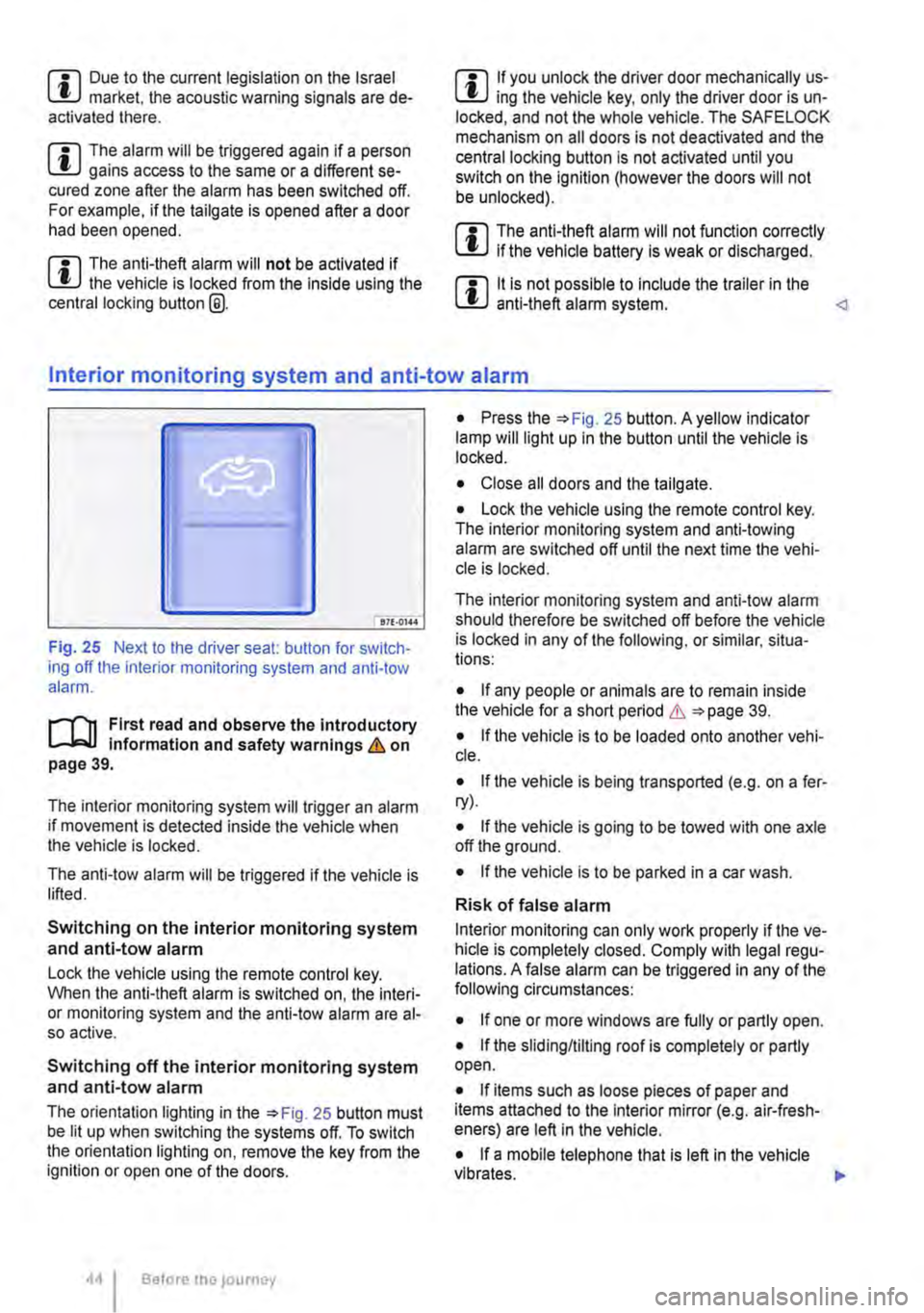
Fig. 25 Next to the driver seat: button for switch-ing off the interior monitoring system and anti-tow alarm.
r-f"n First read and observe the introductory information and safety warnings & on page 39.
The interior monitoring system will trigger an alarm if movement is detected inside the vehicle when the vehicle is locked.
The anti-tow alarm will be triggered if the vehicle is lifted.
Switching on the interior monitoring system and anti-tow alarm
Lock the vehicle using the remote control key. When the anti-theft alarm is switched on, the interi-or monitoring system and the anti-tow alarm are al-so active.
Switching off the interior monitoring system and anti-tow alarm
The orientation lighting in the =>Fig. 25 button must be lit up when switching the systems off. To switch the orientation lighting on, remove the key from the ignition or open one of the doors.
Before the journey
• Press the =>Fig. 25 button. A yellow indicator lamp will light up in the button until the vehicle is locked.
• Close all doors and the tailgate.
• Lock the vehicle using the remote control key. The interior monitoring system and anti-towing alarm are switched off until the next time the vehi-cle is locked.
The interior monitoring system and anti-tow alarm should therefore be switched off before the vehicle is locked in any of the following, or similar, situa-tions:
• If any people or animals are to remain inside the vehicle for a short period & =>page 39.
• If the vehicle is to be loaded onto another vehi-cle.
• If the vehicle is being transported (e.g. on a fer-ry).
• If the vehicle is going to be towed with one axle off the ground.
• If the vehicle is to be parked in a car wash.
Risk of false alarm
Interior monitoring can only work properly if the ve-hicle is completely closed. Comply with legal regu-lations. A false alarm can be triggered in any of the following circumstances:
• If one or more windows are fully or partly open.
• If the slidingflilting roof is completely or partly open.
• If items such as loose pieces of paper and items attached to the Interior mirror (e.g. air-fresh-eners) are left in the vehicle.
• If a mobile telephone that is left in the vehicle vibrates. 11>-
Page 45 of 486
• If the vehicle is being transported (e.g. on a fer-ry).
• If the vehicle is in a car wash.
Doors
CO Introduction
This chapter contains information on the following subjects:
Warning lamp . . . . . . . . . . . . . . . . . . . . . . . . . . . 45
Additional information and warnings:
• Exterior views page 5
• Vehicle key set 36
• Central locking system 39
• Manual opening and closing 413
A WARNING
Any door that Is not properly closed could open suddenly while the vehicle Is In motion. This could lead to severe Injuries.
Warning lamp
m If doors or the tailgate are still open when the W anti-theft alarm is activated, only the anti-theft alarm is activated. Interior monitoring and the anti-tow alarm are not activated until all doors and the tailgate are closed. <1
A WARNING (ConUnued)
• Stop as soon as possible and close the door.
• Make sure that the door Is closed properly and that the lock has engaged. The closed door must be flush with the surrounding body panels.
• Doors should only be opened or closed when you are sure there Is no-one in their path.
A WARNING
Any door being held open by the door arrest-er could close unexpectedly In strong winds or if the vehicle Is on a slope. This could lead to Injuries.
• Always keep a good grip on the handle when opening and closing doors.
m First read and observe the Introductory information and safety warnings&,. on page 45.
Lit up Possible cause
At least one vehicle door is opened or not properly closed.
Several warning and indicator lamps will light up briefly as a functional check when the ignition is switched on. They will go out after a few seconds.
A warning lamp q;o appears in the instrument clus-ter display if a door is open or not properly closed.
Symbols may be displayed in the Instrument clus-ter instead of warning lamps, depending on the ve-hicle's equipment level. These symbols are also
Solution
t Do not drive on I Open the relevant vehicle door and then close it again.
visible when the ignition is switched off. The dis-play will go out approximately 15 seconds after the vehicle has been locked.
m The symbol can differ depending on the ver-W sion of the instrument cluster. <1
Opening and closing 45
Page 49 of 486
Switching the child lock on and off
• Unlock the vehicle and open the appropriate sliding door.
• Use the vehicle key to bring the slot to the de-sired position.
Slot position =>Fig. 29 or =>Fig. 30:
® Child lock is switched off.
@ Child lock is switched on.
A WARNING
When the child lock is activated, the door cannot be opened from the Inside.
Tailgate
a:n Introduction
This chapter contains information on the following subjects:
Warning lamp . . . . . . . . . . . . . . . . . . . . . . 50
Opening and closing the tallgate from the outside . . . . . . . . . . . . . . . . . . . . . . . . . . . . 50
Unlocking and locking the tailgate from the inside . . . . . . . . . . . . . . . . . . . . . . . . . . . . . . . . . 51
Child proof lock in the tailgate . . . . . . . 52
Additional information and warnings:
• Exterior views 5
• Central locking system 39
• Transporting 125
• Manual opening and closing 413
A WARNING
Incorrect and unsupervised unlocking, open-ing or closing of the tail gate can cause acci-dents and serious injuries.
• Therefore the tailgate should only be opened or closed when you are sure there is no-one in its path.
• Never close the tailgate by pushing it down with your hand on the window. The rear window could shatter and cause Injuries.
• After closing the tailgate, check that it is closed and locked correctly so that it does not open while the vehicle is in motion. The closed tailgate must be flush with the sur-rounding body panels.
A WARNING (Continued)
• Never leave children or people requiring assistance alone In the vehicle when the doors are locked. This may mean that these people lock themselves In the vehicle. They could become trapped In the vehicle in an emergency and may not be able to get them-selves to safety. People locked In the vehicle may be subjected to very high or very low temperatures.
• Temperatures inside a locked vehicle may reach extremes of heat or cold, according to season. This can cause serious injuries and Illness or fatalities, especially to small chil-dren.
• Always keep the tailgate closed while the vehicle Is In motion so that no toxic exhaust fumes can enter the vehicle Interior.
• Never open the tailgate if a load is attach-ed to it, e.g. a rack or luggage carrier. lt may also not possible to open the tailgate if there are objects attached to it, e.g. bicycles. The additional load might cause the open tailgate to close by itself. Support the tail gate as nec-essary or remove the load from the surface.
• Close and lock the tailgate and all vehicle doors when the vehicle Is not In use. Make sure there Is no-one left In the vehicle.
• Never leave children playing unattended In or around the vehicle, especially when the tailgate is open. Children could climb Into the luggage compartment and shut the tailgate, thereby trapping themselves Inside. Tempera-tures Inside a locked vehicle may reach ex-tremes of heat or cold, according to season. This can cause serious Injuries and Illness or fatalities, especially to small children.
• Never leave children or people requiring assistance alone in the vehicle. They could use the vehicle key or central locking button to lock the vehicle and thereby trap them-selves Inside. .,.
Opening and closing
Page 50 of 486
CD
Before opening the tailgate, please check that there is enough space to open and close the tailgate, e.g. when towing a trailer or when in a garage.
Warning lamp
CD
Never use the gas-filled strut on the tallgate to fix or hold a load. This could lead to damage and make it Impossible to close the tallgate.
Lit up Possible cause
c:5 The taiigate is open or not properly closed.
Several warning and indicator lamps will light up briefly as a functional check when the ignition is switched on. They will go out after a few seconds.
A warning lamp c:s appears in the instrument clus-ter display if the taiigate is open or not property closed.
Symbols may be displayed in the instrument clus-ter instead of warning lamps, depending on the ve-hicle's equipment level. These symbols are also visible when the ignition is switched off. The dis-play will go out approximately 15 seconds after the vehicle has been locked.
Solution
e Do not drive on I Open the tailgate and close it again.
A WARNING
If the tail gate is not properly closed it could open suddenly while the vehicle is in motion. This could lead to severe injuries.
• Stop as soon as possible and close the tailgate.
• After closing the tailgate, always check that it is properly secured.
m The symbol can differ depending on the ver-L!J sion of the instrument cluster.
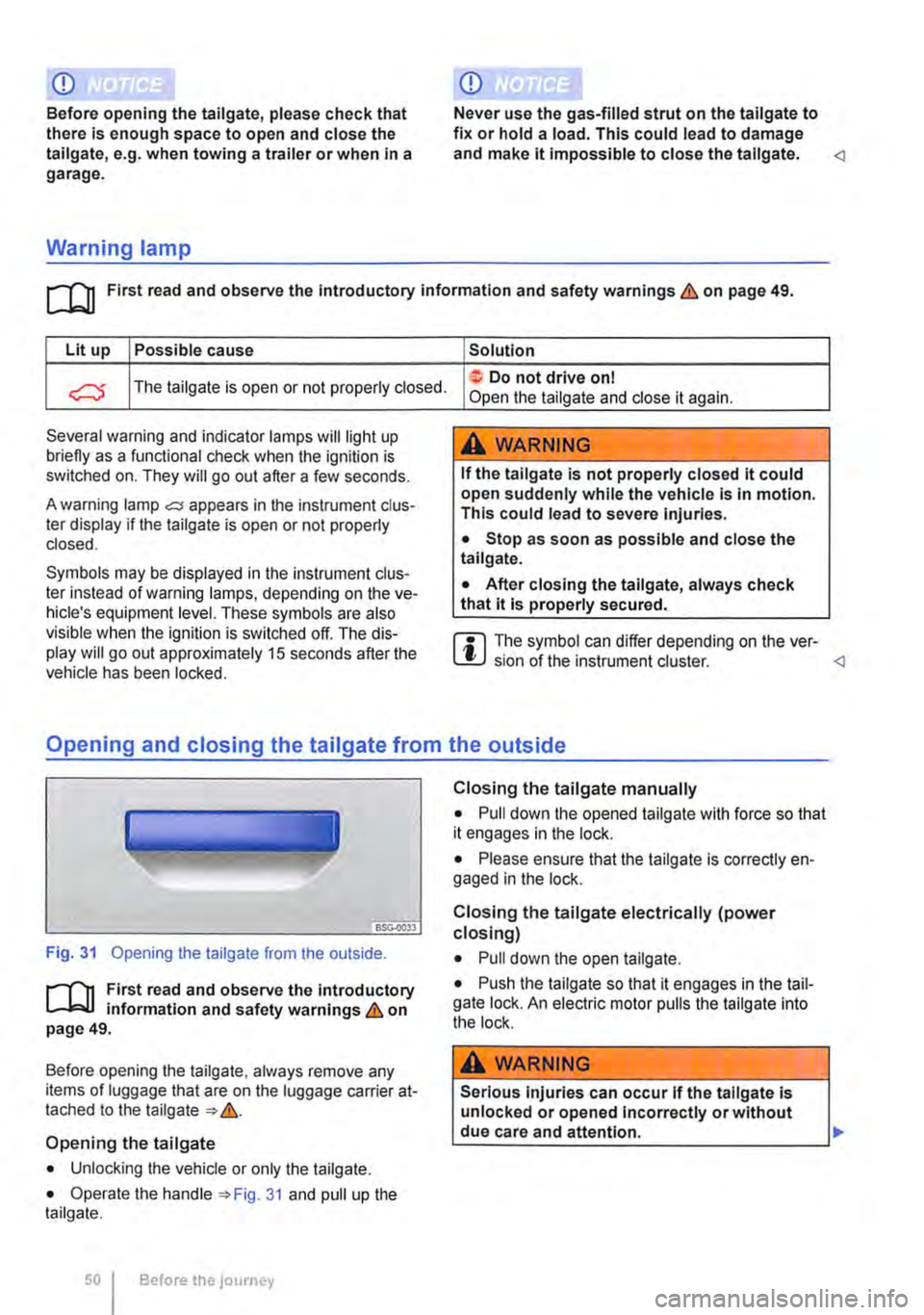
Fig. 31 Opening the tailgate from the outside.
r-Ill First read and observe the introductory L-Wl information and safety warnings & on page 49.
Before opening the taiigate, always remove any items of luggage that are on the luggage carrier at-tached to the tailgate &.
Opening the tailgate
• Unlocking the vehicle or only the tailgate.
• Operate the handle 31 and pull up the tailgate.
Before the journey
Closing the tailgate manually
• Pull down the opened tailgate with force so that it engages in the lock.
• Please ensure that the taiigate is correctly en-gaged in the lock.
Closing the tailgate electrically (power closing)
• Pull down the open tailgate.
• Push the taiigate so that it engages in the tail-gate lock. An electric motor pulls the tailgate into the lock.
A WARNING
Serious injuries can occur if the tallgate is unlocked or opened Incorrectly or without
________________
Page 51 of 486
A WARNING (Continued)
• lt may not always be apparent that the tail-gate is unlocked, for example when a loaded luggage carrier is attached to it. If unlocked, the tallgate may open suddenly while the vehicle is in motion.
A WARNING
Serious injuries can occur if the tailgate is closed incorrectly or without due care and at-tention.
• Never leave children playing unattended In or around the vehicle, especially when the tailgate is open. Children could climb into the
A WARNING (Continued)
luggage compartment and shut the tailgate, thereby trapping themselves inside. Tempera-tures Inside a locked vehicle may reach ex-tremes of heat or cold, according to season. This could cause serious injuries or illness, or even have fatal consequences.
m At outside temperatures of less than O'C L!J (+32'F), the gas-filled struts cannot always lift the opened tailgate automatically. The tailgate then has to be guided up by hand.
m Before closing the taiigate, check that the re-L!J mote control key is not in the luggage com-partment.
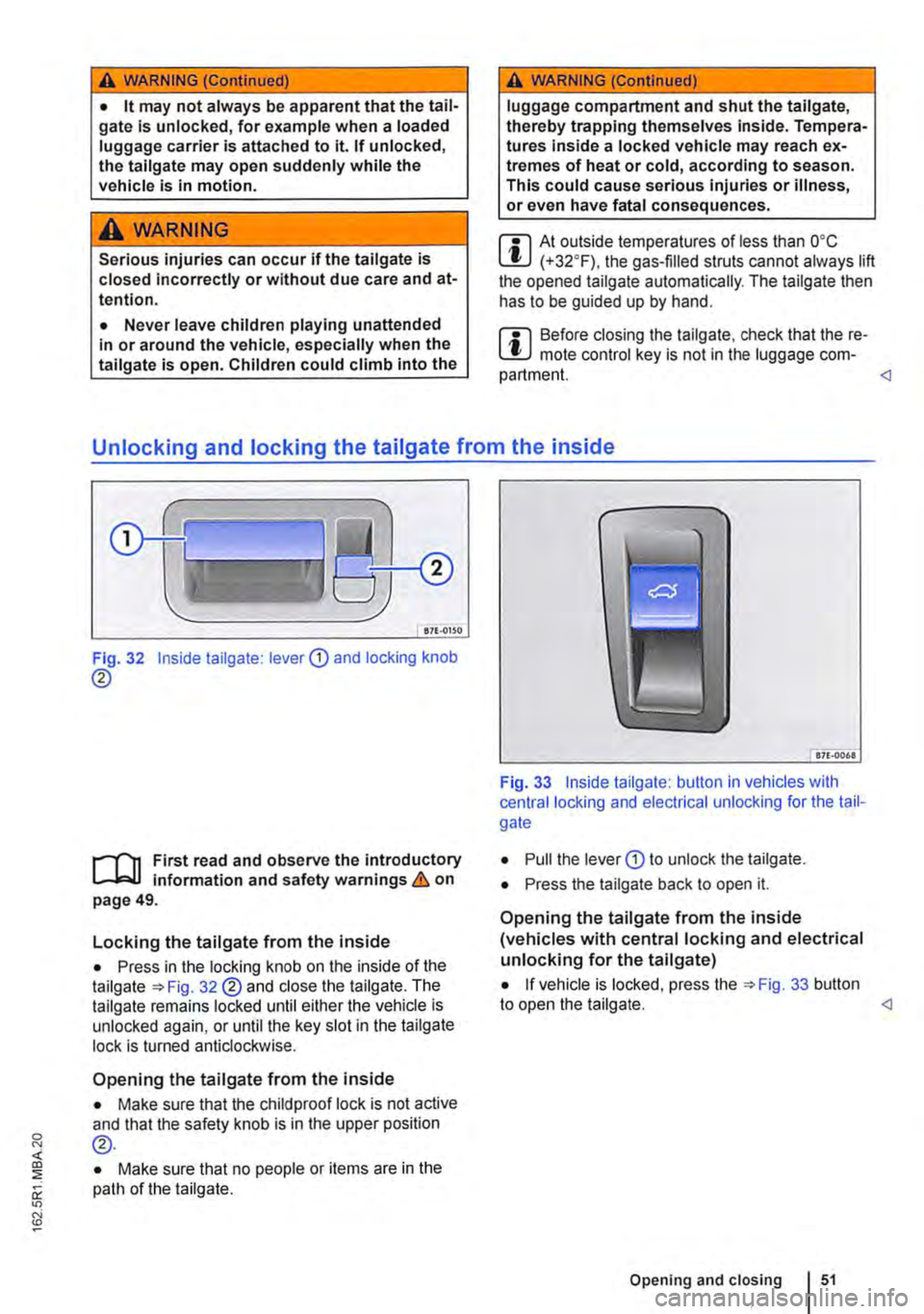
Fig. 32 inside taiigate: lever CD and locking knob
®
1"'111 First read and observe the introductory L-W! information and safety warnings & on page 49.
Locking the tailgate from the inside
• Press in the locking knob on the inside of the taiigate =>Fig. 32@ and close the tailgate. The tailgate remains locked until either the vehicle is unlocked again, or until the key slot in the tailgate lock is turned anticlockwise.
Opening the tailgate from the inside
• Make sure that the child proof lock is not active and that the safety knob is in the upper position @.
• Make sure that no people or items are in the path of the tailgate.
' 87[.0061
Fig. 33 Inside tailgate: button in vehicles with central locking and electrical unlocking for the tail-gate
• Pull the lever CD to unlock the tailgate.
• Press the tailgate back to open it.
Opening the tailgate from the inside (vehicles with central locking and electrical unlocking for the tail gate)
• If vehicle is locked, press the =>Fig. 33 button to open the tailgate.
Page 52 of 486
Childproof lock in the tailgate
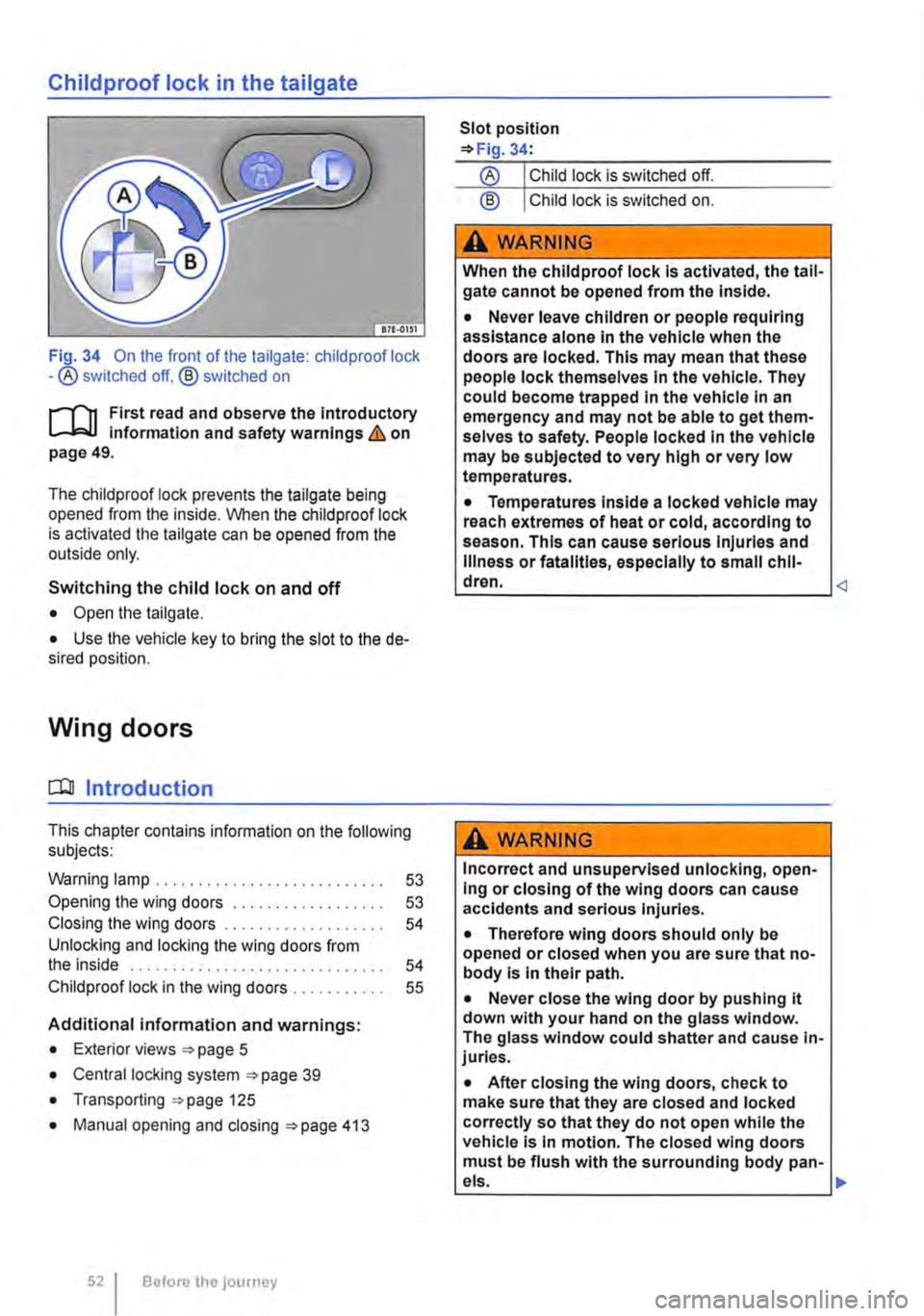
Fi_Q-34 On the front of the tailgate: child proof lock -®switched off, @ switched on
rJ'n First read and observe the introductory l-J.:.U information and safety warnings & on page 49.
The childproof lock prevents the tailgate being opened from the inside. When the child proof lock is activated the tailgate can be opened from the outside only.
Switching the child lock on and off
• Open the tailgate.
• Use the vehicle key to bring the slot to the de-sired position.
Wing doors
CQJ Introduction
This chapter contains information on the following subjects:
Warning lamp . . . . . . . . . . 53
Opening the wing doors 53 Closing the wing doors 54 Unlocking and locking the wing doors from the inside . . . . . . . . . . . . . . . . . . . . . . . . . . . . . . 54 Child proof lock in the wing doors . 55
Additional information and warnings:
• Exterior views =>page 5
• Central locking system =>page 39
• Transporting =>page 125
• Manual opening and closing =>page 413
52 Before the journey
Slot position =>Fig. 34:
@ Child lock is switched on.
A WARNING
When the childproof lock Is activated, the tail-gate cannot be opened from the Inside.
• Never leave children or people requiring assistance alone In the vehicle when the doors are locked. This may mean that these people lock themselves In the vehicle. They could become trapped In the vehicle In an emergency and may not be able to get them-selves to safety. People locked In the vehicle may be subjected to very high or very low temperatures.
• Temperatures Inside a locked vehicle may reach extremes of heat or cold, according to season. This can cause serious Injuries and Illness or fatalities, especially to small chil-dren.
Incorrect and unsupervised unlocking, open-Ing or closing of the wing doors can cause accidents and serious Injuries.
• Therefore wing doors should only be opened or closed when you are sure that no-body Is In their path.
• Never close the wing door by pushing it down with your hand on the glass window. The glass window could shatter and cause in-juries.
• After closing the wing doors, check to make sure that they are closed and locked correctly so that they do not open while the vehicle Is In motion. The closed wing doors must be flush with the surrounding body pan-
•
Page 75 of 486
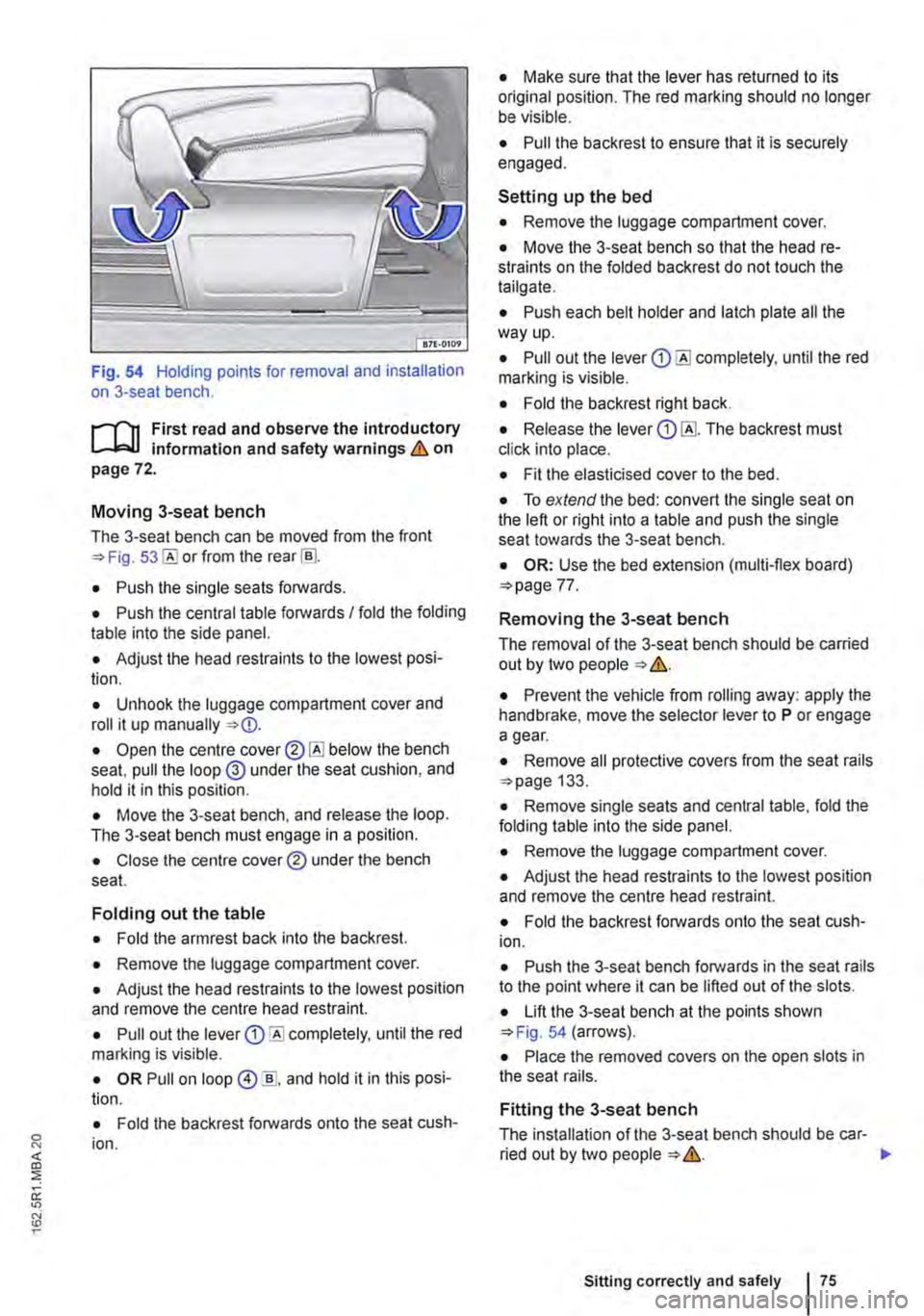
Fig. 54 Holding points for removal and installation on 3-seat bench.
,....-m First read and observe the introductory L-W.I information and safety warnings & on page 72.
Moving 3-seat bench
The 3-seat bench can be moved from the front =>Fig. or from the rear [ru.
• Push the single seats forwards.
• Push the central table forwards I fold the folding table into the side panel.
• Adjust the head restraints to the lowest posi-tion.
• Unhook the luggage compartment cover and roll it up manually =>
• Move the 3-seat bench, and release the loop. The 3-seat bench must engage in a position.
• Close the centre cover® under the bench seat.
Folding out the table
• Fold the armrest back into the backrest.
• Remove the luggage compartment cover.
• Adjust the head restraints to the lowest position and remove the centre head restraint.
• Pull out the lever Q) completely, until the red marking is visible.
• OR Pull on loop @ ]], and hold it in this posi· lion.
• Fold the backrest forwards onto the seat cush· ion.
• Make sure that the lever has returned to its original position. The red marking should no longer be visible.
• Pull the backrest to ensure that it is securely engaged.
Setting up the bed
• Remove the luggage compartment cover.
• Move the 3-seat bench so that the head re· straints on the folded backrest do not touch the tailgate.
• Push each belt holder and latch plate all the way up.
• Pull out the lever Q) until the red marking is visible.
• Fold the backrest right back.
• Release the lever Q) The backrest must click into place.
• Fit the elasticised cover to the bed.
• To extend the bed: convert the single seat on the left or right into a table and push the single seat towards the 3-seat bench.
• OR: Use the bed extension (multi-flex board) =>page 77.
Removing the 3-seat bench
The removal of the 3-seat bench should be carried out by two people => &.
• Prevent the vehicle from rolling away: apply the handbrake, move the selector lever to P or engage a gear.
• Remove all protective covers from the seat rails =>page 133.
• Remove single seats and central table, fold the folding table into the side panel.
• Remove the luggage compartment cover.
• Adjust the head restraints to the lowest position and remove the centre head restraint.
• Fold the backrest forwards onto the seat cush-ion.
• Push the 3-seat bench forwards in the seat rails to the point where it can be lifted out of the slots.
• Lift the 3-seat bench at the points shown =>Fig. 54 (arrows).
• Place the removed covers on the open slots in the seat rails.
Fitting the 3-seat bench
The installation of the 3-seat bench should be car-ried out by two people => &. .,.
Sitting correctly and safely
Page 112 of 486
If you have to drive a right-hand drive vehicle in a left-hand drive country, or vice versa, the asymmet-ric dipped beam halogen headlights may dazzle oncoming traffic. Therefore, the headlights must be masked over if you are driving abroad.
Therefore you must apply stickers to certain parts of the headlighllenses if you are driving abroad. A qualified workshop can provide you with further in-formation. Volkswagen Commercial Vehicles rec-ommends using a Volkswagen Commercial Vehi-cles dealership for this purpose.
m The use of the stickers on the headlights is L!J only permissible if the period of use is limited. Please contact a qualified workshop for a perma-nent alteration. Volkswagen Commercial Vehicles recommends using a Volkswagen Commercial Ve-hicles dealership for this purpose.
,.....-.(')1 First read and observe the introductory l....-.lo:.l.l Information and safety warnings & on page 106.
The Coming Home function is switched on manual-ly. However, the "Leaving Home" function is con-trolled automatically by a rain sensor.
"Coming Home"
Switching on
Switching off
"Leaving Home"
Switching on
Switching off
!Action
-Switch off the ignition. -Activate the headlight flasher for approximately one second 107. The Coming Home lighting is switched on when the driver door is opened. The switch-off delay starts when the last vehicle door or the tailgate has been closed.
-Automatically after the set switch-off delay has elapsed. -Automatically if a door or the tailgate is opened approximately 30 seconds after switch on. -Turn light switch to position 0. -Switch on the ignition.
Action
-Unlock vehicle when light switch is in position AUTO and rain sensor has detected that it is dark.
-Automatically after the switch-off delay. -Lock the vehicle. -Turn light switch to position 0. -Switch on the ignition.
m When the Coming Home function is switched L!J on, no signal tone will be given as a reminder that a light is still switched on when the driver door is opened.
Page 114 of 486
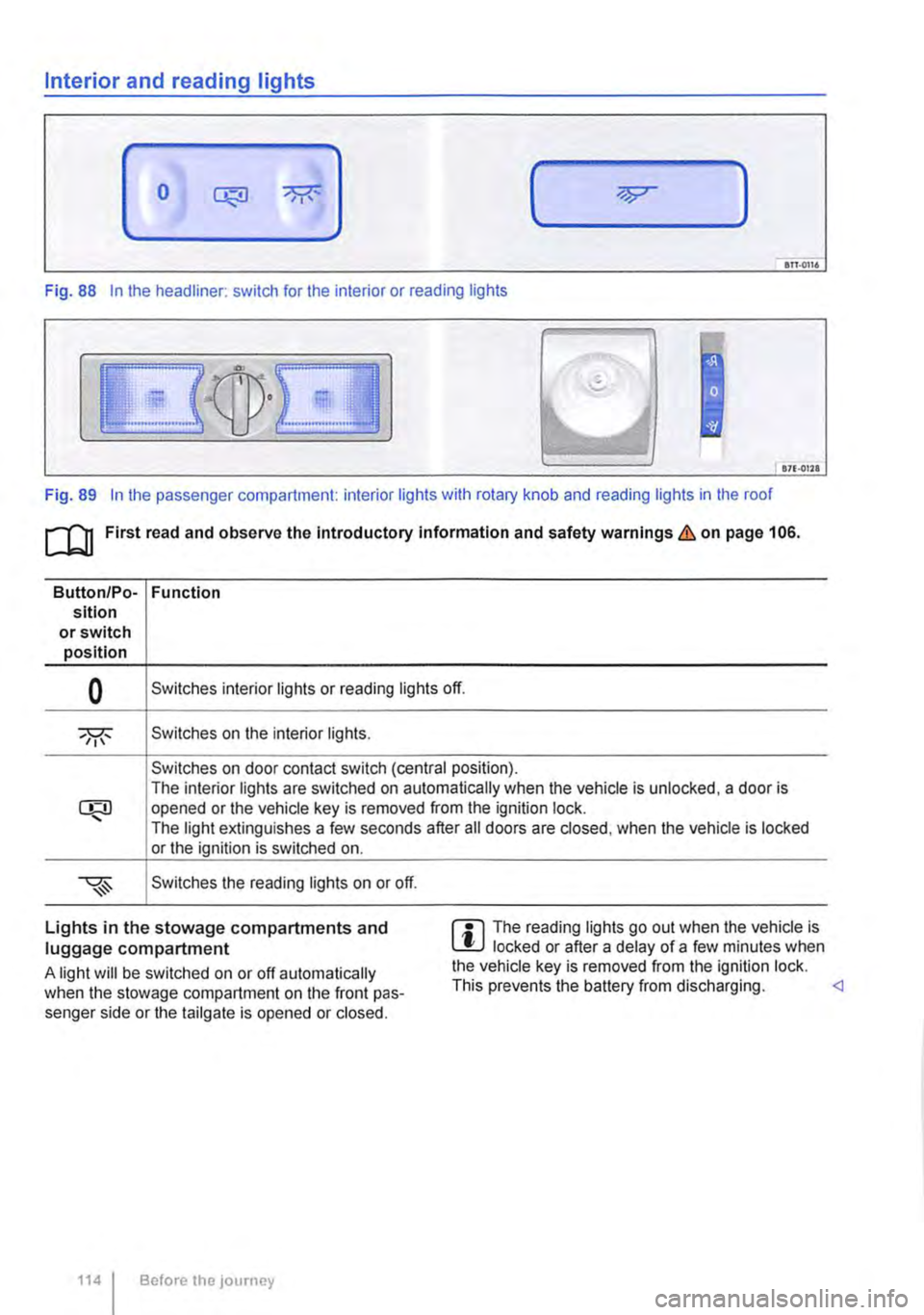
Interior and reading lights
0 ( )
ITT·0116
Fig. 88 In the headliner: switch for the interior or reading lights
871·01ll
Fig. 89 In the passenger compartment: interior lights with rotary knob and reading lights in the roof
[Q] First read and observe the Introductory information and safety warnings&. on page 106.
Button/Po-Function sition or switch position
0 Switches interior lights or reading lights off.
Switches on the interior lights.
Switches on door contact switch (central position). The interior lights are switched on automatically when the vehicle is unlocked, a door is opened or the vehicle key is removed from the ignition lock. The light extinguishes a few seconds after all doors are closed, when the vehicle is locked or the ignition is switched on.
Switches the reading lights on or off.
Lights in the stowage compartments and luggage compartment
A light will be switched on or off automatically when the stowage compartment on the front pas-senger side or the tailgate is opened or closed.
1141 Before the journey
m The reading lights go out when the vehicle is W locked or after a delay of a few minutes when the vehicle key is removed from the ignition lock. This prevents the battery from discharging.
Page 125 of 486
Transporting items
Driving notes
ClJl Introduction
This chapter contains information on the following subjects:
Stowing items of luggage . . . . . . . . . . . . . . . . . 126
Stowing cargo . . . . . . . . . . . . . . . . . . 127
Buckle straps . . . . . . . . . . . . . . . . . . . . . . . . . . . 128
Ratchet straps . . . . . . . . . . . . . . . . . . . 128 Driving with an open tailgate or open wing doors . . . . . . . . . . . . . . . . . . . . . 129
Driving a loaded vehicle .... 130
Always secure the load transported in the luggage compartment or load compartment, on the roof car-rier, on the load surface or trailer. Always use suita-ble securing straps with the fastening rings to se-cure heavy items. Never exceed the vehicle's max-imum payload. Both the payload and the distribu-tion of the load in the vehicle will have an effect on the driving response and braking distance &.
Using securing straps
• Follow the instructions for the securing straps.
• Observe specifications for maximum load rat-ing.
• The securing straps must be long enough for the item you wish to secure.
Damaged securing straps
Never use the securing straps if:
• Damage to the warp and weft of the webbing (cuts or fraying) accounts for more than 10% of the webbing.
• The seams are damaged.
• The webbing is deformed by friction or heat.
• The securing straps are cracked, especially if cracked across the strap, or if the straps have notches.
• The securing straps have splits or corrosion damage.
• There is damage to the tightening device and connection elements.
Additional information and warnings:
• Tailgate 49
• Wing doors 52
• Lights 106
• Luggage compartment 130
• Roof carrier 137
• Towing a trailer 139
• Wheels and tyres 367
• Vehicle weight and axle weight rating 450
A WARNING
Objects that are not secured, or are secured incorrectly, can cause serious injuries in the event of a sudden driving or braking manoeu-vre or accident. This applies particularly if objects are struck by the airbag when activa-ted and then flung through the vehicle interi-or. To reduce the risk of accidents, please ob-serve the following guidelines:
• Always stow all objects in the vehicle se· curely.
• Always use suitable straps to prevent ob-jects entering the deployment zones of the curtain alrbag, the combined curtain and side airbag or the front airbag during a sudden driving or braking manoeuvre.
• Objects should be stowed in the vehicle interior In such a way that they can never en-ter the alrbag deployment zones while the ve-hicle is In motion.
• Always keep stowage compartments closed while the vehicle is In motion.
• The front airbag must be switched off and the indicator lamp PASSENGER AIR BAG OFF 'Ji; must light up for as long as the front passenger seat backrest is folded forwards.
• Stowed objects must never cause passen-gers to assume an incorrect sitting position.
• If an item is being stowed on a seat, this seat must not be used by any passengers.
A WARNING
Transporting heavy objects changes the vehi-cle driving characteristics and increases the braking distance. Heavy loads which are not properly stowed or secured in the vehicle can lead to a loss of vehicle control and cause se-rious injury. .,..
Transporting items 125