Page 358 VOLKSWAGEN TRANSPORTER 2018 Owners Manual
[x] Cancel search | Manufacturer: VOLKSWAGEN, Model Year: 2018, Model line: TRANSPORTER, Model: VOLKSWAGEN TRANSPORTER 2018Pages: 486, PDF Size: 69.28 MB
Page 16 of 486
Instrument cluster
Warning and indicator lamps
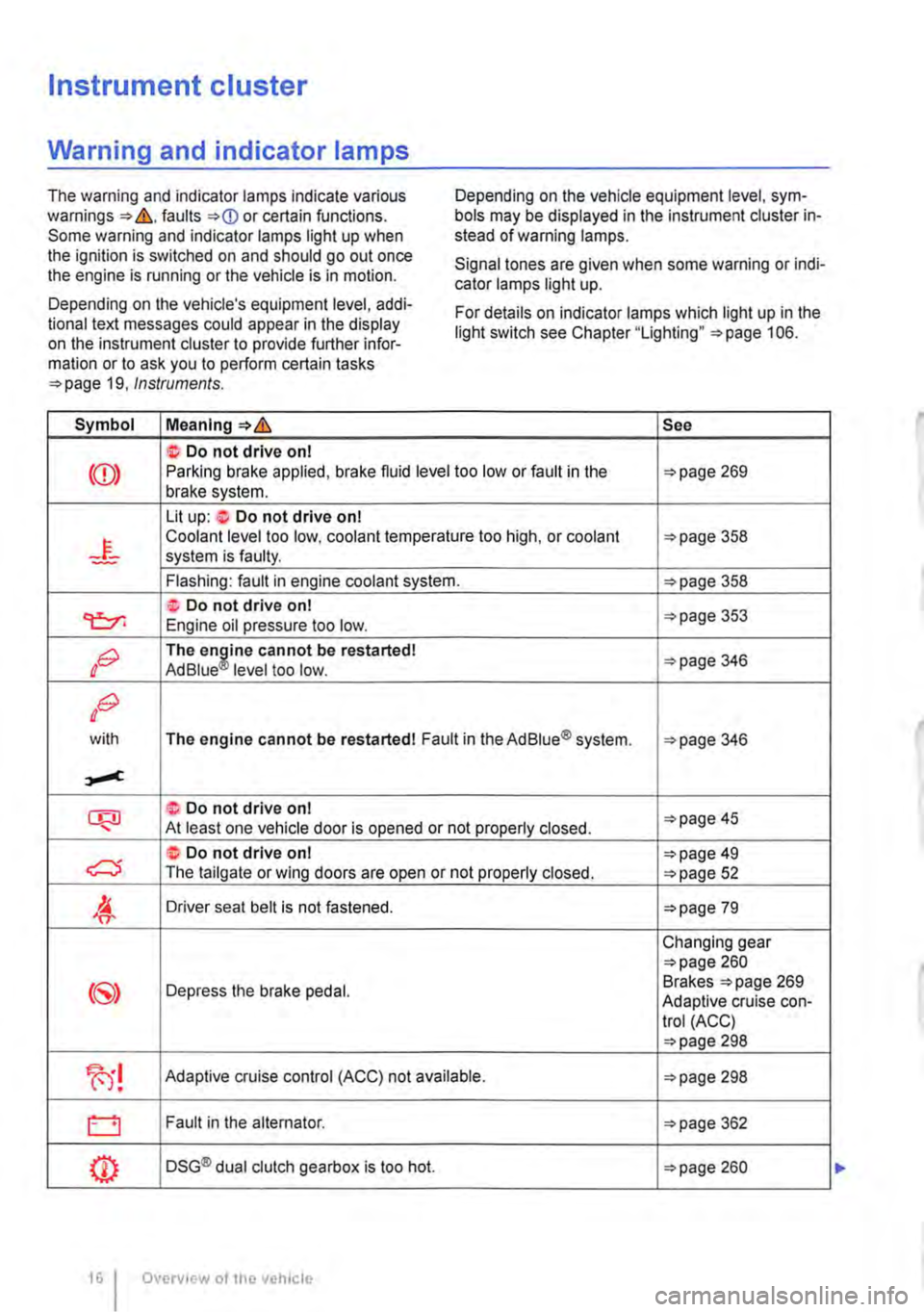
The warning and indicator lamps indicate various warnings ::.&.faults ::.(D or certain functions. Some warning and indicator lamps light up when the ignition is switched on and should go out once the engine is running or the vehicle is in motion.
Depending on the vehicle's equipment level, addi-tional text messages could appear in the display on the instrument cluster to provide further infor-mation or to ask you to perform certain tasks ::.page 19, Instruments.
Symbol Meaning=:>&
Do not drive on I
Depending on the vehicle equipment level, sym-bols may be displayed in the instrument cluster in-stead of warning lamps.
Signal tones are given when some warning or indi-cator lamps light up.
For details on indicator lamps which light up in the light switch see Chapter "Lighting" ::.page 106.
See
Lit up: ·i:-Do not drive ont
-F-Coolant level too low. coolant temperature too high, or coolant ::.page 358 system is faulty.
Flashing: fault in engine coolant system. ::.page 358
Do not drive ont ::.page 353 "t:::r. Engine oil pressure too low.
oG The en£ine cannot be restarted! AdBiue level too low. ::.page 346
oG
with The engine cannot be restarted! Fault in the Ad Blue® system. ::.page 346
CRl ::0 Do not drive on I ::.page 45 .... At least one vehicle door is opened or not properly closed .
c:::5 Do not drive on I ::.page 49 The tailgate or wing doors are open or not properly closed. ::.page 52
!6 'er Driver seat belt is not fastened. ::.page 79
Changing gear ::.page 260
({5)) Depress the brake pedal. Brakes ::.page 269 Adaptive cruise con-trol (ACC) ::.page 298
Adaptive cruise control (ACC) not available. ::.page 298
0 Fault in the alternator. ::.page 362
m DSG® dual clutch gearbox is too hot. ::.page 260
Overv1cw of the vehicle
Page 20 of 486
Instrument overview
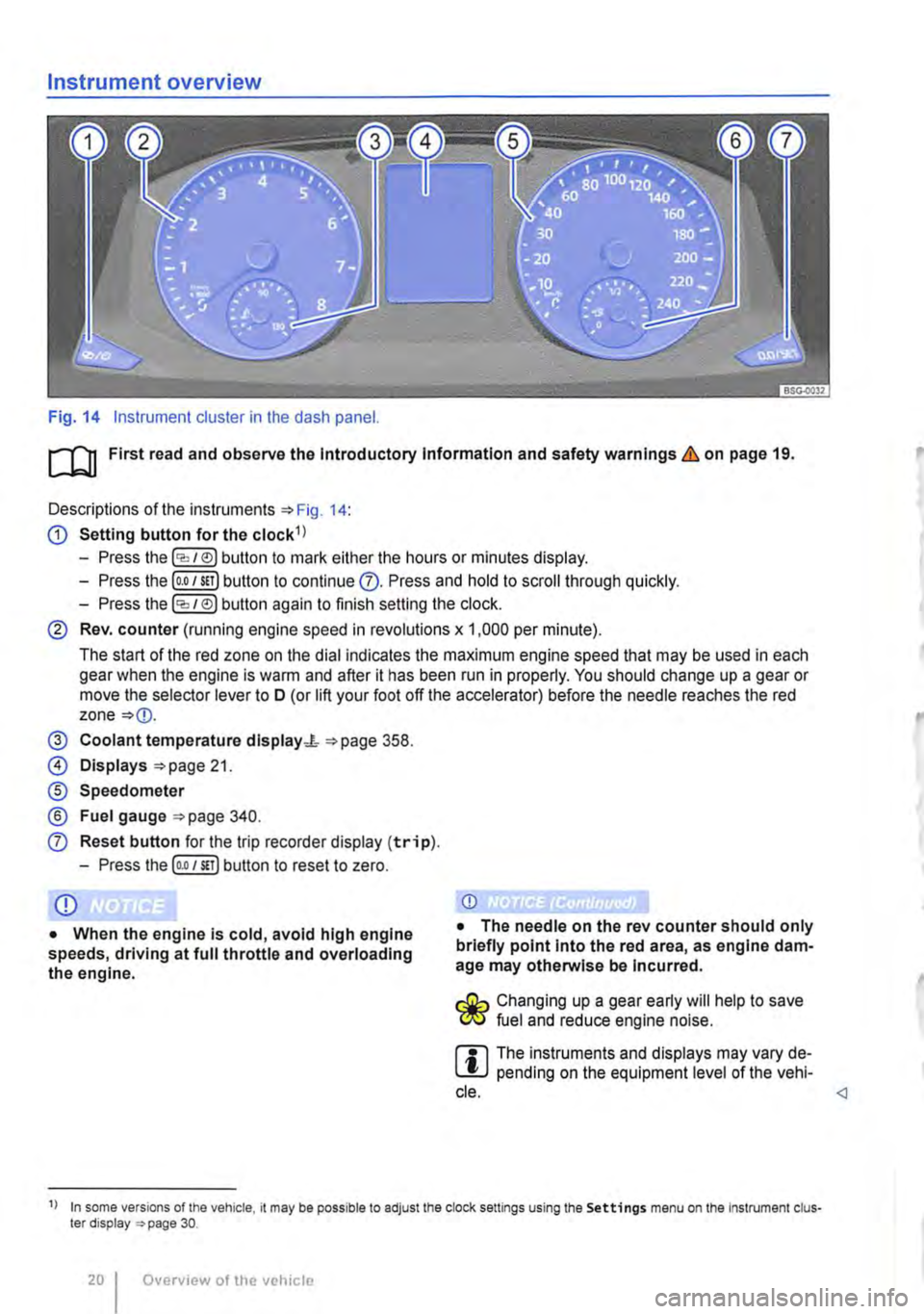
Fig. 14 Instrument cluster in the dash panel.
m First read and observe the Introductory Information and safety warnings & on page 19.
Descriptions of the instruments 14:
G) Setting button for the clock 1)
-Press the (
-Press the (o.o 1 sn) button to continue Q). Press and hold to scroll through quickly.
-Press the (
® Rev. counter (running engine speed in revolutions x 1,000 per minute).
The start or the red zone on the dial indicates the maximum engine speed that may be used in each gear when the engine is wanm and after it has been run in properly. You should change up a gear or move the selector lever to D (or lift your foot off the accelerator) before the needle reaches the red zone =:o(D.
@ Coolant temperature dlsplay.J,. 358.
0) Displays =:opage 21.
® Speedometer
® Fuel gauge =:opage 340.
CD Reset button for the trip recorder display (trip).
-Press the [o.o 1 sn) button to reset to zero.
CD
• When the engine Is cold, avoid high engine speeds, driving at full throttle and overloading the engine.
&... Changing up a gear early will help to save W fuel and reduce engine noise.
r:il The instruments and displays may vary de-L!J pending on the equipment level of the vehi-cle.
20 Ovcrvtew of the vchtclc
Page 343 of 486
Capacities
r--('n First read and observe the introductory L-W.I information and safety warnings & on page 340.
Checks when filling the tank
r--r'n First read and observe the introductory L-W.I information and safety warnings & on page 340.
Checklist
Never carry out any work on the engine or in the engine compartment if you are not familiar with the necessary procedures and the general safety re-quirements or if the correct operating equipment, fluids and unsuitable tools are not available 350, Preparation for working in the engine compartment! The work should be carried out by a qualified workshop if you are uncertain. Please en-sure that the following are checked regular1y, pref-erably every time you fill the tank:
..( Windscreen washer fluid level 116
..( Engine oil level 353
Fuel
c:QJ Introduction
This chapter contains information on the following subjects:
Petrol
Diesel ...
344 345
Different engines require different fuels. The facto-ry-fitted sticker on the inside of the tank flap indi-cates the fuel type that is required for your particu-lar vehicle.
Volkswagen Commercial Vehicles recommends us-ing fuels with a low sulphur content or which are sulphur-free in order to reduce fuel consumption and prevent damage to the engine.
If the engine is not running smoothly or begins to judder, this can indicate poor or inadequate fuel quality, e.g. water in the fuel. If these symptoms appear, reduce the vehicle speed immediately and drive to the nearest qualified workshop at medium engine speeds, avoiding high engine loading. If these symptoms occur immediately after the vehi-
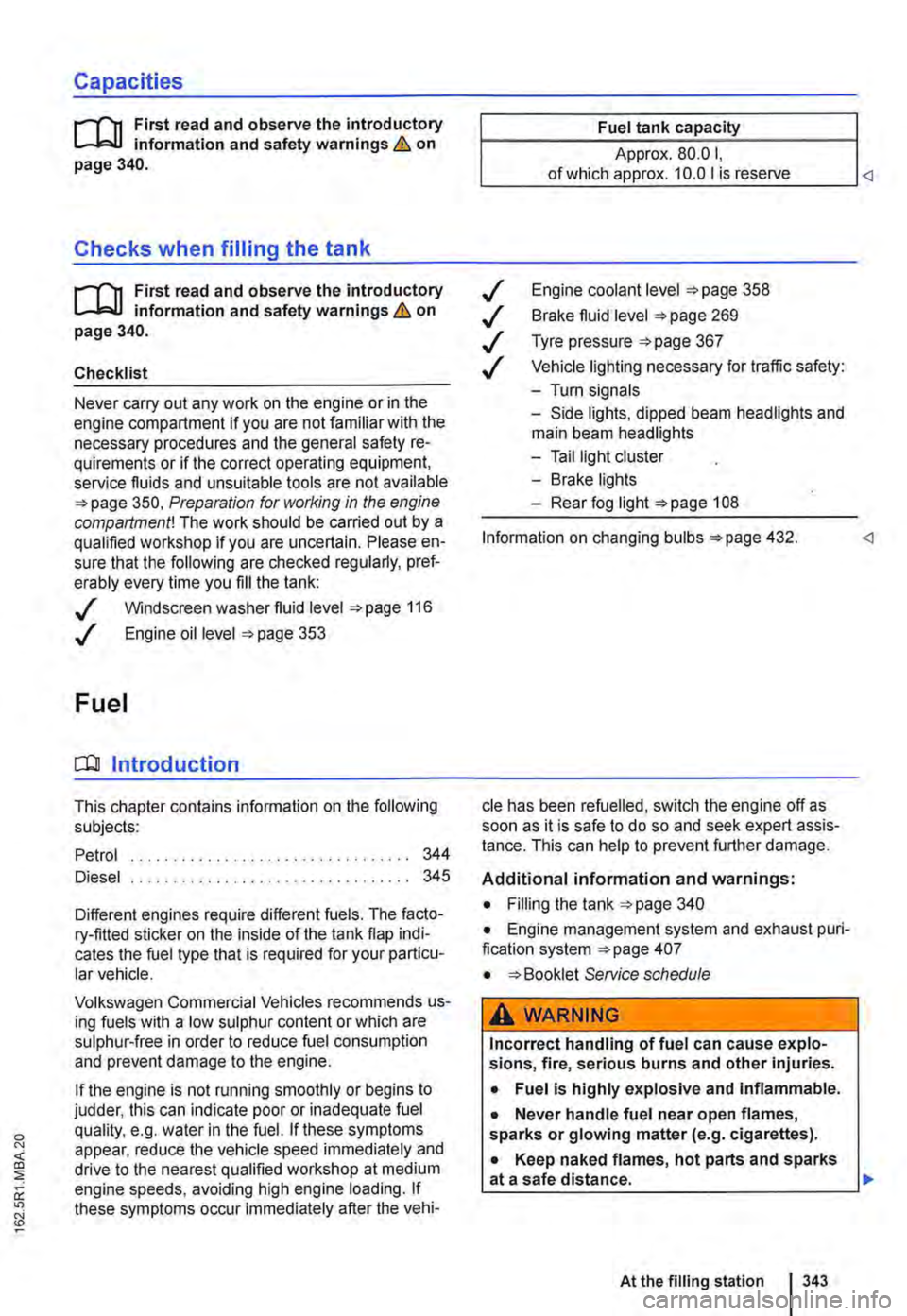
Fuel tank capacity
Approx. 80.0 I,
..( Engine coolant level 358
..( Brake fluid level 269
..( Tyre pressure 367
..( Vehicle lighting necessary for traffic safety:
-Turn signals
-Side lights, dipped beam headlights and main beam headlights
-Tail light cluster
-Brake lights
-Rear fog light 1 08
Information on changing bulbs 432.
cle has been refuelled, switch the engine off as soon as it is safe to do so and seek expert assis-tance. This can help to prevent further damage.
Additional information and warnings:
• Filling the tank 340
• Engine management system and exhaust puri-fication system 407
• Service schedule
A WARNING
Incorrect handling of fuel can cause explo-sions, fire, serious burns and other injuries.
• Fuel is highly explosive and inflammable.
• Never handle fuel near open flames, sparks or glowing matter (e.g. cigarettes).
• Keep naked flames, hot parts and sparks at a safe distance.
At the filling station 1343
Page 350 of 486
Cleaning and maintenance
In the engine compartment
Preparation for working in the engine compartment
ClJ Introduction
This chapter contains information on the following subjects:
Preparing the vehicle for working in the engine compartment . . . . . . . . . . . . . . . . . 352 Opening and closing the bonnet 352
Always park the vehicle on a level and stable sur-face before carrying out any work in the engine compartment.
The engine compartment of a motor vehicle is a hazardous area. Never carry out any work on the engine or in the engine compartment if you are not familiar with the requisite procedures and general safety requirements, or if you only have access to incorrect operating equipment, service fluids, and unsuitable tools &. The work should be carried out by a qualified workshop if you are uncertain. Serious injuries can be caused if work is carried out incorrectly.
Additional information and warnings:
• Exterior views 5
• Wipers/washer 116
• Starting and stopping the engine 257
• Brake fluid 269
• Pull-away assist systems (starUstop system) 282
• Checks when filling the tank 340
• Engine oil 353
• Engine coolant 358
• Battery page 362
• Accessories, modifications, repairs and renewal of parts 394
A wARNING
Unintentional vehicle movements during service work can cause serious injury.
• Never work underneath a vehicle if it is not secured against rolling away. If you are working underneath the vehicle while the wheels are on the ground, the vehicle must
350 I Cleanmg and maintenance
A WARNING (Continued)
be on a level, the wheels must be blocked and the vehicle key must be removed from the ignition lock.
• If you have to work underneath the vehi-cle, use suitable stands to provide extra sup-port for the vehicle. The vehicle jack is not sufficient for this task and can fail, which can lead to serious injuries.
• The start/stop system must have been de-activated.
A WARNING
The engine compartment of any motor vehi-cle is a dangerous area. Serious injuries can be sustained here.
• The utmost care and attention must be paid when carrying out any work and you must follow the general safety rules. Never take any risks.
• Never do any work on the engine or in the engine compartment unless you know exact-ly how to carry it out. If you are uncertain of what to do, the work should be carried out by a qualified workshop. Serious Injuries can re-sult from work that has not been carried out properly.
• Never open the bonnet if you see steam or coolant escaping from the engine compart-ment. Hot steam or coolant can cause seri-ous burns. Always wait until you can no lon-ger see or hear steam or coolant coming from the engine compartment.
• Always allow the engine to cool down be-fore opening the bonnet.
• Hot parts of the engine or exhaust system can burn the skin.
• The following points should be noted be-fore opening the bonnet once it has cooled down.
-Apply the handbrake fully and move the selector lever to position P or move the manual gear lever to the neutral position. .,..
Page 358 of 486
A WARNING (Continued)
• Always allow the engine to cool down completely to avoid burns.
• Avoid raising your arms when removing the oil drain plug with your fingers to help prevent oil from running down your arm.
• Use a suitable container when draining the used oil. it must be at least large enough to hold the entire quantity of engine oil re-quired for refilling.
• Never store engine oil in empty food con-tainers, bottles or any other non-original con-tainers as people finding these containers may not know that they contain engine oil.
Coolant
o:::n Introduction
This chapter contains information on the following subjects:
Warning lamp and coolant temperature display . . . . . . . . . . . . . . . . . . . . . . . . . 359
Coolant specification . . . . . 360 Checking the coolant level and refilling coolant . . . . . . . . . . . . . 361
Never carry out any work on the engine coolant system if you are not familiar with the requisite pro-cedures, or if you do not have access to the cor-rect tools, operating equipment and fluids &. The work should be carried out by a qualified work-shop if you are uncertain. Volkswagen Commercial Vehicles recommends using a Volkswagen Com-mercial Vehicles dealership for this purpose.
Serious injuries can be caused if work is carried out incorrectly.
Additional information and warnings:
• Towing a trailer 139
• Preparation for working in the engine compart-ment 350
• Accessories, modifications, repairs and renewal of parts =>page 394
358 I Cleaning and maintenance
A WARNING (Continued)
• Engine oil is toxic and must be stored out of the reach of children.
r:Q:.. Before changing the engine oil, first find out W where old oil can be disposed of properly near you.
Used oil must be disposed of in accordance W with regulations governing the protection of the environment. Never dispose of old oil in loca-tions such as gardens, woods, sewerage systems, on streets and roads, or in rivers and waterways.
Engine coolant is poisonous and can cause serious Injuries.
• Engine coolant should only be kept in sealed original containers In a safe place.
• Never store engine coolant In empty food containers, bottles or any other non-original containers as people finding these containers may then drink the engine coolant.
• The engine coolant must be stored out of the reach of children.
• Please note that the amount of correct coolant additive used must be sufficient for the lowest ambient temperature that you ex-pect the vehicle to be exposed to.
• Coolant can freeze at extremely cold out-side temperatures, causing the vehicle to break down. Vehicle occupants with Inade-quate winter clothing could then freeze to death as the heating will also no longer func-tion.
Coolant and coolant additives can pollute the W environment. Spilt service fluids must be col-lected then disposed of properly and in an environ-mentally responsible way.
Page 359 of 486
Warning lamp and coolant temperature display
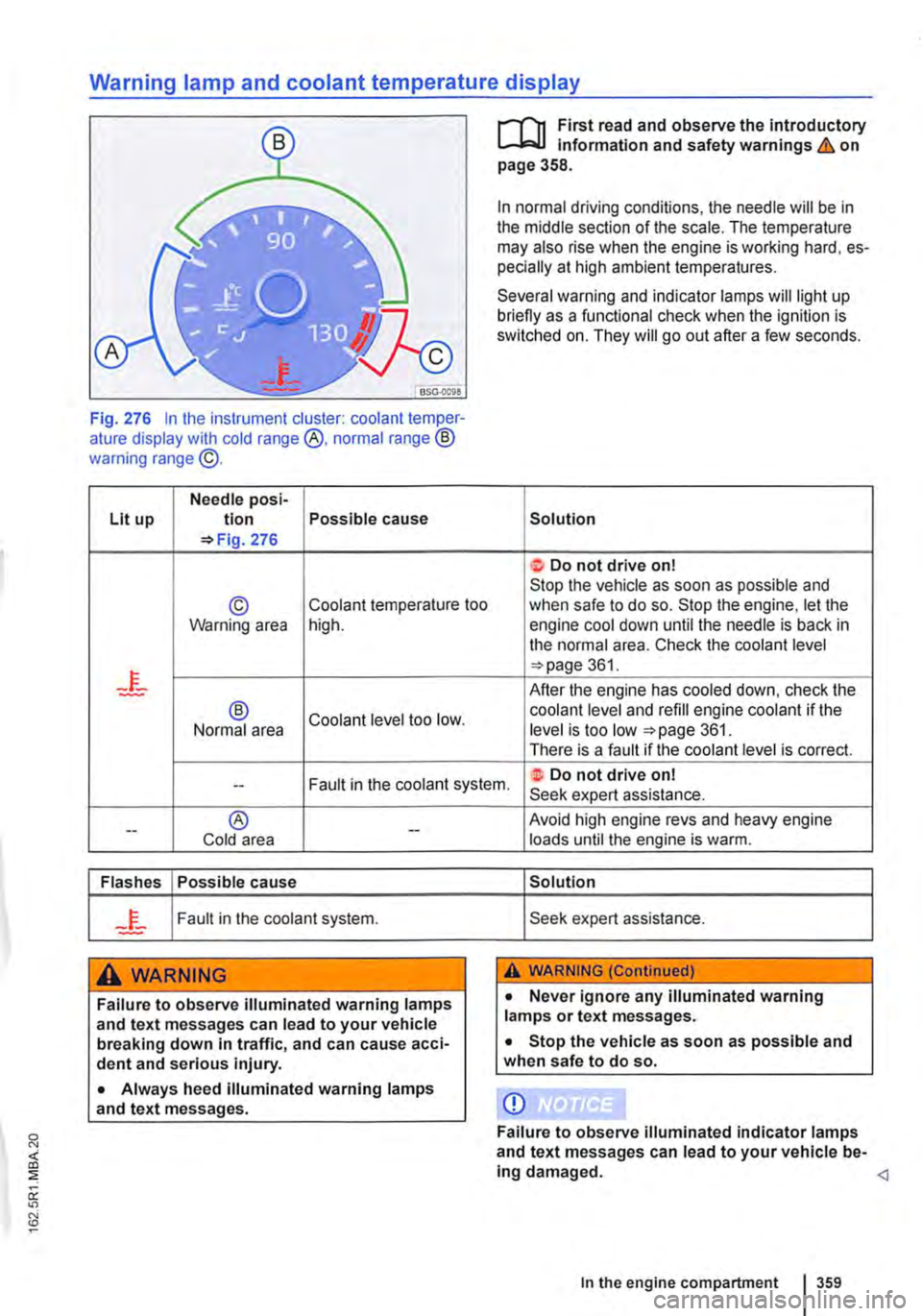
Fig. 276 In the instrument cluster: coolant temper-ature display with cold range @, normal range ® warning range @.
Needle posi-Lit up tion Possible cause =>Fig. 276
© Coolant temperature too Warning area high.
® Coolant level too low. Normal area
r-f"n First read and observe the introductory L,....J.:.lJ Information and safety warnings & on page 358.
In normal driving conditions, the needle will be in the middle section of the scale. The temperature may also rise when the engine is working hard, es-pecially at high ambient temperatures.
Several warning and indicator lamps will light up briefly as a functional check when the ignition is switched on. They will go out after a few seconds.
Solution
t Do not drive on! Stop the vehicle as soon as possible and when safe to do so. Stop the engine, let the engine cool down until the needle is back in the normal area. Check the coolant level =>page 361.
After the engine has cooled down, check the coolant level and refill engine coolant if the level is too low =>page 361. There is a fault if the coolant level is correct.
Fault in the coolant system. ·t Do not drive on! --Seek expert assistance.
--® Cold area --
Flashes Possible cause
Fault in the coolant system.
A WARNING
Failure to observe illuminated warning lamps and text messages can lead to your vehicle breaking down In traffic, and can cause acci-dent and serious injury.
• Always heed illuminated warning lamps and text messages.
Avoid high engine revs and heavy engine loads until the engine is warm.
Solution
Seek expert assistance.
A WARNING (Continued)
• Never ignore any illuminated warning lamps or text messages.
• Stop the vehicle as soon as possible and when safe to do so.
CD
Failure to observe illuminated indicator lamps and text messages can lead to your vehicle be-ing damaged.
Page 360 of 486
Coolant specification
r-l"'n First read and observe the Introductory l..-J,::,U Information and safety warnings & on page 358.
The cooling system is filled at the factory with a mixture of specially prepared water and at least 40% coolant additive G 13 (fl-VW 774 J). The coolant additive is dyed purple. This mixture of wa-ter and coolant additive gives the necessary frost protection down to -2s•c (-13.F) and protects the alloy parts of the cooling system against corrosion. The mixture also prevents scaling and raises the boiling point of the coolant.
In order to protect the coolant system, the propor-tion of coolant additive must always be at least 40%, even if anti-freeze is not required in warm weather and warm climates.
If greater frost protection is required in very cold climates, the proportion of anti-freeze additive can be increased. However, the percentage of coolant additive should not exceed 60%, as this would re-duce the frost protection and the cooling effect.
When refilling the coolant, a mixture of distilled water and at least 40% coolant additive G 13 or G 12 plus-plus (TL-VW 774 G) (both of which are dyed purple) must be used in order to obtain the optimum corrosion protection =>(]). Mixing G 13 with the coolant additives G 12 plus (Tl-VW774 F), G 12 (dyed red) orG 11 (dyed blue-green) will significantly decrease the level of corro-sion protection and should therefore be avoided =>
Insufficient anti-freeze In the coolant system can cause the engine to break down and cause serious Injuries.
• Please note that the amount of correct coolant additive used must be sufficient for the lowest ambient temperature that you ex-pect the vehicle to be exposed to.
• Coolant can freeze at extremely cold out-side temperatures, causing the vehicle to break down. Vehicle occupants with Inade-quate winter clothing could then freeze to death as the heating will also no longer func-tion.
360 I Cleaning and maintenance
CD
Never mix genuine coolant additives with other coolants that have not been approved by Volks-wagen. Mixing other coolants could cause seri-ous damage to the engine and cooling system.
• If the liquid in the coolant expansion tank is brown instead of purple, for example, G 13 has been mixed with another unsuitable engine coolant. The coolant must be changed as soon as possible if this Is the case. Failure to ob-serve this point can result In serious faults or engine damage.
Coolant and coolant additives can pollute the "7!1:5 environment. Spilt service fluids must be col-lected then disposed of properly and in an environ-mentally responsible way.
Page 361 of 486
Checking the coolant level and refilling coolant
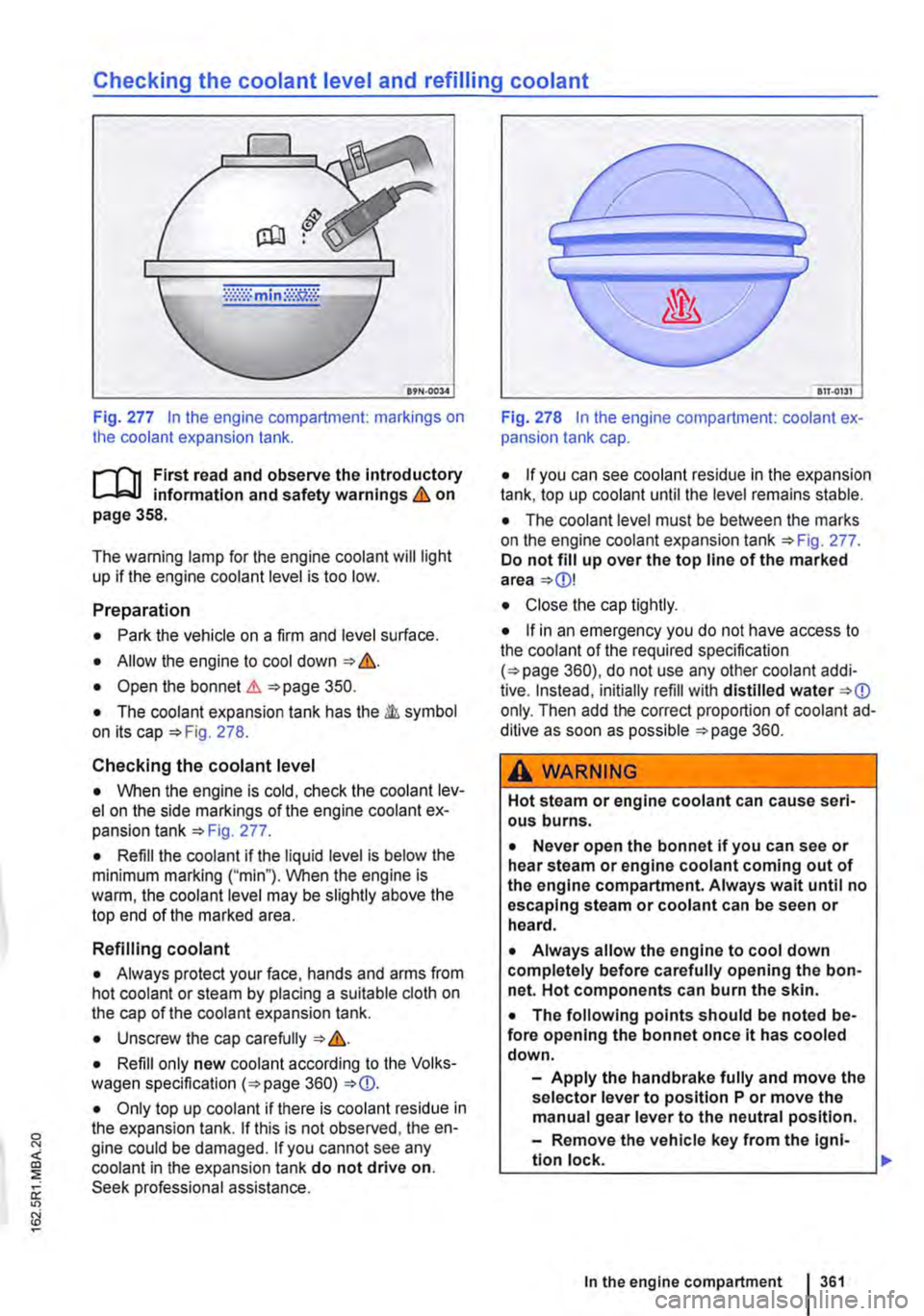
Fig. 277 In the engine compartment: markings on the coolant expansion tank.
r--f'n First read and observe the Introductory information and safety warnings & on page 358.
The warning lamp for the engine coolant will light up if the engine coolant level is too low.
Preparation
• Park the vehicle on a firm and level surface.
• Allow the engine to cool down &.
• Open the bonnet&. 350.
• The coolant expansion tank has the all. symbol on its cap 278.
Checking the coolant level
• When the engine is cold, check the coolant lev-el on the side markings of the engine coolant ex-pansion tank 277.
• Refill the coolant if the liquid level is below the minimum marking ("min"). When the engine is warm, the coolant level may be slightly above the top end of the marked area.
Refilling coolant
• Always protect your face, hands and arms from hot coolant or steam by placing a suitable cloth on the cap of the coolant expansion tank.
• Unscrew the cap carefully &.
• Refill only new coolant according to the Volks-wagen specification 360)
• Only top up coolant if there is coolant residue in the expansion tank. If this is not observed, the en-gine could be damaged. If you cannot see any coolant in the expansion tank do not drive on. Seek professional assistance.
Fig. 278 In the engine compartment: coolant ex-pansion tank cap.
• If you can see coolant residue in the expansion tank, top up coolant until the level remains stable.
• The coolant level must be between the marks on the engine coolant expansion tank 277. Do not fill up over the top line of the marked area
• Close the cap tightly.
• If in an emergency you do not have access to the coolant of the required specification 360), do not use any other coolant addi-tive. Instead, initially refill with distilled water only. Then add the correct proportion of coolant ad-ditive as soon as possible 360.
A WARNING
Hot steam or engine coolant can cause seri-ous burns.
• Never open the bonnet if you can see or hear steam or engine coolant coming out of the engine compartment. Always wait until no escaping steam or coolant can be seen or heard.
• Always allow the engine to cool down completely before carefully opening the bon-net. Hot components can burn the skin.
• The following points should be noted be-fore opening the bonnet once it has cooled down.
-Apply the handbrake fully and move the selector lever to position P or move the manual gear lever to the neutral position.
-Remove the vehicle key from the lgni-
In the engine compartment I 361
Page 394 of 486
Accessories, modifications, repairs and renewal of parts
o::n Introduction
This chapter contains information on the following subjects:
Running-in 394
Accessories and replacement parts 395 Service fluids and consumables . . . . . . . . . . . 395
Repairs and technical modifications . . . . . . . . 396
Repairs and faults in the airbag system . . . . . 397
Retrofitting two-way radios . . . . . . . . . . . . . . . . 398
Information stored in the control units . . . . . . . 398 Using a mobile telephone in the vehicle without a connection to the external aerial . . 399
Vehicle lifting points 401
Additional information and warnings:
• Seat belts '*page 79
• Airbag system '*page 87
• Towing a trailer 139
• Ashtray and cigarette lighter 161
• Electrical sockets 163
• Braking, stopping and parking '*page 269
• Pull-away assist systems 282
• ParkPilot 287
• Reversing camera (Rear Assist) '*page 291
• Cruise control system (CCS) 295
• Driver Alert System 315
• Tyre monitoring system 318
• Preparation for working in the engine compart-ment page 350
• Engine oil 353
• Engine coolant '*page 358
• Battery 362
Running-in
r--('n First read and observe the introductory L-J.:.lJ information and safety warnings & on page 394.
Please follow the regulations concerning running-in new parts.
394 I Cleaning and maintenance
• Cleaning and caring for the vehicle exterior 380
• Cleaning and caring for the interior 388
• Consumer information 404
• Radio, provision for mobile tele-phone, infotainment system, navigation system
A WARNING
Unsuitable spare parts and accessories, In-correctly carried out work, modifications and repairs can lead to damage to the vehicle and cause accidents and serious Injuries.
• Volkswagen Commercial Vehicles strongly recommends you use only approved Volks-wagen accessories and Volkswagen Genuine Parts®. These parts and accessories have been specially tested by Volkswagen Com-mercial Vehicles for suitability, reliability and safety.
• Repairs and modifications to your vehicle should only be carried out by a qualified workshop. Qualified workshops have the nec-essary tools, diagnostic equipment, repair In-formation and qualified personnel.
• Never fit parts to your vehicle that are In any way different from the factory-fitted parts.
• Never secure or mount objects such as drink holders or telephone holders on or next to the airbag covers or within the deployment zone of the airbag.
• Only use rim/tyre combinations which have been approved by Volkswagen Commer-cial Vehicles for your vehicle type.
Any new engine has to be run in during the first 1 ,500 kilometres. During its first few hours of run-ning, the internal friction in the engine is greater than later on when all the moving parts have bed-ded down.
The style of driving during the first 1 ,500 kilometres will also affect the engine quality. Even after this time-and especially with a cold engine-drive the .,.
Page 450 of 486
Technical data
Technical data
Vehicle data
COJ Introduction
This chapter contains information on the following subjects:
Vehicle identification data . . . . . . . . . . . . . . . . . 451
Dimensions ........................... . 452
Unless otherwise specified, the technical data of the basic model apply. The values quoted here may differ if additional equipment is fitted, for differ-ent models, for special vehicles or if country-specif-ic equipment is fitted. All data in the official vehicle documents take precedence over these data.
Engine
The vehicle data sticker and the official vehicle documents show which engine is installed in your vehicle.
Weight
The values for the kerb weight in the following ta-bles apply for the road-ready vehicle with driver (75 kg), service fluids including fuel tank carrying 90% of its capacity and, if applicable, toolkit and spare tyre =>&.Additional equipment and retrofit-ted accessories increase the stated kerb weight and reduce the maximum permitted load accord-ingly.
The load comprises the weights of the following:
• Passengers
• Allluggage
• Roof load including the mounts or roof bars and the load carrier system
• Drawbar load when towing a trailer
Performance figures
The performance figures were measured without equipment which may influence performance, such as a roof carrier or mud flaps.
Gross combination weight rating
The gross combination weight ratings listed are on-ly applicable for altitudes up to 1 ,000 m above sea level. The maximum weight of the car and trailer must be reduced by approximately 10% for every further 1 ,000 m in altitude.
450 I Tcchn1cal data
Descriptions of the tables
Gearbox abbreviations: MG = manual gearbox, DSG® = dual clutch gearbox DSG®.
Additional information and warnings:
• Transporting =:o page 125
• Driving with respect for the environment =:.page 278
• Fuel =:.page 343
• Engine oil =:o page 353
• Engine coolant =:o page 358
• Wheels and tyres =>page 367
• Consumer information =>page 404
,A WARNING
Exceeding the maximum permissible weights, payload, dimensions, vehicle speed and axle weight rating could cause damage to the vehicle, accidents and serious Injuries.
• Do not exceed the permitted weights, loads, dimensions and maximum speeds.
• The actual axle loads must never exceed the maximum permissible axle loads.
• The payload and the distribution of the load In the vehicle have an effect on the driv-ing response and braking distance of the ve-hicle. Adjust your speed accordingly.
,A WARNING
Accidents and severe injuries can occur if the maximum permitted gross combination weight Is exceeded.
• Never exceed the specified gross combi-nation weight rating.