technical specifications Alfa Romeo Giulia 2018 User Guide
[x] Cancel search | Manufacturer: ALFA ROMEO, Model Year: 2018, Model line: Giulia, Model: Alfa Romeo Giulia 2018Pages: 260, PDF Size: 6 MB
Page 232 of 260
IDENTIFICATION DATA
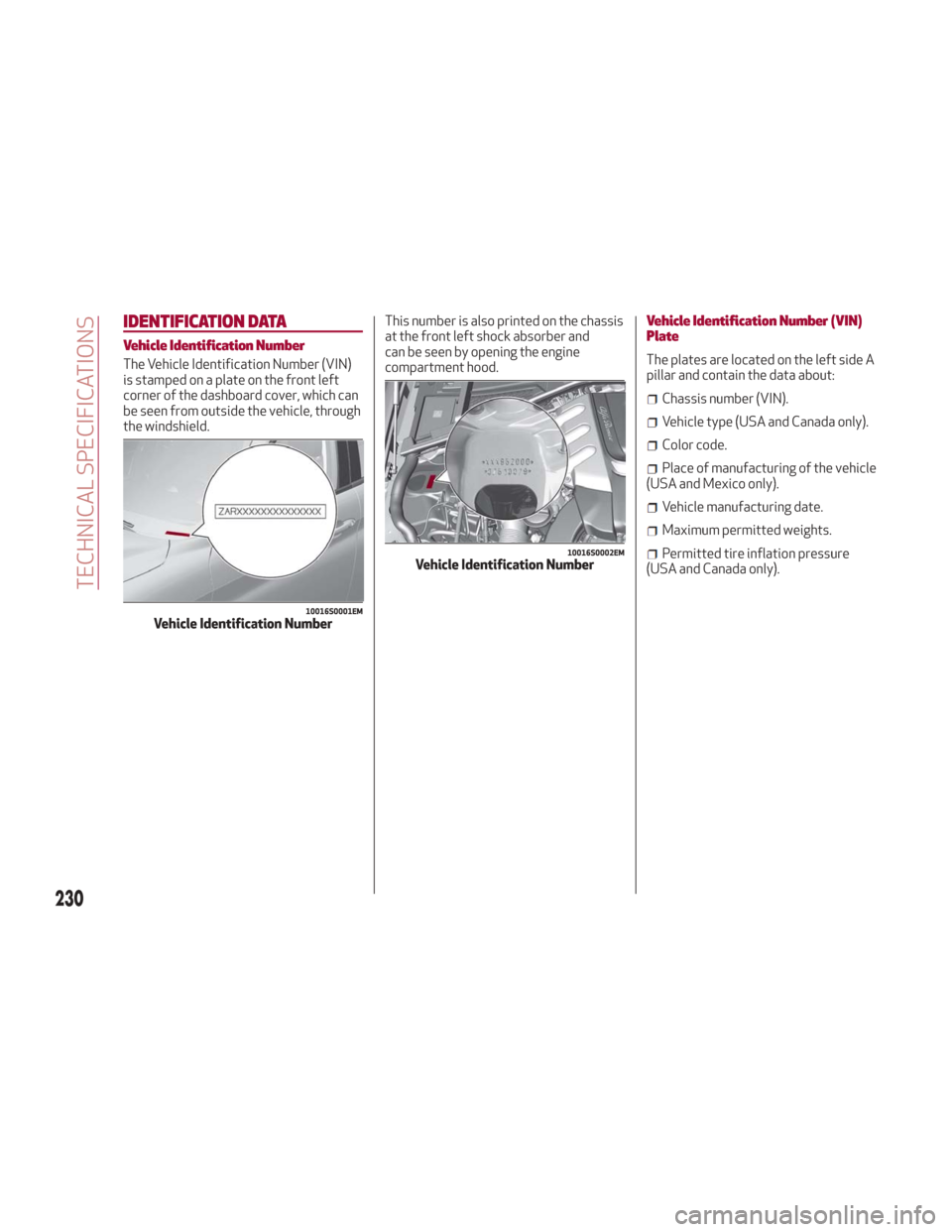
Vehicle Identification Number
The Vehicle Identification Number (VIN)
is stamped on a plate on the front left
corner of the dashboard cover, which can
be seen from outside the vehicle, through
the windshield.This number is also printed on the chassis
at the front left shock absorber and
can be seen by opening the engine
compartment hood.
Vehicle Identification Number (VIN)
Plate
The plates are located on the left side A
pillar and contain the data about:
Chassis number (VIN).
Vehicle type (USA and Canada only).
Color code.
Place of manufacturing of the vehicle
(USA and Mexico only).
Vehicle manufacturing date.
Maximum permitted weights.
Permitted tire inflation pressure
(USA and Canada only).
10016S0001EMVehicle Identification Number
10016S0002EMVehicle Identification Number
230
TECHNICAL SPECIFICATIONS
Page 234 of 260
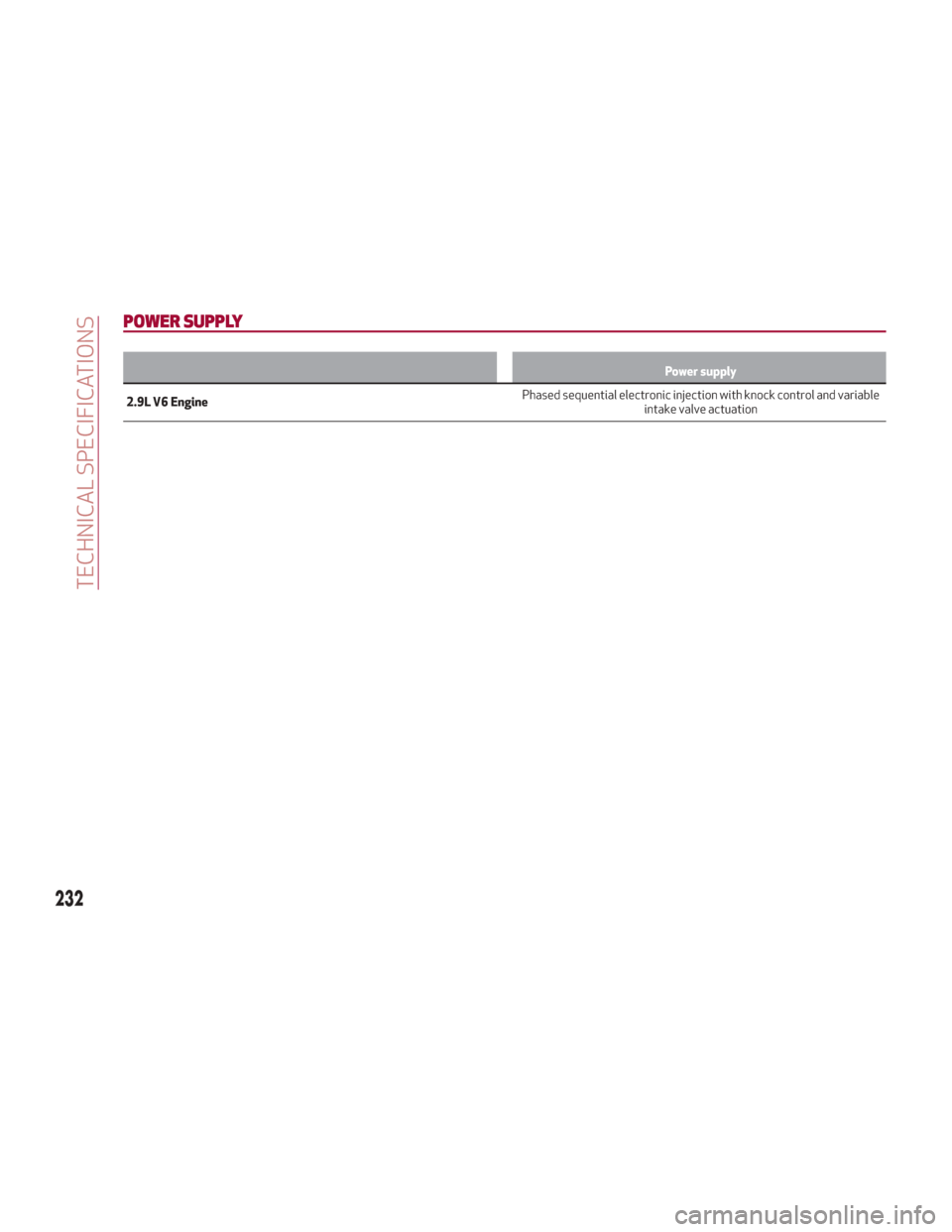
POWER SUPPLY
Power supply
2.9L V6 Engine Phased
sequential electronic injection with knock control and variable
intake valve actuation
232
TECHNICAL SPECIFICATIONS
Page 236 of 260
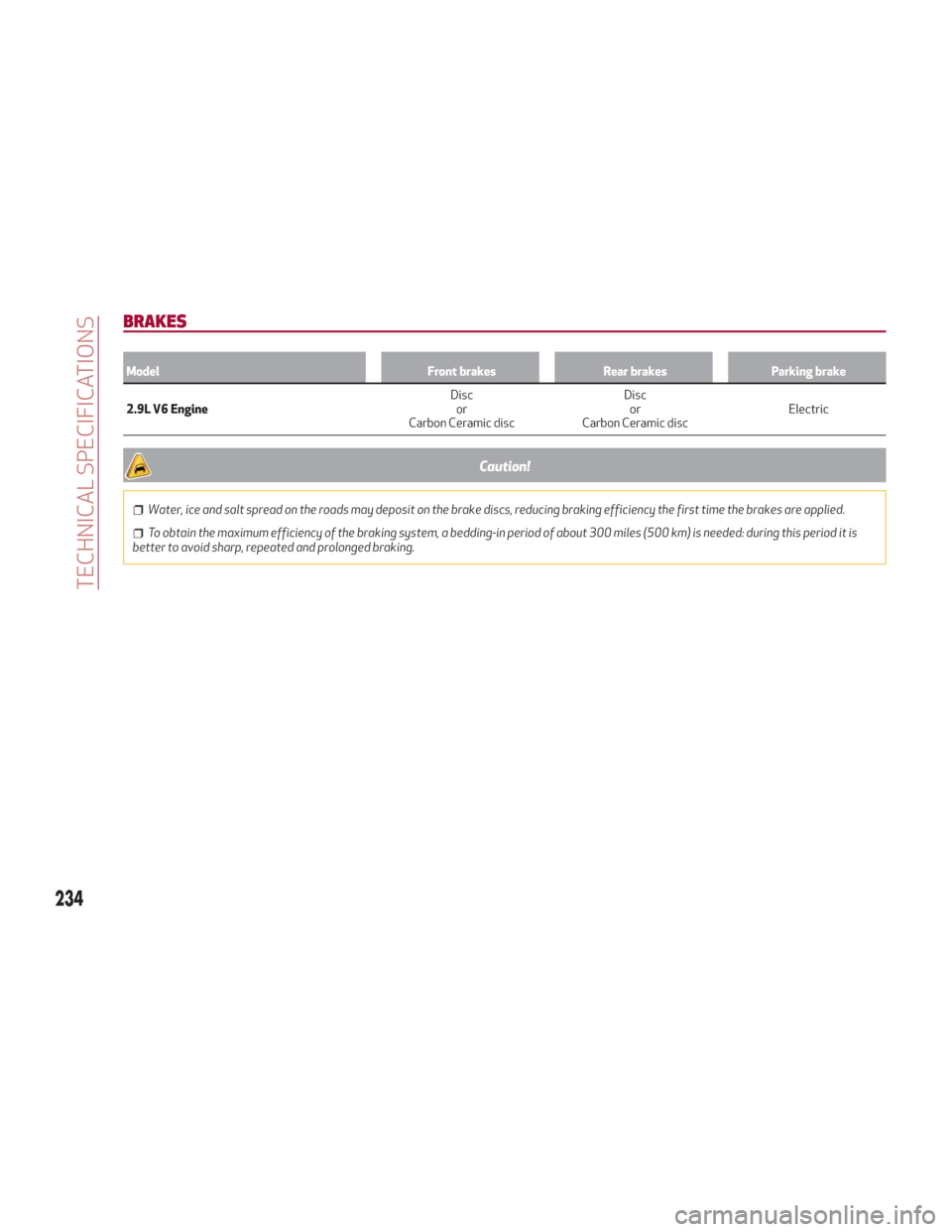
BRAKES
ModelFront brakesRear brakesParking brake
2.9L V6 Engine Disc
or
Carbon
Ceramic discDisc
or
Carbon Ceramic disc Electric
Caution!
Water, ice and salt spread on the roads may deposit on the brake discs, reducing braking efficiency the first time the brakes are applied.
To obtain the maximum efficiency of the braking system, a bedding-in period of about 300 miles (500 km) is needed: during this period it is
better to avoid sharp, repeated and prolonged braking.
234
TECHNICAL SPECIFICATIONS
Page 238 of 260
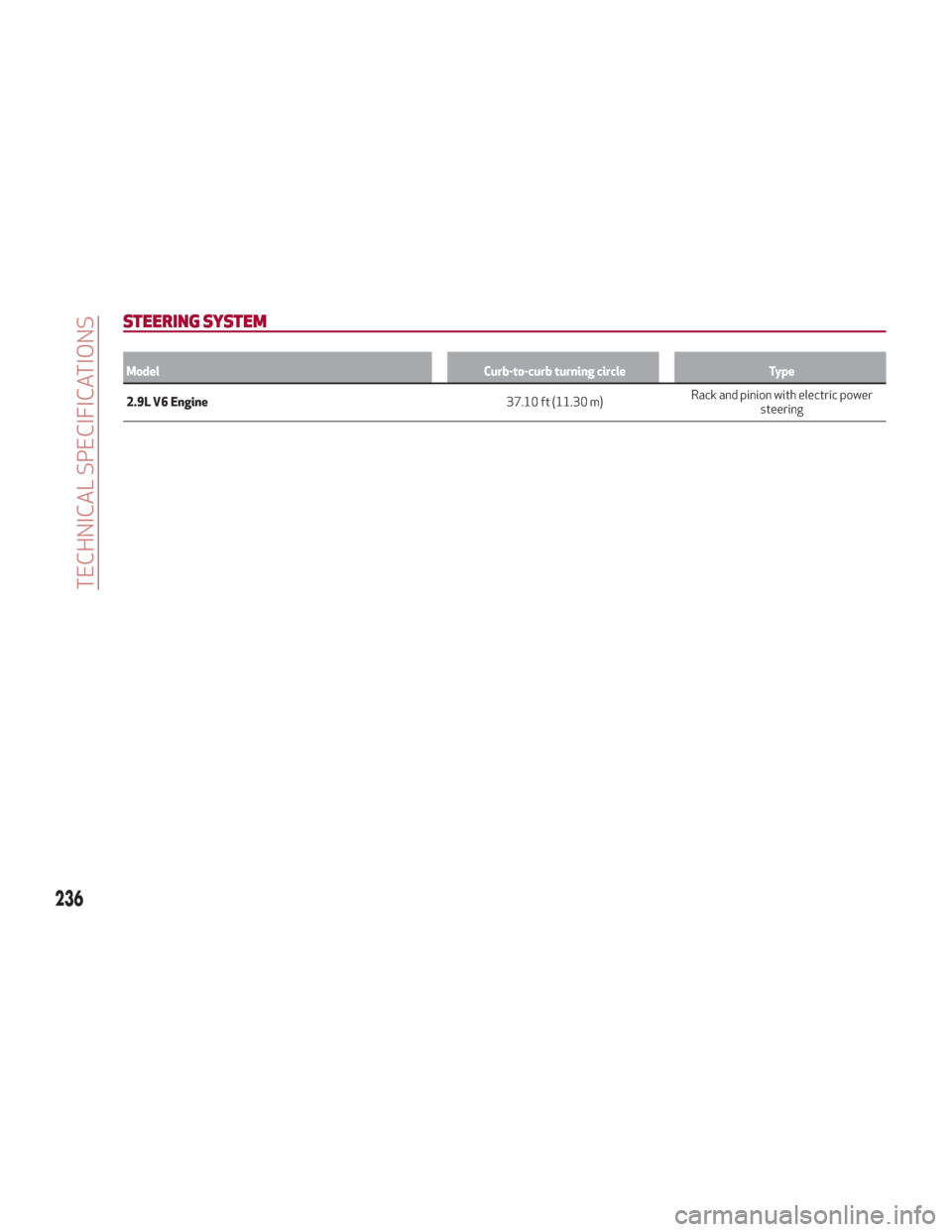
STEERINGSYSTEM
Model Curb-to-curb turning circleType
2.9L V6 Engine 37.10
ft (11.30 m)Rack and pinion with electric power
steering
236
TECHNICAL SPECIFICATIONS
Page 240 of 260
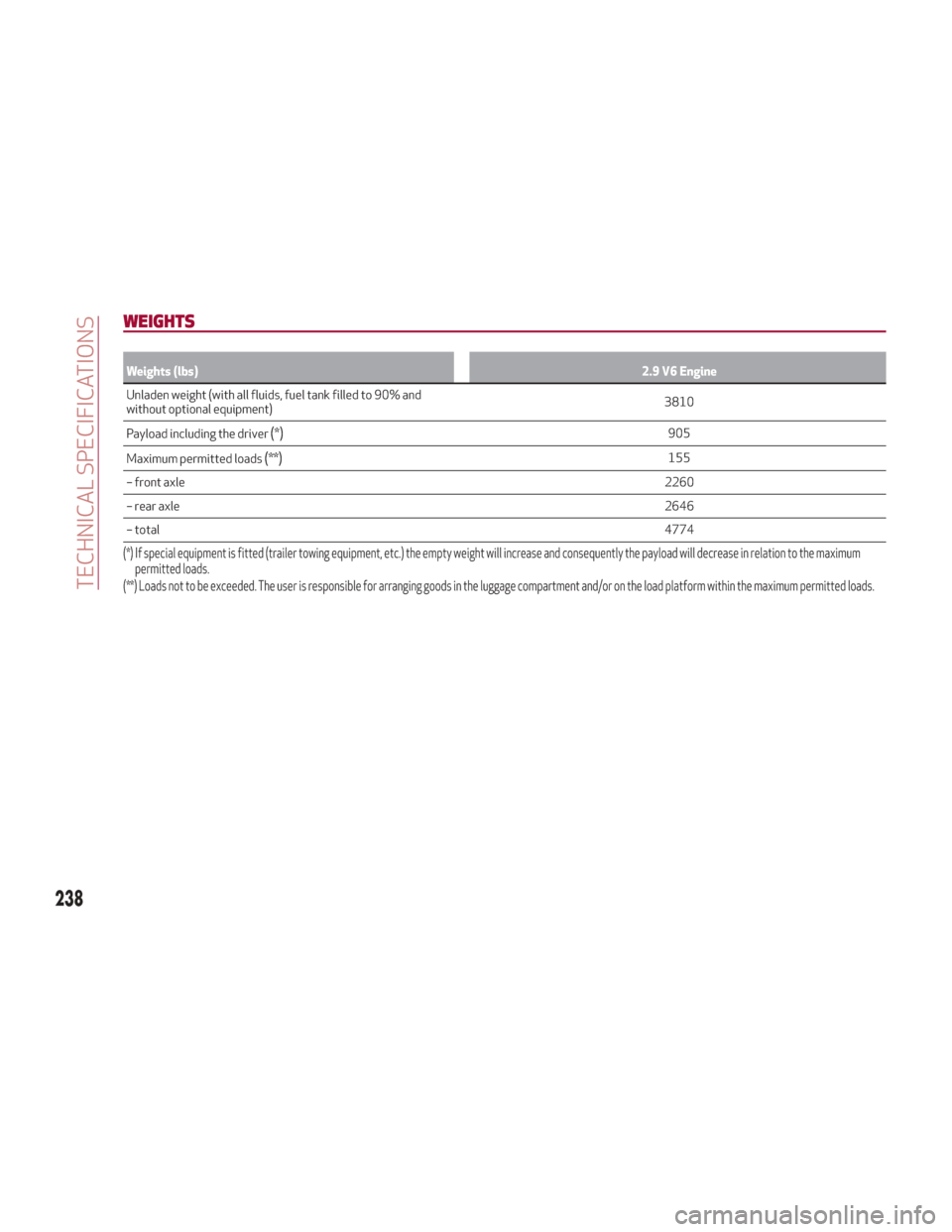
WEIGHTS
Weights (lbs)2.9 V6 Engine
Unladen weight (with all fluids, fuel tank filled to 90% and
without
optional equipment) 3810
Payload including the driver
(*)905
Maximum permitted loads
(**)155
– front axle 2260
– rear axle 2646
– total 4774
(*) If special equipment is fitted (trailer towing equipment, etc.) the empty weight will increase and consequently the payload will decrease in relation to the maximum
permitted loads.
(**) Loads not to be exceeded. The user is responsible for arranging goods in the luggage compartment and/or on the load platform within the maximum permitted loads.
238
TECHNICAL SPECIFICATIONS
Page 242 of 260
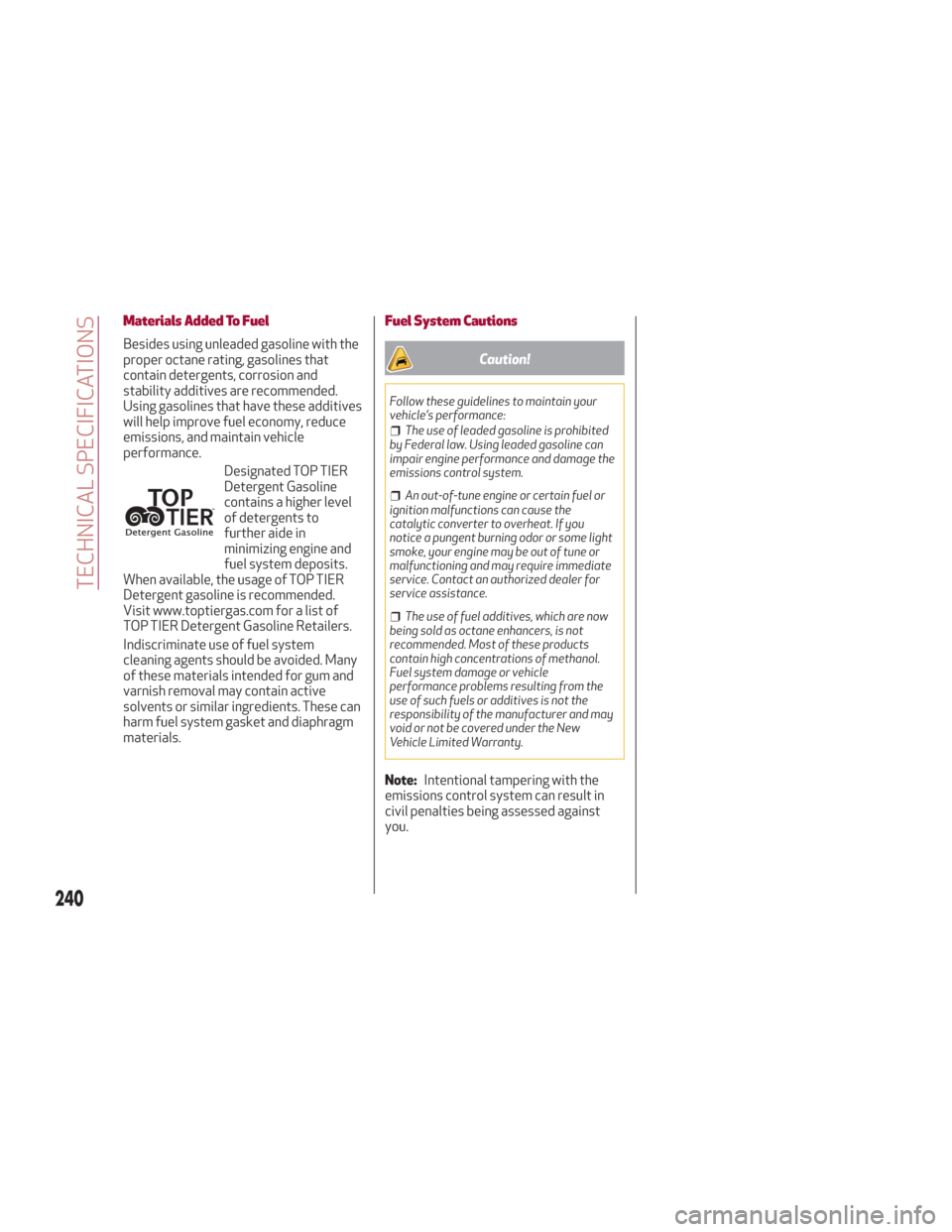
Materials Added To Fuel
Besides using unleaded gasoline with the
proper octane rating, gasolines that
contain detergents, corrosion and
stability additives are recommended.
Using gasolines that have these additives
will help improve fuel economy, reduce
emissions, and maintain vehicle
performance.Designated TOP TIER
Detergent Gasoline
contains a higher level
of detergents to
further aide in
minimizing engine and
fuel system deposits.
When available, the usage of TOP TIER
Detergent gasoline is recommended.
Visit www.toptiergas.com for a list of
TOP TIER Detergent Gasoline Retailers.
Indiscriminate use of fuel system
cleaning agents should be avoided. Many
of these materials intended for gum and
varnish removal may contain active
solvents or similar ingredients. These can
harm fuel system gasket and diaphragm
materials.
Fuel System Cautions
Caution!
Follow these guidelines to maintain your
vehicle’s performance:
The use of leaded gasoline is prohibited
by Federal law. Using leaded gasoline can
impair engine performance and damage the
emissions control system.
An out-of-tune engine or certain fuel or
ignition malfunctions can cause the
catalytic converter to overheat. If you
notice a pungent burning odor or some light
smoke, your engine may be out of tune or
malfunctioning and may require immediate
service. Contact an authorized dealer for
service assistance.
The use of fuel additives, which are now
being sold as octane enhancers, is not
recommended. Most of these products
contain high concentrations of methanol.
Fuel system damage or vehicle
performance problems resulting from the
use of such fuels or additives is not the
responsibility of the manufacturer and may
void or not be covered under the New
Vehicle Limited Warranty.
Note: Intentional tampering with the
emissions control system can result in
civil penalties being assessed against
you.
240
TECHNICAL SPECIFICATIONS
Page 244 of 260
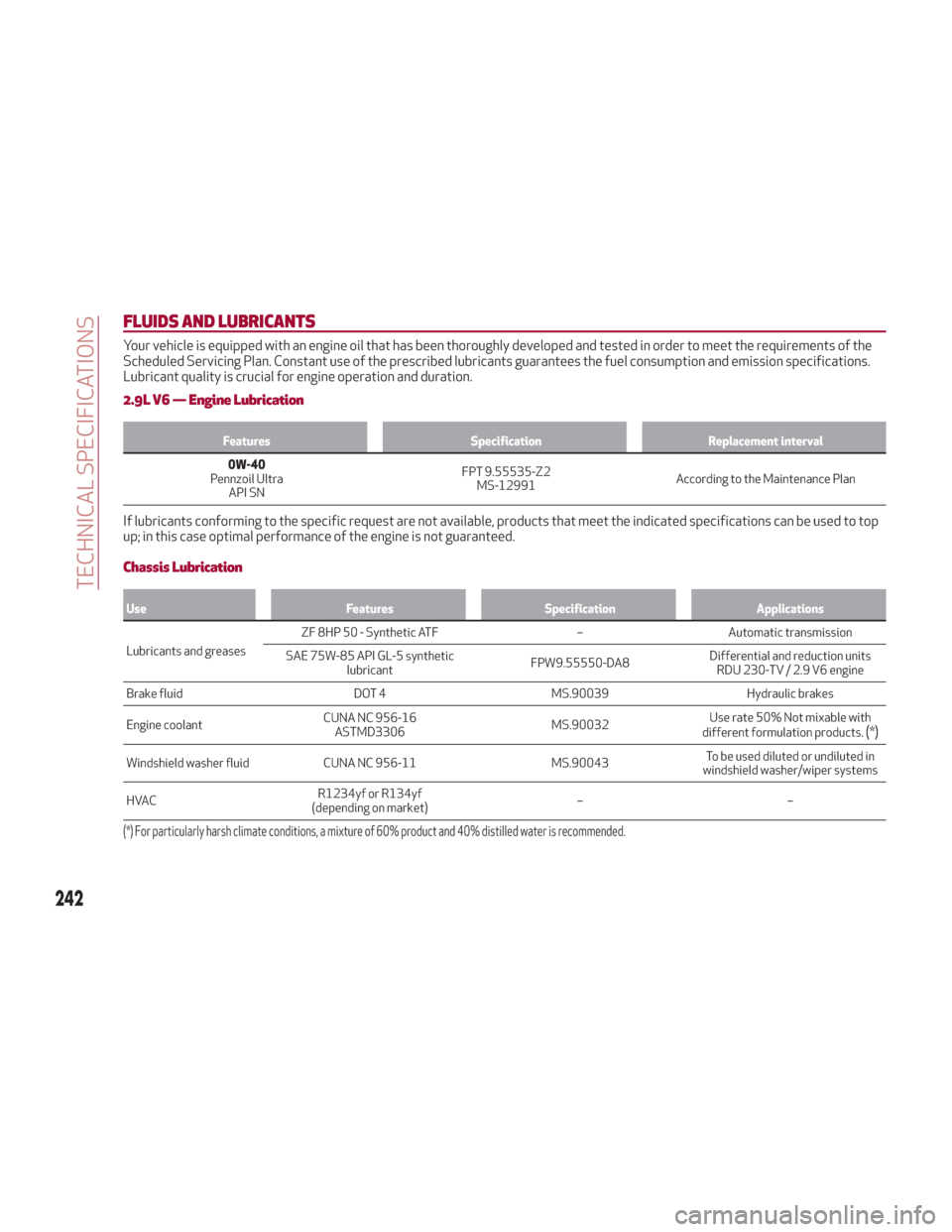
FLUIDS AND LUBRICANTS
Your vehicle is equipped with an engine oil that has been thoroughly developed and tested in order to meet the requirements of the
Scheduled Servicing Plan. Constant use of the prescribed lubricants guarantees the fuel consumption and emission specifications.
Lubricant quality is crucial for engine operation and duration.
2.9L V6 — Engine Lubrication
FeaturesSpecificationReplacement interval
0W-40
P
ennzoil Ultra API SN FPT 9.55535-Z2
MS-12991 According to the Maintenance Plan
If lubricants conforming to the specific request are not available, products that meet the indicated specifications can be used to top
up; in this case optimal performance of the engine is not guaranteed.
Chassis Lubrication
Use
FeaturesSpecification Applications
Lubricants and greases ZF
8HP 50 - Synthetic ATF
–Automatic transmission
SAE 75W-85 API GL-5 synthetic lubricant FPW9.55550-DA8Differential and reduction units
RDU 230-TV / 2.9 V6 engine
Brake fluid DOT 4MS.90039Hydraulic brakes
Engine coolant CUNA NC 956-16
ASTMD3306 MS.90032Use rate 50% Not mixable with
different formulation products.
(*)
Windshield washer fluid CUNA NC 956-11 MS.90043To be used diluted or undiluted in
windshield washer/wiper systems
HVAC R1234yf or R134yf
(depending on market) ––
(*) For particularly harsh climate conditions, a mixture of 60% product and 40% distilled water is recommended.
242
TECHNICAL SPECIFICATIONS