ECO mode AUDI A3 2012 Owner´s Manual
[x] Cancel search | Manufacturer: AUDI, Model Year: 2012, Model line: A3, Model: AUDI A3 2012Pages: 280, PDF Size: 70.11 MB
Page 84 of 280
82 Warm and cold
i Setting the temperature
Separate temperatures can be selected for the driver's and front passenger 's side .
.,. Turn the rotary switch @ on the driver 's
s ide and the rotary switch @ on the pas
senger 's side left(-) or right( +) to control
the temperature
¢ page 80, fig. 96.
There is a time delay before the selected tem perature is reached.
(D Tips
The temperature setting for the driver's
side can be transferred to the passenger's
side
¢ page 81.
~ Defrosting/defogging the windshield
The windshield and side windows are quickly
defrosted or defogged
... Press ~¢ page 80, fig. 96.
... Press ~ again or press !AU TO ! to switch off
the defro ster.
The temperature is automatica lly controlled .
Maximum airflow is primarily blown in
through outlets
(D , @ and ®¢ page 84.
Outlets @ can be opened and closed with the
controls behind them. Outlets @and ® must
be opened so the windows can be defrosted as
quickly as possible.
By pressing ~ and air recirculation are switch
ed off .
~ Manual air recirculation mode
The recirculation mode prevents polluted out
side air from entering the vehicle interior.
Switching on air recirculation
.,. Press the button I"" !¢ page 80, fig. 96
¢,&. .
Switching off air recirculation
.,. Press the button 1...,1 again, or
... Press the !AU TO
I button, or
... Press the~ button . In air recirculation
mode, air is drawn from
the ve hicle interior and recirculated. We rec
ommend that yo u use the manua l air recircu
lation mode under the follow ing cond itions:
When driving thro ugh a tunnel or in a traffic
jam so that exhaust fumes cannot enter the
vehicle interior.
A WARNING
-
Do not use this setting for extended peri
ods of time. The windows cou ld fog up
since no fresh air can enter the vehicle.
If
the windows fog up, press the air r ecircula
tion button again immediately to switch
off the air re cir cula tion function or select
defrost.
~ Automatic air recirculation
If outside air is polluted, an air quality sensor
in the vehicle will automatically switch on the
air recirculation .
Switching on air recirculation
.,. Press ~¢ page 80 , fig . 96 .
Switching off air recirculation
... Press ~ again, or
.,. press !AUTO !, or
.,. press ~.
The automatic air recirculation mode should
normally be left switched on at all times.
T he system is ready to operate approximately
30 seconds after you turn on the ignition or
start the vehicle. Fresh air enters the vehicle
only during this initialization period .
T he air quality sensor for detecting diesel and
gasoline exhaust fumes switches automatica l
l y to air recirculation mode if the outside air is
heavily polluted. The supply of outside air is
closed off.
As soon as the pollution level drops, fresh air
is automatically supplied to the vehicle interi
or again .
Page 85 of 280
The air recirculation opera tes for a maximum
of 12 minutes. If the windows start to fog up
while the air rec irculat ion is on, press~
Unde r certain operating condi tions (fo r exam
p le, if~ or
1-1 are pressed) the air recircu la
tion automatica lly switches off.
If the air con
d itioner is sw itched off, or if the temperature
is below 18 °F (-8 °C), the air recircu lation wi ll
operate only for 12 seconds.
Switching between Fahrenheit and
Centigrade
You can change the temperature display from
°F (Fahrenheit) to °C (Centigrade) and vice
versa.
.,. Hold the l.,s,! button down c:> page 80,
fig.
96.
.,. Turn the rotary switch (d river 's s ide) @ for
3 seconds +.
G;J Air recirculation
The air recirculation prevents exhaust fumes
or oth er pollution from entering the vehicle .
Switching air recirculation on
.,. Press ~ c:> page 80, fig. 96 c:> A
Switching air recirculat ion off
.,. Press~ again, or
.,. press
IAUTOI, or
.,. press~-
I n the ai r recircula tion mode, the air in the
passenger compa rtment is recirculated to
p revent exhaust fumes and ot her pollution
from entering the vehicle. We recommend
that you use the manual air recircu lation un
der the following conditions:
- when d riving through t unnels
- in a traffic jam.
,8. WARNING
Do not use this setting for extended pe ri
ods of time . The windows could fog up
since no fresh a ir can ente r the vehicle . If
Warm and c old 83
the windows fog u p, press the ai r rec ircula
tion button aga in immed iately to sw itch
off the air rec irculation function or select
defrost.
G IB Adjusting the fan speed
The automatically selected fan speed can be
increased or decreased.
.,. Press the[:] or El buttons in the center of
the control panel
c:> page 80, fig. 96 to ad
just the fan speed to your comfort.
T he air conditioning system automatically
r egulates the fa n speed i n respo nse to the in
terior tempe rat ure. However, you can a lso ad
j ust the fan speed ma nually. A line of small
bars in the center display above the fan con
trol buttons w ill re treat or extend to reflect
you r adjustments to the fan speed .
Air distribution
The automatically controlled air distribution
can be changed manually.
You can use the @J , [fil or~ buttons separate
ly or together in combination. To switch back
to the automatic air d istr ibu tion sett ing, ei
the r switch off the b uttons you prev iously se
lected , or press
IAUTOI.
Each of the three buttons has its own spec ific
funct io n (t he reference numbers refer to the
a ir out lets)
c:> page 84, fig. 97.
~ Air directed to the windows
A ll the air is directed to outlets
a ir remains the same .
~ Air directed to the driver /front
passenger
All the a ir is directed to outlets@,@ and ©
in the instrument panel. Air also is directed
th ro ugh the center console in the rear.
~ Air d irected to the footwells
A ll the air is directed to outlets ® and to the
outlets under the front seats.
Page 86 of 280
84 Warm and cold
Air outlets
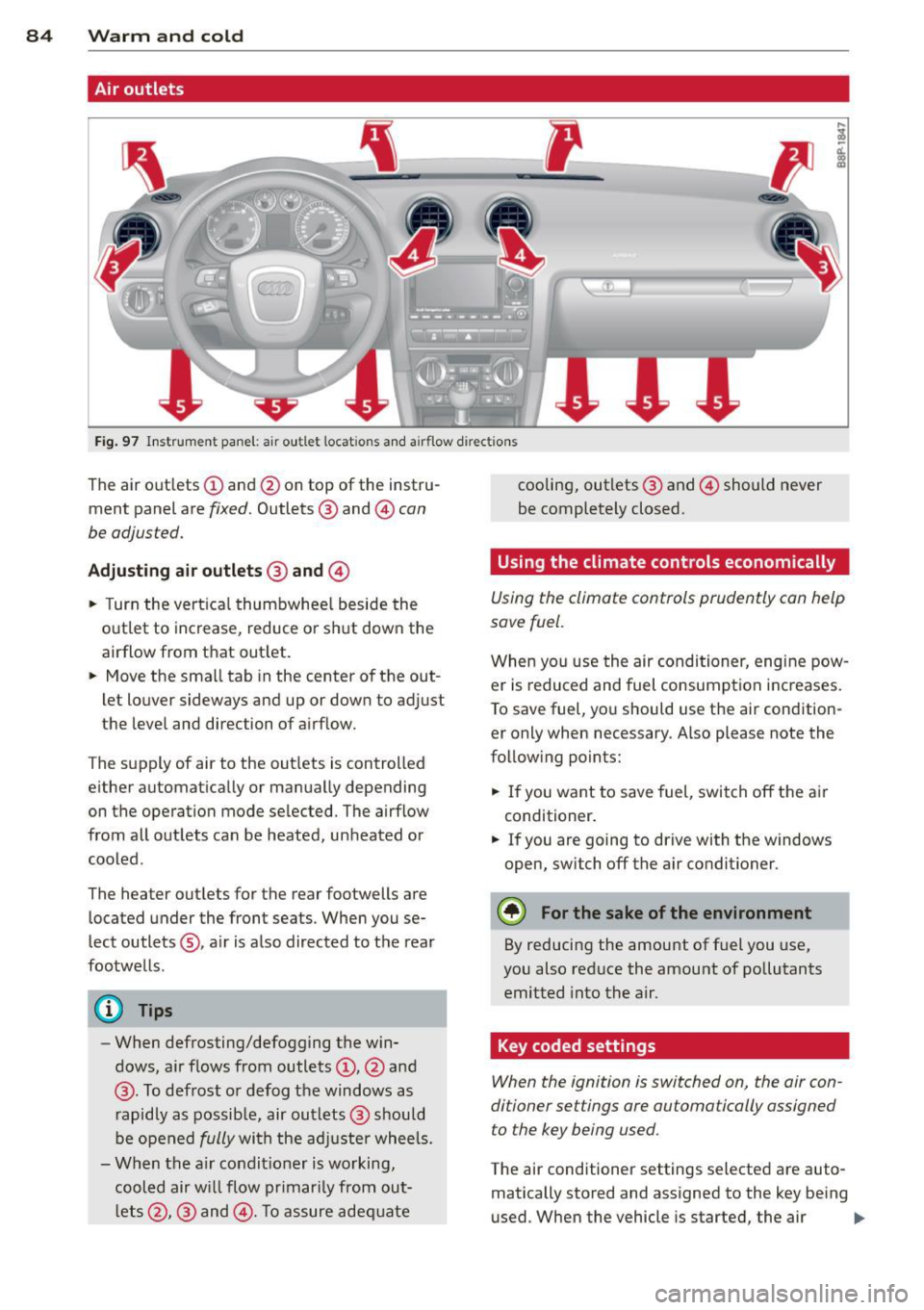
Fi g. 97 Instr ument pane l: a ir ou tlet locat io ns an d airflow d irec tions
The air out lets (D and @on top of the instru
ment panel are
fixed. Outlets @ and @can
be adjusted.
Adjusting a ir outl ets ® and @
.. Turn the vertica l thumbwhee l beside the
outlet to increase, reduce or s hut down the
airflow from that out let.
.. Move the small tab in the center of the out
let louver sideways and up or down to ad just
the leve l and direction of airflow.
T he supply of air to the out lets is controlled
e ither automat ica lly or manually depending
on the operation mode se lected . The airflow
from all outlets can be heated, unheated or
cooled.
The heater out lets for the rear footwells are
located under the front seats . When you se
lect outlets @, a ir is a lso directed to t he rear
footwells .
@ Tips
-When defrosting/defogging the win
dows, air flows from outlets
(D , @ and
@ . To defrost or defog the windows as
r apidly as possib le, air outlets @ should
be ope ned
fully wi th the ad juster wheels.
- When the a ir condit ioner is working,
cooled air w ill flow pr imar ily from out
l e ts @ ,@ and @. To assure adeq uate cooling, outlets
@ and @) should never
be completely closed.
Using the climate controls economically
Using the climate controls prudently can help
save fuel .
When you use the air conditioner, eng ine pow
er is reduced and fuel consumption increases .
T o save fuel, yo u should use the air condition
er only when necessary . Also please note the
follow ing points:
.. If you wa nt to save fuel, switch off the ai r
conditioner .
.. If you are going to drive with the windows
open, switch off the air conditioner .
@ For the sake of the environment
By reducing the amount of fuel you use,
you also reduce the amount of po llutants
emitted into the air.
· Key coded settings
When the ignition is switched on, the air con
di tioner settings are automatically assigned
to the key being used .
The air conditioner settings selected are auto
matically stored and assigned to the key be ing
u sed . When the vehicle is started, the air ..,.
Page 93 of 280
@ For the sake of the environment
To avoid unnecessary engine wear and to reduce exhaust emissions, do not let your
vehicle stand and warm up. Be ready to
drive off immediately after start ing your
veh icle. Mainta in moderate speed until the
engine is completely warm . Remember,
the engine performs best at operating
temperature .
Stopping the engine
.. Turn the ignition key to position@
¢page 89, fig. 102.
_& WARNING
-Never turn off the engine unti l the vehi
cle has come to a complete stop.
- The brake booster and servotronic on ly
work when the engine is running . With
the ignition turned off, you have to apply
more force when steering or braking.
Since you cannot steer and stop normal ly, this can lead to accidents and serious
injuries.
- The rad iator fan can continue to run for
up to 10 minutes even after you have
tu rned off the eng ine and removed the
ignition key. The radiator fan can also
turn on again if the engine coolant heats
up because of intense sunlight or heat
build-up in the engine compartment.
(D Note
Do not stop the engine immediate ly after
hard or extended dr iving. Keep the engine
running for approximately two minutes to
prevent excessive heat build-up .
On the road 91
Parking brake
Parking brake
When the parking brake is set, it prevents the
vehicle from rolling away unintentionally .
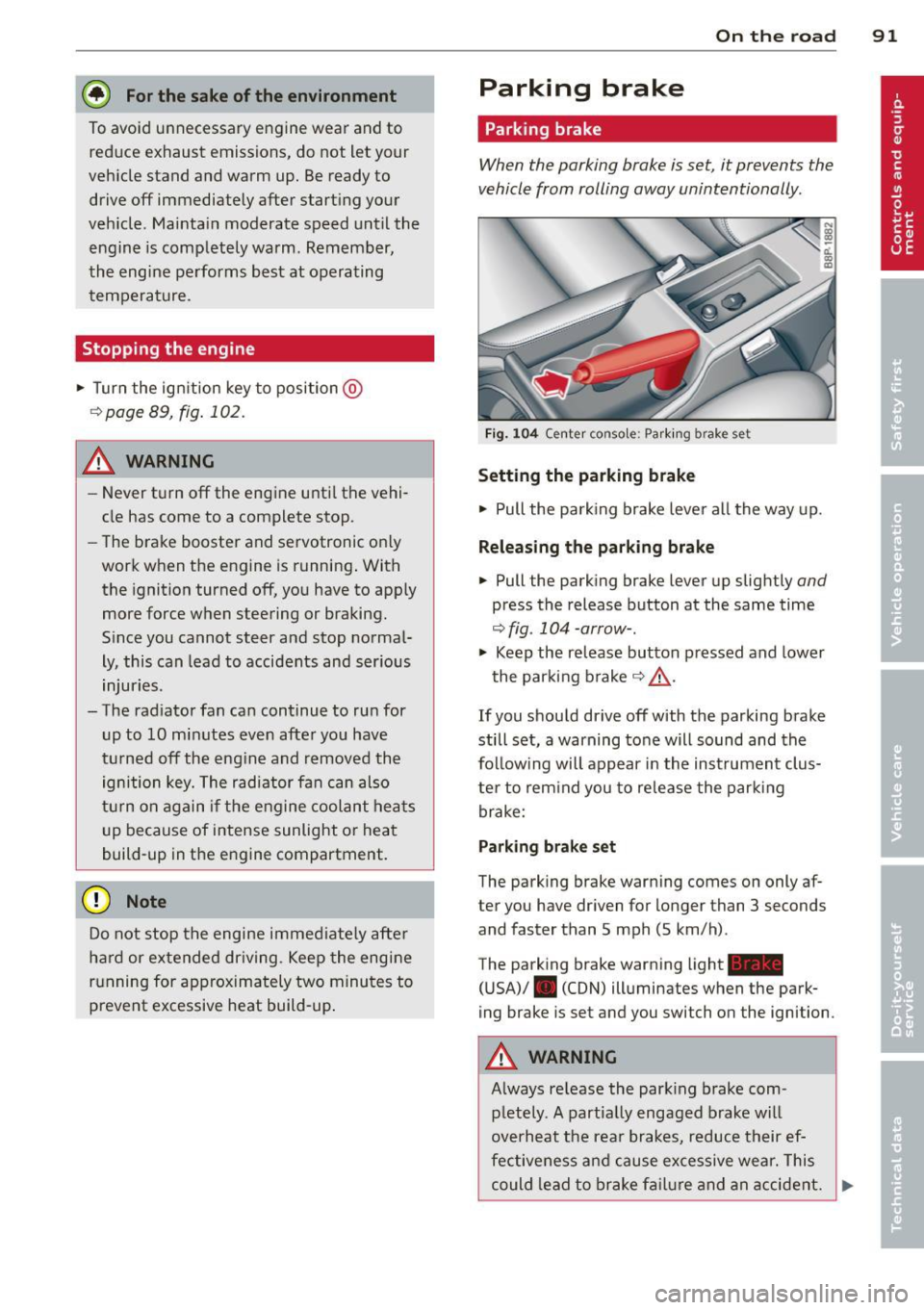
Fig. 104 Cente r co nso le: Park ing b rake set
Setting the parking brake
.. Pull the park ing brake lever all the way up.
Releasing the parking brake
.. Pull the parking brake lever up slightly and
press the release button at the same time
¢fig. 104-arrow-.
.,. Keep the release button pressed and lower
the parking brake¢&_ .
If you should drive off with the parking brake
still set, a warning tone will sound and the
follow ing will appear in the instrument clus
ter to remind you to release the parking
brake:
Parking brake set
The parking brake warning comes on only af
ter you have driven for longer than 3 seconds
and faster than 5 mph (5 km/h) .
The parking brake warning light_
(USA)/ . (CON) illuminates when the park
ing brake is set and you switch on the ignition .
A WARNING
Always release the parking brake com -
pletely. A partially engaged brake will
overheat the rear brakes, reduce their ef
fectiveness and cause excessive wear. This
could lead to brake failure and an accident. .,.
Page 103 of 280
@ Tips
With the gear selector lever in either "D"
or "S" the transmiss ion will sw itch back to
the automatic mode if you do not use the paddles within approx. 30 seconds.
Kick-down feature
Applies to vehicles: with S tronic®
The kick-down feature allows maximum ac
celeration .
If you depress the accelerator pedal fully be
yond the full-thrott le position, the transmis
sion automatically downshifts one gear, de pending on vehicle speed and engine rpm. The
upsh ift into the next higher gear takes place
as soon as the max imum specified engine
speed is reached.
A WARNING
Please note that the drive wheels can spin
if the kick-down is used on a smooth s lip
pery road -ris k of skid ding!
Launch Control Program
Applies to vehicles: with Launch Control and S tronic® and
Gasoline engine only
The Launch Control Program permits maxi
mum acceleration .
In order to use launch Control, the ASR (Anti
Slip Regulation) must be disabled. When ASR is disabled, the ESP warning/ind icator
light
G1 in the instrument cluste r illuminates .
So that la unch Control ca n be used, the en
g ine must be at ope rating temperature a nd
the steer ing wheel mus t not be tu rned.
... With the eng ine run ning, briefly press the
ES P bu tton. The message "ASR off" appea rs
in the instrument cluster d isp lay.
... Sh ift th e gea r lever to "5" or the tip tronic ®
pos it ion.
... Step on t he b rake peda l w it h your left foot
and keep the brake peda l fully depressed for
at least one second.
... With your right foot, step on the accelera
tor to the w ide-open throttle position o r
Transm iss ion 10 1
Kickdown. The engine speed sett les at about
3 ,200 rpm.
... Take your left foot
off the b rake .
A WARNING
-Always adapt your dr iving to the traffic
f low.
- On ly use launch Control when road and
traffic cond itions allow it and other dr iv
ers will not be endangered or annoyed by
your driving and th e acce le rat ion of the
veh icle.
- Ma ke sure that ESP remains enab led.
W ith the ESP disabled, the vehicle could
brake away, part icu la rly on a s lick and
slippe ry r oad - ri sk of s kidding!
- Once acceleration is finished, switch ASR
on again by br iefly pushing t he ESP but
ton.
Back-up program
Applies to vehicles: with S tronic®
-
In the event of a system malfunction, there is
an back-up program.
In the event of system malfunction, the auto
matic transmission switches to the fa il-safe
mode . All of the selecto r lever posi tion d is
plays for the au toma tic tra nsmission a re high
li gh ted wi th a ligh t background in t he i nstr u
ment cluster d isp lay . In some cases yo u can
not drive in the reve rse gear any more .
If the t ransmission swit ches to fail-safe
mode, yo u should ta ke the ve hicl e to an a u
thorized Aud i dea le rship as soon as possib le
to have the condition corrected.
Clutch is overheating
Applies to vehicles: with S tronic®
• Clutch is overheating! Please stop vehi
cle!
If the symbols are i llum ina ted, the clutch is
ove rheati ng and could be dama ged if you con
tin ue to drive . Stop the vehicle and a llow the
transmission to cool with the se lector lever in
the
P position w hile the engine runs at idle . If Iii-
Page 138 of 280
136 Airbag system
airbag system and prevent that system from
working properly in a collision.
There are some important things you have to know to make sure that the effectiveness of
the system will not be impaired and that dis
carded components do not cause injury or pol
lute the environment.
.&_ WARNING
Improper care, servicing and repair proce
dures can increase the risk of personal in
jury and death by preventing an airbag
from deploying when needed or deploying an airbag unexpectedly:
- Never cover, obstruct, or change the steering wheel horn pad or airbag cover
or the instrument panel or modify them
in any way.
- Never attach any objects such as cup
holders or telephone mountings to the
surfaces covering the airbag units.
- For cleaning the horn pad or instrument
panel, use only a soft, dry cloth or one
moi5tened with plain water. Solvent5 or
cleaners could damage the airbag cover
or change the stiffness or strength of the
material so that the airbag cannot de
ploy and protect properly.
- Never repair, adjust, or change any parts
of the airbag system .
- All work on the steering wheel, instru
ment panel, front seats or electrical sys
tem (including the installation of audio
equipment, cellular telephones and CB
radios, etc .) must be performed by a
qualified technician who has the training
and special equipment necessary.
- For any work on the airbag system, we
strongly recommend that you see your authorized Audi dealer or qualified work
shop.
- Never modify the front bumper or parts
of the vehicle body .
-Always make sure that the side airbag
can inflate without interference:
- Never install seat covers or replace
ment upholstery over the front seat- backs that have not been specifically
approved by Audi.
- Never use additional seat cushions that
cover the areas where the side airbags
inflate.
- Damage to the original seat covers or
to the seam in the area of the side air
bag module must always be repaired
immediately by an authorized Audi
dealer .
- The airbag system can be activated only
once . After an airbag has inflated, it
must be replaced by an authorized Audi
dealer or qualified technician who has
the technical information, training and
special equipment necessary.
- The airbag system can be deployed only
once. After an airbag has been deployed,
it must be replaced with new replace
ment parts designed and approved espe
cially for your Audi model version. Re
placement of complete airbag systems
or airbag components must be per
formed by qualified workshops only. Make sure that any airbag service action
is entered in your Audi Warranty
& Main
tenance booklet under
AIRBAG REPLACE
MENT RECORD .
@ For the sake of the environment
Undeployed airbag modules and preten
sioners might be classified as Perchlorate
Material - special handling may apply, see
www .dtsc .ca.gov/hazardouswaste/per
chlorate. When the vehicle or parts of the restraint system including airbag modules
and safety belts with pretensioners are
scrapped, all applicable laws and regula
tions must be observed. Your authorized
Audi dealer is familiar with these require ments and we recommend that you have
your dealer perform this service for you.
Page 147 of 280
seat. The weight of a child restraint and its
"footprint" vary for different kinds of child re
straints and for the different models of the
same kind of child restraint offered by child restra int manufacturers.
The weight ranges for the individual types, makes and mode ls of ch ild restra ints that the
NHTSA has specified in the Safety Standard
together with the we ight ranges of typical in
fants and typical 1 year -old child have been
stored in the control unit of the Advanced A ir
bag System . When a chi ld restraint is being
used on the front passenge r seat with a typi
cal 1 year -old ch ild, the A dvanced Airbag Sys
tem compares the we ight measured by the
weight sensing mat with the information stor
ed in the electronic control unit.
The electron ic contro l unit al so registers the
tension on the front passenger safety be lt.
The tension on the safety be lt for the front
passenger seat will be different for an adult
who is properly using the safety belt as com
pared to the tension on the be lt when it is
used to attach a child restraint to the seat.
T he sensor below the latch for the safety belt
for the front seat passenger measures the
tension on the belt . T he input from this sen
sor is t hen used w ith the we ight to "decide",
whether there is a ch ild restraint with a typ ica l
1 year-o ld child on the front passenger seat
and whether or not the airbag must be turned
off .
Child restraints and Advanced Airbags
Regard less of the child restraint that you use,
make sure that it has been certified to meet
United States Federal Motor Vehicle Safety
Standards and has been certified by its manu
facturer for use with an airbag . Always be sure
that the chi ld restraint is p roperly instal led at
one of the rear seat ing pos itions . If in excep
tional ci rcumstances you must use it on the
front passenger seat, carefu lly read all of the
information on child safety and Advanced Air
bags and heed a ll of the app licable WARN
INGS. Make certain that the child restraint is
correctly recognized by the weight-sensing
Child Sa fet y 145
mat inside the front passenger seat, that the
front passenger airbag is turned off and that
the a irbag status is always correct ly signaled
by the
PAS SENGE R AIR BAG OFF light.
Many types and models of child restraints
have been available over t he years, new mod
els are introduced regu larly incorporating new
and improved des igns and o lder models are
taken out of product ion. Ch ild restraints are
not standard ized . Child restraints of the same
type typ ically have d ifferent weights and sizes
and different 'footpr ints,' the size and shape
of the bottom of the ch ild restrai nt that sits
o n the seat, when they a re insta lled on a veh i
cle seat. These diffe rences make it v irtually
impossible to certify compliance with the re
quirements for advanced airbags with each
and every ch ild restraint that has ever been
sold in the past or will be sold over the course
of the useful life of your veh icle.
For this reason, the United States National
Highway Traffic Safety Adm inistrat ion has
published a list of spec ific type, makes and
models of child restraints that must be used
to certify comp liance of the Advanced Airbag
System in your veh icle with the suppression
requirements of Federal Motor Vehicle Safety
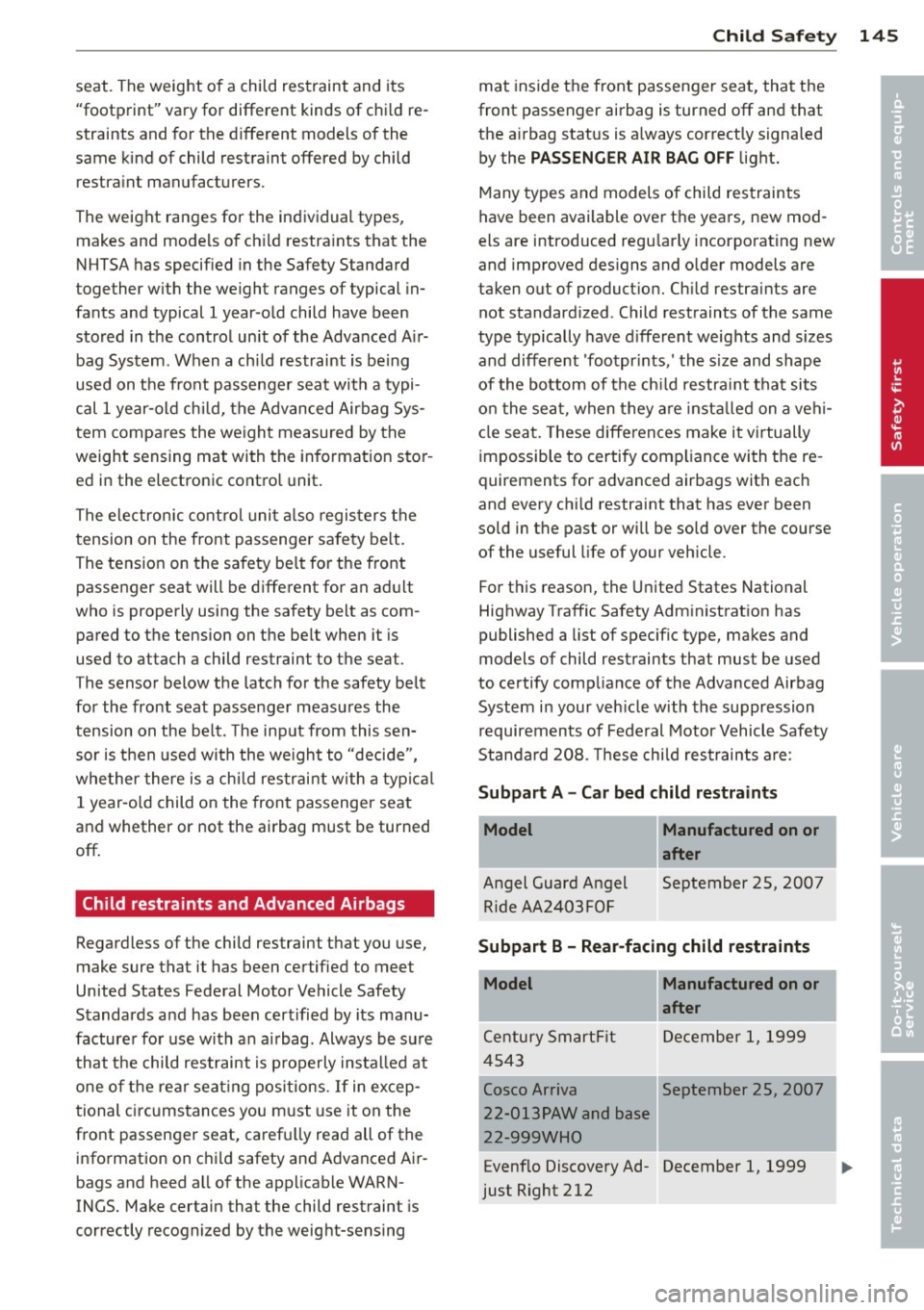
Standa rd 208. These chi ld restraints are :
Subpart A - Car bed child restraints
Model
Angel Guard Angel Ride AA 2403FOF
Manufactured on or
after
September 25, 2007
Subpart B - Rear-facing child restraints
Model Manufactured on or
after
Century SmartF it December 1, 1999
4543
Cosco Arriva September 25, 2007
22-013PAW and base
22-999WHO
Evenf lo Discovery Ad- December 1, 1999
just Right 212
I
j
•
•
....
Page 174 of 280
172 Driving and en vironm ent
Drive smoothly and keep a lookout
ahead
Vehicles use the most fuel when they are ac
celerating.
Avoid unnecessary accelerating and braking .
Vehicles use the most fuel when they are ac
celerati ng. If you anticipate what is go ing to
happen next, you will need to brake less and,
thus , accelerate less . let the vehicle coast
whenever poss ible -fo r example whe n you see
th at the next traffic ligh t is red.
Avoid full throttle
Driving at moderate speeds saves fuel and
improves your mileage.
,. Try and keep well be low your car's max i-
mum speed .
Accelerating gently reduces fuel consump
tion, engine wear, and does not disturb the
env ironment.
Fuel consumption, ex ha ust em issions and en
g ine no ise increase d isproportiona tely at hig h
speeds . If you dr ive at approximately three
qua rters of top speed, fuel consumption will
be reduced by one ha lf . Never dr ive faster
tha n the posted speed limit a nd weather con
d it ions permit.
Reducing unnecessary idling
E ven when your car is just idling it burns up
fuel.
,. Shut the engine off when you a re not dr iv
ing the vehicle.
,. Do not warm up the veh icle by letting the
engi ne run at idle.
It makes sense to shut off the eng ine in traff ic
jams, when waiting for trai ns to pass at ra il
road cros sings, or at t raffic ligh ts that have
l ong wa its on red. Turning the engine o ff fo r
just 30 -40 seconds saves more fue l than is
bu rne d starting the engine again.
It takes a long t ime for the engine to warm up
fully when it is running at id le . However, wea r
and noxious emissions are espec ia lly high
when the eng ine is wa rm ing up. So you shou ld
drive away as soon as yo u start the engine and
avo id running at high RPMs w hile the eng ine
i s s till warm ing up .
(D Note
Do not leave engine idling unattended af
ter start ing . If warni ng lig hts sho uld come
o n t o indicate improper ope ration, they
would go unheeded . Extended idli ng also
produ ces heat , w hich could result in ove r
hea ting or other dam age to the veh icle or
other property .
Regular maintenance
A badly tuned engine unne cessarily wastes a
lo t of fuel.
,. Have your ve hicle serviced at reg ular inter-
vals.
By havi ng your ve hicle regu larly serv iced by an
a utho rized Aud i deale r helps to ensure that it
runs properly and econom ica lly. The cond it io n
of your ve hicle not only affe cts i ts safety and
abili ty to ho ld i ts va lue , it al so a ffects
fuel
con sumption .
Check your oil each time you fill your tank .
The amount of oi l used is re lated to engine
load and speed .
It is normal for the oil consumption of a new
engine to reach its lowest value after a certa in
mileage has bee n driven .
You must drive your vehicle about 3,000 mi les
(S,000 kilometers) before you can properly
assess oil consumpt ion.
T his also app lies to fue l cons umption and en
gine o utp ut.
Q) Note
- Have your veh icle ma inta ined proper ly
and i n acco rdance with the service rec
ommendations in your Warranty
&
Page 205 of 280
luggage compartment. Make sure the
container is securely stored and mount
ed.
0 Note
-If you use engine oil that does not ex
pressly conform to Audi oil specification
VW 507 00, very serious and very expen
sive damage to your vehicle 's engine will
occur . Engine damage caused by using
the wrong engine oil is not covered by
your New Vehicle limited Warranty .
- Not all commercially available oils con
form to this very rigid Audi oil quality
standard even though they may be syn
thetic-based and have the same viscosi
ty.
Engine cooling system
Coolant
T he engine coolant performs two functions: it
keeps the engine from overheating and it pro
tects the engine from freezing in the winter.
The cooling system is sealed and generally re
quires little attention.
The cooling system has been filled at the fac
tory with a permanent coolant which does not need to be changed. The coolant consists of a
mixture of water and the manufacturer's gly
col-based coolant additive Gl2++ antifree ze
with anticorrosion additives (50% for USA models; 60% for Canadian models). This mix
ture both assures the necessary frost protec
tion and protects metal components in the
engine 's cooling system from corrosion and
scaling.
It also raises the boiling point of the
coolant.
Do not reduce the concentration of the cool
ant in the summer by adding plain water.
The
proportion of coolant additive must be at
least 50% but not more than 60%
to main
tain antifreeze protection and cooling efficien
cy. If the coolant frost protection is too low,
the coolant could freeze and damage the vehi
cle heating and engine cooling system.
Checking and filling 203
For year-round driving, antifreeze is added at
the factory for temperatures down to:
--31°F(-35°C)USA
- - 40 °F ( - 40 °C) Canada.
You can mix the Gl2 ++ coolan t additive with
other additives Gl2 + or Gl2. Always check
with your authorized Audi dealer .
A WARNING
-
Before you check anything in the engine
compartment, always read and heed all
WARNINGS~
& in Working in the engine
comportment on page 194.
(D Note
- Before winter sets in, have the coolant
checked to see if the coolant additive in
your vehicle is sufficient to meet the cli
mate conditions. This is especially impor
tant if you live in a region where the
win
ter is extremely cold. If necessary, in
crease the proportion of coolant additive
to 60% .
- When adding coolant additive to your
cooling system, remember :
- We recommend using only coolant ad
ditive G 12++ (check the label) for your
vehicle. This coolant additive is availa
ble at authorized Audi dealers. Other
types of antifreeze can significantly re
duce corrosion protection. The result
ing corrosion can cause a loss of cool
ant and serious engine damage.
- Do not add any type of radiator leak seal
ant to your vehicle's engine coolant.
Adding radiator repair fluid may adverse ly affect the function and performance of
your cooling system and could result in
damage not covered by your New Vehicle
Limited Warranty.
•
•
Page 208 of 280
206 Checking and filling
Brake fluid
Checking brake fluid level
The brake fluid level can be checked with a
quick glance .
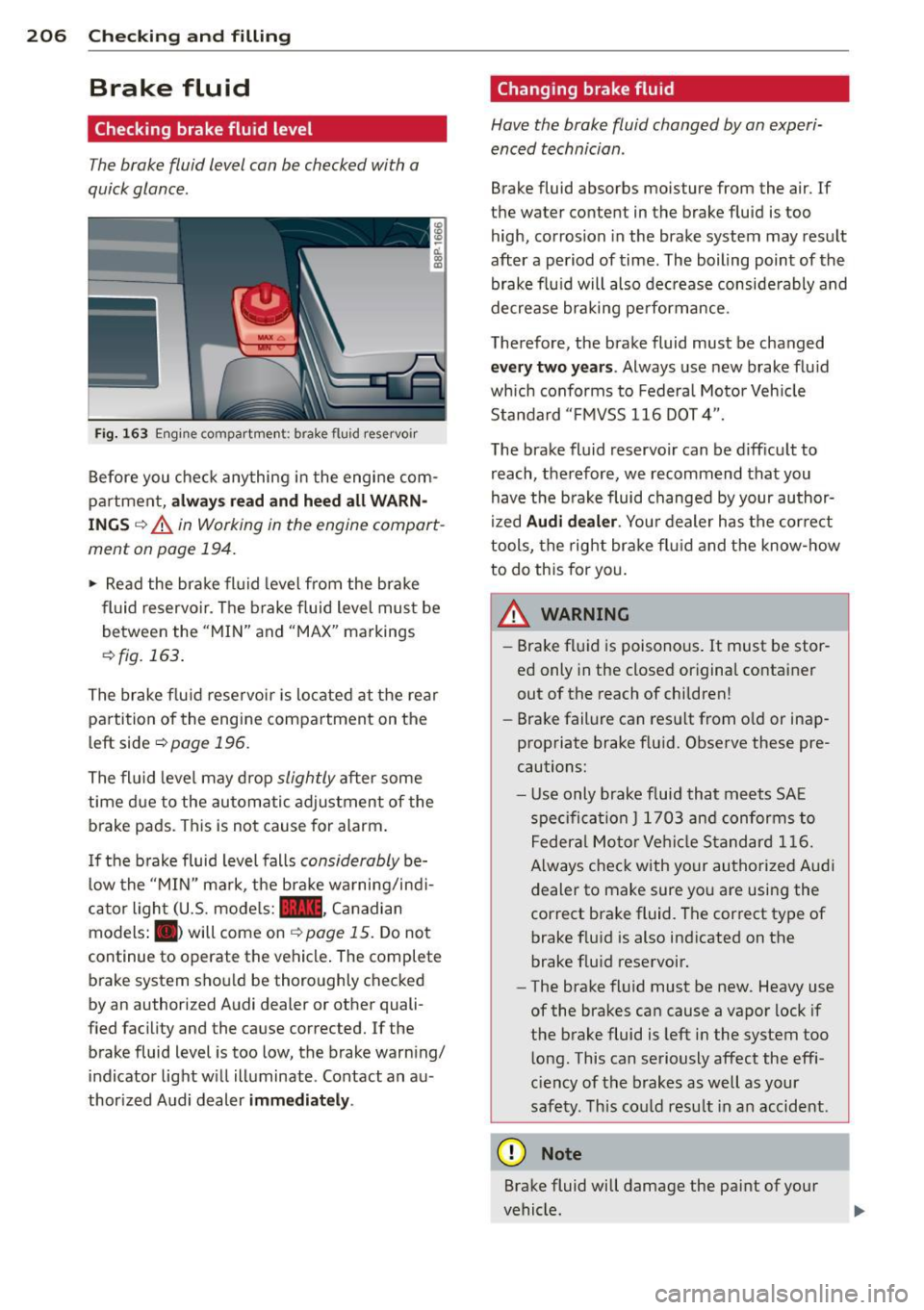
Fig. 163 Engine compartme nt: brake flu id reservo ir
Before you check anything i n the engine com
partment,
a lwa ys rea d and h eed a ll WA RN·
ING S c:> & in Working in the engine compart
ment on page
194.
~ Read the brake fluid level from the bra ke
fluid reservoir. The brake fluid Level must be
between the "MIN" and "MAX" markings
9fig. 163 .
The brake f lu id rese rvoir is located at the rear
partition of the engine compartment on the
L eft side
¢page 196.
The fluid level may drop slightly after some
time due to the automatic adjustment of the b rake pads . This is not cause for alarm .
I f the b rake fluid Level falls
considerably be
low the "MIN" mark, the brake wa rning/ind i
cator Light (U.S. models:
1111 , Canadian
models:
llllt will come on c:> page 15 . Do not
continue to operate the vehicle . The complete
brake system sho uld be thoroughly checked
by an authorized Audi dealer or other quali
fied facility and the cause corrected. If the
brake fluid level is too low, the brake warn ing/
indicator Light w ill illuminate . Contact an au
thor ized Audi dealer
imm ediatel y.
Changing brake fluid
Have the brake fluid changed by an experi
enced technician .
Brake fluid absorbs moisture from the air. If
the water content in the brake fluid is too high, corrosion in the brake system may result
after a period of time . The boiling point of the
brake flu id will also decrease conside rably and
decrease braking pe rformance.
Therefore, the brake fluid must be changed
eve ry two y ears. Always use new brake flu id
which conforms to Federal Motor Veh icle
Standard "F MVSS 116 DOT 4".
The brake fluid reservoir can be diff icult to
reach, therefore, we recommend that you
have the b rake fluid changed by your author
ized
Audi dealer . Your dealer has the correct
tools, the right brake fl uid and the know -how
to do this for you.
A WARNING
- Brake fluid is poisonous . It must be stor
ed only in the closed original container
out of the reach of children!
- Brake failure can resu lt from o ld or inap
propriate brake flu id. Observe these pre
cautions:
- Use only brake f luid that meets SA E
specifica tion
J 1 7 03 and conforms to
Federa l Moto r Ve hicl e Standard 1 16.
Always check with yo ur authorized Aud i
dealer to make sure yo u are using the
correct brake fluid. The correct type of brake f lu id is also ind icated on the
brake flu id reservoir.
- The brake fluid must be new. Heavy use
of the brakes can cause a vapor lock if
the brake fluid is left in the system too
l ong. This can seriously affect the effi
c iency of the brakes as well as your
safety. This cou ld resu lt in an accident.
(D Note
Brake fluid will damage the paint of your
vehicle .