roof AUDI A3 2012 Owner´s Manual
[x] Cancel search | Manufacturer: AUDI, Model Year: 2012, Model line: A3, Model: AUDI A3 2012Pages: 280, PDF Size: 70.11 MB
Page 172 of 280
170 Driving and en vironm ent
Driving through water on roads
Note the following to avoid vehicle damage
when dr iv ing t hrough water, for example on
flooded roads:
- The water must not be any higher than the
bottom of the vehicle body.
- Do not drive faster than walking speed.
A WARNING
After d riving through wate r, mud, slush,
etc., the brakes may be slow to take effect
because o f wet brake ro tors and pads. Dry
the brakes f irst by bra king carefully to re
store the full braking effect .
({D Note
Vehicle components such as the engine,
t ransmiss ion, suspens ion or elect rical sys
tem can be severely damaged by driving
through wate r.
(D Tips
-Che ck the depth of the water before dr iv
i ng through it.
- Do no t stop the veh icle, dr ive in reverse
or switch the engine off when d riving
th rough water.
- Keep in mind that oncoming vehicles
may c reate waves that raise the wate r
l evel and make it too deep for yo ur vehi
cle to drive th rough safely .
- Avoid driving thro ugh salt water because
i t can ca use corrosion.
Catalytic converter
-
It is very important that your emission con
trol system (catalytic converter) is function
ing properly to ensure that your vehicle is run
ning in an environmentally sound manner .
"' Always use lead-free gasoline¢ page 189,
Fuel supply.
"' Never run the tank down a ll the way to
empty .
"' Never put too much motor oil in your en
gine ¢
page 200, ~ Adding engine oil .
"' Never try to push -or tow-start you r vehicle .
T he ca talytic converter is an efficient "clean
u p" dev ice bui lt into the exhaust system of
the vehicle . The cata lytic conve rter bu rns
many of the pollutants in the ex ha u st gas be
fore they are re leased into the atmosphere.
T he exclusive use of unleaded f uel is c rit ically
important for the life o f the catalyt ic convert
er and prope r function ing of the engine .
A WARNING
-Do not park or operate the vehicle in
areas where the hot exhaust system may
come in contact with dry grass, brush,
fue l spill or other material wh ich can
cause a fire .
- Do not app ly additional undercoating or
rustp roofing on or near the exhaust
manifold, exhaust pipes, catalytic con
verter or heat shields. Dur ing driv ing, the
substance used fo r under coating could
overhe at and cause a fire.
((0 Note
-Be aware that just one tank filling with
leaded fuel w ill alr eady ser iously de
grade the performance of the catalytic
converte r.
- Do not exceed t he cor rect engine oil level
¢page 200.
-Do not dr ive until t he fuel tank becomes
completely empty. The engine cou ld mis
fire. Unburned fuel could also get in to
the exhaust system and th is co uld cause
t he catalytic converter to overheat .
- Do not tu rn off the igni tion while the ve
hicle is mov ing.
- Do not continue to ope rate your veh icle
under these conditions, as ot herwise fuel
can reach the catalytic converter. This
cou ld resu lt in overheating of the con
verter, requir ing its replacement.
- To assu re efficient operation of the Emis -
sion Control System : ..,.
Page 181 of 280

CD Note
You should remove debris (such as insects)
from the headlight lenses on a regular basis, for example when refueling your vehi
cle. Never clean the headlights with a dry
cloth or sponge . Use a wet cloth or
sponge.
It is best to use soapy water .
Automatic car wash
The vehicle can be washed in almos t any
modern automatic car wash .
The vehicle paint is so durable that the vehicle
can normally be washed without problems in
an automatic car wash . However, the effect on
the paint depends to a large extent on the de
sign of the facility, the filtering of the wash
water , the type of wash and care material , etc .
If the paint has a dull appearance after going
through the car wash or is scratched, bring
this to the attention of the operator immedi
ately. If necessary, use a different car wash.
Before going through a car wash, be sure to
take the usual precautions such as closing the
windows and panoramic sliding sunroof*. Re move antenna if applicable.
If you have installed additional accessories on
the vehicle -such as spoilers, roof rack, etc. -
it is best to ask the car wash operator if these
should be removed.
A WARNING
Always read and heed all WARNINGS and other information
¢ page 178.
Washing the vehicle by hand
A lot of water is needed when washing a vehi
cle by hand.
11-Before you start washing, make sure you
have read and understood the WARNINGS
¢ A in General information on page 178.
11-First soak all dried dirt until it is soft, then
rinse it off .
11-As you clean your vehicle, s tart with the
roof and work your way down to the bottom,
Cleaning and protection 179
using a sponge, a sponge glove or a clean
brush.
"" Rinse the sponge or the sponge glove often,
flushing it clean each time.
11-Use special car shampoo only for very per
sistent dirt .
11-Rinse the car thoroughly with water .
11-Use a chamois leather to gently wipe the ex-
terior dry.
Use a separate sponge for cleaning the
wheels, door sills and other regions exposed
to road dirt. In this way, you will not scratch
the paint with coarse particles imbedded in
the sponge the next time you wash the car.
A WARNING
= -
-Do not clean the underside of the chas-
sis, fenders, wheel covers , or other hard
to reach parts without protecting your hands and arms . You may cut yourself on
sharp-edged metal parts.
- Always read and heed all WARNINGS and
other information
¢ page 178.
CD Note
- Never try to remove dirt, mud or dust if
the surface of the vehicle is dry. Never
use a dry cloth or sponge, since this
could scratch your vehicle's paint or win
dows.
- Never wash your car in bright sunlight.
Drops of water act as magnifying lenses
and may damage your paint .
- When you wash your car in the winter: if
you rinse your vehicle with a hose, be
careful not to aim the stream of water
directly at locks, or at door or hatch
openings -they can freeze shut.
- Never use sponges designed to remove
insects, or any kitchen scouring sponges
or similar products. They can damage
your paint finish.
- Never use a dry cloth or sponge to clean
the headlights. Only use wet cloths or
sponges to prevent scratches. It is best
to use soapy water. •
•
Page 185 of 280
your authorized Audi dealer. Never leave the cleaner on the rims longer than specified on
the label. If not rinsed
off promptly, the acid
contained in some cleaners can attack the
threads on the wheel bolts.
Never use abrasive or meta l polishing clean
ing agents.
If the protective coat ing has been
chipped, e.g. by kicked up road dirt, touch it
up as soon as possible.
A WARNING
-Moisture and ice on brakes may affect
braking efficiency~
page 163, General
information.
Test the brakes carefully
each time you wash the vehicle.
- Always read and heed all WARNINGS and
other information¢
page 178.
Body cavity sealing
-
The body cavity sealing does not need to be
checked.
All body cavities which could be affected by
corrosion have been thoroughly protected at
the factory.
This sea ling does not require any inspection or
addit ional treatment. If any wax should seep
out of the cavity when the ambient tempera
ture is high, it can be removed with a plast ic
scrape r and a suitab le solvent .
A WARNING
Solvents can be dangerous.
- Benzine is flammable and toxic. If you
use benzine for removing the wax, keep
spar ks, flame and lighted cigarettes
aw ay. Never dump benzine on the
ground, in to open streams or down sew
age drains.
- B e sure to observe all safety and env iro n
menta l regulations . Follow all instruc
tions on t he container .
- Always read and heed all WARN INGS and
other informa tion¢
page 178 .
Cleaning and protec tion 183
Chassis
Hove the undercoating checked for damage
from time to time.
The lower body shell of your Aud i is also thor
oughly protected against corrosio n.
Any damage to the undercoating ca used by
road hazards should be repaired prompt ly.
A WARNING
Too much undercoating in the wrong p la
ces can cause a fire.
- Do not apply additional undercoating or
rustproof ing on or near the exhaust
manifold, exhaust pipes, catalytic con
verter or heat shields. While driving, the
substance used fo r undercoating could
overhea t and cause a fire.
- Always read and heed all WARNINGS and
other info rmation
¢ page 178.
Exhaust tail pipes
Road salt and o ther co rrosive materials w ill
damage the material in the exhaus t tail pipes
i f they are not cleaned regular ly . Do not clean
the tail pipes with whee l cleaner, pa int polish,
c h rome polish or other abrasive clea ners .
Clean the tail pipes with car care products
that are suitable for stainless steel.
Your authorized Audi dea ler can provide clean
ing products that have been tested and ap
proved for your vehicle.
Care of interior
Aluminum trim
Use only neutral-pH products to remove spots
and deposits from a luminum sur faces.
Chrome care products and a lkaline cleaners
will attack a luminum surfaces and can dam
age them over time.
A WARNING
-Always read and heed all WARNINGS and
other information
¢ page 178.
•
•
Page 201 of 280
names etc.) that conform to Audi oil standard
VW 502 00 (vehicles with gasoline engine) or
VW 507 00 (vehicles with diesel engine).
C hang ing th e engin e oil
The engine oil and oi l filter must be changed
according to the m ileage (kilomete rs) and
time inte rva ls specified in yo ur vehicle's War
ranty
& Maintenance booklet. Do not exceed
these intervals -harmful deposits from old
engine oil can reduce engine performance and
can lead to expensive eng ine repairs.
Changing the o il at the recommended inter
va ls is so very important because the lubricat
ing properties of oi l decrease gradually during
norma l vehicle use . If you are not sure when
you have your oi l changed, ask your author
ized Audi Service Advisor.
Under some circumstances the engine oi l
should even be changed more frequently.
Change o il more often if you drive mostly
short distances, operate the vehicle in dusty
areas or mostly under stop-and-go traffic con
d itions, or when you use your veh icle where
temperatures stay below freezing point for
l ong periods.
Detergent addit ives in the o il w ill make fresh
oil look dark after the eng ine has been run
n ing for a short time. This is norma l and is not
a reason to change the o il mo re often than
r ecommended.
D amage or ma lf u nction s du e to lac k of
ma int enance
It is essential that you change your oil at the
recommended interva ls using only engine oil
that complies with Audi oil standard
VW 502 00 (veh icles with gasolin e engine) or
VW 507 00 (veh icles with diese l engi ne). Yo ur
L im ited New Vehicle Warra nty does not cover
damage or ma lfunctions due to failure to fol
l ow recommended maintenance and use re
quirements as set forth in the A udi Owner's
Manual and Warranty
& Maintenance book let.
Your dealer will have to deny warranty cover age un less you present to the dea ler proof in
the form of Service or Repa ir Orders that a ll
Checking and fillin g 199
scheduled maintenance was performed in a
timely manner.
· Engine oil consumption
The engine in your vehicle depends on an ade
quate amount of oil to lubricate and cool all
of its moving parts.
In order to prov ide effective lubrication and
cooling o f inte rna l engine components, all in
ternal combustion engines consume a certain amount of oil. Oil consumpt ion varies from
engine to engine and may change sign ificantly
over the life of the engine. Typically, engines
with a spec ified break-in period (see
Q page 169) consume more oil during the
break-in pe riod than they consume after o il
consump tion has stabilized.
Under normal cond itions, the rate of oi l con
sumption depends on the quality and viscos ity
of the oil, the RPM (revolut ions per minute) at
which the engine is operated, the ambient
temperature a nd road conditions. Further fac
tors are the amount of oil dilut ion from wa ter
condensation or fue l residue and the oxida
tion level of the oi l. As any engine is subject to
wear as mi leage builds up, the oil consump
tion may increase over time until replacement
of worn components may become necessary.
With a ll these variab les coming into p lay, no
standard rate of oil consumption can be es
tablished or spec ified. There is no alternative
to regular and frequent check ing of the oil lev
el, see
Not e.
If the yellow engine oil level warning symbo l
in the instrument cluster
Ill! lights up, you
shou ld check the oil leve l as soon as possib le
with the oil dipstick q page 200 . Top off the
o il at your earliest conven ience
Q page 200.
&_ WARNING
Before you chec k anything in the engine
compartment, always read and heed al l
WARNI NGS
Q .&. in Working in the engine
compartment on page 194 .
•
•
Page 210 of 280
208 Check ing and filling
for questions about the battery -danger
of acid burns and explosion hazard!
- The battery must not be opened! Do not try to change the battery's liq uid level ,
otherwise detonating gas will escape
from the battery- explosion hazard!
- The AGM battery in the luggage com
partment cannot leak, because the elec
trolyte for th is battery is absorbed into a
spec ial glass mat . Th is leak-proof battery
must not be replace with a conventional
battery .
- Make sure the ventilat ion hose on the
s ide of the battery is connected, other
wise fumes or battery acid can leak out .
- Battery ho lder and terminals a lways
have to be secured correctly .
- Before all work on the battery follow the
warning s below c> &. in Working on the
battery on page 208 .
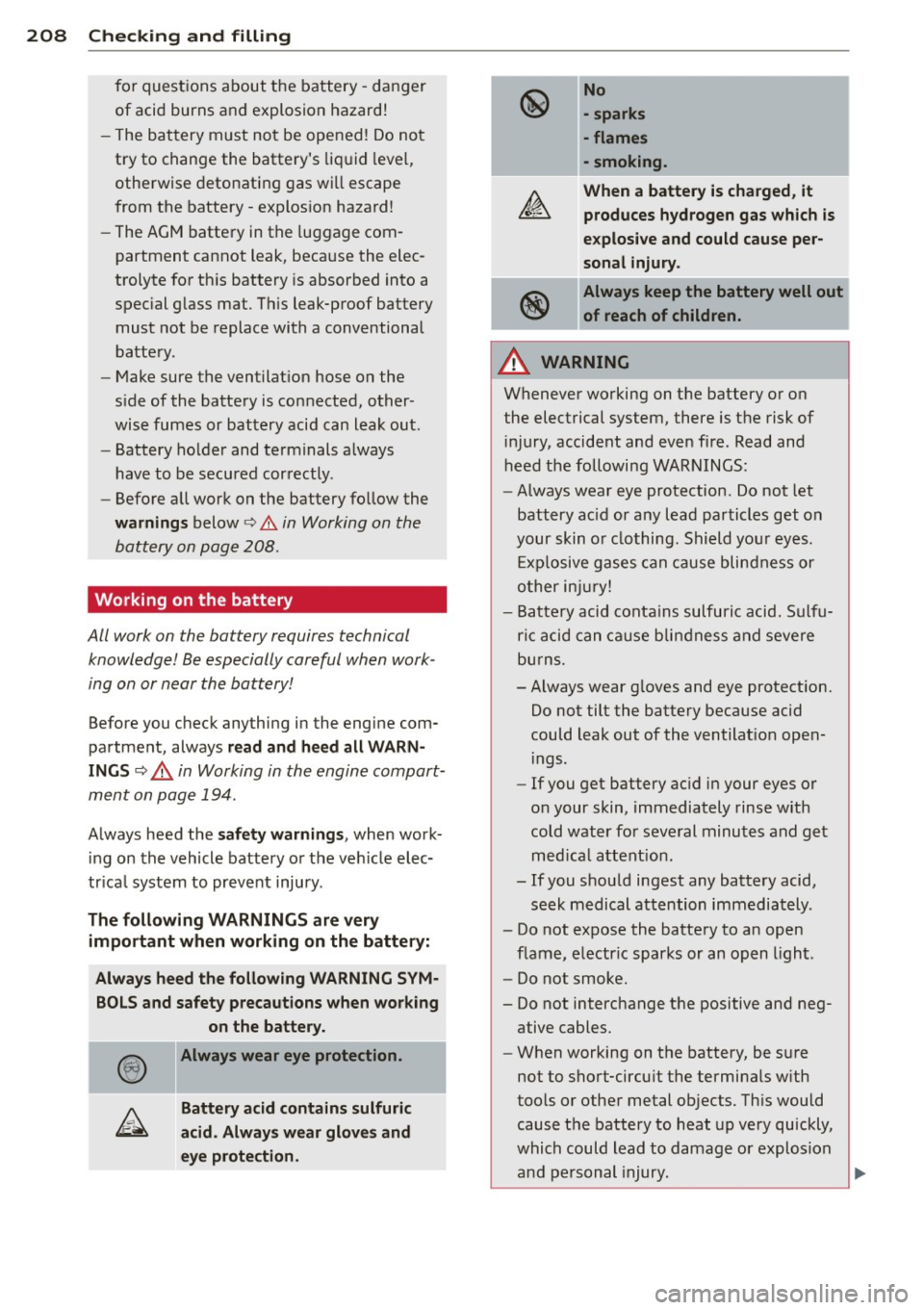
Working on the battery
All work on the battery requires technical
knowledge! Be especially careful when work
ing on or near the battery!
Be fo re you check any thing in the engine com
partment, always
r e ad a nd heed all WARN
INGS
~ .&. in Working in the engine compart
ment on page 194 .
Always heed the s afety warnings , when work
i ng on the vehicle battery or the vehicle elec
tr ica l system to preve nt injury .
The following WARNINGS are very
important when working on the battery:
Always heed the following WARNING SYM ·
BOLS and safety precautions when working on the battery.
Always wear eye protection.
Battery acid contains sulfuric
acid . Always wear glove s and
eye prote ction . No
• sparks
• flames
- smoking.
When a battery is charged , it
produces hydrogen gas which is
e x plosive and cou ld cause per
sonal injury .
®
Always keep the battery well out
of reach of children.
A WARNING ,___
Whenever working on the battery or on
the electrical system, there is the risk of
i njury, accident and even fire . Read and
heed the following WARNINGS :
- Always wear eye protection . Do not let
battery ac id or any lead particles get on
your skin o r clothing . Shield you r eyes.
Exp losive gases can cause blindness or
o ther inju ry!
- Battery acid conta ins sulfuric acid. Sulfu
ric acid can ca use blindness and severe
bu rns.
-Always wear g loves and eye protection.
Do not tilt the battery because acid
could leak out of the ventilat ion open
ings .
- If you get battery ac id in your eyes or
on your skin, immediately rinse with
cold water for several minutes and get med ica l attent ion .
- If you shou ld ingest any battery acid,
seek medical attention immediately .
- Do not expose the batte ry to an open
flame, electr ic sparks or an open l ight.
- Do not smoke.
- Do not interchange the positive and neg-
ative cables.
- When working on the battery, be s ure
not to short-circu it the terminals w ith
too ls or othe r metal objects. Th is would
cause the battery to heat up very quickly,
which could lead to damage or explosion
-
and pe rsonal injury . ~
Page 213 of 280
charged better then vehicles without this sys
tem . To make sure the additional e lectrica l en
ergy is available once again after you have
changed the battery, we recommend that you install batteries of the same type and manu
facture only (the same as those installed at
the t ime your vehicle was delivered). Specifi
cations are listed on the battery hous ing . Your
authorized dealer must code the battery in
the energy management system to enable yo u
to use the energy management functions cor
rectly after replacing the bat tery.
If it is not possible to use a battery of this
type, the new battery must have the same ca
pacity, voltage (12 volts) , amperage, con
struction and plug sealing.
We re commend that you use ma intenance
free or
cy cle -re sis tant /le ak-proof batteries
that conform to the standards TL
825 06
(from December 1997) and VW 7 SO 73 (from
Aug ust 2001).
When insta lling the bat tery , make sure the ig
n ition and all e lectrica l consumers are turned
off .
CD Note
-Make sure tha t the gas venting hose is
always connected to the o riginal open ing
on the battery side . Otherwise gasses or
battery acid could leak out.
- Battery mounts and clamps m ust always
be secured correctly.
- Read and follow the warnings under
C? page 208, Working on the battery be
fore performing any work on the battery .
@ For the sake of the environment
Because of the problem of proper d isposa l
o f a battery, we recommend your author
ized Audi dealer change the batte ry for
you. Batteries contain su lfuric ac id and
lead and must always be disposed of prop
erly in compliance w ith all environmental
regu lations . D isposing of vehicle batte ries
improperly is very dangerous to the envi
ronment. Make sure that the removed bat-
Checkin g and fillin g 211
tery cannot overbalance, otherwise su lfu
ric acid might escape!
Windshield washer container
Using plain water is not adequate for filling
the $ windshield washer system .
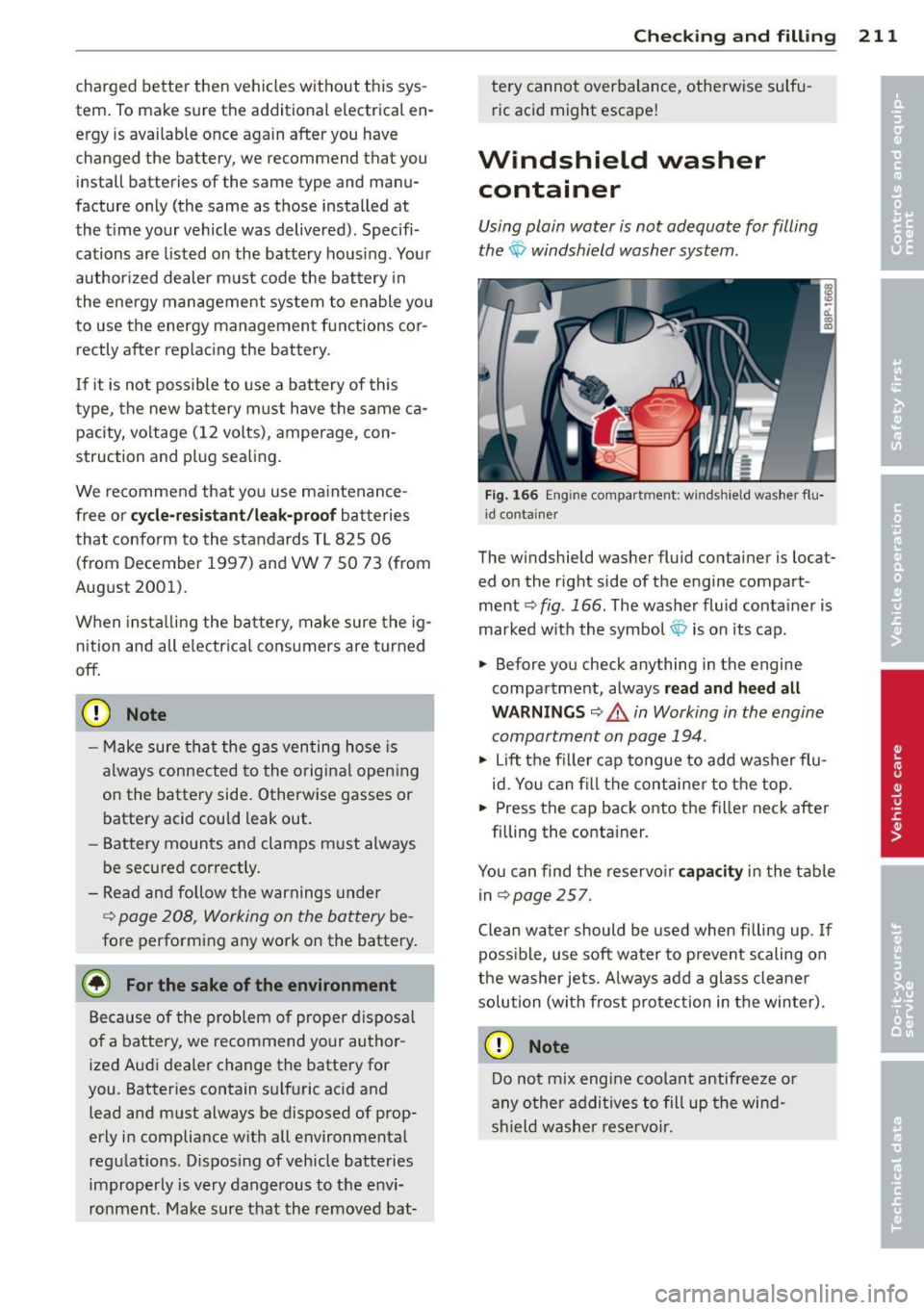
Fig. 166 En gin e compart men t: w in ds hield washer flu
i d co ntai ner
The windshield washer fluid container is locat
ed on the right side of the engine compart
ment ~
fig. 166. The washer fluid conta iner is
marked w ith the symbol $ is on its cap .
.,. Before you check anything in the engine
compartment, always
read and heed all
W ARNINGS ~ _&. in Working in the engine
compartment on page 194.
.,. Lift the fil le r ca p tongue to add washer flu
id. You can fi ll the container to the top.
.,. Press the cap back onto the f iller neck after
f illing the container .
You can find the reservo ir
capacity in t he t able
in
C? page 257.
Clean water should be used when filling up . If
poss ible, use soft water to prevent scaling on
the washer jets. Always add a glass cleane r
solu tion (with frost protection in t he win ter).
CD Note
Do not mix engi ne coolant antifreeze o r
a ny o ther addi tives to fill up the wind
sh ield washer rese rvoi r.
Page 216 of 280

214 Tires and wheels
Maximum loaded vehicle weight
means the sum of:
(a) Curb weight
(b) Accessory weight
(c) Vehicle capacity weight, and
(d) Production options weight
Maximum (permissible) inflation pressure
means the maximum cold inflation pressu re
to which a tire may be inflated. Also called
"maximum inflation p ressure."
Normal occupant weight
means 150 lbs. (68 kilograms) times the
number of occupants seated in the vehicle up
to the total seating capacity of your vehicle.
Occupant distribution means distribution of occupants in a vehicle .
Outer diameter means the overa ll diameter of an inf lated new
tire.
Overall width
means the linear distance between the exteri
ors of the sidewalls of an inflated tire, includ
ing e levations due to labeling, decorations, or
protective bands or ribs.
Ply
means a layer of rubber-coated parallel cords.
Production options weight
means the comb ined weight of those installed
regular production options weighing over 5
lbs . (2 .3 kg) in excess of those standard items
which they replace, not previously considered
in curb weight or accessory weight, including
heavy duty brakes, r ide leve lers, roof rack,
heavy duty battery, and specia l trim .
Radial ply tire
means a pneumatic tir e in which the p ly cords
that extend to the beads are laid at substan
tially 90 degrees to the centerline of the
tread . Recommended inflation pressure
see
~
page 213, Cold tire inflation pressure.
Reinforced tire
means a t ire designed to operate at higher
loads and at higher inflation pressures than
the corresponding standard tire . Re inforced
t ir es my be identified as "XL", "xl", "EX TRA
LOAD", or "RF" on the sidewall.
Rim
means a metal support for a tire or a t ire and
tube assembly upon which the tire beads are seated.
Rim diameter
means nom inal d iameter of the bead seat. If
you change your wheel s ize, you w ill have to
purchase new tires to match the new r im di
ameter .
Rim size designation
means rim diameter and width.
Rim width
means nominal distance between rim flanges .
Sidewall
means that portion of a tire between the
t read and bead.
Speed rating (letter code)
means the speed at which a tire is designed to
be driven for extended periods of time. The
ratings range from 93 mph (150 km/h) to
186 mph (298 km/h)
~ page 224 . You may
not find this information on all tires because
it is not requ ired by law.
The speed rating letter code, where applica
ble, is molded on the tire sidewall and indi
cates the max imum pe rmissibl e road speeds
~ A in Winter tires on page 228.
Tire pressure monitoring system*
means a system that detects when one or
more of a veh icle's tires are underinflated and
illuminates a low tire pressure warning tell
tale.
Page 247 of 280
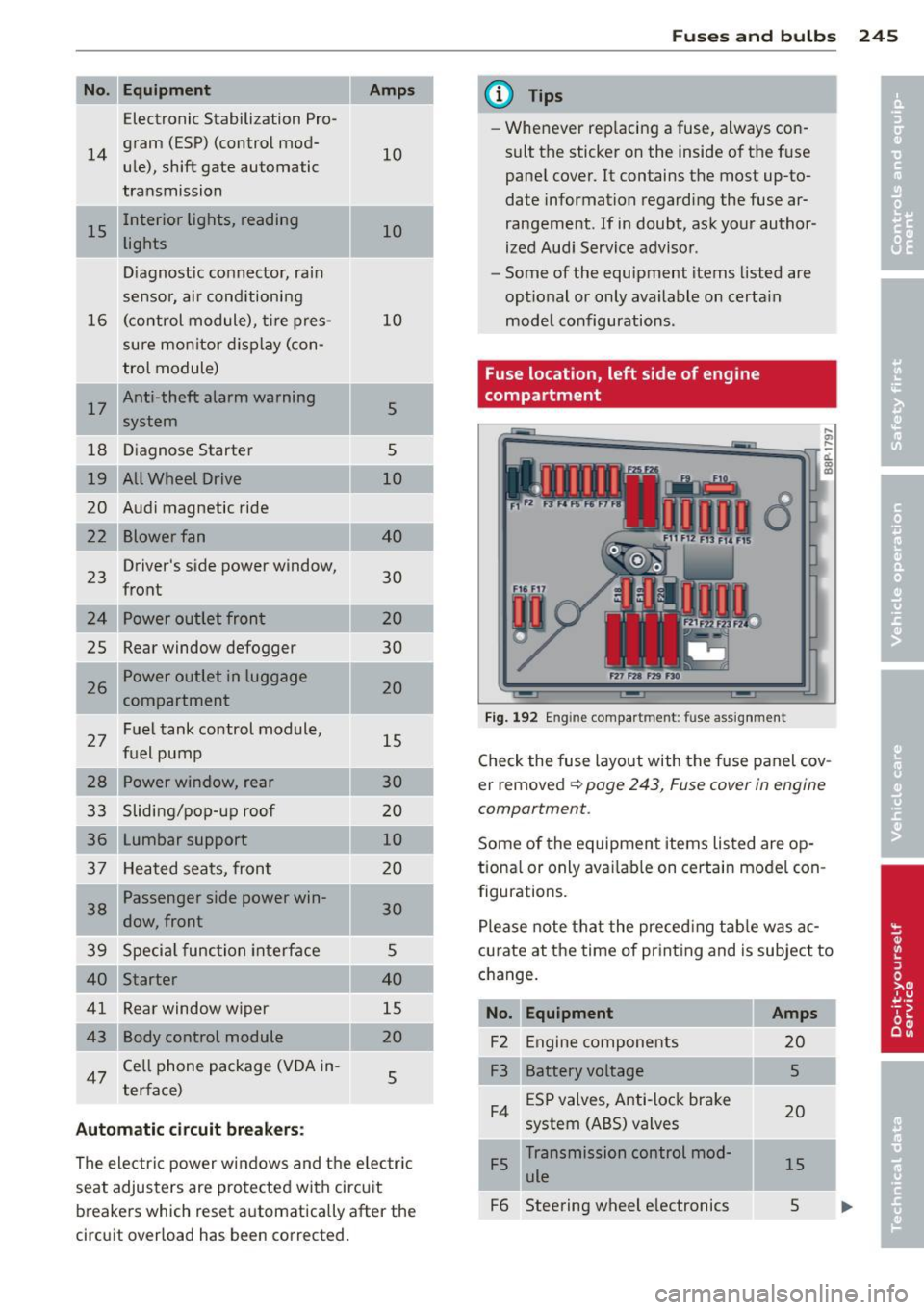
No. Equ ipment
Electronic Stabilization Pro-
14
gram (ESP) (control mod-
u le), shift gate automatic
transmission
15 Interior lights, reading
lights
Diagnostic connector, rain
sensor, air conditioning
16 (control module), t
ire pres-
sure monitor d isplay (con-
trol module)
I 17
Anti-theft alarm warning
system
18 D iagnose Starter
19 All Wheel D rive
20 Audi magnetic ride
Blower fan
23
Driver's
side power window,
front
24 Power outlet front
2S Rear window defogger
26 Power outlet in luggage
compartment
27 Fuel tank control module,
fuel pump
28 Power window, rear
33 Slidi ng/pop-up roof
36 Lumbar support
37 Heated sea ts, front
1 38
Passenger side power win-
dow, front
39 Specia l func tion interface
40 Starter
41 Rear window wiper
43 Body control module
47
Ce ll phone package (V OA in-
terface)
Automatic circuit breakers:
10
10
10
5
5
10
40
30
20
30
20
15
30
20 10
20
30
5
40
15
20 5
The electri c power w in dows and the e lectr ic
seat adjusters are pro tected with circu it
breake rs which reset automatically after the
circuit overload has been corrected.
Fu se s and bulb s 245
@ Tips
-Whenever rep lacing a fuse, always con
sult the sticker on the inside of the f use
pane l cover. It contains the most up-to
date information regarding the fuse ar
rangement. If in doubt, ask your author
ized Aud i Service adviso r.
- Some of the equipment items listed are
opt ional or only available on certa in
mode l configurations.
Fuse location, left side of engine
compartment
Fig . 192 En gine compar tment : fuse assig nment
,._
-d. a, a>
Check the fuse layout with the f use panel cov
er removed
¢ page 243, Fuse cover in engine
comportment.
Some of the equipmen t items listed are op
tiona l or only ava ilab le on certain model con
figurations.
Please note tha t the preced ing tab le was ac
c u rate at the time of pr int ing and is subject to
c h ange.
No. Equipment
F2 Engine compone nts
F3 Battery voltage ESP valves, Anti-lock brake
F4 system (ABS) valves
Transmission control mod
F5 ule
F6 Steering wheel e lectronics
Amps
20
5
20
15
s
Page 258 of 280
256 Genera l inform ation
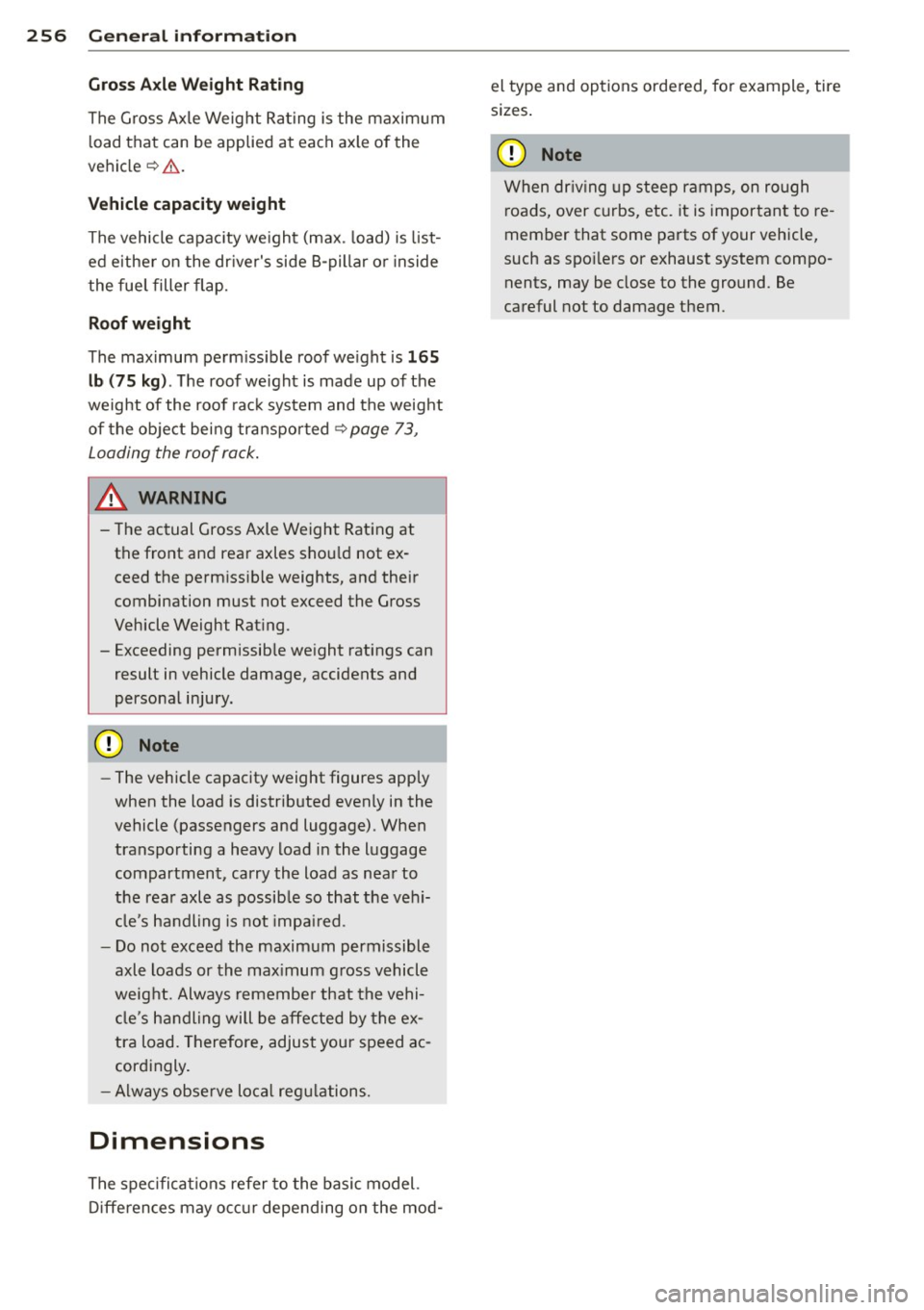
Gro ss Axl e Weight Rating
The Gross Axle Weight Rating is the maxim um
l oad that can be applied at each axle of the
vehicle ~&. .
Vehicle capacity weight
The vehicle capac ity we ight (max . load) is list
ed eithe r on the dr iver's side B-pillar o r inside
the fuel filler flap.
Roof weight
The maximum perm iss ible roof we ight is 165
lb (75 kg ). The roof we ight is made up of the
weight of the roof ra ck system and the weight
of the object bei ng transpo rted
~ page 73 ,
Loading the roof rack .
A WARNING
- The actual Gross Axle Weight Rating at
the front and rear axles sho uld not ex
ceed the perm iss ib le weights, and their
combination must not exceed the Gross
Vehicle Weight Rat ing .
- Exceeding permissib le we ight ratings can
result in vehicle damage, accidents and
personal in jury.
(D Note
- The vehicle capacity weight figures app ly
when the load is distrib uted evenly in the
vehicle (passengers and luggage) . When
transporting a heavy load in the luggage
compartment , carry the load as nea r to
the rea r axle as possib le so that the vehi
cle's handling is not impa ired .
- Do not exceed the maximum permissible
axl e loads or the max imum g ross vehicl e
weig ht. Always remembe r that the vehi
cl e's handling will be affected by the ex
tra load . Therefore, adjust your speed ac
cordingly.
- Alw ays obse rve lo cal regulations.
Dimensions
-
The spe cifica tions refer to the basi c model.
D ifferen ces may oc cur depe nding on the mod- el type and options orde
red , fo r example , tire
siz es.
(D Note
When dr iv ing up steep ramps, on rough
r oads, over curbs, etc. it is important to re
member that some pa rts of your vehicle,
such as spo ile rs or exhaust system compo
nents, may be close to the ground . Be
careful not to damage them .
Page 259 of 280
Data 257
Data
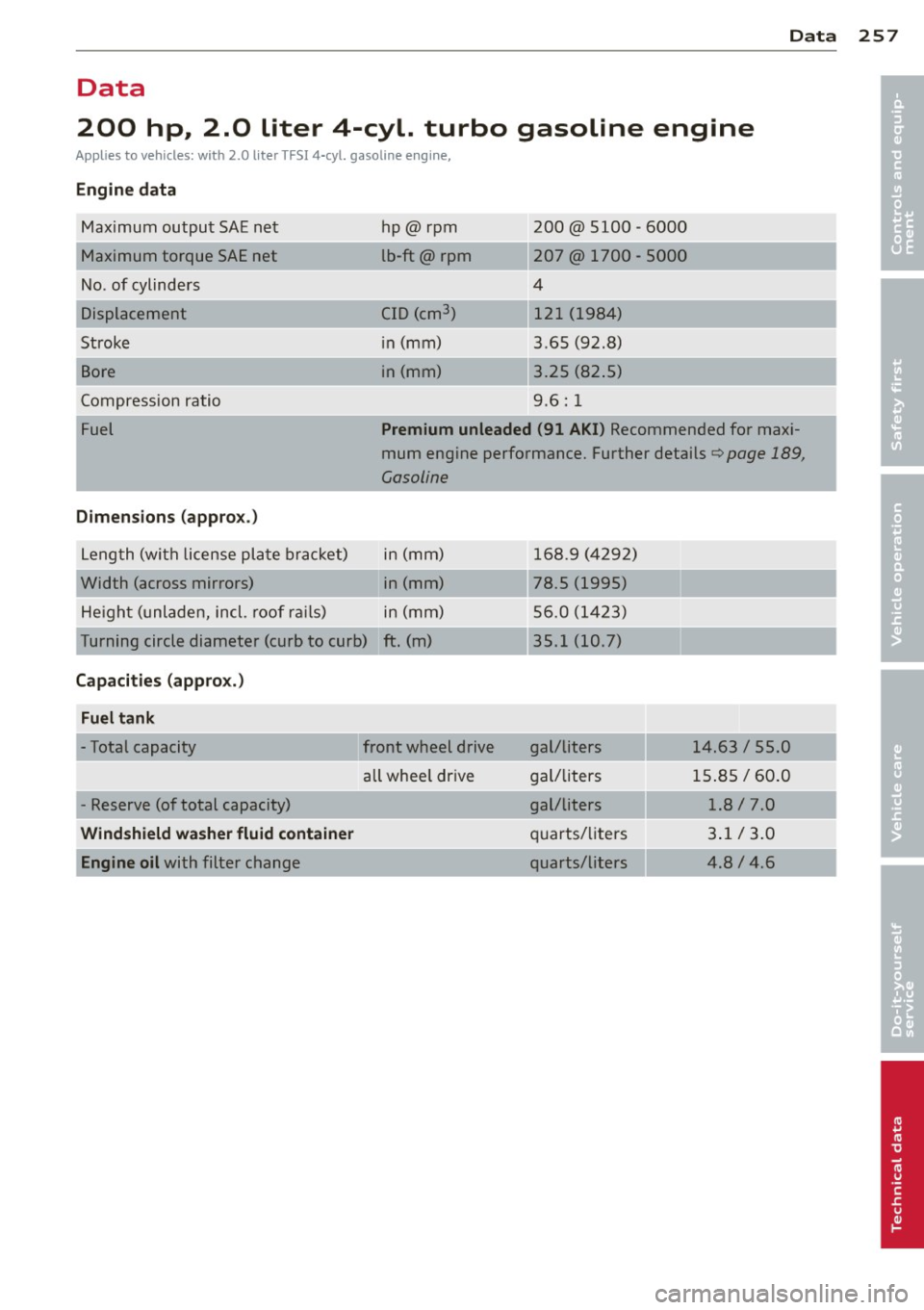
200 hp, 2.0 liter 4-cyl. turbo gasoline engine
Applies to vehicles: with 2.0 liter TFS! 4-cyl. gasoline engine,
Engine data Maximum outpu t SAE ne t
M aximum torque SAE net
No . of cylinders
Displacement
Stroke
Bore
C ompression ratio
Fuel
Dimensions (approx .)
L eng th (wit h license pl ate brac ket)
Width (across mirrors) He igh t (unladen, incl . roof r ails) 200@ 5100
-6000
hp@r pm
lb-ft@ rp m
-~--
CID (cm3
)
in (mm)
in (mm)
---·
207 @ 1700 - 5000
4
121 (1984)
3 .65 (92 .8)
3.25 (82 .5)
9 .6: 1
Premium unleaded
(91 AKI) Recommended for maxi
mum engine performance. Further details ¢page 189,
Gasoline
in (mm) 168.9 (42 92)
in (mm) 78.5 (1995)
in (mm) 56.0 (1423)
T urning circle diameter (curb to curb) ft. (m) 35.1 (10.7)
Capacities (approx.)
Fuel tank
- Total capacity
- Reserve (of total capacity)
Windshield washer fluid container Engine oil with filter change front wheel
drive
a ll whee l drive gal/liters
14.63 / 55.0
g al/liters 15.8 5 / 60 .0
gal/liters 1.8/7.0
qu arts/ liters 3 .1 / 3 .0
quarts/li ters 4.8 / 4.6
•
•