door lock AUDI A3 2015 Owner's Manual
[x] Cancel search | Manufacturer: AUDI, Model Year: 2015, Model line: A3, Model: AUDI A3 2015Pages: 288, PDF Size: 71.46 MB
Page 110 of 288
108 Automatic transmi ssion
Stopp ing /p ar kin g
If the selec tor lever is not in the P position
when you open the driver's door, the vehicle
could ro ll. In vehicles with a convenience key*,
the message:
Shift to P , other wise vehi cle
c a n roll away . Doo rs do not lo ck if le ver not
in
P appears. You will also hear a warning
tone .
"' Press and ho ld the brake pedal¢.&_ .
"' Set the parking brake.
"'Se lect the P selector lever pos ition.
St opp ing on an incline
• Always press the brake pedal to hold the ve
hicle in p lace and prevent it from "rolling
back" ¢ .&_ . Do
n ot try to prevent the vehi
cle from "roll ing back" when a gear is en
gaged by increasing the eng ine speed ¢(D.
Starting on an inclin e in vehicl es wi th out
Hill Hold*
"' Set the parking brake.
"' With the driving gear selected, press the ac
celerator pedal carefully . The parking brake
will release automat ically if your safety belt
is fastened.
St arting on an incl ine i n vehicle s with Hill
Hold*
"' With the driving gear selected, remove your
foot from the brake pedal and press the ac cele rato r pedal ¢
page 78, Hill hold.
Under certain circumstances, (such as driving
in the mountains or towing a tra iler), it may
be usefu l to sw itch temporarily to the manual
shift p rogram in o rder to adjust the gears to
the dr iving condit ions by ha nd
¢ page 110.
When parking on a level surface, simply place
the selector lever in the P pos ition. On in
clines , activate the parking bra ke first and
then move the selector lever to the P pos it ion
¢ page 76 . This prevents the locking mecha
nism from being loaded too heavi ly and will
make it easier to move the selector lever out
of the P position.
A WARNING
- The vehicle can also roll when the engine
is stopped.
- Unintended vehicle movement can cause
serious injury.
- Never leave your vehicle with the engine running while in gear. If you must leave
your veh icle when the engine is running,
set the parking brake and move these
lector lever to the P position .
- Power is still transferred to the wheels
when the engine is runn ing at idle. To
p revent the vehicle from "c reeping", you
must keep you r foot on the brake when
the engine is running and the selector lever is in the D, So r R position or "tip
tronic" mode is selected .
- Do not inadvertently press the ac celera
tor peda l when the vehicle is stationary.
Otherwise the vehicle wi ll start to move
immediate ly, even if the parking brake is
set. Th is could result in a crash.
- Do not press the accelerator pedal when
changing the se lector lever position
while the veh icle is stationary and the
engine is running.
- Never engage the se lector level positions
R or P while dr iv ing. It could cause a
crash .
- Before driving down a steep slope, re
duce your speed and shift into a lower
gear with "tiptronic" .
- Do not ride the brakes or press the brake
pedal too often or too long when driving
downhill . Constant braking causes the
brakes to overheat and substantially re
duces braking pe rformance, increases
b rak ing distan ce or c auses complete fa il
ure of the brake system.
- I f you must stop on an in cl ine, always
hold the vehicle i n place with the foot
brake or park ing brake to p revent it from
rolling back .
- Never hold the vehicle on an incline with
a slipping clutch . The clutch opens auto
matica lly when it becomes too hot from
Page 111 of 288
the overload. The ml indicator light
turns on and a message appears
Q page 111 when the clutch is overload
ed .
-If the engine must remain running, never
have any driving position engaged when
checking under the hood . Make sure the
selector lever has securely engaged and
is locked in P with the parking brake set
Q page 210. Otherwise, any increase in
engine speed may set the vehicle in mo
tion, even with the parking brake set.
(y Note
- When stopping on an incline, do not try
to hold the vehicle in place by pressing
the accelerator pedal while a driving gear
is selected. This can cause the automatic
transmission to overheat and can dam
age it. Set the parking brake or press the
brake pedal to prevent the vehicle from
rolling.
- Allowing the vehicle to roll when the en
gine is stopped and th@ selector lever is
in the N position will damage the auto
matic transmission because it is not lu
bricated under those circumstances .
- The transmission can overheat and be
damaged under certain driving and traf
fic conditions such as frequent starts,
creeping for a long time , or stop-and-go
traffic. When the
ml or . indicator
light turns on, stop the vehicle at the
next opportunity and let the transmis
sion cool
r::!> page 111.
-Allowing the vehicle to roll when the en
gine is stopped will damage the S tronic
transmission because it is not lubricated
<=> page 261, Emergency towing with
commercial tow truck .
For safety reasons, the parking brake re
leases automatically only when the driver's
door is closed and driver's safety belt is
fastened.
Automatic transmission 109
Hill descent control
App lies to vehicles : wi th S tronic tra nsmi ssio n
Hill descent control assists the driver when
driving down inclines .
Hill descent control is activated when these
lector lever is in the D or S position and you
press the brake pedal. The transmission auto
matically selects a gear that is suitable for the
incline. Hill descent control tries to maintain
the speed achieved at the time of braking,
within physical and technical limitations. If
may still be necessary to adjust the speed
with the brakes . Because hill descent control
cannot sh ift down farther than 3rd gear, it
may be necessary to shift into tiptronic mode
in very steep areas. In this case, shift into 1st
or 2nd gear in tiptronic mode to use the en gine's braking force to relieve the brakes .
Hill descent control switches off once the in
cline levels out or you press the accelerator
pedal.
On vehicles with a cruise control system*
Q page 79, hill descent control is also activat
ed when the speed is set.
A WARNING
-
-
Hill descent control cannot overcome
physical limitations, so it may not be able
to maintain a constant speed under all
conditions. Always be ready to apply the brakes .
•
Page 130 of 288
128 Driving safety
-Place heavy objects as far forward in
the luggage compartment as possible.
- Never exceed the Gross Axle Weight Rat
ing or the Gross Vehicle Weight Rating
specified on the safety compliance stick
er on the left door jamb. Exceeding per
missible weight standards can cause the
vehicle to slide and handle differently .
- Please observe information on safe driv
ing
~ page 121.
A WARNING
To help prevent poisonous exhaust gas
from being drawn into the vehicle, always
keep the rear lid closed while driving.
- Never transport objects larger than
those fitting completely into the luggage
area because the rear lid cannot be fully
closed.
- If you absolutely must drive with the rear
lid open, observe the following notes to
reduce the risk of poisoning:
- Close all windows,
- Close the power roof",
- Open all air outlets in the instrument
panel,
- Switch off the air recirculation,
- Set the fresh air fan to the highest
speed.
A WARNING
Always make sure that the doors, all win
dows, the power roof* and the rear lid are
securely closed and locked to reduce the
risk of injury when the vehicle is not being
used.
- After closing the rear lid, always make
sure that it is properly closed and locked.
- Never leave your vehicle unattended, es
pecially with the luggage compartment
lid left open. A child could crawl into the
vehicle through the luggage compart
ment and close the rear lid becoming
trapped and unable to get out. Being
trapped in a vehicle can lead to serious
personal injury.
-
'
- Never let children play in or around the
vehicle.
- Never let passengers ride in the luggage
compartment. Vehicle occupants must
always be properly restrained in one of
the vehicle's seating positions .
(D Tips
-Air circulation helps to reduce window
fogging. Stale air escapes to the outside
through vents in the trim panel. Be sure
to keep these slots free and open.
- The tire pressure must correspond to the load. The tire pressure is shown on the
tire pressure label. The tire pressure la
bel is located on the driver's side B-pillar.
The tire pressure label lists the recom
mended cold tire inflation pressures for
the vehicle at its maximum capacity
weight and the tires that were on your
vehicle at the time it was manufactured.
For recommended tire pressures for nor
mal load conditions, please see chapter
~ page 229.
Tie-downs
The luggage compartment is equipped with
four tie-downs to secure luggage and other
items.
Use the tie-downs to secure your cargo prop
erly ~
page 12 7, Loading th e luggage com
par tment.
In a collision, the laws of physics mean that
even smaller items that are loose in the vehi
cle will become heavy missiles that can cause
serious injury. Items in the vehicle possess en
ergy which vary with vehicle speed and the
weight of the item . Vehicle speed is the most
significant factor.
For example, in a frontal collision at a speed
of 30 mph (48 km/h), the forces acting on a 10-lb (4 .S kg) object are about 20 times the
normal weight of the item . This means that
the weight of the item would suddenly be about 200 lbs. (90 kg). You can imagine the
injuries that a 200 lbs. (90 kg) item flying ..,_
Page 147 of 288
detailed information about airbags, safety
belts and child safety in this and the other
chapters that make up the owner's literature.
Please be sure to heed the WARNINGS -they
are ex tremely important for your safety and
the safety of your passengers, especially in
fants and small children .
A WARNING
Never rely on airbags alone for protection.
- Even when they deploy, airbags provide only supplemental protection .
- Airbag work most effectively when used
with properly worn safety belts .
- Therefore, always wear your safety belts
and make sure that everybody in your ve
hicle is properly restrained .
- Always hold the steering wheel with both
hands on the outside of the steering
wheel rim at the 9:00 o'clock and 3:00
o'clock positions to help reduce the risk
of personal injury if the driver's airbag in
flates.
- Never hold the steering wheel at the 12
o'clock position or with your hands any
where inside the steering wheel or on the
steering wheel hub. Holding the steering
wheel the wrong way increases the risk of severe injury to the arms, hands, and
head if the driver airbag deploys .
A WARNING
Objects between you and the airbag will
increase the risk of injury in a crash by in
terfering with the way the airbag unfolds
and/or by being pushed into you as the air
bag inflates.
- Always make sure nothing is in the front
airbag deployment zone that could be
struck by the airbag when it inflates.
- Objects in the zone of a deploying airbag
can become projectiles when the airbag
deploys and cause serious personal in
jury.
- Never hold things in your hands or on
your lap when the vehicle is in use .
-
Airbag system 145
-Never place accessories or other objects
(such as cup holders, telephone brackets,
note pads, navigation systems, or things
that are large, heavy, or bulky) on the
doors; never attach then to the doors or
the windshield; never place them over or
near or attach them to the area marked
,,AIRBAG " on the steering wheel, instru
ment panel or the seat backrests; never
place them between these areas and you
or any other person in the vehicle.
- Never attach objects to the windshield
above the passenger front airbag, such
as accessory GPS navigation units or mu
sic players. Such objects could cause seri
ous injury in a collision, especially when
the airbags inflate.
- Never recline the front passenger seat to transport objects. Items can also move
into the deployment area of the side air
bags or the front airbag during breaking
or in a sudden maneuver . Objects near
the airbags can fly dangerously through
the passenger compartment and cause
injury, particularly when the seat is re
clined and the airbags inflate.
A WARNING
-=
A person on the front passenger seat , es-
pecially infants and small children, will re
ceive serious injuries and can even be kil
led by being too close to the airbag when
it inflates.
- Although the Advanced Airbag System in your vehicle is designed to turn
off the
front passenger airbag if an infant or a
small child is on the front passenger
seat, nobody can absolutely guarantee
that deployment under these special conditions is impossible in all conceiva
ble situations that may happen during
the useful life of your vehicle.
- The Advanced Airbag System can deploy
in accordance with the ,,low risk" option
for 3-and 6-year-old children under the
•
•
•
Page 156 of 288
154 Airbag sys te m
- and i f th e e lec trica l capacitance registered
on the front passenger seat is equal to or
l ess than t he combined capacitance of a ty p
ical 1 year-old infant and one of the rear
ward-facing o r forward-facing child re
stra ints listed in Federal Motor Ve hicle Safe
ty Standard 208 w ith whic h the Adva nce d
Airbag System in your vehicle was ce rtified .
If the front passenger seat is not occupied,
the front airbag will not deploy, and the
PAS
SENGER AIR BAG OFF
li ght w ill stay on . Nev
e r i nsta ll a rearwa rd-fac ing ch ild restra int on
the front passenger seat, the safest place fo r
a child in any kind of child restraint is at o ne
of the seat ing positions on the rear seat
¢ page 142, Child restraints on the front seat
- some important things to know
and
¢ page 166, Child Safety .
If the PASSENGER AIR BAG light comes
on ...
If the PASSENGER AIR BAG OFF light comes
on when one of the cond itions listed above is
met , be sure to check the light regularly to
make certa in that the
PASSENGER AIR BAG
OFF
light stays on cont inuous ly whenever the
ignit io n is on . If t he
PASSENGER AIR BAG
OFF
l ight does not appear on and does not
stay o n all the time, s top as soon as it is safe
to do so a nd
- react ivate the system by turning the ignition
off for more than 4 seconds and then tu rn
i ng it on agai n;
- remove and re install the chi ld restraint.
Make su re that the child res traint is properly
insta lled and that the safety be lt fo r the
fron t passenger seat has been correct ly
ro uted throug h the child restrain t as descri
bed in t he chi ld restraint man ufact urer 's in
structions;
- make sure that the convertible locking fea
ture on the safety be lt fo r the front passen
ger seat has been activated and that the
safety belt has been pulled tight.
- ma ke sure that no e lectrica l device (such as
a laptop, CD playe r, electronic games device,
power inverter or seat heater for child seats)
is p laced or used on the front passenger seat
if the dev ice is connected to the 12-volt
socket or the cigarette lighter soc ket;
- ma ke s ure that no seat heater has been ret
rofitted or otherwise added to the front pas
senger seat;
- ma ke s ure that no thing can interfere with
the safety belt buck les an d that they are not
obstructed ;
- make sure that there are no wet objects (such as a wet towe l) and no water or other
liquids on the front passenger seat cushion.
If the PASSENGER AIR BAG light still
does not c ome on ...
If the PASSENGER AIR BAG OFF light still
does not come on and does not stay on con
t in uous ly (when the ignition is switched on),
- t ake the child restraint off the front passen -
ge r seat and install it proper ly at o ne of the
rear seat positions. Have the airbag system
inspected by yo ur Audi dealer immed iately.
- move the child to a rear seat position and
make sure t hat the c hil d is properly restra in
ed in a c hild restra int that is appropriate for
its size and age .
The PASSENGER AIR BAG light should
NOT come on . ..
The PASSENGER AIR BAG OFF light should
NOT come on when the ignit ion is on and an
adult is s itting in a proper seating position on
the front passenger seat. If t he
PASSENGER
AIR BAG OFF
light comes o n and s tays on o r
flashes fo r about S seconds w hile d riving, un
der these circumstances, make sure tha t:
- t he adult on the front passenge r sea t is
prope rly seated on the cente r of the seat
cushion wi th his o r her back up aga inst the
backrest and the backrest is no t re cli ned,
- t he adult is not tak ing we ight o ff the sea t by
holding on to the passenger assis t handle
above the front passenger door or s upport
ing their weight on the armrest ,
- t he sa fe ty belt is be ing properly wo rn and
t ha t the re is not a lot o f slack in the safety
be lt webbing,
- t here are no aftermar ket sea t covers or
cushions or other things (such as blankets) .,..
Page 176 of 288
174 Child Safety
• When using the vehicle safety belt to install
a child safety seat, you must first activate
the convertible locking feature on the safety
belt to prevent the child safety seat from
moving
c::;, page 177 or install the seat using
the LATCH attachments .
• Push the child safety seat down with your
full weight to get the safety belt really tight so that the seat cannot move forward or
sideways more than one inch (2.5 cm)
c::;, page 177.
• If the child safety seat is equipped with a
tether strap, attach it to the tether anchors
c::;, page 183.
• Secure unused safety belts on the rear seat
c::;, page 172.
A toddler or child is usually too large for an in
fant restraint if it is more than one year old
and weighs more than 20 lbs. (9 kg) .
Toddlers and children who are older than one
year up to about 4 years old and weigh more
than 20 lbs (9 kg) up to 40 lbs. (18 kg) must
always be properly restrained in a child safety
seat certified for their size and weight
c::;, fig. 134 and c::;, fig . 135.
The airbag on the passenger side makes the
front seat a poten tially dangerous place for a
child to ride . The front seat is not the safest
place for a child in a forward-facing child safe
ty seat.
It is a very dangerous place for an in
fant or a larger child in a rearward-facing seat.
A WARNING
Not using a child safety seat, using the
wrong child safety seat or improperly in
stalling a child restraint increases the risk
of serious personal injury and death in a
collision or other emergency situation.
- Children on the front seat of any car,
even with Advanced Airbags, can be seri
ously injured or even killed when an air
bag inflates. A child in a rearward-facing
child safety seat installed on the front
passenger seat will be seriously injured
and can be killed if the front airbag in-
-
flates -even with an Advanced Airbag
System .
- The inflating airbag will hit the child
safety seat or infant carrier with great
force and will smash the child safety seat
and child against the backrest, center
arm rest, door or roof .
- Always install rear-facing child safety
seats on the rear seat .
- If you must install a rearward facing
child safety seat on the front passenger
seat because of exceptional circumstan
ces and the
PASSENGER AIR BAG OFF
light does not come on and stay on, im
mediately install the rear-facing child
safety seat in a rear seating position and
have the airbag system inspected by your
Audi dealer.
- The rear side of the child safety seat
should be positioned as close as possible
to the backrest on the vehicle seat.
- For adjustable head restraints: adjust or
remove the rear seat head restraint if it
is difficult to install the child seat with
the head restraint in place
c::;, page 55. In
stall the head restraint again immediate ly once the child seat is removed. Driving
without head restraints or with head re straints that are not properly adjusted
increases the risk of serious or fatal neck
injury dramatically.
- Always read and heed all WARNINGS
whenever using a child restrained in ave
hicle is being used
¢page 131, Safety
belts, c::;, page 140, Airbag system
and
c::;, page 166, Important things to know.
A WARNING
-
If exceptional circumstances require the
use of a forward-facing child restraint on
the front passenger's seat, the child's safe
ty and well-being require that the follow
ing special precautions be taken:
- Make sure the forward-facing seat has been designed and certified by its manu
facturer for use on a front seat with a passenger front and side airbag.
Page 181 of 288
A WARNING ,~
Rearward-facing ch ild restraints:
-A chi ld in a rearward-facing child safety
seat installed on the front passenger
seat will be ser iously injured and can be
killed if the front airbag inflates -even
with an Advanced Airbag System .
- The inflating a irbag w ill hit the child
safety seat or infant carrier w ith great
force and w ill smash the ch ild safety seat
and child against the backrest, cente r
armrest, door or roo f.
- Always be especially caref ul if you must
install a rearwa rd fa cing child safety seat
on the front passenge r sea t in exception
al circumstances .
- Make su re that the
PASSENGER AIR BAG
OFF
light comes on and s tays on all the
time whenever the ignition is switched
on .
- If the
PASSENGER AIR BAG OFF light
does not come on and stay on, immedi
ately install the rea r-facing chi ld safety
seat in a rear seating position and have
the a irbag system inspected by you r Audi
dealer.
Activating the convertible locking retractor
Use the convertible locking retractor to se
cure a child restraint.
Always heed the child safety seat manufactur
er's instructions when install ing a chi ld re
straint in your vehicle . To activate t he conver
tible locking retracto r:
.,. Place the child restraint on a seat, prefera
bly on the rear sea t.
.,. Slow ly pull the be lt
all the way out .
.. Route it around or through the ch ild re
st ra int be lt path ¢&, .
.,. Push the child safety seat dow n with your
f ull weight to ge t the safety belt really t ight.
.,. Insert the be lt tongue into the buckle for
that seating position .
Child Safet y 1 79
.,. Guide the sa fe ty be lt back into the retractor
until the be lt lies flat and sn ug on the child
safety seat .
.,. You shou ld hear a "clicking" noise as the
be lt winds back into the iner tia ree l. Test the
convert ible lock ing retractor by pulling on
the belt. You sho uld no lo nger be able to
pull the be lt out of the retracto r. T he con
ver tible locking re trac to r i s now ac tiva ted .
.,. Mak e s ure t hat t he red release b utton is fac
ing away from the child rest rain t so t hat i t
can be unbuckled q uic kly .
.. Pull on the belt to make sure the safety be lt
is properly tight and fastened so that the
seat cannot move forward or sideways more
than one inch (2 .5 cm).
A WARNING
Using the wrong child restraint o r an im
p roperly installed chi ld restraint can cause
serious pe rsonal injury or death in a crash.
- Always ma ke sure that the safe ty belt re-
tracto r is loc ked when insta lling a child
safety seat. An unlocked safety belt re
tracto r can not hold the child safety seat
in place dur ing no rma l driving o r in a
cras h.
- Always buckle the child sa fe ty seat firmly
in place even i f a ch ild is not sitt ing in it.
A loose child safety seat can fly aroun d
during a sudden stop or in a crash .
- Always ma ke s ure the seat backrest to
which the child restraint is installed is in
an upright pos ition and securely latched
into place and can not fold forward . Oth
erw ise, the seatback with the child safety
seat attached to it could fly forward in
the ev ent of an accident o r othe r emer
gency situatio n.
- Always read a nd heed al l WAR NINGS
wheneve r us ing a child restrained in ave
hicle is being used ¢
page 166. Special
pre cau tions apply whe n inst alling a child
safety sea t on the fron t passenger seat
¢ page 142, Child restraints on the front
seat -some important things to know.
-
•
•
•
Page 210 of 288
208 Checking and Filling
snow blower, etc., be very careful and al
ways observe local and state laws regard
ing the use, transportation and storage of
such fuel containers . Make certain the con
tainer meets industry standards (ANSI/
ASTM F852 -86) .
(D Note
Never drive your vehicle until the fuel tank
is completely empty . The irregular supply
of fuel can cause misfiring. Gasoline could
enter the exhaust system and damage the
catalytic converter.
Fueling procedure
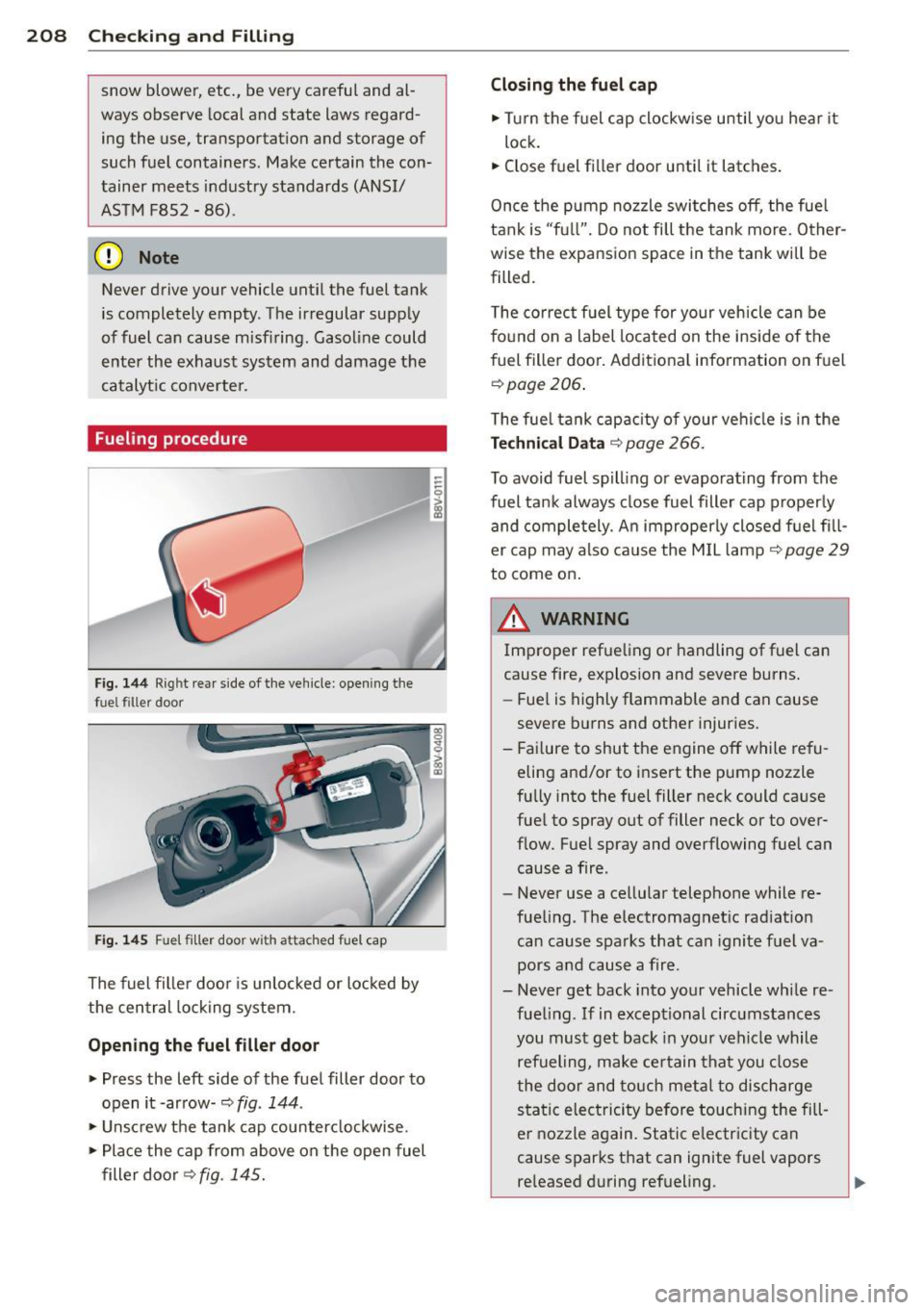
Fig. 144 Rig ht rear side of the vehicle: opening the
fue l filler door
Fig. 145 Fu el filler door w ith atta ched fuel cap
The fuel filler door is unlocked or locked by
the central locking system.
Opening the fuel filler door
.,. Press the left side of the fuel filler door to
open it -arrow-
c::> fig . 144 .
• Unscrew the tank cap counterclockwise.
• Place the cap from above on the open fuel
filler door
c::> fig . 145. Closing the fuel cap
.,.
Turn the fuel cap clockwise until you hear it
lock.
.,. Close fuel filler door until it latches.
Once the pump nozzle switches off , the fuel
tank is "full". Do not fill the tank more. Other
wise the expansion space in the tank will be
filled.
The correct fuel type for your vehicle can be
found on a label located on the inside of the
fuel filler door. Additional information on fuel
c::>page206.
The fuel tank capacity of your vehicle is in the
Technical Data c::> page 266.
To avoid fuel spilling or evaporating from the
fuel tank always close fuel filler cap properly
and completely. An improperly closed fuel fill
er cap may also cause the MIL lamp
c::> page 29
to come on.
A WARNING
Improper refueling or handling of fuel can
cause fire, explosion and severe burns.
- Fuel is highly flammable and can cause
severe burns and other injuries.
- Failure to shut the engine off while refu
eling and/or to insert the pump nozzle
fully into the fuel filler neck could cause
fuel to spray out of filler neck or to
over
flow. Fuel spray and overflowing fuel can
cause a fire .
- Never use a cellular telephone while re
fueling. The electromagnetic radiation can cause sparks that can ignite fuel va
pors and cause a fire .
- Never get back into your vehicle while re
fueling . If in exceptional circumstances
you must get back in your vehicle while
refueling, make certain that you close
the door and touch metal to discharge
static electricity before touching the fill
er nozzle again. Static electricity can
cause sparks that can ignite fuel vapors released during refueling .
Page 211 of 288
-Never smoke or have an open flame any
where in or near your vehicle when refu
eling or filling a portable fuel container.
- For your safety, we strongly recommend
that you do not travel with a portable
fuel container in your vehicle. The con
tainer, full or empty may leak and could
cause a fire, especially in a crash.
- If, under exceptional circumstances, you
must transport a portable fuel container,
please observe the following:
- Never fill a portable fuel container while it is anywhere in or on the vehicle
(for example, in the luggage compart
ment, or on the trunk). Static electrici
ty can build up while filling and can ig
nite fuel vapors causing a fire .
- Always place a portable fuel container
on the ground before filling .
- Always keep the filler nozzle complete
ly inside the portable container before
and during filling.
- If filling a portable container made of
metal, the filler nozzle must always be
in contact with the container . This will
help prevent static electricity from dis
charging and cause a fire.
- Never spill fuel inside the vehicle or
luggage compartment. Fuel vapors are
highly flammable.
- Always observe local and state/provin
cial laws regarding the use, storage
and transportation of fuel containers.
- Make certain the fuel container meets
industry standards (ANSI/ ASTM
F852-86).
(D Note
If any fuel has spilled onto the car, it
should be removed immediately to prevent
damage to the paint.
@ For the sake of the environment
As soon as the correctly operated nozzle
switches off automatically for the first
time, the tank is full. Do not try to add
more fuel because fuel may spill out. In
Checking and Filling 209
addition, the expansion space in the fuel
tank will be filled -causing the fuel to
overflow when it becomes warm and pol
lute the environment.
@ Tips
-Running your engine while refuelling
may cause vapors to escape or even
cause fuel to spill out of the tank. This
would then shut off the fuel nozzle be
fore the tank is full.
- Do not refuel your vehicle with the igni
tion switched on. The fuel gauge may
otherwise not indicate the correct fuel
level after refuelling .
- The fuel filler flap of your vehicle is not
locked when you lock the vehicle from
the inside.
Fuel filler door emergency release
If the central locking system is faulty, the
fuel filler door can be unlocked manually .
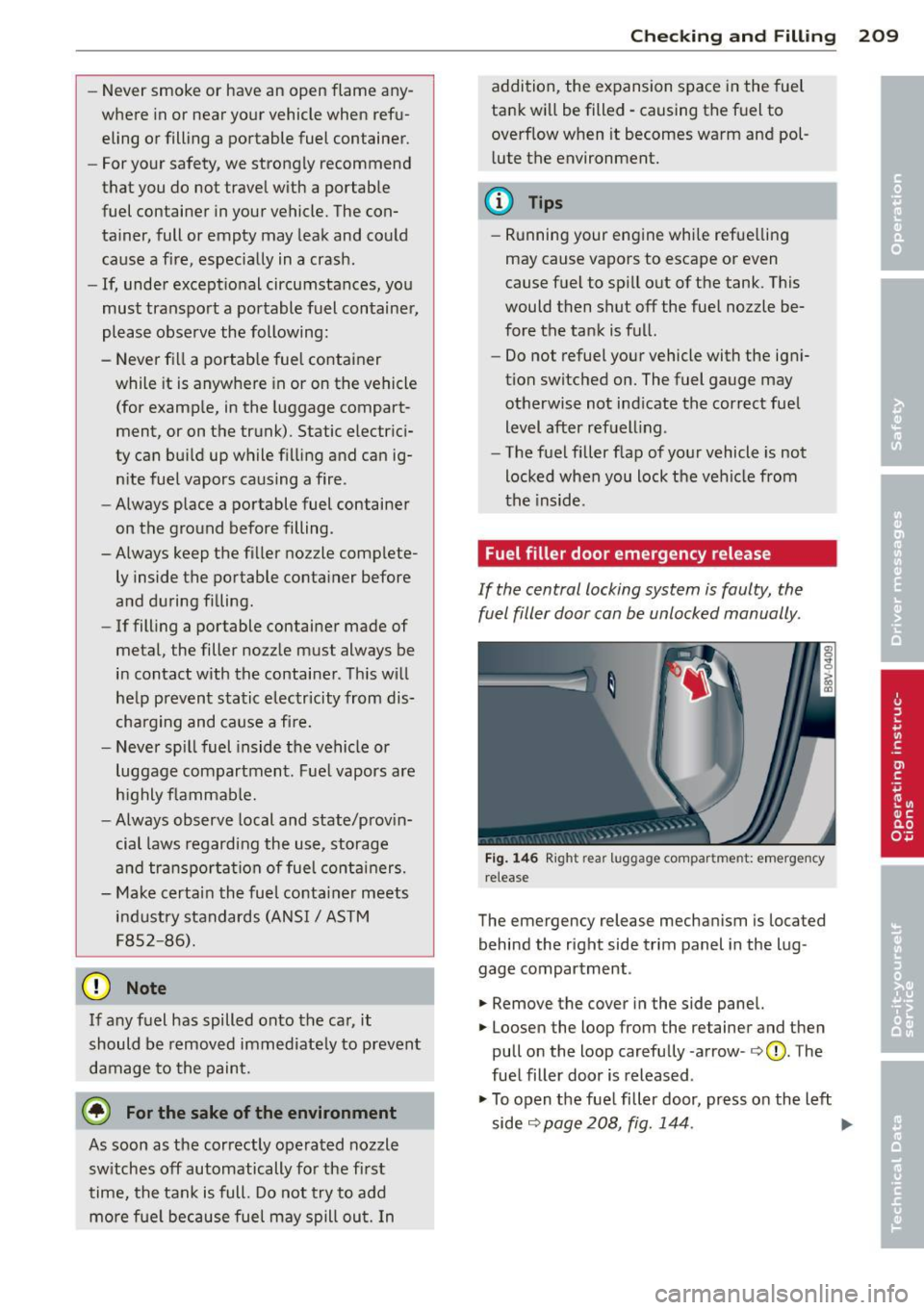
Fig. 146 Rig ht rea r lu g g ag e compar tme nt: emergency
release
The emergency release mechanism is located
behind the right side trim panel in the lug
gage compartment .
.,. Remove the cover in the side panel.
.,. Loosen the loop from the retainer and then
pull on the loop carefully -arrow -
c:>(D . The
fuel filler door is released .
.,. To open the fuel filler door, press on the left
side
c:> page 208, fig. 144 . i,..
Page 213 of 288
,&_ WARNING
California Proposition 65 Warning:
- Engine exhaust, some of its constituents,
and certain vehicle components contain
or emit chemicals known to the State of
California to cause cancer and birth de
fects and reproductive harm. In addition, certain fluids contained in vehicles and
certain products of component wear con
tain or emit chemicals known to the
State of California to cause cancer and birth defects or other reproductive harm .
- Battery posts, terminals and related ac
cessories contain lead and lead com
pounds, chemicals known to the State of
California to cause cancer and reproduc
tive harms. Wash hands after handling.
(D Note
When filling fluids, be sure not to mix the
fluids up. Otherwise severe malfunctions and engine damage will occur.
@) For the sake of the environment
You should regularly check the ground un der your vehicle in order to detect leaks
quickly .
If there are visible spots from oil
or other fluids, bring your vehicle to an au
thorized Audi dealer or qualified repair fa
cility to be checked.
Opening the hood
The hood is released from the interior.
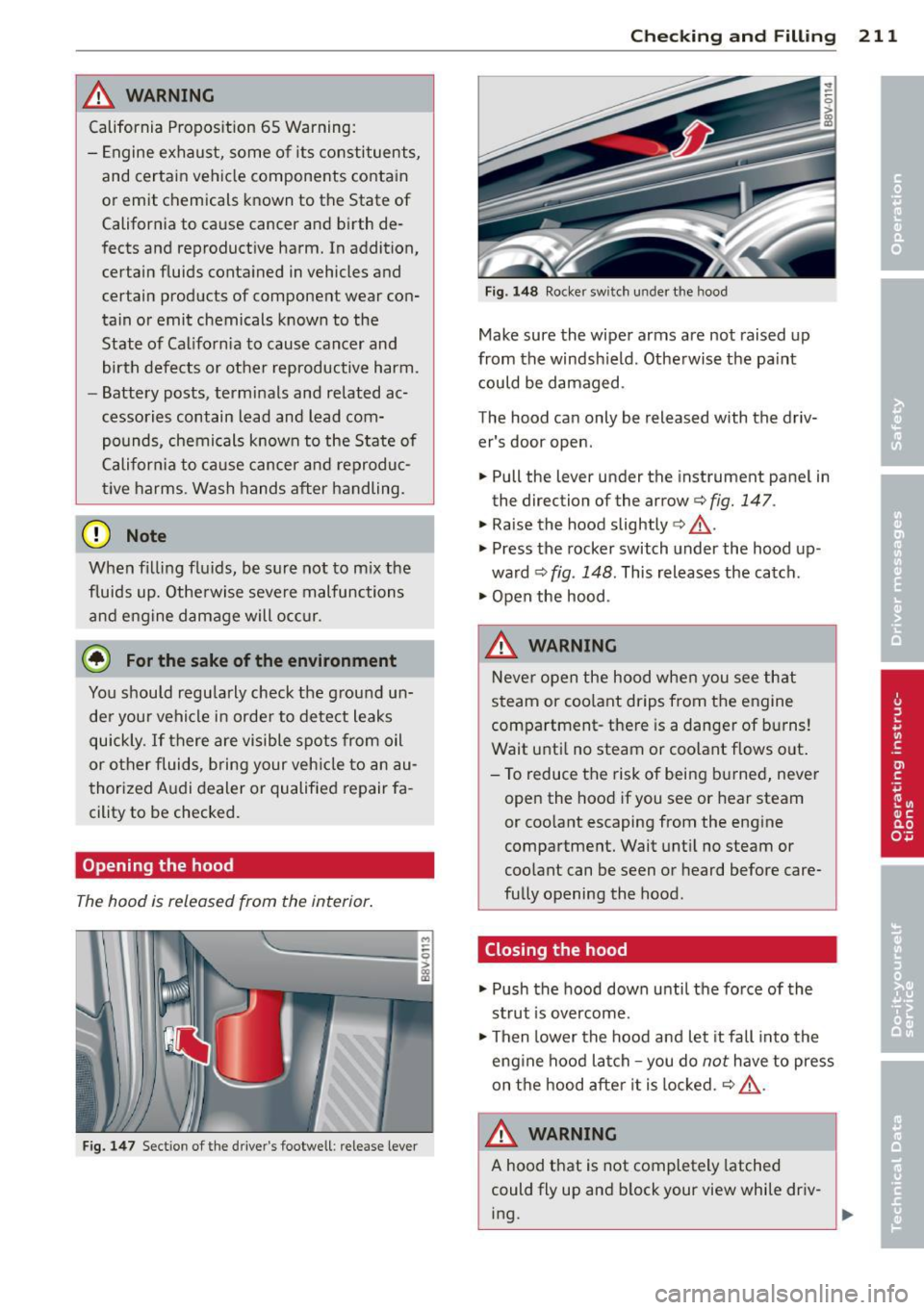
Fig. 147 Sect ion of the driver's footwell: release lever
Checking and Filling 211
Fig. 148 Rocke r switch un der t he hood
Make sure the wiper arms are not raised up
from the windshield. Otherwise the paint
could be damaged .
The hood can only be released with the driv
er's door open .
.,. Pull the lever under the instrument panel in
the direction of the arrow¢
fig. 147 .
.,. Raise the hood slightly¢,&. .
.,. Press the rocker switch under the hood up
ward
c:> fig. 148. This releases the catch.
.,. Open the hood .
.&, WARNING
Never open the hood when you see that
steam or coolant drips from the engine
compartment- there is a danger of burns!
Wait until no steam or coolant flows out.
- To reduce the risk of being burned, never open the hood if you see or hear steam
or coolant escaping from the engine
compartment. Wait until no steam or
coolant can be seen or heard before care
fully opening the hood .
Closing the hood
.,. Push the hood down until the force of the
strut is overcome . -
.,. Then lower the hood and let it fall into the
engine hood latch -you do
not have to press
on the hood after it is locked. ¢ ,&. .
.&, WARNING -
A hood that is not completely latched
could fly up and block your view while driv ing.