fold seats AUDI A3 2020 Owner´s Manual
[x] Cancel search | Manufacturer: AUDI, Model Year: 2020, Model line: A3, Model: AUDI A3 2020Pages: 400, PDF Size: 107.47 MB
Page 42 of 400
Power top
and hold for approximately 10 to 15 seconds
© 2 page 36, fig. 34.
Only close the power top manually in an emer-
gency. Have a second person assist. Drive imme-
diately to an authorized Audi dealer or author-
ized Audi Service Facility to have the malfunction
repaired.
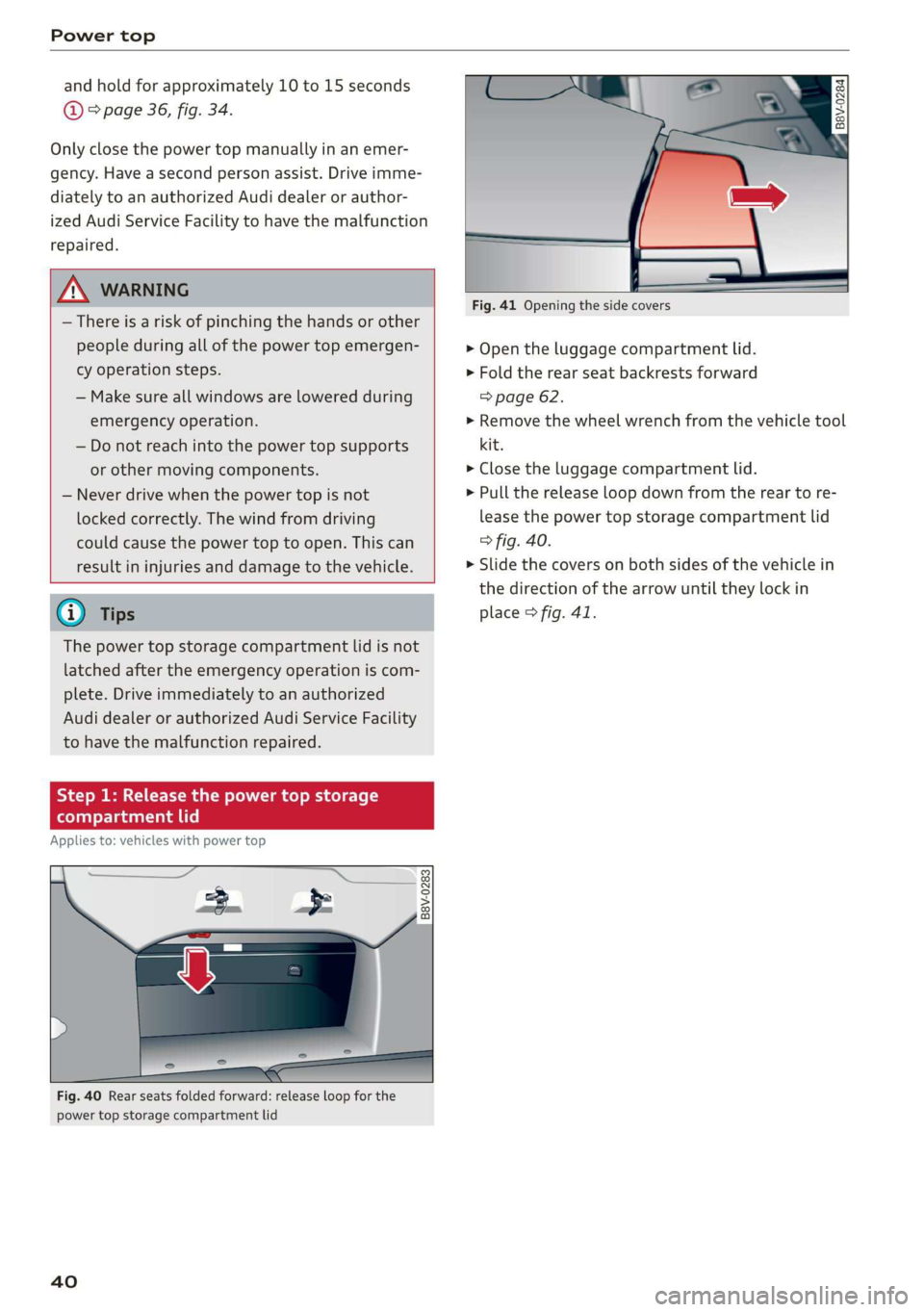
Fig. 41 Opening the side covers
— There is a risk of pinching the hands or other
people during all of the power top emergen- > Open the luggage compartment lid.
cy operation steps. > Fold the rear seat backrests forward
— Make sure all windows are lowered during => page 62.
emergency operation. > Remove the wheel wrench from the vehicle tool
— Do not reach into the power top supports kit.
or other moving components. >» Close the luggage compartment lid.
— Never drive when the power top is not >» Pull the release loop down from the rear to re-
locked correctly. The wind from driving lease the power top storage compartment lid
could cause the power top to open. This can > fig. 40.
result in injuries and damage to the vehicle. > Slide the covers on both sides of the vehicle in
the direction of the arrow until they lock in
place > fig. 41.
The power top storage compartment lid is not
latched after the emergency operation is com-
plete. Drive immediately to an authorized
Audi dealer or authorized Audi Service Facility
to have the malfunction repaired.
Step 1: Release the power top storage
compartment lid
Applies to: vehicles with power top
B8Vv-0283
Fig. 40 Rear seats folded forward: release loop for the
power top storage compartment lid
40
Page 57 of 400
8V2012721BK
Seats
Adjusting the backrests
> To adjust the backrest forward or backward,
press the button @) forward or backward.
Adjusting the seat position
> To adjust the seat forward or backward, push
the button @) forward or backward.
> To adjust the seat upward or downward, push
the rear section of the button @) upward or
downward.
Adjusting the lumbar support
> To adjust the lumbar support, press the button
@) at the applicable location.
Adjusting the upper thigh support
> To can increase or decrease the upper thigh
support, lift the handle @). A spring moves the
support forward.
Adjusting the massage function
> Switching the massage function on or off ().
@) Tips
The massage function switches off automati-
cally after approximately 10 minutes.
Va
Applies
to: vehicles with entry assistance
Entry assistance makes it easier for the rear pas-
sengers to enter and leave the vehicle.
B8W-0269
ZA\ WARNING
—To reduce the risk of an accident, only adjust
the front seats when the vehicle is station-
ary.
— The power adjustment for the front seats al-
so works with the ignition switched off or
with the ignition key removed. To reduce the
risk of injury, children should never be left
unattended in the vehicle for this reason.
— Exercise caution when adjusting the seat
height. Unsupervised or careless seat adjust-
ment could cause parts of the body to get
pinched, which increases the risk of injury.
— The front seat backrests must not be re-
clined too far back when driving, because
this impairs the effectiveness of the safety
belts and airbag system, which increases the
risk of injury.
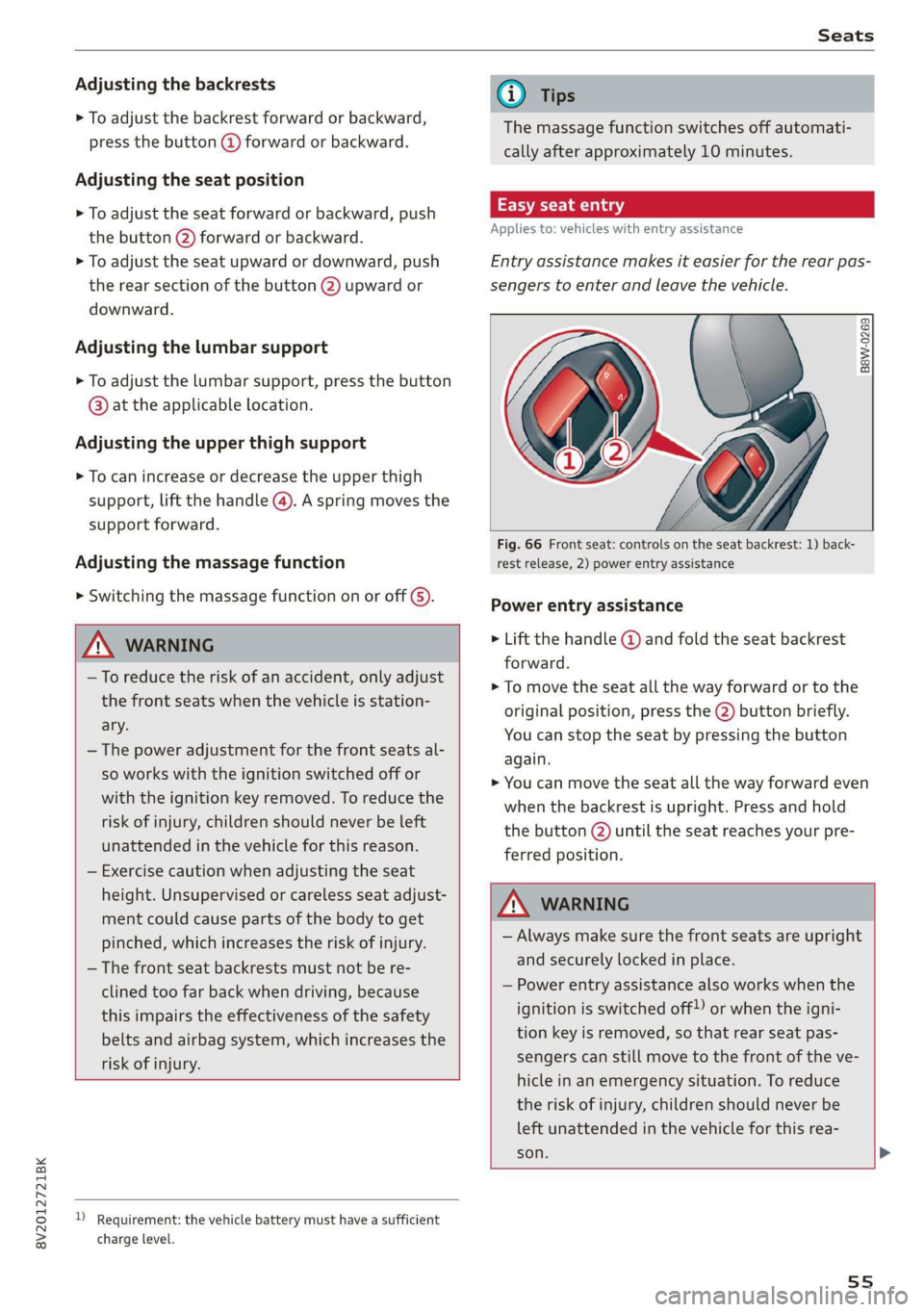
Fig. 66 Front seat: controls on the seat backrest: 1) back-
rest release, 2) power entry assistance
Power entry assistance
> Lift the handle @ and fold the seat backrest
forward.
> To move the seat all the way forward or to the
original position, press the @) button briefly.
You can stop the seat by pressing the button
again.
> You can move the seat all the way forward even
when the backrest is upright. Press and hold
the button 2) until the seat reaches your pre-
ferred position.
ZA WARNING
— Always make sure the front seats are upright
and securely locked in place.
— Power entry assistance also works when the
ignition is switched off!) or when the igni-
tion key is removed, so that rear seat pas-
sengers can still move to the front of the ve-
hicle in an emergency situation. To reduce
the risk of injury, children should never be
left unattended in the vehicle for this rea-
son.
D_ Requirement: the vehicle battery must have a sufficient
charge level.
55
Page 58 of 400
Be very careful when adjusting the seats to
avoid damaging the head restraints, headlin-
er, or sunroof*.
Front center armrest
Applies to: vehicles with a front center armrest
The front center armrest is located between the
front seats.
Adjusting the center armrest
The settings depend on the vehicle equipment.
> To adjust the armrest forward or backward,
move the armrest in the desired direction.
> To adjust the angle, raise the armrest in stages.
> To move the armrest back into the original posi-
tion, raise it slightly out of the top level and
fold it downward.
ZA\ WARNING
In certain positions, the front center armrest
can interfere with the driver’s arm movement,
which increases the risk of injury.
Head restraints
Proper adjustment of head restraints
Applies to: vehicles with adjustable head restraints
Correctly adjusted head restraints are an impor-
tant part of your vehicle's occupant restraint sys-
tem and can help to reduce the risk of injuries in
accident situations.
B4G-0454
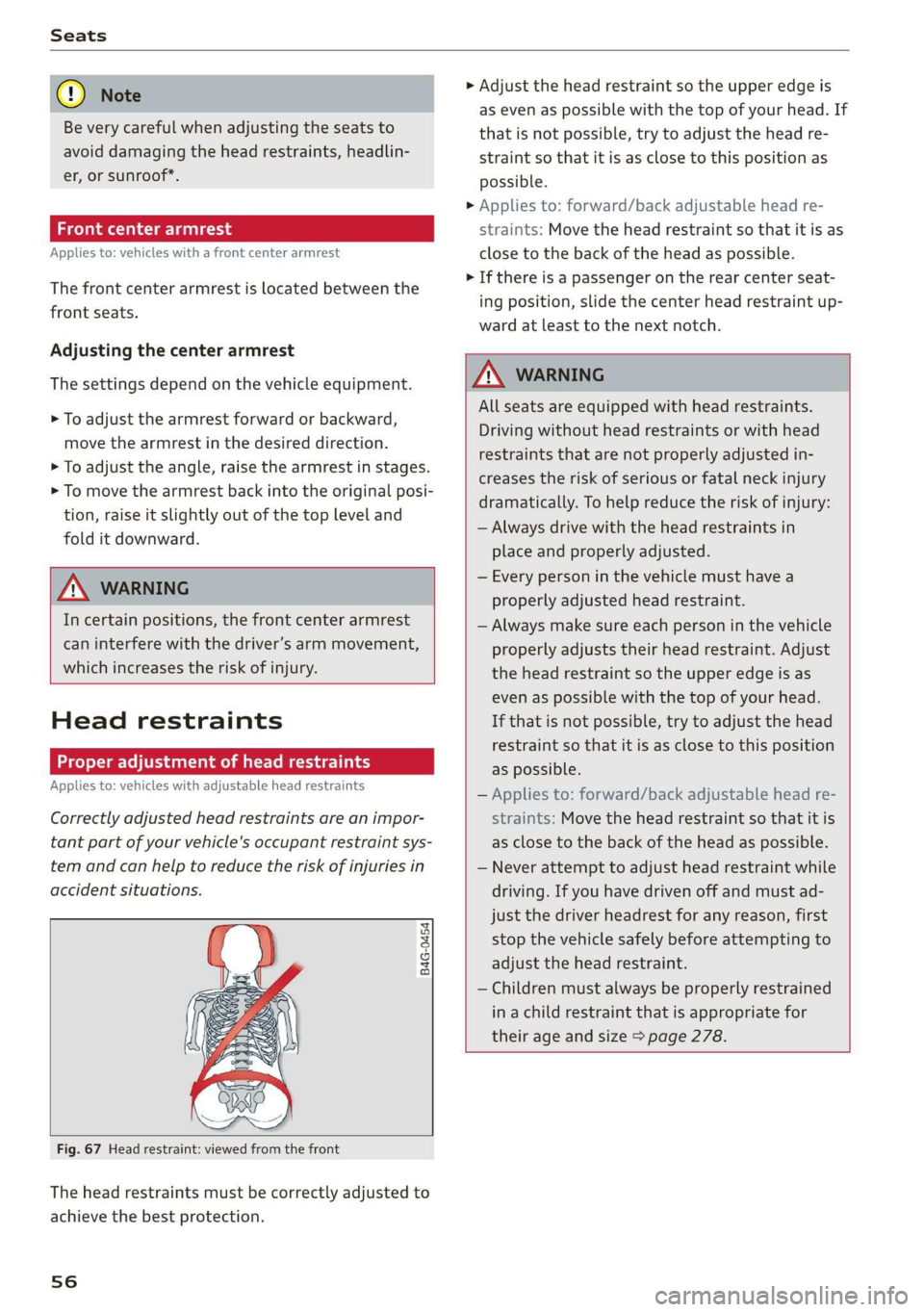
Fig. 67 Head restraint: viewed from the front
The head restraints must be correctly adjusted to
achieve the best protection.
56
> Adjust the head restraint so the upper edge is
as even as possible with the top of your head. If
that is not possible, try to adjust the head re-
straint so that it is as close to this position as
possible.
> Applies to: forward/back adjustable head re-
straints: Move the head restraint so that it is as
close to the back of the head as possible.
> If there is a passenger on the rear center seat-
ing position, slide the center head restraint up-
ward at least to the next notch.
ZA WARNING
All seats are equipped with head restraints.
Driving without head restraints or with head
restraints that are not properly adjusted in-
creases the risk of serious or fatal neck injury
dramatically. To help reduce the risk of injury:
— Always drive with the head restraints in
place and properly adjusted.
— Every person in the vehicle must have a
properly adjusted head restraint.
— Always make sure each person in the vehicle
properly adjusts their head restraint. Adjust
the head restraint so the upper edge is as
even as possible with the top of your head.
If that is not possible, try to adjust the head
restraint so that it is as close to this position
as possible.
— Applies to: forward/back adjustable head re-
straints: Move the head restraint so that it is
as close to the back of the head as possible.
— Never attempt to adjust head restraint while
driving. If you have driven off and must ad-
just the driver headrest for any reason, first
stop the vehicle safely before attempting to
adjust the head restraint.
— Children must always be properly restrained
in a child restraint that is appropriate for
their age and size > page 278.
Page 59 of 400
8V2012721BK
Seats
ame M estan)
Applies to: vehicles with adjustable head restraints
Rear head restraints
Applies to: vehicles with adjustable head restraints
RAZ-0766,
Applies to: version 1
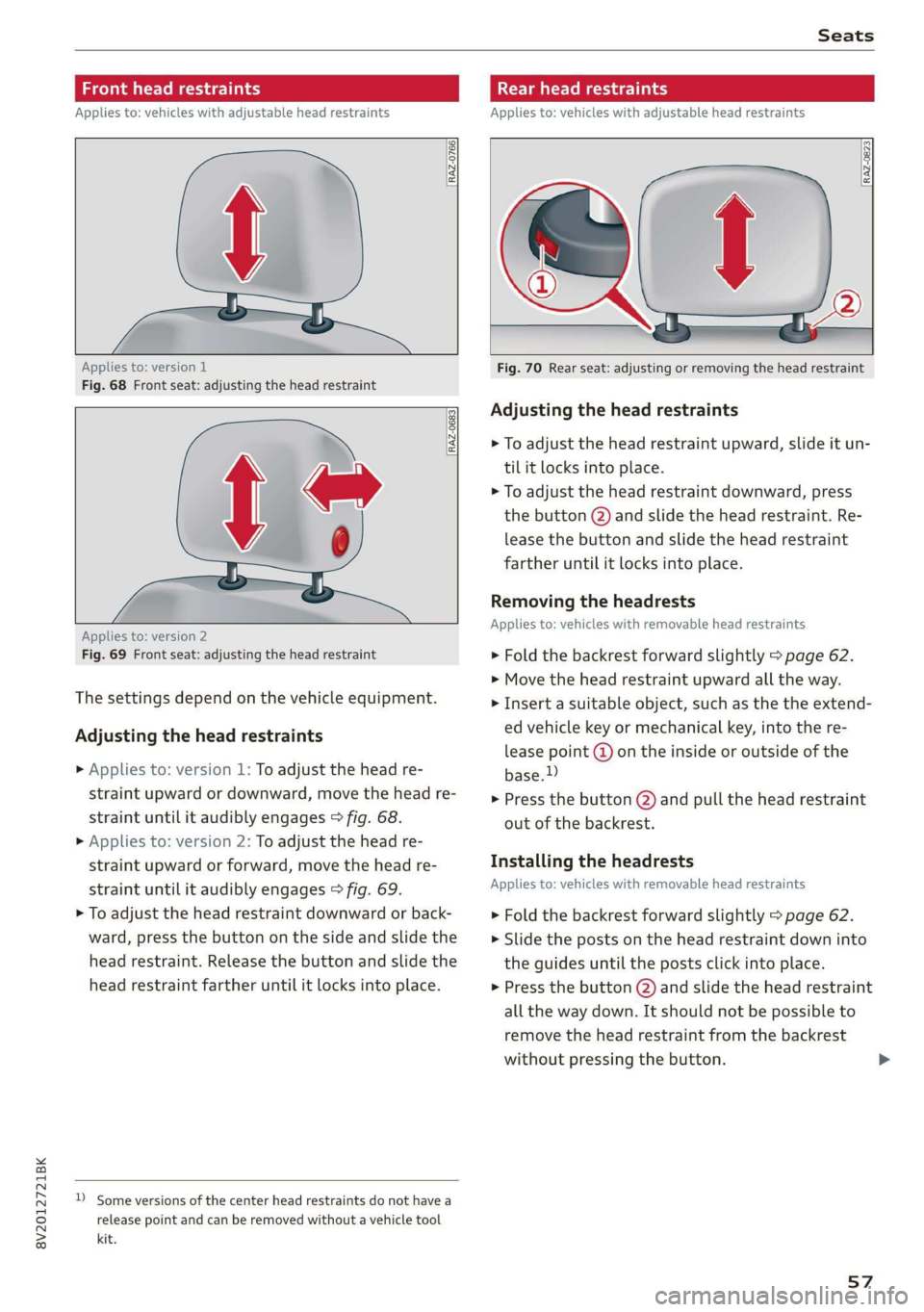
Fig. 68 Front seat: adjusting the head restraint
RAZ-0683
Applies to: version 2
Fig. 69 Front seat: adjusting the head restraint
The settings depend on the vehicle equipment.
Adjusting the head restraints
> Applies to: version 1: To adjust the head re-
straint upward or downward, move the head re-
straint until it audibly engages > fig. 68.
> Applies to: version 2: To adjust the head re-
straint upward or forward, move the head re-
straint until it audibly engages > fig. 69.
> To adjust the head restraint downward or back-
ward, press the button on the side and slide the
head restraint. Release the button and slide the
head restraint farther until it locks into place.
D_ Some versions of the center head restraints do not have a
release point and can be removed without a vehicle tool
kit.
Fig. 70 Rear seat: adjusting or removing the head restraint
Adjusting the head restraints
> To adjust the head restraint upward, slide it un-
til it locks into place.
> To adjust the head restraint downward, press
the button @) and slide the head restraint. Re-
lease the button and slide the head restraint
farther until it locks into place.
Removing the headrests
Applies to: vehicles with removable head restraints
> Fold the backrest forward slightly > page 62.
> Move the head restraint upward all the way.
> Insert a suitable object, such as the the extend-
ed vehicle key or mechanical key, into the re-
lease point @ on the inside or outside of the
base.)
> Press the button @) and pull the head restraint
out of the backrest.
Installing the headrests
Applies to: vehicles with removable head restraints
> Fold the backrest forward slightly > page 62.
> Slide the posts on the head restraint down into
the guides until the posts click into place.
> Press the button (2) and slide the head restraint
all the way down. It should not be possible to
remove the head restraint from the backrest
without pressing the button.
57
Page 241 of 400

8V2012721BK
Driving safety
> Always keep both feet in the footwell so that
you are in control of the vehicle at all times.
For detailed information on how to adjust the
driver's seat, see > page 54.
ZA WARNING
Drivers who are unbelted, out of position or
too close to the airbag can be seriously injured
by an airbag as it unfolds. To help reduce the
risk of serious personal injury:
— Always adjust the driver's seat and the
steering wheel so that there are at least
10 inches (25 cm) between your breastbone
and the steering wheel.
— Always adjust the driver's seat and the
steering wheel so that there are at least
4 inches (10 cm) between the knees and the
lower part of the instrument panel.
— Always hold the steering wheel on the out-
side of the steering wheel rim with your
hands at the 9 o'clock and 3 o'clock posi-
tions to help reduce the risk of personal in-
jury if the driver's airbag inflates.
— Never hold the steering wheel at the
12 o'clock position or with your hands at
other positions inside the steering wheel
rim or on the steering wheel hub. Holding
the steering wheel the wrong way can cause
serious injuries to the hands, arms and head
if the driver's airbag inflates.
— Pointing the steering wheel toward your
face decreases the ability of the supplemen-
tal driver's airbag to protect you in a colli-
sion.
— Always sit in an upright position and never
lean against or place any part of your body
too close to the area where the airbags are
located.
— Before driving, always adjust the front seats
properly and make sure that all passengers
are properly restrained.
— For adjustable head restraints: before driv-
ing, always also adjust the head restraints
properly.
— Never adjust the seats while the vehicle is
moving. Your seat may move unexpectedly
and you could lose control of the vehicle.
— Never drive with the backrest reclined or tilt-
ed far back! The farther the backrests are
tilted
back, the greater the risk of injury due
to incorrect positioning of the safety belt
and improper seating position.
— Children must always ride in child seats
=> page 278. Special precautions apply when
installing a child seat on the front passenger
seat > page 253.
Proper seating position for the front
passenger
The proper front passenger seating position is
important for safe, relaxed driving.
For your own safety and to reduce the risk of in-
jury in the event of an accident, we recommend
that you adjust the seat for the front passenger
to the following position:
> Adjust the angle of the seatback so that it is in
an upright position and your back comes in full
contact with it whenever the vehicle is moving.
> For adjustable head restraints: adjust the head
restraint so the upper edge is as even as possi-
ble with the top of your head. If that is not pos-
sible, try to adjust the head restraint so that it
is as close to this position as possible
=> page 57. Move the head restraint so that it is
as close to the back of the head as possible.
> Keep both feet flat on the floor in front of the
front passenger seat.
> Fasten and wear safety belts correctly
=> page 248.
For detailed information on how to adjust the
front passenger's seat, see > page 54.
ZA\ WARNING
Front seat passengers who are unbelted, out
of position or too close to the airbag can be
seriously injured or killed by the airbag as it
unfolds. To help reduce the risk of serious per-
sonal injury:
— Passengers must always sit in an upright po-
sition and never lean against or place any
part of their body too close to the area
where the airbags are located. >
239
Page 242 of 400
Driving safety
— Passengers who are unbelted, out of posi-
tion or too close to the airbag can be seri-
ously injured by an airbag as it unfolds with
great force in the blink of an eye.
— Always make sure that there are at least
10 inches (25 cm) between the front pas-
senger‘s breastbone and the instrument
panel.
— Always make sure that there are at least
4 inches (10 cm) between the front passen-
ger‘s knees and the lower part of the instru-
ment panel.
— Each passenger must always sit on a seat of
their own and properly fasten and wear the
safety belt belonging to that seat.
— Before driving, always adjust the front pas-
senger seat properly.
— For adjustable head restraints: before driv-
ing, always also adjust the head restraints
properly.
— Always keep your feet on the floor in front of
the seat. Never rest them on the seat, in-
strument panel, out of the window, etc. The
airbag system and safety belt will not be
able to protect you properly and can even in-
crease the risk of injury in a crash.
— Never drive with the backrest reclined or tilt-
ed far back! The farther the backrests are
tilted
back, the greater the risk of injury due
to incorrect positioning of the safety belt
and improper seating position.
— Children must always ride in child seats
= page 278. Special precautions apply when
installing a child seat on the front passenger
seat > page 253.
Proper seating positions for passengers in
israel -r- 1}
Rear seat passengers must sit upright with both
feet on the floor consistent with their physical
size and be properly restrained whenever the ve-
hicle is in use.
To reduce the risk of injury caused by an incorrect
seating position in the event of a sudden braking
maneuver or an accident, your passengers on the
rear bench seat must always observe the follow-
ing:
240
> For adjustable head restraints: adjust the head
restraint so the upper edge is as even as possi-
ble with the top of your head. If that is not pos-
sible, try to adjust the head restraint so that it
is as close to this position as possible
=> page 57.
> Keep both feet flat in the footwell in front of
the rear seat.
> Fasten and wear safety belts properly
=> page 248.
> Make sure that children are always properly re-
strained in a child restraint that is appropriate
for their size and age > page 278.
ZA WARNING
Passengers who are improperly seated on the
rear seat can be seriously injured in a crash.
— Each passenger must always sit on a seat of
their own and properly fasten and wear the
safety belt belonging to that seat.
— Safety belts only offer maximum protection
when the safety belts are properly posi-
tioned on the body and securely latched. By
not sitting upright, a rear seat passenger in-
creases the risk of personal injury from im-
properly positioned safety belts!
— For adjustable head restraints: always adjust
the head restraint properly so that it can
give maximum protection.
Examples of improper seating positions
The occupant restraint system can only reduce
the risk of injury if vehicle occupants are properly
seated.
Improper seating positions can cause serious in-
jury or death. Safety belts can only work when
they are properly positioned on the body. Im-
proper seating positions reduce the effectiveness
of safety belts and will even increase the risk of
injury and death by moving the safety belt to crit-
ical areas of the body. Improper seating positions
also increase the risk of serious injury and death
when an airbag deploys and strikes an occupant
who is not in the proper seating position. A driver
is responsible for the safety of all vehicle occu-
pants and especially for children. Therefore: >
Page 260 of 400
Airbag system
— Never hold the steering wheel at the 12
o'clock position or with your hands any-
where inside the steering wheel or on the
steering wheel hub. Holding the steering
wheel the wrong way increases the risk of
severe injury to the arms, hands, and head if
the driver airbag deploys.
ZA\ WARNING
Objects between you and the airbag will in-
crease the risk of injury in a crash by interfer-
ing with the way the airbag unfolds and/or by
being pushed into you as the airbag inflates.
— Always make sure nothing is in the front air-
bag deployment zone that could be struck
by the airbag when it inflates.
— Objects in the zone of a deploying airbag can
become projectiles when the airbag deploys
and cause serious personal injury.
— Never hold things in your hands or on your
lap when the vehicle is in use.
— Never place accessories or other objects
(such as cup holders, telephone brackets,
note pads, navigation systems, or things
that are large, heavy, or bulky) on the doors;
never attach them to the doors or the wind-
shield; never place them over or near or at-
tach them to the area marked ,, AIRBAG“ on
the steering wheel, instrument panel or the
seat backrests; never place them between
these areas and you or any other person in
the vehicle.
— Never attach objects to the windshield
above the passenger front airbag, such as
accessory GPS navigation units or music
players. Such objects could cause serious in-
jury in a collision, especially when the air-
bags inflate.
— Never recline the front passenger seat to
transport objects. Items can also move into
the deployment area of the side airbags or
the front airbag during breaking or in a sud-
den maneuver. Objects near the airbags can
fly dangerously through the passenger com-
partment and cause injury, particularly
when the seat is reclined and the airbags in-
flate.
258
Z\ WARNING
A person on the front passenger seat, espe-
cially infants and small children, will receive
serious injuries and can even be killed by be-
ing too close to the airbag when it inflates.
— Although the Advanced Airbag System in
your vehicle is designed to turn off the front
passenger airbag if an infant or a small child
is on the front passenger seat, nobody can
absolutely guarantee that deployment un-
der these special conditions is impossible in
all conceivable situations that may happen
during the useful life of your vehicle.
— The Advanced Airbag System can deploy in
accordance with the ,,low risk“ option for 3-
and 6-year-old children under the U.S. Fed-
eral Standard if a child with electrical capac-
itance greater than the combined capaci-
tance of a typical one-year old infant re-
strained in one of the forward facing or rear-
ward-facing child seats with which your ve-
hicle was certified is on the front passenger
seat and the other conditions for airbag de-
ployment are met.
— Accident statistics have shown that children
are generally safer in the rear seat area than
in the front seating position.
— For their own safety, all children, especially
12 years and younger, should always ride in
the back properly restrained for their age
and
size.
Advanced front airbag system
Your vehicle is equipped with a front Advanced
Airbag System in compliance with United States
Federal Motor Vehicle Safety Standard 208, as
well as Canada Motor Vehicle Safety Standard
(CMVSS) 208 as applicable at the time your vehi-
cle was manufactured.
The front Advanced Airbag System supplements
the safety belts to provide additional protection
for the driver's and front passenger's heads and
upper bodies in frontal crashes. The airbags in-
flate only in frontal impacts when the vehicle de-
celeration is high enough.
Page 265 of 400
8V2012721BK
Airbag system
airbag or too close to it when it inflates -
even with an Advanced Airbag > page 253.
TCM tee MoM dalla iol tLs
airbags
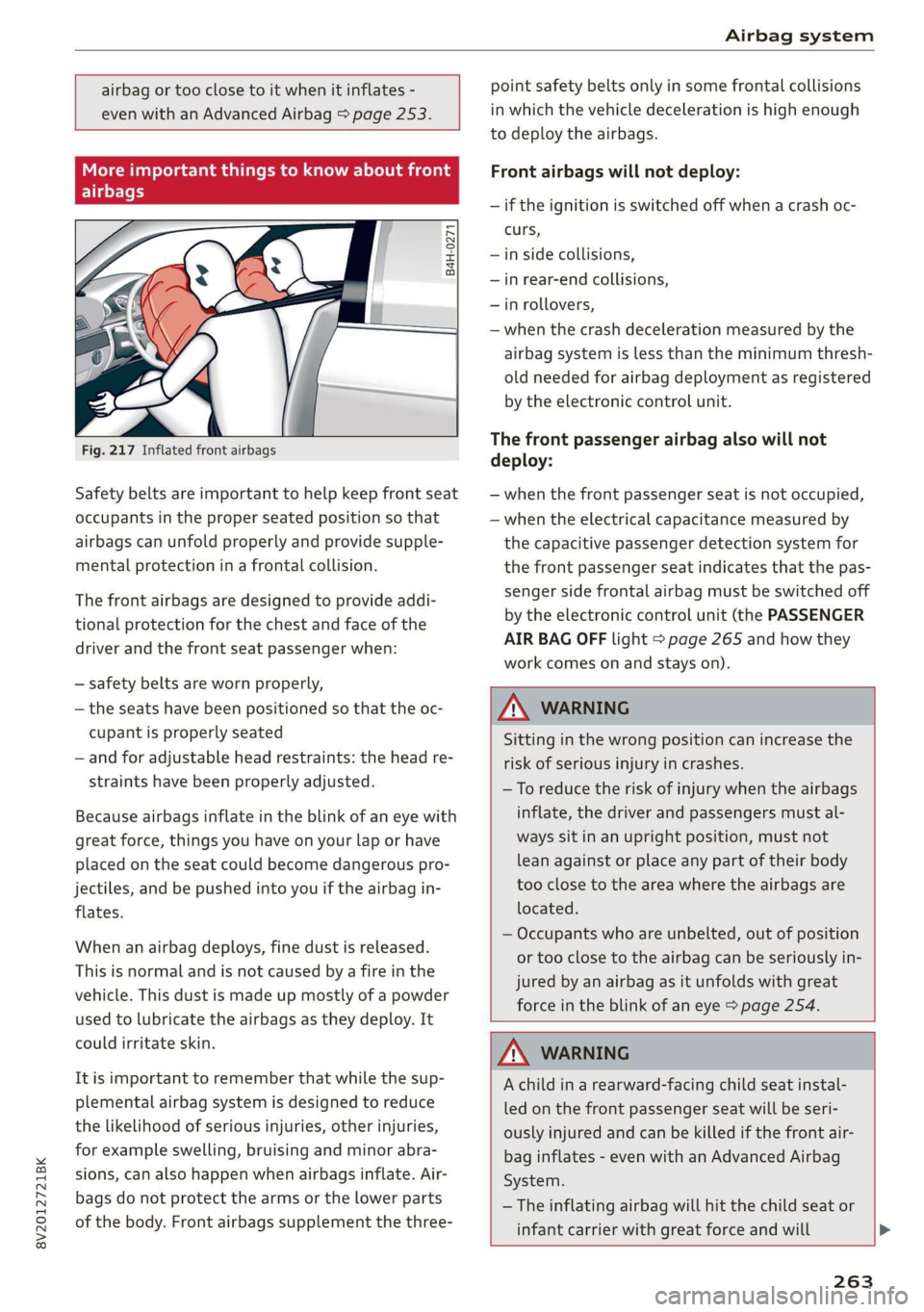
B4H-0271
Fig. 217 Inflated front airbags
Safety belts are important to help keep front seat
occupants in the proper seated position so that
airbags can unfold properly and provide supple-
mental protection in a frontal collision.
The front airbags are designed to provide addi-
tional protection for the chest and face of the
driver and the front seat passenger when:
— safety belts are worn properly,
— the seats have been positioned so that the oc-
cupant is properly seated
—and for adjustable head restraints: the head re-
straints have been properly adjusted.
Because airbags inflate in the blink of an eye with
great force, things you have on your lap or have
placed on the seat could become dangerous pro-
jectiles, and be pushed into you if the airbag in-
flates.
When an airbag deploys, fine dust is released.
This is normal and is not caused by a fire in the
vehicle. This dust is made up mostly of a powder
used to lubricate the airbags as they deploy. It
could irritate skin.
It is important to remember that while the sup-
plemental airbag system is designed to reduce
the likelihood of serious injuries, other injuries,
for example swelling, bruising and minor abra-
sions, can also happen when airbags inflate. Air-
bags do not protect the arms or the lower parts
of the body. Front airbags supplement the three-
point safety belts only in some frontal collisions
in which the vehicle deceleration is high enough
to deploy the airbags.
Front airbags will not deploy:
— if the ignition is switched off when a crash oc-
curs,
— in side collisions,
—in rear-end collisions,
—in rollovers,
— when the crash deceleration measured by the
airbag system is less than the minimum thresh-
old needed for airbag deployment as registered
by the electronic control unit.
The front passenger airbag also will not
deploy:
— when the front passenger seat is not occupied,
— when the electrical capacitance measured by
the capacitive passenger detection system for
the front passenger seat indicates that the pas-
senger side frontal airbag must be switched off
by the electronic control unit (the PASSENGER
AIR BAG OFF light > page 265 and how they
work comes on and stays on).
ZA\ WARNING
Sitting in the wrong position can increase the
risk of serious injury in crashes.
—To reduce the risk of injury when the airbags
inflate, the driver and passengers must al-
ways sit in an upright position, must not
lean against or place any part of their body
too close to the area where the airbags are
located.
— Occupants who are unbelted, out of position
or too close to the airbag can be seriously in-
jured by an airbag as it unfolds with great
force in the blink of an eye > page 254.
ZA\ WARNING
A child in a rearward-facing child seat instal-
led on the front passenger seat will be seri-
ously injured and can be killed if the front air-
bag inflates - even with an Advanced Airbag
System.
— The inflating airbag will hit the child seat or
infant carrier with great force and will
263
Page 266 of 400

Airbag system
smash the child seat and child against the
backrest, center armrest, door or roof.
— Always install rear-facing child seats on the
rear seat.
— If you must install a rearward facing child
seat on the front passenger seat because of
exceptional circumstances and the PASSEN-
GER AIR BAG OFF light does not come on
and stay on, immediately install the rear-
facing child seat in a rear seating position
and have the airbag system inspected by
your Audi dealer.
ZA WARNING
Objects between you and the airbag will in-
crease the risk of injury in a crash by interfer-
ing with the way the airbag unfolds or by be-
ing pushed into you as the airbag inflates.
— Never hold things in your hands or on your
lap when the vehicle is in use.
— Never transport items on or in the area of
the front passenger seat. Objects could
move into the area of the front airbags dur-
ing braking or other sudden maneuvers and
become dangerous projectiles that can
cause serious personal injury if the airbags
inflate.
— Never place or attach accessories or other
objects (such as cup holders, telephone
brackets, large, heavy or bulky objects) on
the doors, over or near the area marked
“AIRBAG” on the steering wheel, instrument
panel, seat backrests or between those
areas and yourself. These objects could
cause injury in a crash, especially when the
airbags inflate.
— Never recline the front passenger's seat to
transport objects. Items can also move into
the area of the side airbag or the front air-
bag during braking or in a sudden maneuver.
Objects near the airbags can become projec-
tiles and cause injury, particularly when the
seat is reclined.
— Never place or transport objects on the front
passenger seat. Objects on the front passen-
ger seat could cause the capacitive sensor in
the seat to signal to airbag system that the
seat is occupied by a person when it in fact is
not, or that the person on the seat is heavier
than he or she actually is. The change in
electric capacitance because of such objects
can cause the passenger front airbag to be
turned on when it should be off, or can
cause the airbag to work in a way that is dif-
ferent from the way it would have worked
without objects on the seat.
— Always make sure that there is nothing on
the front passenger seat that will cause the
capacitive passenger detection system in
the seat to signal to the Airbag System that
the seat is occupied by a person when it is
not, or to signal that it is occupied by some-
one who is heavier than the person actually
sitting on the seat. The presence of an ob-
ject could cause the passenger front airbag
to be turned on when it should be off, or
could cause the airbag to work in a way that
is different from the way it would have
worked without the object on the seat.
ZA\ WARNING
The fine dust created when airbags deploy can
cause breathing problems for people with a
history of asthma or other breathing condi-
tions.
—To reduce the risk of breathing problems,
those with asthma or other respiratory con-
ditions should get fresh air right away by
getting out of the vehicle or opening win-
dows or doors.
— If you are in a collision in which airbags de-
ploy, wash your hands and face with mild
soap and water before eating.
— Be careful not to get the dust into your eyes,
or into any cuts or scratches.
— If the residue should get into your eyes,
flush them with water.
264
Page 293 of 400
8V2012721BK
Child safety
your vehicle. To activate the convertible locking
retractor:
> Place the child restraint on a seat, preferably on
the rear seat.
> Slowly pull the belt all the way out.
> Route it around or through the child restraint
belt path > A\.
» Push the child safety seat down with your full
weight to get the safety belt really tight.
> Insert the belt tongue into the buckle for that
seating position.
> Guide the safety belt back into the retractor un-
til the belt lies flat and snug on the child safety
seat.
> You should hear a “clicking” noise as the belt
winds back into the inertia reel. Test the con-
vertible locking retractor by pulling on the belt.
You should no longer be able to pull the belt
out of the retractor. The convertible locking re-
tractor is now activated.
> Make sure that the red release button is facing
away from the child restraint so that it can be
unbuckled quickly.
> Pull on the belt to make sure the safety belt is
properly tight and fastened so that the seat
cannot move forward or sideways more than
one inch (2.5 cm).
ZA WARNING
Using the wrong child restraint or an improp-
erly installed child restraint can cause serious
personal injury or death in a crash.
— Always make sure that the safety belt retrac-
tor is locked when installing a child safety
seat. An unlocked safety belt retractor can-
not hold the child safety seat in place during
normal driving or in a crash.
— Always buckle the child safety seat firmly in
place even if a child is not sitting in it. A
loose child safety seat can fly around during
a sudden stop or ina crash.
— Always make sure the seat backrest to which
the child restraint is installed is in an up-
right position and securely latched into
place and cannot fold forward. Otherwise,
the seatback with the child safety seat at-
tached to it could fly forward in the event of
an accident or other emergency situation.
— Always read and heed all WARNINGS when-
ever using a child restrained in a vehicle is
being used > page 278. Special precautions
apply when installing a child safety seat on
the front passenger seat > page 254, Child
restraints on the front seat - some impor-
tant things to know.
Deactivating the convertible locking
retractor
The convertible locking retractor for child re-
straints will be deactivated automatically when
the belt is wound all the way back into the re-
tractor.
>» Press the red button on the safety belt buckle.
The belt tongue will pop out of the buckle.
> Guide the safety belt all the way back into its
stowed position.
Always let the safety belt retract completely into
its stowed position. The safety belt can now be
used as an ordinary safety belt without the con-
vertible locking retractor for child restraints.
If the convertible locking retractor should be ac-
tivated inadvertently, the safety belt must be un-
fastened and guided completely back into its
stowed position to deactivate this feature. If the
convertible locking retractor is not deactivated,
the safety belt will gradually become tighter and
uncomfortable to wear.
ZA WARNING
Improperly installed child safety seats in-
crease the risk of serious personal injury and
death ina collision.
— Never unfasten the safety belt to deactivate
the convertible locking retractor for child re-
straints while the vehicle is moving. You
would not be restrained and could be seri-
ously injured in an accident.
— Always read and heed all WARNINGS when-
ever using a child restrained in a vehicle is
being used > page 278. Special precautions
apply when installing a child safety seaton |>
291