instrument panel AUDI A3 CABRIOLET 2015 User Guide
[x] Cancel search | Manufacturer: AUDI, Model Year: 2015, Model line: A3 CABRIOLET, Model: AUDI A3 CABRIOLET 2015Pages: 302, PDF Size: 73.83 MB
Page 149 of 302
Airbag system 147
Since the circumstances will vary considerab ly
also at greater risk of injury or death
between on e collision and another , it is not
through contact with an inflating airbag .
possible to define a range of veh icle speeds
-If you are unrestrained, leaning forward,
that will cover every possible k ind and angle
sitting sideways or out of position in any
of impact that will always trigger the a irbags .
way, your risk of injury is much higher.
Important factors include, for example, the -You will a lso receive serious injuries and
nature (hard or soft) of the object which the could even be killed if you are up against
•
car h its, the ang le of impact, vehicle speed ,
• the airbag or too close to it when it in-
etc. The front airbags will a lso not inflate in
flates - even with an Advanced A irbag.
side or rea r collisions, or in ro ll-overs .
-To reduce the risk of injury when an air-
Alwa ys re memb er: Airbags will deploy only bag inflates, always wear safety belts
once, and only in certa in kinds of co llisions. properly
c::;, page 141, Safety belts
.
Your safety belts are always there to offe r pro- -
Always make certain that ch ildren age 12
tection in those s ituations in which airbags or younger always ride in the rear seat. If
are not supposed to deploy , or when they have children a
re not properly restrained , they
already deployed ; for example , when your ve- may be severe
ly inju red or killed when an
hide strikes or is struck by another vehicle af- airbag inf
lates.
ter the first collision . -
Never let ch ildren ride un restra ined o r
This is just one of the reasons why an a irbag is improperly restrained
in the vehicle . Ad-
just the front sea ts prope rly.
a supp lementary restraint and is not a s ubsti -
-Never ride with the back rest reclined .
tute for a safety belt . The airbag system
-Always sit as far as possible from the
works most effect ively when used with the
steering whee l or the instrument panel
safety belts. Therefore, always properly wear
c::;, page 127 . your safety belts c::;, page 138 .
- Always sit upright with your back against
A WARNING the backrest of yo ur seat.
- Never p lace your feet on the instrument
Sitting too close to the steer ing whee l or
panel or on the seat . Always keep both
instrument panel will dec rease the effec-
feet on the floor in front of the seat to
tiveness of the airbags and will inc rease
help prevent serious in ju ries to the legs
the risk of pe rsonal injury in a co llision.
and hips if the airbag in fla te s.
- Never si t closer than 10 inches (2S cm)
-Never recline the front passenger's sea t
to the stee ring wheel or instr ument pan-
to transport objects. Items can a lso
el. move into the area of the s ide a irb ag or
- If you cannot si t mo re than 10 inches
the front airbag during bra king or in a
( 2 5 cm) from the steer ing whee l, investi-
sudden maneuver. Objects near the air-
ga te whethe r adap tive equipmen t may
bags can become projectiles and cause
be available to help you reach the pedals injury when an airbag inflates.
and increase your seating distance from
the steering wheel.
A WARNING
- All veh icle occupants and especia lly chil -
dren m ust be restrained properly when- A
irbags that have deployed in a crash must
ever riding in a vehicle . An unrestra ined be replaced.
or improperly restrained child could be -
Use on ly orig inal equipment airbags ap-
M injured by striking the inter ior or by be- proved by Audi and installed by a trained • N technician who has the necessary too
ls ~ ,.... ing ejected from the vehicle during a > co sudden maneuver or impact . An unre-...... \!) ..,., strained or imp roperly rest rained child is ...... ..,., ......
Page 151 of 302
M N ,....
> co ,...., \!) 1.1'1 ,...., 1.1'1 ,....,
Fo r exa mple, the airbag may depl oy if:
-a small child that is heavier than a typical 1
year-o ld child is on the front passenger seat
(regardless of whether the child is in one of
the chi ld seats listed
page 171), or
- a ch ild who has outgrown child rest raints is
on the front passenger seat.
If the front passenger airbag is turned off, the
P ASS ENGER AIR B AG OFF light comes on in
the instrument cluster and stays on.
If the front passenger airbag deploys, the
Federal Standard requires the airbag to meet
the "low risk" deployment criter ia to reduce
the r isk of injury through interaction with the
airbag. "Low risk" deployment occurs in those
crashes that take place at lower decelerations
as defined in the electronic control unit
r::> page 159, PASSENGER AIR BAG OFF light.
Always remember, a chi ld seat or infant carri
er insta lled on the front seat may be struck
and knocked out of position by the rapidly in
flating passenger's airbag in a frontal colli
sion. The airbag could greatly reduce the ef
fectiveness of the child restraint and even se
riously injure the child during inflat ion.
For this reason, and because the back seat is
the safest place for children - when properly
restrained according to their age and size - we
strongly recommend that children always sit
in the back seat
r::> page 169, Child Safety .
A WARNING
A child in a rearward-facing child seat in
stalled on the front passenger seat will be
ser iously injured and can be killed if the
front airbag inflates -even with an Ad
vanced Airbag System .
- T he inflating airbag will hit the child seat
or infant carrier with great force and wi ll
smash the child seat and child against
the backrest, center armrest, door or roof.
- Always install rear-facing child seats on
the rear seat.
- If you must install a rearward facing
child seat on the front passenger seat
-
A irbag system 149
because of exceptional circumstances
and the
PA SSENGER AIR BAG OFF light
does not come on and stay on, immed i
ately install the rear-fac ing child seat in a
rear seat ing pos ition and have the airbag
system inspected by your A udi dealer.
- Forward-facing child seats installed on the front passenger's seat may interfere
with the dep loyment of the a irbag and
cause serious persona l injury to the
child.
A WARNING
If, in except iona l circumstances, you must
install a forward -facing child restraint on
the front passenger's seat:
- Always ma ke s ure the forward-facing
seat has been designed and certified by its manufacturer for use on a front seat
with a passenger front and s ide a irbag.
- Never put the forward-facing child re
straint up against or very near the instru
ment panel.
- Always move the passenge r seat into its
rearmost pos ition in the seat's fore and
aft ad justment range, as far away from
the airbag as possible before installing
the forward-fac ing ch ild restra int. The
backrest must be adjusted to an upright
position.
- Make sure that the
PASSENGER AIR BAG
OFF
l ight comes on and stays on all the
time wheneve r the ig nit ion is switched
on.
A WARNING
To reduce the ri sk of ser ious injury, ma ke
sure that the
PASSENGER AIR BAG OFF
light wi ll be displayed whenever a child re
straint is insta lled on the front passenger
seat and the ignition is switched on.
- If the PASSENGER AIR BAG OF F light
does not stay on, perform the checks de
scribed
¢ page 158, Monitoring the Ad-
vanced Airbag System.
~
•
•
•
Page 159 of 302
M N ,....
> co ,...., \!) 1.1'1 ,...., 1.1'1 ,....,
or the lower parts of the body. Front airbags
supp lement the three-point safety belts only
in some frontal collisions in which the vehicle
dece leration is high enough to deploy the air
bags.
F ront airbag s will no t deplo y:
- if the ignition is switched off when a crash
occurs,
- in side collisions,
- in rear-end collisions,
- in rollovers,
- when the crash deceleration measured by
the a irbag system is less than the m inimum
threshold needed for airbag deployment as
registered by the electronic control unit.
The f ront pas seng er airbag al so will n ot
deploy:
- when the front passenger seat is not occu
pied,
- when the electrical capac itance measured by
the capacitive passenger detect io n system
for the front passenger seat indicates that
the passenger side frontal airbag must be switched off by the electronic control unit
(the
P AS SENGER A IR BA G OFF light
c:> page 159 and how they work comes on
and stays on).
A WARNING
Sitting in the wrong position can increase
the risk of serious injury in crashes.
- To reduce the r isk of injury when the air
bags inflate, the driver and passengers
must always sit in an upright posit ion,
must not lean against or place any part
of the ir body too close to the area where
the a irbags are located.
- Occupants who a re unbelted, out of posi
t ion or too close to the airbag can be se
riously injured by an airbag as it unfolds
with great force in the blink of an eye
c:> page 148 .
A WARNING
A child in a rearward-facing child seat in
stalled on the front passenger seat will be
-
A irbag system 157
seriously injured and can be killed if the
front airbag inflates -even w ith an Ad
vanced A irbag System.
- The inflating airbag will hit the ch ild seat
or infant carrier with great force and will
smash the child seat and child against
the backrest, center armrest, door or
roof.
- Always install rear-fac ing ch ild seats on
the rear seat.
- If you must install a rearward fac ing
child seat on the front passenger seat because of exceptional circumstances
and the
P A SSENGER AIR BAG OFF light
does not come on and stay on, immed i
ately insta ll the rear-fac ing child seat in a
rear seat ing position and have the airbag
system inspected by your A udi dealer.
A WARNING
r---------
O b j e cts between you and the airbag will
increase the risk of injury in a crash by in
terfering with the way the airbag unfolds
or by be ing pushed into you as the airbag
inflates.
- Never hold things in your hands or on
your lap when the veh icle is in use.
- Never transport items on or in the area
of the front passenger seat. Objects
could move into the area of the front air bags during braking or other sudden ma
neuvers and become dangerous projec
tiles that can cause ser ious personal in
jury if the a irbags inflate.
- Never p lace or attach accesso ries o r oth
er objects (such as cup holders, te le
phone b rac kets, large, heavy or bulky ob
jects) on the doors, over o r near the area
marked "AIRBAG" on the steering wheel,
instrument panel, seat backrests or be
tween those areas and yourself . These
objects could cause injury in a crash, es pecially when the airbags inflate.
- Never recline the front passenger's seat
to transport objects. Items can also
move into the area of the s ide a irbag or
the front a irbag during braking or in a
•
•
Page 161 of 302
_& WARNING
An airbag system that is not functioning
properly cannot provide supplemental pro
tection in a frontal crash.
- If the airbag indicator light¢
page 20
turns on when the vehicle is being used,
have the system inspected immediately
by you r auth o riz ed Aud i dea le r. It is pos
sible that the airb ag will inf late when it
is not s upposed to, or w ill not inflate
when it sho uld .
PASSENGER AIR BAG OFF light
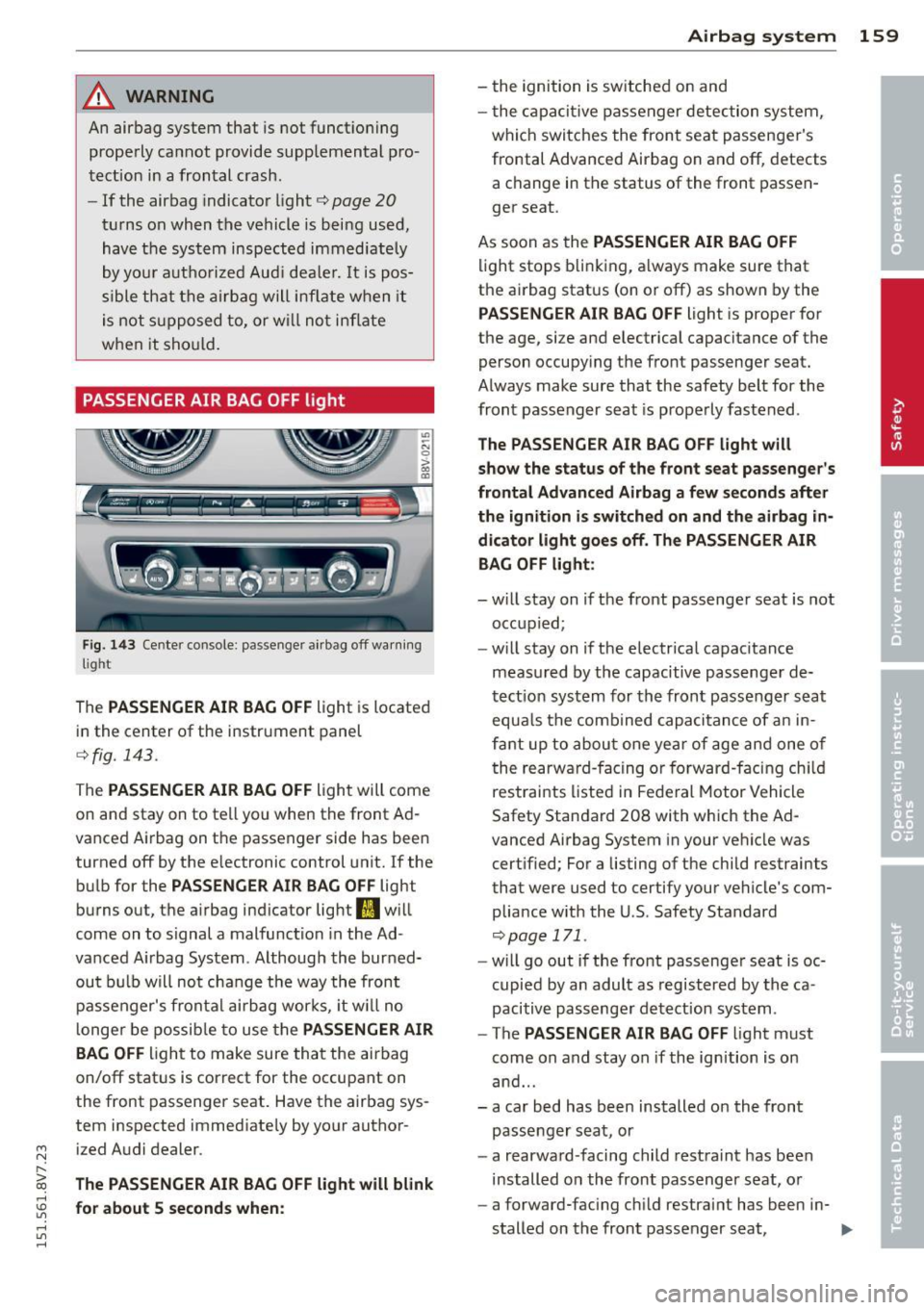
Fig. 14 3 Center console: passenger a irbag off warnin g
light
The PASSENGER AIR BAG OF F light is located
in the center of the instrument panel
¢fig. 143.
The PASSENGER AIR BAG OFF light will come
on and stay on to tell yo u when the front Ad
vanced A irbag on t he passenger side has been
turned off by the e lectronic control unit. If the
bulb for the
PASSENGER AIR BAG OFF light
burns out, the a irbag indicator light
fl w ill
come on to signal a malfunction in the Ad
vanced A irbag System . Although the bur ned
out b ulb will not cha nge the way the front
passenger's frontal airbag wor ks, it w ill no
l onge r be possib le to use the
PAS SENGER AIR
BAG
OFF light to make sure that the airbag
on/off stat us is correct for the occupant on
the front passenger seat. Have the airbag sys
tem inspected immed iate ly by your author-
~ ized Audi dealer.
r--.
iii The PASSENGER AIR BAG OFF light will blink rl
:5: for about 5 seconds when :
rl l/1 rl
Airba g sy stem 159
- the ignition is sw itched on and
- t he capaci tive passenger detection system,
which switches the front seat passenger's
frontal Advanced Airbag on and off, detects a change in the status of the front passen
ger seat.
As soon as the
PASSENGER AIR BAG OFF
light stops blink ing, a lways make sure that
the ai rbag status (on or off) as shown by the
PASSENGER AIR BAG OFF light is proper for
the age, size and electrical capacitance of the
person occupying the front passenger seat.
Always make sure that the safety belt for the
front passenger seat is properly fastened.
The PASSENGER AIR BAG OFF l ight will
show the status of the front sea t passenger 's
fronta l Advan ced Airbag a fe w se conds after
th e ignition i s sw itched on and th e airbag in
dicator light goes off. The PASSENGER AIR
BAG
OFF light :
- will stay on if the front passenger seat is not
occupied;
- will stay on if the electrical capacitance
meas ured by the capacitive passenge r de
tect io n system for the fron t passenger s eat
equa ls the comb ined capacitance of an in
fa nt up to about one year of age and one of
t he rearwa rd- facing or forward-fa cing ch ild
restraints listed in Fede ral Motor Vehicle
Safety Standard 208 with which the Ad
vanced Airbag System in your vehicle was
cert ified; For a listing of the child restraints
that were used to certify your vehicle's com
pliance w ith the U.S. Safety Standard
~page 171 .
-will go out if the fro nt passenge r seat is oc
cupied by an adult as registered by the ca
pacitive passenger detection system .
- The
PASSENGER AIR BAG OFF light must
come on and stay on if the ignition is on
and ...
- a car bed has been installed on the front passenger seat, or
- a rearwa rd-facing child rest ra int has been
installed on the front passenger seat, or
- a forward-facing child restrai nt has been in-
stalled on the front passenger seat, .,,.
Page 164 of 302
162 Airbag system
Repair, care and disposal of the airbags
Parts of the airbag system are installed at
many different places on your Audi. Installing,
removing, servicing or repairing a part in an
area of the vehicle can damage a part of an
airbag system and prevent that system from
working properly in a collision.
There are some important things you have to know to make sure that the effectiveness of
the system will not be impaired and that dis
carded components do not cause injury or pol lute the environment.
A WARNING
Improper care, servicing and repair proce
dures can increase the risk of personal in
jury and death by preventing an airbag from deploying when needed or deploying
an airbag unexpectedly:
- Never cover, obstruct, or change the
steering wheel horn pad or airbag cover
or the instrument panel or modify them
in any way.
- Never attach any objects such as cup
holders or telephone mountings to the
surfaces covering the airbag units.
- For cleaning the horn pad or instrument
panel, use only a soft, dry cloth or one
moistened with plain water. Solvents or
cleaners could damage the airbag cover
or change the stiffness or strength of the material so that the airbag cannot de
ploy and protect properly.
- Never repair, adjust, or change any parts
of the airbag system.
- All work on the steering wheel, instru
ment panel, front seats or electrical sys
tem (including the installation of audio
equipment, cellular telephones and CB
radios, etc .) must be performed by a
qualified technician who has the training
and special equipment necessary.
- For any work on the airbag system, we
strongly recommend that you see your
authorized Audi dealer or qualified work
shop. -
Never modify the front bumper or parts
of the vehicle body.
- Always make sure that the side airbag
can inflate without interference:
- Never install seat covers or replace
ment upholstery over the front seat
backs that have not been specifically
approved by Audi.
- Never use additional seat cushions that
cover the areas where the side airbags
inflate.
- Damage to the original seat covers or
to the seam in the area of the side air
bag module must always be repaired
immediately by an authorized Audi
dealer.
- The airbag system can deploy only once.
After an airbag has been deployed, it must be replaced with new replacement
parts designed and approved especially
for your Audi model version. Replace
ment of complete airbag systems or air
bag components must be performed by
qualified workshops only . Make sure that
any airbag service action is entered in
your Audi Warranty
& Maintenance book
let under
AIRBAG REPLACEMENT RE
CORD.
- For safety reasons in severe accidents,
the alternator and starter are separated
from the vehicle battery with a pyrotech nic circuit interrupter.
- Work on the pyrotechnic circuit inter
rupter must only be performed by a
qualified technicians who have the ex perience, information and special tools
necessary to perform the work safely.
- If the vehicle or the circuit interrupter
is scrapped, all applicable safety pre
cautions must be followed.
@) For the sake of the environment
Undeployed airbag modules and preten
sioners might be classified as Perchlorate
Material -special handling may apply, see
Page 165 of 302
....,
N
r--. > co
rl I.O
"' rl
"' rl
www.dtsc.ca.gov/hazardouswaste/perchlorate. When the vehicle or parts of the
restraint system includ ing airbag modules
and safety belts with pretensioners are
scrapped, all applicable laws and regula
tions must be observed. Your authorized
Audi dealer is familiar with these require
ments and we recommend that you have
your dealer perform this serv ice for you.
Other things that can affect Advanced
Airbag performance
Changing the vehicle's suspension system can
change the way that the Advanced Airbag Sys
tem performs in a crash. For example, using
tire-r im combinations not approved by Audi,
lowering the vehicle, changing the stiffness of
the suspension, including the springs, suspen
sion struts, shock absorbers etc. can change
the forces that are measured by the airbag sensors and sent to the electron ic control
unit. Some suspension changes can, for exam
ple, increase the force levels measured by the
sensors and make the airbag system deploy in
crashes in which it would not deploy if the
changes had not been made. Other kinds of
changes may reduce the force levels meas
ured by the sensors and prevent the airbag
from deploying when it should .
A WARNING
Changing the vehicle's suspension includ
ing use of unapproved tire-rim combina
tions can change Advanced Airbag per
formance and increase the risk of serious
personal injury in a crash.
- Never install suspension components
that do not have the same performance characteristics as the components origi
nally insta lled on your vehicle.
- Never use tire-rim combinations that
have not been approved by Audi.
Airbag system 163
Knee airbags
Description of knee airbags
Applies to vehicles: wi th knee airbags
The knee airbag system can provide supple
mental protection to properly restrained
front seat occupants.
Fig. 144 Driver 's kn ee airbag
The dr iver knee airbag is in the instrument
panel underneath the steering wheel
¢
fig. 144, the airbag for the passenger is at
about the same height in the instrument pan
el underneath the glove compartment.
The knee airbag offers additional protection
to the driver's and passenger's knees and up
per and lower thigh areas and supplements
the protection provided by the safety belts.
If the front airbags deploy, the knee airbags
also dep loy in frontal collisions when the de
ployment threshold stored in the control unit
is met¢
page 156, More important things to
know about front airbags.
In addition to their normal safety function,
safety belts help keep the driver or front pas
senger in position in a frontal collision so that
the airbags can provide supplemental protec
tion.
The airbag system is not a substitute for your
safety belt. Rather, it is part of the overall oc
cupant restraint system in your vehicle. Al
ways remember that the airbag system can
only help to protect you if you are wearing
your safety be lt and wearing it properly. This
is why you should always wear your safety
belt, not just because the law requires you to
do so
¢page 138, General notes. ..,_
Page 166 of 302
164 Airbag system
Remember too, airbags will deploy only once
and on ly in certain k inds of accidents -your
safety belts are always there to offer protec
tion in those accidents in which airbags are
not supposed to deploy or when they have al
ready deployed, for example when your veh i
cle strikes or is struck by another after the
first coll is ion .
This is just one of the reasons why an airbag is
not a substitute for the safety belt . The airbag
system works most effectively when used with
the safety belts . Therefore, always wear your
safety be lts correctly .
It is important to remember that while the
supplemental knee airbag system is designed
to reduce the likelihood of serious injuries,
other injuries , for example , swell ing, bruising
and minor abrasions and friction burns can al
so occur when an airbag inflates.
The knee airbag system basically consists
of:
- The elec tronic con trol module
- T wo inflatab le airbags (airbag and gas gen-
erator), one fo r the driver and one for the
front passenger
- T he airbag indicator light in the instrument
panel
The knee airbag system will not deploy:
-when the ign ition is switched off
- in frontal collisions when the deceleration
measured by the control unit is too low
- in side collisions
- in rear-end collisions
- in rollovers
- i n the event of a system malfunction (warn-
i ng/indicator light is on)
Q page 20.
.8, WARNING
-Safety belts and the airbag system can
only provide protection when occupants
are in the proper seating posit ion
Q page 156.
-If the airbag indicator light¢ page 20
tur ns on when the vehicle is being used,
have the system inspected immediately
-
by your authorized Audi dealer. It is pos
sible that the airbag will inflate when it
is not supposed to, or will not inflate
when it should .
How knee airbags work
Applies to vehicles: wi th knee airbags
The risk of injury to the leg area can be re
duced by fully inflated knee airbags.
Fig . 145 Inflated a irbags protecting in a fronta l co lli
sion
The knee airbag system has been designed so
that the airbags for the driver and front pas
senger deploy in certa in but not all frontal
collisions.
If the front airbags dep loy, the knee airbags
also dep loy in frontal collisions when the de
ployment threshold stored in the control unit
is met.
When the system deploys, the airbags fill
with a compressed propellant gas, and inf late
between the lower part of the instrument
panel and the driver and the lower part of the
instrument panel and the front passenger
Qpage 156, fig. 142.
Although they are not a soft pillow, they can
"cushion" the impact and in th is way they can
help to reduce the risk of injury to the lower
extremit ies .
All of th is takes place in the blink of an eye, so
fast that many people don't even realize that
the a irbags have deployed . The airbags also
i nflate with a great deal of force and it is im
portant for occupant safety that nothing
shou ld be in their way when they deploy. ..,.
Page 167 of 302
....,
N
r--. > co
rl I.O
"' rl
"' rl
Fully inflated airbags in combination with
properly worn safety belts slow down and lim
it the occupant's forward movement and help
to reduce the risk of injury.
Important safety instructions on the
knee airbag system
App lies to vehicles: with knee airbags
Airbags are only supplemen tal restraints. Al
ways wear safety belts correctly and ride in a
proper seating position.
There is a lot that you and your passengers
must know and do to help the safety belts and
airbags to provide supplemental protection .
A WARNING
An inflating knee airbag can cause serious
injury. Wearing safety belts incorrectly and
improper seating positions increase the
risk of serious personal injury and death
whenever a vehicle is being used.
- The knee airbag system cannot protect
you properly if you are seated too close
to any of the airbag locations. When ad
justing their seat positions, it is impor
tant that both the driver and the front passenger keep their upper bodies and
knees at the following minimum safe
distances:
- at least 10 inches (25 cm) between the
chest and the steering wheel/instru
ment panel.
- at least 4 inches (10 cm) between the
knees and the lower part of the instru
ment panel.
- The risk of personal injury increases if
you lean forward or to the side, or if the
seat is improperly positioned and you are
not wearing your safety belt. The risk in
creases even more should the airbag de ploy.
- Always make sure that the knee airbag can inflate without interference. Objects
between you and the airbag can increase
the risk of injury in an accident by inter
fering with the way the airbag deploys or
Airbag system 165
by being pushed into you as the airbag
deploys.
- Never let anybody, especially children
or animals ride in the footwell in front
of the passenger seat.
If the airbag de
ploys, this can result in serious or fatal
injuries.
- Never carry objects of any kind in the
footwell area in front of the driver's or
passenger's seat. Bulky objects (shop
ping bags, for example) can interfere
with or prevent proper deployment of
the airbag. Small objects can be
thrown through the vehicle if the air bag deploys and injure you or your pas
sengers .
- Make sure there are no cracks, deep scratches or other damage in the area of
the instrument panel where the knee air
bags are located.
- If children are incorrectly seated, their
risk of injury increases in a collision
~page 169, Child Safety .
Side airbags
Description of side airbags
The airbag system can provide supplemental
protection to properly restrained occupants.
Fig. 146 Side a irbag locatio n in the driver's seat
The side airbags are located in the sides of the
front seat backrests~
fig. 146 ..
The side airbags installed for the front seating
positions have been designed and certified to
help reduce the risk of injury that can be
caused by airbags when they inflate, particu -
larly when the occupant sitting next to it is .,..
Page 173 of 302
M N ,....
> co ,...., \!) ..,.,
,...., ..,., ,....,
-Always read and heed all WARNINGS
whenever using a child restraint in ave
hicle
¢ page 138, Safety belts,
¢ page 146, Airbag system and
¢ page 169, Important things to
know.
(D Tips
Always replace child restraints that were
installed in a vehicle during a crash. Dam
age to a child restraint that is not visible
could cause it to fail in another collision
situation.
Advanced front airbag system and children
Your vehicle is equipped with a front "Ad
vanced Airbag System" in compliance with United States Federal Motor Vehicle Safety
Standard (FMVSS) 208 as applicable at the
time your vehicle was manufactured .
The Advanced Airbag system in your vehicle
has been certified to meet the "low-risk" re
quirements for 3-and 6-year old children on
the passenger side and small adults on the
driver side. The low risk deployment criteria
are intended to reduce the risk of injury
through interaction with the airbag that can
occur, for example, by being too close to the
steering wheel and instrument panel when
the airbag inflates . In addition, the system
has been certified to comply with the "sup
pression" requirements of the Safety Stand
ard, to turn off the front airbag for infants up
to 12 months who are restrained on the front passenger seat in child restraints that are list
ed in the Standard .
Even though your vehicle is equipped with an
Advanced Airbag system, all children, espe
cially those 12 years and younger, should al
ways ride in the back seat properly restrained
for their age and size. The airbag on the pas
senger side makes the front seat a potentially
dangerous place for a child to ride. The front
seat is not the safest place fo r a child in a for
ward-facing child safety seat. It can be a very
Child Safety 1 71
dangerous place for an infant or a larger child
in a rearward-facing seat.
The vehicle's Advanced Airbag System has a
capacitive passenger detection system in the
front passenger seat cushion that can detect
the presence of a baby or a child in a child re
straint system on this seat.
The capacitive passenger detection system
registers the changes that result in an electri
cal field when a child, a child restraint, and a
baby blanket are on the front passenger seat .
The change in the measured capacitance due
to the presence of a child, a child restraint,
and a baby blanket on the front passenger
seat is related to the child restraint system resting on the seat . The measured capacitance
of a child restraint system varies depending
on the type of system and specific make and model.
The electrical capacitance of the various
types, makes, and models of child restraints
specified by the U.S.National Highway Traffic
Safety Administration (NH TSA) in the relevant
safety standard are stored in the Advanced
Airbag System control unit together with the capacitances typical of infants and a 1-year
old child. When a child restraint is used on the
front passenger seat with a typical 1 year-old infant, the Advanced Airbag System compares
the capacitance measured by the capacitive passenger detection system with the data
stored in the electronic control unit.
Child restraints and Advanced front
airbag system
Regardless of the child restraint that you use,
make sure that it has been certified to meet
United States Federal Motor Vehicle Safety
Standards and has been certified by its manu
facturer for use with an airbag. Always be sure
that the child restraint is properly installed at
one of the rear seating positions. If in excep
tional circumstances you must use it on the
front passenger seat, ca refully read all of the
information on child safety and Advanced Air-
bags and heed all of the applicable ..,.
•
•
•
Page 217 of 302
....,
N
r--. > co
rl I.O
"' rl
"' rl
fan belt or other moving components or do not come into contact w ith hot
components. T ie back long hair before
beginning work and do not wear cloth ing that can hang down into the en
g ine .
- Limit your exposure to exhaust and
chemicals to as short a time as poss ible
c::;, &. .
& WARNING
California P ropos ition 65 Warning:
- Engine exhaust, some of its constituents,
and certain veh icle components conta in
o r emit chemicals known to the State of
Californ ia to cause cancer and b irth de
fec ts and reproduct ive harm . In addition,
certain fluids conta ined in vehicles and
certain products of component wear con
tain or emit chemicals known to the State of California to cause cancer and
birth defects or other reproductive harm.
- Battery posts, terminals and related ac
cessories contain lead and lead com pounds , chemicals known to the State of
Californ ia to cause cancer a nd reproduc
t ive harms . Wash hands after handling .
(D Note
When filling fluids, be sure not to m ix the
fluids up. Othe rwise severe malfunctions
and e ng ine damage will occur .
@ For the sake of the environment
You should regularly check the ground un
der your vehicle in orde r to detect leaks
quickly . If there are visible spots from oil
or other fluids, b ring your veh icle to an au
thori zed Audi dealer or qualified repair fa
cility to be checked .
Checking and Fillin g 215
Opening the hood
The hood is released from the interior .
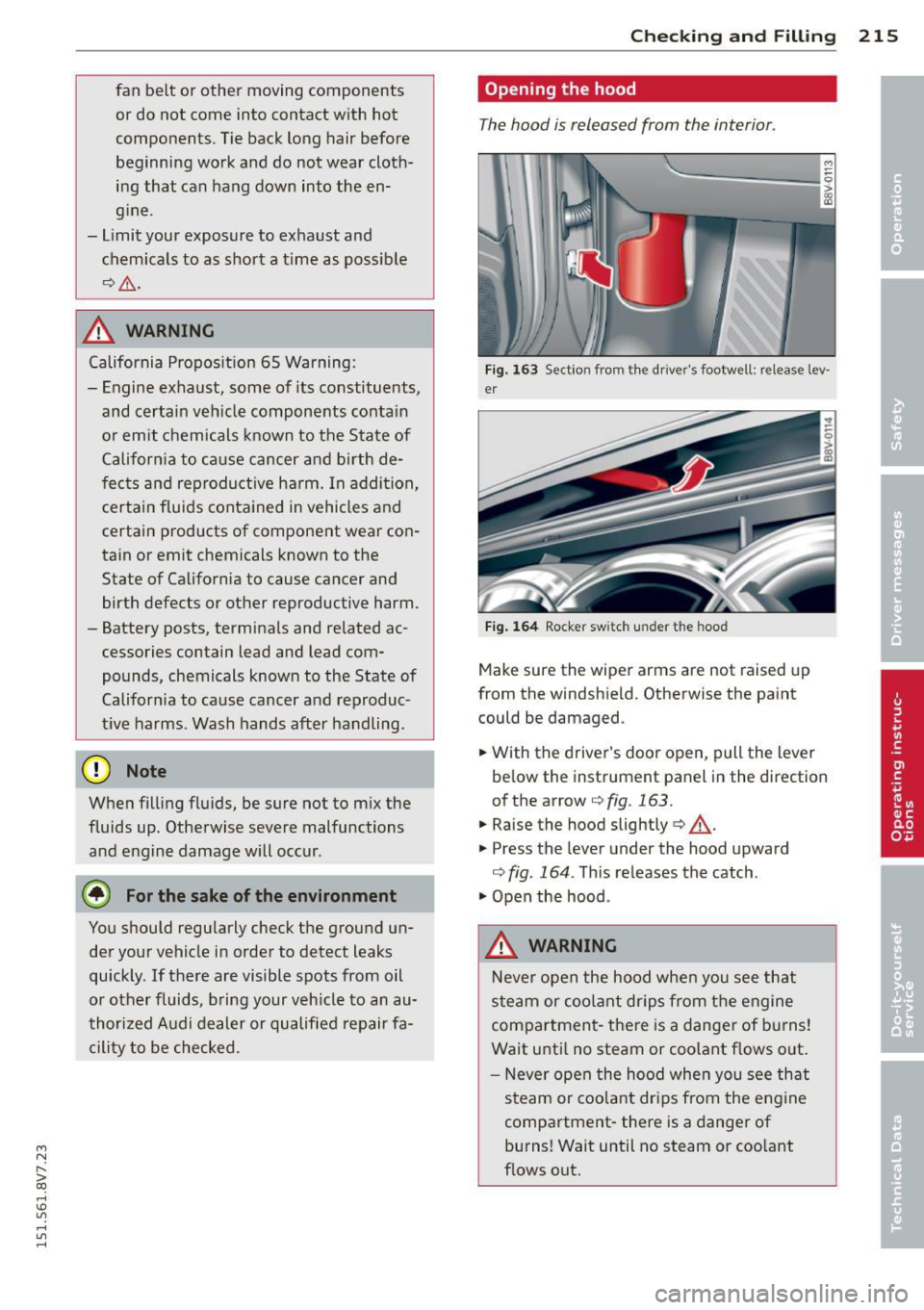
Fig. 163 Se ct io n fro m t he dr iver 's footwell : release Lev ·
er
Fi g. 1 64 Rocke r sw it ch under t he hood
Make sure the wiper arms are not raised up
from the windshield. Otherwise the paint could be damaged .
... With the drive r's door open, pull the lever
be low the instrument panel in the direction
of the arrow
¢ fig. 163.
.,. Raise the hood slightly c::;, ,A .
.,. Press the lever under the hood upward
¢ fig . 164 . This releases the catch .
.,. Open the hood .
& WARNING
Never open the hood whe n you see that
steam or coo lant drips from the engine
compartment -there is a danger of b urns!
Wait unti l no steam or coolant flows o ut.
- Never open the hood when you see that
steam or coolant dr ips from the engine
compartment- there is a danger of burns! Wait until no steam or coo lant
flows out.
-