tire pressure AUDI A3 CABRIOLET 2016 User Guide
[x] Cancel search | Manufacturer: AUDI, Model Year: 2016, Model line: A3 CABRIOLET, Model: AUDI A3 CABRIOLET 2016Pages: 272, PDF Size: 67.88 MB
Page 214 of 272
Tires and wheels
This can especially have a nega
t ive effect on handling, on the
risk aquaplaning when driving
through water, when driving
through curves and when brak ing, which increases the risk of
an accident.
Tire pressure
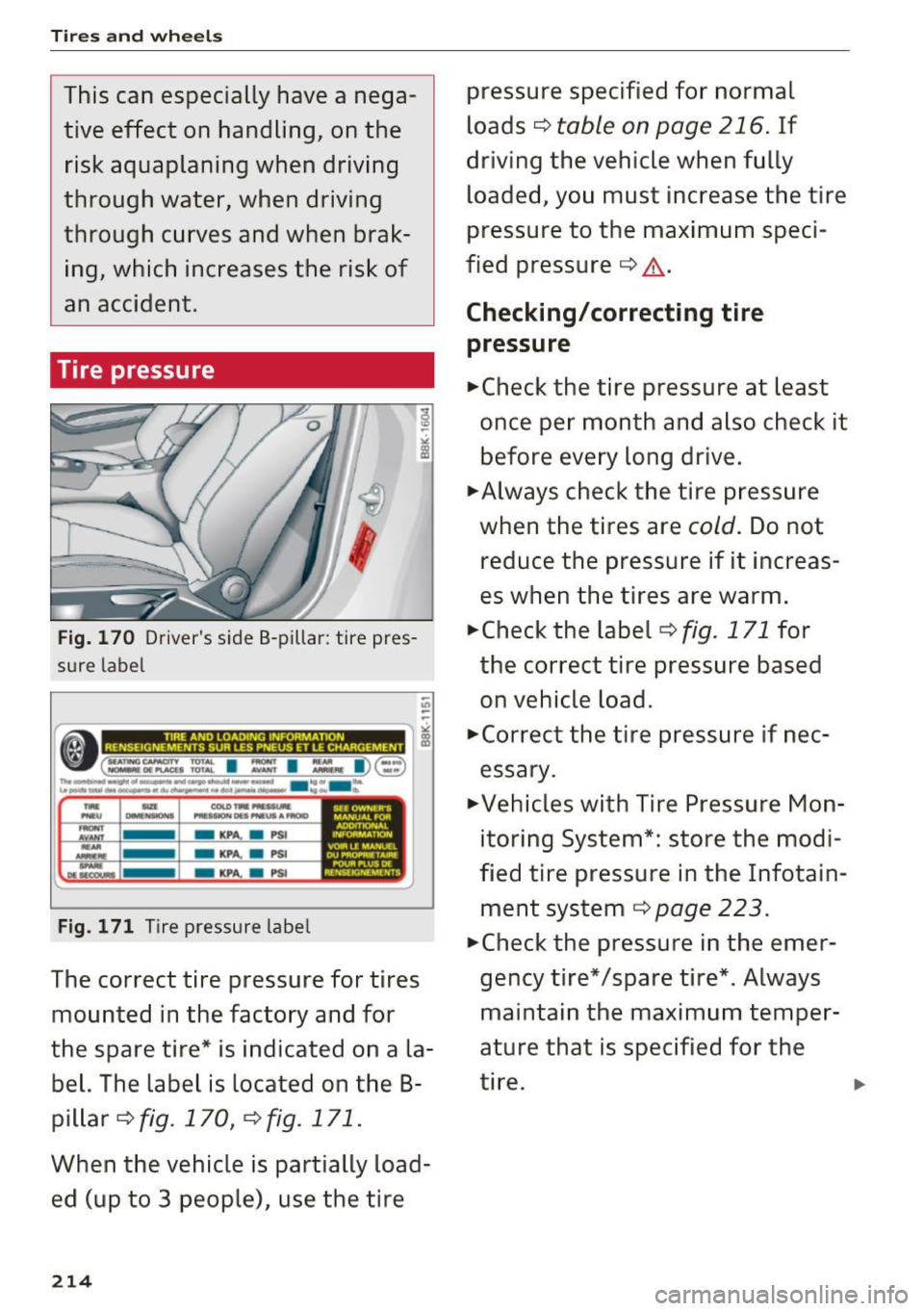
Fig. 170 Dr iver's side 8-pillar: tire pres
sur e lab el
-"' -r,...-------------~
•c==. ~:t I :'.!: I :,. 1)§ l il! ................. .._.. ....................... .... . .. , '--................................ ,............ .... -.
TN 11D COt..O TN Nl&AUM. ,_U ~ ,,,...,..00,....AMOID
- KP aPSt
- KPA. a PSI
- KPA. a PSl
Fig. 171 Tire pressure label
SIE OWNl:llt'S MAN UAL FOR AD0010NAl 1NfOAMAT101-4 ~l[M.ANUCL DU PMCM"M T Al!IJ[ POW. ,tU$ Dl MNSC.JONlMtNTS
The correct tire pressure for tires
mounted in the factory and for
the spare tire* is indicated on a la
bel. The label is located on the B
pillar
¢fig. 170, ¢fig. 171.
When the vehicle is partially load
ed (up to 3 people), use the tire
214
pressure specified for normal
loads¢
table on page 216. If
driving the vehicle when fully loaded, you must increase the tire
pressure to the maximum speci
fied pressure ¢.&, .
Checking/correcting tire
pressure
.,.Check the tire pressure at least
once per month and also check it
before every long drive .
.,.Always check the tire pressure
when the tires are
cold . Do not
reduce the pressure if it increas
es when the tires are warm .
.,.Check the label ¢
fig. 171 for
the correct tire pressure based
on vehicle load.
.,.Correct the tire pressure if nec
essary .
.,.Vehicles with Tire Pressure Mon
itoring System*: store the modi
fied tire pressure in the Infotain
ment system ¢
page 223.
.,.Check the pressure in the emer
gency tire* /spare tire*. Always
maintain the maximum temper
ature that is specified for the
tire. .,.
Page 215 of 272
<( a:, ... N .... N ... 0
s: a:,
A WARNING
Always adapt the tire pressure
to your driving style and vehicle load.
-Overloading can lead to loss of
vehicle control and increase the risk of an accident. Read
and follow the important safe
ty precautions in¢
page 216,
Tires and vehicle load limits.
-The tire must flex more if the
tire pressure is too low or if
the vehicle speed or load are
too high. This heats the tire up
too much. This increases the risk of an accident because it
can cause the tire to burst and result in loss of vehicle con
trol.
-Incorrect tire pressure in creases tire wear and has a
Tire pressure table
Please note that the information
contained in the following table
was correct at the time of print
ing, and the information is sub
ject to change. If there are differ
ences between this information
and the tire pressures specified
on the label on the driver's side B pillar, always follow the specifica-
Tires and wheels
negative effect on driving and
braking behavior, which in
creases the risk of an accident.
Replace lost valve caps to re
duce the risk of damage to the
tire valves.
@ For the sake of the environment
Tire pressure that is too low in
creases fuel consumption.
(1) Tips
Audi recommends using the
tire pressure specified for a normal load ¢
table on
page 216
or for a full load
when the vehicle is partially
loaded.
tion on the B-pillar label
¢ page 214, fig. 170.
Make sure that the tire designa
tion on your tire matches the des ignation on the tire pressure label
and the tire pressure table.
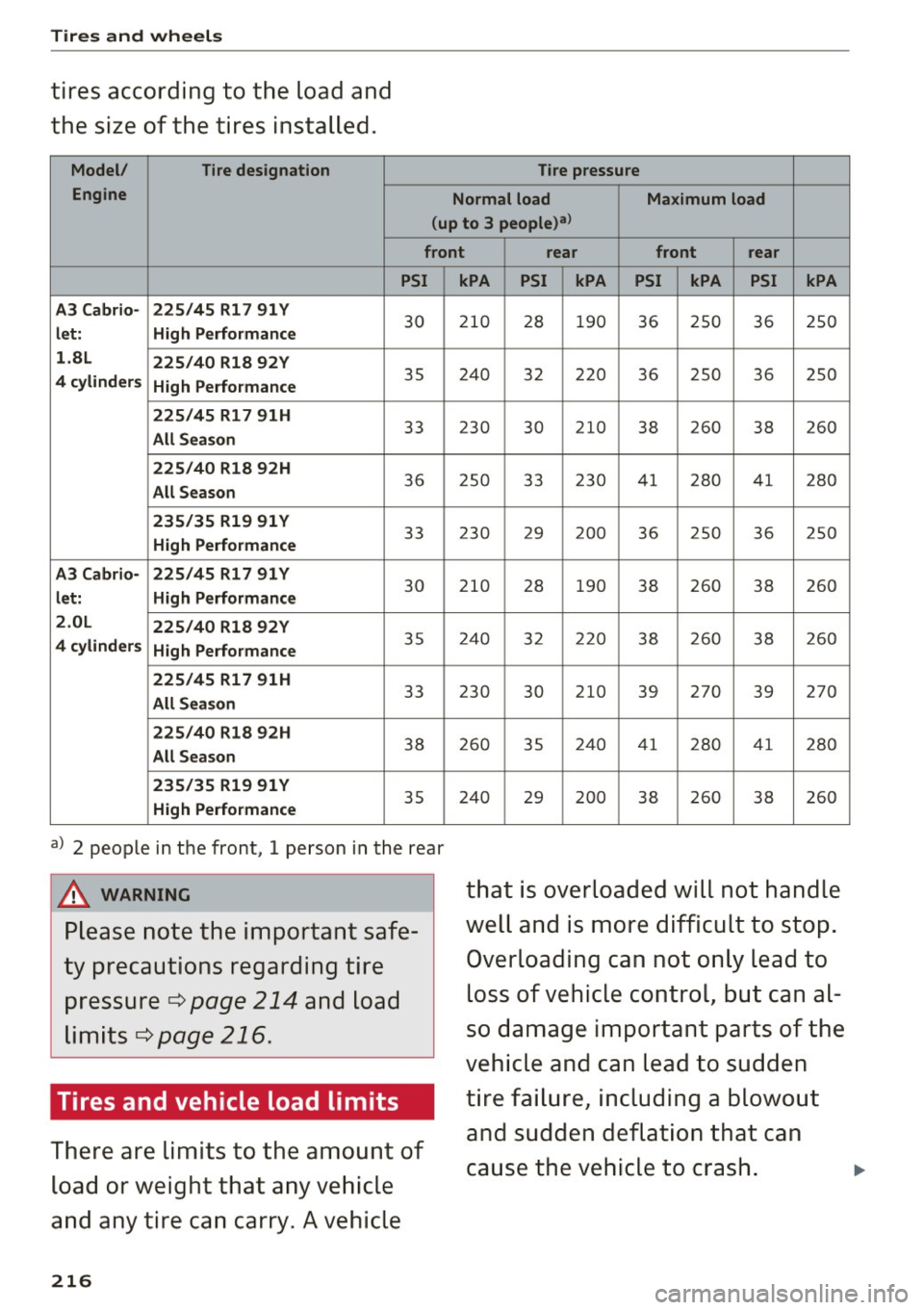
The following table lists recom mended tire pressures in cold
215
Page 216 of 272
Tires and wheels
tires according to the load and
the size of the tires installed.
Model/ Tire designation
Engine Tire pressure
Normal load Maximum load
(up to 3 people)
3>
front rear front rear
PSI
A3 Cabrio- 225/45 Rl7 91Y let: High Performance
30
l.8L
225/40 Rl8 92Y
4 cylinders High Performance
35
225/45 Rl 7 91H
All Season
33
225/40 Rl8 92H
All Season
36
235/35 Rl9 91 Y
High Performance
33
A3 Cabrio- 225/45 Rl 7 91 Y
let: High Performance
30
2.0L 225/40 Rl8 92Y
4 cylinders High Performance
35
225/45 Rl 7 91H
All Season
33
225/40 Rl8 92H
All Season
38
235/35 Rl9 91 Y
High Performance
35
a) 2 people in the front , 1 perso n in the rear
.&, WARNING
Please note the important safe
ty precautions regarding tire
pressure
¢ page 214 and load
limits
¢page 216.
Tires and vehicle load limits
There are limits to the amount of
load or weight that any vehicle
and any tire can carry. A vehicle
216
kPA PSI kPA PSI kPA PSI kPA
210 28 190 36 250 36 250
240 3 2 220 36 2 50 36 250
2 30 30 210 38 260 38 260
250 33 230 41 280 41 280
2 30 29 200
36 25
0
36 25
0
210 28 190 38 260 38 260
240 32 220 38 260 38 260
230 30 2 10 39 270
39 270
260 35 240 41 280 41 280
240 29 200 38 260
38 260
that is
overloaded will not handle
well and is more difficult to stop.
Overloading can not only lead to
loss of vehicle control, but can al
so damage important parts of the
vehicle and can lead to sudden
tire failure, including a blowout
and sudden deflation that can
cause the vehicle to crash.
Page 218 of 272
Tires and wheels
-Tires on a vehicle that has been overloaded can fail sud
denly, including a blowout and
sudden deflation, causing loss of control and a crash .
-Always make sure that the to tal load being transported -
including the weight of a trail
er hitch and the tongue
weight of a loaded trailer does not make the vehicle
heavier than the vehicle's
Gross Vehicle Weight Rating.
Determining correct load
limit
Use the example below to calcu
late the total weight of the pas
sengers and luggage or other
things that you plan to transport
so that you can make sure that
your vehicle will not be overload ed .
Steps for Determining Correct
Load Limit
1 . Locate the statement "THE
COMBINED WEIGHT OF OCCU
PANTS AND CARGO SHOULD
NEVER EXCEED XXX KG OR XXX
LBS"on your vehicle's placard
(tire inflation pressure label)
¢page 214, fig.170.
218
2. Determine the combined
weight of the driver and passengers that will be riding in
your vehicle.
3. Subtract the combined weight
of the driver and passengers
from
"XXX" kilograms or "XXX"
pounds shown on the sticker
¢page 214, fig. 170.
4. The resulting figure equals the
available amount of cargo and
luggage load capacity. For ex
ample, if the "XXX" amount
equals
1400 lbs . and there will
be five
150 lbs. passengers in
your vehicle, the amount of
available cargo and luggage
load capacity is 650 lbs.
(1400-750 (5 X 150) = 650
lbs.)
5. Determine the combined
weight of luggage and cargo being loaded on the vehicle.
That weight may not safely ex ceed the available cargo and luggage load capacity calculat
ed in Step 4.
6. If your vehicle will be towing a trailer, load from your trailer
will be transferred to your ve
hicle. Consult this manual to
determine how this reduces ...
Page 220 of 272

Tires and wheels
"' Check and cor rect the seating of the snow
c h ains if necessa ry after dr iving a few feet. Fo l
l ow the instructions from the manufacturer .
"' Note the maximum permitted speed when d riv
i ng with snow chains. Do not exceed 30 mp h
(SO km/h) .
Snow chains not only improve the
driving in win
ter road conditions, but also the
broking .
Use of snow cha ins is o nly pe rmitted with certain
rim/t ire combinations due to tec hnical reasons .
C hec k with an authorized A udi dealer o r autho r
i z ed Audi Service Fac ility to see if yo u may use
snow cha ins.
Use
fine-mesh snow chains . They must not add
mo re t han 0.53 inch (13.5 mm) in height, includ
i n g the chain loc k.
You must remove the c hains when d riving on
roads that are
free of snow . W hen roads a re free
of snow, snow c hains ca n impair handling and
damage the ti res, and the chai ns w ill quickly be
destroyed.
A WARNINC
Us ing inco rrect snow c hains or insta lling snow
c hai ns inco rre ctl y can resul t in loss o f vehicle
c o ntro l, w hich incr ease s th e ris k of an a cci
d ent .
(D Note
Snow chains can damage th e rims/wheel cov
ers* i f the cha ins come in to d irect contact
w it h t hem. R emove the w heel c overs* first .
U se coat ed sn ow cha ins.
Low aspect ratio tires
Your Au di is fac to ry-equipped wi th low aspec t ra
tio tires . These ti res have been tho roughly tested
a nd been se lected specifically fo r yo ur model fo r
their supe rb per fo rmance, road feel and handling
un der a variety of driving conditions . As k yo ur au
thor ized Audi dealer for mo re details.
The low aspect ratio of these t ires is i ndicated by
a numeral of
55 or less in t he tire's size designa
tion. The nume ra l rep resents the rat io of the
tire's sidewall he ight i n relat io n to its tread width
220
exp ressed in perce nta ge . Conventiona l tir es h ave
a height/width ratio of 60 or more.
The performance of low-aspect -ratio tires is par
ticularly sensitive to improper inflation pres
sure. It is therefore important that low aspect ratio tires are inflated to the specified pressure
and that the inflation pressure is regularly
checked and maintained. Tire pressures should
be checked at least once a month and always
before a long trip
r=> pog e 214.
What you can do to avoid tire and rim
damage
Low aspect ratio tires can be damaged more eas i
l y by impact with potho les, curbs, gullies or
r idges on the road, particularly if the tire is un
der inflated .
In orde r to min imize the occur rence of impact
damage to the tires of you r vehicle, we recom
mend that you observe the following preca u
tions:
- Always ma intain recommended inflation pres
sures. Check you r tir e pressure every
2,000 miles (3,000 km) and add a ir if necessa
ry.
- Dr ive ca refully on roads w it h potholes, deep
gu llies o r ridges . Th e impac t from dr iv ing
t hroug h or over such o bstacl es ca n da mage
your tire s. I mpac t w ith a curb may also cau se
d am age to yo ur ti re s.
- After any impac t, imme diate ly inspect you r
t ire s or h ave them inspe cted by t he nea rest a u
t hori ze d Audi d ealer. Repl ace a dama ged t ire as
soon as possible.
- Ins pect your tir es eve ry 2,00 0 m iles (3,0 00 k m)
for dama ge and wear. Dam age is no t always
easy to see . Damage can lead to loss of a ir and
unde rinflation, w hich coul d event ua lly cause
tire fa ilure. If yo u be lieve that a tire may have
been damaged, replace the tire as soon as pos
sible .
- These tires may wear mo re quick ly than others.
- Please also remember that, while t hese tires
delive r responsive hand ling, they may ride less
comfortably and make mo re noise than other
choices. ""
Page 222 of 272

Tires and wheels
Tire pressure monitoring
indicator
CD General notes
Applies to: ve hicles w ith tire p ressu re monitoring system
Each tire, including the spare (if provided),
should be checked monthly when cold and inflat
ed to the inflation pressure recommended by the
vehicle manufacturer on the vehicle placard or tire inflation pressure label. (If your vehicle has
tires of a different size than the size indicated on
the vehicle placard or tire inflation pressure la
bel, you should determine the proper tire infla
tion pressure for those tires) .
As an added safety feature, your vehicle has been
equipped w ith a tire pressure monitoring system
(TPMS) that illuminates a low tire pressure tell
tale when one or more of your t ires is significant
ly under-inflated. Accordingly, when the low tire
pressure telltale illuminates, you should stop and
check your tires as soon as possible , and inflate
them to the proper pressure. Driving on a signifi
cantly under-inflated tire causes the tire to over
heat and can lead to tire failure. Under-inflation
also reduces fuel efficiency and tire tread life,
and may affect the vehicle's handling and stop
ping ability .
Please note that the TPMS is not a substitute for
proper tire maintenance, and it is the driver's re
sponsib ility to ma intain correct tire pressure,
even if under-inflation has not reached the level
to tr igger illum inat ion of the TPMS low tire pres
sure telltale.
Your veh icle has also been equipped w ith a TPMS
malfunct ion indicator to indicate when the sys
tem is not operat ing properly. The TPMS mal
function indicator is combined w ith the low tire
pressure telltale. When the system detects a
malfunction, the telltale will flash for approxi
mately one minute and then remain continuous ly
illuminated. This sequence will continue upon
subsequent vehicle start-ups as long as the mal
function exists .
When the malfunction indicator is illuminated,
the system may not be able to detect or signal low tire pressure as intended . TPMS malfunctions
222
may occur for a variety of reasons, including the
installation of replacement or alternate tires or
wheels on the veh icle that prevent the TPMS
from functioning properly. Always check the
TPMS malfunction telltale after replacing one or more tires or wheels on your vehicle to ensure
that the replacement or alternate tires and
whee ls allow the TPMS to continue to function
properly.
If the Tire Pressure Monitoring System
indicator appears
Appl ies to: vehicles wit h Tire Pressure Mo nito rin g System in
dica tor
The tire pressure indicator in the instrument
cluster informs you if the tire pressure is too low
or if there is a system malfunction.
Using the ABS sensors, the tire pressure monitor
i ng system compares the tire tread c ircumfer
ence and vibration characteristics of the individu
al tires. If the pressure changes in one or more
tires , this is indicated in the instrument cluster
display with an
Ii] indicator light and a message.
If only one tire is affected, the location of that
tire will be indicated. The message turns
off after
a few minutes. You can display the message
again
,=;, page 25.
The tire pressures must be stored in the menu
display again each time the pressures change
(switching between partial and full load pres
sure) or after changing or replacing a tire on your
vehicle
c;, page 223. The tire pressure mon itor
ing system on ly monitors the tire pressure you
have stored . You can find the recommended tire
pressures for your vehicle on the label on the
driver's door pillar
q page 214 .
Tire tread circumference and vibrat ion character
i stics can change and cause a tire pressure warn
i ng if:
-If the tire pressure in one or more t ires is too
low,
- the tire has structural damage,
- The tire was replaced or the tire pressure
changed and it was not stored again
,=;, page 223.
- the spare tire is installed.
Page 223 of 272
<( co .... N r--N .... 0 r--> co
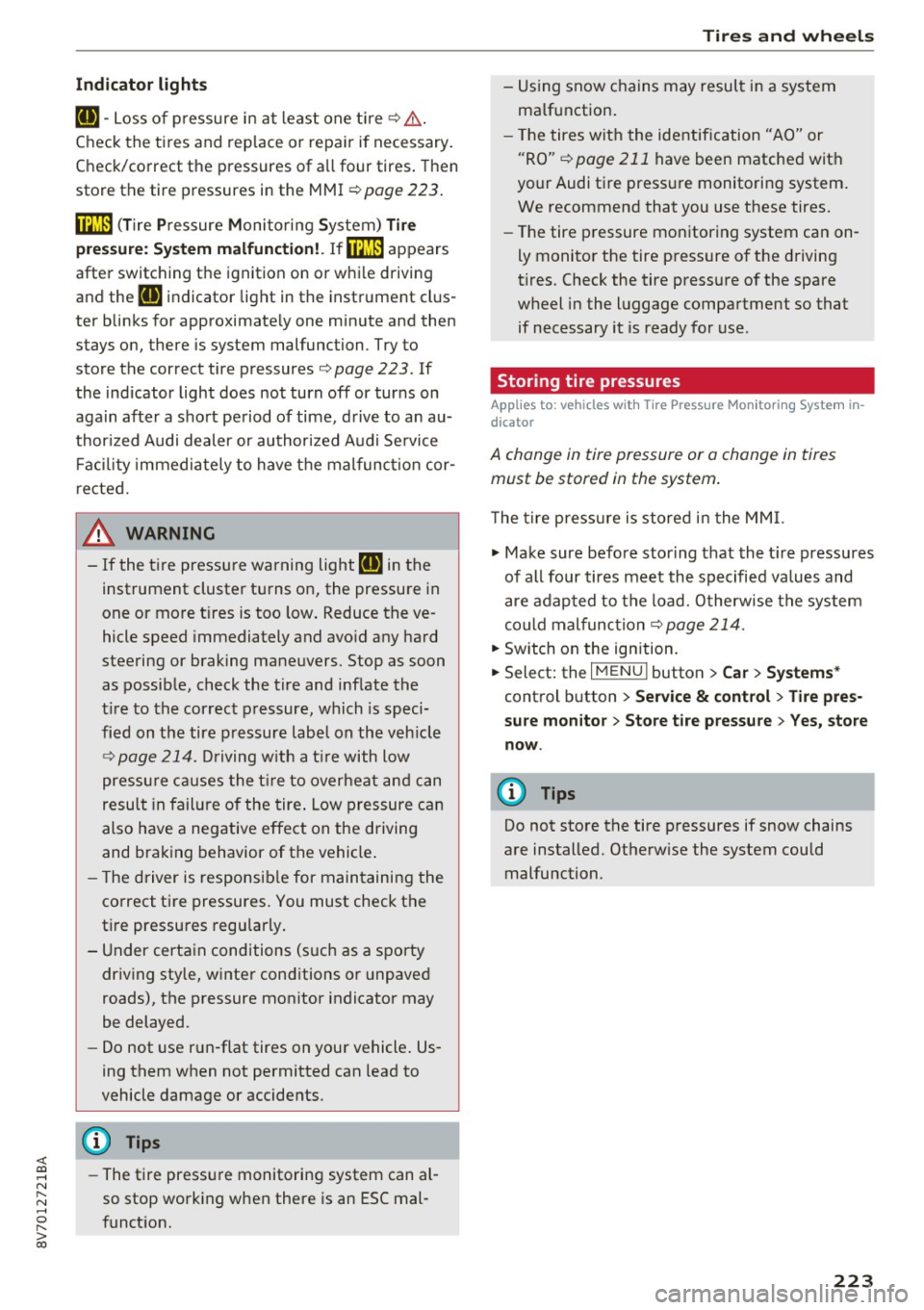
Indicat or lights
IE -Loss of pressure in at least one ti re c::> ,& .
Check the tires and replace or repair if necessary.
Check/correct the pressures of all four tires. Then
store the tire pressures in the MMI
<=:>page 223.
mm (T ire Pressure Monitoring System) Tire
press ure: System malfuncti on!.
Ifm appears
after switching the ignition on or whi le driving
and the
IE indicator light in the instrument clus
ter blinks for approximately one minute and then
stays on, there is system malfunction . Try to
store the correct tire pressures
c::> page 223 . If
the indicator light does not turn off or turns on
again after a short period of time, drive to an au
thor ized Audi dealer or authorized Audi Service
Faci lity immediately to have the malfunction cor
rected.
A WARNING
- If the tire pressure warning light IE in the
instrument cluster turns on, the pressure in
one or more tires is too low . Reduce the ve
hicle speed immediately and avo id any hard
steering or braking maneuvers. Stop as soon as possible, check the tire and inflate the
t ire to the correct pressure, which is speci
fied on the tire pressure label on the veh icle
<=:> page 214. Driving w ith a t ire with low
pressure c auses the t ire to overheat and can
result in failure of the tire . Low pressure can
also have a negative effect on the driving
and braking behavior of the vehicle .
- T he driver is responsib le for maintaining the
correct tire pressures . You must check the
tire pressures regularly .
- Under certain conditions (such as a sporty
driv ing style, winter conditions or unpaved
roads), the pressure monitor indicator may
be delayed.
- Do not use run-flat tires on your vehicle . Us
ing them when not permitted can lead to
vehicle damage or accidents .
(D Tips
-The tire pressure monitoring system can al
so stop working when there is an ESC mal
function.
Tir es and wheel s
- Us ing snow chains may result in a system
ma lfunction.
- The tires with the identification "AO" or
"RO"
c::> page 211 have been matched with
your Audi tire pressure monitoring system .
We recommend that you use these tires.
- The tire pressure monitoring system can on
ly monitor the tire pressure of the driving
tires. Check the tire pressure of the spare
wheel in the luggage compartment so that if necessary it is ready for use.
Storing tire pressures
App lies to : vehicles wi th Tir e Pressure Mo nito rin g Sys te m in
dic ator
A change in tire pressur e or a change in tires
must be stored in the syst em .
The tire press ure is stored in the MM I.
.,. Make sure before storing that the t ire pressures
of all four tires meet the specified values and
are adap ted to the load. O therwise the system
could malfunction
c::> page 214.
.. Switch on the ignition.
.,. Select: the I MENU I button> Ca r> Sys tem s*
con trol button > S er vice & control > Tire pre s
s u re m on itor > Stor e tire pressu re > Yes , sto re
no w.
(D Tips
Do not store the tire pressures if snow chains
are installed. Otherw ise the system could
malfunction.
223
Page 224 of 272

Care and cleaning
Care and cleaning
General information
Regular, prope r care helps to maintain your vehi
cle's value.
It can a lso be a requirement when
submitting war ranty claims for cor rosion damage
and pa int defects on the body.
The necessary care prod ucts can be obtained
from an autho rized Audi deale r or authorized
Aud i Service Facility. Read and follow the instruc
tions for use on the packaging.
A WARNING
- Using clean ing and care products incorrectly
can be dangero us to your hea lth .
- Always store clean ing and care products out
of reach of children to reduce the r isk of po i
so ning .
@ For the sake of the environment
- Preferably use environmentally-friendly
products when buying cleaning agents.
- Do not dispose of leftove r clean ing and care
products with household t rash.
Car washes
The longer that deposits s uch as insects, bird
droppings, tree sap or road salt remain on the ve h icle, the more the surface can be damaged. High
temperatures such as those caused by sunlight
i n crease the damag ing effect .
Before washing, r inse off heavy deposits with
p lenty of water.
St ubb orn deposits such as bird droppings or tree
sap are best removed with plenty of wate r and a
microfiber cloth.
Also, wash the underside of yo ur vehicle once
road sa lt stops being used for the season .
Pressure washers
When washing your veh icles with a pressure
washer, always follow t he ope ra ti ng ins tructions
p rovided w ith the pressure washer. This is espe
cially important in regard to the pressure and
spraying distance . Do not direct the stream of
224
water d irect ly onto seals for the side windows,
doors, luggage compartment lid or hood or onto
the tires, r ubber hoses, insulat ing mater ia l, the
power top, sensors* or camera lenses*. Keep a
distance of at least 16 in (40 cm).
Do not remove snow and ice with a pressure
washe r.
Never use rot ary no zzles or high pressure no z
z les .
The wate r temperatu re must not be above 140 °F
(60 °().
Automatic car washes
Spray off the ve hicle before wash ing.
Make su re t hat the windows and power top are
closed and the windsh ield wipers are off. Follow
i nstruct ions from the car wash operator, espe
c ially if there are accessories attached to your ve
hicle.
If possible, use car washes that do not have
brushes.
Washing by hand
Clean the vehicle starting from the top and work
ing down using a soft sponge or cleaning brush .
U se solvent-free cleaning products .
Washing vehicles with matte finish paint by
hand
To avoid damaging the pa int when washing, first
remove dust and large part icles from your vehi
cle. Insects, grease spots and f ingerprints are
best removed w ith a special cleaner for matte
finish paint .
Apply the product using a microf iber cloth. To
avo id damag ing the pa int surface, do not use too
much pressure.
Rinse the veh icle thorough ly with water. Then
clean using a neutra l shampoo and a soft m icro
fiber cloth.
Rinse the vehicle thoroughly again and let it air
dry. Remove any water residue using a sham my.
Stubborn deposits such as bird dropp ings or tree
sap are best removed with plenty o f water and a
microfiber cloth. .,..
Page 231 of 272
<( co ..... N
" N ..... 0 r--. > 00
@ Tips
The vehicle jack* in your vehicle is maintena nee-free.
Tire mobility kit
Preparation
A ppl ies to: ve hicles with tire mobility kit
~ Read and f ollow th e imp ortant saf ety pre cau
t io ns ¢
page 230, General information .
~ Check if a repair with the t ire mobility k it is pos
sible
¢ page 231.
Using the tire mobility kit
Appl ies to: ve hicles with tire mobility kit
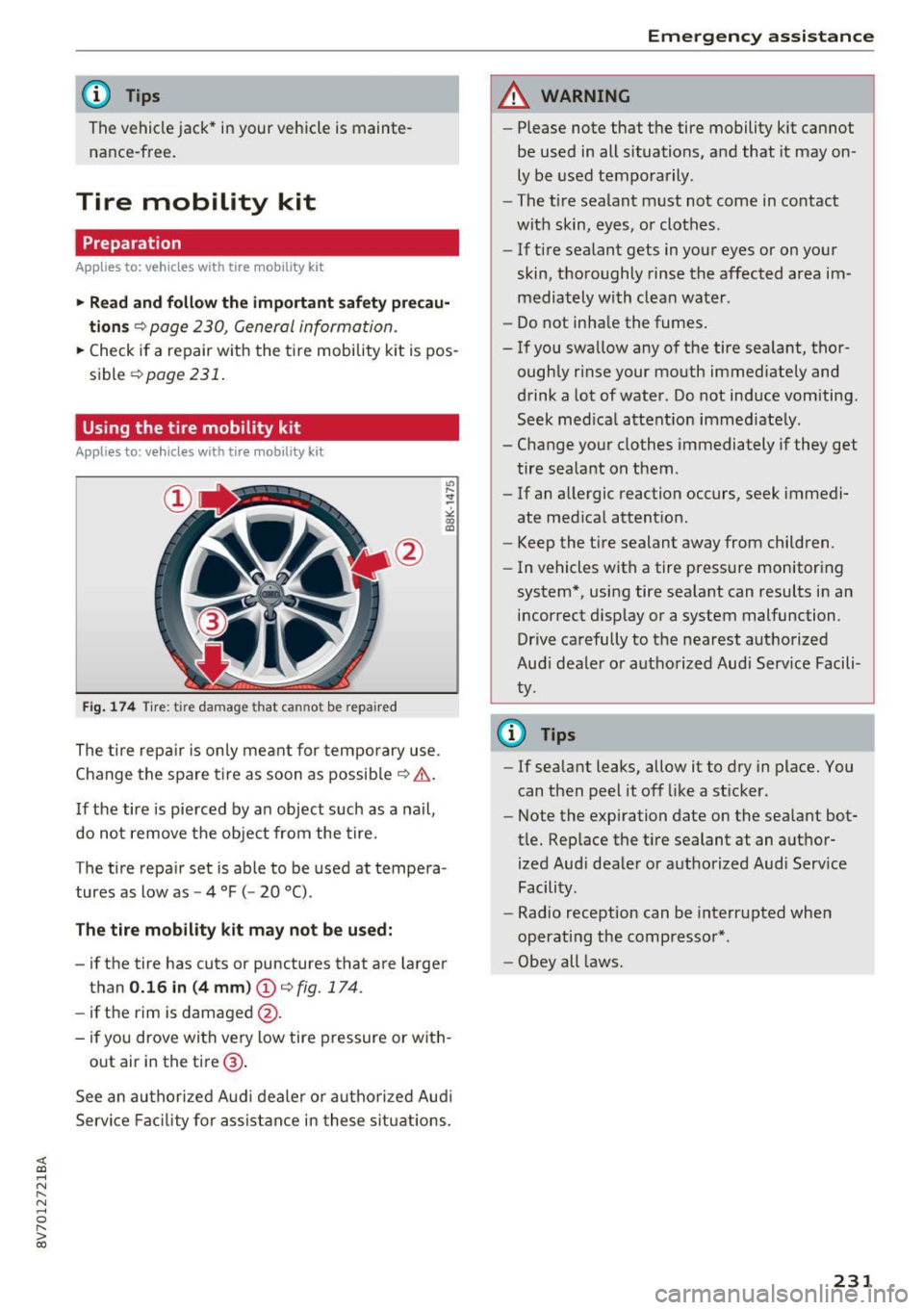
Fig. 174 Tire: t ire da mage t hat ca nnot be repa ired
The ti re repa ir is on ly meant for temporary use .
Change the spare t ire as soon as possible ¢ ,& .
If the tire is pierced by an object such as a nail,
do not remove the object from the tire.
T he tire repair set is able to be used at tempera
tures as low as -4 °F ( -20 °C).
Th e tir e mobil it y k it ma y not be u sed :
-if the t ire has cuts or punctures that are larger
than
0.1 6 in (4 mm ) (D ¢ fig. 174 .
-if th e rim is damaged @.
- if you drove with very low tire pressure or with -
ou t air in th e tire @.
See an au thorized Aud i dealer or authorized Aud i
Service Facility for assistance in these situations.
Em ergen cy a ssis tanc e
A WARNING
--Please note that the tire mobility kit cannot
be used in all situations, and that it may on
ly be used temporarily.
- The tire sealant must not come in contact
with skin, eyes , or clothes.
- If tire sealant gets in your eyes or on your
skin, thoroughly rinse the affected area im
mediately with clean water .
- Do not inhale the fumes.
- If you swa llow any of the tire sealant, thor-
oughly rinse your mouth immediately and
drink a lot of water . Do not induce vomiting .
Seek med ical attention immed iate ly .
- Change your clothes immediately if they get
tire sealant on them.
- If an allergic reaction occurs, seek immedi
ate med ical attention .
- Keep the t ire sealant away from children.
- In vehicles with a tire pressure monitor ing
system*, using tire sealant can results in an incorrect d isplay or a system malfunction.
Drive carefully to the nearest authorized
Aud i dealer or authorized Audi Serv ice Facili
ty .
@ Tips
-If sea lant leaks, allow it to dry in place. You
can then peel it off like a st icker.
- Note the expiration date on the sealant bot
tle. Rep lace the tire sealant at an aut hor
ized Aud i deale r or autho rized Aud i Serv ice
Facility .
- Radio reception can be interrupted when
operating the compressor* .
- Obey all laws.
231
Page 232 of 272
Emergency assistance
Repairing tires
Applies to: vehicles with tire mobility kit
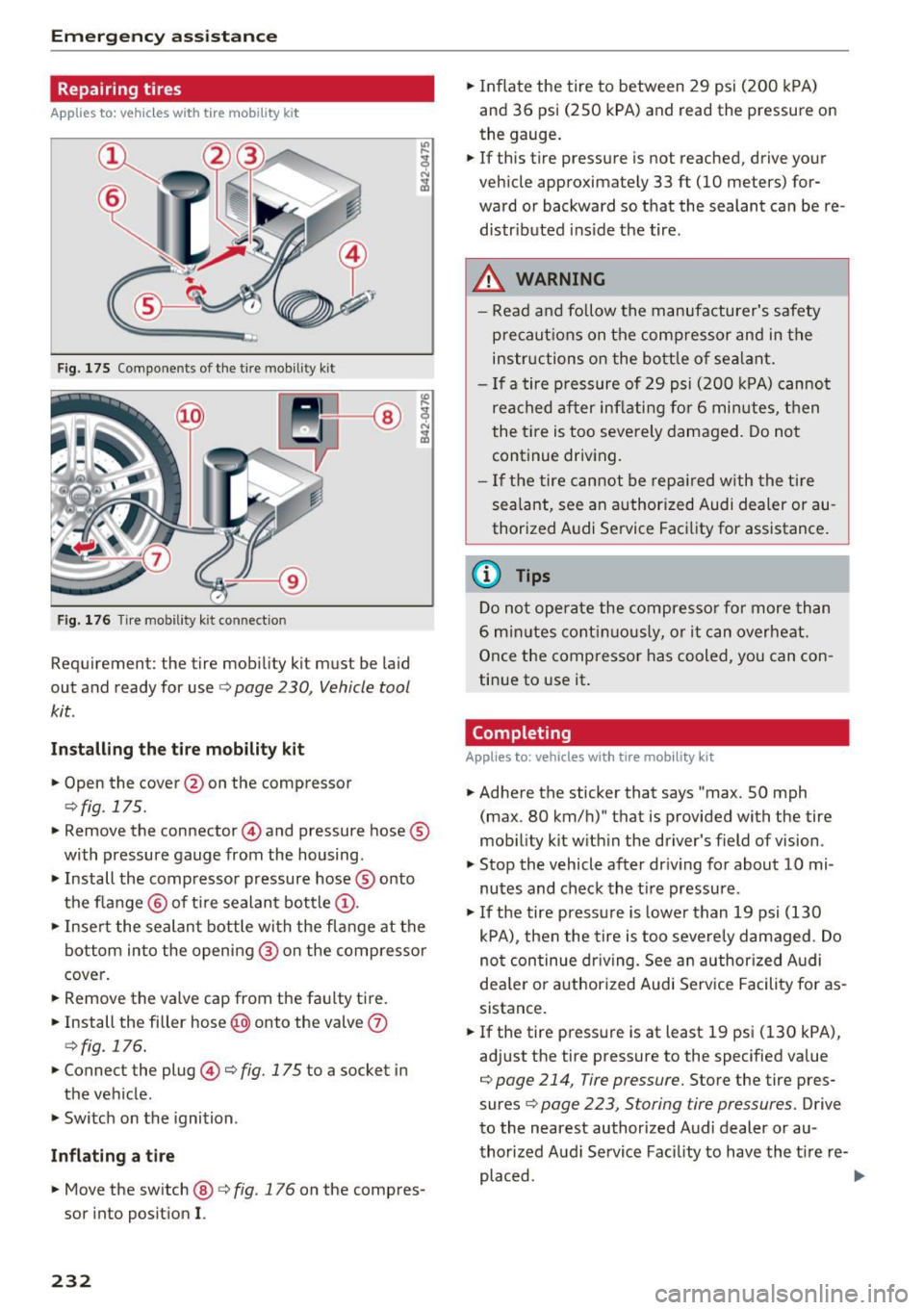
Fig. 175 Components of the tire mobility kit
F ig. 176 Tire mobility k it connecti on
Requirement: the tire mobility kit must be laid
out and ready for use
o page 230, Vehicle tool
kit .
Installing the tire mobility kit
• Open the cover @on the compressor
9fig. 175.
• Remove the connector @) and pressure hose®
with pressure gauge from the housing.
• Install the compressor pressure hose® onto
the flange @ of tire sealant bottle@.
• Insert the sealant bottle with the flange at the
bottom into the opening @ on the compresso r
cover .
... Remove the valve cap from the fau lty tire.
• Install the filler hose @onto the valve
0
ofig. 176.
• Connect the plug @o fig. 175 to a socket in
the vehicle.
• Switch on the ignition.
Inflating a tire
... Move the switch @ o fig. 176 on the compres
sor into posit ion I.
232
... Inflate the tire to between 29 psi (200 kPA)
and 36 psi (250 kPA) and read the pressure on
the gauge.
• If this tire pressure is not reached, drive your
vehicle approximate ly 33 ft (10 meters) for
ward or backward so that the sealant can be re
distr ibuted inside the tire .
.&_ WARNING
- Read and follow the manufacturer's safety
precautions on the compressor and in the
instructions on the bottle of sealant .
-If a tire pressure of 29 psi (200 kPA) cannot
rea ched after inflati ng for 6 minutes, then
the tire is too severely damaged. Do not
continue driving.
- If the tire cannot be repaired with the tire
sealant, see an authorized Audi dealer or au
thorized Audi Service Facility for assistance.
(D Tips
Do not operate the compressor for more than
6 minutes continuously, or it can overheat.
Once the compressor has cooled, you can con
tinue to use it .
Completing
Applies to: vehicles with tire mobility kit
... Adhere the sticker that says "max. SO mph
(max. 80 km/h)" that is provided with the tire
mob ility kit w ith in the driver's field of vision.
... Stop the vehicle after driv ing for about 10 mi
nutes and check the t ire pressure.
• If the tire pressure is lower than 19 psi (130
kPA), then the tire is too severely damaged . Do
not con tinue dr iving. See an authorized Audi
deale r o r authorized Audi Service Facility for as
sistance.
... If the tire pressure is at least 19 psi (130 kPA),
adjust the tire pressure to the specified value
o page 214, Tire pressure. Store the tire pres
sures
o page 223, Storing tire pressures. Drive
to the nearest authorized Audi dealer or au
thorized Audi Service Facility to have the tire re-
placed. ..,.