door lock AUDI A3 CABRIOLET 2016 Owner's Manual
[x] Cancel search | Manufacturer: AUDI, Model Year: 2016, Model line: A3 CABRIOLET, Model: AUDI A3 CABRIOLET 2016Pages: 272, PDF Size: 67.88 MB
Page 148 of 272
Airbag system
-Therefore, always wear your safety belts and
make sure that everybody in your vehicle is
properly restrained.
- Always hold the steering wheel with both
hands on the outside of the steering wheel
rim at the 9:00 o 'clock and 3 :00 o'clock po
sitions to help reduce the risk of personal in
jury if the driver's airbag inflates .
- Never hold the steering wheel at the 12
o'clock position or with your hands any
where inside the steering wheel or on the steering wheel hub. Holding the steering
wheel the wrong way increases the risk of
severe injury to the arms, hands, and head if
the driver airbag deploys.
A WARNING
Objects between you and the airbag will in
crease the risk of injury in a crash by interfer
ing with the way the airbag unfolds and/or by
being pushed into you as the airbag inflates.
- Always make sure nothing is in the front air-
-
bag deployment zone that could be struck
by the airbag when it inflates.
- Objects in the zone of a deploying airbag
can become projectiles when the airbag de
ploys and cause serious personal injury.
- Never hold things in your hands or on your lap when the vehicle is in use .
- Never place accessories or other objects
(such as cup holders, telephone brackets,
note pads, navigation systems, or things
that are large, heavy, or bulky) on the doors;
never attach then to the doors or the wind
shield; never place them over or near or at
tach them to the area marked ,.AIRBAG" on
the steering wheel, instrument panel or the
seat backrests; never place them between
these areas and you or any other person in
the vehicle.
- Never attach objects to the windshield
above the passenger front airbag, such as
accessory GPS navigation units or music
players. Such objects could cause serious in
jury in a collision, especially when the air bags inflate .
148
-Never recline the front passenger seat to
transport objects. Items can also move into
the deployment area of the side airbags or
the front airbag during breaking or in a sud
den maneuver . Objects near the airbags can
fly dangerously through the passenger com
partment and cause injury, particularly
when the seat is reclined and the airbags in
flate.
A WARNING
A person on the front passenger seat, espe
cially infants and small children, will receive
serious injuries and can even be killed by be ing too close to the airbag when it inflates .
- Although the Advanced Airbag System in
-
your vehicle is designed to turn off the front
passenger airbag if an infant or a small child
is on the front passenger seat, nobody can
absolutely guarantee that deployment un
der these special conditions is impossible in
all conceivable situations that may happen
during the useful life of your vehicle.
- The Advanced Airbag System can deploy in
accordance with the .,low risk" option for 3-
and 6-year-old children under the U.S . Fed
eral Standard if a child with electrical capac
itance greater than the combined capaci
tance of a typical one-year old infant re
strained in one of the forward facing or rear
ward-facing child seats with which your ve
hicle was certified is on the front passenger
seat and the other conditions for airbag de
ployment are met.
- Accident statistics have shown that children
are generally safer in the rear seat area than
in the front seating position.
- For their own safety, all children, especially
12 years and younger, should always ride in
the back properly restrained for their age and size.
Advanced front airbag system
Your vehicle is equipped with a front Advanced
Airbag System in compliance with United States
Federal Motor Vehicle Safety Standard 208, as
well as Canada Motor Vehicle Safety Standard ..,.
Page 172 of 272
Child safety
_& WARNING
Not using a child safety seat, using the wrong
child safety seat or improperly install ing a
child restra int increases the risk of serious
personal injury and death in a crash.
- Never install rear-facing child safety seats or infant carr iers on the front passenger
seat -
even with an Advanced Airbag System.
A chi ld will be seriously injured and can be
k illed when the inflating airbag hits the
child safety seat or infant carrier with great
force and smashes the child safety seat and
child against the backrest, door or roof
c> page 144, Child restraints on the front
seat -some important things to know.
-Always install rear-facing child safety seats
or infant carr iers on the rear seat.
- Never install a rear-facing child restraint in
the forward-facing direction. Such restraints are designed for the special needs of infants
and
very small children and cannot protect
them properly if the seat is forward-facing.
- If you must install a rearward fac ing ch ild
safety seat on the front passenger seat be cause of exceptional circumstances and the
PASSENGER AIR BAG OFF light does not
come on and stay on, immed iate ly install
the rear-fa cing ch ild safety seat in a rear
seating position and have the airbag systetn inspected by your Audi dealer.
- Never place or use any electrical device
(such as a laptop, CD player, electronic
games device, power inverter or seat heater
for child seats) on the front passenger seat if the device is connected to the 12-volt
socket or the cigarette lighter socket.
- If a seat heater has been retrofitted or oth
erwise added to the front passenger seat,
never install any ch ild restraint system on
this seat .
- Make sure that there are no wet objects
(such as a wet towel) and no water or other
liquids on the front passenge r seat cushion .
- Never place objects on the seat (such as a
laptop, CD player, elect ronic games dev ice,
power inverter or seat heater for child
seats). These may influence the e lectr ica l
172
capacitance measured by the capacitive pas
senger detect ion system and can also fly
around in an accident and cause serious per
sonal injury .
- Always read and heed all WARNINGS when
ever us ing a child restrained in a vehicle is
being used.:.>
page 135, Safety belts,
r:=;,page 143, Airbag system
and
.:.> page 165, Important information.
Convertible child safety seats
Properly used convertible child safety seats can
help protect toddlers and children over age one
who weigh between 20 and 40 lbs. (9 and 18 kg)
in a crash .
Fig. 147 Schema tic ove,v iew: installat ion of t he attach
me nts applicable to a LA TCH seat
Fig. 148 Schematic oveiview : installat ion of th e seat using
the vehicle's sa fety belt system
.,. When using the vehicle safety belt to install a
child safety seat, you must first activate the
convertible locking retractor on the safety belt
to prevent the child safety seat from moving
¢page 176 or install the seat using the LATCH
attachments .
.,. Push the ch ild safety seat down with you r full
weight to get the safety belt really tight so that .,..
Page 176 of 272
Child safet y
-If you must install a booster seat on the
front passenger seat because of exceptional
circumstances the
P ASSENGER AIR BAG
OFF
light must come on and stay on, when
ever the ignition is switched on.
- If the PASSENGER AIR BAG OFF light does
not come on and stay on, perform the
checks descr ibed
~ page 155, Monitoring
the Advanced Airbag System.
- Take the ch ild restraint off the front passen
ger seat and install it p roperly at one of the
rea r seat positions if the
PA SSENGER AIR
BAG OFF
l ight does not stay on whenever
the ignition is switched on.
- Always read and heed all WARN INGS when
ever using a child restrained in a veh icle is
being used~
page 135, Safety belts,
~ page 143, Airbag system and
~page 165, Important information.
Securing child seats
Securing a child safety seat using a safety
belt
---
Safety belts for the rear seats and the front pas
senger can be locked with the convertible locking
retractor to properly secure child safety seats .
The safety belts emergency locking retractors for
the rear seats safety belts and for the front pas
senger's seat safety belt have a convertib le lock
i n g ret rac to r fo r child rest raints . The safety belt
m ust be locked so that belt webbing cannot un
reel. The retractor can be activated to lock the
safety belt and prevent the safety belt webbing
from loosening up during normal driving. A child
safety seat can only be properly installed when
the safety belt is locked so that the child and
chi ld safety seat w ill stay in place .
A lways remember: Even though your vehicle is
equ ipped w ith an Advanced Airbag system, all
children, especially those 12 years and younger,
should always ride in the back seat properly re
stra ined for their age and size .
176
A WARNING ,.
Improperly installed child safety seats in-
crease the r isk of serious personal injury and
death in a collision.
-
- Always make sure that the safety be lt re
tractor is locked when installing a ch ild
safety seat . An unlocked safety be lt retrac
tor cannot hold the ch ild safety seat in place
during normal d riving or in a c rash.
- Always buckle the child safety seat firmly in
place even if a ch ild is not si tting in it. A
loose child safety seat can fly a round dur ing
a sudden s top or in a collision.
- I f the backrest is not se curely latched, the
child and the ch ild restraint will be thrown
forward together with the backrest and w ill
strike parts of the veh icle interior. The child
can be seriously injured or killed.
- Never install rear -facing child safety seats
or infant carriers on the front passenger
seat. A child w ill be seriously injured and
can be k illed when the passenger a irbag in
flates.
- The inflating airbag will h it the ch ild safety
seat or infant carr ier with great force and
w ill smash the child safety seat and child
aga inst the backrest, center armrest, door
or roof.
- Always install rear-fac ing ch ild safety seats
or infant carriers on the rear seat .
- Forward-facing child safety seats or infant
carriers installed on the front passenger's
seat may interfere w ith the deployment of
the airbag and ca use serio us inju ry to the
child.
- It is safer to install a forward-facing child
safety seat on the rear seat.
- Always read and heed all WARNINGS when
eve r us ing a child restrained in a vehicle is
be ing used
c::!;> page 165. Special p recautions
apply when installing a child safety seat on
the front passenger seat~
page 144, Child
restraints on the front seat -some impor-
tant things to know .
~
Page 177 of 272
<( co .... N ,.__
N .... 0 ,.__
> co
A WARNING 1=
Always take special precautions if you must install a forward or rearward -facing ch ild re
straint on the front passenger's seat in excep
tional situations:
- Whenever a forward or rearward -facing
child restraint is installed on the front pas
senger seat, the
P ASSENGER AIR BAG OFF
light must come on and stay on whenever
the ignition is switched on .
- If the
PA SSENGER AIR BAG OFF light does
not come on and stay on , perform the
checks descr ibed
~ page 155, Monitoring
the Advanced Airbag System.
- T ake the ch ild restraint off the front passen
ger seat and install it p roperly at one of the
rear seat positions if the
PAS SEN GER AI R
BAG OF F
light does not stay on whenever
the ignition is switched on.
- Improper installation of ch ild restraints can
reduce their effectiveness or even prevent
them from providing any protection .
- An improper ly installed child restraint can
interfere with the airbag as it deploys and
seriously injure or even kill the child .
- Always carefu lly follow the manufacturer's
instructions provided with the child safety
seat or carrier.
- After checking to make sure that the child restra int is properly installed, make certa in
tha t the child restraint is correctly recog
nized by the capacit ive passenger detection
system in the front passenger seat and that
the
PASSENGER AIR BAG OFF light signals
the cor rect front passenger fronta l airbag
status .
A WARNING
Forward-fac ing child rest raints :
- Always ma ke sure the forward-fac ing seat
has been designed and ce rtified by its man
ufacturer for use on a fron t seat with a pas
senger front and s ide a irbag .
- Never put the forward-facing child restraint
up, against or very near the instrument pan
el.
-
Ch ild safety
-Always move the front passenger seat to
the highest posit ion in the up and down ad
justment range and move it back to the rearmost posit ion in the seat's fore and aft
ad justment range, as far away from the a ir
bag as possible , before installing the for
ward-facing ch ild restraint.
- Always make sure that the safety belt upper
anchorage is behind the ch ild rest raint and
not next to o r in front of the child restraint
so that the safety be lt will be p roperly posi
tioned.
- Ma ke sure that the
PASSENGER AIR BAG
OFF
li ght comes on and stays on a ll the time
whenever the ignit ion is switched on .
A WARNING
= Rearward-facing chi ld restraints:
- A child in a rearward-fac ing c hild safety sea t
installed on the front passenger seat will be
serio usly injured and can be ki lled if the
front airbag inflates -even with an Ad
vanced Airbag System .
- The inflating airbag will hit the c hild safety
seat or infant carr ier with great force and
will smash the child safety seat and child
aga inst the backrest, center armrest, door
or roof.
- Always be especially carefu l if you must in
stall a rearward facing child safety seat on
the front passenger seat in except ional cir
cumstances.
- Make sure that the
PASSENGER AIR BAG
OFF
light comes on and stays on all the time
whenever the ignit ion is switched on .
- If the
PA SSENGER AIR BAG OFF light does
not come on and stay on, immediately in
stall the rea r-facing child safety seat in a
rear seating posit ion and have the airbag
sys tem inspected by you r Audi dealer.
Activating the convertible locking retractor
Use the convertible locking retractor to secure a
child restraint.
Always heed the c hild safety seat manufacturer 's
instruct ions when installing a child restraint in
177
Page 182 of 272
Child safety
-Never attach a tether strap to a tie-down
hook in the luggage compartment.
- Never use child restraint tether anchorages
to secure safety belts or other kinds of occu
pant restraints.
- Never secure or attach any luggage or other
items to the LATCH lower anchorages or to
the tether anchors.
- If you must install a rearward facing child
safety seat on the front passenger seat be
cause of exceptional circumstances and the
PAS SEN G ER AIR BAG OFF light does not
come on and stay on, immed iate ly install
the rear-fac ing ch ild safety seat in a rea r
seat ing pos ition and have the airbag system
inspected by your Audi dealer.
Installing the upper tether strap on the
anchorage
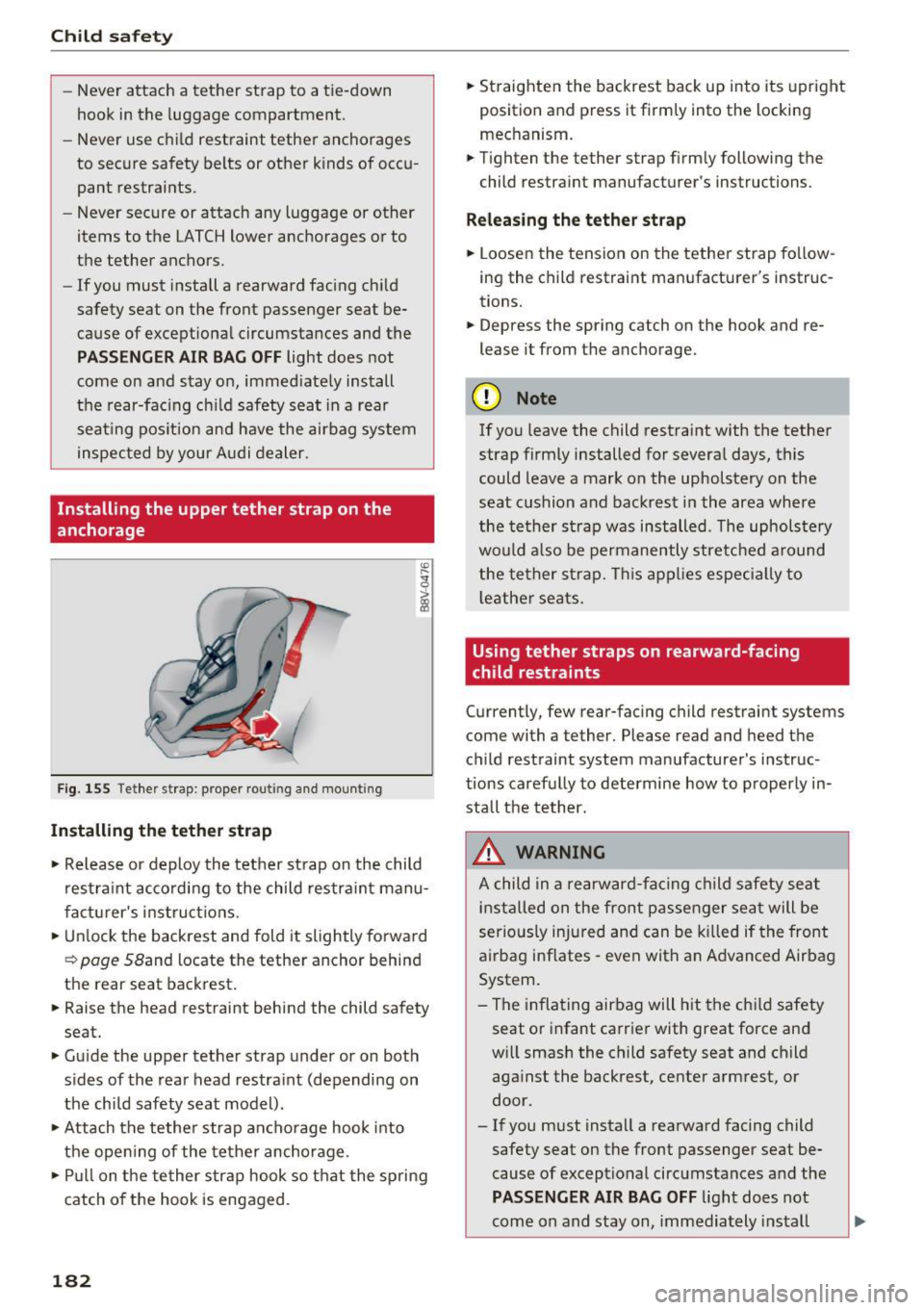
Fig. 155 Tet her strap: proper routing and mounting
Installing th e teth er strap
.,. Release or deploy the tether strap on the child
restra int acco rding to the child restra int manu
fac ture r's instruct ions.
.,. Un lock the backrest and fold it slightly forward
¢ page 58and locate the tether anchor behind
the rear seat backrest.
.,. Raise the head restraint behind the child safety
seat.
.,. Gu ide the upper tether strap under or on both
s ides of the rea r head restra int (depending on
the child safety seat model) .
.,. Attach the tether strap ancho rage hook into
the open ing of the tether anchorage.
.,. Pull on the tether strap hook so that the spring
catch of the hook is engaged.
182
.,. Straighten the backrest back up into its upright
position and press it firmly into the locking
mechanism.
.,. Tighten the tether strap firmly following the
child restraint manufacturer's instructions.
Releasi ng th e tet her strap
.,. Loosen the tension on the tethe r strap fo llow
ing the child restraint manufacturer's instruc
tions.
.,. Depress the spring catch on the hook and re
lease it from the anchorage.
(D Note
If you leave the child restraint with the tether
strap firmly installed for several days, this
could leave a mark on the upholstery on the
seat cushion and backrest in the area where
the tether strap was installed. The upholstery
would also be permanently stretched a round
the tether s trap. This applies especially to
l eather seats.
Using tether straps on rearward-facing
child restraints
Currently, few rear-facing child restraint systems
come with a tether. Please read and heed the
ch ild restraint system manufacturer's i nstruc
tions carefully to determine how to properly in
stall the tether.
&_ WARNING
A child in a rearward-facing child safety seat installed on the front passenger seat will be
seriously inju red and can be k illed if the front
airbag inf lates -even with an Advanced Airbag
System.
- The inflating airbag will h it the child safety
seat or infant carrier with great force and
will smash the child safety seat and child aga inst the backrest, center armrest, or
door.
- If you m ust install a rearward facing child
safety seat on the front passenger seat be
cause of exceptional circumstances and the
PA SSENGER A IR BA G OFF light does not
come on and stay on, immediately install
Page 186 of 272
Checking and Filling
Fueling procedure
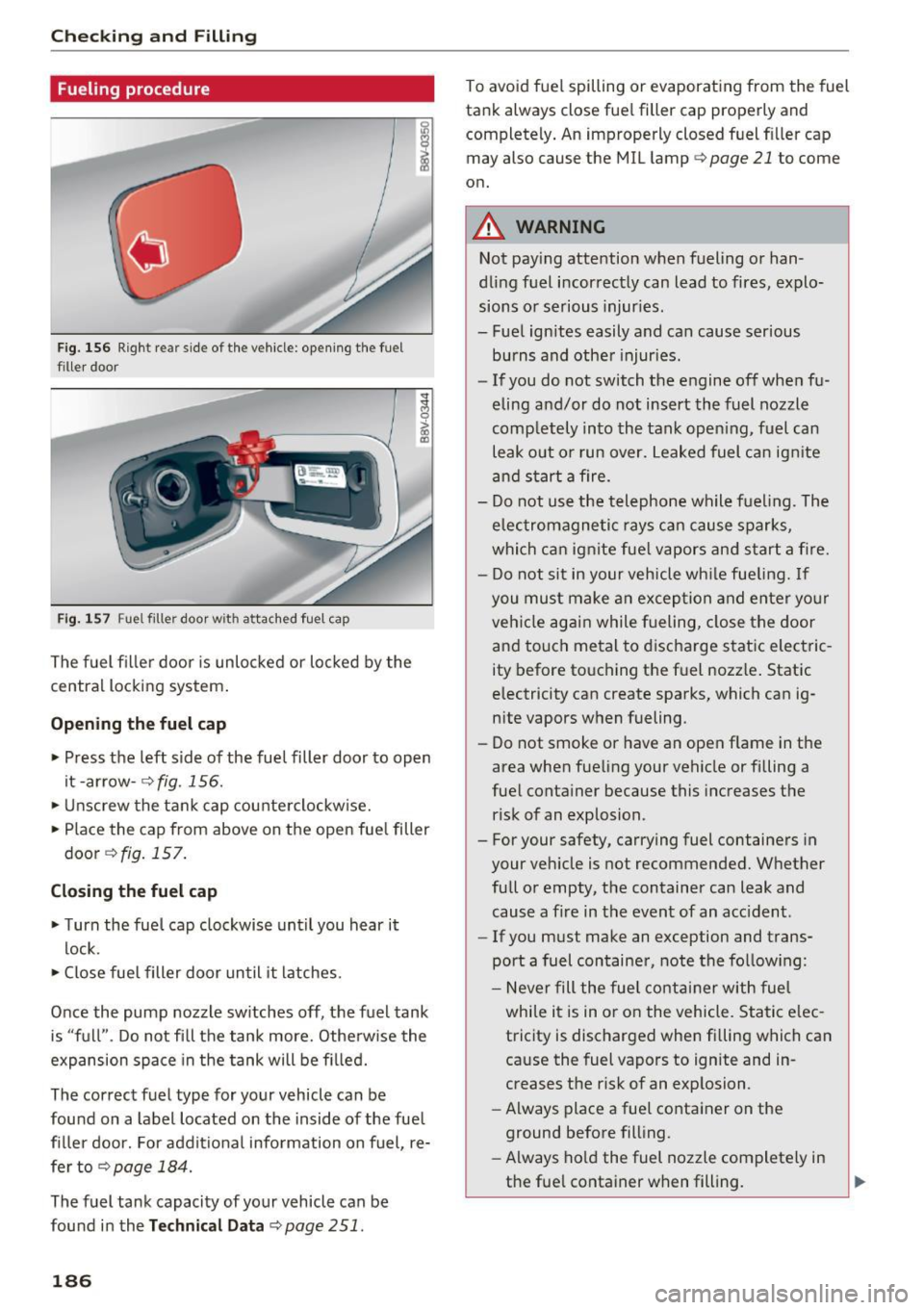
Fig. 156 Right rear side of the vehicle: opening the fue l
filler door
Fig . 157 Fue l filler door w it h atta ched fue l cap
The fuel fi ller door is unlocked or locked by the
central locking system .
Opening the fuel cap
I
• Press the left side of the fuel filler door to open
it -arrow -
9 fig. 156.
• Unscrew the tank cap counte rclockw ise.
• Place the cap from above on the open fue l filler
door
9 fig. 157.
Cl osi ng th e fu el cap
• Turn the fue l cap clockwise until you hear it
lock.
• Close fuel filler door until it latches.
Once the pump nozzle sw itches off, the fuel tank
is "fu ll". Do not fi ll the tank more. Otherw ise the
expansion space in the tank will be fi lled.
The correct fuel type for your vehicle can be
found on a label located on the inside of the fue l
fi ller door. For addit io nal info rmation on fuel, re
fe r to
Q page 184.
The fuel tank capacity of your vehicle can be
found in the
Technic al Data 9 page 251.
186
To avoid fuel spilling or evaporating from the fuel
tank always close fue l filler cap properly and
completely . An improperly closed f uel f iller cap
may also cause the MIL lamp
~ page 21 to come
on.
A WARNING
Not pay ing attention w hen fueling or han
dling f uel incorrectly can lead to fires , explo
sions o r serious injur ies .
- Fue l ignites easily and can cause serious
burns and other injur ies .
-
-If you do not switch the engine off when fu
eling a nd/or do not insert the fuel nozzle
comp letely into the tank open ing, fuel can
leak out o r run over. Leaked fuel can ign ite
and start a fire.
- Do not use the telephone wh ile f uel ing . The
elec tromagneti c rays can cause sparks,
which can ignite fue l vapors and s tart a fire.
- Do not sit in your vehicle wh ile fue ling. If
you must make an excep tion and enter yo ur
veh icle aga in while fueling, close the door
and touch me tal to discharge static electric
ity before touching the f uel nozz le . Static
electricity can create sparks, which can ig
nite vapors when fueling .
- Do not smoke or have an open flame in the
area when fueling your vehicle or filling a
fue l conta iner because this increases the
risk of an explosion.
- For your safety, carrying fuel containers in
your veh icle is not recommended. Whether
full or empty, the container can leak and
cause a fire in the even t of an acc ident.
- If you must make an exception and trans
port a fuel containe r, note the follow ing:
- Never fill the fuel co ntainer with fue l
while it is in or on the vehicle. Static e lec
tricity is discharged when fi lling which can
cause the fuel vapors to ignite and in
creases the risk of an exp losion.
- Always place a fuel conta iner on the
ground before fill ing.
- Always ho ld the fuel nozzle completely in
the fue l container when filling.
Page 187 of 272
<( co ..... N
" N ..... 0 r--. > 00
-If the fuel container is made of metal, the
fuel nozzle must always be in contact with
the container when filling it with fuel. This
prevents static electricity from discharg
ing.
- Never spill fuel in the vehicle or the lug
gage compartment . Evaporated fuel is ex
plosive and increases the risk of serious in
jury or death.
- Follow legal requirements when using,
storing and transporting fuel containers .
- Make sure the fuel container conforms to industry standards (ANSI/ASTM F852-86).
(D Note
-Remove spilled fuel from vehicle paint im
mediately, because it can damage paint.
- Never drive until the fuel tank is completely
empty . The irregular supply of fuel that re
sults from that can cause engine misfires. Uncombusted fuel will enter the exhaust
system and increase the risk of damage to
the catalytic converter.
@) For the sake of the environment
If the fuel nozzle is used correctly, it will ind i
cate that the tank is full the first time it
sw itches off automatically. Do not try to add
more fuel, because it can spill over. Also, the
expansion space in the tank will fill, which can
result in fuel spilling out when it becomes
warm and polluting the environment.
@ Tips
Fuel can age and may lead to problems when
starting . Audi recommends replacing the fuel
in your vehicle within six months.
@ Tips
- If the engine is running while fueling, va
pors can escape or the fuel can spill over.
Because of th is, the fuel nozzle switches off
before the tank is full.
- Do not fue l the vehicle when the ignition is
switched on . Otherwise, the fuel gauge may
not show the correct level after fueling the
vehicle.
Checking and Filling
-The fuel filler door on your vehicle does not
lock when you lock the vehicle from the in
side.
Fuel filler door emergency release
If the central locking system is faulty, the fuel
filler door can be unlocked manually.
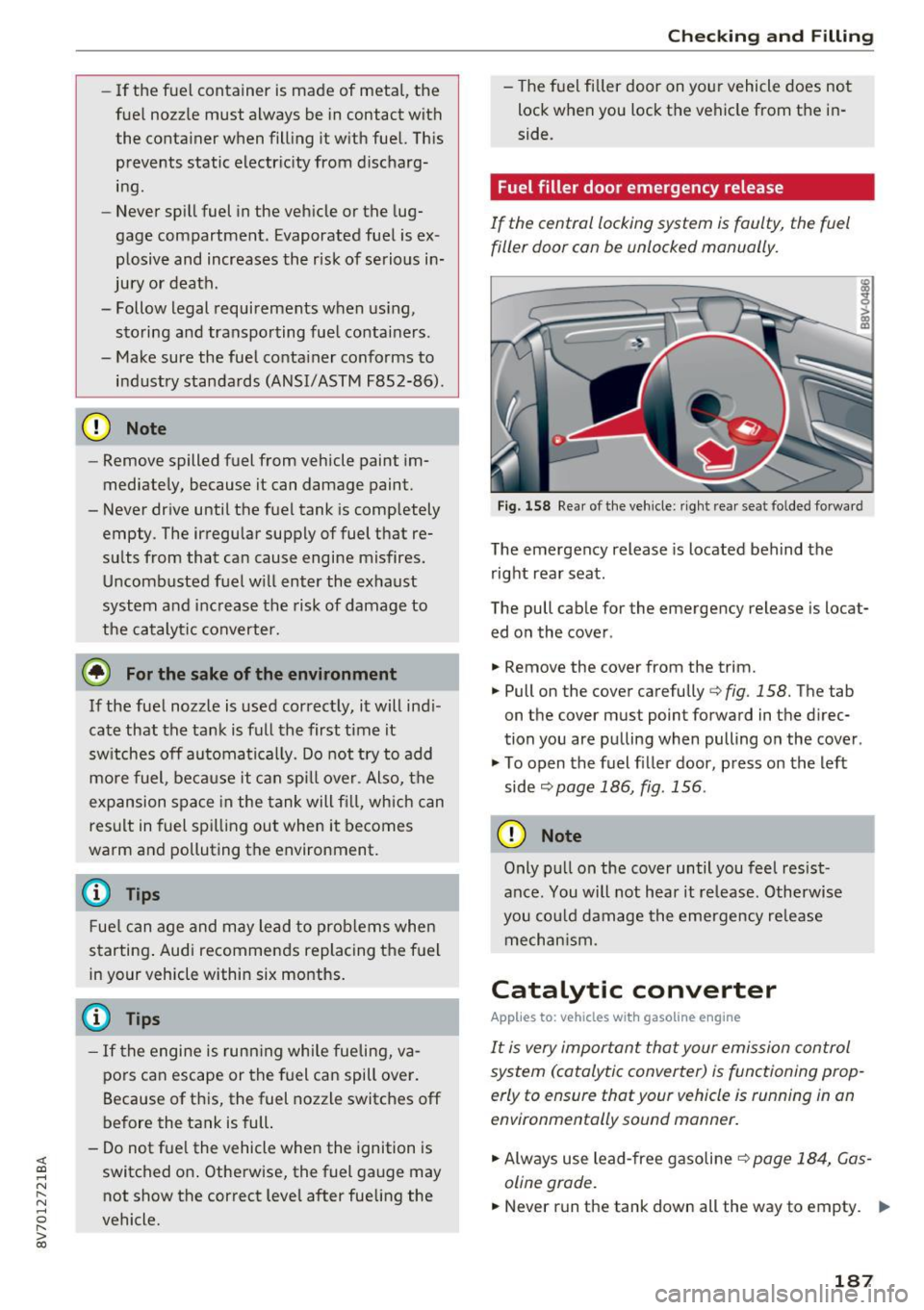
Fig. 158 Rear of the vehicle: right rea r seat fo lded fo rward
The emergency release is located behind the
right rear seat.
The pull cable for the emergency release is locat ed on the cover .
.. Remove the cover from the trim .
.. Pull on the cover carefully
c:> fig. 158. The tab
on the cover must point forward in the direc
tion you are pulling when pulling on the cover .
"' To open the fuel filler door, press on the left
side
c:> page 186, fig . 156 .
(D Note
Only pu ll on the cover until you feel resist
ance. You will not hear it release. Otherwise
you could damage the emergency re lease
mechanism.
Catalytic converter
Applies to: vehicles with gasoline engine
It is very important that your emission control
system (catalytic converter) is functioning prop
erly to ensure that your vehicle is running in an
environmentally sound manner.
.. Always use lead-free gasoline c:> page 184, Gas
oline grade .
.. Never run the tank down all the way to empty. ~
187
Page 241 of 272
<( co ..... N
" N ..... 0 r--. > 00
-Some of the equipment listed in the follow
ing tables applies only to certain model ver
s ions or certain optional equipment .
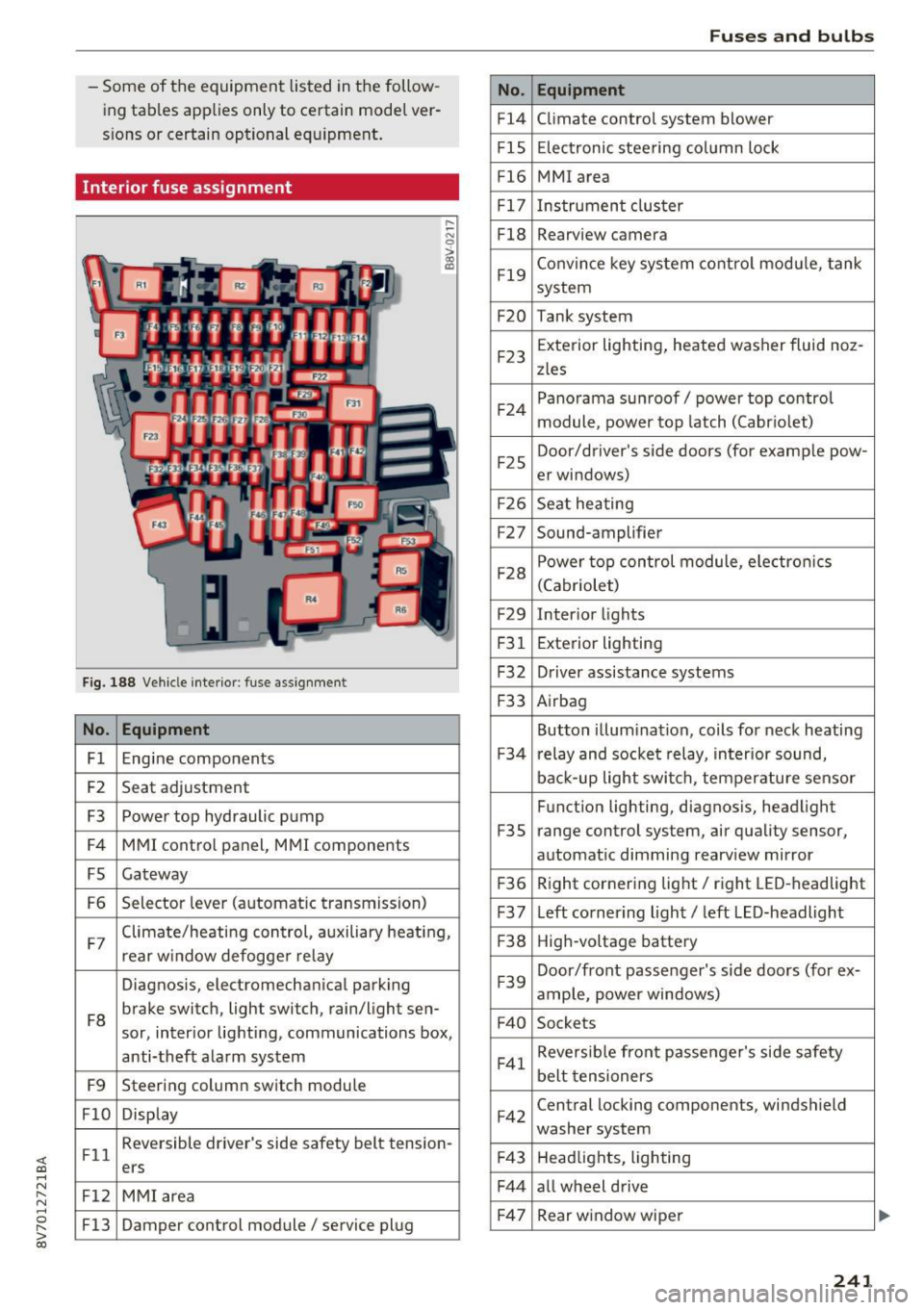
Interior fuse assignment
Fig. 188 Vehicle interior: fuse assignment
No. Equipment
Fl Engine components
F2 Seat
adjustment
F3 Power top hydraulic pump
F4 MMI control panel, MMI components
FS Gateway
F6 Selector
lever (automatic transmission)
.... ~ N
0
>
"' (0
F7 Climate/heating control, auxiliary heating,
rear w
indow defogger relay
Diagnosis, electromechanical parking
FB brake switch, light switch
, rain/light sen-
sor, inter ior lighting, communications box,
anti-theft alarm system
F9 Steering column switch module
FlO Display
Fll Reversible driver's side safety belt tension
-
ers
F12 MMI area
F13 Damper control module/ service plug
No.
Fl4
FlS
Fl6
F 17
FlB
F19
F20
F23
F 24
F2 5
F2 6
F27
F28
F29
F 31
F32
F 33
F 34
F35
F 36
F37
F38
F39
F40
F41
F42
F4 3
F44
F 47
Fuses and bulbs
Equipment
Climate control system blower
Electronic steering column lock
MMI area
Instrument cluster
Rearview camera
Convince key system control module, tank
system
Tank system
Exterior lighting, heated washer fluid noz -
zles
Panorama sunroof/ power top control
module, power top latch (Cabriolet)
Door/driver's side doors (for examp le pow-
er windows)
Seat heating
Sound-amplifier
Power top control module, electro nics
(Cabriolet)
Inter ior lights
Exterior lighting
Driver assistance systems
Airbag
Button illumination, coils for neck heating
r elay and socket relay, interior sound,
back-up light switch, temperature sensor
Function lighting, diagnosis, headlight
range control system, air quality sensor,
automat ic dimming rearview mirror
R ight cornering light/ right LED-headlight
Left cornering light/ left LED-headlight
High-voltage battery
Door/front passenger's side doors (for ex-
ample, power windows)
Sockets
Reversible front passenger's side safety
belt tensioners
Central locking components, windshield
washer system
Headlights, lighting
all wheel drive Rear w indow wiper
241
Page 260 of 272
Index
Convertible locking retractor
Activating . . . . . . . . . . . . . . . . . . . . . . . . . . 177
Deactivating . . . . . . . . . . . . . . . . . . . . . . . . 178
Using to secure a child safety seat . . . . . . 177
Cooling mode (au toma tic climate con trol sys -
t em) . . . . . . . . . . . . . . . . . . . . . . . . . . . . . . . . 62
Cooling system Add ing coolant ... ............ .... .. . 195
Coolan t . . . . . . . . . . . . . . . . . . . . . . . . . . . . 195
Coolan t leve l check ing . . . . . . . . . . . . . . . . 195
Coolant temperature indicator . . . . . . . . . . 12
Indicator light . . . . . . . . . . . . . . . . . . . . . . . 1 6
Corner ing light . . . . . . . . . . . . . . . . . . . . . . . . 43
Cruise control system Changing speed . . . . . . . . . . . . . . . . . . . . . . 89
Descr ipt io n . . . . . . . . . . . . . . . . . . . . . . . . . . 88
Preselect ing speed . . . . . . . . . . . . . . . . . . . . 89
Sw itchi ng off . . . . . . . . . . . . . . . . . . . . . . . . 89
sw itch ing on . . . . . . . . . . . . . . . . . . . . . . . . . 89
Cup holders . . . . . . . . . . . . . . . . . . . . . . . . . . . 57
Curre nt cons umption . . . . . . . . . . . . . . . . 23, 24
D
D ata recorder . . . . . . . . . . . . . . . . . . . . . . . . 12 2
Date display . . . . . . . . . . . . . . . . . . . . . . . . . . 10
Daytime running lights . . . . . . . . . . . . . . . . . 43
D eclaration of compliance
Adapt ive cr uise control . . . . . . . . . . . . . . . 256
Aud i side assis t . . . . . . . . . . . . . . . . . . . . . 256
Ce ll phone package . . . . . . . . . . . . . . . . . . 256
Convenience key . . . . . . . . . . . . . . . . . . . . . 256
Elect ronic immob ilizer. . . . . . . . . . . . . . . . 256
Homelink universa l remote control . . . . . 256
Remote control key . . . . . . . . . . . . . . . . . . 256
Defective light bulb warning Indicator light . . . . . . . . . . . . . . . . . . . . . . . 20
Defrost ing (windsh ield)
automatic clima te con trol system . . . . . . . 63
DEF (instrument cluste r) . . . . . . . . . . . . . . . . 11
D eluxe a utomatic climate contro l
refer to Climate contro l system (automatic) .62
D etermin ing cor rec t load limit . . . . . . . . . . 2 18
Dig ita l compass . . . . . . . . . . . . . . . . . . . . . . . 51
D imensions . ..... ... .. ..... ... .. .. ... 251
Dimmi ng the rea rview mirror . . . . . . . . . . . . 48
Distance . . . . . . . . . . . . . . . . . . . . . . . . . . . . . 24
260
Door/luggage compartment lid wa rning . . . 23
Door contact switch . . . . . . . . . . . . . . . . . . . . 46
Doors Emergency locking . . . . . . . . . . . . . . . . . . . . 32
Driver in fo rmat ion system . . . . . . . . . . . . . . . 23
CD/radio display. . . . . . . . . . . . . . . . . . . . . . 23
Door/luggage compartment lid warning . . 23
E fficiency program . . . . . . . . . . . . . . . . . . . . 25
Ind icator lights . . . . . . . . . . . . . . . . . . . . . . 12
Messages . . . . . . . . . . . . . . . . . . . . . . . . . . . 12
On-board computer . . . . . . . . . . . . . . . . . . . 24
Outs ide temperature display . . . . . . . . . . . . 23
Se rvice in terva l display . . . . . . . . . . . . . . . 202
U sing the m ultifu nction stee ring wheel . . . 23
Driver seating position . . . . . . . . . . . . . . . . . 125
D rive select . . . . . . . . . . . . . . . . . . . . . . . . . . 106
Indicator light . . . . . . . . . . . . . . . . . . . . . . . 21
D rivi ng econom ica lly . . . . . . . . . . . . . . . . . . . 65
D riving safe ly . . . . . . . . . . . . . . . . . . . . . . . . 124
Drivin g throu gh wa ter . . . . . . . . . . . . . . . . . . 65
D rivi ng time . . . . . . . . . . . . . . . . . . . . . . . . . . 24
D ust filter
refer to Pollut ant fi lt er . . . . . . . . . . . . . . . . 61
E
ear window defogger . . . . . . . . . . . . . . . . . . . 64
E CO mode (a utomat ic cl ima te contro l
system) . . . . . . . . . . . . . . . . . . . . . . . . . . . . . . 62
Efficiency program . . . . . . . . . . . . . . . . . . . . . 25
Descnptron . . . . . . . . . . . . . . . . . . . . . . . . . . 25
Fuel economy messages . . . . . . . . . . . . . . . 26
Other equ ipment . . . . . . . . . . . . . . . . . . . . . 25
E lectr ical accessories
refer to Socket . . . . . . . . . . . . . . . . . . . . . . . 56
E lectromechanical parking brake
refer to Parking brake . . . . . . . . . . . . . . . . . 73
El ec trome chanical steering . . . . . . . . . . . . . 119
Ind icator lig hts . . . . . . . . . . . . . . . . . . . . . 119
E lectronic differentia l lock ........... .. . 116
Ind icator light . . . . . . . . . . . . . . . . . . . . . . . 18
E lectronic immobili zer . . . . . . . . . . . . . . . . . . 31
also refer to Immobili zer . . . . . . . . . . . . . . 27
E lec tronic spee d limiter . . . . . . . . . . . . . . . . . 88
E lec tronic stabiliza tion control (ESC)
Ind icator lig ht . . . . . . . . . . . . . . . . . . . . . . . 18
Spor t mode . . . . . . . . . . . . . . . . . . . . . . . . 11 7
Page 261 of 272
<( co .... N r--N .... 0 r--> co
Electronic Stabilization Control (ESC) . . . . . 116
Emergency assistance . . . . . . . . . . . . . . . . . 230
Emergency flasher . . . . . . . . . . . . . . . . . . . . . 44
E mergency flashe rs
I ndicator light . . . . . . . . . . . . . . . . . . . . . . .
21
Emergency locking the front passenger 's door .3.2
Emergency operat ion
Emergency braking function . . . . . . . . . . . .
75
Front passenger's door . . . . . . . . . . . . . . . . 32
Luggage compartment lid . . . . . . . . . . . . . . 33
Power top . . . . . . . . . . . . . . . . . . . . . . . . . . . 40
with conven ience key . . . . . . . . . . . . . . . . . . 72
Emergency release
Fuel filler door . . . . . . . . . . . . . . . . . . . . . .
187
Selector lever . . . . . . . . . . . . . . . . . . . . . . . . 83
Emergency starting 244
Energy management . . . . . . . . . . . . . . . . . . 121
Indicator light . . . . . . . . . . . . . . . . . . . . . . . 17
Engine
Coolant . . . . . . . . . . . . . . . . . . . . . . . . . . . .
195
Starting with jumper cables . . . . . . . . . . . 244
Starting (button) . . . . . . . . . . . . . . . . . . . . . 70
Starting (key) . . . . . . . . . . . . . . . . . . . . . . . . 68
Starting (messages with conven ience key) . 72
stopping (button) . . . . . . . . . . . . . . . . . . . . 71
stopping (key) . . . . . . . . . . . . . . . . . . . . . . . 69
Engine compartment
C losing the hood . . . . . . . . . . . . . . . . . . . .
190
Opening the hood . . . . . . . . . . . . . . . . . . . 190
Overview ... .................. ..... . 191
Safety precautions . . . . . . . . . . . . . . . . . . . 188
Engine control (indicator light) . . . . . . . . . . . 19
Engine coolant
Radiator fan
196
Engine oil . . . . . . . . . . . . . . . . . . . . . . . . . . . 191
Changing . . . . . . . . . . . . . . . . . . . . . . . . . . 194
Checking oil level . . . . . . . . . . . . . . . . . . . . 193
Consumption . . . . . . . . . . . . . . . . . . . . . . . 193
Dipstick . . . . . . . . . . . . . . . . . . . . . . . . 191, 193
F'll ' I mg . . . . . . . . . . . . . . . . . . . . . . . . . . . . . 193
Indicator light . . . . . . . . . . . . . . . . . . . . . . . 16
Oi l consumption . . . . . . . . . . . . . . . . . . . . . 192
Specification and viscosity . . . . . . . . . . . . . 191
Engine speed limitation (indicator light) . . . 19
Environment
Break-in period . . . . . . . . . . . . . . . . . . . . . . .
65
Catalytic converter . . . . . . . . . . . . . . . . . . . 187
Index
Disposing of your vehicle battery . . . . . . . 201
Driving at high speeds . . . . . . . . . . . . . . . . . 66
Letting the vehicle stand and warm up. . . . 66
Proper disposal of drained brake fluid . . . 197
Proper disposal of drained engine oil . . . . 194
Unleaded gasoline . . . . . . . . . . . . . . . . . . . 184
What should I do with an old battery? . . . 201
EPC (engine control) . . . . . . . . . . . . . . . . . . . . 19
ESC
Automatic post-collision braking system .
116
Electronic stabilization control . . . . . . . . . 116
Sport mode . . . . . . . . . . . . . . . . . . . . . . . . 117
also refer to Electronic Stabilization Control
(ESC) . . . . . . . . . . . . . . . . . . . . . . . . . . . . . .
116
ESP
refer to Electronic Stabilization
Control (ESC) . . . . . . . . . . . . . . . . . . . . . . .
116
Event Data Recorder (EDR) . . . . . . . . . . . . . 122
Exterior lighting . . . . . . . . . . . . . . . . . . . . . . . 43
Exterior mirrors
Adjusting . . . . . . . . . . . . . . . . . . . . . . . . . . .
47
Dimming . . . . . . . . . . . . . . . . . . . . . . . . . . . . 48
folding . . . . . . . . . . . . . . . . . . . . . . . . . . . . . 47
Heating... .. .. .. .. ............... .. . 47
F
Fastening
Booster seats . . . . . . . . . . . . . . . . . . . . . . .
17 4
Convertible child safety seats . . . . . . . . . . 172
Infant seats . . . . . . . . . . . . . . . . . . . . . . . . 171
Floor mats . . . . . . . . . . . . . . . . . . . . . . . . . . . 129
Fog lights/rear fog light(s) . . . . . . . . . . . . . . 43
Folding the exterior mirrors
Center locking . . . . . . . . . . . . . . . . . . . . . . .
31
Folding the rear seats . . . . . . . . . . . . . . . . . . . 58
Foot pedals . . . . . . . . . . . . . . . . . . . . . . . . . . 129
Footwell lighting . . . . . . . . . . . . . . . . . . . . . . 46
For the sake of the env ironment
ear w indow defogger . . . . . . . . . . . . . . . . . .
64
Environmentally-friend ly driving . . . . . . . . 65
Fueling . . . . . . . . . . . . . . . . . . . . . . . . . . . . 186
Leaks..... .... .. ................. .. 189
Freeze protection
Coo lant additive . . . . . . . . . . . . . . . . . . . . .
195
Windshield washer system . . . . . . . . . . . . 202
261