brake AUDI A3 CABRIOLET 2016 Workshop Manual
[x] Cancel search | Manufacturer: AUDI, Model Year: 2016, Model line: A3 CABRIOLET, Model: AUDI A3 CABRIOLET 2016Pages: 272, PDF Size: 67.88 MB
Page 208 of 272

Tires and wheels
(a) Curb weight
(b) Accessory weight
(c) Vehicle capacity weight, and
(d) Production options weight
Ma ximum (permissible )
inflation pressur e
means the maximum cold infla
tion pressure to which a tire may be inflated. Also called "maxi
mum inflation pressure ."
Normal occupant weight
means 150 lbs . (68 kilograms)
times the number of occupants
seated in the vehicle up to the to
ta l seating capacity of your vehi
c le .
Occupant d istribution
means distribution of occupants
in a vehic le .
Outer diameter
means the overall diameter of an
inflated new tire.
Overall width
means the l inear distance be
tween the exteriors of the side
walls of an inflated tire , including
elevations due to labeling , deco
rations, or protective bands or
ribs .
208
Ply
means a layer of rubber -coated
parallel cords.
Production options weight
means the comb ined weight of
those installed regular production
options weighing over 5 lbs . (2 .3
kg) in excess of those standard
items which they replace, not pre
vio usly considered in c urb weight
or accessory weight, inc luding
heavy duty brakes, ride levelers,
roof rack, heavy duty ba ttery, and
special trim.
Radial ply tire
means a pneumatic tire in which
the ply cords that extend to the beads are laid at subs tantially 90
degrees to the centerline of the
tread .
Recommended inflation
pressure
see~ page 207, Cold tire infla
tion pressure.
Reinforced tire
means a tire designe d to operate
at higher loads and at higher in
flat ion pressures than the corre
spond ing standard tire . Rein
forced tires may be identified as .,.
Page 212 of 272
Tires and wheels
different tire speeds. For this rea
son, in case of emergency, only
use a spare tire* that is the same
circumference as the regular
tires.
,&. WARNING -
-Only use tire/rim combina
tions and suitable wheel bolts
that have been approved by
Audi. Otherwise, damage to
the vehicle and an accident could result.
-For technical reasons, it is not possible to use tires from oth
er vehicles - in some cases,
you cannot even use tires from
the same vehicle model.
-Make sure that the tires you select have enough clearance
to the vehicle. Replacement
tires should not be chosen simply based on the nominal
size, because tires with a dif
ferent construction can differ
greatly
even if they are the
same size. If there is not
enough clearance, the tires or
the vehicle can be damaged and this can reduce driving
safety and increase the risk of an accident.
212
-Only use tires that are more
than six years old when abso lutely necessary and drive
carefully when doing so.
-Do not use run-flat tires on your vehicle. Using them when not permitted can Lead to ve
hicle damage or accidents.
-If you install wheel covers on
the vehicle, make sure they al
low enough air circulation to
cool the brake system. If they
do not, this could increase the
risk of an accident.
Tire wear/damage
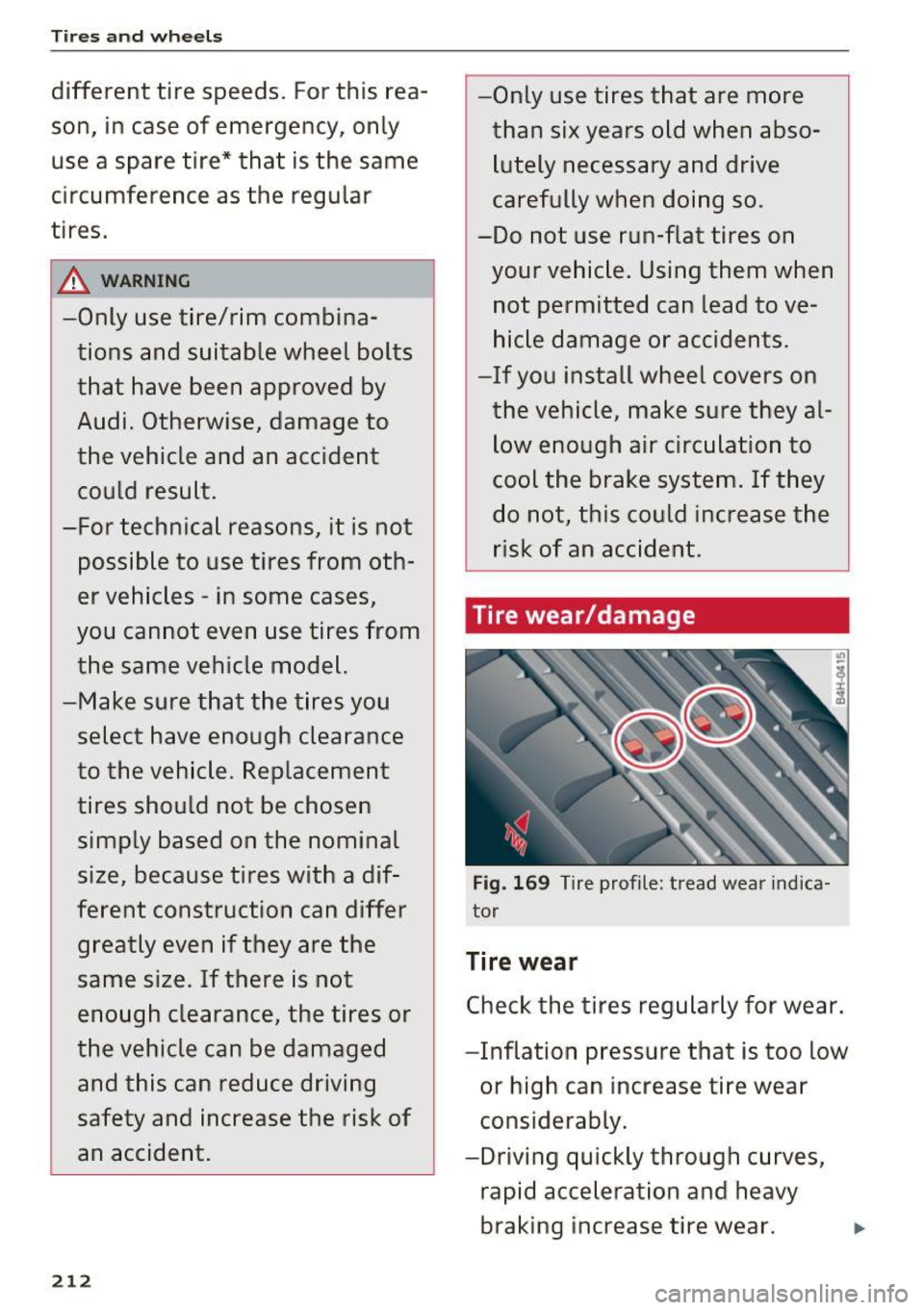
Fig. 169 Tire profile: tread wear indica
tor
Tire wear
Check the tires regularly for wear.
-Inflation pressure that is too low
or high can increase tire wear
considerably.
-Driving quickly through curves, rapid acceleration and heavy
braking increase tire wear. ..
Page 217 of 272
Your safety and that of your passengers also depends on making
sure that load limits are not ex
ceeded. Vehicle load includes ev
erybody and everything in and on
the vehicle. These load limits are
technically referred to as the vehi
cle's
Gross Vehicle Weight Rat
ing
("GVWR").
The "GVWR" includes the weight
of the basic vehicle, all factory in
stalled accessories, a full tank of
fuel, oil, coolant and other fluids
plus maximum load. The maxi
mum load includes the number of
passengers that the vehicle is in
tended to carry ("seating capaci
ty") with an assumed weight of
150 lbs. (68 kg) for each passen
ger at a designated seating posi
tion and the total weight of any luggage in the vehicle. If you tow
a trailer, the weight of the trailer
hitch and the tongue weight of
the loaded trailer must be includ
ed as part of the vehicle load.
The
Gross Axle Weight Rating
("GAWR") is the maximum load
that can be applied at each of the
vehicle's two axles .
; The fact that there is an upper
N
~ limit to your vehicle's Gross Vehi-
o
s: a:,
Tires and wheels
cle Weight Rating means that the
total weight of whatever is being
carried in the vehicle (including
the weight of a trailer hitch and
the tongue weight of the loaded
trailer) is limited. The more pas
sengers in the vehicle or passen
gers who are heavier than the
standard weights assumed mean
that less weight can be carried as
luggage.
The Gross Vehicle Weight Rating
and the Gross Axle Weight Rating
are listed on the safety compli
ance sticker label located on the driver's side B-pillar
9page 214,
fig. 170.
A WARNING
Overloading a vehicle can cause
loss of vehicle control, a crash
or other accident, serious per
sonal injury, and even death.
-Carrying more weight than your vehicle was designed to carry will prevent the vehicle
from handling properly and increase the risk of the loss of
vehicle control.
-The brakes on a vehicle that
has been overloaded may not
be able to stop the vehicle
within a safe distance.
217
Page 225 of 272
<( co .... N ,.__
N .... 0 ,.__
> co
A WARNING
-Only wash the vehicle when the ignition is
off and follow the instructions from the car
wash operator to reduce the risk of acci dents.
- To reduce the risk of cuts, protect yourself from sha rp metal components when wash
ing the underbody or the inside of the wheel
housings.
- After washing the vehicle, the bra king effect
may be de layed due to mo isture on the
bra ke rotors or i ce in the w inte r. The brake s
must be dried fi rst w ith a few care ful brake
applications .
Q) Note
-If yo u wash t he vehi cle in an au toma tic car
wash, yo u m ust fold the exte rior m irrors i n
to re duce the risk of damage to the mirrors .
Power folding exterior m irrors * must on ly
be fo lded in and out using the power folding
funct ion.
- To p revent paint damage, do not wash the
vehicle in d irect sunlight.
Ca re and cleaning
- To re duce the risk of damage, do not wash
the power top with a pressure washer .
- T o red uce the risk of damage to the surface,
do not use insect removing sponges, kitche n
sponges o r similar items .
- M atte finish painted veh icle components:
- To reduce the risk of damage to the sur-
face, do not use polishing agents or hard
wax.
- Never use protective wax. It can destroy
the matte finish effect.
- Do not place any stickers or magnetic
signs on vehicle parts painted with matte
finish paint. The paint could be damaged
when the stickers or magnets are re
moved.
@ For the sake of the environment
Only wash t he veh icle in facili ties s pec ially de
s igned for that pu rpose. This will reduce the
r isk of dirty wate r contamina ted with o il from
ente ring the sewe r sys tem.
Cleaning and care information
When cleaning and caring for individua l vehicle
components, refer to the follow ing tables . The
information contained there is simp ly recom
mendations. For quest ions or for components t
h at are not listed, cons ult an authorize d Audi
dealer or authorized Audi Service Fac ility . Also
f o llow the information found in c> ,& .
Exterior cleaning
Component Situation Solution
Windshield wiper
Deposits <=> page 50 , Cleaning windshield wiper blades
blades
Headlights /
Deposits So
ft sponge with a mild soap solutiona)
Tail light s
Sensors /
Deposits Sensors: soft cloth w it h solvent-free cleani ng solut io n
Camera len ses Camera lenses: soft clot h w ith alcoho l-free cleaning sol u-
tion
Snow/ice Hand br ush/solvent-free de-icing spray
Wheels Road salt Water
Brake dust Acid-free special cleaning solution
Exhaust tail pipe s Road salt Wate
r, clean ing so lution su itab le for s tainless stee l, if ne e-
essa ry
225
Page 230 of 272

Emerg ency assis ta nce
Emergency assistance
Trunk escape latch
Applies to: vehicles with trunk escape latch (A3 sedan)
In case of an emergency, the rear lid can be
opened from the inside using the trunk escape
latch.
Fig. 172 luggage compartment: t runk escape latch
.,. Push the latch in the direction of the arrow un
til the lock releases .
The trunk escape latch inside the rear lid is made of fluo rescent mater ial to glow in the dark.
_& WARNING
The trunk escape latch is to be used only in an
emergency .
General information
.,. Park the vehicle as far as poss ible from moving
traff ic in the event of a flat tire. In the event of
a flat t ire, park the vehicle on a level surface. It
you are on a steep incline, be especia lly careful.
.,. Set the park ing brake.
.,. Place the selector lever in the P position.
.,. Switch the emergency flashers on.
.,. Put on a reflective vest, if available .
.,. Set up the warning triangle, if available .
.,. Have the passengers exit the vehicle . They
should move to a safe place, for example be
hind a guard rail.
_& WARNING
Pay attention to the steps above. They are for
your protection and the for the safety of other
drivers.
2 30
Equipment
Vehicle tool kit
Applies to: vehicles with vehicle tool kit
Fig. 173 lu gg age compartmen t: cargo floor cove r fo lded
upward (example)
The vehicle tool kit, t ire repa ir set* and compres
sor* are stored in the luggage compartment un
der the floor cover~
fig. 173 .
.,. Hook the p lastic hook@ into the luggage com
partment seal.
.,. Unhook the cargo floor before closing the lug
gage compartment lid.
_& WARNING
Improper use of the vehicle jack can cause se
rious personal injuries.
- Never use the screw driver hex head to
tighten wheel bolts, since the bolts cannot
attain the necessary tightening torque if you
use the hex head, potentially causing an ac
cident.
- The factory-supplied jack is intended only
for your veh icle model. Under no circum
stances should it be used to lift heavy
vehicles or other loads; you risk injuring
yourself .
- Never start the engine when the veh icle is
raised, which co uld cause an accident .
- Support the vehicle securely with a ppropri
ate stands if work is to be pe rformed under
neath the vehicle; otherwise, there is a po
tential risk for injury.
- Never use the jack supplied with your Audi
on another vehicle, particularly on a heavier
one. The jack is only su itable for use on the
vehicle it came with. ..,.
Page 234 of 272
Emerg enc y assis ta nc e
-If the spare tire is more than 6 years old,
use it only in an emergency and with ex
treme caution and careful dr iving .
- The spare tire is intended on ly for tempora
ry and short-term use. It should be replaced
as soon as possible with the normal wheel and t ire .
- After mounting the compact spare t ire, the
t ire pressure must be checked as soon as
poss ible . The tire pressure of the compact
spare tire must be
61 psi (420 kPA); other
wise, you risk hav ing an accident.
- Do not drive faster than
50 mph (80 km/h).
You risk hav ing an accident.
- Avoid full -throttle accelerat ion, heavy brak
ing, and fast cornering. You risk having an
acc ident.
- Never dr ive using more than one spare
wheel and tire. You risk having an acc ident .
- Normal summer or winter tires must not be mounted on the compact spare wheel rim.
- For technical reasons, the use of tire chains
on the spare tire is not perm itted. If it is
necessary to drive with t ire chains, the spare
wheel must be mounted on the front axle in
the event of a flat in a rear tire. The new ly
available front wheel m ust then be insta lled
in place of the rear wheel with the flat tire.
Installing the tire chain before mounting
the wheel and tire is recommended.
- Loose items in the passenger compartment
can cause serious personal injury during
hard braking or in an accident. Never store
the inflatable spare t ire or jack and too ls in
the passenger compartment.
- Normal summer or winter tires must not be
mounted on the compact spare wheel rim.
Replacing wheels
Before changing a wheel
Observe the following precautions for your own
and your passenger's safety when changing a
wheel.
.,. After you experience a tire failure, pull the car
well away from moving traff ic and try to reach
le vel ground before you stop¢_& .
234
.. All passengers should lea ve th e car and move
to a safe location (for instance, behind the
guardrail) ¢ _& .
.. Engage the
par king br ake to prevent your vehi
cle from rolling unintentionally¢_& .
.. Move
selec tor le ve r to p osition P ¢ _& .
.. If you are towing a tra iler , u nhitch the trailer
from your vehicle.
.. Ta ke the
jac k¢ page 230 and the spar e tir e
¢ page 233 out of the luggage compa rtment.
A WARNING
-
You or your passengers could be injured while
changing a whee l if you do not follow these
safety precautions:
- If you have a flat tire, move a safe distance off the road. Turn off the engine, turn the
emergency f lashers on and use other warn
ing dev ices to alert other motorists.
- Make sure that passengers wait in a safe
place away from the vehicle and well away
from the road and traff ic.
- To help prevent the veh icle from moving
suddenly and possibly slipping off the jack,
always fully set the parking brake and block
the wheel diagonally opposite the wheel be
ing cha nged . When one front wheel is lifted
off the ground, placing the Automat ic
T ransmiss ion in P (Park) will
not prevent the
veh icle from moving.
- Before you change a whee l, be sure the
gro und is level and firm . If necessary, use a
sturdy board under the jack.
- Always sto re the vehicle too l kit, the jack
and the replaced tire in the luggage com
par tment
¢page 130.
Changing a wheel
When you change a wheel, follow the sequence
described below step-by-step and in exactly that
order.
1. Remove the decorati ve wh eel co ver* . For
more detai ls see also ¢
page 235, Decora
tive wheel covers
or ¢ page 235, Wheels
with wheel bolt caps .
2. Loosen the wh ee l bolt s ¢page 236.
Page 236 of 272
Emergency assistance
The caps are to protect and keep the whee l bolts
clean.
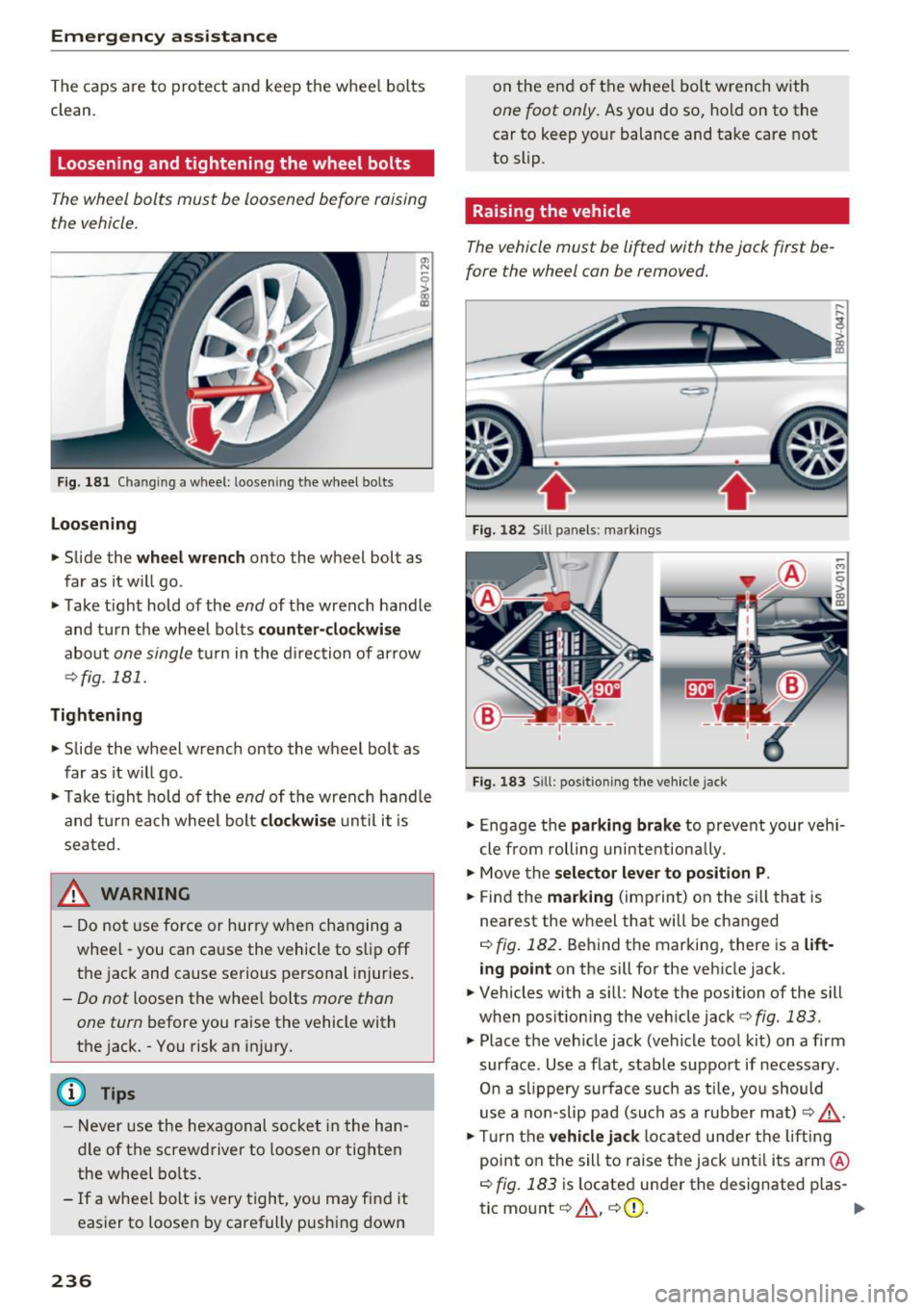
Loosening and tightening the wheel bolts
Th e wheel bolts must be loosened before raising
the vehicle.
Fig . 181 Cha ngin g a wheel: loosening t he w heel bolts
Loosening
• Slide the wheel wrench onto the wheel bolt as
far as it w ill go .
• Take tight hold of the
end of the wrench handle
and turn the wheel bolts
counter-clockwise
about one single tur n in the direction of arrow
c:::>fig . 181.
Tightening
• Slide the wheel wrench onto the wheel bolt as
far as it w ill go .
• Ta ke tight hold of the
end of the wrench handle
and turn each whee l bolt
clockwise until it is
seated.
_& WARNING
- Do not use force or hurry when changing a
wheel -you can cause the vehicle to slip off
the jack and cause serious personal injuries.
-Do not loosen the whee l bolts more than
one turn
before you raise the vehicle with
the jack . - You risk an injury .
(D Tips
-Never use the hexagonal socket in the han
dle of the screwdriver to loosen o r tighten
the wheel bolts.
- If a whee l bolt is very tight, you may find it
easier to loosen by carefully push ing down
236
on the end of the whee l bolt wrench with
one foot only. As you do so, hold on to the
car to keep your balance and take care not
to slip .
Raising the vehicle
The vehicle must be lifted with the jack first be
fore the wheel can be removed.
Fig. 182 Sill panels: marking s
Fig. 183 S ill: pos itio ning the vehicle jack
• Engage the parking brake to prevent your vehi
cle from rolling unintentiona lly .
• Move the
selector lever to position P .
• Find the marking (imprint) on the sill that is
nea rest the wheel that will be changed
c:::>fig. 182. Behind the marking, there is a lift
ing point on the sill for the vehicle jack.
• Vehicles with a sill : Note the position of the sill
when position ing the veh icle jack
c:::> fig. 183 .
• Place the veh icle jack (vehicle tool kit) on a firm
surface . Use a f lat, stable support if necessary .
On a slippery surface such as tile, you should
use a non-slip pad (such as a rubber mat)
c:::> & -
• Tur n the vehicle jack located under the lifting
point on the sill to raise the jack until its arm @
c:::> fig. 183 is located under the designated plas-
tic mount
c:::> ,&. , c:::>(D . "'
Page 241 of 272
<( co ..... N
" N ..... 0 r--. > 00
-Some of the equipment listed in the follow
ing tables applies only to certain model ver
s ions or certain optional equipment .
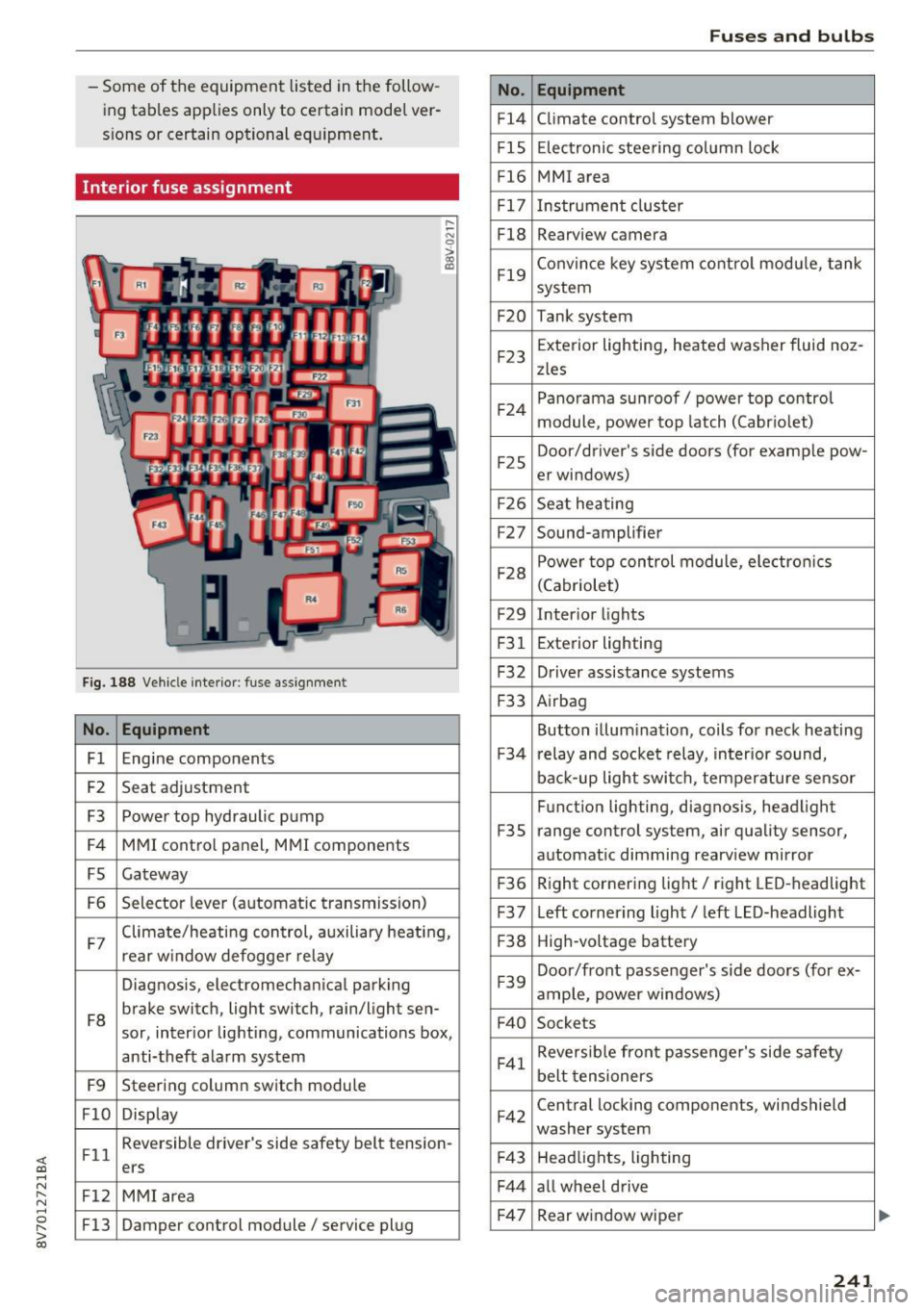
Interior fuse assignment
Fig. 188 Vehicle interior: fuse assignment
No. Equipment
Fl Engine components
F2 Seat
adjustment
F3 Power top hydraulic pump
F4 MMI control panel, MMI components
FS Gateway
F6 Selector
lever (automatic transmission)
.... ~ N
0
>
"' (0
F7 Climate/heating control, auxiliary heating,
rear w
indow defogger relay
Diagnosis, electromechanical parking
FB brake switch, light switch
, rain/light sen-
sor, inter ior lighting, communications box,
anti-theft alarm system
F9 Steering column switch module
FlO Display
Fll Reversible driver's side safety belt tension
-
ers
F12 MMI area
F13 Damper control module/ service plug
No.
Fl4
FlS
Fl6
F 17
FlB
F19
F20
F23
F 24
F2 5
F2 6
F27
F28
F29
F 31
F32
F 33
F 34
F35
F 36
F37
F38
F39
F40
F41
F42
F4 3
F44
F 47
Fuses and bulbs
Equipment
Climate control system blower
Electronic steering column lock
MMI area
Instrument cluster
Rearview camera
Convince key system control module, tank
system
Tank system
Exterior lighting, heated washer fluid noz -
zles
Panorama sunroof/ power top control
module, power top latch (Cabriolet)
Door/driver's side doors (for examp le pow-
er windows)
Seat heating
Sound-amplifier
Power top control module, electro nics
(Cabriolet)
Inter ior lights
Exterior lighting
Driver assistance systems
Airbag
Button illumination, coils for neck heating
r elay and socket relay, interior sound,
back-up light switch, temperature sensor
Function lighting, diagnosis, headlight
range control system, air quality sensor,
automat ic dimming rearview mirror
R ight cornering light/ right LED-headlight
Left cornering light/ left LED-headlight
High-voltage battery
Door/front passenger's side doors (for ex-
ample, power windows)
Sockets
Reversible front passenger's side safety
belt tensioners
Central locking components, windshield
washer system
Headlights, lighting
all wheel drive Rear w indow wiper
241
Page 242 of 272
Fuses and bulbs
No . Equipment
F48 Exterior sound actuator
F49 Starter, clutch sensor, headlight relay coil,
high-voltage
battery
FS3 Rear window defogger
The power seats* are protected via
circuit break
ers
that automatically switch on after a few sec
onds after the overload has been reduced.
(D Tips
Note that the following table was accurate at
the time of printing and is subject to change.
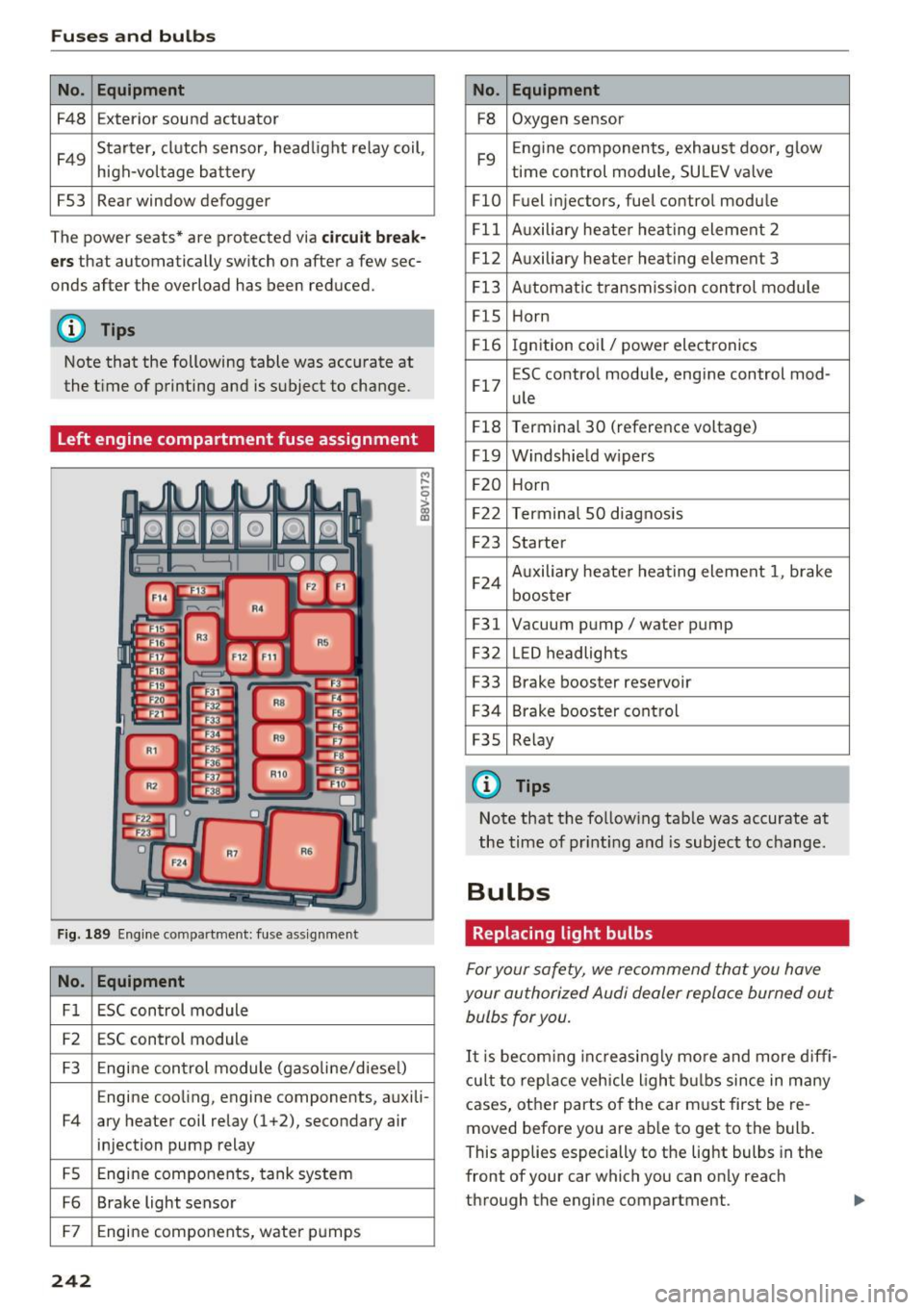
Left engine compartment fuse assignment
Fig . 189 Engine compartment: fuse assignment
No. Equipment
Fl ESC control module
F2 ESC control module
F3 Engine control module (gaso line/diesel)
Engine cooling, engine components, auxili-
F4 ary heater coil relay (1+2), secondary air injection pump relay
FS Engine components,
tank system
F6 Brake light sensor
F7 Engine components, water
pumps
242
No. Equipment
F8 Oxygen sensor
F9 Engine
components, exhaust door, glow
time control module, SU LEV valve
FlO Fuel injectors, fuel control module
Fll Auxiliary heater heat ing element 2
F12 Auxiliary heater heating element 3
F13 Automatic transmiss ion control module
FlS Horn
F16 Ignition coil/ power electronics
F17 ESC control module, engine control mod-
ule
F18 Terminal 30 (reference voltage)
F19 Windshie ld w ipers
F20 Horn
F22 Terminal SO diagnosis
F23 Starter
F24 Auxiliary heater heating element
1, brake
booster
F31 Vacuum pump/ water pump
F32 LED headlights
F33 Brake booster reservoir
F34 Brake booster control
F3S Relay
@ Tips
Note that the following tab le was accurate at
the time of printin g and is subject to change.
Bulbs
Replacing light bulbs
For your safety, we recommend that you have
your authorized Audi dealer replace burned out bulbs for you.
It i s becom ing increasingly more and more diffi
cult to replace vehicle light bulbs since in many
cases, other parts of the car must first be re
moved before you are ab le to get to the bulb.
This applies especially to the light bulbs in the
front of your car which you can only reach
through the engine compartment .
Page 245 of 272

<( co ..... N
" N ..... 0
" > 00
When jump starting or charging the battery,
never connect the negative ground cable to
the battery negative post because the battery
manager system must be able to detect the
battery's state of charge . Always connect the
negative ground cable to the negat ive ground
post of the battery manager control unit .
Using jump start cables
Connect the jump start cables in the exact order
described below.
Fig . 190 Engine compa rtment: connec tor s for ju mp start
cab les and a charger
Fig. 191 Jump start ing th e battery w ith another vehicle:
@ -dra ined bat tery, @-sta rter battery
m ~ 0 :> m
m
The battery is located to the left in the engine
compartment.
Do not jump start a frozen or
thawed battery
c> A in Starting with jumper ca
bles on page
244! Replace the battery. The pro
cedure for connecting jump start cables that is
described next is designed to help jump start
your veh icle.
Vehicle with drained battery:
.. Read the following carefully
c> page 244
.. Set the parking brake and place the selector
lever in the P position .
Emergency situations
.. Turn the ignition and electrica l equipment off
in both vehicles .
Connecting the negative terminal(-) to the
negative terminal(-) (black)
.. To reach the battery terminals, flip the battery
cover cap to the side
c> fig. 190.
1. Clamp the end of the red jump start cable to
the terminal
(D c> fig. 191 on the dead bat
tery @
c> CD in Starting with jumper cables
on page 244 .
2. Clamp the other end of the red jump start ca
ble to the terminal @on the charging bat
tery @.
Connect NEGATIVE (-) to NEGATIVE (-)
(black)
3. Clamp the black end of the jump start cable
preferably at the ground point, or on the
negative term inal @ on the charging battery
®·
4. Clamp the other end of the black jump start
cable
only to the ground point© on your
vehicle @Q(D.
5. Route the jump start cables so they cannot
get caught in the moving parts in the engine
compartment.
Starting the engine
6. Start the engine in the vehicle giving the charge and let it run at idle.
7. Start the engine in the vehicle with the dead battery and wait two to three minutes until it
"runs smoothly" .
8.
If the engine does not start, stop the start ing
procedure after 10 seconds and then repeat
it after approx imately 30 seconds.
9. In the vehicle that is being jump started,
switch the heate r fan and rear window de
froster on to red uce any voltage peaks that
may occur when disconnecting the jumper
cables. The headlights must be switched off.
10. With the engines running, remove the cables in
reverse order of the way they were instal
led . Make sure the cables do not get caught
in moving eng ine components .
11. Switch the heater fan and rear window de
froster off.
12 . Close the battery cover.
245