sim AUDI A3 SEDAN 2018 Owner's Manual
[x] Cancel search | Manufacturer: AUDI, Model Year: 2018, Model line: A3 SEDAN, Model: AUDI A3 SEDAN 2018Pages: 404, PDF Size: 62.3 MB
Page 264 of 404
Safety belts
Unbelted occupants are not able to resist the tre
mendous forces of impact by holding tight or
bracing themselves. Without the benefit of safe
ty restraint systems, the unrestrained occupant
will slam violently into the steering wheel, in
strument panel, windshield, or whatever else is
in the
way ¢ fig. 227. This impact with the vehi
cle interior has all the energy they had just be
fore the crash.
Never rely on airbags alone for protection . Even
when they deploy, airbags provide only add itional
protection . Airbags are not supposed to deploy in
all kinds of accidents. Although your Audi is
equipped with airbags, all vehicle occupants, in
cluding the driver, must wear safety belts cor
rectly in order to minimize the risk of severe in
jury or death in a crash.
Remember too, that airbags will deploy only
once and that your safety belts are always there
to offer protection in those accidents in which
airbags are not supposed to deploy or when they
have already deployed. Unbelted occupants can
also be thrown out of the vehicle where even
more severe or fatal injuries can occur.
It is also important for the rear passengers to
wear safety belts correctly. Unbelted passengers
in the rear seats endanger not only themselves
but also the driver and other passengers
c> fig . 228 . In a frontal collision they will be
thrown forward violently, where they can hit a nd
injure the driver and/or front seat passenger.
262
Safety belts protect
People think it's possible to use the hands to
brace the body in a minor collision . It's simply
not true!
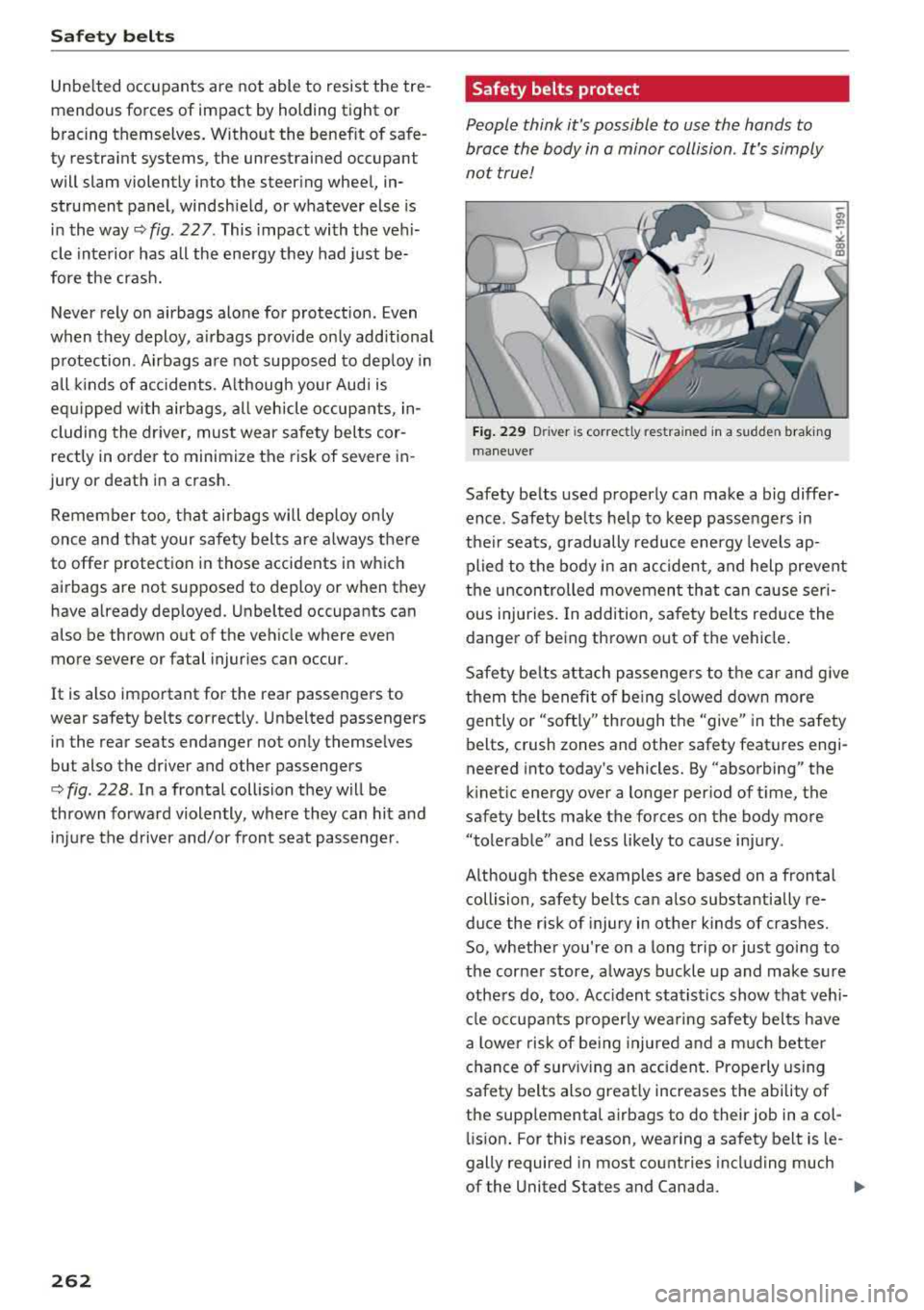
Fig. 229 Driver is correctly res trained in a sudde n braking
maneuver
Safety belts used properly can make a big differ
ence . Safety belts help to keep passengers in
their seats, gradually reduce energy levels ap
plied to the body in an accident, and help prevent
the uncontrolled movement that can cause seri
ous injuries. In addition, safety belts reduce the
danger of being thrown out of the vehicle.
Safety belts attach passengers to the car and give
them the benefit of being slowed down more gently or "softly" through the
"give" in the safety
belts, crush zones and other safety features engi
neered into today's vehicles. By "absorbing" the
kinetic energy over a longer period of time, the
safety belts make the forces on the body more
"tolerable" and less likely to cause injury .
Although these examples are based on a frontal
collision, safety belts can also substantially re
duce the risk of injury in other kinds of crashes.
So, whether you're on a long trip or just going to
the corner store, always buckle up and make sure
others do, too . Accident statistics show that vehi
cle occupants properly wearing safety belts have
a lower risk of being injured and a much better
chance of surviving an accident. Properly using
safety belts also greatly increases the ability of
the supplemental airbags to do their job in a col lision. For this reason, wearing a safety belt is le
gally required in most countries including much
of the United States and Canada.
.,.
Page 279 of 404

u. 00 .-< N l' N .-< 0 N > 00
Airbag System for the front passenger seat from
doing its job in a crash.
The front Ad vanced Airbag System con sists
o f th e follo wing :
-Cras h sensors in the front of the vehicle that
measure vehicle acceleration/deceleration to
provide information to the Advanced Airbag
System a bout the severity of the crash.
- An electronic control unit, with integrated
crash sensors for front and side impacts. The
contro l unit "decides" whether to fire the front
airbags based on the information received from
the crash sensors . The control unit also "de
c ides" whether the safety belt pretens ioners
shou ld be activated .
-An Advanced Airbag with gas generator for the
dr iver inside the steering wheel hub.
-An Advanced Airbag with gas generator ins ide
the instrument panel for the front passenger.
-A capac itive passenger detect io n system under
neath the front passenger seat cover. This sys
tem measures the elect rical capac ita nce of the
person in the seat. The info rmat ion registe red
is sent cont inuous ly to the electro nic cont rol
u nit to regula te deployment of t he front Ad
vanced Airbag on the passenge r side.
-An a irbag monito ring system and indica tor
li gh t in the ins trument
cluste r¢ page 281 .
-A se nso r in each front seat reg isters the dis
tance between the respec tive sea t and the
steering wheel or instrument pane l. The infor
mation registered is sent continuous ly to the
electronic control unit to regulate deployment
of the front Adv a need A irbags.
-T he PASSENGER AIR BAG OFF light comes on
and stays on in the center of the instrument
panel
¢ page 318 and tells you when the front
Advanced Airbag on the passenger side has been turned off .
-A sensor in the safety belt latch for the driver
and for the front seat passenger that senses
whether that safety belt is latched or not and
transm its this info rmat ion to the elect ronic
contro l unit.
Airbag syste m
.&, WARNING ~ -
Damage to the front passenger seat can pre
vent the front airbag from working properly.
-Improper repair or disassembly of the front
passenger and driver seat will p revent the
Advanced Airbag System from f unct ion ing
p roperly.
-Repairs to the front passenger seat must be
pe rformed by qualified and p roperly trained
wo rkshop personne l.
-Never remove the front passenger or driver
seat from the vehicle .
-Never remove the upholstery from the front
passenger seat.
-Never d isassemble or remove parts from the
seat o r disconnect w ires from it.
-Never carry sharp objects in your pockets or
put them on the seat. The capacit ive pas
senger de tect ion mat in the front passenger
seat will not function p roperly if i t is punc
tured.
-Never carry things on your lap or carry ob
jects on the front passenge r seat. S uch ob
jects can influence the capacitance reg is
tered by the cap aci tive passenger detection
sys tem, so that incorrect in formation is pro
vided to the ai rbag control unit.
-Never store i tems unde r the front passenger
seat . Parts of the Advanced Airbag System
under the passenger seat could be dam
aged, p reventing them and the airbag sys
tem from wor king p roper ly.
-Never p lace seat covers or replacement up
holstery that have not been specifically ap
proved by Audi on the front seats.
-Seat covers can prevent the Advanced Air bag System from recognizing chi ld re
stra ints or occupants on the front passenger
seat and prevent the side airbag in the seat
backrest from deploying properly.
-If a seat heater has been retrofitted or oth
erwise added to the front passenger seat,
never ins tall any child restra int system on
this seat.
-Never use cushions, p illows , blankets, or
similar items on the front passenge r seat .
T he addi tional laye rs prevent the capacit ive
277
Page 310 of 404

Child sa fety
- Always make sure the seat backrest to which
t h e chi ld restraint is installed is in an up
rig ht p osition and s ecurely latched into
plac e and can not f old forward . O therwise,
t he se atback with t he ch ild safe ty seat at
tached to it could fly forward in the event of
an accident or other emergency situation.
- Always read and heed all WARNINGS when
ever using a child restrained in a veh icle is
being used
¢ page 294. Specia l preca utions
apply when installing a child safety seat on
the front passenger
seat ¢ page 2 70, Child
restraints on the front seat -some impor
tant things to know.
Deactivating the convertible locking
retractor
The convertible locking r etractor for child
re
straints will be deactivated automatically when
the bel t is wound all the way back in to the re
tractor .
~ Press the red button on the safety belt b uckle.
Th@ belt tongue w ill pop out of the buckl e.
~ Gu ide the safety belt a ll the way back into its
stowed position .
Always let the safety belt retract complete ly into
its stowed position . The safety bel t can now be
used as an ordinary safety belt without the con
vert ible lock ing retractor for child restra ints .
If the convert ible lock ing retractor should be ac
tiva ted inadve rtently, the safe ty belt must be un
fastened and gu ided completely back into its
stowed position to deact ivate this feature .
If the
convertib le lock ing retractor is not deact ivated,
the safety belt w ill gradually become tighte r and
uncomfo rtable to wea r.
A WARNING
-
Improperly installe d child safety seats in
crease the risk of serio us pe rsonal injury and
death in a collision .
- Never unfasten the safe ty belt to deactiva te
the convert ible locking retractor for child re
straints while the vehicle is moving . You
308
wou ld not be rest rained and could be seri
ously in jured in an acc ident.
- Always read and heed all WARNINGS when
ever us ing a child restrained in a vehicle is
be ing
used¢ page 294. Special p recautions
apply when installing a child safety seat on
the front passenge r seat
¢ page 2 70, Child
restraints on the front seat -some impor
tant things to know.
LATCH system (lower
anchorages and tethers
for children)
Child Restraint System anchors and how
are they related to child safety
To p rovide a simp ler and mo re practicab le way to
attach the ch ild restraint on the vehicle seat,
Federal regulations require spec ia l lower ancho
rages in vehicles and devices on new ch ild re
straints to attach to the vehicle anchorages .
In the United States, the combination of the
tethe r ancho rages and the lower anchorages is
now generally called t he LATCH system for
" Lower Anchorages and Tethers for Children" . In
Canada, the terms
" top tet her " wi th "lower u ni
versa l anchorages " (o r "lowe r universa l anchor
age bars") a re used to des cribe the system .
In other co untries the term
"ISOF IX" is used to
desc ribe the lower anchorages .
Fo rward-facing chi ld restraints manufactured af
ter September
1, 1999, are required by U.S . fed
era l regulations to comply with new child head
movement performance req uir ements . These
new performance requ irements make a tether
necessary on most new ch ild sea ts.
Installing a ch ild restraint that requires a top
tether wi thout one can se riously impair the per
fo rmance of the c hild rest raint and its ab ility to
pro tect the ch ild in a co ll ision. I nstalling a ch ild
r es trai nt th at r equi res a top te ther wi tho ut the
top tether may be a vio lation o f st ate law.
Child restra int manufactu rers offe r LATCH lowe r
ancho rages on t heir child seats w ith hook-on or
...
Page 332 of 404

Wheels
Wheels
Wheels and T ires
General information
~check your tires regularly for
damage (punctures, cuts, cracks
and bulges). Remove foreign ob
jects from the tire tread.
~ If driving over curbs or similar
obstacles, drive slowly and ap proach the curb at an angle.
~Have faulty tires or rims re
placed immediately.
~ Protect your tires from oil,
grease and fuel.
~ Mark tires before removing
them so that the same running
direction can be maintained if
they are reinstalled.
~Lay tires flat when storing and
store them in a cool, dry location
with as little exposure to light as
possible.
_&. WARNING -
-Never drive faster than the maximum permitted speed
for your tires. This could cause
the tires to heat up too much.
This increases the risk of an
accident because it can cause
the tire to burst .
-Always adapt your driving to the road and traffic condi-
330
tions . Drive carefully and re
duce your speed on icy or slip
pery roads . Even winter tires
can lose traction on black ice.
(@ Note
-Please note that summer and
winter tires are designed for
the conditions that are typical
i n those seasons . Aud i recom
mends using winter tires dur
ing the winter months . Low
temperatures significantly de
crease the elasticity of summ
er tires, which affects traction
and braking ability. If summer
tires are used in very cold
temperatures, cracks can form
on the tread bars, resulting in
permanent tire damage that
can cause loud driving noise
and unbalanced tires.
-Burnished, polished or chromed rims must not be used in winter driving condi
t ions. The surface of the r ims
does not have sufficient corro
sion protection for this and
could be permanently dam
aged by road salt or similar
substances.
Page 338 of 404

Wheels
maximum permissible road
speeds . See also ¢
A in General
information on page 330 .
Tire pressure monitoring
system *
means a system that detects
when one or more of a vehicle's
tires are underinflated and illumi
nates a low tire pressure warning
telltale .
Tread
means that portion of a tire that
comes into co ntact with the road.
Tread separat ion
means pulling away of the tread
from the tire carcass.
Treadwear indicators (TWI)
means the projections within the
pr incipal grooves designed to g ive
a vis ual indication of the degrees
of wear of the tread . See
¢ page 339, Treadwear indicator
for more information on measu r
ing tire wear.
Uniform Tire Quality Grading
is a tire information system devel
oped by the United States Nat ion
a l Highway Traffic Safety Admin
istration ( NHTSA) tha t is designed
to he lp buyers make relative com-
33 6
parisons among tires . The UTQG
is not a safety rat ing and not a
guarantee that a tire will last for
a prescribed number of miles (kilo meters) or perform in acer
t ain way . It simply g ives tire buy
ers add itiona l information to
combine with other considera
tions , such as price, brand loyalty
and dealer recommendations. U n
de r UT QG, tires a re graded by the
tire manufacturers in three areas: treadwear, tract ion, and tempera
ture res istance. The UTQG info r
mation on the tires , molded into
the si dewalls .
U.S. DOT Tire Identification
Number (TIN)
This is the tire's "serial number".
It beg ins with the letters
"DO T"
and indicates that the tire meets
all federal s tandards. The next
two numbers or le tters indicate
the plant whe re it was ma nufac
tured, and t he last four num bers
represent the week and year of
manufacture. Fo r example,
DOT ... 2217 .. .
means that the tire was produced
in the 22nd week o f 2017. The
other numbers are ma rketing co
des that may or may not be used
~
Page 340 of 404

Wheels
.,.Audi recommends that you use
Audi Original Tires. If you would like to use different tires, please
note that the tires may perform
differently even if they are the
same size
¢ 11:,. .
.,. If you would like to equip your
vehicle with a tire/rim combina
tion that is different from what
was installed at the factory, con
sult with an authorized Audi dealer or authorized Audi Service
Facility before making a pur
chase¢ ,&.
Because the spare tire* is differ
ent from the regular tires instal
led on the vehicle (such as winter
tires or wide tires), only use the
spare tire* temporarily in case of
emergency and drive carefully
while it is in use. It should be re
placed with a regular tire as soon
as possible.
Applies to: vehicles with all wheel
drive: all four wheels must be
equipped with tires that are the
same brand and have the same
construction and tread pattern so
that the drive system is not dam
aged by different wheel speeds. For this reason, in case of emer
gency, only use a spare tire* that
338
is the same circumference as the
regular tires.
~ WARNING -
-Only use tire/rim combina tions and suitable wheel bolts
that have been approved by
Audi. Otherwise, damage to
the vehicle and an accident could result.
-For technical reasons, it is not possible to use tires from oth
er vehicles - in some cases,
you cannot even use tires from
the same vehicle model.
-Make sure that the tires you
select have enough clearance
to the vehicle. Replacement
tires should not be chosen simply based on the nominal
size, because tires with a dif
ferent construction can differ
greatly even if they are the
same size. If there is not
enough clearance, the tires or
the vehicle can be damaged and this can reduce driving
safety and increase the risk of
an accident.
-Only use tires that are more than six years old when abso
lutely necessary and drive
carefully when doing so.
...
Page 360 of 404
Care and cl eaning
- Camera len se s
- Never use warm or hot water to remove
snow or ice from the camera lens. Th is
could cause the lens to crack .
- Never use abras ive clean ing mater ia ls or
alcohol to clean the camera lens . This
cou ld cause scratches and cracks.
- Pow er top
- Remove bi rd dropp ings immedia tely.
- Never use gasoline, spot remover, ben-
zene, pa int thinne r or other solvents to re
move.
- Door windows
- Remove snow and ice on windows and ex-
terior mirrors with a p lastic scraper. To
avoid scratches, move the scraper on ly in
one direction and not back and forth.
- Never remove snow or ice from door win
dows and m irrors using warm or hot water
because this could cause cracks to form .
- To avoid damage to the rear w indow de
fogger, do not apply any stickers on the
heating w ires on the inside of the window.
- Decorative parts /trim
- Never use chrome care or cleaning p rod-
ucts.
- Paint
-To red uce the risk of scratches, the vehicle
must be free of dirt and dust before pol
ishing or waxing.
- To prevent paint damage, do not polish or
wax the veh icle in direct sunlight.
- To red uce the risk of paint damage, do not
polish away rust spots.
- Remove cosmetics and sunscreen immedi
ately - these could damage the paint.
- Di spla ys/ instrument cluster
- The d isplays/instrument cluster and the
trim surrounding them must not be
cleaned with dry cleaning methods be
cause they could be scratched .
- Make sure that the instrument cluster is
switched off and has cooled off before
cleaning it .
- Make sure no fluids enter the spaces be tween the instrument cluster and the
trim, because that could ca use damage.
35 8
-Controls
- Make sure that no flu ids enter the con-
trols, because this could cause damage .
-Safety belts
- Do not remove the safety belts to clean
them.
- Never clean safety belts or their compo
nents chem ica lly or with co rrosive fluids
or solven ts and never allow sharp objec ts
to come into contact with the safety belts .
This could ca use damage to the belt web
bing.
- If there is damage to the webbing, the
connections, the retractors or the buckles, have them replaced by an authorized Audi
dealer or authorized Aud i Serv ice Facility .
-Te xtile s/artificial leather / Alcantara
- Never treat art ificial leather/Alcantara
with leathe r ca re products, solvents, floor
polish, shoe polish, spot remove o r similar
p rodu cts.
- H ave a spec ial ist remove stubborn stains
to prevent damage .
-Never use steam cleaners, brushes, hard
sponges, etc. when cleaning.
- Do not turn on the seat heating* to dry the seat .
- Objects w ith sharp edges, such as zippers
or rivets on clothing or belts, can cause
damage to the surface .
- Open hook and loop fasteners, for exam
ple on clothing, can damage seat covers .
Make sure hook and loop fastene rs a re
closed.
- Na tural leather
- Never treat leather with solvents, floor
polish, shoe polish, spot remover or simi
lar products.
- Objects with sharp edges, such as zippers
or rivets on clothing or belts, can cause
damage to the surface.
- Never use steam cleaners, brushes, hard
sponges, etc. when cleaning.
- Do not turn on the seat heating* to dry the
seat.
- To he lp prevent the leather from fading,
do not leave the vehicle in direct sunlight
Page 368 of 404
Emergency assistance
Raising the vehicle
The vehicle must be li~ed with the jack first be
fore the wheel can be removed.
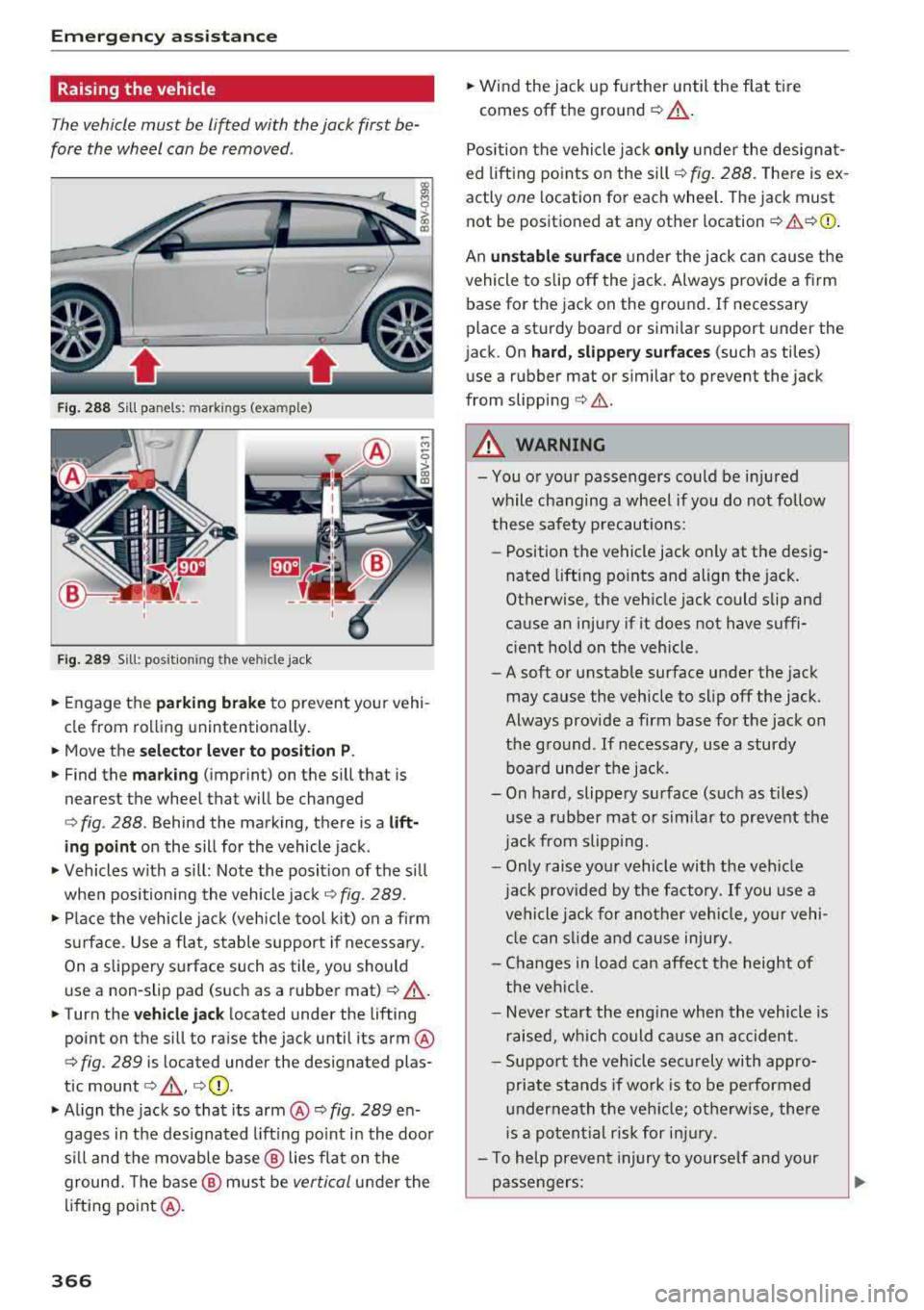
Fig. 288 Sill panels : mark in gs (exa mple)
Fig. 289 Sill : positio nin g th e ve hicle jack
,.. Engage the parking brake to prevent your vehi
cle from rolling unintentionally.
,.. Move the selector lever to position P.
,.. Find the marking (imprint) on the sill that is
nearest the wheel that will be changed
c> fig . 288 . Behind the marking, there is a lift
ing point on the sill for the vehicle jack.
,.. Vehicles with a sill: Note the position of the sill
when positioning the vehicle jack
c::> fig. 289.
,.. Place the vehicle jack (vehicle tool kit) on a firm
surface. Use a flat, stable support if necessary.
On a slippery surface such as tile, you should
use a non-slip pad (such as a rubber mat)
c::> ,&..
,.. Turn the vehicle jack located under the lifting
point on the sill to raise the jack until its arm @
c> fig. 289 is located under the designated plas
tic mount
c::> ,& , c::>G) .
,.. Align the jack so that its arm@ c::> fig. 289 en
gages in the designated lifting point in the door
sill and the movable base @ lies flat on the
ground. The base @ must be
vertical under the
lifting point @.
366
,.. Wind the jack up further until the flat tire
comes off the ground
c::> ,&. .
Position the vehicle jack only under the designat
ed lifting points on the sill
c::>fig. 288. There is ex
actly
one location for each wheel. The jack must
not be positioned at any other location
c::> & c::>(I) .
An unstable surface under the jack can cause the
vehicle to slip off the jack. Always provide a firm
base for the jack on the ground. If necessary
place a sturdy board or similar support under the
jack. On
hard, slippery surfaces (such as tiles)
use a rubber mat or similar to prevent the jack
from slipping
c::> & .
A WARNING -
-You or your passengers could be injured
while changing a wheel if you do not follow
these safety precautions :
-Position the vehicle jack only at the desig
nated lifting points and align the jack.
Otherwise, the vehicle jack could slip and
cause an injury if it does not have suffi
cient hold on the vehicle .
-A soft or unstable surface under the jack
may cause the vehicle to slip off the jack.
Always provide a firm base for the jack on
the ground . If necessary, use a sturdy
board under the jack.
-On hard, slippery surface (such as tiles)
use a rubber mat or similar to prevent the
jack from slipping.
-Only raise your vehicle with the vehicle
jack provided by the factory. If you use a
vehicle jack for another vehicle, your vehi
cle can slide and cause injury.
-Changes in load can affect the height of
the vehicle.
-Never start the engine when the vehicle is
raised, which could cause an accident.
-Support the vehicle securely with appro
priate stands if work is to be performed
underneath the vehicle; otherwise, there
is a potential risk for injury .
-To help prevent injury to yourself and your
passengers: