lock AUDI A4 2013 Manual PDF
[x] Cancel search | Manufacturer: AUDI, Model Year: 2013, Model line: A4, Model: AUDI A4 2013Pages: 302, PDF Size: 75.61 MB
Page 218 of 302

216 Fuel supply and filling your fuel tank
-Inform your authorized Audi dealer that
you are operating or have operated the
vehicle with E85.
- Read and follow the information and tips
about gasoline
¢ page 214.
@ Tips
I t may take longer to start the engine
when the outside temperature is very cold.
If possible, use winterized fuel if tempera
tures are below freezing.
Gasoline additives
A major concern among many auto manufac
turers is carbon deposit build-up caused by
the type of gasoline you use.
Although gasoline grades differ from one manufacturer to another, they have certain
things in common. All gasoline grades contain
substances that can cause depos its to collect
on vital engine parts, such as fuel injectors
and intake valves. Although most gasoline
b rands include additives to keep eng ine and
fuel systems clean, they are not equally effec
tive.
Aud i recommends using TOP TIER Detergent
Gasoline. For more information on TOP TIER
Detergent Gasoline, please go to the official
website (www.toptiergas .com).
After an extended period of using inadequate
f u els, b uilt-up carbon deposits can rob your
engine of peak performance.
CJ) Note
-Damage or malfunct ion due to poor fuel
quality is not covered by the Audi New
Vehicle Limited Wa rranty.
- Do not add aftermarket fuel addit ive
products to your fuel tank .
Fuel tank
Fuel filler neck
The fuel filler neck is located on the right rear
side panel behind the fuel filler flap. If the power
locking system should fai l, you
can still open the flap manua lly -for detailed
instructions see
¢page 218.
You can find the fuel tank capacity of your ve
hicle in
Technical Data ¢page 277 .
T he label on the inside of the fuel filler flap
te lls you the correct fuel for your veh icle. For
more information about fuel specifications,
see ¢
page 214.
Your vehicle fuel tank has an on-board refuel
ling vapor recovery system. This feature helps
to prevent fue l vapors from escaping from the
tank and polluting the environment while you
refuel your vehicle. In order to fi ll the tank
proper ly while protecting the environment,
please fo llow this refueling procedure careful
ly.
A WARNING "'--
Under normal operating cond itions, never
carry addit ional fuel conta iners in your car .
Gas canisters and other conta iners used to
transport fuel can be dangerous. Such con
tainers, full or empty, may leak and could
cause a fire in a collision . If you must
transport fuel to use for your lawn mower,
snow b lower, etc., be very careful and al
ways observe loca l and state laws regard
ing the use, transportation and storage of
such fuel containers. Make certain the con
tai ner meets industry standards (ANSI/
ASTM F852 -86).
(D Note
Never drive your veh icle until the fuel tank
i s completely empty. The irregular supply
of fuel can cause misfiring. Gasoline could
enter the exhaust system and damage the
catalytic converter.
Page 219 of 302
Refuelling
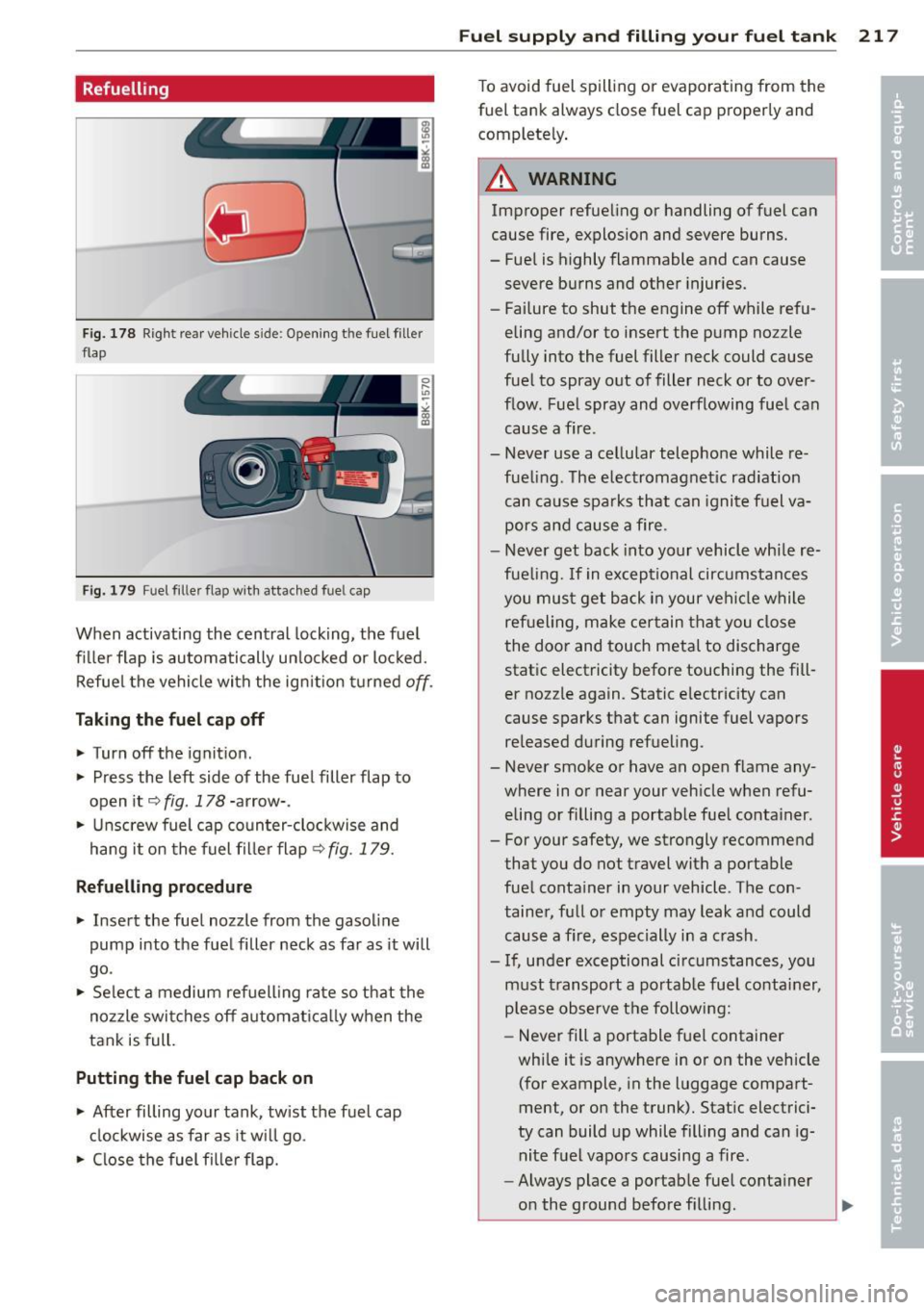
Fig. 178 Right rear vehicle sid e: Opening t he fuel filler
flap
Fig. 179 Fu el filler flap with attached fuel cap
When activating the central locking, the fuel
filler flap is automatically unlocked or locked.
Refuel the vehicle with the ignition turned
off.
Taking the fuel cap off
.. Turn off the ignition .
.. Press the left side of the fuel filler flap to
open it~
fig. 178 -arrow- .
.. Unscrew fuel cap counter-clockwise and
hang it on the fuel filler flap~
fig. 179.
Refuelling procedure
.. Insert the fuel nozzle from the gasoline
pump into the fuel filler neck as far as it will
go .
.. Select a medium refuelling rate so that the
nozzle switches off automatically when the
tank is full.
Putting the fuel cap back on
.. After filling your tank, twist the fuel cap
clockwise as far as it will go .
.. Close the fuel filler flap.
Fuel supply and filling your fuel tank 217
To avoid fuel spilling or evaporating from the
fuel tank always close fuel cap properly and
completely.
_& WARNING
Improper refueling or handling of fuel can
cause fire, explosion and severe burns.
- Fuel is highly flammable and can cause
severe burns and other injuries.
- Failure to shut the engine off while refu
eling and/or to insert the pump nozzle
fully into the fuel filler neck could cause
fuel to spray out of filler neck or to over
flow. Fuel spray and overflowing fuel can cause a fire .
- Never use a cellular telephone while re
fueling. The electromagnetic radiation
can cause sparks that can ignite fuel va
pors and cause a fire.
- Never get back into your vehicle while re
fueling.
If in exceptional circumstances
you must get back in your vehicle while
refueling, make certain that you close
the door and touch metal to discharge static electricity before touching the fill
er nozzle again. Static electricity can
cause sparks that can ignite fuel vapors
released during refueling .
- Never smoke or have an open flame any
where in or near your vehicle when refu
eling or filling a portable fuel container .
- For your safety, we strongly recommend
that you do not travel with a portable
fuel container in your vehicle . The con
tainer, full or empty may leak and could
cause a fire, especially in a crash.
- If, under exceptional circumstances, you must transport a portable fuel container,
please observe the following:
- Never fill a portable fuel container
while it is anywhere in or on the vehicle
(for example, in the luggage compart
ment, or on the trunk). Static electrici
ty can build up while filling and can ig
nite fuel vapors causing a fire .
- Always place a portable fuel container
on the ground before filling.
Page 220 of 302
218 Fuel supply and filling your fuel tank
-Always keep the filler nozzle complete
ly inside the portable container before
and during filling.
- If filling a portable container made of
metal , the filler no zzle must always be
in contact with the container. Th is will
help prevent static electricity from dis
charging and cause a fire .
- Never spill fuel inside the vehicle or
luggage compartment. Fuel vapors are
highly flammable .
-Always observe local and state/provin
cial laws regarding the use, storage
and transportation of fuel containers.
- Make certain the fuel container meets
industry standards (ANSI/ ASTM
F 852-86).
(D Note
If any fuel has spilled onto the car, it
should be removed immediately to prevent
damage to the paint .
@ For the sake of the environment
As soon as the correctly operated nozzle
sw itches off automatically for the first
time, the tank is full . Do not try to add
more fuel because fuel may spill out. In
addition, the expansion space in the fuel
tank will be filled -causing the fue l to
overflow when it becomes warm and pol
lute the environment.
@ Tips
-Running yo ur engine while refuelling
may cause vapors to escape or even
cause fue l to spill out of the tank . This
would then shut off the fuel nozzle be
fore the tank is full.
- Do not refuel your vehicle with the igni
tion turned on. The fuel gauge may oth
erwise not indicate the correct fuel level
after refuelling .
- The fuel filler flap of your vehicle is not locked when you lock the vehicle from
the inside .
Unlocking the fuel filler flap by hand
You can open the fuel filler flap by hand if the
power locking system should fail.
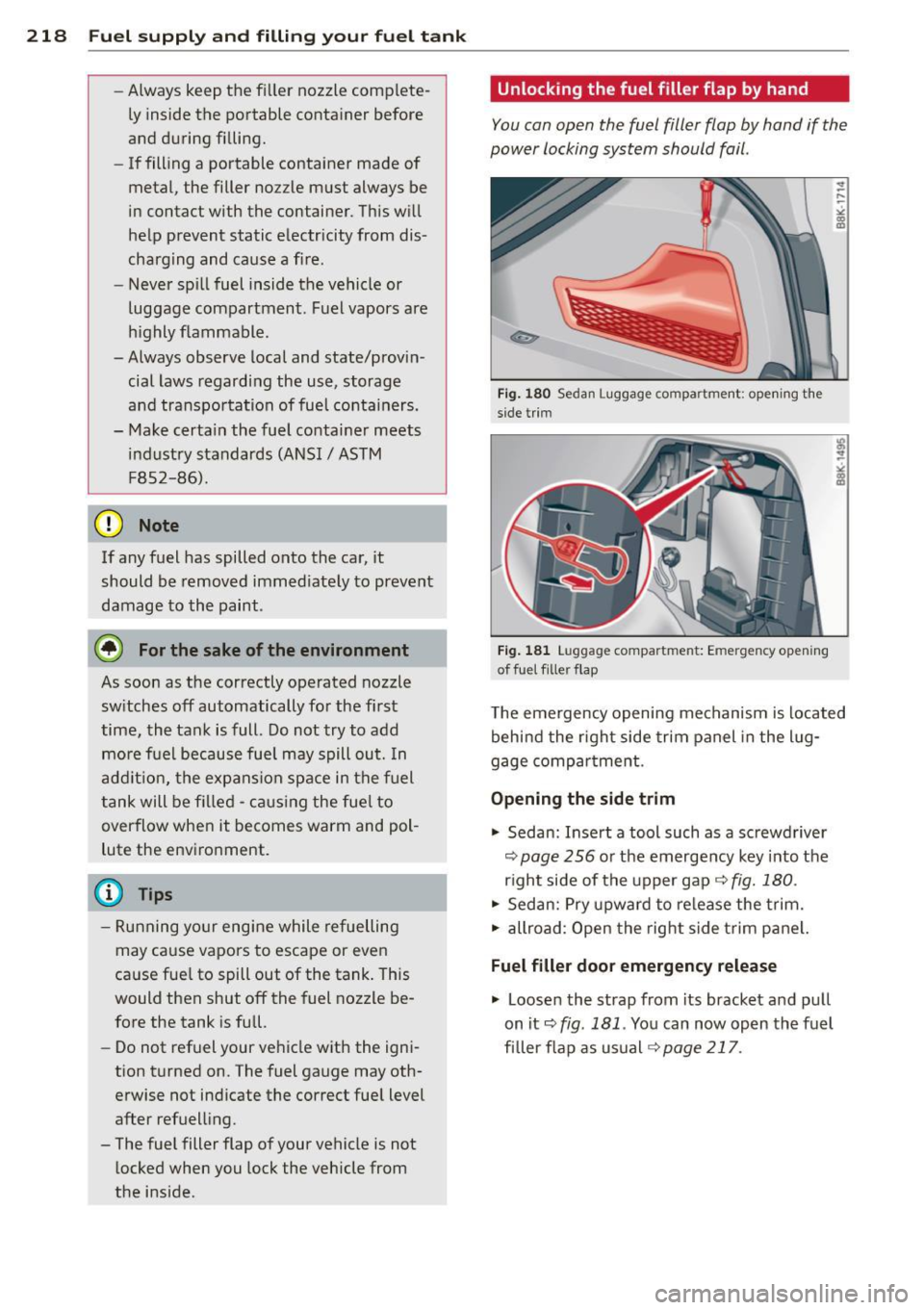
Fig. 180 Sed an Lugga ge com pa rtment: op ening the
side trim
Fig. 181 Lug gag e compart men t: Em erge ncy opening
of fuel filler fla p
The emergency opening mechanism is located
behind the right side trim panel in the lug
gage compartment .
Opening the side trim
"' Sedan: Insert a tool such as a screwdriver
c:> page 256 or the emergency key into the
right side of the upper gap~
fig. 180 .
"' Sedan: Pry upward to release the trim .
.,.. allroad : Open the right side trim panel.
Fuel filler door emergency release
"' Loosen the strap from its bracket and pull
on it
c:> fig . 181 . You can now open the fuel
fi ller f lap as usual
c:> page 217.
Page 221 of 302
Checking and filling Engine hood
Releasing and opening the engine hood
The engine hood is released from inside the
vehicle .
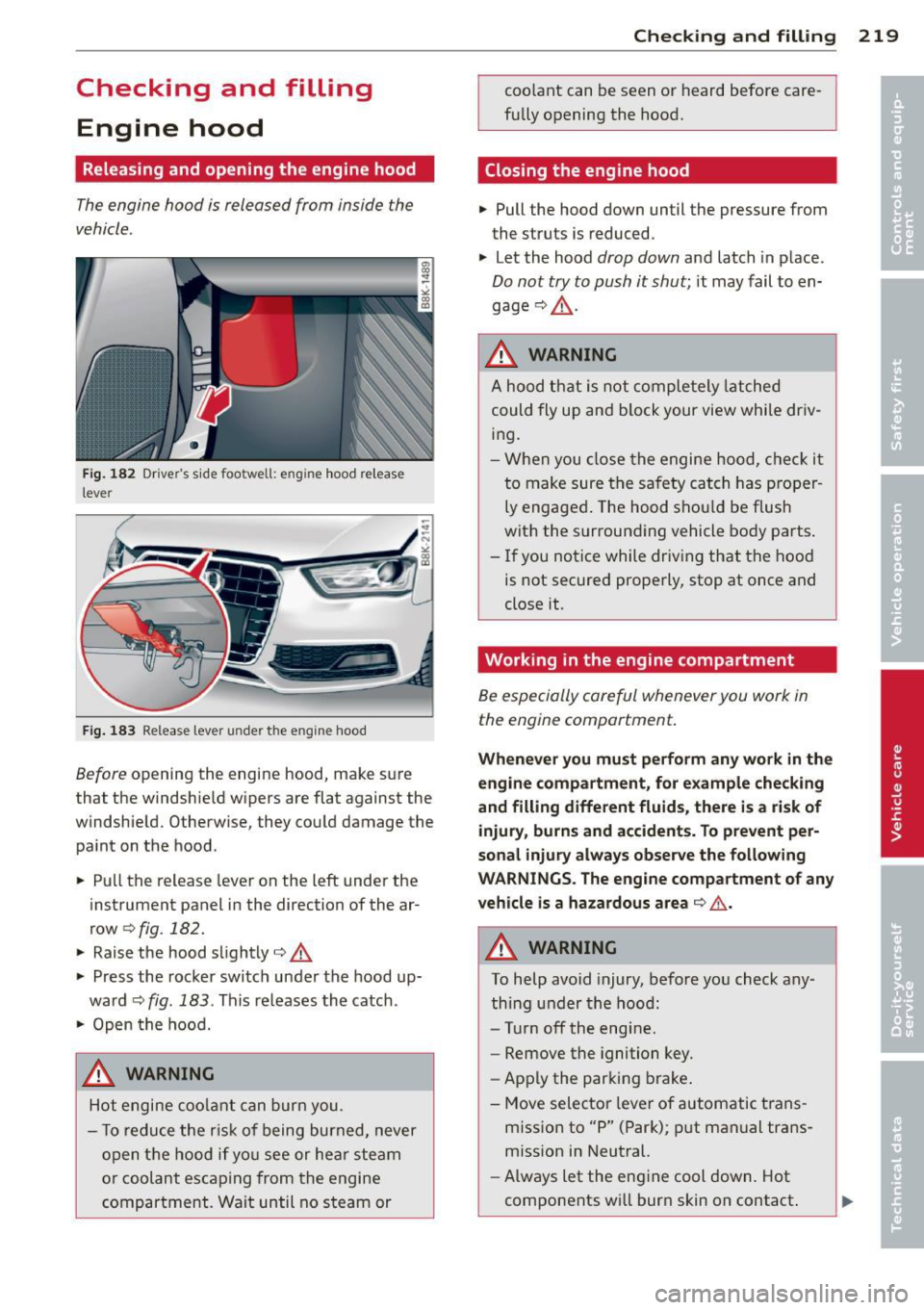
Fig . 182 Dr iver's side footwell: eng ine hood release
lever
... ~ - ---
F ig . 183 Re lease lever un der the engine hood
Before opening the engine hood, make sure
that the windshield w ipers are flat against the
windshield. Otherwise, they could damage the
paint on the hood.
.. Pull the release lever on the left under the
instrument panel in the direction of the ar
row
Q fig. 182.
.. Raise the hood slightly QA
.. Press the rocker switch under the hood up
ward
c::> fig . 183 . This re leases the catch .
.,. Open the hood.
& WARNING
Hot engine coo lant can burn you.
- To redu ce the r isk of being burned, never
open the hood if yo u see or hear steam
or coolant escaping from the engine
compartment. Wait until no steam or Checkin
g and fillin g 219
coolant can be seen or heard before care
fully opening the hood.
Closing the engine hood
.. Pull the hood down until the pressure from
the struts is reduced .
.. Let the hood
drop down and latch in place.
Do not try to push it shut; it may fail to en
gage
c::> .&, .
_&. WARNING
-
A hood that is not comple tely latched
could fly up and b lock your view while dr iv
ing.
- When you close the engine hood, chec k it
to make sure the safety catch has p ro pe r
ly engaged . The hood sho uld be flush
with the surrounding vehicle body parts .
-If you notice while driv ing that the hood
is not secured prope rly, stop at once and
close it.
Working in the engine compartment
Be especially careful whenever you work in the engine compartment .
Whenever yo u mu st p erform an y w or k in th e
eng in e compa rtment, for example checking
and filling differ ent fluid s, there i s a ri sk of
injury , burns and accidents. To prevent per
sonal injury always obser ve the following
WARNINGS . The eng ine compa rtment of any
v ehicle is a hazardous are a
QA .
_&. WARNING
To help avoid injury, before you check any
thing under the hood:
- Turn off the engine.
- Remove the ignition key.
- Apply the parking brake .
- Move selector lever of automatic trans -
mission to "P" (Park); p ut manual trans
miss ion in Neutral.
- Always let the engine cool down. Hot
components w ill burn skin on contact .
Page 229 of 302

The location of the coolant expansion tank
can be seen in the engine compartment illus
tration
q page 221 .
To obtain an accurate read ing , the eng ine
must be switched off .
The expa nsion tank in you r vehicle is equipped
with an elec tric coolant level sensor.
When the coolant level is too low, the warning
light in the Auto-Check System
q page 18 wi ll
b lin k until you add coo lant and the level has
been restored to norma l. Even t hough the re is
an e lec tric coolant level sensor, we s till rec
ommend you check the coolant leve l from
time to time .
Coolant loss
Coolant loss may indi cate a leak in the coo ling
sys tem. In the event of coolant loss, the cool
ing system should be inspected immedia tely
by your authorized A udi dealer. It is not
enough merely to add coolant.
I n a
s ealed system, losses can occur only if
the boiling point of the coolant is exceeded as
a result of overheating.
A WARNING
The cooling system is unde r press ure and
can get ve ry hot. Reduce the risk of sca ld
ing from hot coolant by following these
steps.
- Turn off the engine and allow it to coo l
down.
- Protect yo ur face, hands and arms from
escaping fluid and steam by covering the
cap with a large, thick rag.
- Turn the cap slowly and very carefu lly in
a counter-clockwise direction wh ile ap
plying light, downward pressure on the
t op of the cap .
- To avoid being bu rned, do not spill ant i
freeze or coo lant on the exhaust system
o r hot eng ine parts . Unde r certai n condi
t ions, the ethy lene g lycol in engine cool
an t ca n catc h fire.
Checkin g and fillin g 22 7
@ Note
Do not ad d any type of radiator leak sea l
ant to your ve hicle's engine coolant. Add
i ng radiator repa ir flui d may adverse ly af
fect the funct ion and performance of your
cooling system and could result in damage not cove red by your New Vehicle l imi ted
Warranty .
Adding coolant
Be very careful when adding engine coolant.
Before you check anyth ing in the eng ine com
partment,
always read and heed all WARN
INGS q & in Working in the engine compart
ment on page 219 .
.,. Turn off the engine.
.,. let the engi ne cool down.
.,. Place a thick rag over the coolant expansion
tank
q page 226, fig . 187 and carefully turn
the cap counter-clockwise
~ &_ .
.,. Add coo la nt.
.,. Twist the cap o n aga in
tightly.
Rep lacement engine coo lant must confo rm to
exact specificat ions ~
page 226, Coolant. We
recommend using on ly coo lant additive G 12+
+ , G 13 or in an eme rgency G12+. Do
not use a
different additive. In an emergency use pla in
water until you can get the correct additive
and can restore the correct ratio . This sho uld
be done as soon as possible.
If you have los t a cons iderab le amount o f
coolant , then you sho uld add cold antifreeze
and co ld water on ly when the engine is cold.
A lw ays use
new engine coo lant w hen refilling.
Do not f ill coo lant above t he "MAX" mark. Ex
cess coola nt w ill be fo rced o ut through t he
pressure relief valve in the cap when the en
gine becomes hot.
A WARNING
- The cooling system is under pressure and
can get very hot. Reduce the risk of ..,.
•
•
Page 230 of 302
228 Check ing and filling
scalding from hot coolant by following
these steps .
- Turn off the eng ine and allow it to cool
down.
- Protect your face, hands and arms from escaping flu id and steam by cover ing
the cap with a large, thick rag .
- Turn the cap slowly and very carefully
i n a counter-clockwise direction while
apply ing l ight, downwa rd press ure on
the top of the cap .
- To avo id being burned, do not spi ll an
tifreeze or coolant on the exhaust sys
tem or hot engine parts . Under certain
conditions, the ethylene glyco l in en
gine coolant can catch f ire .
- Antifreeze is poisonous . Always store an
tifreeze in its or iginal container and we ll
out of the reach of children.
- If you drain the coolant, it must be
caught and safely stored in a proper con
tainer clear ly marked "poison".
@ Note
- Coolant po llutes the env ironment and
could cause an engine fire . Excess coo l
ant will be forced out through the pres
sure re lief valve in the cap when the en
gine becomes hot.
- If, in an emergency, only water can be
added, the correct ratio between water
and antifreeze
c::> page 226 must be re
stored as soon as possible .
@ For the sake of the environment
Drained coolant should not be re used. Al
ways dispose of used coolant while observ
ing all environmental regulat ions .
Radiator fan
The radiator fan switches on automatically by
itself
T he radiator fan is driven by the engine via the
V-be lt . The viscous clutch regulates the speed
of the fan accord ing to the temperature of the
coolant. An a
uxiliary electric radiator fan* switches on
and off depend ing on coolant temperature
and other vehicle operat ing condit ions .
After yo u sw itch the engine off, the aux iliary
f an can continue running for up to 10 minutes
- eve n wit h the ignit ion off. It can even switc h
on again later by itself
c::> &. , if
- t he tempe rature of the engine coo lant rises
due to the heat build -up from the engine in
the engine compartment, or
- the engine compa rtment heats up because
the vehicle is parked in i ntense sunlight.
_& WARNING
- To reduce the risk of personal injury nev
er touch the radiator fan.
- The auxiliary electric fan is temperat ure
controlled and can sw itch on suddenly
even when the engine is not running.
- The a uxiliary radiator fan sw itches on au
tomatically when the engine coo lant
reaches a certai n temperature and will
continue to run until the coolant temper
ature drops .
Brake fluid
Checking brake fluid level
The brake fluid level can be checked with a
quick glance.
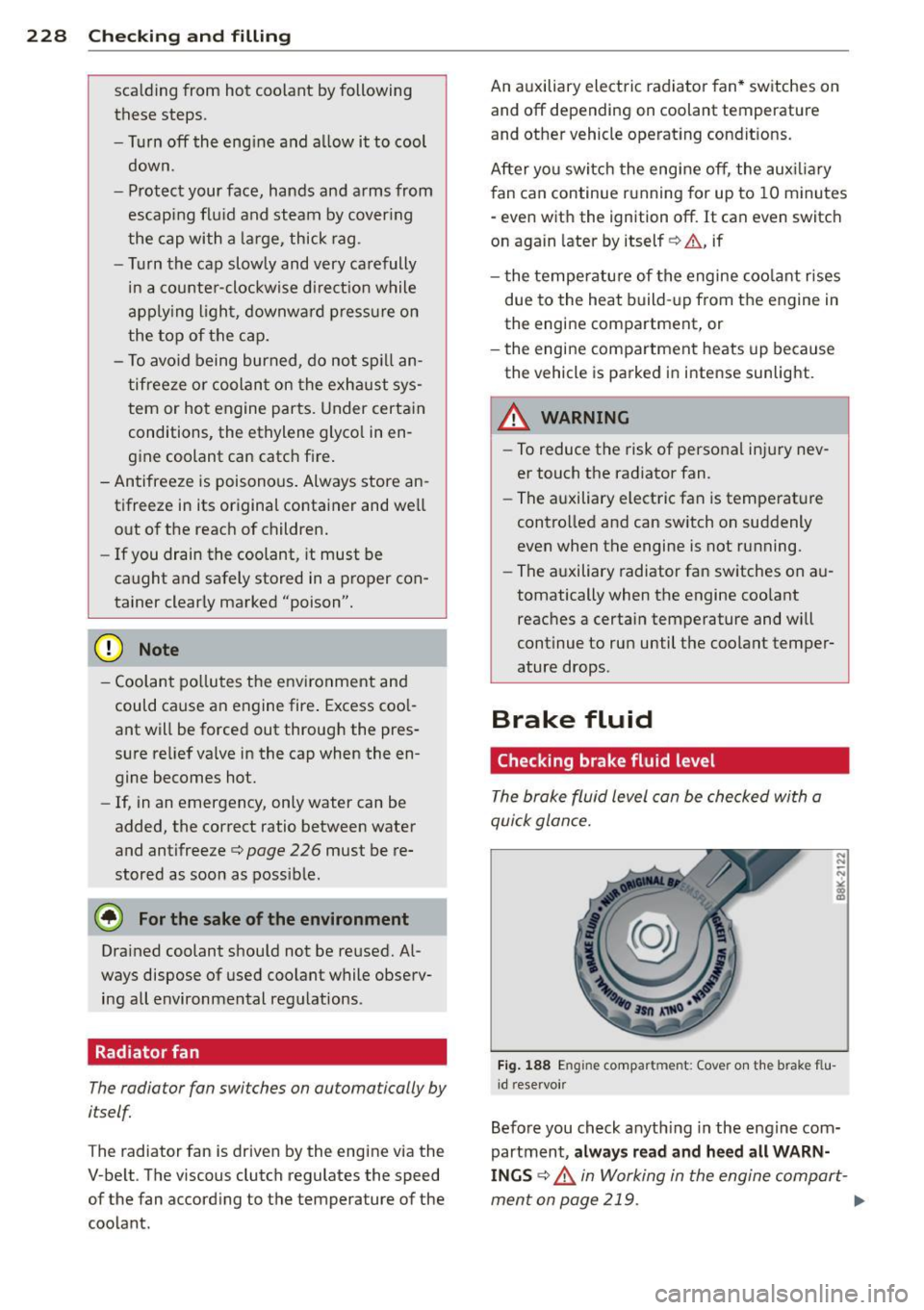
F ig . 1 88 Engin e compart men t: Cover on the b rak e flu
i d reservo ir
Before you check a nyth ing in the engine com
partment,
always read and hee d all WARN
INGS c::> .&. in Working in the engine compart-
ment on page 219 . .,..
Page 231 of 302
~ Read the brake fluid level from the brake
fluid reservoir ~
fig. 188, ¢ page 221,
fig . 184.
T he brake fluid level must be be
tween the "MIN" and "MAX" markings.
The brake f luid reservoir is located at the rear
partition of the engine compartment on the
l eft side
¢ page 221 .
The fluid level may drop slightly after some
time due to the automatic adjustment of the brake pads . This is not cause for alarm .
If the brake fluid level falls considerably be
l ow the "M IN" mark, the bra ke wa rning/ind i
cator light (U .S . mode ls:
1111 , Canadian
models: .) will come on
¢ page 15. Do not
continue to operate the vehicle. The complete
brake system shou ld be thoroughly checked
by an authorized Audi dealer or qualified
workshop and the cause co rrected . If the
b rake fluid level is too low, the b rake wa rn ing/
i nd icator lig ht w ill illuminate . Co ntact an a u
thor ized Audi dealer immediately.
@ Tips
The brake f luid rese rvoir is located unde r
neath the cove r.
Changing brake fluid
Have the brake fluid changed by an experi
enc ed technician .
Brake fluid ab sorbs moisture from the a ir. If
the water content in the brake fluid is too
hi gh, corrosion in the b rake system may result
after a per iod of t ime . The bo iling po int of t he
b ra ke fluid w ill also decrease con siderab ly and
d ec rease brak ing per forman ce.
Therefore, the brake flu id must be changed
every two year s. Always use new b ra ke fluid
which confo rms to Fede ral Motor Vehicle
S tand ard "FMVSS 1 16 DOT 4".
The brake flu id rese rvoir can be difficult to
r eac h, therefo re , we recommend that yo u
have the brake fl uid changed by yo ur aut ho r
iz ed Audi dealer. Your dealer has the correc t
Checking and fillin g 229
tools, the right brake fl uid and t he know -how
to do this for you .
A WARNING
- Brake fl uid is poisonous. It must be stor
ed only in the closed or iginal container
out of the reach of children!
- Brake failure can res ult from o ld or inap
propriate brake f lu id. Observe these pre
cautions:
- Use only brake fluid th at mee ts SA E
spe cificat ion
J 17 03 and conforms to
Fe dera l Mo to r Ve hicl e Standard 1 16.
Always check with yo ur autho rized Au di
dealer to make sure yo u are using the
correct brake fluid. The c orrect type of
brake f luid is also ind icated on t he
brake f luid reservoir .
- The bra ke fl uid must be new. Heavy use
of the brakes ca n cause a vapor lock if
the b rake fluid is left i n the system too
long. This can se riously affect the effi
c iency of the b rakes as well as your
safety , T his could result in an accide nt.
(!) Note
Brake fluid will damage the pai nt of your
vehicle.
@) For the sake of the environment
Because of the prob lem of proper disposal
of brake fluid as well as the spec ial too ls
r equired an d th e nec essary exper tise, w e
r ecomme nd that yo u have th e brake flu id
c hanged by yo ur aut ho rize d Aud i dea le r.
Battery
General information
U nder normal operating cond itions, the bat
te ry in your Audi does not need any ma inte
nance . With
high outside temperat ures or
lo ng da ily drives we recommend that you have
t h e e lectrolyte leve l che cked by an autho riz ed
A udi de aler or qu alified workshop. The elec
tro lyte leve l should also be checked e ach time
the battery is charged
¢ page 232 . 1J1>
•
•
Page 243 of 302
-Incorrect tire pressures and/or underin
flation can also lead to sudden tire fa il
ure, including a blowout and sudden de
flation, causing loss of vehicle control.
Checking tire pressure
The correct tire pressure for the tires original
ly installed on your vehicle is listed on the tire
pressure label located on driver's side 8-pil lar .
The recommended t ire pressures are on the
tire pressure label and in the table
c:> page 238, Cold tire inflation pressure .Th is
means that the pressure must be checked and
adjusted when the tire has not been driven for
mo re tha n a couple of m iles (k ilome ters) at
l ow speeds during t he p revious three hours.
A ir in the tires expands when the ti re heats up
as a result of inte rna l friction as it flexes in
use. The tire press ure is higher when the tire
has warmed up than when it is "cold."
It is the i nflat ion p ressu re in a "cold" tire that
counts . Therefore, you shou ld never let air ou t
of a warm tire to match "Cold tire inflation pressure" recommendations
c:> page 238. The
tires would then be under inflated and could
fa il suddenly.
The tire press ure labe l on yo ur Audi lists the
recommended cold t ire inflat ion pressures at
maximum capacity for the new, origina l
equ ipment tires that were on your vehicle at
the time it was manufactured. For the loca
tion of the label
<=> page 238, fig . 191 .
Most tires lose a ir naturally over time. They
can also lose some a ir if you drive
over a pot
hole or hit a curb while parking. It is usually
not possible to see whether the radial t ires
used today are underi nflated just by looking
at them.
Therefore, be sure to check tire pressures at
least o nce a month and always before going
on a long tr ip . Make sure to take the number
of people and the amoun t of luggage into ac
coun t when adjusting tire pressure for a t rip -
even one that you would not consider to be
Tire s an d wheel s 241
"long." See c:> page 24 2, Tires and vehicle
load limits
for more important information.
A lways use an acc urat e tire pressu re ga uge
when checking and ad justing infla tion pres
s ur es . Check a ll of the tires and be sure not to
forget the spare tire. If the pressure in any t ire
is too h igh when the tire is "cold", let a ir o ut
of the t ire s low ly w ith the edge of the tire
gauge and keep checking the pressure until
you reach the pressure that is correct for the load (passengers and luggage) and k ind of
driv ing you plan to do.
If the pressure in any tire is too low, note the
difference between the pressure in the co ld
t ire a nd the pressure you need and add the air
that you need to reach the correct pressure for
t h e ve hicl e load (passenge rs and luggage) for
the tires on you r veh icle as l isted on the o n
yo ur vehicle and in this ma nual and the kind
of driving you plan to do.
Never exc eed the maximum inflation pr es
sure li ste d on the tire sidewall for any re a
s o n.
Remember that the vehicl e manufacture r, not
t h e tire manu fact urer, de termines t he cor re ct
t ir e p ress ure fo r th e tires on your ve hicl e.
It is important to check the t ire p ressu re whe n
the tires are co ld.
- Read the required tire pressure from the t ire
pressure labe l. The t ire pressure label is lo
cated o n the dr iver's side 8-pillar. The tire
pressure labe l lists the recommended co ld
tire inflation pressures for t he vehi cle at its
maxim um capacity weigh t and t he tires that
were on your ve hicle a t the time i t was man
ufactured . For recommended tire pressures
for normal load conditions, p lease see chap
ter
<=> page 238.
-Tu rn the va lve stem cap counter -clockwise
to remove it from the tire
va lve .
-Place t he ai r pressure gauge on the va lve.
- The tire pressu res should o nly be checked
and ad justed when the tires are co ld . The
slightly raised pressures of warm tires must
not be red uced.
Ill>-
•
•
Page 250 of 302
248 Tire s and whee ls
Tir e pl y c ompo sit ion and materi als used
The numbe r of plies ind icates the number of
l ayers of rubber -coated fabric in the tire. In
general, the greater the number of p lies, the
more weight a tire can support . Tire manufac
turers also must indicate the materials in the
tire, wh ich include steel, nylon, polyester, and
others .
Max imum Load R ating
This number indicates the maximum load in
kilograms and pounds that can be carried by
the tire .
Tire quality grading for treadw ear ,
tr act ion, a nd t emper ature re sis tan ce
Tread wear, traction and temperature grades
c:> page249.
Max imum Permiss ibl e Inflation Pressur e
This numbe r is the greatest amo unt of air
p ressure that should ever be put in the ti re
under normal driving conditions .
A WARNING
-Using incorrect or unmatched tires and/
or wheels or improper tire and wheel
combinations can lead to loss of contro l,
collision and serious persona l injury .
- Always use tires, rims and wheel bo lts
that meet the specifications of orig inal
factory-installed t ires or other combina
t ions that have been spec ifically ap
proved by the vehicle manufacturer.
- Tires age even if they are not be ing used
and can fail suddenly, especially at high
speeds. Tir es that are more than 6 years
o ld can only be used in an emergency
and then with special care and at lower
speeds.
- Never mount used ti res on yo ur vehicle if
yo u are not su re of their "previous histo
ry ." Old used tires may have been dam
aged even though the damage cannot be
seen that can lead to sudden tire failure and loss of vehicle control.
- All four wheels must be fitted with radia l
t ires of the same type, size (roll ing c ir- cumference) and the same tread pattern
.
Driving with different tires reduces vehi
cle handling and can lead to a loss of
control.
- If the spare tire is not the same as the
tires that are mounted on the vehicle -
for example with winter tires -only use
the spare t ire fo r a short period of time
and drive with extra care . Refit the nor
mal road wheel as soon as safely poss i
b le.
- Never drive faster than the max imum
speed for which the tires on you r vehicle
are rated because tires that are dr iven
faster than their rated speed can fai l
suddenly .
- Overloading tires cause heat build-up,
sudden tire fa ilure, including a blowout
and sudden deflation and loss of contro l.
- Temperature grades apply to tires that are properly inflated and not over or un
derinf lated .
- For technica l reasons it is not always
possible to use whee ls from other
veh icles -in some cases not even wheels
from the same veh icle model.
- If you install wheel trim discs on the ve
hicle wheels, make sure that the a ir flow
to the brakes is not blocked. Reduced air
f low to the brakes can them to overheat,
increas ing stopp ing distances and caus
ing a co llision.
- Run flat tires may only be used on veh icles that were equipped with them
at the factory. The veh icle must have a
chassis designed for run flat tires and a
f a ctory -insta lled tire pressure monitor
ing system* that indicates a loss of tire
pressu re . I ncorrect use of run flat tires
can lead to vehicle damage or accidents.
Check with an authorized Audi dealer or
tire specialist to see if your vehicle can be
equ ipped w ith run flat t ires. If run flat
tires are used, they must be installed on
all fou r wheels . Mix ing tire types is not
pe rm itted.
Page 253 of 302
Snow chains
Snow chains may be fitted only to the front
wheels, and only to certain tire sizes. Ask your
authorized Audi dealer on which tire sizes
snow chains can be used.
The snow chains must have low-profile links
and must not be thicker than 0.53 inch
(13.5 mm), including the lock .
Remove wheel center covers and trim discs
before putting snow chains on your vehicle
~ 0. For safety reasons cover caps must then
be fitted over the wheel bolts. These are avail
able from authorized Audi dealers.
~ WARNING
Using the wrong snow chains for your vehi
cle or installing them incorrectly can in
crease the risk of loss of control leading to
serious personal injury.
- Snow chains are available in different sizes. Always make sure to follow the in
structions provided by the snow chain
manufacturer .
- When driving with snow chains never
drive faster than the speed permitted for
your specific snow chains.
- Always observe local regulations.
(D Note
- Remove snow chains before driving on
roads not covered with snow to avoid
damaging tires and wearing the snow
chains down unnecessarily.
- Snow chains, which come into direct con
tact with the wheel rim, can scratch or
damage it . Therefore, make sure that the
snow chains are suitably covered . Check
the position of the snow chains after
driving a few yards and correct if neces
sary. Follow the instructions from the
snow chain manufacturer when doing so.
(j) Tips
Where snow chains are mandatory oncer
tain roads, this normally also applies to
vehicles with all wheel drive.
Tires and wheels 251
Wheel bolts
Wheel bolts must always be tightened to the
correct torque.
The design of wheel bolts is ma tched to the
factory inst alled rims. If diffe ren t rims are fit
ted, the correct wheel bolts with the right length and correctly shaped bolt heads must
be used. This ensures that wheels are fitted
securely and that the brake system functions
correctly.
In certain circumstances, you may not use
wheel bolts from a different vehicle -even if it
is the same model~
page 282 .
&_ WARNING
Improperly tightened or maintained wheel
bolts can become loose causing loss of
control , a collision and serious personal in
jury.
- Always keep the wheel bolts and the threads in the wheel hubs clean so the
wheel bolts can turn easily and be prop
erly tightened.
- Never grease or oil the wheel bolts and
the threads in the wheel hubs. They can become loose while driving if greased or
oiled, even if tightened to the specified
torque .
- Only use wheel bolts that belong to the
rim being installed .
- Never use different wheels bolts on your
vehicle.
-Always maintain the correct tightening torque for the wheel bolts to reduce the risk of a wheel loss. If the tightening tor
que of the wheel bolts is too low, they
can loosen and come out when the vehi
cle is moving.
If the tightening torque is
too high, the wheel bolts and threads
can be damaged and the wheel can be
come loose.
(I} Note
The specified torque for the wheel bolts is
90 ft lbs. (120 Nm) with a tolerance of
± 7,4 ft lbs. (± 10 Nm). Torque wheel bolts .,.. •
•