window AUDI A4 2017 Owner's Manual
[x] Cancel search | Manufacturer: AUDI, Model Year: 2017, Model line: A4, Model: AUDI A4 2017Pages: 386, PDF Size: 96.32 MB
Page 226 of 386

Media
-The manufactu rer of the storage device can
provide information about its "USB Device
Subclass" . - Some MTP player functions are not support
ed, such as rating music tracks and video
playback.
CD drive
Applies to: ve hicles w ith a CD drive
The following audio file properties are supported by the CD drive:
Audio files
Supported
Audio CDs (up to 80 min) with CD text (artist, alb um, track)*, CO-ROMs with a capaci-
media ty of up to 700 MB
File system CD file system: 1509660, Joliet, UDF
Metadata Album
cover : GIF, JPG, PNG with max . 800x800 px. The album cover from the medi-
um may be disp layed, depending on availability.
Format M PE G 1/2 Windows Media Au- MP EG 2/4 FLAC
Layer 3 dio 9 and 10
File extension .mp3 .wma
.m4a; .flac
. m4b;
. aac
Playlists .M3U; .PLS; .WPL; .M3U8; .ASX
Characteristics up to maximum 320 kbit/s and 48 kHz sampling frequenc ies 48 k Hz sampling
frequency
Number of Maximum 1,000 files per medium
Files
(D Tips
-For compressing MP3 files, Audi recom
mends a bit rate of at least 160 kb it/s. The
display showing the remaining play time
may differ for audio files with variable bit
rate . -
Special characters (such as those in 103 tag
information) display differently depending
on the system language and cannot always
be guaranteed .
Troubleshooting
Problem Solution
Audi music interface /Bluetooth
Read the instructions in the chapter ~ page 215, Multimedia con-
audio player *: mobile dev ice is nectionsl~ page 212, Bluetooth audio player . You can learn
not supported . about
supported mobi le devices in the Audi database for mobile
devices at
www.audiusa.com/bluetooth.
Audi music interface :
the volume Adjust the volume of the mobile device to approximately 70% of
is too h igh/too low when start ing the maximum output~
page 220, Input level.
playback th ro ugh the AUX input.
224
Page 238 of 386
Driving sa fe ty
Driving safety
General notes
Safe driving habits
Please remember -safety first!
This chapter contains important information,
tips, instruct ions and warn ings that you need to
read and observe for your own safety, the safety
of your passengers and others. We have summar
ized here what you need to know about safety
be lts, a irbags, child restra ints as well as child
safety. Your safety is for us
priority number 1 . Al
ways observe t he i nfo rmation and wa rn ings in
this section - for your own safety as well as tha t
of yo ur passengers.
The information i n this section applies to all
model ve rsions of your vehicle . Some of the fea
tures descr ibed in t his sec tions may be s tanda rd
eq uipment on some models, or may be optional
equipment on others. If yo u are not sure, ask
your author ized Audi dealer.
A WARNING
-Always make sure that you follow the in
structions and heed the WARNINGS in th is
manual. It is in your inte rest and in the in
te rest of your passengers .
- Always keep all of the Owner's Lite rature
manuals in your Audi when you lend o r sell
yo ur vehicle so that this important informa
t ion w ill always be availab le to the dr iver
and passenge rs.
- Always keep the Owner 's Lite rature handy
so that you can find i t easi ly if yo u have
ques tions.
Safety equipment
The safety features are part of the occupant re
straint system and work together to help reduce
the risk of injury in a wide variety of occident si t
uations.
Your safety and the safety of yo ur passenge rs
should not be left to chan ce. Advan ces in tech
nology have made a var iety of features av ail ab le
to help reduce t he risk of injury in an accident .
236
The following is a list of just a few of the sa fety
features in your Audi :
- sophis tic ated safety be lts fo r dr ive r and all pas-
senge r seat ing pos itions,
- safety belt p re tensioners,
- be lt height adjustment for the front seats,
- head restraints for each seating position,
- front airbags,
- knee airbags fo r the front seats,
- side airbags in the front seats and outboard
rear seats *,
- side curtain airbags,
- special LA TC H anchorages for the outboard rear
seats and top tether anchorages for chi ld re
straints for all of the rear seats,
- adjustab le steering col umn.
These ind iv idual safety features, can work to
gether as a system to he lp protect you and your
pa ssengers in a wide range of a cciden ts. These
fea tures canno t wo rk as a sys tem if they a re not
a lways cor rec tly ad juste d and cor rect ly used.
Safety is everybod y's responsibilit y!
Important things to do before driving
Safety is everybody's job! Vehicle and occupant
safety always depends on the informed and care
ful driver .
For your safety a nd the safety of your passen
gers,
before driving alway s:
.,. Make sure that all lights and signals are operat
ing correctly .
.,. Make sure that the tire pressure is correct .
.,. Make sure that a ll windows a re clean and afford
good v is ibility to the outs ide.
.,. Se cur e all luggage and othe r items ca refully
q page 242.
.,. Make sure that noth ing can i nter fere with the
peda ls .
.,. Adjust front seat, head restraint and mirrors
correctly for yo ur height.
.,. Instruct passengers to adjust the head re
straints according to their he ight .
.,. Make sure to use the rig ht child restraint co r
rectly to protect chi ldren
q page 2 77 , Child
safety. ..,.
Page 241 of 386
-Always make sure that there are at least
4 inches (10 cm) between the front passen
ger's knees and the lower part of the instru
ment panel.
- Eac h passenger must always sit on a seat of
t h eir own and properly fasten and w ear the
safety belt belonging to that seat.
- Before driving, always adjust the front pas
senger seat and head restraint properly.
- Always keep your feet on the floor in front
of the seat. Never rest them on the seat, in
strument panel, out of the window, etc. The
airbag system and safety belt will not be
able to protect you properly and can even in
c rease the risk of injury in a crash.
- Never drive with the backrest recli ned or
t il ted fa r bac k! The farther the backrests are
t il ted back, the greater the risk of i njury due
to incorrect posi tioning of the safety bel t
and improper seating position.
- Children must always ride in child safety
sea ts¢
page 2 77. Spec ial precaut ions ap
ply when installing a chi ld safety seat on the
front passenger seat
c::> page 253.
Proper seating positions for passengers in
rear seats
Rear seat passengers must sit upright with both
feet on the floor consistent with their physical
size and be properly restrained whenever the ve
hicle is in use.
To reduce the r isk of injury caused by an incorrect
seating position in the event of a sudden braking
maneuver or a n accident, you r passengers on the
rear bench seat must always observe the follow
in g:
.,. If there are passengers on the outer rear seats,
adjust the head restraints so the upper edge is
as even as possible with the top of your head. If
that is not poss ible, try to adjust the head re
straint so that it is as close to this position as
poss ible.
If there is a passenger in the ce nte r
rea r seat, slide the head res traint upward
¢page 62.
.,. Make s ure that the seatback is sec urely latched
in t he upright position
c::> page 65.
Dr iving safety
.,. Keep both feet f lat in the footwell in front of
the rear seat.
.,. Fasten and wear safety belts properly
c::>poge248 .
.,. Make sure that children are always properly re
strained in a child restra int that is appropr iate
for their size and age
c::> page 2 77.
_&. WARNING
Passengers w ho are improperly seated on the
rear seat can be serio usly inju red in a crash.
- Each passenge r must always sit on a seat of
their own and properly fas ten and wear the
safety bel t belonging to tha t seat.
- Safety bel ts only offer maxim um protect ion
when the seatba ck is securely latched in t he
upright pos ition and the safe ty belts are
properly positioned on the body. By not sit
ting upright, a rear seat passenger increases
the risk of personal injury from improper ly
positioned safety belts!
- Always ad just the head restraint proper ly so
that it can give maximum protection.
Proper adjustment of head restraints
Correctly adjusted head restraints ore on impor
tant port of your vehicle's occupant restraint sys
tem and con help to reduce the risk of injuries in
occident situations.
F ig. 20 6 Head restra int: v iewed from t he front
The head rest raints mus t be correct ly adjusted to
achieve the best protection.
.,. Ad just t he head restra ints so the upper edge is
as even as possib le w ith the top of you r head . If
that is not possib le, t ry to adjust the head re-
stra int so that it is as close to this pos it ion as .,.
239
Page 242 of 386
Driving sa fe ty
possible . Position* the head restraint as close
as possible to the back of your head.
~ If there is a passenger in the center rear seat,
slide the head restraint upward .
Adjusting head restraints
r=-, page 62.
A WARNING
All seats are equipped with head restraints .
Dr iv ing without head restraints or with head
restraints that are not proper ly adjusted in
creases the risk of ser ious or fatal neck injury
dramatically . To help reduce the r isk of injury:
- Always dr ive with the head restraints in
place and properly adjusted.
- Every person in the vehicle must have a
properly adjusted head restra int.
- Always make sure each person in the vehicle properly adjusts their head restraint. Adjust
the head restra ints so the upper edge is as
even as possib le w ith the top of your head.
If that is not possib le, t ry to adjust the head
restra int so that it is as close to t his position
as possib le.
- Never attempt to adjust head restrai nt
wh ile driving. If you have dr iven off a nd
mus t adjust the driver headrest for any rea
son, fi rst stop the vehicle sa fely before at
tempting to ad just the head restra int .
- C hildren must always be p roper ly restrained
in a chi ld restraint that is appropriate fo r
their age and size
i=-, page 2 77.
Examples of improper seating positions
-
The oc cupant restraint system can only reduce
the risk of injury if vehicle occupants are properly
seated .
Imp roper seating positions can cause se rious in
jury or deat h. Safety belts can only work when
they are proper ly positioned on the body. Im
proper seating positions reduce the effectiveness
of safety belts and w ill even increase the r isk of
in ju ry and death by moving the safety be lt to crit
ical areas of the body. Improper seating posit ions
also increase the risk of ser ious injury and death
when an airbag deploys and strikes an occupant
who is not in the prope r seat ing pos ition . A driver
240
is responsible fo r the safety o f all veh icle occu
pants and especia lly for children. Therefore :
~ Never allow anyone to assume a n incorrect
seating posi tion when the vehicle is being used
q _& .
The following bulletins list on ly some samp le po
s itions that w ill increase the r is k of se rious injury
and death. Our hope is that these examples wi ll
make yo u more aware of seating positions that
are dangerous.
Therefore , whenever the vehicle is moving :
-neve r sta nd up in the vehicle
- neve r stand on the seats
- never k neel on the seats
- never ride w it h the seatback recl ined
- never lie down on the rear seat
- never lean up against the instrument panel
- neve r sit on the edge of the seat
- neve r sit sideways
- neve r lean out the w indow
- never put your feet out the window
- neve r put your feet on the instrument panel
- never rest your feet on the seat c ushion or back
of the seat
- never ride in the footwell
- never ride in the cargo area
A WARNING
Imp roper seating positions inc rease the risk
of ser ious personal inju ry and death whenever
a veh icle is being used.
- Always make sure that all veh icle occupants
stay in a proper seating posit ion and a re
proper ly restrained whenever the vehicle is
be ing used.
Driver's and front
passenger's footwell
Important safety instructions
A WARNING
A lways make su re that the knee airbag can in
flate w ithout inte rfe rence. Objects between
yourself and the airbag can in cr ease the risk
Page 244 of 386

Driving safety
Storing cargo correctly
Loading the luggage compartment
All Luggage and other objects must be properly
stowed and secured in the Luggage compart
ment.
Fig. 207 Safe load positio ning: place heavy objects as low
and as far forwar d as possible.
Loose items in the luggage compartment can
shift suddenly, changing vehicle handling charac
teristics . Loose items can also increase the risk of
serious personal injury in a sudden vehicle ma
neuver or in a collision.
• Distribute the load evenly in the luggage com
partment.
• Always place and properly secure heavy items in
the luggage compartment as low and as far for
ward as possible
¢ fig. 207.
• Secure luggage using the tie-downs provided
¢ page 66.
• Make sure that the rear seatback is securely
latched in place .
A WARNING
Improperly stored luggage or other items can
fly through the vehicle causing serious per sonal injury in the event of hard braking or an
accident . To help reduce the risk of serious
personal injury:
- Always put objects, for example, luggage or
other heavy items in the luggage compart
ment.
- Always secure objects in the luggage com
partment using the tie-down eyelets and
suitable straps.
242
A WARNING
Heavy loads will influence the way your vehi
cle handles. To help reduce the risk of a loss
of control leading to serious personal injury:
- Always keep in mind when transporting
heavy objects, that a change in the center of
gravity can also cause changes in vehicle
handling:
- Always distribute the load as evenly as
possible.
- Place heavy objects as far forward in the
luggage compartment as possible.
- Never exceed the Gross Axle Weight Rating or the Gross Vehicle Weight Rating specified
on the safety compliance sticker on the
front end of the driver's door. Exceeding
permissible weight standards can cause the
vehicle to slide and handle differently.
- Please observe information on safe driving
¢page 236.
A WARNING
To help prevent poisonous exhaust gas from
being drawn into the vehicle, always keep the
rear lid closed while driving.
- Never transport objects larger than those
fitting completely into the luggage area be
cause the rear lid cannot be fully closed.
- If you absolutely must drive with the rear lid
open, observe the following notes to reduce
the risk of poisoning:
- Close all windows,
- Close the sliding sunroof*,
- Open all air outlets in the instrument pan-
el,
- Switch off the air recirculation,
- Set the fresh air fan to the highest speed.
A WARNING
-
Always make sure that the doors, all win
dows, the sliding sunroof* and the rear lid are
securely closed and locked to reduce the risk
of injury when the vehicle is not being used.
- After closing the rear lid, always make sure
that it is properly closed and locked.
Page 245 of 386
<( a, .... N ,....
N .... 0 0
3 a,
-Never leave your vehicle unattended espe
cially with the rear lid left open. A child
could crawl into the vehicle through the lug
gage compartment and close the rear lid be
coming trapped and unable to get out . Be
ing trapped in a vehicle can lead to serious
personal injury.
- Never let children play in or around the vehi
cle.
- Never let passengers ride in the luggage
compartment. Vehicle occupants must al
ways be properly restrained in one of the ve
hicle's seating positions.
-Air circulation helps to reduce window fog
ging . Stale air escapes to the outside
through vents in the trim panel. Be sure to
keep these slots free and open.
- The tire pressure must correspond to the
load. The tire pressure is shown on the tire
pressure label. The tire pressure label is lo
cated on the driver's side B-pillar. The tire
pressure label lists the recommended cold
tire inflation pressures for the vehicle at its
maximum capacity weight and the tires that
were on your vehicle at the time it was man
ufactured. For recommended tire pressures
for normal load conditions, please see chap
ter
c:> page 328.
Tie-downs
The luggage compartment is equipped with four
tie-downs to secure luggage and other items.
Use the tie-downs to secure your cargo properly
c:> page 242, Loading the luggage compar tment.
In a collision, the laws of physics mean that even
smaller items that are loose in the vehicle will
become heavy missiles that can cause serious in
jury . Items in the vehicle possess energy which
vary with vehicle speed and the weight of the
item. Vehicle speed is the most significant factor .
For example, in a frontal collision at a speed of
30 mph (48 km/h) , the forces acting on a 10-lb
(4 .5 kg) object are about 20 times the normal
weight of the item. This means that the weight
Driving safety
of the item would suddenly be about
200 lbs. (90 kg) . You can imagine the injuries
that a 200 lbs. (90 kg) item flying freely through
the passenger compartment could cause in a col
lision like this.
A WARNING
= -
Weak, damaged or improper straps used to
secure items to tie-downs can fail during hard
braking or in a collision and cause serious per
sonal injury.
- Always use suitable mounting straps and
properly secure items to the tie-downs in
the luggage compartment to help prevent
items from shifting or flying forward as dan
gerous missiles.
- When the rear seat backrest is folded down,
always use suitable mounting straps and
properly secure items to the tie-downs in
the luggage compartment to help prevent items from flying forward as dangerous
missiles into the passenger compartment.
- Never attach a child safety seat tether strap
to a tie-down.
Reporting Safety Defects
Applicable to U.S.A.
If you believe that your vehicle has a defect which could cause a
crash or could cause injury or
death, you should immediately in
form the National Highway Traffic Safety Administration (NHTSA) in
addition to notifying Audi of
America, Inc.
If NHTSA receives similar com
plaints, it may open an investiga
tion, and if it finds that a safety
defects exists in a group of
vehicles, it may order a recall and ""'
243
Page 250 of 386
Safety belts
_& WARNING
Not wearing safety belts or wearing them im
properly increases the risk of serious personal
injury and death . Safety belts can work only
when used correctly.
-Always fasten your safety belts correctly be fore driving off and make sure all passen
gers are correctly restrained.
- For maximum protection, safety belts must
always be positioned properly on the body.
- Never strap more than one person, includ
ing small children, into any belt.
- Never place a safety belt over a child sitting
on your lap.
- Always keep feet in the footwell in front of
the seat while the vehicle is being driven.
- Never let any person ride with their feet on
the instrument panel or sticking out the
window or on the seat.
- Never
remove a safety belt while the vehicle
is moving . Doing so will increase your risk of
being injured or killed .
- Never wear belts twisted.
- Never wear belts
over rigid or breakable ob-
jects in or on your clothing, such as eye
glasses, pens, keys, etc., as these may cause
injury.
- Never allow safety belts to become dam
aged by being caught in door or seat hard
ware .
- Do not wear the shoulder part of the belt
under your arm or otherwise out of position.
- Several layers of heavy clothing may inter
fere with correct positioning of belts and re
duce the overall effectiveness of the system.
- Always keep belt buckles free of anything
that may prevent the buckle from latching
securely .
- Never use comfort clips or devices that cre
ate slack in the shoulder belt. However, spe
cial clips may be required for the proper use
of some child restraint systems.
- Torn or frayed safety belts can tear, and
damaged belt hardware can break in an acci
dent . Inspect belts regularly.
If webbing,
bindings, buckles, or retractors are dam-
248
aged, have belts replaced by an authorized
Audi dealer or qualified workshop.
- Safety belts that have been worn and loaded
in an accident must be replaced with the
correct replacement safety belt by an au
thorized Audi dealer. Replacement may be
necessary
even if damage cannot be clearly
seen . Anchorages that were loaded must al
so be inspected.
- Never
remove, modify , disassemble, or try
to repair the safety belts yourself .
-Always keep the belts clean. Dirty belts may not work properly and can impair the func
tion of the inertia reel¢
table Interior
cleaning on page 339.
Safety belts
Fastening safety belts
Safety first -everybody buckle up!
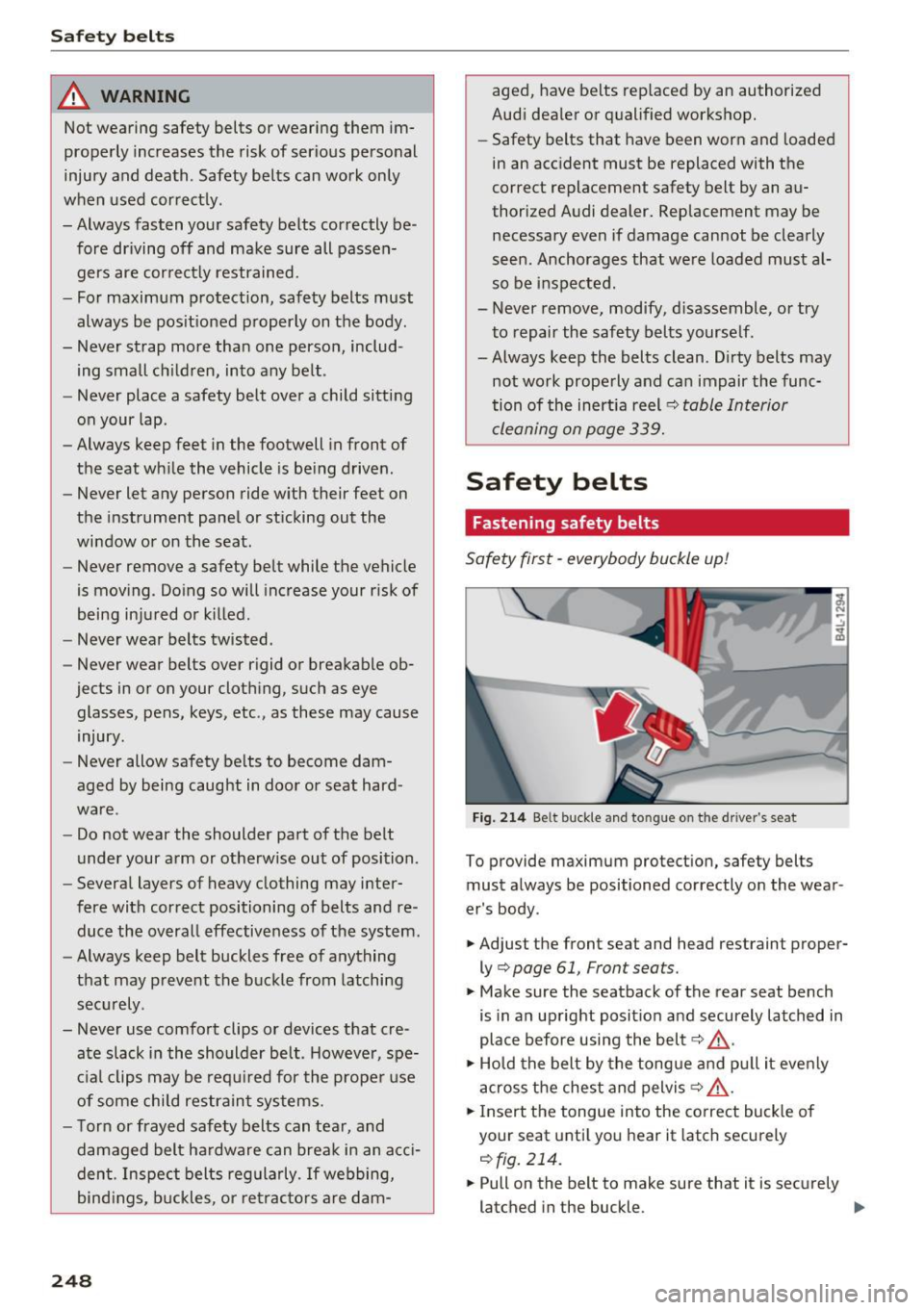
Fig. 214 Belt buckle and tongue on the driver's seat
To provide maximum protection, safety belts
must always be positioned correctly on the wear
er's body .
.. Adjust the front seat and head restraint proper
ly¢
page 61, Front seats.
.. Make sure the seatback of the rear seat bench
is in an upright position and securely latched in
place before using the belt
q ,&. .
.. Hold the belt by the tongue and pull it evenly
across the chest and pelvis¢,&..
.. Insert the tongue into the correct buckle of
your seat until you hear it latch securely
¢fig. 214.
.. Pull on the belt to make sure that it is securely
latched in the buckle. .,,._
Page 275 of 386
the airbag will inflate when it is not
supposed to, or will not inflate when it
should.
How supplemental side airbags work
Side airbags deploy instantly and can help re duce the risk of upper torso injuries for occu
pants who are properly restrained.
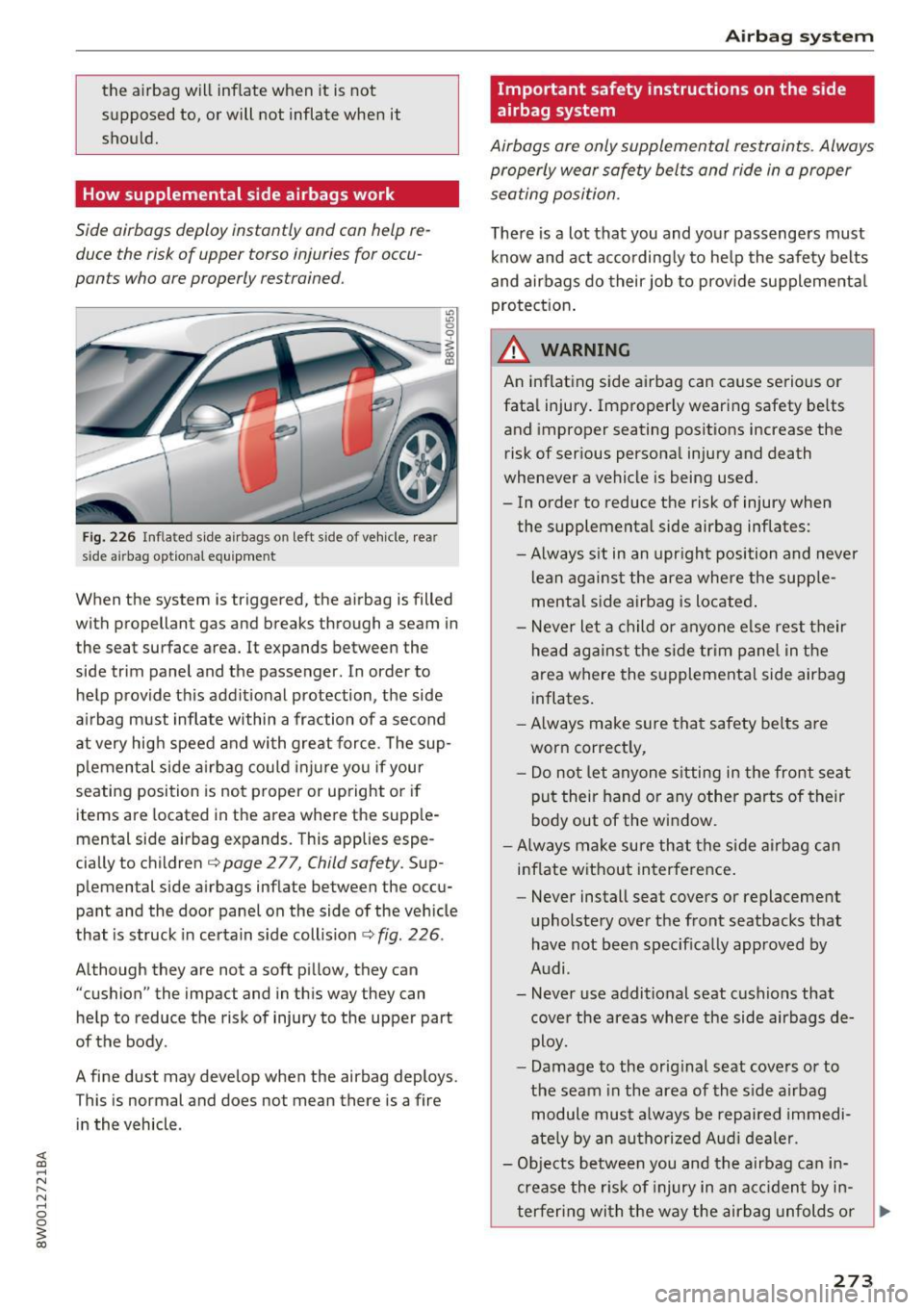
Fig. 226 Infla ted side airbags on left side of veh icle, rear
side airbag opt ional equipment
When the system is triggered, the airbag is filled
with propellant gas and breaks through a seam in
the seat surface area.
It expands between the
side trim panel and the passenger. In order to
help provide this additional protection, the side
airbag must inflate within a fraction of a second
at very high speed and with great force . The sup
plemental side airbag could injure you if your
seating position is not proper or upright or if
items are locat ed in the area where the supple
mental side airbag expands. This applies espe
cially to children
c;, page 277, Child safety. Sup
plemental side airbags inf late between the occu
pant and the door panel on the side of the vehicle
that is struck in certain side collision ¢
fig. 226 .
Although they are not a soft pillow, they can
"cushion" the impact and in this way they can
help to reduce the risk of injury to the upper part
of the body.
A fine dust may develop when the airbag deploys.
This is normal and does not mean there is a fire
in the vehicle .
Airbag system
Important safety instructions on the side
airbag system
Airbags are only supplemental restraints. Always
properly wear safety belts and ride in a proper
seating position .
There is a lot that you and your passengers must
know and act accordingly to help the safety belts
and airbags do their job to provide supplemental
protection.
A WARNING
An inflating side airbag can cause serious or
fatal injury. Improperly wearing safety belts
and improper seating positions increase the
risk of serious personal injury and death
whenever a vehicle is being used.
- In order to reduce the risk of injury when
the supplemental side airbag inflates:
- Always sit in an upright position and never
lean against the area where the supple
mental side airbag is located.
- Never let a child or anyone else rest their
head against the side trim panel in the
area where the supplemental side airbag inflates.
- Always make sure that safety belts are
worn correctly,
- Do not let anyone sitting in the front seat
put their hand or any other parts of their
body out of the window.
- Always make sure that the side airbag can
inflate without interference.
- Never install seat covers or replacement
upholstery over the front seatbacks that
have not been specifically approved by
Audi.
- Never use additional seat cushions that
cover the areas where the side airbags de ploy.
- Damage to the original seat covers or to
the seam in the area of the side airbag
module must always be repaired immedi
ately by an authorized Audi dealer.
-
- Objects between you and the airbag can in
crease the risk of injury in an accident by in
terfering with the way the airbag unfolds or _,.
273
Page 277 of 386
collision. It is not possible to define an airbag
triggering range that will cover every possible an
g le of impact, s ince the circumstances will vary
considerably between one collision and another.
Important factors include, for example, the na
ture (hard or soft) of the impacting object, the
angle of impact, vehicle speed, etc.
¢ page 2 75,
How side curtain airbags work .
Aside from their normal safety function, safety
be lts work to he lp keep the driver or front pas
senger in pos it ion in the event of a collision so
that the side curtain airbags can p rovide protec
tion .
The airbag system is not a substitute for your
safety belt . Rather, it is part of the overall occu
pant restraint system in your veh icle . Always re
member that the airbag system can only help to
p rotect you if you are wearing your safety bel t
and wearing it properly . This is another reason
why you should always wear your safety belts, not just because the law requires you to do so
<::;> page 245, General information.
It is important to remember that whi le the s ide
curtain airbag system is designed to he lp reduce
the likelihood of serious injuries, other injuries,
for example, swelling, bruising, friction burns and minor abrasions can also be associated with
these airbags upon deployment . Remember too,
these airbags will deploy only o nce and only in
certa in ki nds of acc idents -your safety belts are
always there to offer protection .
The side curtain airba g sy stem ba sically
consists of:
- The electronic control module and external s ide
impact senso rs
- The side curtain airbags above the w indows of
the outer seating positions with ejection miti
gation feat ures
- The airbag indicator light in the instrument
panel
The airbag system is monitored electronically to make certain it is funct ion ing properly at all
times . Each time you turn on the ignit ion, the air
bag system ind icator light will come on for a few
seconds (self d iagnost ics) .
Airb ag sys tem
The side curta in airbag is not activ ated:
- if the ignition is turned off
- in side co llisions whe n the acceleration meas-
ured by the sensor is too low
- in rear-end col lisions .
_&. WARNING
-Safe ty bel ts and the airbag system will only
provide pro tect ion when occupants are in
the proper seating position
¢ page 61,
Front seats.
- I f the airbag ind ic a tor light q page 33
comes when the veh icle is being used, have
the system inspected immediately by your
authorized Audi dealer. It is possib le that
the airbag will inflate when it is not sup
posed to, or w ill not inf late when it should.
How side curtain airbags work
Side curtain airbags con work together with side
airbags to help reduce the risk of head and upper
torso injuries for occupants who are properly re
strained .
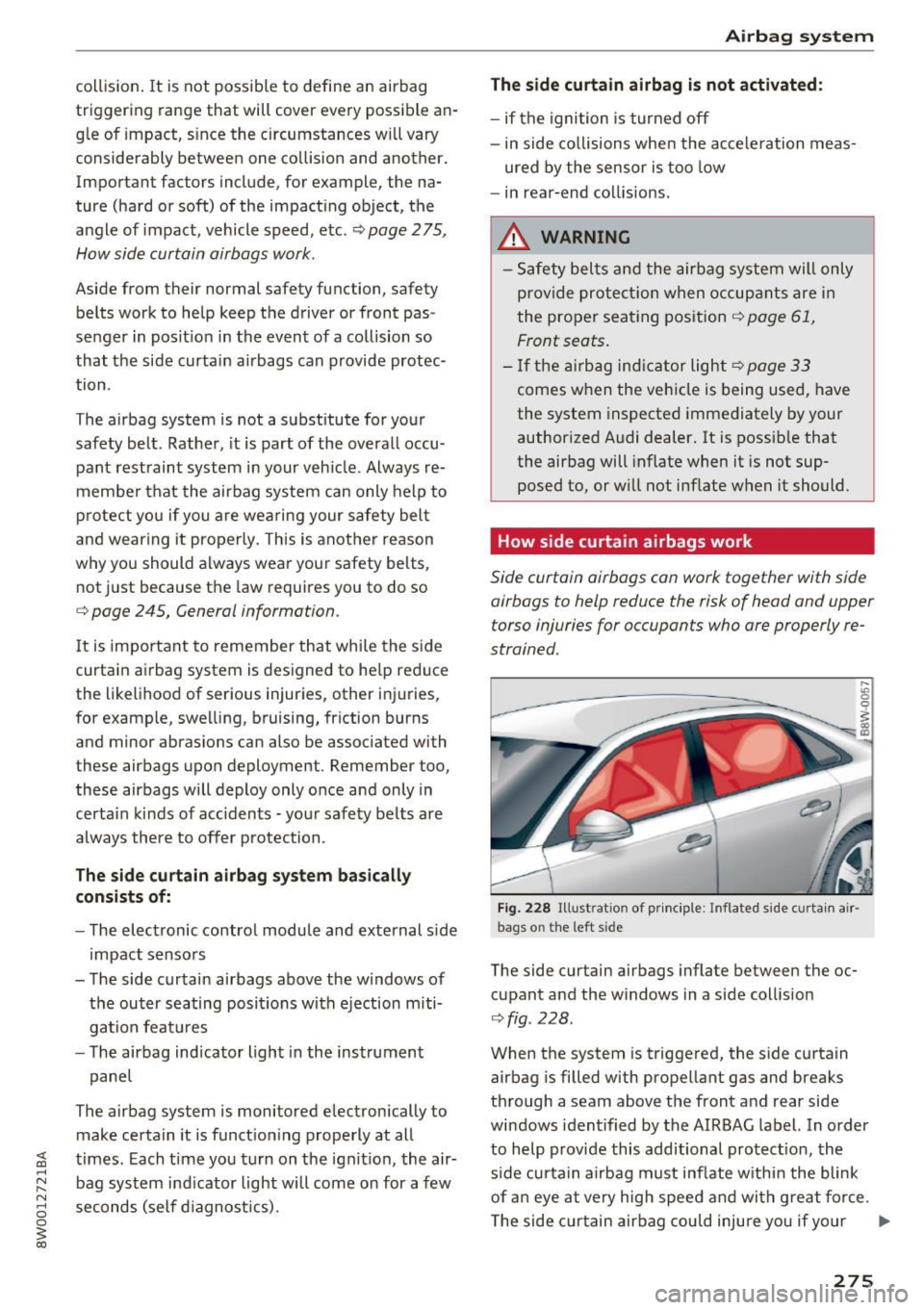
Fig. 228 Illustration of pr incip le: Inflated s ide curta in air
bags o n the left s ide
The side curtain airbags inflate between the oc
cupant and the w indows in a side collis ion
c> fig . 228 .
When the system is triggered, the side curtain
airbag is filled with propellant gas and breaks
through a seam above the front and rear side
windows identified by the AIRBAG label. In order
to help provide this additional protect ion, the
s ide curtain a irbag must inf late w ithi n the blink
of a n eye at very high speed and with g reat fo rce .
T he side c urtain airbag could injure you if yo ur
Ill>
275
Page 278 of 386
Airbag syste m
seating position is not proper or upright or if
items are located in the area where the supp le
mental side curtain airbag inflates. This applies
especially to children
c> page 2 77.
A lthough they are not a soft pillow, side curtain
airbags can "cushion" the impact and in this way
they can help to reduce the risk of in jury to the
head and the upper part of the body.
A fine dust may develop when the airbag deploys.
This is quite normal and does not mean there is a
f ire in the veh icle .
Important safety instructions on the side
curtain airbag system
Airbags are only supplemental restraints. Always
properly wear safety belts and ride in a proper
seating position.
There is a lot that yo u and your passengers must
know and do to help the safety be lts and airbags
do their job to provide supplemental protect ion.
A WARNING
Improperly wearing safety belts and improper
seating posit ions increase the risk of serious
personal inju ry and death whenever a vehicle
is being used.
- Never let occupants p lace any parts of the ir
bodies in the area from which the side cur
ta in a irbag inflate.
- Always make sure that the side curtain air
bags can inflate witho ut interferen ce.
- Use the built- in coat hooks on ly for light
weight cloth ing. Neve r leave any heavy or
sharp-edged obje cts in t he pockets that may
in terfere w ith airbag deployment and can
ca use personal injury in a collision.
- Never use hangers to hang clothes on the
hoo ks.
- Only use factory-installed s un shades or, if
shades installed after the veh icle leaves the
factory, use only genuine Aud i sun shades.
- Never swing the sun viso rs ove r to the side
windows if things such as pens, ga rage door
openers, hands-free speakers, etc . are at
tached to the sun visors. They co uld come
276
loose and cause serious injury if the side cu r
tain airbag inflates.
- A deploying airbag inflates in a fraction of a
second and with great force.
- Never attach objects to the cover or in the
deployment zone of a side curtain airbag .
- The a irbag deployment zones must be kept
clear at all times. Make s ure there are no
objects, pets, o r other persons in the space
between any vehicle occupant and any air
bag at any time.
- Do not attach any accessories to the doors.
A WARNING
- The a irbag system can deploy on ly once. If
the airbag has been triggered, the system
m ust be rep laced by an authorized A udi
dealer or qualified workshop .
- Always have work invo lv ing the side curtain
airbag system, remova l and installat ion of
the airbag components, or other repairs
pe rformed by a q ualified dealership. Other
w ise the airbag system m ay not work cor
rectly.
- Never attempt to mod ify a ny componen ts of
the airbag system in any way.