change time AUDI A4 SEDAN 2013 Owner's Manual
[x] Cancel search | Manufacturer: AUDI, Model Year: 2013, Model line: A4 SEDAN, Model: AUDI A4 SEDAN 2013Pages: 294, PDF Size: 73.71 MB
Page 221 of 294
temperatures stay below freezing point for l ong periods.
Detergent add itives in the o il w il l make fresh
oil look dark after the eng ine has been run
ning fo r a short time . This is norma l and is not
a reason to change the oi l more often than
recommended.
D am ag e or m alfun ction s due to lack of
ma intenanc e
It is essential that you change your oil at the
r ecommended inte rva ls using only engine o il
t hat complies wi th A udi oi l standard
VW 502 00 . Your Limited New Vehicle War
ranty does not cover damage or malfunctions
d ue to fa ilure to fo llow recommended mainte
nance and use requ irements as set forth in
the Audi Owner's Manua l and Warranty
&
Maintenance book let . Your dea ler will have to
deny warranty coverage u nless you present to
the dea ler p roof in the fo rm of Serv ice or Re
pa ir Orde rs that all s chedu led maintenance
wa s pe rformed in a t imely manner .
Engine oil consumption
The engine in your vehicle dep ends on an ade
quate amount of oil to lubricate and cool all
of its moving parts.
In o rder to provide effective lubrication and
cool ing of i nternal engine components, a ll in
ternal comb ustion eng ines consume a cert ain
amo unt of o il. Oil cons umption varies from
engine to engine and may change significantly
over the life of the engine. Typ ica lly, engines
with a specified break-in per iod (see
¢
page 192) consume more oil during the
break-in per iod than they consume after oil
consumption has stabilized .
Under norma l conditions, the rate of oil con
sumpt ion depends on the quality and viscosity
of the oil, the RPM (revo lutions per m inute) at
which the engine is operated, the amb ient
temperature and road condit ions. Furthe r fac
tors ar e the amount of o il d ilution from wate r
condensation or fuel residue and the ox ida
tion level of the oi l. As any engine is s ubje ct to
Checkin g and fillin g 219
wear as m ileage builds up, the oil consump
tion may increase over time until replacement
of worn components may become necessary.
Wi th a ll these variab les coming into p lay, no
standard rate of oil consumpt ion can be es
tablished or specified. There is no alternative
to regular and frequent check ing of the o il lev
el, see
Note .
If the yellow engine oil leve l warning symbo l
1\1 in the instrument cluster lights up , you
sho uld check the oil leve l as soon as possib le
¢
page 220. Top off the oil at your earliest
convenience ¢
page 220.
A WARNING
Before you check anythi ng i n the engi ne
compartment, always read a nd heed all
WARNINGS¢ .&.
in Working in th e engine
c ompartment on page 215.
(D Note
D riving w ith an insufficient o il level is like
ly to cause sever e damage to the engine .
(D Tips
- The oil pressure warning display. is
not an indicator of the oil le vel. Do not
rely on it . Instead, check the oil level in
your engine at regu lar intervals, pref
erably ea ch time you refuel, and always
before going on a long trip .
-If you have the impression yo ur engi ne
c ons umes ex ce ss ive amoun ts of o il, we
recommend that you consul t an a uthor
ized Aud i dea ler to have the cause of
your concern properly d iagnosed. Keep in
mind that the accurate measu rement of
oil consumption requ ires great care and
may take some t ime. An authorized Aud i
dealer has instructions about how to
measu re oil consumption accurately.
-
•
•
Page 223 of 294
@ For the sake of the environment
-Under no circ umstances can the oil come
i n contact w ith the sewage network or
the soil.
- Observe and follow lega l regu lations
when disposing of empty oil containers.
Changing the engine oil
We r ecommend that hove your oil changed by
on authorized Audi dealer or a qualified serv
ice station .
Before you check anything i n the engine com
pa rtment,
alwa ys read and heed all WARN
INGS c:> &. in Working in the engine comport
men t on page 215.
The engine oil must be changed according to
the intervals specified in your Warranty
&
Maintenance book let . T his is very important
because the l ubricating proper ties of oil di
minish gradua lly dur ing no rmal veh icle use.
Under some circ umstances the engine o il
should be changed more frequently . Change
oil more often if you drive most ly short dis
tances, operate the vehicle in dusty areas or
under predominantly stop-and -go traff ic con
d itions, or have your ve hicle where tempera
tures remain below free zing fo r extended pe
ri ods.
Detergent addi tives in the o il w ill make fresh
oil look dark after the eng ine has been run
n ing fo r a short time. This is norma l and is not
a reason to change the o il mo re often tha n
recommen ded.
Because of the problem of prope r disposal,
a long w ith the special tools and necessary ex
p e rti se require d, we strong ly recommend tha t
you have you r o il change d by an author ized
Audi dealer or a q ualified service sta tion.
If you choo se to change your oil yourself ,
please note the following importa nt informa
tion :
Checkin g and fillin g 221
A WARNING
To reduce the risk of personal inj ury if you
must change the eng ine oil in your vehicle
yourself:
- Wear eye protect io n.
- To reduce the risk of burns from hot en- gi ne oil, let the engi ne cool down to the
touch.
- When removing the o il dra in p lug with
your fi ngers, stay as far away as possible.
Always keep you r fo rearm parallel to the
grou nd to help p revent hot o il from run
ning down yo ur arm.
- Dra in the oil into a containe r designed
for this purpose, one la rge enough to
hold at least the tota l am ou nt of oi l in
your eng ine .
- E ngine oil is poisonous . Keep it we ll out
of the rea ch of childre n.
- Con tinuous contact wit h used eng ine o il
is harmful to yo ur ski n. A lways p rote ct
your skin by w ashing oil off tho ro ughly
wit h soap and wate r.
@ Note
N eve r mix oil addi tiv es with yo ur engine
oi l. These additives can damage your e n
g ine and adver se ly affec t yo u r A udi L imit
ed New Veh icle Warran ty.
@ For the sake of the environment
- B efore changi ng your oil, first make su re
yo u k now where yo u can prope rly dispose
o f t he used oil.
- Always dispose of used eng ine o il proper
ly. Do not dump it on garden soil, wood
ed are as, into open streams o r down
sewage drains .
- Re cy cl e used engine oil by taking i t to a
used engi ne oil col lect ion facility in your
area, or contact a service station .
•
•
Page 227 of 294
~ Read the brake fluid level from the brake
fluid reservoir ¢
fig. 171, ¢ page 217,
fig . 167.
T he brake fluid level must be be
tween the "MIN" and "MAX" markings.
The brake f luid reservoir is located at the rear
partition of the engine compartment on the
l eft side ¢
page 217 .
The fluid level may drop slightly after some
time due to the automatic adjustment of the brake pads . This is not cause for alarm .
If the brake fluid level falls considerably be
l ow the "M IN" mark, the bra ke wa rning/ind i
cator light (U .S . mode ls:
1111 , Canadian
models: .) will come on
¢ page 15. Do not
continue to operate the vehicle. The complete
brake system shou ld be thoroughly checked
by an authorized Audi dealer or qualified
workshop and the cause co rrected . If the
b rake fluid level is too low, the b rake wa rn ing/
i nd icator lig ht w ill illuminate . Co ntact an a u
thor ized Audi dealer immediately.
@ Tips
The brake f luid rese rvoir is located unde r
neath the cove r.
Changing brake fluid
Have the brake fluid changed by an experi
enc ed technician .
Brake fluid ab sorbs moisture from the a ir. If
the water content in the brake fluid is too
hi gh, corrosion in the b rake system may result
after a per iod of t ime . The bo iling po int of t he
b ra ke fluid w ill also decrease con siderab ly and
d ec rease brak ing per forman ce.
Therefore, the brake flu id must be changed
every two year s. Always use new b ra ke fluid
which confo rms to Fede ral Motor Vehicle
S tand ard "FMVSS 1 16 DOT 4".
The brake flu id rese rvoir can be difficult to
r eac h, therefo re , we recommend that yo u
have the brake fl uid changed by yo ur aut ho r
iz ed Audi dealer. Your dealer has the correc t
Checking and fillin g 225
tools, the right brake fl uid and t he know -how
to do this for you .
A WARNING
- Brake fl uid is poisonous. It must be stor
ed only in the closed or iginal container
out of the reach of children!
- Brake failure can res ult from o ld or inap
propriate brake f lu id. Observe these pre
cautions:
- Use only brake fluid th at mee ts SA E
spe cificat ion
J 17 03 and conforms to
Fe dera l Mo to r Ve hicl e Standard 1 16.
Always check with yo ur autho rized Au di
dealer to make sure yo u are using the
correct brake fluid. The c orrect type of
brake f luid is also ind icated on t he
brake f luid reservoir .
- The bra ke fl uid must be new. Heavy use
of the brakes ca n cause a vapor lock if
the b rake fluid is left i n the system too
long. This can se riously affect the effi
c iency of the b rakes as well as your
safety , T his could result in an accide nt.
(!) Note
Brake fluid will damage the pai nt of your
vehicle.
@) For the sake of the environment
Because of the prob lem of proper disposal
of brake fluid as well as the spec ial too ls
r equired an d th e nec essary exper tise, w e
r ecomme nd that yo u have th e brake flu id
c hanged by yo ur aut ho rize d Aud i dea le r.
Battery
General information
U nder normal operating cond itions, the bat
te ry in your Audi does not need any ma inte
nance . With
high outside temperat ures or
lo ng da ily drives we recommend that you have
t h e e lectrolyte leve l che cked by an autho riz ed
A udi de aler or qu alified workshop. The elec
tro lyte leve l should also be checked e ach time
the battery is charged
¢ page 2 28 . 1J1>
•
•
Page 229 of 294
-Always wear eye protection. Do not let
battery acid or any lead particles get on
your skin or clothing. Shield your eyes .
Explosive gases can cause blindness or
other injury.
- Battery acid contains sulfuric acid . Sulfu
ric acid can cause blindness and severe
burns.
- Always wear gloves and eye protection.
Do not tilt the battery because acid
could leak out of the ventilation open
ings.
- If you get battery acid in your eyes or
on your skin, immediately rinse with
cold water for several minutes and get
medical attention .
- If you should ingest any battery acid,
seek medical attention immediately.
- Do not expose the battery to an open
flame, electric sparks or an open light.
- Do not smoke.
- Do not interchange the positive and neg-
ative cables .
= When working on the battery, be sure
not to short-circuit the terminals with
tools or other metal objects. This would cause the battery to heat up very quickly,
which could lead to damage or explosion and personal injury.
- When a battery is charged, it produces
hydrogen gas which is explosive and
could cause personal injury .
- Always keep the battery well out of the
reach of children.
- Before work is done on the electrical sys
tem, disconnect the negative ground ca ble .
- Before performing any work on the elec
trical system, switch off the engine and
ignition as well as any electrical equip
ment. The negative cable on the battery
must be disconnected . If you are just go
ing to replace a light bulb, then it is
enough to switch off the lights.
- Before disconnecting the battery, switch
off the anti-theft alarm system! Other
wise you will set off the alarm.
Checking and filling 22 7
-When disconnecting the battery, first
disconnect the negative cable and then
the positive cable.
- Before reconnecting the battery, make
sure all electrical consumers are switch
ed off. Reconnect the positive cable first
and then the negative cable . Never inter
change the cables -this could start a fire!
- Never charge a frozen or a thawed-out
battery . It could explode! If a battery has
frozen , then it must be replaced . A dis
charged battery can freeze over at 32°F
(QOC),
-Make sure the vent hose is always attach
ed to the opening on the side of the bat
tery .
- Never use batteries which are damaged.
There is the danger of an explosion! Al
ways replace a damaged battery.
&_ WARNING
California Proposition 65 Warning:
- Battery posts, terminals and related ac
cessories contain lead and lead com
pounds, chemicals known to the State of
California to cause cancer and reproduc
tive problems. Wash hands after han dling.
(D Note
- Do not disconnect the vehicle battery
when the ignition is switched on or when the engine is running, otherwise, you will
damage electronic components in the
electrical system.
- If your vehicle is going to stand for a
long period of time without being driven,
protect the battery from "freezing", oth
erwise it will be damaged and will then
have to be replaced.
•
•
Page 231 of 294
(D Note
Never use a fast charger as a booster to
start the engine . This will seriously dam
age sensitive electronic components, such
as control units, relays, radio, etc ., as well
as the battery charger .
Battery replacement
The new battery must have the same specifi
cations and dimensions as the original equip
ment battery .
Intelligent energy management in your vehi
cle is responsible for d istributing the electr i
cal energy throughout your vehicle
c::>
page 190 . The intelligent energy manage
ment system w ill keep the engine battery
charged bette r then vehicles w ithout t his sys
tem. To make sure the additional electr ica l en
ergy is available once again after you have
changed the battery, we recommend that you
install batteries of the same type and manu
facture only (the same as those installed at
the time your vehicle was delivered). Specifi
cations are listed on the bat tery hous ing. Your
author ized Audi dealer must code the battery
in the energy management system to enable
you to use the energy management functions
correctly after replac ing the battery .
If it is not possible to use a battery of this
type, the new battery must have the same ca
pacity, voltage (12 volts) , amperage, con
struction and plug sea ling.
When insta lling the battery, make sure the ig
nition and all electr ical consumers are turned
off.
(D Note
Make sure the ventilation hose on the s ide
of the battery is connected , othe rwise
fumes or battery ac id can leak out .
@ For the sake of the environment
Because of the problem of proper d isposal
of a battery, we recommend your author
ized Aud i dealer change the battery for
Checkin g and fillin g 229
you. Batteries contain sul fur ic acid and
l ead and must always be disposed of prop
erly in comp liance with a ll environmental
regulations. Disposing of vehicle batter ies
i mproperly is very dangerous to the envi
ronment .
Windshield/headlight*
washer container
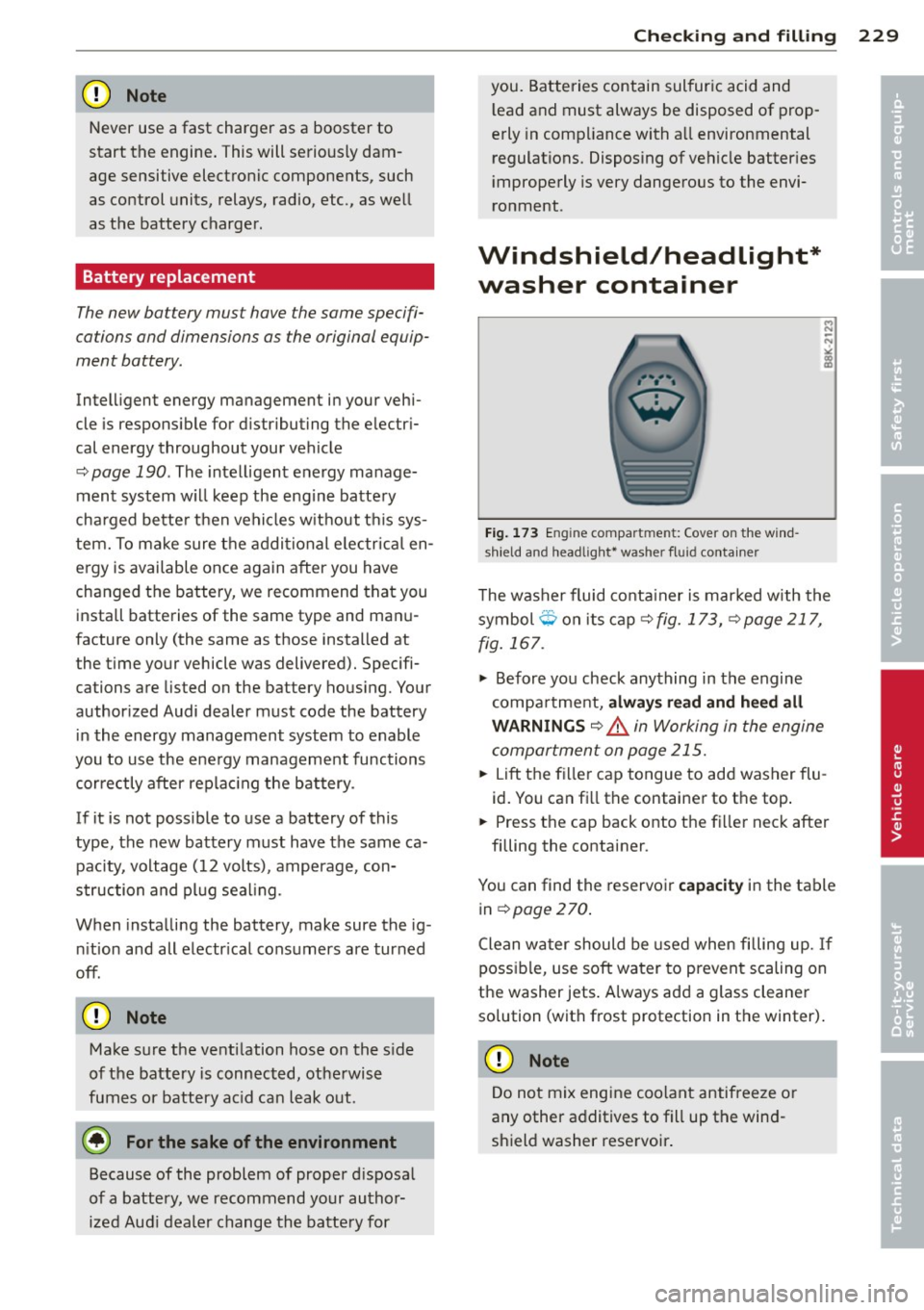
Fig. 173 En gin e compart men t: Cove r on the w ind
s hi eld an d headligh t* was her fl uid conta iner
The washer fluid container is marked w ith the
symbol
Q on its cap c::> fig. 173, c::> page 217,
fig. 167 .
.,. Before you check anything in the engine
compa rtment,
always read and heed all
WARNINGS
c::> .&. in Working in the engine
compartment on page 215.
.,. Lift the f iller cap tongue to add washer flu
id. You can fi ll the container to the top .
.. Press the cap back onto the fi ller neck after
filling the container .
You can find the reservoir
capacity in the table
in c::>
page 2 70 .
Clean water should be used when filling up. If
possib le, use soft water to prevent scaling on
the washer jets . Always add a glass cleaner
solution (with frost protection in the winter) .
(D Note
Do not mix engine coolant antifreeze or
any other additives to fill up the wind
shield washer reservoir .
•
•
Page 234 of 294
232 Tires and wheels
Maximum loaded vehicle weight
means the sum of:
(a) Curb weight
(b) Accessory weight
(c) Vehicle capacity weight, and
(d) Production options weight
Maximum (permissible) inflation pressure
means the maximum cold inflation pressu re
to which a tire may be inflated. Also called
"maximum inflation p ressure."
Normal occupant weight
means 150 lbs. (68 kilograms) times the
number of occupants seated in the vehicle up
to the total seating capacity of your vehicle.
Occupant distribution means distribution of occupants in a vehicle .
Outer diameter means the overa ll diameter of an inf lated new
tire.
Overall width
means the linear distance between the exteri
ors of the sidewalls of an inflated tire, includ
ing e levations due to labeling, decorations, or
protective bands or ribs.
Ply
means a layer of rubber-coated parallel cords.
Production options weight
means the comb ined weight of those installed
regular production options weighing over 5
lbs . (2 .3 kg) in excess of those standard items
which they replace, not previously considered
in curb weight or accessory weight, including
heavy duty brakes, r ide leve lers, roof rack,
heavy duty battery, and specia l trim .
Radial ply tire
means a pneumatic tir e in which the p ly cords
that extend to the beads are laid at substan
tially 90 degrees to the centerline of the
tread . Recommended inflation pressure
see
~
page 231, Cold tire inflation pressure.
Reinforced tire
means a t ire design to operate at higher loads
and at h igher inflation pressures than the cor
responding standard tire. Reinforced tires
may be identified as "XL", "xl", "EXTRA LOAD",
o r "R F" on the sidewall.
Rim
means a metal support for a tire or a t ire and
tube assembly upon which the tire beads are
seated.
Rim diameter
means nom inal d iameter of the bead seat. If
you change your wheel s ize, you will have to
purchase new tires to match the new rim di
ameter .
Rim size designation
means rim diameter and width.
Rim width
means nominal distance between rim flanges.
Sidewall
means that portion of a tire between the
t read and bead.
Speed rating (letter code)
means the speed at which a tire is designed to
be driven for extended periods of time. The
ratings range from 93 mph (150 km/h) to
186 mph (298 km/h)
~ page 242. You may
not find this information on all tires because
it is not requ ired by law.
The speed rating letter code, where applica
ble , is molded on the tire sidewall and indi
cates the max imum perm issible road speeds
~ A in Winter tires on page 246.
Tire pressure monitoring system*
means a system that detects when one or
more of a veh icle's tires are underinflated and
illuminates a low tire pressure warning tell
tale.
Page 251 of 294
When the malfunction indicator is illuminat
ed, the system may not be able to detect or
signal low tire pressure as intended. TPMS
malfunctions may occur for a variety of rea
sons, including the installation of replace
ment or alternate tires or whee ls on the veh i
cle that prevent the TPMS from funct io ni ng
p roperly . Always check the T PMS malfunct ion
tellta le afte r replacing one or more t ires or
wheels on your veh icle to ensure that the re
p lacement or a lternate tires and wheels allow
the TPMS to continue to function properly .
Tire pressure indicator appears
Applies to vehicles: with tire pressure monitoring system
The tire pressure indicator in the instrument
cluster informs you if the tire pressure is too
low or if there is a system malfunction.
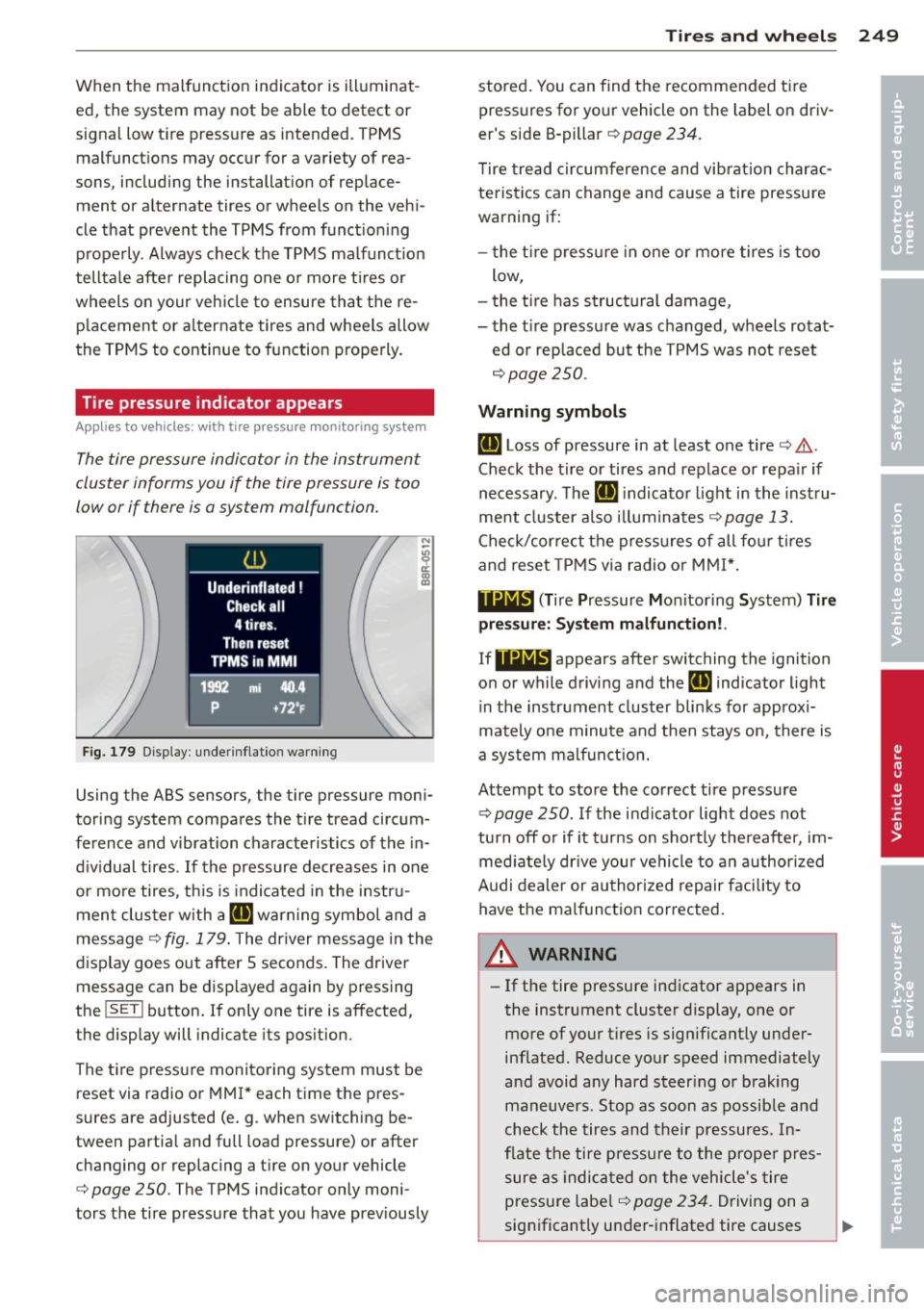
Fig. 179 Display : underinflatio n warning
Using the ABS sensors, the tire pressure moni
toring system compares the t ire tread circum
ference and vibration characteristics of the in
d iv idual tires . If the pressure decreases in one
or mo re tires, th is is indicated in the instru
ment clus ter with a
IE warning symbol and a
message ¢
fig. 179. The driver message in the
display goes out after 5 seconds. The driver message can be displayed again by pressing
the
! SET ! button. If only one tire is affected,
the display will indicate its pos ition.
The tire pressure monitoring system must be reset via radio or MMI* each time the pres
sures are adjusted (e.g . when switching be
tween partia l and full load pressure) or after
changing or replacing a t ire on your vehicle
¢
page 250. The TPMS indicator only moni
tors the tire pressure that you have prev iously
Tire s an d wheel s 249
stored . You can find the recommended t ire
pressures for yo ur vehicle on the label on driv
er's side B-pillar ¢
page 234.
Tire tread circum ference and vibration charac
teristics can change and cause a tire pressure
warning if:
- the t ire p ress ure in one or more tires is too
low,
- t he t ire has structural damage,
- the t ire pressure was changed, wheels rotat-
ed or replaced but the TPMS was not reset
¢ page 250.
Warning symbo ls
IE Loss of pressure in at least one tire¢.&,.
Check the tire or tires and replace or repa ir if
necessary. The
IE indicato r light in the inst ru
ment cluster a lso illuminates
c::!;> page 13.
Check/correct the press ures of all fou r tires
and reset TPMS via radio o r MMI*.
119;~, (T ir e Pressure Mon itoring System) Tire
pre ssure: Syst em malfun ction!.
If 11Nlf:1 appears afte r switching the ignition
on or while driving and the
IE indicator light
i n the instrument cluster blinks fo r approx i
mately one minute and then stays on, there is
a system malf unct ion.
Attempt to store the correct tire pressure
¢ page 250 . If the ind icator light does not
tu rn off o r if it turns on sho rtly the reafter, im
med iate ly dr ive your vehicle to a n author ized
Audi dealer or au thorized repair faci lity to
have the malfunc tion corrected .
A WARNING
-=
-If the tire pressure indicator appears in
the instrument cluster display, one or
more of your t ires is significant ly under
inflated. Reduce your speed immediately
and avoid any hard steer ing or braking
maneuvers. Stop as soon as possible and
check the tires and their pressures. In
flate the tire p ressure to the prope r pres
sure as indica ted on the vehicle's tire
pressu re labe l
¢page 234. Driving on a
significantly under-i nflated tire causes
•
•
Page 293 of 294
It has always been Audi's policy to continu
ously improve its products. Aud i, therefore,
reserves the right to make changes in design
a nd specifications, and to make additions or
improvements in its p roducts, without incur
ring any obl igat ion to insta ll t hem on p rod
uc ts p revio usly man ufact ured .
Text , illustrat ions and specif ications in th is
manual are based on the most up-to-date in
formation available at the time of p rinting.
All rights reserved. May not be reproduced or
translated in whole or in part without the wr
itten consent of AUDI AG. Specifications are
subject to change without notice.
"Audi", "q uattro" and the four r ings emblem
are registered trademarks of AUD I AG.
Editor ial de adlin e: 04 /16 /2012
@ For the sake of the environment
P rinted on environmentally friendly pape r
(b leached without chlorine, recyclable).
Printed in Germany
© 2012 AUDI AG