seats AUDI A5 2015 Owner´s Manual
[x] Cancel search | Manufacturer: AUDI, Model Year: 2015, Model line: A5, Model: AUDI A5 2015Pages: 264, PDF Size: 66.83 MB
Page 123 of 264
Safety belts
General information
Always wear safety belts!
Wearing safety belts correctly saves lives !
This chapter exp lains why safety be lts are neces
sary, how they work and how to adjust and wear
them correctly .
~ Read all the informat ion that fo llows and heed
all of the instructions and WARNINGS .
A WARNING
Not wearing safety belts or wearing them im
properly increases the r isk of serious personal
injury and death.
- Safety belts are the sing le most effective
means availab le to reduce the r isk of serious
injury and death in automobile accide nts .
For yo ur protection and tha t of your passen
gers, always correct ly wear safety belts
when the veh icle is moving.
- Preg nant wome n, injured, or physically im
paired pe rsons mu st also use safety belts .
Lik e all ve hicle occu pants, t hey are more
likely to be seriously injured if they do not
wea r safety belts . The best way to protect a
fetus is to protect the mother -th rougho ut
the enti re pregnancy.
Number of seats
Your Audi has a total of four seating positions:
t wo in the fron t and two in the rear. Each seating
position has a safety belt.
A WARNING
N ot wea ring safety belts or wea ring them im
prope rly i ncreases the r is k of se rious personal
injury and death.
- Never st rap more than one pe rson, includ
ing small children, into any belt. It is espe
ci ally d angerous t o place a safe ty belt over a
c hild sitting on you r lap.
- Never le t mo re people ride in t he ve hicle
t han there are s afety be lts availab le.
Safety bel ts
- Be s ure everyone riding in the vehicle is
properly restrained w ith a separate safety
belt or chi ld restraint.
Safety belt warning light
Your vehicle hos o warning system for the driver
and (on USA models onl y) front seat passenger
to remind you abou t the importance of buckling
up .
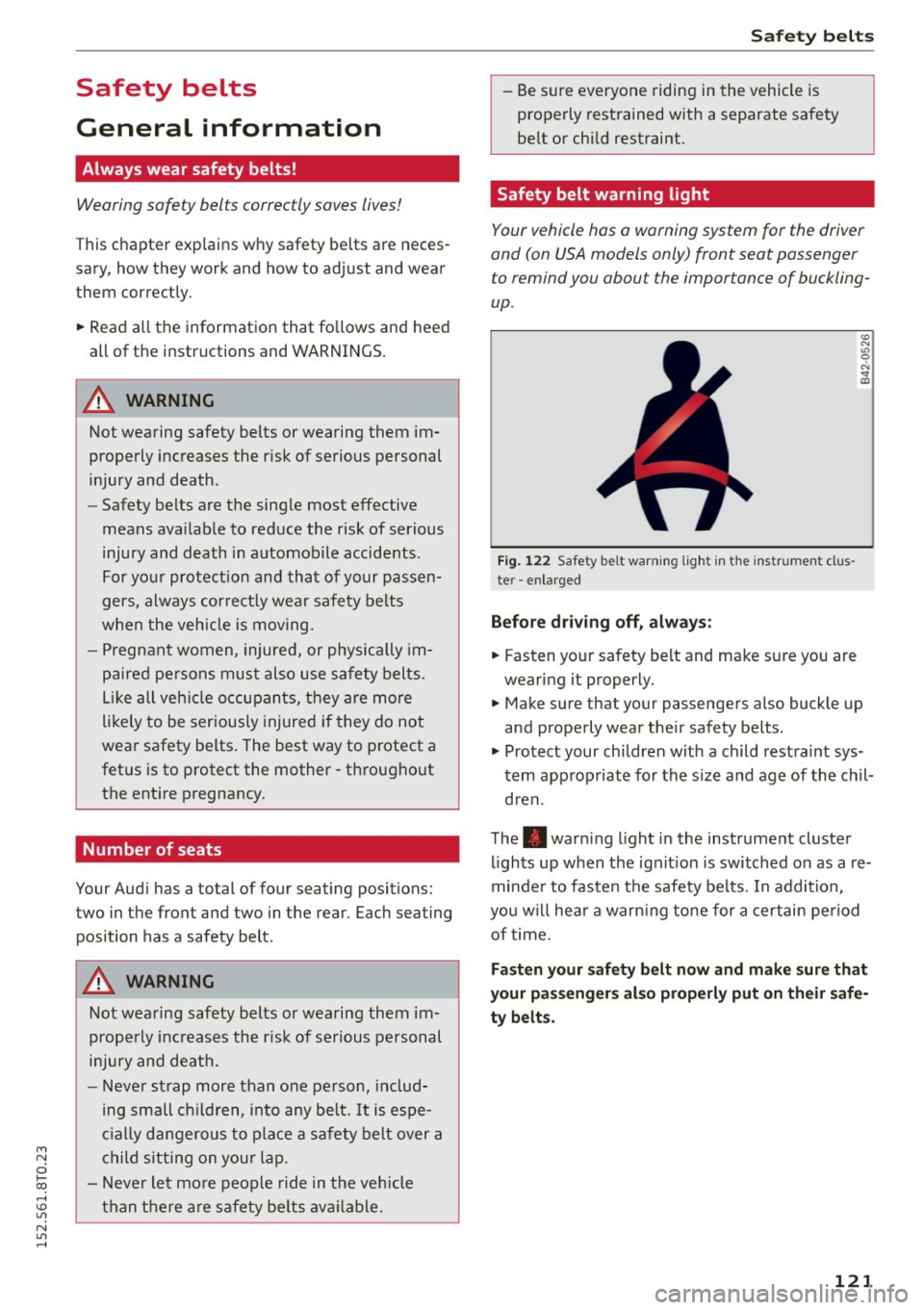
Fig. 1 22 Safety bel t warni ng lig ht in the instr um ent clu s
te r -enlarged
Before driving off, alway s:
.. Fas ten yo ur sa fe ty belt and make sure you are
wearing it pr operly.
.,, N
"' 0 ..:, ., m
~ Make sure that your passengers also buck le up
and properly wear the ir safety be lts .
~ Protect your children w it h a child rest raint sys
t em app rop riate for the s ize and age of the chil
d ren.
The . warn ing light in the instrument cluster
lights up when the ignit ion is switched on as a re
minde r to fasten the safety be lts. In addition,
yo u w ill hea r a warn ing tone for a ce rtai n period
of time.
Fast en your safety belt now and make sure that
your passenger s also properly put on their safe
ty belt s.
121
Page 125 of 264
M N
0 loo
rl I.O
"' N
"' rl
Never rely on airbags alone for protection. Even
when they deploy, airbags provide only additional
protection. Airbags are not supposed to deploy in
all kinds of accidents. Although your Audi is
equipped with airbags, all vehicle occupants, in
cluding the driver, must wear safety belts cor
rectly in order to minimize the risk of severe in
jury or death in a crash.
Remember too, that airbags will deploy only once
and that your safety belts are always there to of
fer protection in those accidents in which airbags
are not supposed to deploy or when they have al ready deployed. Unbelted occupants can also be
thrown out of the vehicle where even more severe or fatal injuries can occur.
It is also important for the rear passengers to
wear safety belts correctly. Unbelted passengers in the rear seats endanger not only themselves
but also the driver and other passengers
¢ fig. 126. In a frontal collision they will be
thrown forward violently, where they can hit and
injure the driver and/or front seat passenger.
Safety belts protect
People think it's possible to use the hands to
brace the body in a minor collision. It's simply
not true!
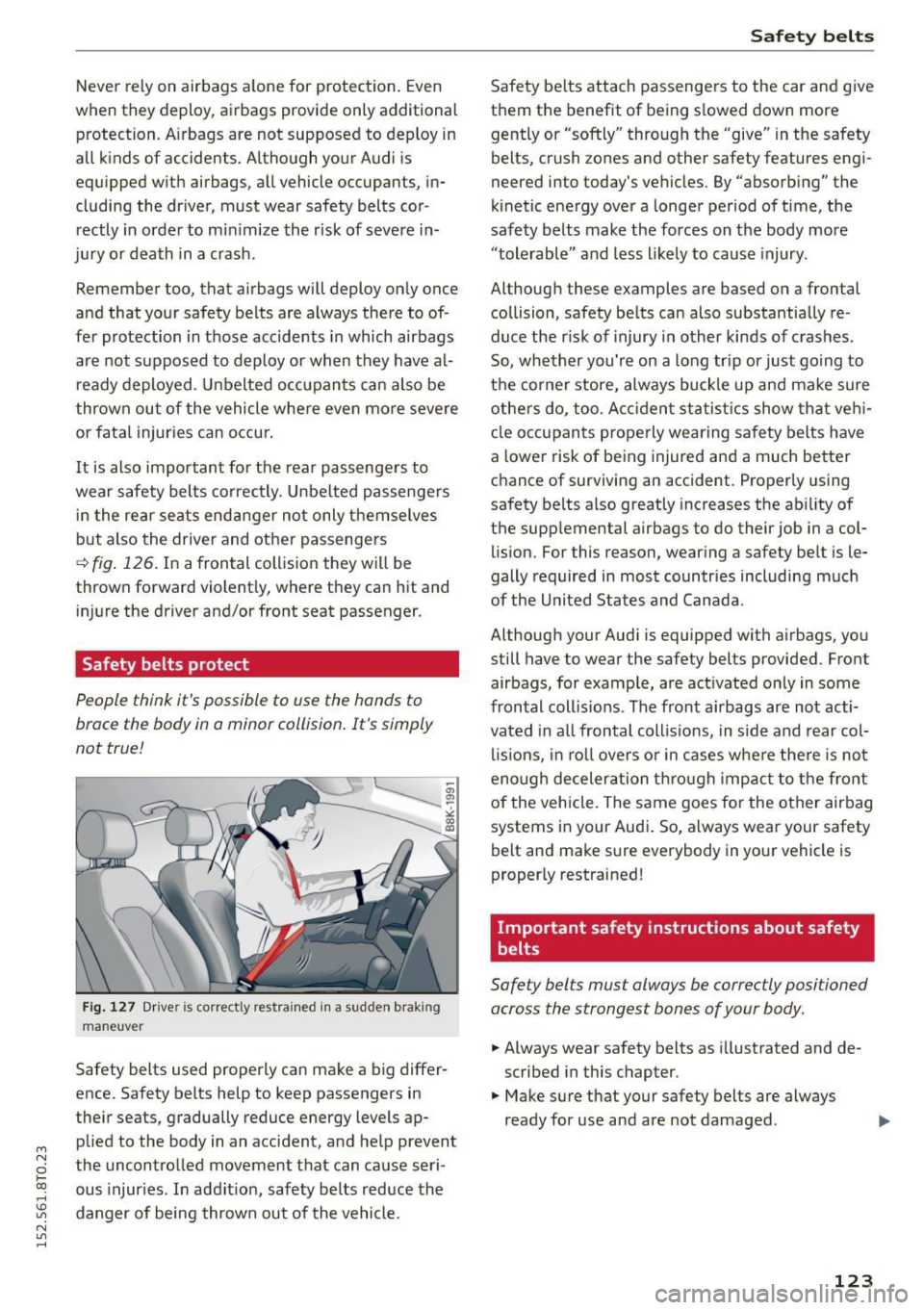
Fig. 127 Driver is correct ly restrained in a sudden braking
maneuver
Safety belts used properly can make a big differ
ence. Safety belts help to keep passengers in
their seats, gradually reduce energy levels ap plied to the body in an accident, and help prevent
the uncontrolled movement that can cause seri ous injuries. In addition, safety belts reduce the
danger of being thrown out of the vehicle.
Safety belts
Safety belts attach passengers to the car and give
them the benefit of being slowed down more
gently or "softly" through the "give" in the safety
belts, crush zones and other safety features engi
neered into today's vehicles . By "absorbing" the
kinetic energy over a longer period of ti me, the
safety belts make the forces on the body more
"tolerable" and less likely to cause injury.
Although these examples are based on a frontal collision, safety belts can also substantially re
duce the risk of injury in other kinds of crashes.
So, whether you're on a long trip or just going to
the corner store, always buckle up and make sure others do, too. Accident statistics show that vehi
cle occupants properly wearing safety belts have
a lower risk of being injured and a much better
chance of surviving an accident. Properly using
safety belts also greatly increases the ability of
the supplemental airbags to do their job in a col lision. For this reason, wearing a safety belt is le
gally required in most countries including much
of the United States and Canada.
Although your Audi is equipped with airbags, you
still have to wear the safety belts provided. Front
airbags, for example, are activated only in some
frontal collisions. The front airbags are not acti
vated in all frontal collisions, in side and rear col
lisions, in roll overs or in cases where there is not
enough deceleration through impact to the front
of the vehicle. The same goes for the other airbag
systems in your Audi. So, always wear your safety
belt and make sure everybody in your vehicle is
properly restrained!
Important safety instructions about safety
belts
Safety belts must always be correctly positioned
across the strongest bones of your body.
.,. Always wear safety belts as illustrated and de
scribed in this chapter.
.,. Make sure that your safety belts are always
ready for use and are not damaged .
123
Page 126 of 264
Safety belts
_& WARNING
Not wearing safety bel ts or wearing them im
properly increases the risk of serious personal
injury and death . Safety belts can work only
when used correctly .
- Always fasten your safety belts correctly be
fore driv ing off and make sure al l passen
gers are correctly restrained.
- For maximum protection, safety belts must
always be pos itioned properly on the body .
- Never strap more than one person, includ
ing small ch ild ren, into any belt .
- Never place a safety belt over a child sitting
on your lap .
- Always keep feet in the footwell in front of
the seat wh ile the vehicle is be ing driven .
- Never let any person ride with their feet on
the instrument panel or st icking out the
window or on the seat .
- Never
remove a safety belt while the vehicle
is moving . Doing so will increase your risk of
being in jured or killed .
- Never wear belts twisted .
- Never wear belts
over rigid or breakable ob-
jects in or on your cloth ing, such as eye
glasses, pens, keys, etc ., as these may cause
i njury .
- Never allow safety belts to become dam
aged by being caught in door or seat hard
ware.
- Do not wear the shoulder part of the belt
under your arm or otherwise out of position .
- Several layers of heavy clothing may inter
fere w ith correct pos itioning of belts and re
duce the overall effectiveness of the system.
- Always keep belt buckles free of anything
that may prevent the buckle from latching
securely .
- Never use comfort clips or devices that cre
ate slack in the shoulder belt. However, spe
c ial clips may be required for the proper use
of some child restraint systems.
- Torn or frayed safety belts can tear, and
damaged belt hardware can break in an acci
dent . Inspect belts regularly. If webb ing,
bind ings, buckles, or re tractors are dam-
124
aged, have belts replaced by an authorized
Audi dea ler.
- Safety belts that have been worn and loaded
in an accident must be rep laced with the
correct replacement safety belt by an au
thorized Audi dealer. Replacement may be necessary
even if damage cannot be clearly
seen . Anchorages that were loaded must al
so be inspected.
- Never
remove, modify, d isassemble, or try
to repair the safety belts yourself .
-Always keep the belts clean . Dirty belts may
not work properly and can impair the func
tion of the inert ia reel
¢ page 184.
Safety belts
Fastening safety belts
Safety first -everybody buckle up!
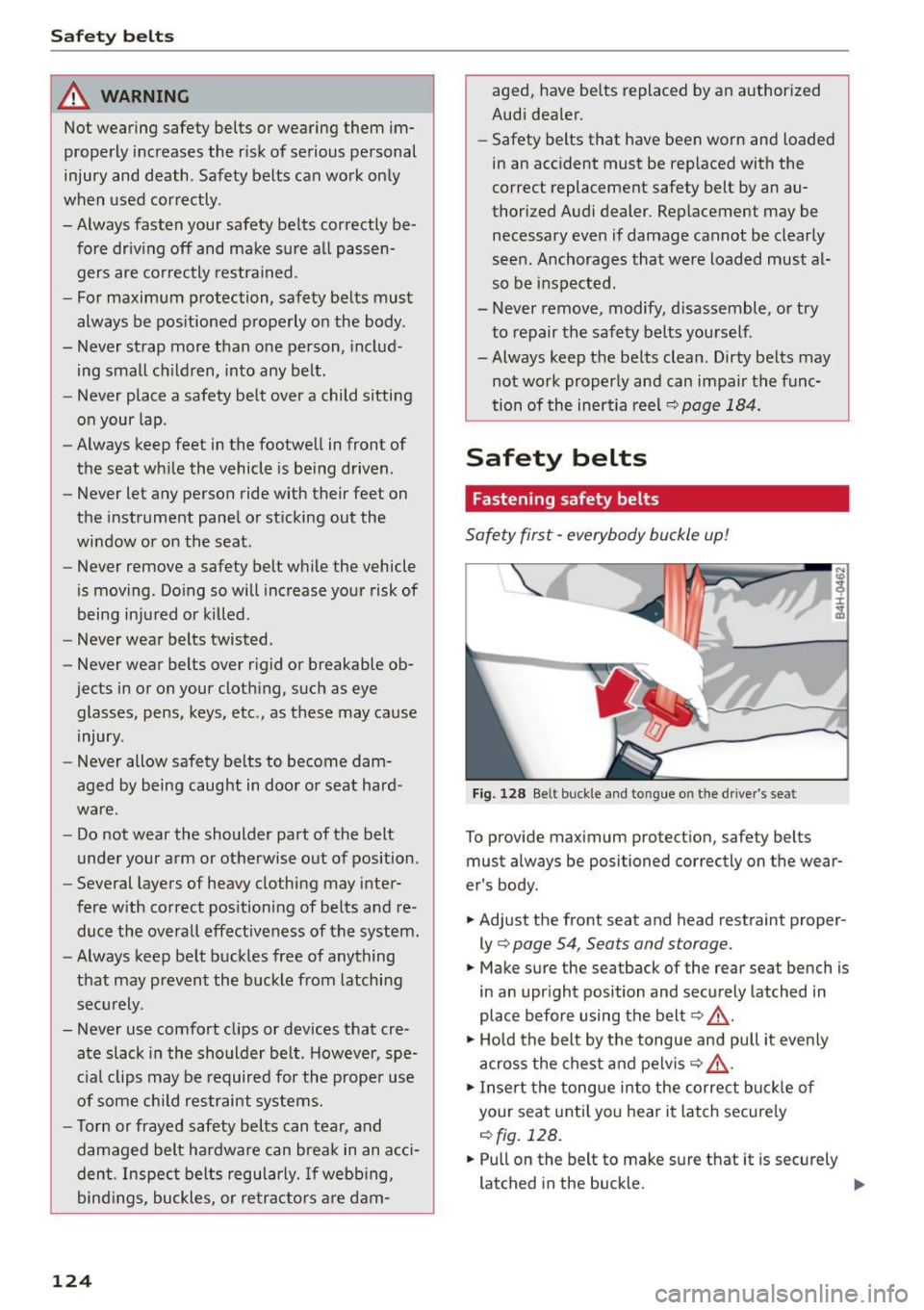
Fig. 128 Belt buckl e and to ngue o n th e dri ver's se at
To provide maximum protection, s afety belts
must a lways be positioned correctly on the wea r
er's body .
... Adjust the front seat and head restra int proper
ly ¢
page 54, Seats and storage.
... Make sure the seatback of the rear seat bench is
in an upr ight position and securely latched in
place before using the belt
q &_ .
.,. Hold the belt by the tongue and pull it even ly
across the chest and pelvis ¢ &_ .
.,. Insert the tongue into the correct buckle of
your seat unt il you hear it latch secure ly
¢ fig. 128.
... Pull on the belt to make sure that it is securely
latched in the buckle .
II>
Page 127 of 264
M N
0 loo
rl I.O
"' N
"' rl
Automatic safety belt retractors
Every safety belt is equipped with an automatic
belt retractor on the shoulder belt. This feature
locks the belt when the belt is pulled out fast,
during hard braking and in an accident . The belt
may also lo ck when you drive up or down a steep
hill or through a sharp curve. During normal driv
ing the belt lets you move freely.
Safety belt pretensioners
The safety belts are equipped with a belt preten
sioner that helps to tighten the safety belt and
remove slack when the pretensioner is activated.
The function of the pretensioner is monitored by
a warning light
r::> page 19.
Convertible locking retractor
Every safety belt except the one on the driver
seat is equipped with a convertible locking retrac
tor that
must be used when the safety belt is
used to attach a child safety seat. Be sure to read
the important information about this feature
r::;, page 160 .
& WARNING
Improperly positioned safety belts can cause
serious injury in an accident
r::;, page 125,
Safety belt position.
- Safety belts offer optimum protection only
when the seatback is upright and belts are
properly positioned on the body.
- Never attach the safety belt to the buckle
for another seat. Attaching the belt to the
wrong buckle will reduce safety belt effec
tiveness and can cause serious personal in
jury.
- A passenger who is not properly restrained
can be seriously injur ed by the safety belt it
self when it moves from the stronger parts of the body into critical areas like the abdo
men.
- Always lock the convertible locking retractor
when you are securing a child safety seat in
the vehicle
r::> page 162.
Safety belts
Safety belt position
Correct belt position is the key to getting maxi
mum protection from safety belts.
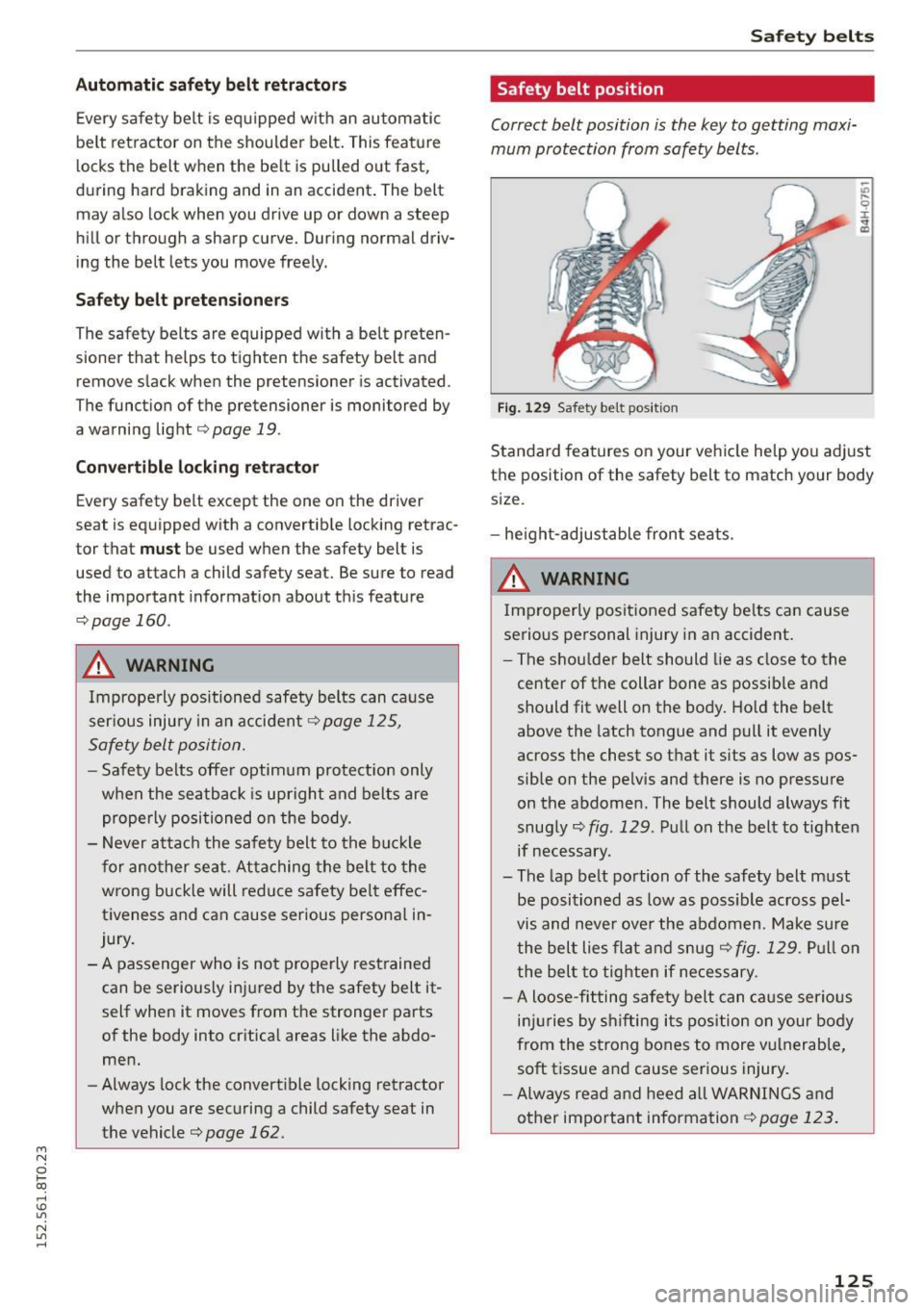
Fig. 129 Safety belt position
Standard features on your vehicle help you adjust
the position of the safety belt to match your body
size.
- height-adjustable front seats .
& WARNING
Improperly positioned safety belts can cause
serious personal injury in an accident.
- The shoulder belt should lie as close to the
center of the collar bone as possible and
should fit well on the body. Hold the belt
above the latch tongue and pull it evenly
across the chest so that it sits as low as pos
sible on the pelvis and there is no pressure
on the abdomen. The belt should always fit
snugly
r::;, fig . 129 . Pull on the belt to tighten
if necessary.
- The lap belt portion of the safety belt must
be positioned as low as possible across pel
vis and never over the abdomen. Make sure
the belt lies flat and snug
r::> fig. 129. Pull on
the belt to tighten if necessary.
- A loose-fitting safety belt can cause serious
injuries by shifting its position on your body
from the strong bones to more vulnerable,
soft tissue and cause serious injury.
-Always read and heed all WARNINGS and
other important information
r::;, page 123.
125
Page 128 of 264
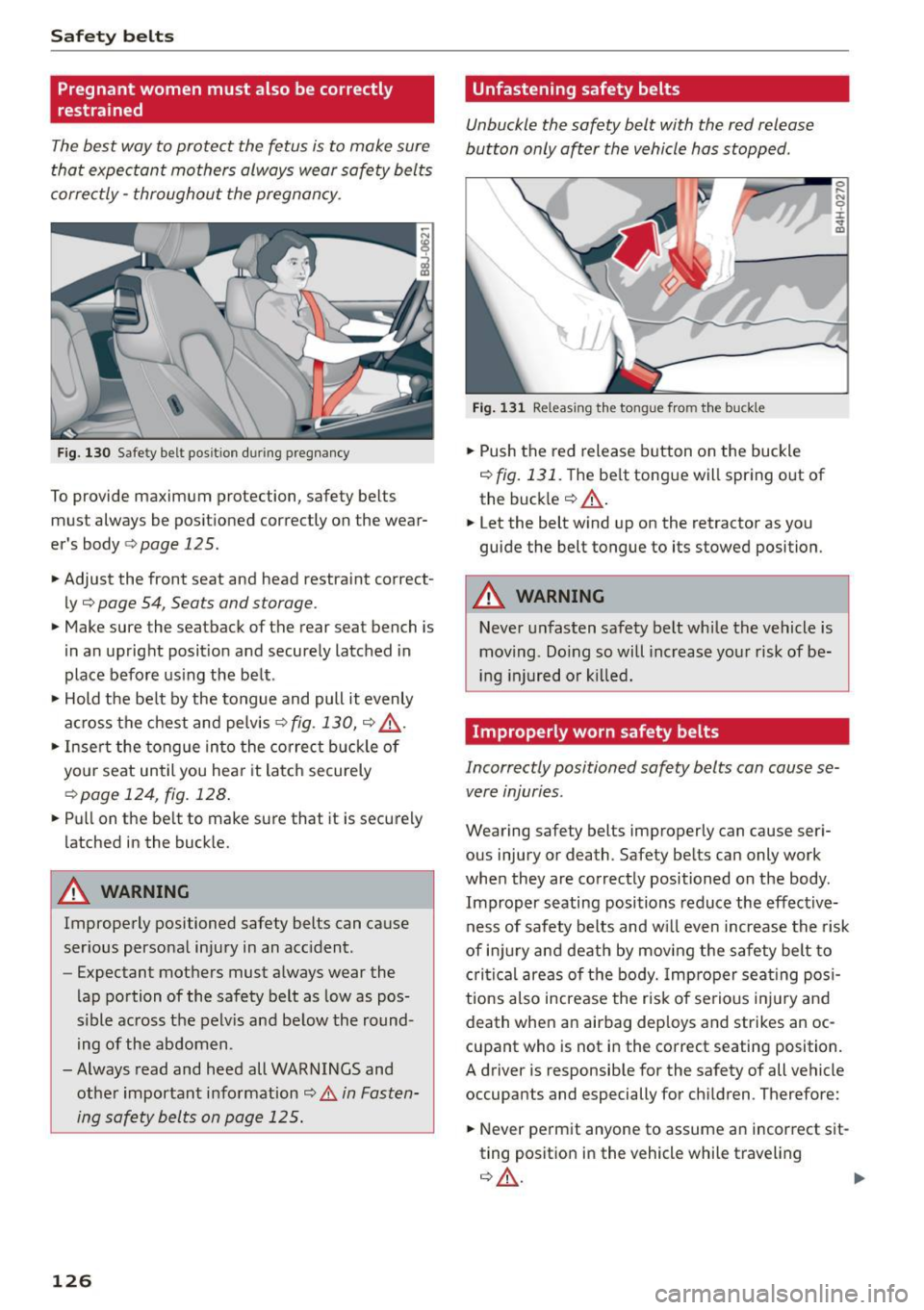
Safety belts
Pregnant women must also be correctly
restrained
The best way to protect the fetus is to make sure
that expectant mothers always wear safety belts
correctly -throughout the pregnancy.
Fig. 130 Safety belt posit ion during pregnancy
To provide maximum protection, safety belts
must always be positioned correctly on the wear
er's body
¢ page 125.
... Adjust the front seat and head restraint correct
ly
¢ page 54, Seats and storage .
... Make sure the seatback of the rear seat bench is
in an upright posit ion and secure ly latched in
place befo re us ing the be lt .
... Hold the be lt by the tongue and pull it evenly
ac ross the chest and pelvis
9fig. 130, ~ _&.
... Inse rt the tongue in to the co rrec t buckle of
you r seat until you he ar it latc h securely
¢ page 124, fig. 128 .
... Pu ll on the be lt to make sure that it is secure ly
l atched in the buck le.
A WARNING
Imprope rly p ositioned safety belts can ca use
ser ious persona l inju ry in an acc ident.
- Expectant mothers must a lways wear the
lap po rtion of the sa fety belt as low as pos
s ible across t he pelv is and be low the round
i ng of the abdom en.
- Always read and heed all WARNINGS and othe r important info rmat ion
~ .&. in Fasten
ing saf ety belts on page 125 .
126
Unfastening safety belts
Unbuckle the safety belt with the red release
button only after the vehicle has stopped.
.,,
Fig . 13 1 Releasing th e tongue from th e buckle
... Push the red release b utton on the buckle
~fig. 131. The be lt tongue will spr ing o ut of
the buck le
~ A .
... Let the belt wind up on the retractor as you
guide the belt tongue to its stowed position .
A WARNING
Never unfasten safety be lt while the vehicle is
moving. Do ing so will increase you r risk of be
ing inj ured o r killed.
Improperly worn safety belts
0 ,-. N 0 :i: .. m
Incorrectly positioned safety belts can cause se
vere injuries.
Wearing safety belts improperly can cause ser i
ous injury or death. Safety be lts can only work
whe n they are correctly positioned on the body.
Improper seating positions reduce the effective ness of safety belts and w ill even increase the risk
of i njur y and death by moving the safety belt to
c riti ca l areas of t he body. Imp rope r sea ting pos i
t ions also increase the risk of se rio us injur y and
death when an airbag dep loys and strikes an oc
cupant who is not in the correct seating position.
A driver is responsib le for the safety of all vehicle
occupa nts and especially fo r ch ildren. Therefore:
... Never pe rm it anyone to assume an incor rect sit-
ting position in the vehicle while traveling
¢ ,& . ...
Page 132 of 264
Airbag syste m
also not inflate in s ide or rear collisions, or in roll
overs.
Al wa ys rem ember : Airbags will deploy on ly once,
and only in certain kinds of collis ions . Your safety
be lts are a lways there to offer p rotection in those
situations in which airbags are not supposed to
deploy, or when they have already deployed; for
examp le, when your vehicle s trikes or is struck by
ano ther a fter the firs t collision .
This is just one of the reasons why an airbag is a
supp lementary restra int and is not a substitute
for a safety belt. The airbag system works mos t
e ff ectively when used w it h the safety belts.
Therefore, always properly wear your safety belts
r=;, page 121 .
A WARNING
Sitting too close to the steering wheel or in
strument panel wil l decrease the effect ive
ness of the airbags and will inc rease the risk
o f personal injury in a collision .
- Never sit closer than 10 inches (25 cm) to
the steering wheel or instrument panel.
- If you cannot sit more than 10 inches
( 2 5 cm) from the steer ing whee l, investi
gate whether adaptive equipment may be
available to help you reach the pedals and
increase yo ur seating distance from the
steering wheel.
- If you are unrestrained, leani ng forward, s it
ting sideways o r out of position in any way,
yo ur risk of in jury is much higher.
- You wi ll also receive serio us injuries and
could even be killed if you are up against the
airbag or too close to it when it inf lates -
even with an Advanced Airbag.
- To reduce the r isk of injury when an airbag
inflates, always wear safety belts properly
c> page 124, Safety belts .
- Always make certain that children age 12 or
younger always r ide in the rear seat. If chil
dren are not properly restrained, they may
be severely injured or killed when an airbag
inflates .
- Never let children ride unrestrained or im
properly restrained in the vehicle. Adjust the
front seats properly.
130
-
- Never ride with the backrest reclined .
- Always sit as far as possible from the steer -
ing wheel or the instrument panel
c> page 113.
-Always sit upright with yo ur back against
the backrest of yo ur seat .
- Never p lace your feet on the instrumen t
panel or on the seat. Always keep both feet
on the floor in front of the seat to help pre
vent serious injur ies to the legs and hips if
the airbag inflates.
- Never recline the front passenger 's seat to
transport objects. Items can also move into
the area of the side airbag o r the front air
bag during braking or in a sudden maneu
ver . Objects n ear the airbags can become
projectiles and cause in ju ry when an airbag
inflates.
A WARNING
A irbags that have deployed i n a crash mus t be
replaced.
- Use o nly orig inal equ ipmen t airbags ap
proved by Audi and installed by a trained
technician who has the necessary too ls and
diagnostic equipment to properly rep lace
any airbag in yo ur vehicle and assure system
effectiveness in a crash.
'
- Never permit salvaged or recycled airbags to
be installed in your vehicle .
Child restraints on the front seat - some
important things to know
""Be sure to read the importa nt information and
head the WARNINGS for importa nt details
about ch ild ren and Advanced Airbags
r=;, page 151 .
Even thoug h your veh icle is equipped w ith an Ad
vanced Airbag Sys tem, make ce rtain tha t all chil
dren, especially those 12 years and younge r, a l
ways ride in the ba ck seat p roperly res trained fo r
their age and size. The a irbag on the passenger
s ide makes the front seat a potent ially dangero us
place for a child to r id e. T he front seat is not the
safest p lace for a chi ld in a forward-fac ing chi ld ..,.
Page 134 of 264
Airbag syste m
A WARNING
A child in a rearward-facing child safety seat
installed on the fr ont passenger seat will be
ser iously injure d and can be killed if the front
airbag inflates - ev en w ith an Advanced Airbag
System.
- The inflating a irbag w ill hit the child safety
seat or infant carrier with great force and
will smash the chi ld safety seat and child
against the backrest, center armrest, door or roof .
- Always insta ll rear-facing child sa fety seats
on the rear seat.
- If you must install a rearward facing child
safety seat on the front passenger seat be ca use of exceptional c ircumstances and the
PASSENGER A IR BAG OFF light does not
come on and stay on, immediately install
the rear-fac ing ch ild safety seat in a rear
seat ing pos ition and have the airbag system
inspected by your authorized Audi dea ler.
- Forward-facing ch ild safety seats installed
on the front passenger's seat may interfere
with the deployment of the airbag and cause serio us pe rsonal injury to the child .
A WARNING
If, in exceptional c ircumstances, you must in
stall a forward-facing chi ld restraint on the
front passenger's seat:
- Always make sure the forward-fac ing seat
has been designed and ce rtified by its man
ufact urer for use on a front seat with a pas
senger front and side airbag.
- Never put the forwa rd-facing child rest raint
up against or ve ry nea r the instrument pan
el.
- Always move the passenger seat into its
rearmost posi tion in the sea t's fore and aft
adjus tment range, as far away from the air
bag as possib le before installing the for
ward-facing ch ild restraint . The backrest
must be adjusted to an up right posit ion.
- Make sure that the
PASSENGER AIR BAG
OFF
light comes on and stays on all the t ime
whenever the ignition is switched on.
132
A WARNING
-
To reduce the risk of ser ious injury, make sure
that the
PASSENGER AIR BAG OFF li ght will
be d isp layed wheneve r a ch ild restraint is in
stalled on the front passenger seat and the ig nit ion is switched on.
- If the PASSENGER AIR BAG OFF light does
not stay on, pe rform the checks desc ribed
~ page 139, Monitoring the Advanced Air
bag System.
- Ta ke the child restraint off the front passen
ge r seat and inst all it properly at one of the
rea r seat positions if the
PASSENGER AIR
BAG OFF
light does not stay on.
- Have the airbag system inspected by your
author ized Audi dealer immed iate ly .
- Always carefu lly follow instr uctions from
child res traint manufa cturers when instal
ling child restraints .
A WARNING
If, in exceptiona l circumstances, you must in
stall a forwa rd or rearward-facing ch ild re
straint on the front passenger's seat:
- Improper installation of chi ld restraints can
red uce their effectiveness or even prevent
them from providing any protect ion.
- An improperly installed chi ld restra int can
interfere w ith the airbag as it deploys and
serious ly injure or even kill the child - even
w ith an Advanced A irbag System.
-Always carefully fo llow the man ufacturer's
instructions provided w ith the child safety
seat or ca rrie r.
- Never p lace add itiona l items on the seat
that can increase the total weight reg istered
by the weight-sensing mat and can cause in
jury in a crash.
Page 135 of 264
M N
0 loo
rl I.O
"' N
"' rl
Front airbags
Description of front airbags
The airbag system can provide supplemental
protection to properly restrained front seat occu
pants.
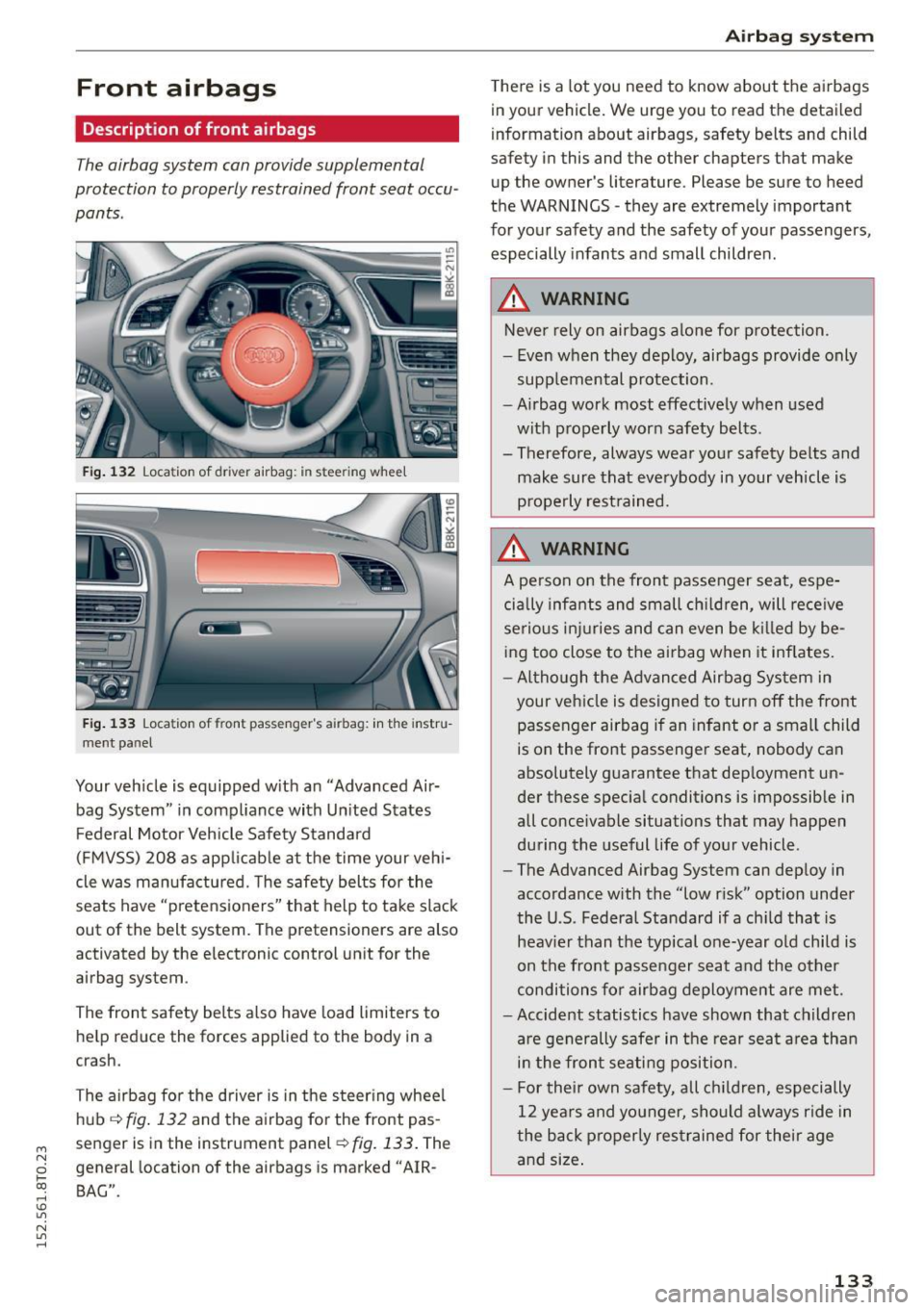
Fig . 132 Location of driver airbag: in steering wheel
Fig . 133 Location of front passenger's airbag: in the instru
ment panel
Your vehicle is equipped with an "Advanced Air
bag System" in compliance with United States
Federal Motor Vehicle Safety Standard
(FMVSS) 208 as applicable at the time your veh i
cle was manufactured. The safety belts for the
seats have "pretensioners" that help to take slack
out of the belt system. The pretensioners are also
activated by the electronic control unit for the
airbag system .
The front safety belts also have load limiters to he lp reduce the forces applied to the body in a
crash.
The airbag for the driver is in the steer ing wheel
hub
c::> fig . 132 and the airbag for the front pas
senger is in the instrument panel
~fig. 133. The
general location of the airbags is marked "AIR
BAG".
Ai rb ag system
There is a lot you need to know about the airbags
in your vehicle. We urge you to read the detailed
information about airbags, safety belts and child
safety in this and the other chapters that make
up the owner's literature. Please be sure to heed
the WARNINGS -they are extremely important
for your safety and the safety of your passengers, especially infants and small children.
_&. WARNING
Neve r rely on airbags alone for protection.
- Even when they deploy, airbags provide only
supp lemental protection.
- Airbag work most effectively when used
with properly worn safety belts.
- Therefore, always wear your safety belts and
make sure that everybody in your vehicle is properly rest rained.
_&. WARNING
--A pe rson on the front passenger seat, espe
cially infants and small ch ildren, will rece ive
se rious inj uries and can even be k illed by be
i ng too close to the airbag when it inflates.
- Altho ugh the Advanced Airbag System in
your veh icle is designed to turn off the front
passenger airbag if an infant or a small child
is on the front passenger seat, nobody can
absolutely guarantee that deployment un
der these special conditions is impossible in
all conceivable situations that may happen
during the useful life of your vehicle.
- The Advanced Airbag System can deploy in
accordance with the "low r isk" option under
the U.S. Federal Standard if a ch ild that is
heav ier than the typical one-year old child is
on the front passenger seat and the other
conditions for airbag deployment are met.
-Accident statistics have shown that children are generally safer in the rear seat area than
in the fron t seating position.
- For their own safety, all ch ildren, especially
12 years and yo unger, should a lways ride in
the back properly restrained for their age and size .
133
Page 136 of 264
Airbag syste m
Advanced front airbag system
Your vehicle is equipped w ith a front Advanced
A irbag System in compl iance with Un ited States
F ederal Motor Vehicle Sa fety Standard 208 asap
plicab le at the time your vehicle was manu fac
tured .
The front Advanced Airbag System supplements
the safety belts to provide add itiona l protect ion
for the driver's and front passenger's heads and
upper bodies in frontal crashes. The airbags in
flate only in fronta l impacts when the vehicle de
celeration is high enough.
The front Advanced Airbag System for the front
seat occupants is not a substitute for your safety be lts. Rather, it is part of the overall occupant re
straint system in your veh icle. Always remember
that the airbag system can only help to protect
you, if you are sitting upright, wearing your safe
ty belt and weari ng it properly . This is why you
and your passengers must always be p roper ly re
strained, not just because the law requires you to
be.
The Advanced Airbag System in your veh icle has
been ce rtified to meet the "low risk" require
ments for 3 and 6 yea r-old ch ild ren o n the pas
senger side and very small ad ults on the drive r
side . The low risk deployment c riteria a re intend
ed to he lp red uce the risk of injury through inter
action with the front airbag t hat can occur, for
examp le, by being too close to the steering wheel
and instrument panel when the airbag inflates.
I n addition, the system has been certified to
comp ly with the "suppression" requirements of
the Safety Standard, to turn off the front airbag
for infants 12 months old and yo unger who are
restrained on the front passenger seat in ch ild re
straints that are listed in the Standard
c::> page 153, Child restraints and Advanced Air
bags.
"Suppression" requires the front airbag on the passenger side to be turned off if:
- a chi ld up to about one year of age is restrained
on the front passenger seat in one of the rear
facing or forward-fac ing infant restraints listed
i n Federa l Motor Veh icle Safety Standard 208
134 with which the Advanced Airbag System in you
r
vehicle was certified. For a listing of the child
restraints that were used to certify your vehi
cle 's compliance with the US Safety Standard
c::> page 153,
- weight less than a thresho ld level stored in the
control unit is detected on the front passenger
seat.
When a person is detected on the front passen
ger seat, weighing more than the tota l we ight of
a child that is about
1 year old restrained in one
of the rear-facing or forward-facing infant re
stra ints (listed in Federal Motor Vehicle Safety
Standard 208 with which the Advanced Airbag
System i n your vehicle was certified), the front
a irbag on the passenger s ide may or may not de
ploy.
The
PASSENGER AIR BAG OFF light comes on
whe n the elect ron ic cont ro l unit detects a total
weight on the fro nt passenger seat that requires
the front airbag to be tu rned off. If the
PASSEN
GER AIR BAG OFF
light does not come on, the
front airbag on the passenger side has not been
turned off by the control unit and can dep loy if
the control unit senses an impact that meets the cond it ions stored in its memory.
If the total weight on the front passenger seat is
more than that of a typical 1 year-o ld, but less
than the weight of a small adult, the front airbag
on the passenger s ide may deploy (the
PASSEN
GER AIR BAG O FF
light does not come on).
For ex ample , the air b ag ma y deplo y if:
-a small ch ild that is heavier than a typical 1
year -old chi ld is on the front passenger seat (re
gardless of whether the chi ld is in one of the
child safety seats listed
c::, page 153),
- a child who has outgrown chi ld restraints is on
the front passenger seat.
If the fron t passenger airbag is turned off, the
PASSENGER AIR BAG OFF light in the center of
the i nstr ument pane l will come on and stay on.
The front airbag on the passenger side may
not
deploy (the PASSENGER AIR BAG OFF light does
not ill uminate and stay lit) if: .,..
Page 138 of 264
Airbag syste m
detail below . Because the front passenger seat
contains important parts of the Advanced Airbag
System, you must take care to prevent it from be ing damaged. Damage to the seat may prevent
the Advanced Airbag for the front passenger seat
from doing its job in a crash .
The front Ad vanced Airb ag System con sis ts
of the follow ing :
-Crash sensors in the front of the veh icle that
measure veh icle acceleration/decelerat ion to
provide information to the Advanced Airbag
System about the severity of the crash .
- An electronic control unit, with integrated crash sensors for front and side impacts. The
control un it "decides" whether to fire the front
airbags based on the informa tion rece ived from
the crash sensors. The con trol un it also "de
cides" whether the safety be lt pretensioners
shou ld be activated.
- An Advanced Airbag wi th gas generator and
control valve for the driver inside the steering
whee l hub.
- An Advanced Airbag with gas generator and
control va lve inside the instrument panel for
the front passenger.
- A weight -sensing mat under the upholste ry
padding of the front passenger seat cushion
that measures the total weight on the seat. The information registered is sent continuously to
the electronic control un it to regu late dep loy
ment of the front Advanced Airbag on the pas
senger side.
- An airbag monitoring system and indicator
light in the instrument cluster
r=> page 139.
-A sensor in each front seat registers the dis
tance between the respect ive seat and the
steering wheel or instrument panel. The infor
mation registered is sent cont inuously to the
electron ic co ntro l unit to regulate deployment
of the front Advanced Airbags.
- T he
PA SSENGER AIR B AG OFF light comes on
and stays on in the center of the instrument
pane l
c>page 139, fig . 135 and tells you when
the front Advanced A irbag on the passenger
side has been turned off.
- A sensor below the safety belt la tch for the
front seat passenge r to measure the tension on
136 the safety belt
. The tension on the safety be lt
and the weight registered by the weight-sens
ing mat help the control unit "decide" whether
the front a irbag for the front passenger seat
should be turned
off or not c> page 130, Child
restraints on the front seat -some important
things to know.
- A sensor in the safety belt latch for the driver
and for the front seat passenger that senses
whether that safety belt is latched or not and transm its this info rmat ion to the elect ro ni c
cont ro l unit .
_&. WARNING
Damage to the fron t passenger seat can pre
vent the front a irbag from working properly.
- I mproper repa ir or d isassembly of the front
passenger and driver seat will p revent the
Advanced Airbag System from functioning properly.
- Repairs to the front passenge r seat must be
performed by qualified and properly trained
wo rkshop personne l.
- Never remove the front passenger o r driver
seat from the vehicle .
- Never remove the upho lstery from the front
passenger seat.
- Never d isassemble o r remove par ts from the
seat or disconnect w ires from it.
- Never carry sharp obje cts in yo ur pocke ts or
place them on the seat. If the weight-sens
ing mat in the passenger seat is p unctured
it cannot work properly.
- Never carry things on you r lap or carry ob
jects on the passenger seat. S uch items can
increase the weight registe red by the
weight-sensing mat and send the wrong in formation to the airbag contro l unit.
- Never store items under the front passenger
seat. Parts of the Advanced Airbag System
under the passenger seat could be dam
aged, preventing them and the airbag sys
tem from wo rking prope rly.
- Never p lace seat covers or rep lacement up
holstery that have not been specifically ap
proved by Audi on the front seats.
- Seat covers can prevent the Advanced Air bag System from recogniz ing ch ild