child restraint AUDI A5 2021 Owners Manual
[x] Cancel search | Manufacturer: AUDI, Model Year: 2021, Model line: A5, Model: AUDI A5 2021Pages: 318, PDF Size: 85.96 MB
Page 4 of 318
Table of contents
About this Owner's Manual......
SUMIMAry: < = exe : eens: Seen cs sens
QutckeaeCe ssh: «i esis se ois a eaves @
Cockpit. ...... 0... eee eee eee eee
Indicator lights overview...........4..
Display and operation...........
Instrument cluster...............
Instrument cluster overview...........
Operating. ecccuse w+ were oo wens oo ayes 9 ¥
Adjusting the display.................
Coolant temperature display...........
Tachometer’ series i ewe so snes ¥ & ome
Odometer.............. cee eee eee ee
Outside temperature display...........
Engine oil temperature indicator.......
Boost indicator...............0--000.
Shift light indicator..................
Sportidisplaystens « scwne x » eum os vomew «02
Vehicle functions ..............00000.
TOUCH AISPLAY ' sevece: 3 seisas 6 sessen 6 6 ws
General touch display operation........
Multi Media Interface................
Head-up display..................
Description............0.. ee cee eee
Voice recognition system........
General information..............00.
DESGriptiOns « = seen ¢ = seme xs eee st eee
External voice operation..............
Global functions.................
Additional function buttons...........
Starting and driving.............
Personalization..................
Opening and closing.............
Central locking) sani x x swasien © x sponae 2 aaaonor
Keys... eee
Luggage compartment lid.............
Childisafety lock seis 2 « sere ¥ © were 3 ¢ overs
Power windows............000eeeeee
Panorartiic glass roof 0... ieee s ieee es
12 12 12
13
13
14 14
15
15
15
16
16
16
16 18
18
20 26 26 27 27 27
28
30
30
311.
Bi
3,
34
34
38
Al 45 45
47
Valetiparking = s ssse «x cscs ov crue a ¥ oe 47
Garage door opener..........--.00 eee 48
POWOEPRtOP lies. 5 6 sisi. ae sic ao oie & wae 51
Automatic power top................. 51
Wind deflect6r « cccs ss pees sv eeea sv ees 54
Power top emergency operation........ 55
Lights and Vision................. 58
Exteriorlighting « css < «sees < ¢ caew soars 58
Interior lightinGpenis « « sen 0 mew © 2 amore 62
VISION. 2... eee ee eee eee 63
Windshield wipers..................- 65
Digital. compass’. « . ceria ss caw s cei es 67
Sitting correctly and safely...... 69
Correct passenger seating position...... 69
Front seats ....... 0c eee 69
Steering Wheel sows » s wou sg wane x x see 73
Head restraintsti:. «ose a a nase ao oan ae 73
Safety belts. .............0...00000. 75
Memory function..............ee sees 78
‘Airbag SYSteM eviscie co soaae es werae oo eee 79
Child
safety seats... ...... 00... eee eee 84
Storage and convenience........ 91
POWEPISQUIGES vases + arouse « 6 eomaime « + eects 91
Cup holders............. eee eee eee 91
Storage and compartments............ 92
Luggage compartment............... 92
Roof rack... 2.0.2... 2c eee eee eee 96
Warmandicoled ioc. es isco & 6 anes 9 5 ae 98
Climate control system............... 98
3-zone deluxe automatic climate control. 99
Steering wheel heating............... 102
Fluids in the A/C system.............. 102
DYPIVITVE: « eens ¢ & cars ¢ & seme 4 2 HasEE Ee 103
Starting the vehicle.................. 103
When driving.............00eeee eens 104
Drive SYStE Misses ¢ = sawe + « mee se eee sb 110
Start/Stopisystei « sso so aceon 4 @ suena a 111
Brakes... . 2.2.2.0... 2c eee ee eee eee 112
Electromechanical parking brake....... 114
Special driving situations.............. 116
Page 71 of 318

8W7012721BB
Sitting correctly and safely
Sitting correctly and
safely
Correct passenger
seating position
General information
As the driver, you are responsible for making sure
every passenger is sitting correctly in their seat
and maintaining this seating position while driv-
ing. Make sure that:
— Every passenger in the vehicle has adjusted his
or her seat correctly > page 69
— The steering wheel is adjusted correctly
=> page 73
— The mirrors are adjusted so that there is a suffi-
cient view of the area around the vehicle
=> page 63
— Every passenger in the vehicle has his or her
head restraint adjusted correctly > page 73
— Every passenger in the vehicle has his or her
safety belt fastened correctly > page 75
— The activation status of the front passenger's
airbag is suitable for the passenger in the front
passenger's seat > page 82
— Children are secured in suitable child safety
seats that are secured to appropriate vehicle
seats > page 84. Read and observe the impor-
tant safety information pertaining to the use of
child safety seats on the front passenger's seat
= A in General information on page 85.
Examples of incorrect seating positions
Safety belts can only provide its optimal protec-
tion when they are routed correctly. Incorrect
seating positions significantly reduce the protec-
tive functions of the safety belts and increase the
risk of injury due to incorrect belt routing.
The following list includes examples of seating
positions that could be dangerous for all vehicle
occupants. This is not a complete list. The pur-
pose is to provide examples to increase your
awareness of the topic. The following points ap-
ply when the vehicle is in motion:
— Never stand inside the vehicle.
— Never stand on the seats.
— Never kneel on the seats.
— Never tilt your backrest too far back.
— Never lean against the instrument panel.
— Never lie down on the rear bench seat.
— Never sit only on the front section of the seat.
— Never sit sideways on the seat.
— Never lean against the window.
— Never place your feet out of the window.
— Never place your feet on the instrument panel.
— Never place your feet on the seat cushion.
— Never ride in the footwell.
— Never sit on the armrests.
— Never drive or ride in a seat without fastening
your safety belt.
— Never ride in the luggage compartment.
ZA WARNING
Incorrect seating positions, failure to wear a
safety belt, or being too close to an airbag in-
crease the risk of serious or fatal injury to ve-
hicle occupants, especially if the airbags de-
ploy and come into contact with occupants
who are not seated correctly. Note the impor-
tant information and warnings in the chapters
for the topics given above.
Gi) Tips
If you or other vehicle passengers have physi-
cal limitations that prevent sitting in a correct
position, modifications to the vehicle may be
necessary. For more information, contact an
authorized Audi dealer or authorized Audi
Service Facility, or call Audi customer support
at 1-800-822-2834.
Front seats
General information
Make sure that:
— You can press the pedals down completely
while your legs are slightly bent
— The distance between your upper body and the
steering wheel or instrument panel is at least
10 inches (25 cm)
— The distance between your knees and the in-
strument panel is at least 4 inches (10 cm)
69
>
Page 74 of 318

Sitting correctly and safely
Depending on the vehicle equipment, the follow-
ing options may be available.
Reset seat position
You can adjust the position of the front passeng-
er’s seat to match the driver's seat.
Driver seat entry assistance
Entry assistance makes it easier to enter or exit
the vehicle.
Front passenger seat adjustment
You can adjust the front passenger's side with the
driver's seat buttons.
(Fatt)
Applies to: vehicles with easy entry function
SSA stele
B8W-0269.
Fig. 68 Front seat: power entry assistance (version 2)
Entry assistance makes it easier for the rear pas-
sengers to enter and leave the vehicle.
Power entry assistance (version 1)
> Lift the handle @ © fig. 67 and fold the seat
backrest forward.
2) Requirement: the vehicle battery must have a sufficient
charge level.
72
> To move the seat all the way forward or to the
original position, press the (2) button briefly.
You can stop the seat by pressing the button
again.
> You can move the seat all the way forward even
when the backrest is upright. Press and hold
the button @) until the seat reaches your pre-
ferred position.
Power entry assistance (version 2)
Pull on the loop @ © fig. 68 and fold the back-
rest forward (2).
> To move the seat all the way forward or to the
original position, press the @) button briefly.
You can stop the seat by pressing the button
again.
ZA WARNING
Always make sure the front seats are upright
and securely locked in place.
— Power entry assistance also works when the
ignition is switched off) or when the vehicle
key is removed, so that rear seat passengers
can still move to the front of the vehicle in
an emergency situation. To reduce the risk
of injury, children should never be left unat-
tended in the vehicle for this reason.
@) Tips
To prevent the head restraints from running
into the headliner, the power adjustable head
restraints* automatically move forward or up-
ward when the seat is adjusted.
eames Cera ti
Applies to: vehicles with a front center armrest
The front center armrest is located between the
front seats.
Adjusting the center armrest
The settings depend on the vehicle equipment.
> To adjust the armrest forward or backward,
move the armrest in the desired direction. >
Page 76 of 318

Sitting correctly and safely
— The upper edge of the head restraint is as even
as possible with the top of your head
— The head restraint is as close as possible to the
back of the head
— The head restraints in any occupied rear seats
are all the way up
Z\ WARNING
— There is one head restraint for each seat. All
vehicle occupants must adjust the head re-
straint correctly before every trip. Having
head restraints that are not adjusted cor-
rectly or not installed in the vehicle increas-
es the risk of a neck injury during sudden or
unexpected driving or braking maneuvers or
in a collision.
— Only remove the rear seat head restraints if
it is necessary to install a child safety seat
=> page 84. Stow the removed head re-
straints securely, for example in the luggage
compartment. Reinstall the head restraints
immediately once the child safety seat has
been removed. Driving without head re-
straints increases the risk of serious neck in-
juries.
rede matt le Mes Tiny
Applies to: vehicles with adjustable head restraints
RAZ-0683
Fig. 71 Front seat: adjusting the head restraint
The settings depend on the vehicle equipment.
Adjusting the head restraints
Applies to: vehicles with manually adjustable head restraints
> To adjust the head restraint upward or forward,
slide it until it locks into place.
> To adjust the head restraint downward or back-
ward, press the button on the side and slide the
74
head restraint. Release the button and slide the
head restraint farther until it locks into place.
Power head restraint adjustment
Applies to vehicles with power adjustable head restraints
> To adjust the head restraint upward or down-
ward, press the button @ > page 70, fig. 64 or
=> page 70, fig. 65 upward or downward.
> To adjust the head restraint forward or back-
ward as needed, press the side button and slide
the head restraint in the desired direction until
it locks into place.
mae Mee ay
Applies to: vehicles with adjustable head restraints
Fig. 72 Rear seat: adjusting or removing the head restraint
Adjusting the head restraints
> To adjust the head restraint upward, slide it un-
til it locks into place.
> To adjust the head restraint downward, press
the button @) and slide the head restraint. Re-
lease the button and slide the head restraint
farther until it locks into place.
Removing the headrests
Applies to: vehicles with removable head restraints
> Fold the backrest forward slightly > page 94.
> Move the head restraint upward all the way.
> Insert a suitable object, such as the extended
vehicle key or mechanical key, into the release
point @ on the inside or outside of the base.
> Press the button (2) and pull the head restraint
out of the backrest.
Installing the headrests
> Fold the backrest forward slightly > page 94.
> Slide the posts on the head restraint down into
the guides until the posts click into place.
Page 77 of 318

8W7012721BB
Sitting correctly and safely
> Press the button (2) and slide the head restraint
all the way down. It should not be possible to
remove the head restraint from the backrest
without pressing the button.
Safety belts
Each seat is equipped with a three-point safety
belt. Safety belts that are worn correctly are the
most effective way to reduce the risk of serious or
fatal injuries in a collision. Therefore, wear your
safety belt correctly and make sure that all vehi-
cle passengers are also wearing their safety belts
correctly when the vehicle is moving.
Even though your vehicle is equipped with an air-
bag system, every vehicle passenger must still al-
ways wear the appropriate safety belt. In addi-
tion to their normal protective function, safety
belts also hold vehicle occupants in the correct
seating position in the event of a collision so that
the airbags can deploy correctly and provide addi-
tional protection. Safety belts provide protection
during collisions when the airbags do not deploy
or if they have already deployed.
ZA WARNING
The risk of serious or fatal injury increases if
the safety belt is not fastened, if it is worn in-
correctly, or if it is damaged.
— All vehicle occupants, including the driver,
must fasten their safety belts correctly be-
fore every trip and must always keep their
safety belts fastened during the trip, regard-
less of whether the seat is equipped with an
airbag or not. This also applies to children
that are seated in a child safety seat that is
appropriate for their weight and age and
that is secured with a safety belt.
— In the event of a collision, vehicle occupants
that are not wearing safety belts could be
propelled through the vehicle interior and
collide with vehicle components, such as the
steering wheel, instrument panel, wind-
shield, or doors. In some situations, vehicle
occupants could also be ejected from the ve-
hicle. Vehicle occupants in the rear seats
who do not wear safety belts not only en-
danger themselves, but also other people in
the vehicle.
— Only one person may be fastened with a
safety belt at a time. Never secure more
than one person, including children, with a
single safety belt.
— Never allow children or infants to ride on an-
other person's lap and be belted into the
safety belt with them.
— Insert the belt buckle only in the belt latch
belonging to the corresponding seat, so that
the protective function is not impaired.
— To ensure the maximum protective function
of the safety belts, all vehicle passengers
must sit in the correct seating position
=> page 69.
— Check the condition of your vehicle’s safety
belts regularly > page 268. If you find dam-
age to the belt webbing, the belt connec-
tions, the retractor, or the buckle, have the
damaged safety belt replaced by an author-
ized Audi dealer or authorized Audi Service
Facility.
— The safety belts must not be removed or
modified in any way. Do not attempt to re-
pair the safety belts yourself.
— Safety belts that are strained during an acci-
dent must be replaced by an authorized
Audi dealer or authorized Audi Service Facili-
ty.
75
Page 87 of 318
8W7012721BB
Sitting correctly and safely
You can also obtain useful and current informa-
tion from the following sources:
U.S. National Highway Traffic Safety Adminis-
tration
http://www.nhtsa.gov
http://www.safercar.gov
National SAFE KIDS Campaign
http://www.safekids.org
SafetyBeltSafe U.S.A.
http://www.carseat.org
Transport Canada Information Centre
http://www.tc.gc.ca/roadsafety
Audi Customer Experience Center
https://www.audiusa.com/help/contact-us
https://www.audi.ca/ca/web/en/models/layer/
contact.html
Z\ WARNING
To reduce the risk of serious or fatal injuries,
children must always be secured in the vehicle
with a child safety seat that is appropriate for
their body size, weight, and age.
— Children ages 12 and under must be trans-
ported using the appropriate child safety
seat. Note differences in regulations be-
tween states and countries.
— Child safety seats secured incorrectly in the
vehicle may cause serious or fatal injuries in
the event of an accident. Always secure the
child safety seat according to the manufac-
turer instructions.
— Children or babies must not under any cir-
cumstances be held on the lap of the driver
or other passengers while driving.
— Do not secure more than one child in a child
safety seat.
— Never allow a child to sit in a child safety
seat unsupervised.
— Never allow children to ride unsecured in the
vehicle or to stand or kneel on the seats
while driving. In the event of an accident, a
child could be propelled through the vehicle.
This can cause serious or fatal injuries for
the child and passengers.
— If children use an incorrect seating position
while driving, they have a higher risk of in-
jury during a sudden braking maneuver or
accident. This especially applies to children
in the front passenger's seat or children who
have their head near the side airbag deploy-
ment area, if the airbag system is deployed
during an accident. This incorrect seating
position can cause severe or even fatal inju-
ries.
Make sure there is enough space in front of
the child in the child safety seat. If necessa-
ry, adjust the angle and position of the seat
in front of the child safety seat.
The rear side of a forward-facing child safety
seat should be positioned as close as possi-
ble to the backrest on the vehicle seat. If the
head restraints make it difficult to install a
child safety seat, adjust or remove them if
necessary > page 73. Reinstall the head re-
straints immediately once the child safety
seat has been removed.
Always make sure that the backrest on the
seat where the child safety seat is installed
is securely locked in place and cannot move
forward. Otherwise, the backrest where the
child safety seat is secured could move for-
ward in the event of an accident or other
emergency situation.
NEVER use a rear-facing child safety seat on
a seat with an ACTIVATED FRONT AIRBAG;
this could cause DEATH or SERIOUS INJU-
RIES to a CHILD.
— Always secure child safety seats on the
rear seats. If exceptional circumstances re-
quire the child safety seat to be placed on
the front passenger's seat, then the front
Passenger's airbag must be deactivated.
Always make sure that
PASSENGER AIR BAG OFF #; stays on
while driving. If
PASSENGER AIR BAG OFF #%; does not
turn on, remove the child safety seat and
install it again according to the child safe-
ty seat manufacturer instructions. If
PASSENGER AIR BAG OFF %;; still
does not turn on, the front passenger's
seat must not be used. Drive to an author-
ized Audi dealer or authorized Audi Service
8s
Page 89 of 318
8W7012721BB
Sitting correctly and safely
the fastening systems or safety belts do not
impair those in an adjacent seating position.
— All child safety seats are constructed so that
they can be secured using the lap safety belt
in the vehicle.
— Child safety seats with a load leg can only
be secured to the outer rear seats and to the
front passenger's seat.
Yate ie Man Cm eA Lm RMCLICLe
LATCH anchors
Lt Lg ce gpa lil
ATA aS
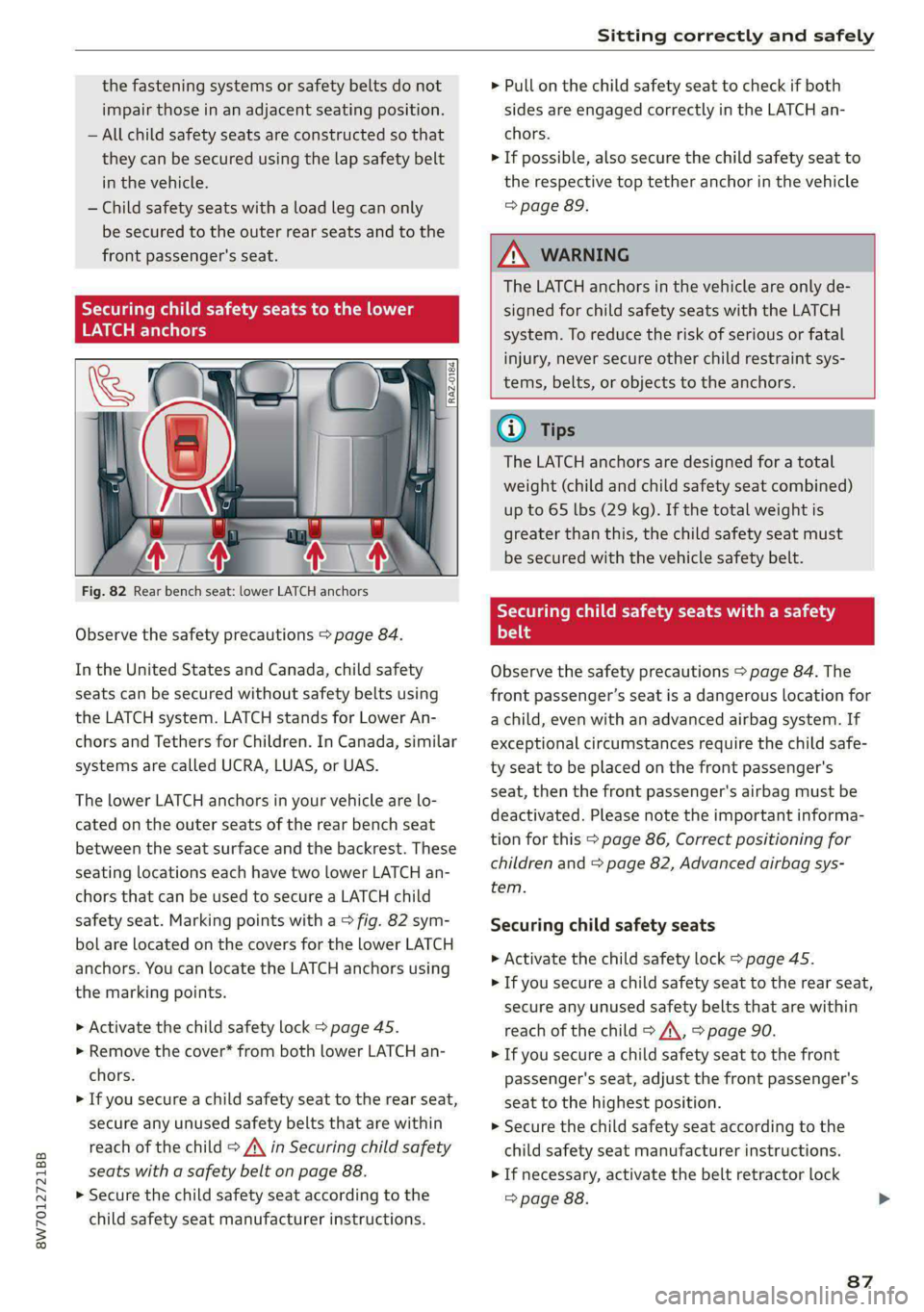
Fig. 82 Rear bench seat: lower LATCH anchors
Observe the safety precautions > page 84.
In the United States and Canada, child safety
seats can be secured without safety belts using
the LATCH system. LATCH stands for Lower An-
chors and Tethers for Children. In Canada, similar
systems are called UCRA, LUAS, or UAS.
The lower LATCH anchors in your vehicle are lo-
cated on the outer seats of the rear bench seat
between the seat surface and the backrest. These
seating locations each have two lower LATCH an-
chors that can be used to secure a LATCH child
safety seat. Marking points with a > fig. 82 sym-
bol are located on the covers for the lower LATCH
anchors. You can locate the LATCH anchors using
the marking points.
> Activate the child safety lock > page 45.
> Remove the cover* from both lower LATCH an-
chors.
> If you secure a child safety seat to the rear seat,
secure any unused safety belts that are within
reach of the child > A\ in Securing child safety
seats with a safety belt on page 88.
> Secure the child safety seat according to the
child safety seat manufacturer instructions.
> Pull on the child safety seat to check if both
sides are engaged correctly in the LATCH an-
chors.
> If possible, also secure the child safety seat to
the respective top tether anchor in the vehicle
=> page 89.
ZA WARNING
The LATCH anchors in the vehicle are only de-
signed for child safety seats with the LATCH
system. To reduce the risk of serious or fatal
injury, never secure other child restraint sys-
tems, belts, or objects to the anchors.
@® Tips
The LATCH anchors are designed for a total
weight (child and child safety seat combined)
up to 65 lbs (29 kg). If the total weight is
greater than this, the child safety seat must
be secured with the vehicle safety belt.
Securing child safety seats with a safety
Phy
Observe the safety precautions > page 84. The
front passenger’s seat is a dangerous location for
a child, even with an advanced airbag system. If
exceptional circumstances require the child safe-
ty seat to be placed on the front passenger's
seat, then the front passenger's airbag must be
deactivated. Please note the important informa-
tion for this > page 86, Correct positioning for
children and > page 82, Advanced airbag sys-
tem.
Securing child safety seats
> Activate the child safety lock > page 45.
> If you secure a child safety seat to the rear seat,
secure any unused safety belts that are within
reach of the child > A\, > page 90.
> If you secure a child safety seat to the front
passenger's seat, adjust the front passenger's
seat to the highest position.
> Secure the child safety seat according to the
child safety seat manufacturer instructions.
> If necessary, activate the belt retractor lock
=> page 88.
87
Page 91 of 318
8W7012721BB
Sitting correctly and safely
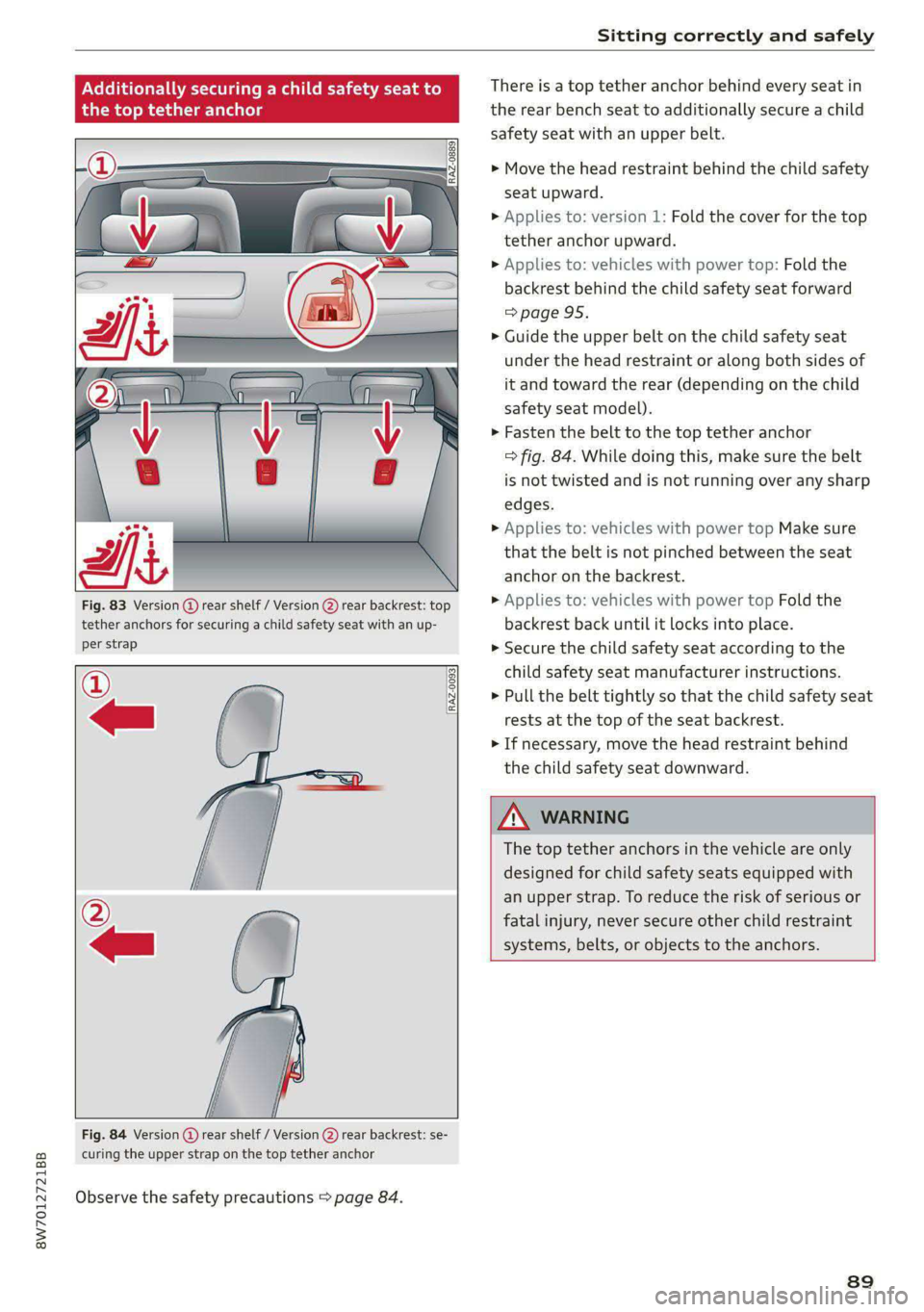
Fig. 83 Version @) rear shelf / Version @) rear backrest: top
tether anchors for securing a child safety seat with an up-
per strap
RAZ-0093
Fig. 84 Version @ rear shelf / Version @) rear backrest: se-
curing the upper strap on the top tether anchor
Observe the safety precautions > page 84.
There is a top tether anchor behind every seat in
the rear bench seat to additionally secure a child
safety seat with an upper belt.
> Move the head restraint behind the child safety
seat upward.
>» Applies to: version 1: Fold the cover for the top
tether anchor upward.
> Applies to: vehicles with power top: Fold the
backrest behind the child safety seat forward
=> page 95.
> Guide the upper belt on the child safety seat
under the head restraint or along both sides of
it and toward the rear (depending on the child
safety seat model).
> Fasten the belt to the top tether anchor
=> fig. 84. While doing this, make sure the belt
is not twisted and is not running over any sharp
edges.
> Applies to: vehicles with power top Make sure
that the belt is not pinched between the seat
anchor on the backrest.
> Applies to: vehicles with power top Fold the
backrest back until it locks into place.
>» Secure the child safety seat according to the
child safety seat manufacturer instructions.
> Pull the belt tightly so that the child safety seat
rests at the top of the seat backrest.
> If necessary, move the head restraint behind
the child safety seat downward.
The top tether anchors in the vehicle are only
designed for child safety seats equipped with
an upper strap. To reduce the risk of serious or
fatal injury, never secure other child restraint
systems, belts, or objects to the anchors.
89
Page 95 of 318

8W7012721BB
Storage and convenience
— Applies to: vehicles with luggage compart-
ment cover: The luggage compartment cov-
er must always be securely fastened when in
use to reduce the risk of an accident.
— Loose objects can be thrown around the ve-
hicle interior during sudden driving or brak-
ing maneuvers, which increases the risk of
an accident. Always stow objects securely in
the luggage compartment and secure them
at the tie-downs. Use straps suitable for
heavy objects.
— If pieces of luggage or objects are secured
to the tie-downs with unsuitable or dam-
aged straps, this can increase the risk of in-
jury during braking maneuvers or accidents.
— When transporting heavy objects, the vehi-
cle characteristics will change due to the
shift in the center of gravity, which increases
the risk of an accident. You may need to
adapt your driving style and speed to the
current conditions.
— The cargo net* is only strong enough to se-
cure light objects. Heavy objects are not ade-
quately secured. Attempting to secure heavy
objects increases the risk of injury.
— Never exceed the permitted axle and load
and vehicle weight > page 300.
— Never secure a child safety seat to the tie-
downs.
— Never leave your vehicle unattended, espe-
cially if the luggage compartment lid is
open. Children could enter the luggage com-
partment and close the luggage compart-
ment lid from the inside. This creates the
risk of fatal injury, since the children would
be locked in and may not be able to escape
by themselves.
— Do not allow children to play in or on the ve-
hicle. Close and lock the luggage compart-
ment lid as well as all other doors when you
leave the vehicle.
— Never transport passengers in the luggage
compartment. Every passenger must be cor-
rectly secured with the safety belts in the
vehicle > page 75.
— Be careful when releasing the backrest and
folding
it forward. To reduce the risk of be-
ing pinched, pay attention and check when
folding backrests forward.
— The backrest must be securely latched so
objects cannot slide forward out of the lug-
gage compartment during sudden braking.
— The backrest must be latched securely to en-
sure that the safety belt is protecting the
center seating position.
— Always pull forward on the backrest to make
sure it is check if it is correctly locked in
place.
() Note
—To reduce the risk of damage, move the rear
head restraints down > page 74 before fold-
ing the rear backrests forward.
— When folding the backrest forward, make
sure the outer safety belts are in the belt
guide recess so that they do not get pinched
in the backrest lock and damaged. Other ob-
jects should be removed from the rear
bench seat to protect the backrest from
damage.
—To reduce the risk of damaging the front
seats, make sure there is enough space be-
tween the front seat and the rear seat
equipment when folding the center backrest
forward.
— If you move the front seat back when the
rear seat backrest is folded forward, you
could damage the head restraints on the
rear seat.
— Make sure that the heating grid strips for
the rear window defogger are not damaged
by abrasive objects.
@) Tips
— The tire pressure must be adapted to the
load > page 254.
— You can purchase straps at specialty stores.
93
Page 312 of 318

Index
Replacement parts.............-.020005 296
Replacing bulbsescs. «6 voi 2 6 sree #0 were 2 289
Reporting
Safety Defects................ 296
Reverse gear
TEPEFLO.GOANS & secs ¥ waveere ¥ wave eo eee 105
RIMS! « aces oo smn oo corse oo Ree De BS 259
Cleaning....... 00... cece cece 269
Rolling. ..... 0... cee eee ee eee eee 104
Rolling ability
Electromechanical parking brake........ 114
Transmission idlés « < seo x y ose 2 eee « 2 106
Roof
refer to Panoramic glass roof............ 47
Roof load « « seas seee x ¢ peen sc Pee ex eS 300
ROOPECK ose : sae « £ sexe es Heme ss meu eee 96
alsorreferito Roof taCkivrses «sce a wow «oe 96
Route guidance
SEOPPLING erie «© sures © & senmns © o sammeee wo cane 194
also refer to Navigation............... 190
Running direction (tires)................ 279,
S
Safety belt microphone................. 181
Safety belts... 0... 2... eee eee 75
Belt positioner... 0... 0... eee eee 77
Cleaning’: « ¢ saws ¢ ¢ sews oy cee ee ees eee 270
Locking... 0.6... cee eee eee eee eee 88
Securing child safety seats.............. 87
Satellite map... ... eee eee 197
Saving fuel
Energy consumers..............-.--05- i?
Recuperation « « eee ss ceww + ween & + wows ¢ 9 17
Screen
refer to Touch display..........00ees eee 18
SCrewahiver’s x + sxswive wo inane & o sama ow omncam a 274
Search function
refer to Free text search............... 215
Seat: heating secs so cane eo esawere 2 eases 100, 101
Seats
Adjusting. .......... 0. cee eee eee eee 70
ClGANING:: ¢ « saas ss Hess 2 o ReeS eo eRe eA: 270
Easy entry function................200. 72
Folding the rearseats............... 94,95
Head restraints....................05. 73
Memory FUNCHON ¢ wie & 2 mas a ¢ ween » 2 ese 78
310
Resetting the position.................. 71
Storing a seat profile...............000. 78
Seat ventilation.................8. 100, 101
Securing the vehicle................000. 104
Selecting a source (media).............. 212
Selector lever + « wows oo awesome 2 cvtue oo sees 105
Selector lever position
MOPEPEONGCANS :. iacans wo « enerame we % suena @ Heer 105
Sensors
Coverage areaS.. 1. eee eee eee 127
LOGatiONS aes = y seme + a serge « eee ce eS 128
Service interval display................. 242
SET REAR (button).............00000005 100
Setting measurement units.............. 221
Settings... 20... cee eee eee eee eee 221
Announcements and tones............. 221
BlUGtOOEN's ¢ sasns + & were = & sees © v cores & 222
Dateramd timer: « x secmece = x carne © = sms = 5 221
Language............ cece eee eee 221
Measurement units................06- 221
Media... ... cee eee eee eee 216
Navigation..............0..0.00 ee eee 200
RaGiO son x ¢ woe & o cme 2H Hee YB Ee 208
SOUNG aiicssa x a isvars «+ cvenane 2 0 ncanews a 8 seauow oa 221
SysteM . 1... eee eee ee 221
TIMEZONE wis 2 = news a o eoeeR & & SOU GE PETE 221
WisFihotspot. cscs 2 sec x 2 eens e 2 wns « 185
Setting the language................... 221
Setting the times: « + aes neen ee rea ee 221
Shift light indicator’: « escx « s wees se sors «ee 16
Shit Pad dleSiacu « = misuse & = menue 2 § Hepes 2 Ese 107
5S) To)» 184
Shuffle... 0... eee ee 214
Side assist... 0... eee eee eee 156
Cleaning the sensors...............0-. 269
SIM Card... 6... eee ee eee eee 183
Sliding/tilting sunroof
refer to Panoramic glass roof............ 47
Smart Favorites
referto Presets sais so sews v een av were as 205
Smartphone
refer to Telephone ..........ceeeeenees 171
SNOW CHAINS is: os weeiies os eee 6 wow a 6 awa 260
Socket
refer to Power sourceS..........--.00--- 91