brake AUDI A5 CABRIOLET 2013 Workshop Manual
[x] Cancel search | Manufacturer: AUDI, Model Year: 2013, Model line: A5 CABRIOLET, Model: AUDI A5 CABRIOLET 2013Pages: 290, PDF Size: 72.35 MB
Page 202 of 290
200 Cleaning and protec tio n
The best way to remove snow from windows
and mirrors is to use a brush. Use a non-abra
sive
plas tic ice scraper -better still, a spray
de icer -to remove
ic e from windows and mir
rors.
The windows must not be cleaned with insect remover or wax s ince these can interfere with
the function of the windshield wiper blades (chatter).
Oi l, grease, or silicone residue can be removed
with
gl ass clea ner or silic on e remo ver. How
ever, wax residue requires the use of a special ly formulated solvent. Please contact your au
thor ized Audi dealer for adv ice on safe prod
ucts for wax removal.
W indows shou ld also be cleaned on the inside
at regular intervals.
Never dry windows with the same chamois
that you use to dry painted surfaces. Wax resi
due on the chamois can impair vision through
the w indows.
.&_ WARNING
- Always read and heed all WARNINGS and
other information ~
page 194.
-The windshie ld must not be treated with
water-repellent materials . They can in
crease glare under poor visib ility condi
tions such as wetness, darkness, or when
the sun is low on the hori zon. In addi
t ion, they can cause the win dshield wip
ers to chatter.
(D Note
- Never use warm or hot water to remove
snow and ice from windows and mirrors.
This cou ld cause the g lass to cra ck.
- To preven t damage to the wi res of the
rear defogger, do not place any adhe sive
stickers on the inside of the rear window
ove r the wires .
- To he lp prevent d irt from sc ratch ing the
window, always scrape in a forward di
rection -pushing the scraper away from
you -never back and fo rth. -
Water leaking from the ins ide of the rear
windows may damage sensitive electrical components located either under the
rear parcel shelf or in the rear trunk area.
Always ensure that water never leaks
through the body section of the vehicle.
You can do th is by us ing waterproof pro
tection over the vehicle's electrical com
ponents (e.g. when install ing window
tinting) .
- Damage or malfunction of elect rical
c ompone nts due to water damage or any
other o uts ide infl uence is not covered by
the A udi New Veh icle Limited Warranty.
See your Warranty
& Ma intenance book
let for additional detai ls about your war
ranty.
Cast (light) alloy wheels
Cast (light) alloy wheels require special care.
.,. Wash the w heels with a sponge or hose
brush every other week .
.,. For deep clean ing afterwards, use only a
dedicated
a ci d-free cast alloy wheel cleaner.
.,. Rub a coat of
liqu id w ax onto the rims every
three month. Be sure to reach and treat all
parts of the rim.
To preserve the decorative appearance of the cast alloy wheels, some special care is neces
sary. In addition to road dirt and salt, brake dust is also corrosive . If left on for too long,
brake dust can cause pitting .
U se only spec ial
acid-free cleaners formulated
for alloy r ims. Safe products are availab le at
your authorized Aud i dealer . Never leave the
cleaner on the rims longer than spec ified on
the label. If not rinsed off promptly, the acid
contained in some cleane rs can attac k the
threads on the wheel bolts .
Never use abrasive o r metal po lish ing clean
ing agents.
If the protective coating has been
c h ipped, e .g. by kicked up road dirt, touc h it
u p as soon as possible . .,..
Page 203 of 290
A WARNING 1=
- Moisture and ice on brakes may affect
braking efficiency
Q page 181 . Test the
brakes carefully each time you wash the
vehicle .
- Always read and heed all WARNINGS and other information Qpage 194.
Body cavity sealing
The body cavity sealing does no t need to be
checked.
All body cavities which co uld be affected by
corrosion have been thoro ughly protec ted at
the factory.
This sea ling does not require any inspection or
addit iona l treatment. If any wax should seep
out of the cav ity when the ambient tempera
ture is high, it can be removed w it h a plastic
scraper and a suitab le solvent.
A WARNING
So lvents can be dangerous .
- Benzine is flammable and toxic . If you
use benzine for removing the wax, keep
spar ks , flame and light ed c igaret tes
away. Never dump ben zine on t he
ground, in to open s tre ams or dow n sew
age dra ins.
- Be sure to observe all safety and env iro n
me ntal regu lations. Follow all ins truc
t ions on the con tainer .
- Always re ad and hee d all WARN INGS and
ot her informa tion
Q page 194 .
Chassis
Have the undercoating checked for damage
from time to time.
The lower body shell of your Audi is a lso thor
ough ly protected against corrosion .
Any damage to the undercoating caused by road hazards shou ld be repa ired promptly .
Cleaning and protec tion 20 1
A WARNING
Too much undercoating i n the wrong p la
ces can cause a fire .
- Do not apply additional undercoating or
ru stp roof ing o n or near the exhaust
manifold, exhaust pipes, catalytic con
verter or heat shields . While d riving, the
substance used fo r under coating could
over hea t an d cause a fire.
- Always read an d heed a ll WAR NIN GS and
o ther info rmation
c:? page 19 4.
Exhaust tail pipes
Road salt and other co rrosive mater ials w ill
d amage the mate rial in the exhaus t tail pipes
i f they are not cleaned regular ly . Do not clea n
the tail pipes with whee l cleaner, paint polish,
c hr ome polish or other abras ive cleaners .
Clean the tail pipes with car care products
that are suitable for sta inless s teel.
Your a uthorized Audi dea ler can provi de clean
ing products that have been tested and ap
proved for yo ur vehicle.
Care of interior
Infotainment components
The Rad io/MM !* disp lay m ay be cleaned with
a soft cloth and commercially-available "LC D
cleaner". The cloth should be coated lightly
whe n the cleaning sol ution when cleaning the
display.
T he M MI* con trols m ust be cleaned first with
a b rush so that dirt does not enter the unit or
enter between the buttons and the housing.
Then wiping the cont rols with a cloth damp
ened with dish de tergent and water is recom
mended .
(D Note
-To avoid scratching the display, you
should never clean it dry .
- To prevent damage, make sure fluids do
not enter the cont ro ls .
•
•
Page 214 of 290
212 Checking and filling
Checking and filling
Engine hood
Releasing and opening the engine hood
The engine hood is released from inside the
vehicle .
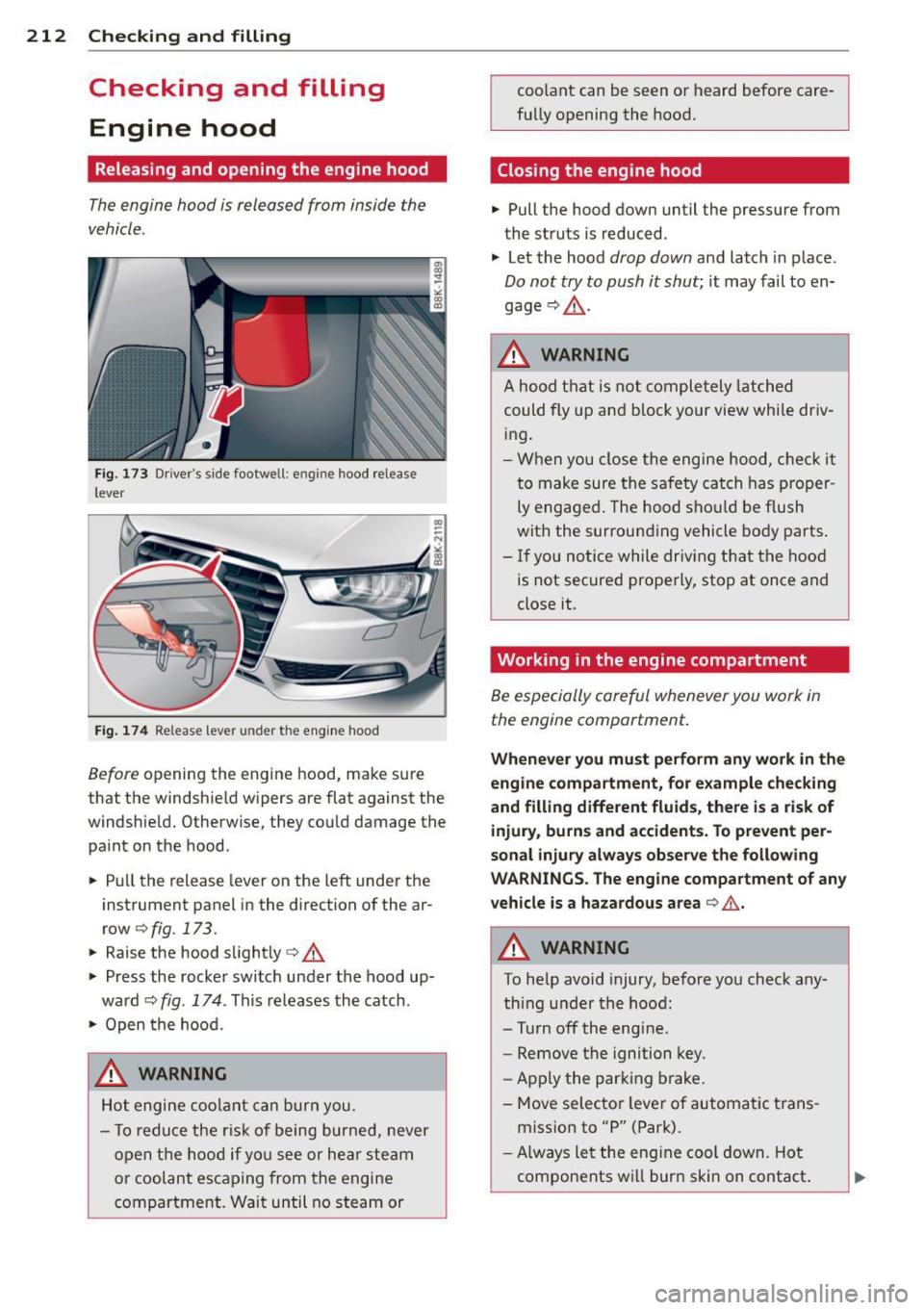
Fig . 173 D river' s side footwe ll: e ngin e hood re lease
lever
F ig. 1 74 Re lease lever u nde r the eng ine hood
Before openin g the engine hood, ma ke s ure
that the windshie ld w ipers are flat against the
windshield. Otherwise, they co uld damage the
pa int on the hood .
... Pull the release lever on the left under the
inst rument panel in the direction of the ar
row
c;, fig . 173.
... Raise t he hood s lightly r::;, &,
... Press the rocke r swi tc h under the hood up
ward
c;, fig . 174 . This re leases the catch .
... Ope n the hood.
A WARNING
Hot engi ne co olan t ca n bur n you .
- T o redu ce the r is k o f being burned, never
op en t he ho od if yo u see or hea r ste am
or cool an t esc aping from the engine
c ompartment. Wait unti l no steam or co
olant can be seen or heard before care
fu lly opening the hood.
Closing the engine hood
... Pull the hood down until the pressure from
the struts is reduced .
... Let the hood
drop down and latch in p lace .
Do not try to push it shut; it may fail to en
gage
r::;, &, .
A WARNING
-
A ho od th at is not co mpletely latched
could fly u p an d block your view while driv
in g.
- Wh en you cl ose the engi ne ho od, ch ec k it
t o make sure the sa fe ty ca tch has prope r
ly engaged . The hood s hould be flush
wit h the surroun ding vehicle body pa rts .
-If you notice while driv in g that t he hood
is not secured prope rly, sto p at once and
close it.
Working in the engine compartment
Be especially ca reful whenever you work in
the engine compartment.
Whenever you must perform any work in the
engine compartment, for example checking
and filling different fluid s, there is a ri sk of
injury , burns and accidents . To prevent per
sonal injury always observe the following
WARNINGS. The engine compartment of any
vehicle is a hazardous area
r::;, ,&. .
A WARNING
-To help avo id injury, before yo u check any-
thing unde r the hoo d:
- Turn off the eng ine.
- Remove the ignition key.
- Ap ply the park ing brake .
- Move selector leve r of automatic t rans -
miss io n to "P" (Par k).
- Alway s le t the eng ine cool d own. Ho t
components w ill bur n skin on contact .
Page 215 of 290
-To reduce the r isk of being burned, never
open the hood if you see or hear steam
or coolant escaping from the engine
compartment . Wait until no steam or
coolant can be seen or heard before ca re
fully opening the hood .
- Keep children away from the engine com
partment.
- Never spill flu ids on hot engine compo
nents. They can cause a fire .
- Never touch the radiator fan. The aux ili
ary e lectr ic fan is temperature controlled
and can switch on suddenly .
- Never open the coolant reservoir cap
when the eng ine is still warm . The cool
ant system is pressur ized and hot coo l
ant could spray out.
- Protect your face, hands and arm from
steam or hot eng ine coolant by placing a
thic k rag over the cap when you open the
coolant reservoir.
- Do not remove the engine cover under
any c ircumstances. Th is increases the
risk of bu rns.
- If wo rk on the fuel system or the electri
cal sys tem is ne cessary:
- Always disconnect the battery.
- Never smoke or work near heaters or
open flames . Fluids in the engine com
partment co uld start a fire.
- Keep an approved fire extinguisher im
mediately ava ilable.
- To avoid electrical s hock and persona l in
jury while the engine is running or being
started, never touch:
- Ignition cables
- Other components of the high voltage
electronic ignition system.
- If you must perform a check or repa ir
with the engine running:
- Fir st, fully apply the parking brake,
move se lector lever of a utomatic trans
mission to "P" (Park).
Checkin g and fillin g 213
-Always use extreme caution to prevent
clothing, jewelry, or long hair from get
ting caught in the radiator fan, V-be lts
or other moving parts, or from contact
i ng hot parts . Tie back hair before
starting, and do not wear clothing that
will hang o r droop into the engine.
- Minimize exposure to em ission and
chemical hazards
9 .&, .
&_ WARNING
Califo rnia Proposition 65 Wa rni ng:
- Engi ne exhaust, some of its const ituents,
and certa in vehicle components contain
or emit chemi cals known to the State of
California to cause cancer and birth de
fects and reproduc tive harm. In addition,
certain fl uids con tained in vehicles and
certain products of component wear con
tain or emit chemica ls known to the
State of California to cause cancer and
birth defects or other reproductive harm.
- Battery posts, terminals and related ac
cessories conta in lead and lead com
pounds, c hemicals known to the State of
California to cause cancer and reproduc
tive harms. Wash hands afte r handling .
(D Note
When adding flu ids, always make sure that
they are poured into the proper conta iner
or f iller opening, otherwise serious dam
age to vehicle systems w ill occur .
@ For the sake of the environment
To detect leaks in time, inspect the vehicle
floor pan from underneath regularly . If
you see spots from oil or other veh icle flu
i ds, have you r vehicle inspected by an au
thori zed Audi dealer. •
•
Page 223 of 290
scalding from hot coo lant by following
these steps.
- Turn
off the engi ne and a llow it to cool
down.
- Protect your face, hands and arms from
escapi ng fl uid and steam by cover ing
the cap with a large, thick rag .
- Turn the cap slowly and very ca refully
i n a cou nte r-clockw ise dir ect ion while
a pply ing lig ht, downwa rd p ress ure on
the top of the cap.
- T o avo id being burned, do no t sp ill an
tifree ze o r coolan t on t he exh aust sys
tem or ho t engine parts . Un der certain
conditions, the ethylene glyco l in en
gine coolant can catch fire .
- Antifree ze is poisono us. Always store an
tifreeze in its or iginal co ntainer and we ll
o ut o f the reac h of children.
- If you drain the coolant , it must be
caught and safely stored in a p roper con
tainer clear ly marked "poison".
(D Note
- Coolant po llutes the env ironment and
could ca use a n engine fire . Excess coo l
ant wi ll be forced out through the pres
sure re lief va lve in the cap when the en
gine becomes hot.
- If, in an emergency, only water can be
added , the correct ratio between water
and antifreeze¢
page 219 must be re
stored as soon as possib le .
@ For the sake of the environment
Drained coolant should not be re used . Al
ways dispose of used c oolant while observ
ing all envir onmental regulations .
Radiator fan
The radiator fan switches on automa tically by
itself
T he radiator fan is driven by the engine via the
V-be lt. The viscous clutch regulates the speed
of the fan according to the temperature of the
coolant .
Checkin g and fillin g 221
An auxiliary electric radiato r fan* sw itches on
and
off depending on coolant temperature
and othe r vehicle ope rat ing con ditions.
After yo u switc h the engi ne off, the aux iliary
f an can con tinue r unning for up to 10 minutes
- even with the ignition off. It can even switch
on again later by itself¢ & , if
- t he temperatu re of the engine coo lant rises
due to the heat b uild -up from the en gine in
the engi ne compartment, or
- the engine compartment heats up be cause
the vehicle is parked in intense sunlight.
A WARNING
- To reduce the risk of personal in jury nev
er touch the radiator fan.
- The a uxiliary electric fan is temperat ure
contro lled and can switch on sud denly
even when the engine is not running.
- The a uxiliary radiator fa n switches on a u
tomatically when the engine coo lant
reaches a certain temperature and will
continue to run until the coo lant temper
ature drops .
Brake fluid
Checking brake fluid level
The brake fluid level can be checked with a
qui ck glance.
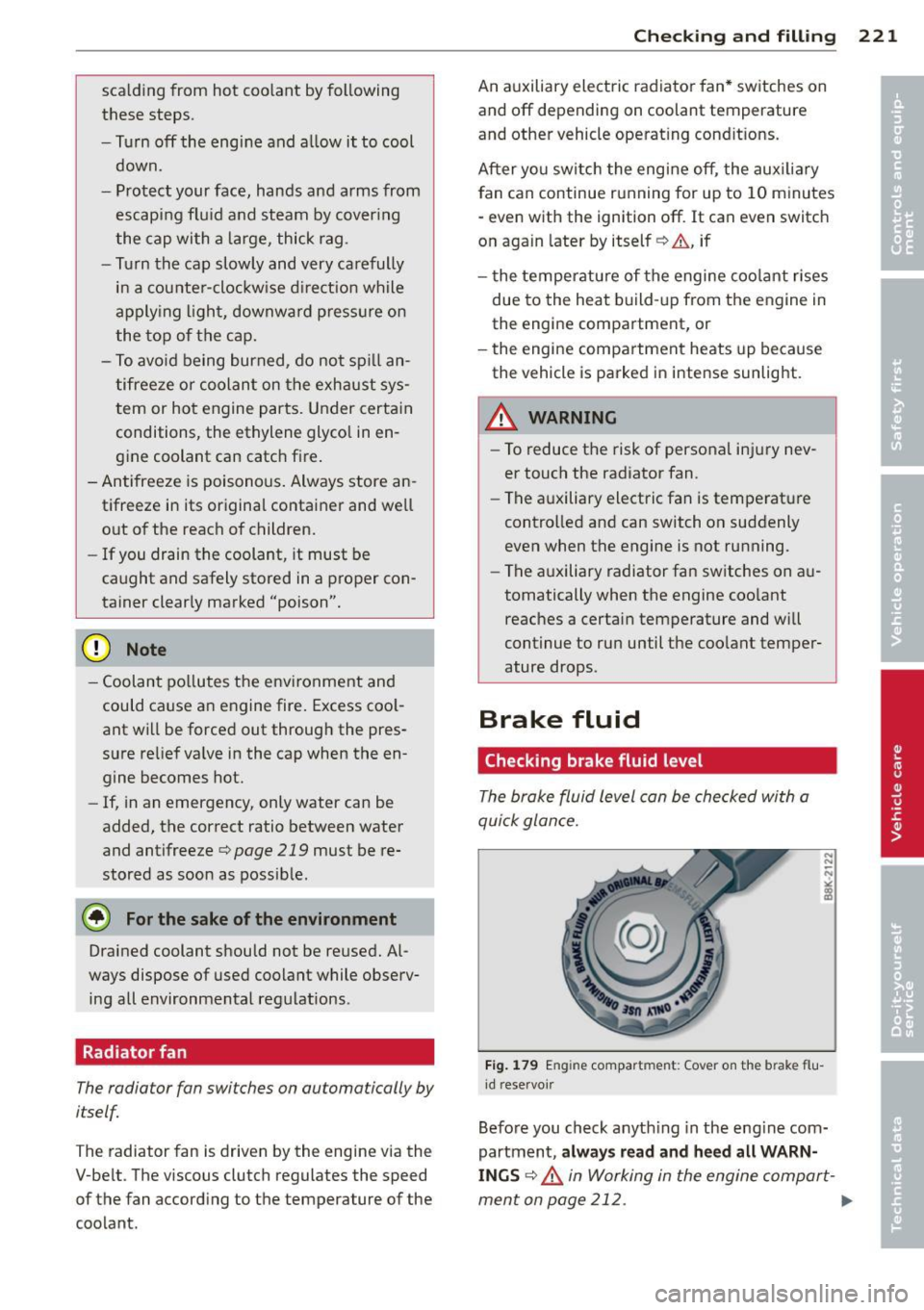
Fig. 17 9 En gin e compar tment: Cover o n the brak e flu
i d reservoi r
Before you check anyth ing in the eng ine com
partment ,
always re ad and heed all WARN
INGS c::> ,& in Working in the engine compar t-
ment on page 212 . .,..
Page 224 of 290

222 Check ing and filling
• Read the brake fluid leve l from the brake
fluid reservoir ¢
fig. 179, ¢ fig. 175. The
brake f lu id leve l must be between the "MIN"
and "MAX" markings.
The brake fluid reservoir is located at the rear partition of the engine compartment on the
left side ¢
page 214 .
The fluid level may drop slightly after some
time due to the automatic adjustment of the brake pads . This is not cause for alarm .
I f the brake fluid level falls
considerably be
l ow the "MIN" mark, the brake wa rning/indi
cator light (U .S . mode ls:
1111 , Canadian
models :. ) will come on
¢ page 15. Do not
continue to operate the vehicle. The complete brake system should be thoroughly checked
by an authorized Audi dealer or qualified
workshop and the cause corrected . If the
brake fluid level is too low, the b rake war ning/
i ndicato r light w ill illuminate . Contact an au
thor ized Audi dealer
imm ediately .
@ Tips
The brake f lu id reservoir is located unde r
neath the cove r.
Changing brake fluid
Have the brake fluid changed by an experi
enced technician .
Brake fluid absorbs moisture from the a ir . If
the water content in the brake fluid is too
h igh, corrosion in the brake system may result
after a per iod of t ime . The bo iling po int of the
b rake fluid w ill also decrease considerably and
dec rease braking per formance.
Therefore, the brake flu id must be changed
e ver y two ye ars. A lways use new b rake fluid
which confo rms to Fede ral Motor Vehicle
S tanda rd "FMVSS 116 DO T 4".
The brake flu id reservoir can be difficult to
r each, therefo re , we recommend that yo u
have the brake fl uid changed by yo ur au tho r
i z ed
Audi dealer . Your dealer has the co rrec t tools, the
right brake flu id and t he know -how
to do this for you.
A WARNING
'-
- Brake flu id is poisonous. It must be stor-
ed only in the closed or igina l container
out of the reach of children!
- Brake failure can res ult from o ld or inap
propriate brake f lu id. Observe these pre
cautions:
- Use only brake f luid that meets SA E
spe cifi cat ion
J 17 03 and conforms to
Federa l Motor Vehi cle Standard 1 16.
Always chec k with yo ur authorized A udi
dealer to make sure yo u are using the
correct brake fluid. The cor rect type of
brake flu id is also ind icated on the
brake f lu id reservoir.
- The brake fluid must be new. Heavy use
of the brakes can cause a vapor lock if
the brake fluid is left i n the system too
long . This can se riously affect the effi
c iency of the brakes as well as your
safety . T his could result in an accident.
W Note
Brake fluid will damage the pai nt of you r
vehicle .
@ For the sake of the environment
Because of the prob lem of proper disposal
of brake fluid as well as the spec ial too ls
r equired and the necessary expertise, we
r ecommend that yo u have the brake flu id
changed by yo ur autho rized Aud i dea le r.
Battery
General information
U nder normal operat ing cond itions, the bat
te ry in your Audi does not need any ma inte
nance. With
high outside temperatu res or
long da ily drives we recommend that you have
the e lectrolyte leve l che cked by an autho riz ed
A udi dealer or qu alified workshop. The elec
tro ly t e level should also be checked e ach time
the battery is charged
¢ page 225. ...
Page 229 of 290
Tires and wheels
Tires
General notes
Tires may be the least appreciated and most
abused parts of a motor vehicle .
Tires may be the least appreciated and most
abused parts of a motor vehicle . Tires are,
however, one of the most important parts of a
vehicle, particularly considering the compara
tively small patch of rubber on each tire that
assures that a ll- important contact between
you, your vehicle and the road.
Maintaining the correct tire pressure, mak ing
sure that your vehicle and its tires do not have
to carry mo re weight than they can safely han
d le, avoiding damage from road hazards and
r eg ularly inspect ing t ires for damage i nclud
ing cuts, slashes irregu la r wear and ove rall
condition are the most important things that
you can do to he lp avoid sudden tire failure in
cluding tread separat ion and blowouts.
A voidin g damage
If you have to d rive over a curb or similar ob
stacle, drive very slow ly and as close as possi
b le at a right angle to the curb.
A lways keep chemicals includ ing grease, o il ,
gasoline and brake fluid off the t ires .
I nspect the t ires regularly for damage (cuts,
cracks or b listers, etc.). Remove any fo reign
bod ies embedde d in the treads.
Storing tires Mark tires when you remove them to indicate
the direction of rotation . T his ensures you to
be ab le to mount them correctly when you re
i nstall them .
When removed, the wheels or t ires should be
sto red in a cool, d ry and preferably dark place .
Store tires in a vertical pos ition if they are not
mounted on rims, in a horizontal pos it ion if
they are mounted on rims .
Tires an d wheel s 22 7
New tires
New ti res have to be broken in¢& .
The tread depth of new t ires may vary, accord
ing to the type a nd make of t ire and the tread
patte rn.
H idden damage
Damage to tires and r ims is ofte n not readily
visible . If you notice unusual v ib rat ion or the
vehicle pulls to one s ide, th is may ind icate
that one of the t ires has been damaged . T he
ti res m ust be chec ked immed iate ly by an au
thorized Audi dea le r or q ua lified wor kshop .
Unidirectional tires
A un idirectional tire can be identified by ar
rows on the sidewa ll, that po int in the direc
tion the t ire is designed to rotate. You mus t
f ol low the specified di rection o f rotation . T his
is necessary so that these tires can develop
their optimum characteristics regarding grip, road noise, wear and hydrop laning resistance.
For more information ¢
page 254.
A WARNING
New tires or t ires that are o ld, worn or
damaged cannot provide maximum con
trol and braking ability .
-
-New tires tend to be slippery and must
also be b roken-in. To reduce the risk of
losing control, a collision and serious
pe rsonal injuries, drive w it h special care
for the first 350 miles (560 km).
- Driving with worn or damaged tires can
lead to loss of control, sudden tire fail
ure, including a blowout and sudden de
fl ation, cras hes and se riou s personal in
juries . Have worn or damaged t ires re
placed immediate ly.
- Ti res age even if they are not being used
and can fai l sudden ly, especially at hig h
speeds. Tires that are more than 6 years
old can only be used in an emergency
and then w ith special care and at low
speed.
•
•
Page 230 of 290
228 Tire s and wheel s
-Never mount used tires on yo ur vehicle if
you are not sure of their "previous histo
ry." Old used tires may have been dam
aged even though the damage cannot be
seen that can lead to sudden t ire failure
and loss of vehicle control.
- If you notice unusual vibration or if the
vehicle pulls to one side when driving, al
ways stop as soon as it is safe to do so
and check the wheels and tires for dam
age.
(D Note
Please note that summer and winter tires
are designed for the cond itions that are
Glossary of tire and loading terminology
Accessory weight
means t he comb ined we ight (in excess of
those sta ndard items which may be rep laced)
of au toma tic tra nsmission, power steer ing,
power brakes, power windows, power seats,
radio, and heater, to the extent that th ese
items are availab le as factory -installed equip
ment (whether installed or not) .
Aspect ratio
means t he ratio of the he ight to the w idth of
the tire in percent . Numbers of 55 or lower in
dicate a low sidewall for improved steering re
sponse and better overall handling on dry pavement .
Bead
means the part of the ti re that is made of
steel wires, wrapped or reinforced by ply cords
and that is shaped to fit the rim.
Bead separation
means a b reakdown of the bond between
components in the bead.
Cord
means the strands forming the plies in the
tire . typ
ica l in those seasons . Audi recommends
using winter tires during the winter
months . Low temperatures signif icant ly
decrease the e lasticity of summer tires,
which affects tract ion and brak ing ability.
If summer tires are used in very co ld tem
peratures, cracks ca n form on the tread
bars, res ulting in permanent tire damage
that can cause loud driving no ise and un
balan ced t ires. Audi is not responsible for
th is type of damage .
Cold tire inflation pressure
means the tire p ressu re recommended by t he
vehicle manufacturer fo r a tire of a des igna ted
s iz e that has not bee n driven for more than a
coup le of miles (k ilometers) at low speeds in
t h e three hour period before the tire pressure
is measured or adjusted.
Curb weight
mea ns the we ight of a motor ve hicl e w ith
standard equipment including the max imum
capacity of fuel, oil, and coolant, air condi
tioning and additional weight of optiona l
equipment.
Extra load tire
me ans a t ire design to operate at higher loads
and at h igher inflation pressures than the cor
responding standard tire . Extra load tires may
be identified as "XL", "x l" , "EXTRA LOAD", or
"RF" on the sidewall.
Gross A xle Weight Rating ("GAWR ")
means the lo ad -c a rry ing c apac ity of a s ingle
axle system , measured a t the tire-ground in
terfaces.
Gross Vehicle Weight Rating ("GVWR ")
mea ns the maximum total loaded we ight of
t h e ve hicl e. .,.
Page 231 of 290
Groove
means the space between two adjacent tread
ribs.
Load rating (code)
means the maximum load that a tire is rated
to carry for a given inflation pressure. You
may not find this information on all tires be
cause it is no t req uired by law.
Maximum load rating
means the load rating for a t ire at the max i
mum permissible inflation pressure for that
tire.
Maximum loaded vehicle weight
means the sum of:
(a) Curb weight
(b) Accessory weight
(c) Vehicle capacity weight, and
(d) Production options weight
Maximum (permissible) inflation pressure
means the maximum cold inflation pressure
to which a tire may be inflated. Also called "maximum inflation pressure."
Normal occupant weight
means 150 lbs. (68 kilograms) times the
number of occupants seated in the vehicle up
to the total seating capacity of your vehicle.
Occupant distribution
means distribution of occupants in a vehicle.
Outer diameter
means the overa ll diamete r of an inflated new
tire.
Overall width
means the linear distance between the exteri
ors of the sidewalls of an inflated tire, includ
in g elevations due to labeling, decorations, or
protective bands or ribs.
Ply
means a layer of rubber-coated parallel cords.
Tires and wheels 229
Production options weight
means the combined weight of those installed
regular production options we ighing over 5
lbs. (2.3 kg) in excess of those standard items
which they replace, not previously considered
in curb weight or accessory weight, including
heavy duty brakes, ride levelers, heavy duty
battery, and special trim.
Radial ply tire
means a pneumatic tire in wh ich the ply cords
that extend to the beads are laid at substan
tia lly 90 degrees to the center line of the
tread .
Recommended inflation pressure
see¢ page 228, Cold tire inflation pressure.
Reinforced tire
means a t ire design to operate at higher loads
and at h igher inflation pressures than the cor
re sp onding standard tire. Reinforced tires
may be identified as "XL", "xl", "EXTRA LOAD",
or "RF" on the sidewa ll.
Rim
means a metal support for a tire or a tire and
tube assembly upon which the tire beads are
seated.
Rim diameter
means nom inal d iameter of the bead seat. If
you change your wheel s ize, you will have to
purchase new tires to match the new rim di
ameter.
Rim size designation
means r im diameter and width .
Rim width
means nominal distance between rim flanges .
Sidewall
means that portion of a tire between the
tread and bead.
•
•
Page 238 of 290
236 Tires and wheels
-Carrying more weight than your vehicle
was designed to carry will prevent the
vehicle from handling properly and in
crease the risk of the loss of vehicle con
trol.
- The brakes on a vehicle that has been
overloaded may not be able to stop the
vehicle within a safe distance.
- Tires on a vehicle that has been overload
ed can fail suddenly, including a blowout
and sudden deflation, causing loss of
control and a crash.
- Always make sure that the total load be
ing transported -including the weight of
a trailer hitch and the tongue weight of a
loaded trailer - does not make the vehi
cle heavier than the vehicle's Gross Vehi
cle Weight Rating.
Determining correct load limit
Use the example below to cal
culate the total weight of the
passengers and luggage or oth
er things that you plan to trans
port so that you can make sure
that your vehicle will not be
overloaded.
Steps for Determining Correct Load Limit
1. Locate the statement "THE
COMBINED WEIGHT OF OC
CUPANTS AND CARGO
SHOULD NEVER EXCEED XXX KG OR XXX LBS"on your vehi
cle's placard (tire inflation pressure label)
¢fig. 182.
2. Determine the combined weight of the driver and pas- sengers that will be riding in
your vehicle.
3. Subtract the combined weight of the driver and passengers from
"XXX" kilo
grams or
"XXX" pounds
shown on the sticker
¢fig. 182.
4. The resulting figure equals the available amount of car
go and luggage load capaci
ty. For example, if the
"XXX"
amount equals 1400 lbs.
and there will be five 150
lbs. passengers in your vehi
cle, the amount of available
cargo and luggage load ca
pacity is 650 lbs. (1400-7 SO
(5
X 150) = 650 lbs.)
5. Determine the combined weight of luggage and cargo
being loaded on the vehicle.
That weight may not safely exceed the available cargo
and luggage load capacity
calculated in Step 4.
6. If your vehicle will be towing a trailer, load from your trail
er will be transferred to your
vehicle. Consult this manual
to determine how this re duces the available cargo