ESP AUDI A5 CABRIOLET 2013 Repair Manual
[x] Cancel search | Manufacturer: AUDI, Model Year: 2013, Model line: A5 CABRIOLET, Model: AUDI A5 CABRIOLET 2013Pages: 290, PDF Size: 72.35 MB
Page 194 of 290

192 Trailer towing
Tire pre ss ure
When towing a trai le r, inflate the t ires of your
vehicle to the co ld tire pressure listed under
"Full load" on the label located on the driver 's
side B-pillar (visible when the door is open).
Inflate trailer tires to trailer and tire manufac
turers' specifications.
Light s
The headlight settings should be checked with
the trailer attached before dr iving off. Check
to make sure both vehicle and tra iler lights
are working properly.
Saf ety chains
Be sure tra iler sa fe ty cha ins a re p roperly con
nected from the trailer to the hitch on the ve
hicle. Leave eno ugh slack in the chains to per
mit turning corners. When you install safety
cha ins, make sure they w ill not drag on the
road when you are driving.
The chains shou ld cross under the trai ler
tongue to prevent it from dropping in case of
separation from the hitch.
Driving instructions
Driving with a trailer always requires extra
care and consideration.
To obtain the best possible handling o f vehicle
and trai ler, p lease note the following:
.,. Do not tow a loaded tra iler whe n your car it
self is no t loaded .
.,. Be especia lly careful when passing other
vehicles .
.,. Observe speed limits .
.,. Do not drive at the maximum permissible
speed.
.,. Always apply brakes early .
.,. Monitor the temperature gauge.
Weigh t di stribution
Towing a loaded trai ler with an empty car re
sults in a highly unstable distribution of
weight . If this cannot be avo ided, drive at very
low speeds only to avoid the risk of losing
steer ing control. A "ba
lanced' ' rig is easier to operate and con
trol. This means that the tow vehicle should be loaded to the extent possible and permissi
ble, while keep ing the trai ler as light as possi
ble under the c ircumstances. Whenever poss i
ble, transfer some cargo to the luggage com
partment of the tow veh icle while obse rving
tongue load requ irements and vehicle load ing
considerations.
Speed
The higher the speed, the more d iff icu lt it be
comes for the driver to control the rig. Do not
drive at t he maximum permissible speed. Re
duce your speed even more if load, weather or
wind conditions are unfavorable -pa rtic ularly
whe n going downhill.
Reduce veh icle speed
immediately if the trail
er shows the slightest s ign of sway ing.
Do n ot
try to sto p th e swaying by acc elerating .
Observe speed limits. In some areas, speeds
fo r vehicles tow ing tra ile rs a re lower than for
regular veh icles .
Always apply brakes early. When driving downh ill, shift into a lower gear to use the en
gine braking effect to slow the vehicle . U se of
the brakes alone can cause them to overheat
and fail.
Coolant tempe rature
The coo lant temperature gauge c> page 10
must be observed carefu lly. If the needle
moves close to the upper end of the scale, re
duce speed immediately and/or turn off the
air conditioner.
If the coolant temperature warning light •
i n t he i nstrument cluster starts flashing, pull
off the road, stop and let the engine
idle for
abo ut two min utes to prevent he at build-up .
_& WARNING
Anyone not proper ly restra ined in a mov
i ng vehicle is a t a much greater risk in an
accident . Never let anyone ride in yo ur car
who is not p roperly wea ring the rest raints
prov ided by Audi.
-
Page 195 of 290
Trailer towing tips
Important to know
Your vehicle hand les different ly when tow ing
a trailer because o f the addit ional weight and
d iffe ren t weight distribution . Safety, perform
ance and economy w ill greatly depend on how
caref ully you load your trailer and operate
your rig.
B efore you actua lly tow your trailer, pr actice
turning, stopp ing and bac king up in an area
away from traffic. Keep practicing until you have become comp lete ly fam iliar with the way
your veh icle-trailer comb ination behaves and
responds.
Backing up is d ifficu lt a nd requires practice .
Backing up with a tra iler genera lly requires
steer ing action opposite to that when backing
up your vehicle without a trailer.
M aintain a g reater distance betwee n your ve
h icle and the one in front o f you . You will need
mo re room to stop. To compensate for the
trailer, you will need a larger than normal
turning radius .
W hen pass ing, remember that yo u cannot ac
celerate as fast as yo u normally wo uld be
cause of the added load. Make sure you have
e nough room to pass . After passing , allow
p lenty o f room fo r your tra iler before chang
in g la nes aga in .
Avoid jerky starts, sharp turns or rap id lane
changes.
(D Tips
- Do n ot tow a tra ile r during the break-in
period of you r vehicle.
- If you tow a trailer, your A udi may re
quire more frequent maintenance due to
t h e ext ra load
o page 269.
Trailer towin g 193
Parking on a slope
Do not park on a slope with a trailer . If it can
not be avoided, do so only after doing the fol lowing:
When parking:
.. App ly the foot brake.
"' Have someone p lace chocks under both the
veh icle and the tra iler wheels .
"' With chocks in place, slowly release t he
bra kes unt il t he whee l chocks absorb the
load .
.. Tur n the whee ls towa rds t he curb .
.,. App ly the parking brake.
.. Move the se lector lever to P.
When restarting after parking:
.. App ly the foot brake .
.,. Sta rt t he engine .
.. Move the se lector lever to D/S .
.. Release the pa rking brake and s low ly pull
out a nd away from the wheel chocks .
.. Stop and have someone retr ieve the wheel
chocks .
(D Tips
If you move the selector leve r of the auto
matic transmission to P befo re a pplying
the parking brake and before bloc king the
whee ls, you may have to use more force
l ater to move the l ever out of the P posi
tion .
•
•
Page 200 of 290
198 Cleaning and protection
Chamois are not suitable for drying the top .
Neve r use gasoline, spot remover, benzene,
pa int thinner o r so lvents to remove spots. We
recommend that you only use cleaners espe
cially formu lated for use on convertible tops,
and that you follow the produce use directions
caref ully. Authorized Audi deals can provide
deta iled information.
A WARNING
Always read and heed all WARNINGS and
the information on
¢ page 194.
@ Note
Never use a high-pressure power washer to
clean the power top.
Wind deflector
App lies to vehicles: with wind def lector
Clear the wind deflector with water or, if it is
heav ily soiled, a chemically neutral cleaning
solut ion .
A WARNING
Always read and heed a ll WARNINGS and
the information on¢
page 194.
Sensors and camera lenses
-Remove snow with a hand brush and remove
ice with a de-icing spray that does not con
tain solvents .
- Clean the sensors (adapt ive cruise control*,
parking system*) with a cleaning solution
that does not conta in solvents and a soft
cloth .
@ Note
- If you wash you r vehicle with a pressu re
washer,
- make sure there is enough distance to
sensors in the rear bumper .
- do not clean the camera lenses and the
area around them with the pressure
washer . - Never use warm or hot wate
r to remove
snow or ice from the camera lens . This
cou ld cause the lens to crack.
- Never clean the camera lens with abra
sive products.
Waxing and Polishing
W axin g
A good wax coating protects the vehicle paint
to a large extent against the environmental
factors listed under¢
page 194, Washing and
even against slight scratches.
You can use a liquid car wax to protect your
paint as soon as one week after your vehicle
has been delivered.
Even if you regularly use a
w axin g process in
automatic car washes, we recommend that
you manually apply a coat of wax to give the
paint extra protection, part icularly if water no
longer beads on the clean paint .
Protect plastic body parts with car wax in the
same way as the vehicle
body.
During warm weather dead insects tend to
collect on the front bumper and on the for
ward area of the hood . They are much easier
to remove from pa int that is waxed
often.
Polishing
Polish yo ur vehicle only if the paint has lost its
shine and the gloss cannot be brought back
with wax .
If the polish used does not conta in preserva
tive compounds, the paint must be waxed af
terwards.
A WARNING
A lways read and heed all WARNINGS and
other information ¢
page 194.
(D Note
Do not use car wax on
- matte o r anodized meta l trim
- rubber or rubber-like t rim .
Page 201 of 290
Trim strips
Metal trim needs special care.
For environmenta l reasons, Audi fabricates
the br ight trim strips and trim pieces from
pure chromium-free aluminum.
Dirt and marks on the trim strips should be
removed with a
pH -b ala nced cleaning agent
(do not use a chrome cleaner). Authorized
Aud i dealers carry clean ing products w hich
have been tested for use on your veh icle and
are not harmful to the env ironment .
To avoid corros ion on the exterior trim str ips,
only a pH-balanced solution should be used
for the w indshield washer .
A WARNING
Always read and heed all WARNINGS and
other information ¢
page 194.
Plastic and vinyl
Plastic needs special care .
Use a clean, damp cloth or sponge to remove
dust and light surface dirt. For other soil, use
a lukewarm all-purpose clean ing solution or a
m ild saddle soap for vinyl trim. Remove water
spots and traces of soap w ith a clean, damp
clot h or sponge. Use a clean, soft clot h to rub
d ry.
Grease, tar or oil stains can be removed with a
clean cloth or sponge soaked w ith all-purpose
cleane r or with a solvent des igned especially
to clean viny l.
Occasionally apply a colorless vinyl or leather preservat ive to reta in the material's luste r
and pliability.
A WARNING
Alw ays read a nd heed all WARNINGS an d
other information
¢page 194.
Aluminum trim
.
Use only neutral-pH products to remove spots
and deposits from alumin um s urfaces.
Cleaning and protec tion 199
Chrome care products and a lkaline cleaners
will attack a luminum surfaces and can dam
age them over t ime.
A WARNING
A lways read and heed all WARNINGS and
other information
¢page 194.
Touch-up paint
Minor paint damages should be touched up
immediately.
.. Use either a touch-up paint stick or spray
paint to cover minor scratches and nicks .
You r authorized Audi dea ler has touch -up
paint for minor scratches and stone chips.
Scratches sho uld be touched up soon after
they occur to prevent corrosion.
If a spot starts to rus t, however, a s imple
touch -up job will not be eno ugh. The affected
s u rface m ust be sanded smooth and coated
with an anti-rust primer before the painted
finish can be restored.
T he number for the origina l veh icle paint can
be fo und o n the vehicle identification label
¢ page 265.
A WARNING
Always read and heed all WARNINGS and
other information¢
page 194.
Windows
Clear vision to all sides.
Clean a ll w indows regularly to remove road
f ilm and car wash wax buildup.
.. Remove snow from w indows using a brush.
.. Use a plastic ice s craper to remove ice from
w indows and mi rrors .
.. Remove other residue on the windows with
a spray-on g lass cleaner .
.. Wipe the windows dry with a clean piece of
cloth or kitchen paper towel.
•
•
Page 205 of 290
CD Note
Cleaning agents containing solvents will
attack the material and can change the
way it behaves.
Natural leather
App lies to vehicles: with natura l leather
Audi makes great efforts to maintain the
properties, natural look and feel of interior
leather.
G ene ra l
We offer many different types of leather on
our veh icles. Most are different types of nappa
leather, which has a smooth surface and
comes in various co lors.
The intensity of the color determines the visu
al characteristics and appearance . If the sur
face of the leather has a typical natural look,
then the leather is a nappa leather that has
been left in a relatively natural condition. This
leather offers particularly good comfort and
breathes well. F ine veins, closed grains, insect
b ites, skin folds, and subtle variations in co lor
remain visible. These cha racte ristics demon
strate that the mater ia l is na tural.
Natural nappa leather is not covered by a col
or finish.
It is therefore more sensitive to so il
ing and wear, wh ich is something you need to
consider if ch ild ren, an imals o r othe r factors
m ight prove to be particularly hard on the
l eather .
By contrast, leather types that are cove red by
a co lored finish laye r are more durable. This
h as a posit ive effect on the leather's resist
ance to wear and soiling in daily use . On the
other hand, the typical characteristics of natu
ra l leather are bare ly or not apparent. Howev
er, this does not mean that the leather itself
is of infer ior quality.
Ca re and handling
Because of the exclusive nat ure of the types of
l eather that Audi uses and their unique prop
erties (such as sensitivity to oils, grease, soi l
ing, etc.), you will need to be somewhat care-
Cleaning and protec tion 203
ful with these leathers, and a ce rtain type of
care is required. For example, dark clothing
mater ia ls can disco lor leather seats (especia l
l y if such clothing is damp and was not dyed
correctly). Dust and dirt particles in pores,
folds, and seams can have an abrasive effect
and can damage the leather surface as well as
weaken seams .
The leather should be cleaned regularly as needed . After having been used for a relat ively
long time, your leather seats will acqu ire a
rich aged fin ish. This is a character istic of nat
ural leathe r and a s ign of true quality.
In order to maintain the value of this natural
product over the life of your ve hicle, you
shou ld follow the recommendat ions below:
CD Note
- To keep your leather from b leac hing out,
do not allow it to be exposed to bright
sunlight for long periods of time. If you
have to leave the veh icle parked outside
for long per iods, cover the leather to
protect it from direct exposure to s un
light.
- Sharp objects on clothing, such as zip
pers, rivets or sharp pieces on belts can
leave permanent sc ratches or scrape
marks on the surface of the leather .
{i) Tips
-After each time you clean the leather and
at regular intervals, use a leather preser
vative cream that contains UV-b lockers
and that works into the leather. Th is
cream will nour is h and mo isturize the
leather, helping it to breathe and stay
supple. It also helps to build up a protec
tive coating on the surface .
- Clean the leather every 2 - 3 months,
and clean any areas that get soiled.
- Remove fresh marks made by ballpo int
pens, ink, lipstick, shoe polish, etc. as
soon as poss ible.
- Preserve the color of the leather as need
ed by us ing a special colored leather care
cream to touch up areas of uneven color. •
•
Page 206 of 290
204 Cleaning and protec tio n
Cleaning and caring for leather
upholstery and trim
Appl ies to vehicles: with natural leather
Natural leather requires special care and at
tention.
Norm al cleaning
"' Clean soiled areas w ith a slightly mo istened
cotton or woolen cloth.
M ore stub born d irt
"' More stubborn dirt can be removed using a
cloth saturated with a mild soap so lution (2
tablespoons mi ld liquid soap).
"' Never allow the soap solution to saturate
the leather, and make certain that no water
soaks into the seams .
• Wipe off the soap solut ion with a soft, dry
cloth .
Clean ing s pots
"' Remove fresh wa te r-b ase d spots (such as
coffee, tea, ju ices, blood) w ith an absorbent
cloth or paper towel.
"' Remove fresh
grea se or oil-b ase d spot s
(such as b utter, m ayonnaise , chocolate) with
an absorbent cloth or paper towe l, or use
the cleaner from the leather care kit if the
spot has not yet penetrated into the surface
of the leather.
"' Use an oil/grease dissolving spray, if
oil /
gre ase spot s ha ve drie d on.
• Remove spec ific kinds of spots (ballpoint
pen, felt marker, fingernail polish, water
based paint, shoe polish, etc.) with a spot
remove r specifically formulated for leather .
Leather care
"' Every half year use an approved leather care
product (available from your authorized
Audi dealer) to care for the leather .
• Apply the product
very sparingly.
• Wipe it off wi th a damp cloth .
If you have any questions about cleaning and
car ing for the leathe r in your vehicle, it is best
to contact your author ized Audi dealer, who
will be glad to he lp you and te ll yo u about ou r
fu ll range of leather care products, s uch as: -
Leather cleaning and care kit
- Creams to care for colored leather
- Spot
removers for ballpoint pens, shoe pol-
ish, etc.
- Oi l/grease d issolving spray
- New and upcom ing products .
_&. WARNING
-Always read and heed all WARNINGS and
other information
~ page 194.
(D Note
- Never use chemical so lvents (e.g. lighter
fluid, turpentine), waxes, shoe polish or sim ilar products on the leather surfaces
in your Audi .
I
-To avoid damage, have stubborn sta ins
removed by a comme rcial clean ing spe
cialist.
Cleaning Alcantara ® (synthetic suede)
Applies to vehicles: with Alcantara® upholstery
Removing dust and dirt
• Moisten a cloth, squeeze out excess water
and wipe down the seat surfaces.
Removing stains
"' Moisten a cloth with lukewarm water o r
w ith di luted
eth yl (rubbing ) alcohol.
"' Dab at the stain . Start at the outside and
work inwards .
"' Once the sta in is no longe r vis ible, use a
soft dry cloth or tissue to soak up the mois
ture .
Do no t use leather cleaning prod ucts on A l
cantara ®.
You may use a suitab le shampoo for removing
dust and d irt.
Dust and grit in the pores and seams can
scratch and damage the surface. If the car is left standing in the sun for long per iods, the
Alcanta ra ® should be protected aga inst direct
s u nl ight to prevent it from fading. S light color
variations will develop in norma l use and are
not an indication of materia l deterioration . ..,.
Page 207 of 290
(D Note
- Never use chemical solvents (e.g . lighter
flu id, turpentine), waxes, shoe polish or
s imilar products on Alcantara ® surfaces.
- To avoid damage, have stubborn stains
removed by a commercia l cleaning spe
cialist.
- Do not use brushes, stiff sponges or sim
ilarly abrasive cleaning aids.
Safety belts
Only well-maintained safety belts work relia
bly when needed.
.. Keep belts clean .
.. For cleaning, use a mi ld soap and water sol
ution . Let be lts dry thoroughly and away
from direct sunlight.
.,. Do not allow inertia reel safety belts to re
tract before they are completely dry.
.,. Check the condition of your safety belts
reg
ularly .
Heavily soiled safety belts may not retract
properly .
A WARNING
Damaged safety belts can break in a crash.
- Anything that might damage your safety
belts could mean that you and your pas
sengers wou ld not be adequately pro
tected in an acc ident.
- Safety belt performance depends on cor
rect installation. Never remove belts
from the vehicle to clean them.
- Do not use chemical cleaning agents,
bleach o r dyes. They have corros ive prop
erties whi ch weaken the webbing.
- When cleaning your safety belts, inspect
them for damage.
If you discover dam
age, see your a uthorized Audi dea ler.
- Always read and heed all WARN INGS and
other information
Qpage 194.
l) Use o nly the correct cleaning sol utions. Neve r use gas
oline or d iese l fuel.
Cleaning and protec tion
Engine compartment
Be especially careful when cleaning the en
gine compartment.
A lw ays switch o ff the ign it ion before cle an
i ng the eng ine
c> ,& .
Plenum pan el
Remove leaves from the plenum panel in front
of the windshield under the engine hood. This
prevents the water drain holes from becoming
blocked, and it prevents debris from enter ing
the vehicle interior through the heating and
vent ilat ion ducts.
Co rro sio n protect ion
The engine compartment and transmission
have been corrosion-protected at the factory.
Good anti -corrosion treatment is very impor
tant, partic ularly in the winter.
If the vehicle
is frequently driven on salt treated roads, the
entire engine compartment and p lenum panel
should be thoroughly cleaned at the end of
winter and retreated to prevent salt damage.
At the same time, the underside of the vehicle
shou ld be washed as well.
If the engine compartment is cleaned at any
time with grease remov ing solutions
1> , or if
you have the engine washed, the anti-corro
s ion treatment is almost always removed as
well.
It i s therefo re essentia l to have a long
lasti ng cor rosion pro tect ion reapplied to all
surfaces, seams, joints and components in the
engine compartment .
A WARNING
Be aware: The engine compartment of any
motor vehicle is a potentially hazardous
area.
- Before work ing in the engine compart
ment, be sure to read the information
c> page 212.
- Before reaching into the front plenum
panel, a lways remove the ignit ion key.
205
•
•
Page 210 of 290
208 Fuel supply and filling your fuel tank
-Anti -knock index must be 87 AKI or higher.
- Blend must contain not more than 15%
MTBE .
Seasonally adjusted gasoline
Many gasoline grades are blended to perform
especially well for winter or summer driving .
During seasonal change-over, we suggest that
you fill up at busy gas stat ions where the sea
sonal adjustment is more likely to be made in
time.
CD Note
- Fuels containing a high percentage of
ethanol such as ESO and E85 may only
be used in vehicles with flex ible fuel en
gines. Using high ethano l fuel in vehicles
not equipped with flexib le fue l eng ines
can cause severe engine damage.
- Methanol fuels which do not mee t these
requirements may cause corrosion and
damage to plastic and rubber compo
nents in the fuel system.
- Do not use fuels that fail to meet the
specified criteria in this chapter.
- If you are unable to determine whether
or not a particular fuel blend meets the
specifications, ask your service station or
its fuel supplier.
- Do not use fuel for which the contents
cannot be identif ied.
- Fuel system damage and performance
problems resulting from the use of fuels
different from those specified are not
the respons ibility of Audi and are not
covered under the New Vehicle or the
Emission Control System Warranties .
- If you experience a loss of fuel economy
or driveab ility and performance prob
le ms due to the use of one of these fuel
blends, we recommend that you switch
to unblended fuel.
Ethanol fuel (B io-ethanol)
App lies to veh icles : w ith flex ible fue l en g in e
You can recognize vehicles with a flexible fuel
engine by looking at the label on the inside of
the fuel filler flap.
Vehicles with flexible fuel engines may be op
erated with bio -ethanol fuels such as E85
(85% ethanol and 15% gasoline) or with un
leaded gasoline (91 AKI/ROZ 95) . The vehicle
may also be operated with a mixture of these
fuels.
Your fuel consumption w ill increase when us
ing bio-ethanol fue ls due to the lower amount
of energy contained per unit volume in etha
nol.
Warming up the flexible fuel engine in
low temperatures
Due to the chemical composition of b io-etha
nol , a certain amount of fuel ends up in the
engine oil when driving short distances in very
low temperatures. This fue l evaporates again
when the engine is warmed up.
II Please warm up engine.
If the driver message appears in the instru
ment cluster display, drive with a warm en
gine to reduce the o il level.
CD Note
- Never fill with methanol o r with a higher
percentage of b io-ethanol than 85%
(E85). A higher percentage of bio-etha
nol in the fuel can cause damage to the
engine or to the fue l system.
- If you use only E85, it is recommended
to fill the fuel tank complete ly with un
leaded premium grade gaso line every
5,000 miles.
- If you experience starting, rough id le or
hesitation driveability problems, fill the
fue l tank comp letely with unleaded pre
m ium grade gasoline and dr ive it nor
mally until the gasoline is used. See your
authorized Audi dealer if the problem
persists .
Page 212 of 290
210 Fuel supply and filling your fuel tank
Refuelling
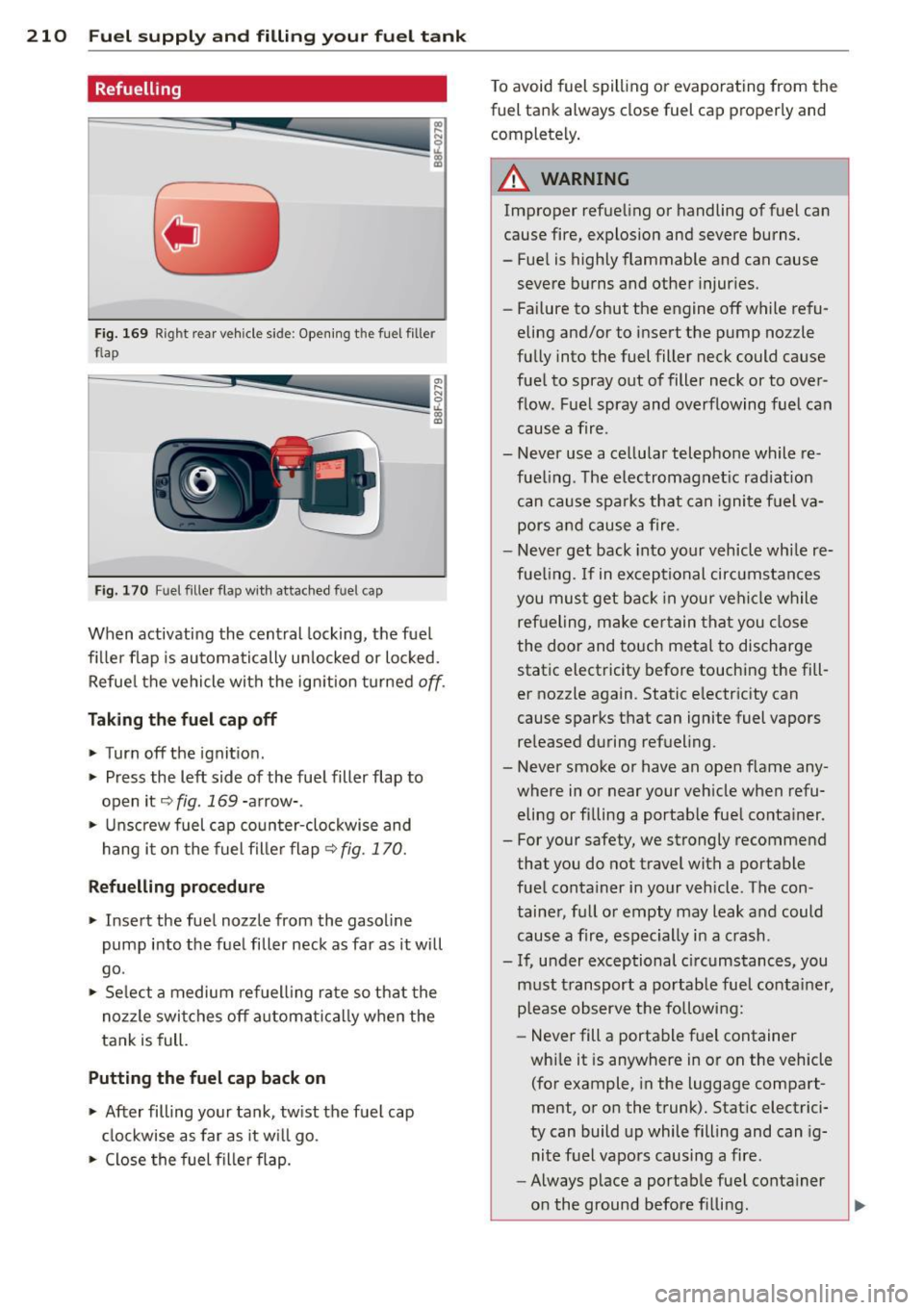
Fig. 169 Rig ht rear veh icle s ide: Open ing t he fuel fille r
fl ap
Fig. 170 Fu el fi ller fla p w ith attached fuel c ap
When activating the central lock ing, the fuel
fi ller flap is automatically un locked or loc ked.
Refuel the vehicle with the ig nition turned
off.
Taking the fuel cap off
~ Turn off the ignition .
~ Press the left side of the fuel fil ler flap to
open it~
fig . 169 -arrow- .
~ Unscrew fuel cap counter-clockwise and
hang i t on the fuel filler flap
~ fig . 170.
Refuelling procedure
~ Insert the fuel no zzle from the gasoline
pump into the fuel filler nec k as far as it will
go .
~ Select a medium refuelling rate so that the
nozzle switches off automatical ly when the
tank is full.
Putting the fuel cap back on
~ After filling your tank, tw ist the fuel cap
clockwise as far as it will go .
~ Close the fuel filler flap. T
o avoid fuel spill ing or evaporating from the
fuel tank always close fuel cap properly and
completely .
A WARNING
-Improper refueling or handling of fuel can
cause fire, explosion and severe burns.
- Fuel is highly flammable and can cause
severe burns and other injuries.
- Failure to shut the engine off while refu
eling and/or to insert the pump no zzle
fully into the fuel filler neck could cause
fuel to spray out of filler neck or to over
flow . Fuel spray and overflowing fuel can
cause a fire .
- Never use a cellular telephone while re
fueling . The electromagnet ic rad iat ion
can cause sparks that can ignite fuel va
pors and cause a fire.
- Never get back into your vehicle whi le re
fue ling.
If in exceptional circumstances
you must get back in your vehicle while
ref ueling, make ce rtain that you close
the door and touch metal to discharge
static electricity before touching the fill
er nozzle again . Static electricity can
cause sparks that can ignite fuel vapors released during refueling .
- Never smoke or have an open flame any
where in or near your veh icle when refu
eling or filling a portable fuel conta iner .
- For your safety, we strongly recommend
that you do not travel with a portable
fuel conta iner in your vehicle . The con
tainer, full or empty may leak and could
cause a fire, especially in a crash .
- If, u nder exceptional cir cumstances, you
must transport a portable fuel conta iner,
p lease observe the following:
- Never fill a portable f uel container
whi le it is anywhere in or on the vehicle
(for example, in the luggage compart
ment, or on the trunk). Static electrici
ty can build up while filling and can ig
nite fuel vapors causing a fire.
- Always place a portable fue l conta iner
on the ground before filling.
Page 214 of 290
212 Checking and filling
Checking and filling
Engine hood
Releasing and opening the engine hood
The engine hood is released from inside the
vehicle .
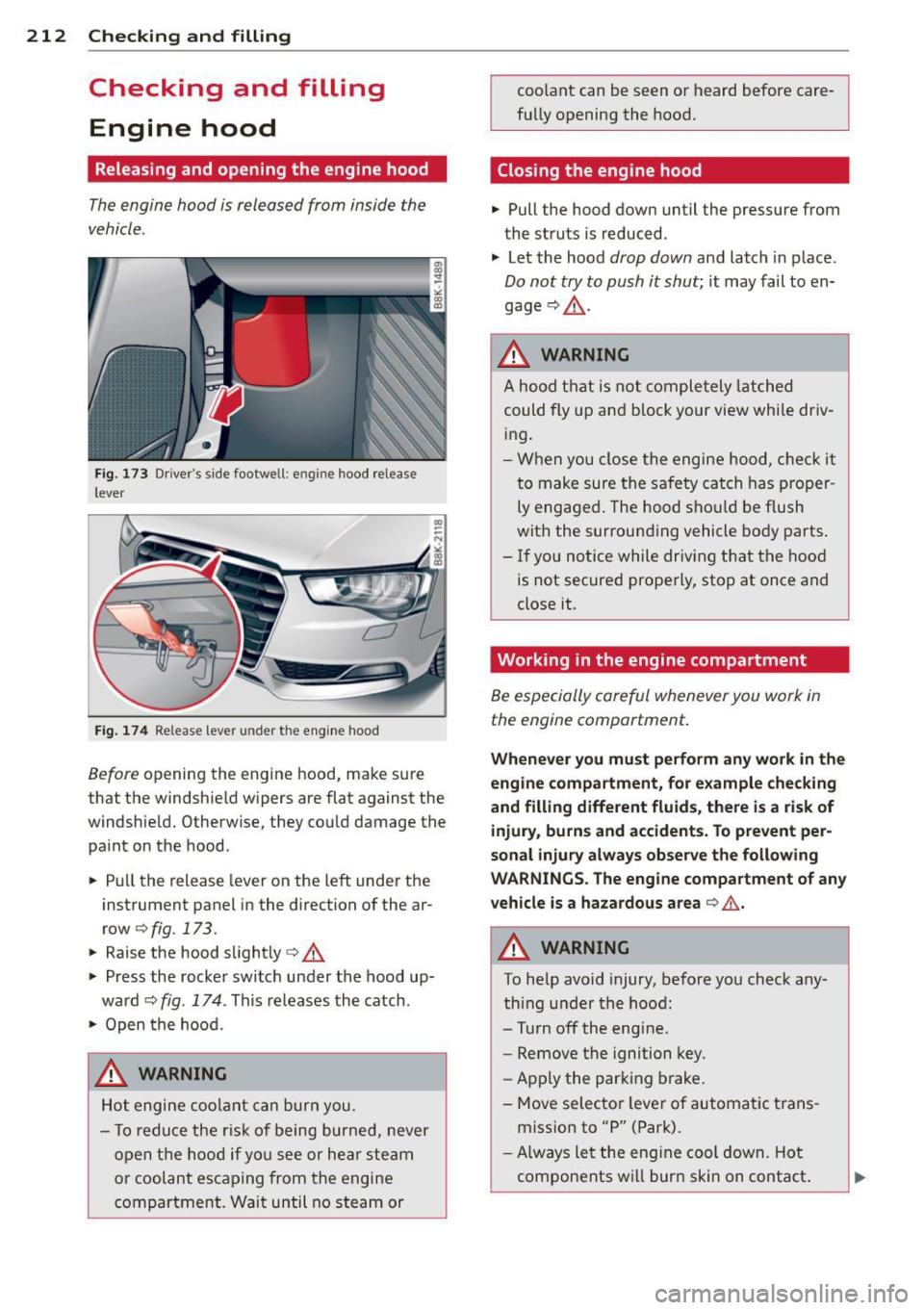
Fig . 173 D river' s side footwe ll: e ngin e hood re lease
lever
F ig. 1 74 Re lease lever u nde r the eng ine hood
Before openin g the engine hood, ma ke s ure
that the windshie ld w ipers are flat against the
windshield. Otherwise, they co uld damage the
pa int on the hood .
... Pull the release lever on the left under the
inst rument panel in the direction of the ar
row
c;, fig . 173.
... Raise t he hood s lightly r::;, &,
... Press the rocke r swi tc h under the hood up
ward
c;, fig . 174 . This re leases the catch .
... Ope n the hood.
A WARNING
Hot engi ne co olan t ca n bur n you .
- T o redu ce the r is k o f being burned, never
op en t he ho od if yo u see or hea r ste am
or cool an t esc aping from the engine
c ompartment. Wait unti l no steam or co
olant can be seen or heard before care
fu lly opening the hood.
Closing the engine hood
... Pull the hood down until the pressure from
the struts is reduced .
... Let the hood
drop down and latch in p lace .
Do not try to push it shut; it may fail to en
gage
r::;, &, .
A WARNING
-
A ho od th at is not co mpletely latched
could fly u p an d block your view while driv
in g.
- Wh en you cl ose the engi ne ho od, ch ec k it
t o make sure the sa fe ty ca tch has prope r
ly engaged . The hood s hould be flush
wit h the surroun ding vehicle body pa rts .
-If you notice while driv in g that t he hood
is not secured prope rly, sto p at once and
close it.
Working in the engine compartment
Be especially ca reful whenever you work in
the engine compartment.
Whenever you must perform any work in the
engine compartment, for example checking
and filling different fluid s, there is a ri sk of
injury , burns and accidents . To prevent per
sonal injury always observe the following
WARNINGS. The engine compartment of any
vehicle is a hazardous area
r::;, ,&. .
A WARNING
-To help avo id injury, before yo u check any-
thing unde r the hoo d:
- Turn off the eng ine.
- Remove the ignition key.
- Ap ply the park ing brake .
- Move selector leve r of automatic t rans -
miss io n to "P" (Par k).
- Alway s le t the eng ine cool d own. Ho t
components w ill bur n skin on contact .